- Season
- Year-round; fresh heads from the autumn harvest, from storage through winter
- Price
- Low
Calories and nutrition per 100 g
- 29 kcal
- 1.6 g protein
- 0.2 g fat
- 3.9 g carbs
Red Cabbage
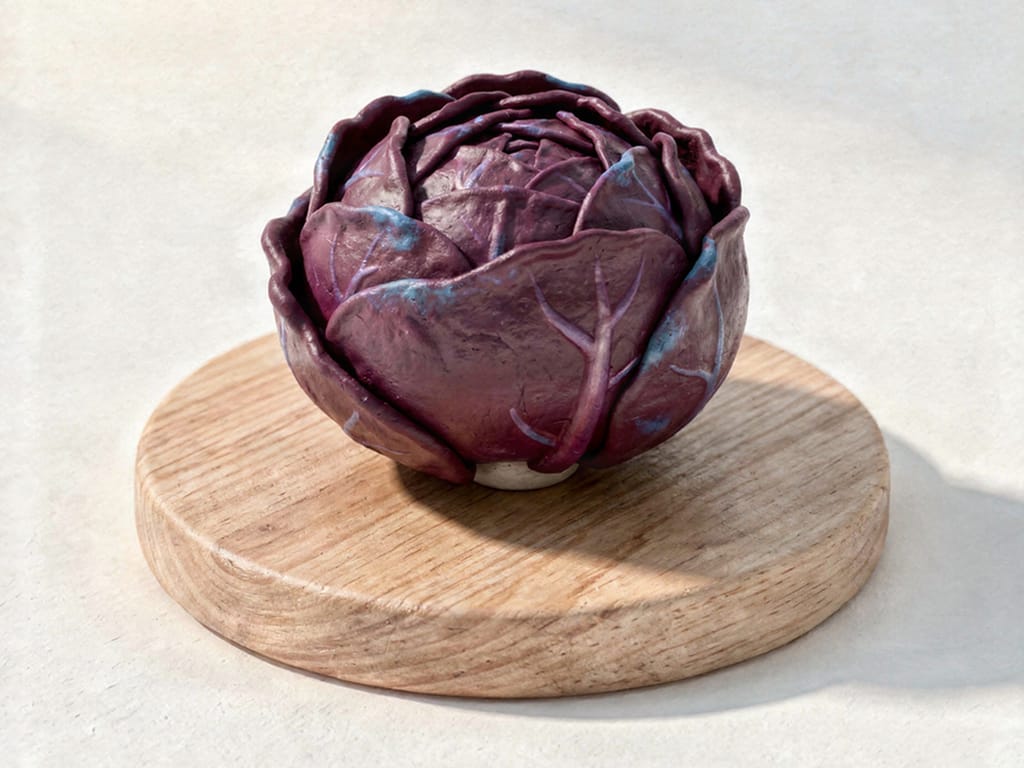
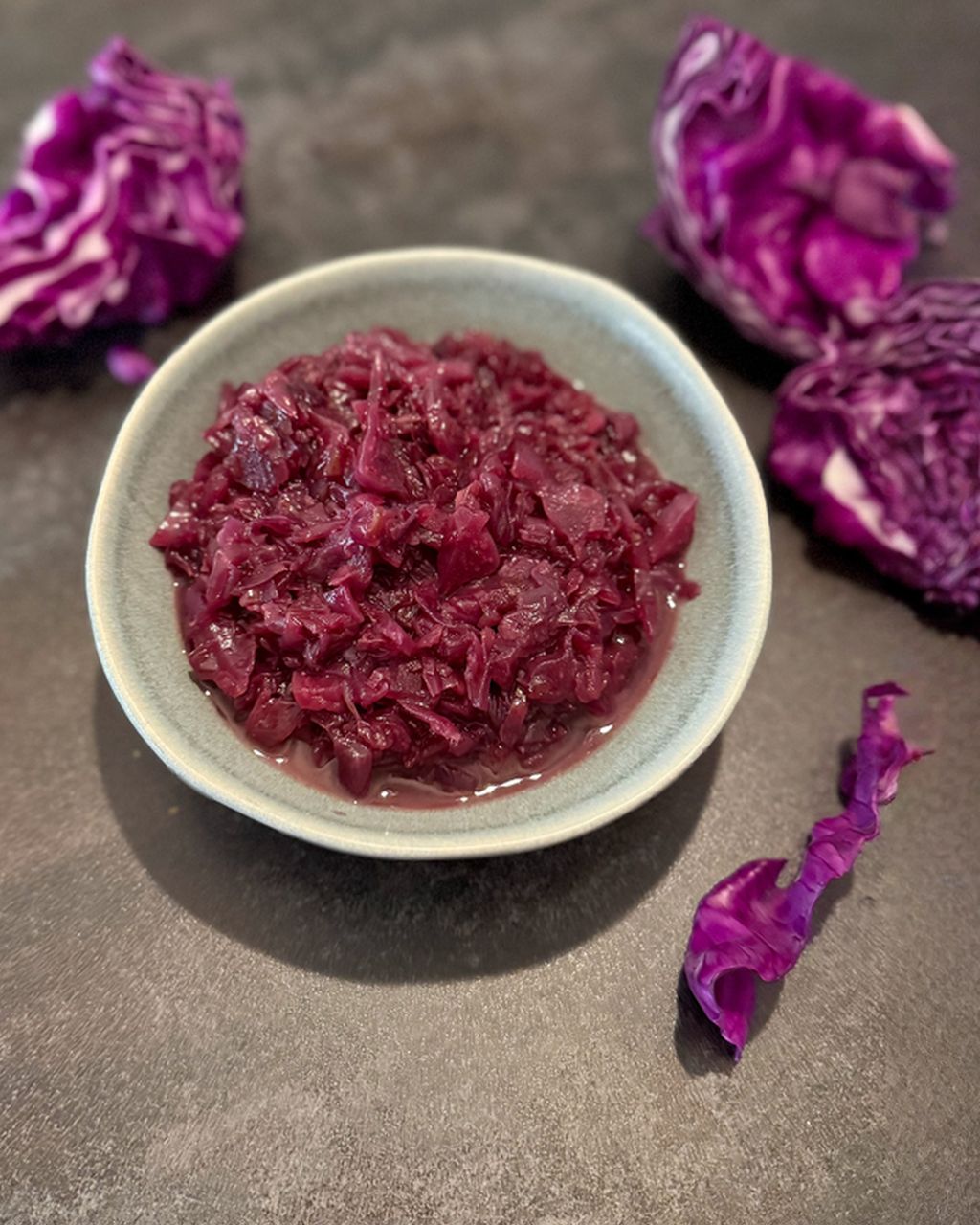
Red cabbage is a head cabbage with dark purple leaves, eaten raw in salads or braised as a sweet-and-sour side for goose, duck or pork. Its colour comes from anthocyanins, which stay wine-red in acid and turn blue when cooked without it, which is why vinegar goes in.
Leave a whole head on the counter for only a few days; in a cool pantry or cellar it keeps longer. Cut cabbage belongs in the fridge.
Keep the whole unwashed head loosely wrapped in the vegetable drawer; it keeps for 1–2 weeks. Wrap a cut head tightly in film or put it cut side down in a box, use it first, and thinly trim any darkened edge. Cooked cabbage keeps 3–4 days in the fridge.
Shred raw cabbage, blanch for 1.5 minutes, cool in iced water, drain and freeze; at −18 °C it keeps 10–12 months and is then only good for cooking. Braised cabbage freezes well; eat it within 1–2 months for best quality.
Choose a firm head that is heavy for its size, with glossy, tightly packed leaves. The outer leaves may be slightly wilted; they protect the head and come off anyway. Avoid heads with soft, brown or mouldy patches and a dried, cracked stem cut. Allow 150–200 g of raw cabbage per side portion; 1 kg serves 5–6 people.
White cabbage in the same amount. It is milder and has no colour; season it the same way with vinegar and sugar when braising.
For salad, thinly shredded savoy cabbage, or radicchio, which is more bitter. For a quick side, jarred red cabbage works; salt it less and do not cook it long.
Remove the outer leaves, quarter the head and cut out the core. For salad, shred it as thinly as you can; for braising, cut it into strips. Cut it on a board you can wash, as the dye stains wood and hands. When cooking, add the vinegar at the start so the cabbage keeps its colour.
Slice the core thinly and add it to salad or braised cabbage. The water from boiling the leaves dyes eggs blue. Reheat leftover braised cabbage to serve with potato dumplings or potato flatbreads.
Roughly what one measure weighs, scooped the way you normally would in the kitchen.
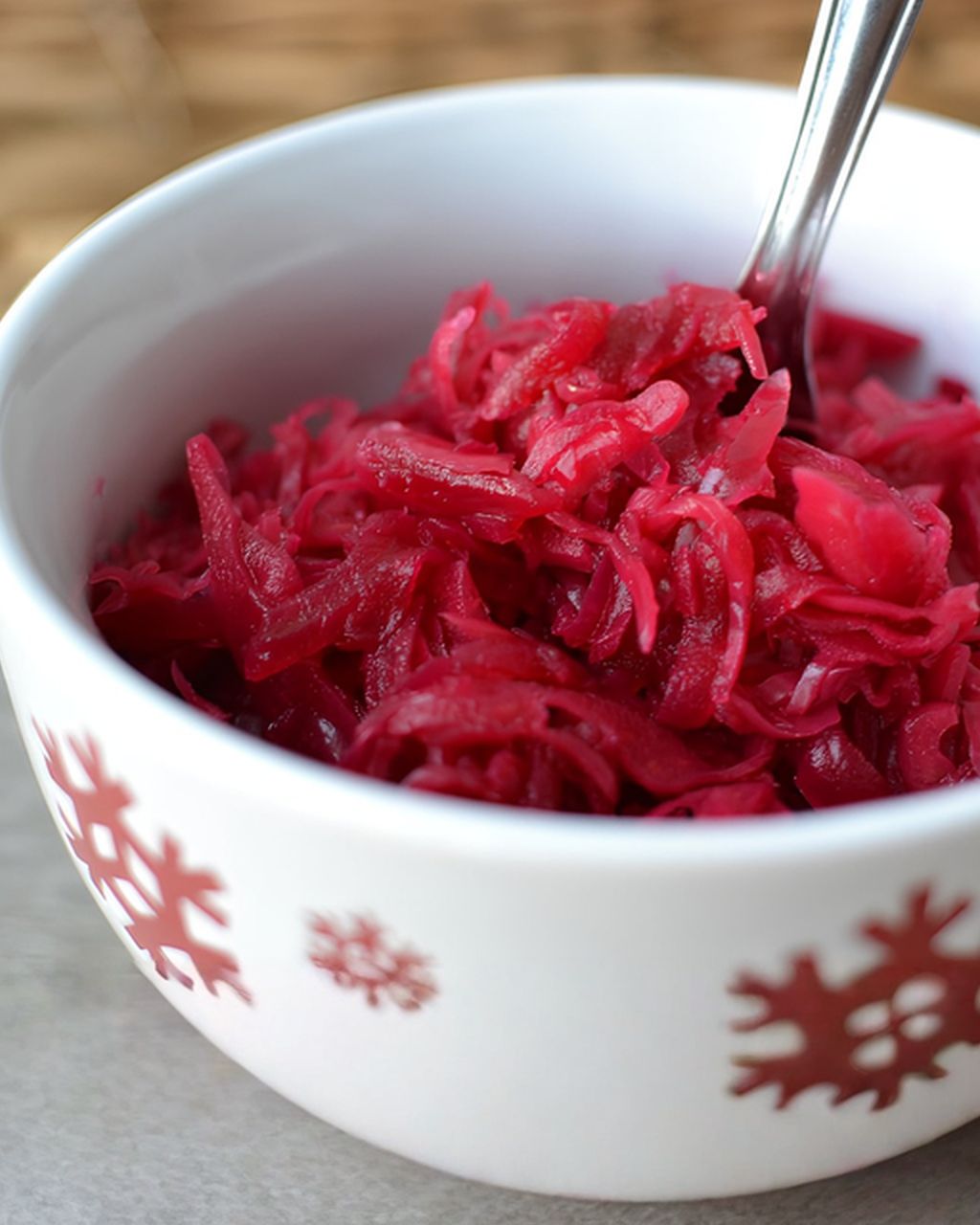
Raw in coleslaw and quick-pickled in wraps, tacos and burgers. Braised with onion, vinegar and sugar or apple as a side for goose, duck, pork and game. Roasted in wedges on a tray with oil and salt. Stir-fried in strips briefly so it keeps some bite. Always with acid, or it turns blue as it cooks.
Botanically it is the same species as white cabbage, Brassica oleracea, and older Czech cookbooks also call it blue cabbage. It is sold by the head; on the Czech online grocer Rohlík, for example, heads weigh around 2 kg.
Raw, it is crunchy, firmer and slightly more peppery than white cabbage, with an earthy bitterness. Braising softens and sweetens it, and with vinegar and sugar it takes on the classic sweet-and-sour taste. Like all cabbage it smells sulphurous as it cooks; longer braising mellows the smell.
Seasonal baking plans, tested recipes and kitchen tricks that save you time. Unsubscribe in one click.
3 min read
Red cabbage is a variety of head cabbage, botanically the same species, Brassica oleracea, as white cabbage, savoy cabbage and broccoli. It differs from white cabbage in its dark purple leaves, slightly firmer texture and stronger flavour. In older Czech cooking it was also called blue cabbage, and in German it is Blaukraut.
It is sown in spring and harvested mainly in autumn, and you can buy it fresh all year. The USDA database gives raw red cabbage 31 kcal, 1.4 g protein, 7.4 g carbohydrate, 2.1 g fibre and 57 mg vitamin C per 100 g.
Its colour comes from anthocyanins, water-soluble pigments that act as a natural pH indicator. In acid they are wine-red, in neutral conditions purple, and in alkaline conditions they turn blue to green. That is why vinegar, wine or lemon goes into red cabbage at the start of cooking. In hard tap water without acid the cabbage turns blue.
Soil acidity affects the colour already in the field: heads grow redder in acidic soil and greener in alkaline soil. If cabbage turns blue in the pot, add a tablespoon of vinegar or lemon juice and the colour returns within a few minutes.
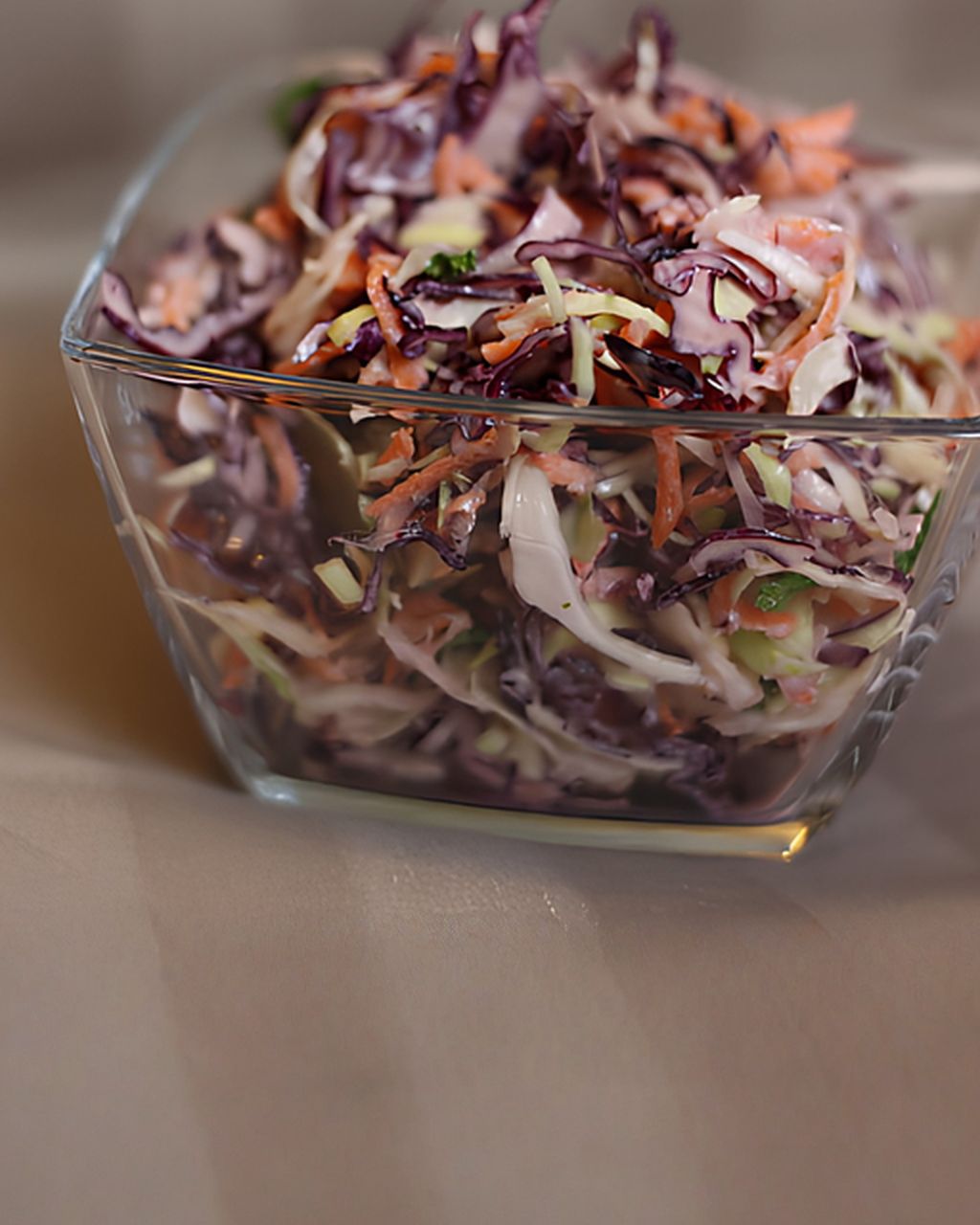
Raw red cabbage is firm, so it does not wilt under dressing and stays crunchy in a salad. Shred it thinly, salt it and massage it by hand so it softens and releases juice. Then dress it with vinegar and oil and add apple or orange. A colourful salad of red and white cabbage is in our rainbow cabbage salad recipe.
Quick-pickled cabbage in a 1 : 1 mix of vinegar and water with sugar must stay in the fridge and be eaten within a few days; it is not preserving for the store cupboard.
For 1 kg of cabbage allow one onion, 2 tablespoons of lard, 3–4 tablespoons of vinegar, 1–2 tablespoons of sugar or one grated apple, a teaspoon each of salt and caraway, and 100–150 ml of water. Braise the cabbage covered until tender and adjust the seasoning only at the end. Ratios, thickening and fixing jarred cabbage are covered in red cabbage: how to cook and season it, and a tested step-by-step method is in sweet and sour braised red cabbage.
Refrigerate cooked cabbage within 2 hours, and reheat leftovers until hot all the way through, to at least 70 °C for 2 minutes.
A whole head keeps 1–2 weeks in the fridge, braised cabbage 3–4 days. You can freeze raw cabbage after a short blanch (1.5 minutes), but once thawed it is soft and only good for cooking. Braised cabbage freezes better; more on freezing cabbage is in braised cabbage: how to cook and freeze it.
Only can red cabbage pickled in a vinegar brine from a tested recipe, with at least as much vinegar as water. Cabbage is a low-acid vegetable, and without enough acid Clostridium botulinum can grow in a sealed jar. Do not can sweet-and-sour braised cabbage; freeze it instead.