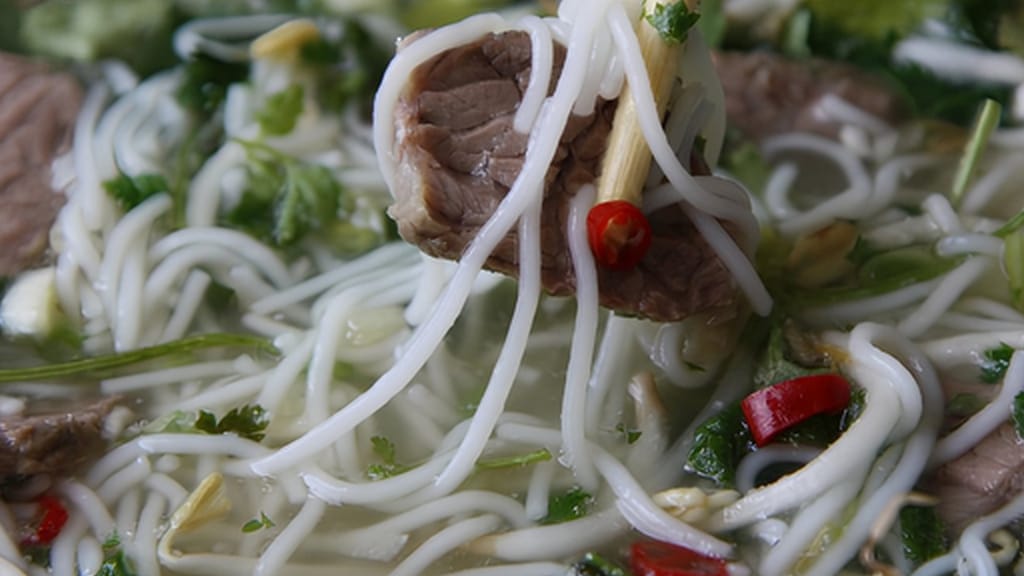
Pho bo – vietnamese beef noodle soup
Asian Recipes at Home: Pho, Satay, Mongolian Beef and Quick Skillet Dinners
Updated Nov 20, 2026
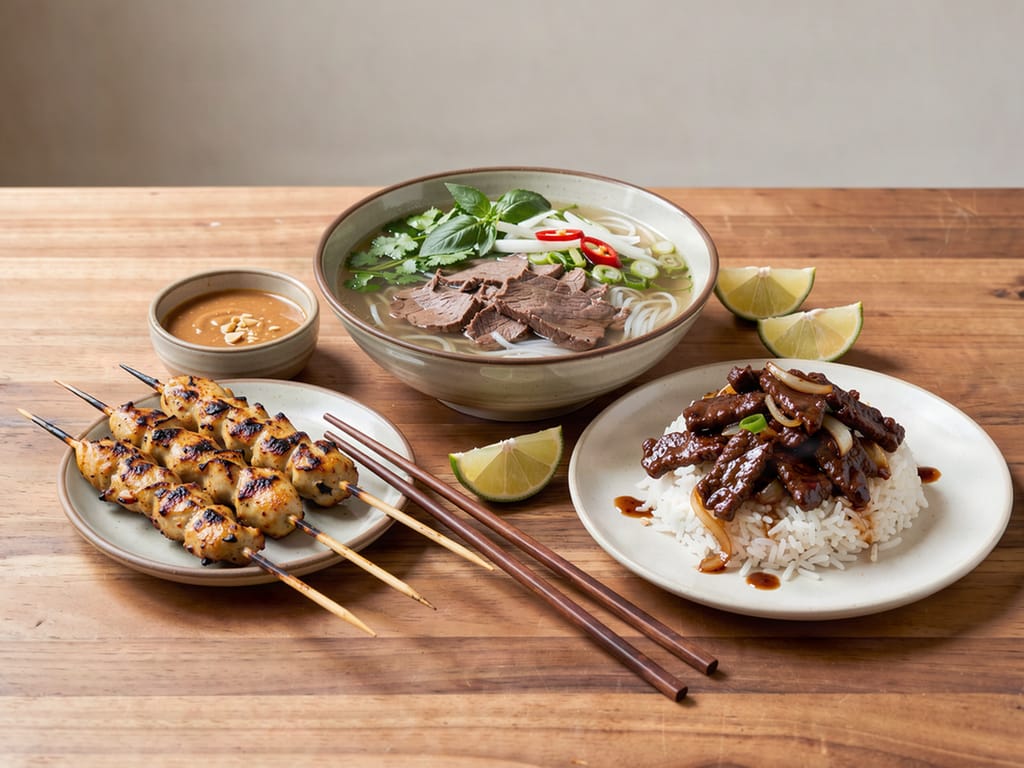
The Asian dishes you can make at home rely on just a few ingredients: soy sauce, fish sauce, ginger, garlic, scallions, chili, plus rice or noodles. With them you can make Vietnamese pho, chicken satay with peanut sauce, Mongolian beef in 35 minutes and a noodle skillet for the whole family. Below you'll find what to cook, how to do it and why it works.
Asian cooking isn't one cuisine but dozens: Vietnamese, Thai, Chinese, Japanese, Korean, Indonesian and more. At home, though, they share the same logic: quick cooking, bold seasoning that's salty (soy sauce, fish sauce), sweet (sugar, honey), sour (lime) and hot (chili), and fresh herbs right at the end.
The basic pantry you need to cook everything in this article:
soy sauce – light soy for seasoning, and Japanese shoyu soy sauce for sauces that should taste full and slightly sweet
fish sauce – saltiness and depth for pho, satay and salads
fresh ginger, garlic, scallions, chili – the aromatic base of almost every skillet dish
jasmine rice – a fragrant side for sauces and meat
rice noodles – for soups and salads, ready in a few minutes
cornstarch – for coating meat and thickening sauce
lime and fresh cilantro – the sourness and freshness that "wake up" a dish
One rule applies across the board: slice and prep everything ahead. In a hot wok, things happen in seconds, and there's no time to chop garlic.
Seasonal baking plans, tested recipes and kitchen tricks that save you time. Unsubscribe in one click.
These are the eight Asian dishes we've tested and written up:
Pho bo – Vietnamese beef noodle soup
Chicken satay with peanut sauce
Mongolian beef
Asian-style grilled pork belly
Asian chicken in spicy batter
Asian skillet with meat and crispy quail eggs
Asian salad with mango and shrimp
Sticky rice with mango and salted cashews
For each one you'll find what the dish is, what makes it work and how much time to allow. The full method is in the recipe.
Pho bo – Vietnamese beef noodle soup is a clear broth made from marrow bones and beef ribs with star anise, cinnamon and charred ginger and onion, ladled over rice noodles and herbs. The key trick: blanch the bones first and pour off the water, then keep the broth at a gentle simmer and don't stir it, or it will turn cloudy. Allow just under four hours, though the broth does most of that on its own.
Pho bo – vietnamese beef noodle soup
Pho bo – Vietnamese beef soup with rice noodles
Chicken satay with peanut sauce is thin strips of chicken breast marinated overnight in lemongrass and coconut milk, then grilled on skewers. Soak the skewers in water for 10 minutes beforehand so they don't burn on the grill. It takes over nine hours in total, but almost all of that is waiting in the fridge.
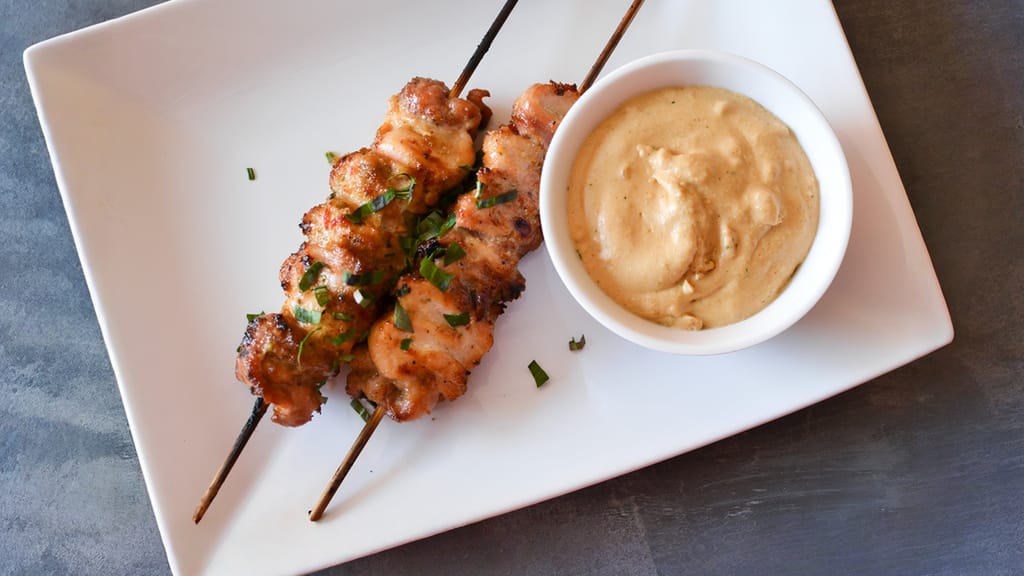
Chicken satay with peanut sauce
Chicken satay with peanut sauce on the grill
Fragrant, intensely flavored Mongolian beef is strips of beef in a glossy glaze of shoyu soy sauce, ginger, garlic and brown sugar, ready in 35 minutes. The trick is the cornstarch: coat the beef in it, fry until crisp and drain on a paper towel so the sauce isn't greasy.
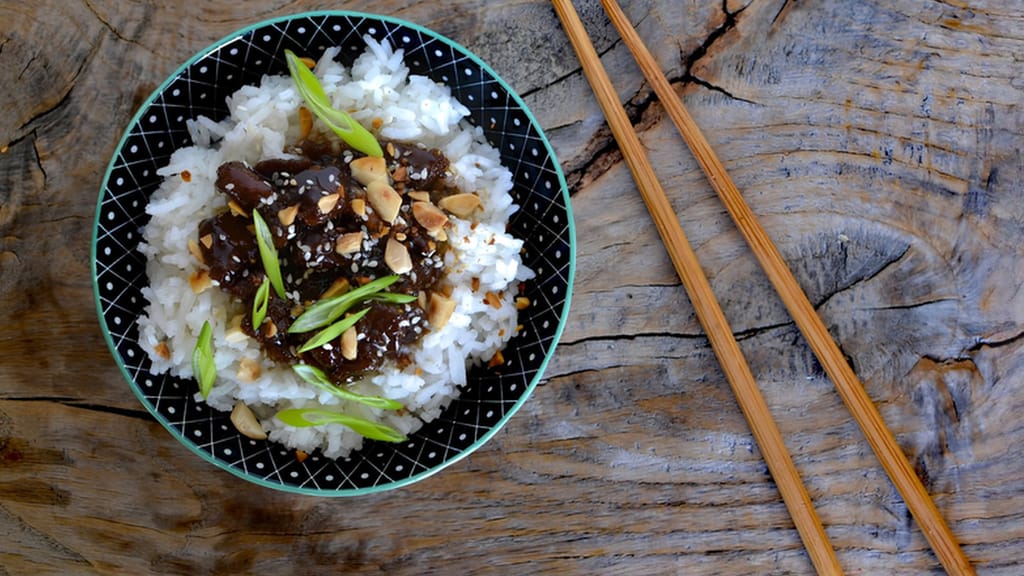
Fragrant & bold mongolian beef
Mongolian beef in a glossy soy glaze
Asian-style grilled pork belly is thin slices of pork belly in a marinade of soy sauce, fish sauce, brown sugar and five-spice powder, grilled until crisp. First firm the meat up in the freezer for a few hours so you can slice it really thin, then leave it in the marinade for 8 to 24 hours. Grill it until it's cooked through.
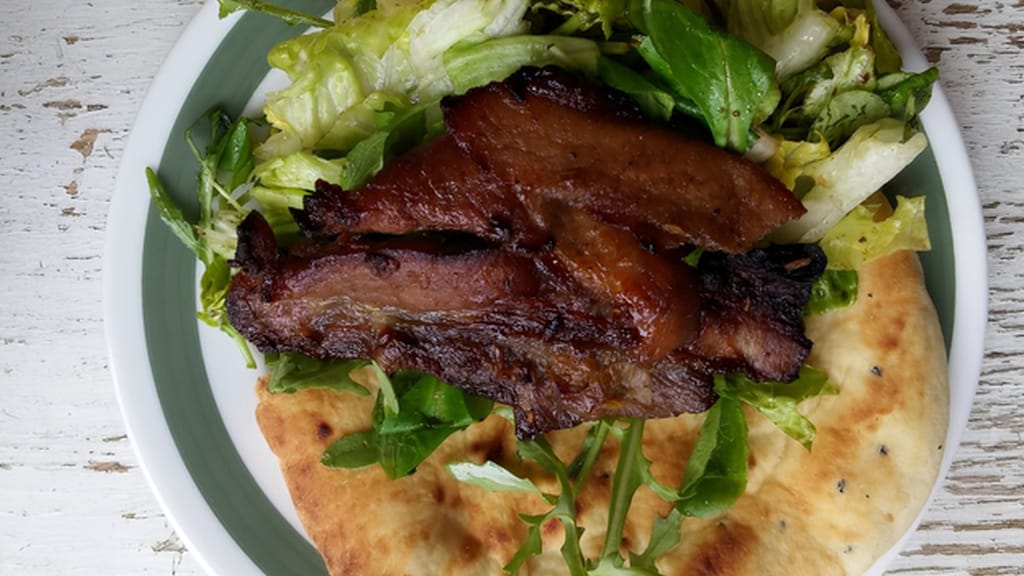
Grilled asian-style pork belly
Asian-style grilled pork belly with five-spice marinade
Asian chicken in spicy batter with hot sauce is Asia's answer to schnitzel: crispy pieces of chicken breast tossed in a sweet chili and soy sauce, ready in 35 minutes. The triple coating of starch, egg and flour holds up even in the glaze. Just fry the chicken in smaller batches and serve right away.
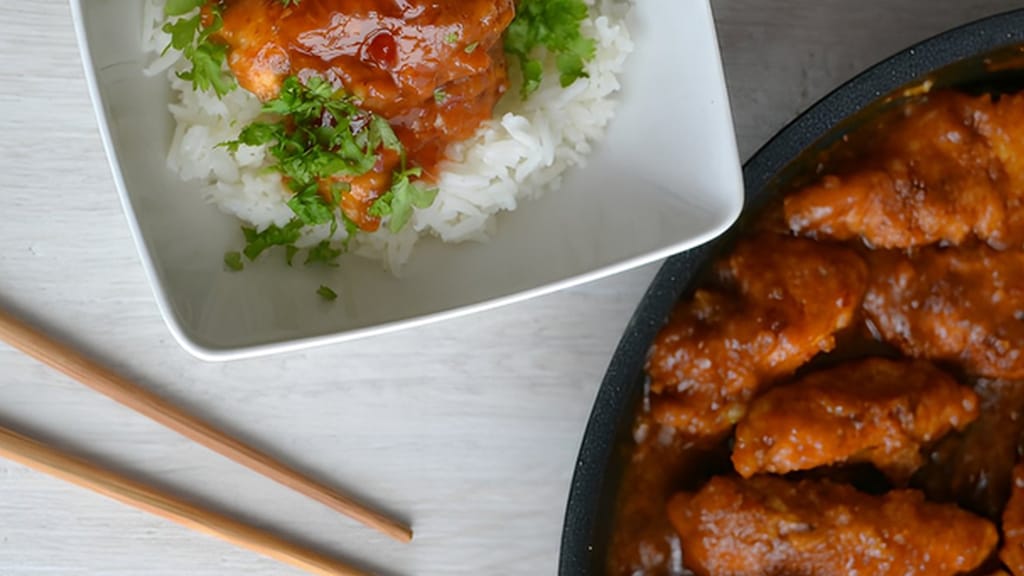
Asian-style chicken in spicy batter with hot sauce
Asian chicken in spicy batter with hot sauce
Asian skillet with meat and crispy quail eggs combines egg noodles, ground meat and mushrooms in a sauce of soy, oyster and chili sauce, ready in 49 minutes. The crispy topping is quail eggs, briefly boiled and fried until golden.
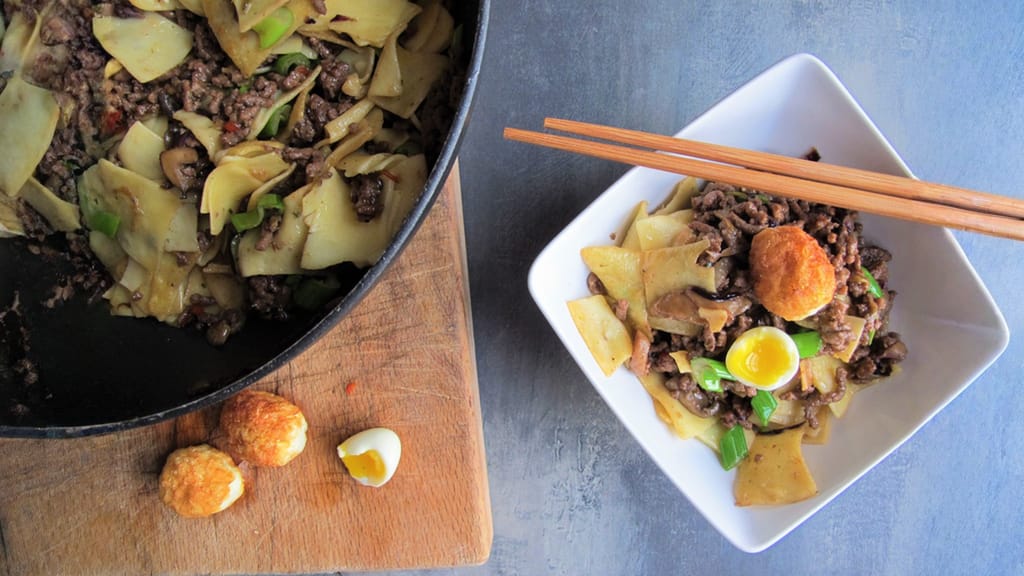
Asian noodle stir-fry with meat and crispy quail eggs
Asian skillet with noodles, meat and crispy quail eggs
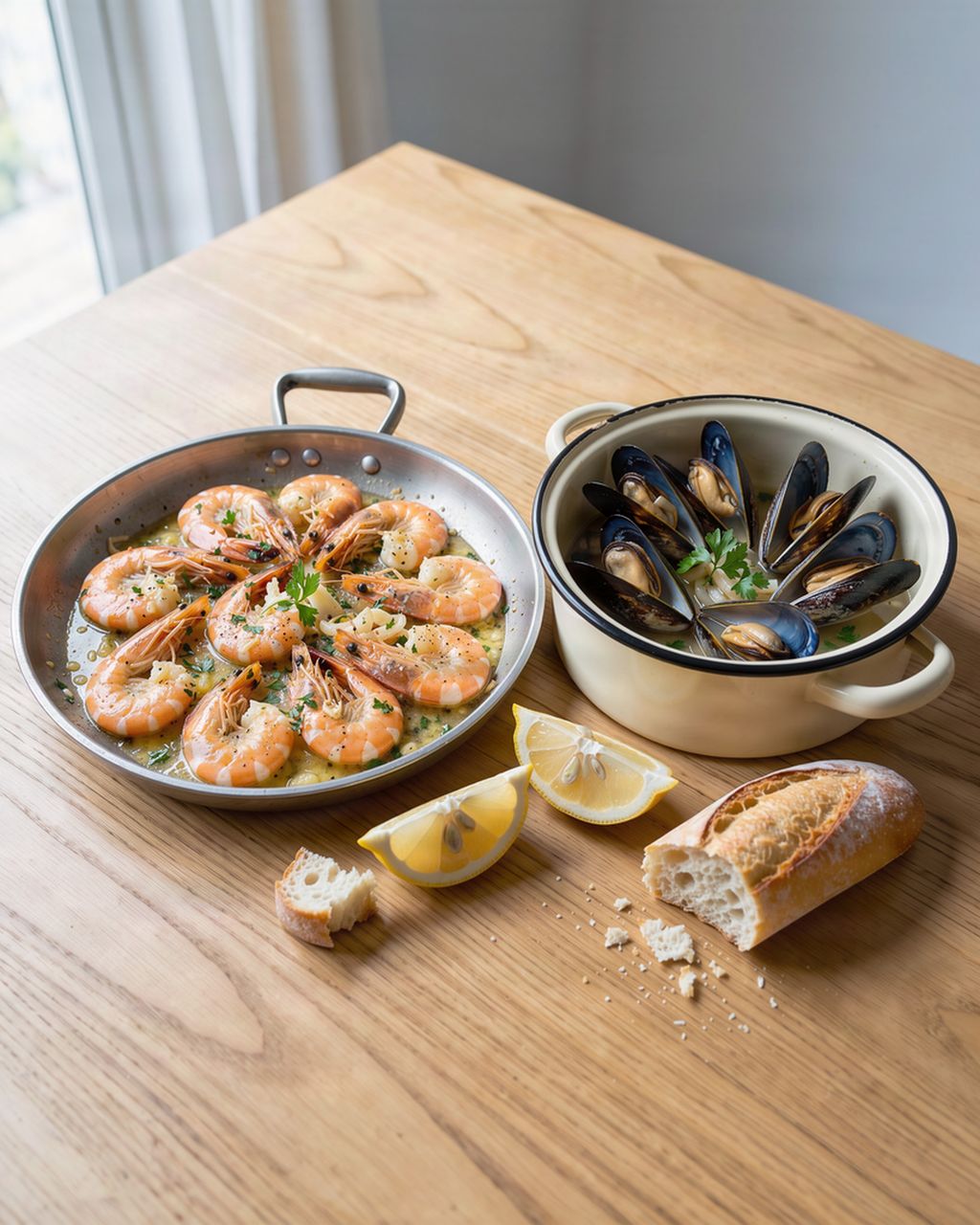
Asian salad with mango and shrimp is a fresh salad of iceberg lettuce, cucumber and mango with a lime dressing and seared shrimp, ready in 23 minutes. Pat the shrimp dry before cooking so they sear rather than steam, and pick a mango that's ripe but still firm.
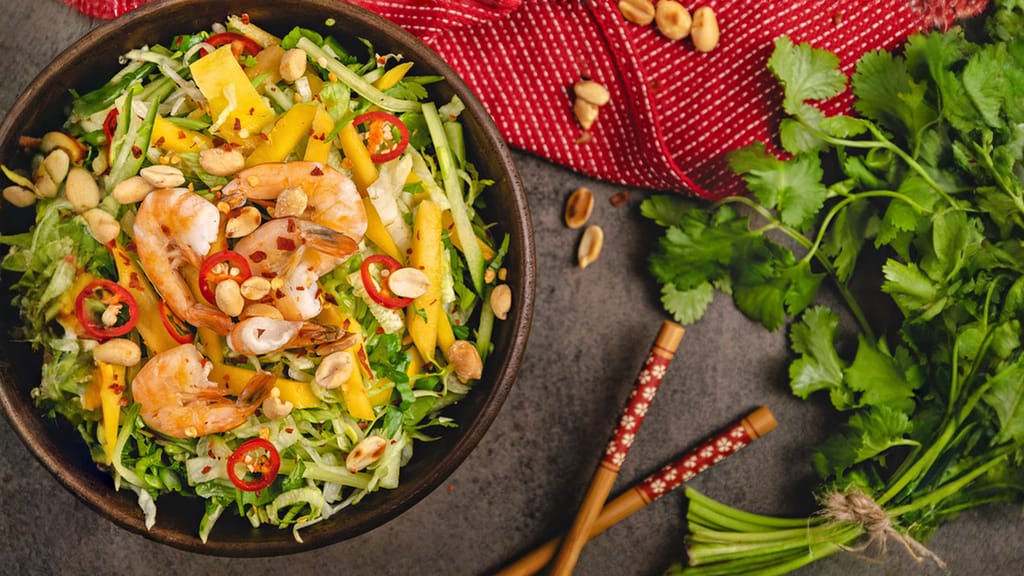
Asian mango and shrimp salad
Asian salad with mango, shrimp and lime dressing
Sticky rice with mango and salted cashews is a vegan Thai dessert with coconut sauce and glazed cashews. The whole secret is in the rice: soak it for at least 6 hours and steam it rather than boiling it in water.
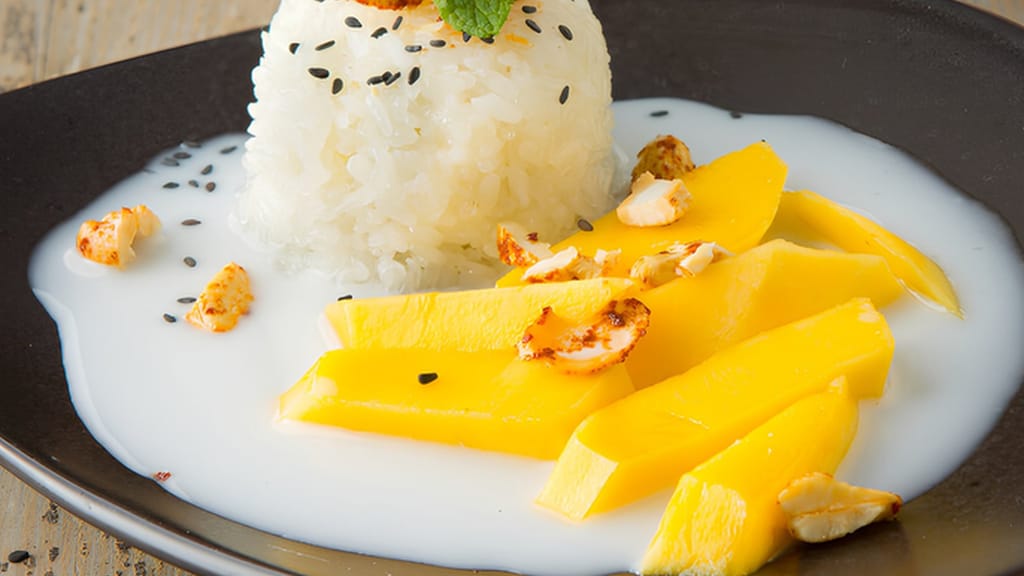
Mango sticky rice with salty cashews
Sticky rice with mango and salted cashews
Asian food tastes "right" when four flavors are in balance: salty, sweet, sour and hot. When something's missing, it's almost always one of them.
Salty: soy sauce, fish sauce, oyster sauce. Fish sauce smells sharp in the bottle, but in a dish it melts into a deep, savory saltiness.
Sweet: brown cane sugar, coconut sugar, honey, sweet chili sauce. Sweetness shouldn't turn the dish into dessert, just round off the saltiness.
Sour: lime, rice vinegar. Add it at the end, since cooking dulls its freshness.
Hot: fresh chili, sriracha, chili sauce. Remove the seeds from the chili when you want to tame the heat.
Keep tasting. Mongolian beef is built on sweet and salty, satay adds coconut and peanuts, and the shrimp salad relies on sour lime. When a dish is flat, squeeze in some lime. When it's too salty, add a little sugar or rice. When it's too sweet, reach for soy or fish sauce.
Soy sauce isn't just one thing. Light soy sauce is thinner and saltier, good for seasoning a skillet dish. Japanese shoyu soy sauce is balanced, full and slightly sweet – which is why Mongolian beef uses a full 100 ml of it as the base of the sauce. Tamari is thicker and more pronounced; in the sticky rice with mango, a few milliliters are enough to glaze the cashews. Regular soy sauce is made from soybeans and wheat, so if you're cooking for someone who can't have gluten, read the label. Tamari is often wheat-free, but check its label too.
For Asian dishes, either a wok or a large skillet will do; a wok is better because it has a small, extremely hot base and high sides you can push finished pieces up. If you don't have a wok, use the largest skillet you own – the Asian skillet recipe is written with that in mind.
What will come in handy:
a large skillet or wok – the bigger the surface, the less the meat steams
a sharp knife – Asian dishes rely on thin strips and slices
wooden skewers for satay, soaked for 10 minutes before grilling
a colander and parchment paper for steaming sticky rice
a large pot for pho, big enough for 3 liters of water and the bones
Slice thin pieces more easily the way you would for pork belly: put the meat in the freezer for a few hours to firm up. Then you can slice it thinly even without much kitchen practice. It works the same way with the tenderloin for pho bo tái.
The best Asian rice dishes are the ones with a sauce – Mongolian beef, chicken in spicy batter, beef braised in coconut milk – plus fried rice made from yesterday's rice. At home you'll want three types: jasmine for sauces and meat, sticky rice for desserts, and any long-grain rice, cooked a day ahead, for fried rice.
Jasmine rice is a Thai long-grain rice with a delicate floral aroma and slightly sticky grains. Rinse it before cooking until the water runs almost clear; that washes off the surface starch so the grains don't clump into mush. Cook it covered, and once it's done let it rest for a few minutes before fluffing it with a fork.
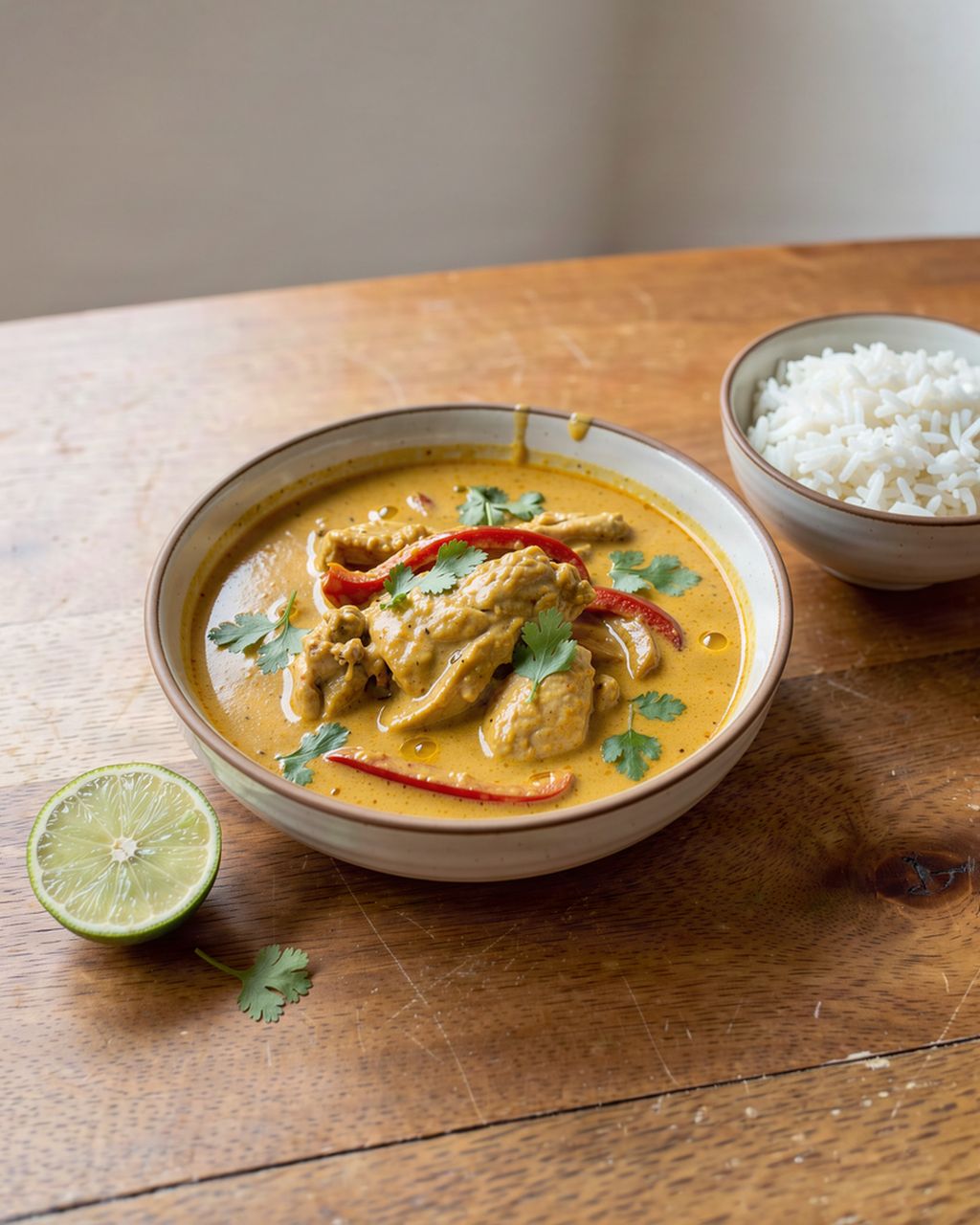
Jasmine rice goes with everything that has a sauce: Mongolian beef, chicken in spicy batter or beef pieces braised in coconut milk. That's beef shin slowly braised with ginger, garlic and leek, mellowed at the end with coconut milk; it's done when the meat pulls apart easily with a fork.
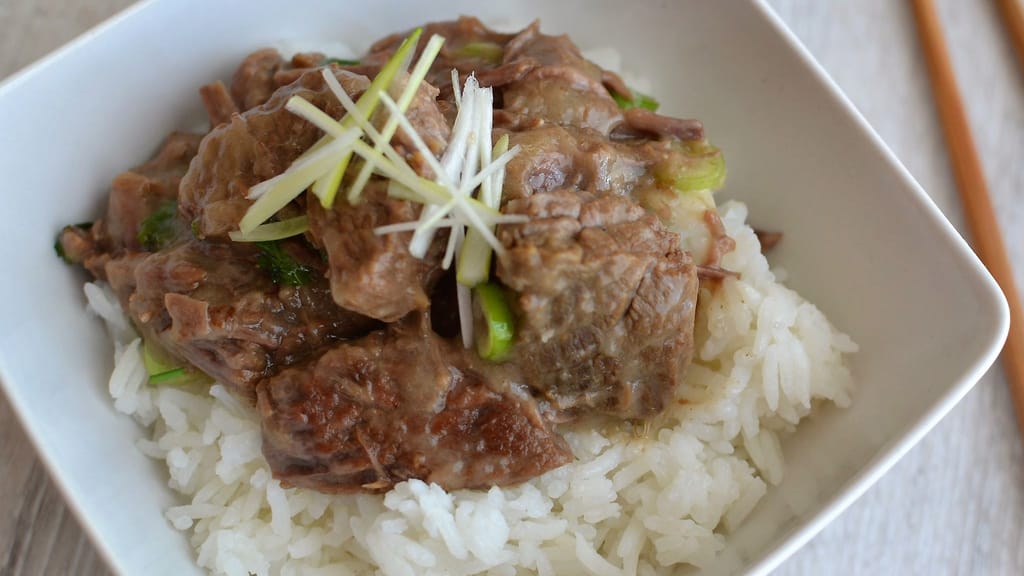
Beef chunks braised in coconut milk
Beef pieces braised in coconut milk with jasmine rice
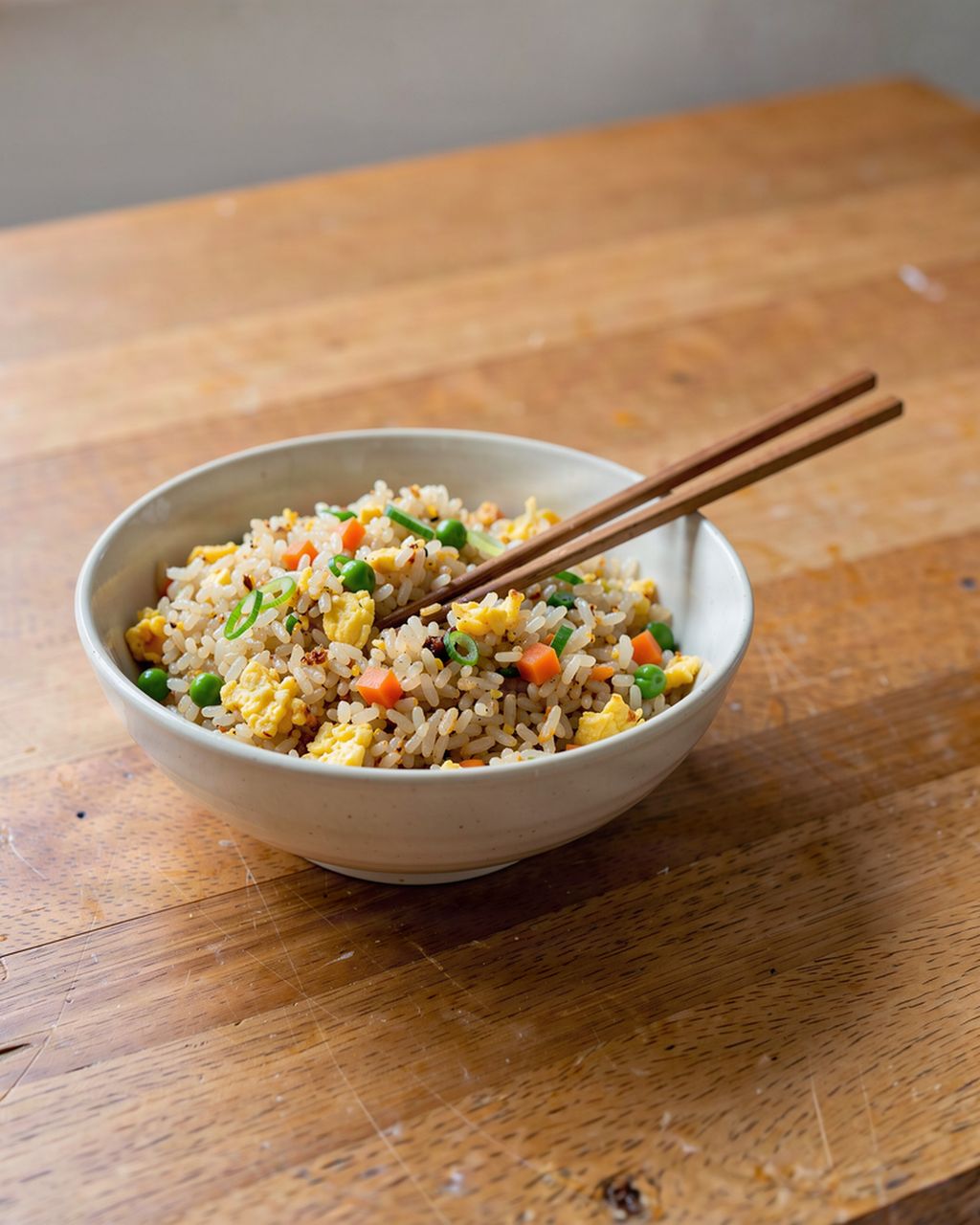
Fried rice is the best way to use up cooked rice. Spicy fried rice with meat and vegetables combines ground meat, leek, carrot, celery and basmati rice with soy and sweet chili sauce and egg, ready in 31 minutes.
Be careful with leftover rice, though. According to Food Standards Scotland, cooked rice needs to be cooled as quickly as possible, ideally within one hour, stored in the fridge, eaten within 24 hours and reheated only once, until piping hot all the way through. So don't leave it on the stove overnight thinking you'll fry it in the morning.
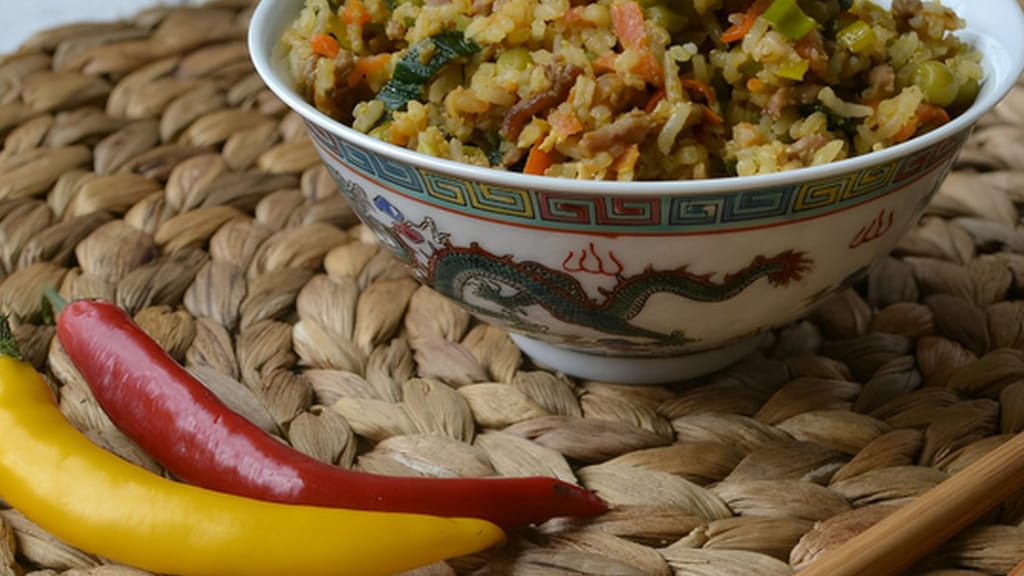
Spicy fried rice with meat and vegetables
Spicy fried rice with meat and vegetables
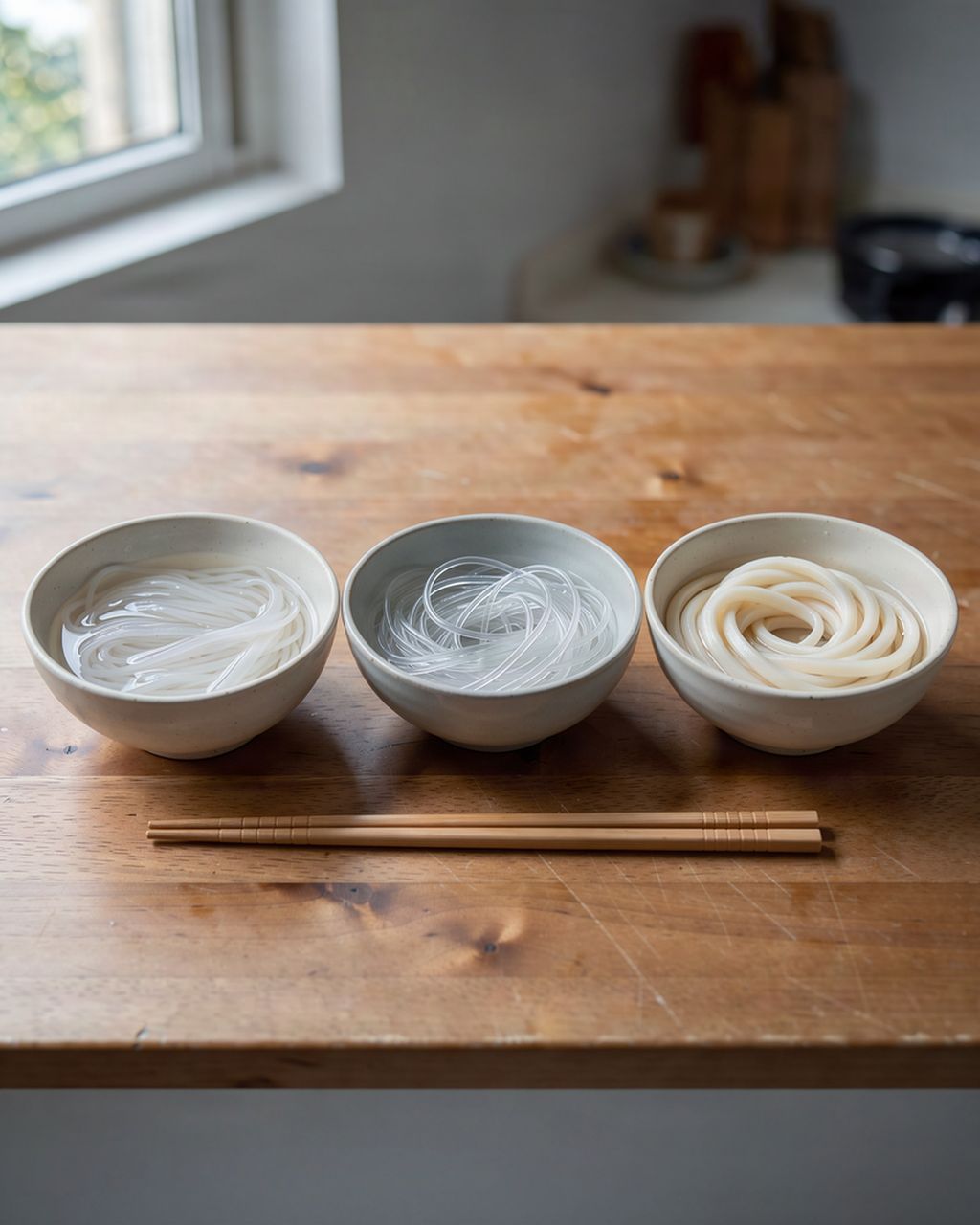
Asian noodles are divided by their main ingredient, and each suits different dishes. Rice noodles go in soups and salads, egg noodles in skillet dishes, wheat noodles in ramen.
Rice noodles are delicate, quick and usually gluten-free, but if you're cooking gluten-free, always check the label. Don't cook them long: just soak them in hot water or boil briefly according to the package, then drain and rinse with cold water if you're not serving them right away. Overcooked, they fall apart in soup.
Egg noodles stand up to hard stir-frying and soak up sauce, so they belong in skillet dishes like the Asian skillet with meat and quail eggs.
Wheat noodles (ramen, udon) are springy and dense, good in hearty broths.
Always add noodles to the skillet drained and only at the end, once the meat is cooked and the sauce is in the pan. Wet noodles drop the temperature and start to steam instead of frying.
Pad thai is a Thai dish of stir-fried rice noodles with tamarind, egg, fish sauce and peanuts. We don't have a recipe on Yumsto yet, but we're working on it.
Ramen is a Japanese soup of wheat noodles in a rich broth cooked for hours. We're still preparing that one on Yumsto too.
The best-known Asian dishes in the world are pho, pad thai, sushi, ramen, fried rice, satay and fried chicken in spicy sauce. You can make most of them at home without special equipment.
Pho (Vietnam) – broth with rice noodles and herbs
Pad thai (Thailand) – stir-fried rice noodles with tamarind
Sushi (Japan) – vinegar-seasoned rice with fish or vegetables, rolled (maki) or shaped by hand (nigiri)
Ramen (Japan) – wheat noodles in a hearty broth
Fried rice (China and all of Southeast Asia) – day-old rice with egg and vegetables
Satay (Indonesia, Malaysia, Thailand) – grilled skewers with peanut sauce
Fried chicken in spicy sauce – crispy pieces in a glossy glaze, here as Asian chicken in spicy batter with hot sauce
Sushi is Japanese short-grain rice seasoned with rice vinegar and served with fish or vegetables – either rolled in a sheet of nori (maki) or as hand-shaped pieces (nigiri). We don't have a recipe on Yumsto yet, but we're working on it.
At home, though, skillet dishes and dishes with a sauce settle in fastest: battered chicken, Mongolian beef and a noodle skillet. They're quick, filling and everyone in the family likes them.
You can recognize traditional Asian dishes by the fact that time does the work for you: a long-simmered broth, a night in a marinade, rice soaked for half a day. Three from our selection belong here: pho bo, satay and sticky rice with mango.
Pho bo is a Vietnamese classic where the broth simmers for hours. It's traditionally also served as phở bò tái – with raw slices of tenderloin that you lay over the noodles in the bowl and cover with boiling broth. The Yumsto recipe explicitly says the broth must truly be boiling at that moment, because lukewarm broth won't cook the meat. A study from Canada's BCIT (2016) that measured takeaway pho from 30 Vietnamese restaurants in Vancouver and Burnaby found that the broth mostly failed to reach 70°C (158°F) after 20 minutes (median about 62°C / 144°F) – and when raw beef isn't properly cooked through, pathogens such as E. coli can survive in it. If you're not sure, choose the version with the meat cooked through in the broth.
Satay most likely comes from Java in Indonesia and is a street food: meat on a skewer, grilled over hot coals, with peanut sauce. The tradition rests on a marinade of lemongrass and coconut and on thin pieces of meat that grill quickly without drying out.
Sticky rice with mango is a Thai dessert from mango season. Sticky rice isn't boiled in water but steamed, after a long soak – and that's the whole secret of its chewy texture.
The best Asian dish is the one that fits your day. Here's a quick guide:
For a weeknight dinner in under 40 minutes: Mongolian beef, chicken in spicy batter, fried rice
For a weekend with no rush: pho bo
For a barbecue: chicken satay, Asian-style grilled pork belly
For a light lunch: Asian salad with mango and shrimp
For the whole family from one skillet: Asian skillet with meat and quail eggs
For a sweet finish: sticky rice with mango
For grilled dishes, plan ahead. Both satay and pork belly need a night in the fridge, so schedule them the day before. For that effort, the grill then does most of the flavor work for you.
Asian dishes are great for sharing: instead of one main course, put three smaller dishes and a bowl of rice on the table. Choose one dish you can make ahead, one quick skillet dish and one cold one.
A tried-and-tested combination for four to six people:
the day before: marinate the chicken satay
an hour ahead: slice the vegetables and mango for the shrimp salad and shake the dressing together in a jar
half an hour ahead: cook the jasmine rice
right before eating: grill the satay, make the peanut sauce in the meantime and finish by frying the Mongolian beef
That way you aren't standing at the stove all evening, and the table has something grilled, something from the skillet and something fresh – three different textures and four flavors. Anyone who doesn't like spicy food can add chili on their own plate; put it on the table in a separate bowl along with sriracha and lime.
For dessert, sticky rice with mango is all you need. Soak the rice in the morning, steam it in the afternoon, and you can prepare the coconut sauce and glazed cashews ahead.
Easy Asian dishes rest on one technique and one sauce. If you can fry an aromatic base and season it with soy sauce, you can handle half of Asian cooking.
A universal method that works for both the skillet dinner and fried rice:
Heat a wok or large skillet with a little oil.
Stir-fry the garlic, ginger and the white part of the scallions.
Add the meat, let it sear and don't stir it right away.
Add the vegetables that need the longest, then the softer ones.
Season with soy sauce, chili and something sweet.
Stir in the rice or noodles, and finish with the green scallions and herbs.
The easiest of all is the Asian skillet with meat: one pan, ground meat you don't have to slice, and noodles cooked according to the package. The quail eggs are a bonus – leave them out and you still have a complete dinner.
The most common mistake is an overcrowded pan. If you tip in a kilo of meat at once, the temperature drops, the juices run out of the meat and it starts to boil. Fry in batches, as the battered chicken recipe advises: smaller batches, hot fat, a golden coating.
Most failed Asian dinners come down to the same five things:
A cold pan. Meat and vegetables need to be fried over high heat. If the pan isn't sizzling, wait.
Wet meat. Both the satay and the battered chicken recipes agree: don't rinse the meat, just pat it dry with a paper towel. A wet surface won't sear.
An overcrowded pan. Fry in batches so the fat doesn't cool down.
Overcooked noodles. Cook them for a shorter time than the package says if you'll be reheating them in the pan afterwards.
Herbs too early. Cilantro, perilla and green scallions go on the dish at the end, or they wilt and lose their aroma.
With raw meat, take hygiene seriously too, as the recipes describe: for the battered chicken, throw away the leftover flour and egg after handling raw meat; for satay, take the bowl of marinated chicken out of the fridge only when the grill is heating up, and grill the satay until the chicken reaches 74°C (165°F) inside; grill pork belly until it reaches at least 63°C (145°F) inside and let it rest for 3 minutes.
You can make quick Asian dishes in 20 to 50 minutes. The fastest of our recipes:
Asian salad with mango and shrimp – 23 minutes
Spicy fried rice with meat and vegetables – 31 minutes
Mongolian beef – 35 minutes
Asian chicken in spicy batter – 35 minutes
Asian skillet with meat and quail eggs – 49 minutes
With Asian dishes, it's not the recipe that makes them fast but the prep. Slice everything into bowls before you turn on the burner, mix the sauces in a cup ahead of time and cook the rice first. The actual frying then takes just a few minutes.
The second trick is cornstarch. Mongolian beef and battered chicken use it the same way: it coats the meat, forms a crispy layer during frying and lightly thickens the sauce. That gives you a glossy glaze without long reducing.
If you want to go further, take a look at Indian dishes at home, what to cook with coconut milk or shrimp and seafood in the skillet. And if you have beef at home and can't decide between a wok and a goulash, check out what to cook with beef.
Yes. In skillet dinners and fried rice you can swap the meat for tofu or extra vegetables, and the fish sauce for soy sauce. That change makes a different dish from the one the recipe describes, though. Of the recipes in this article, the sticky rice with mango is already free of animal ingredients, since it's vegan.
The closest substitute is soy sauce, perhaps with an extra pinch of salt, because fish sauce mainly adds saltiness and depth. The flavor will be a little less pronounced, but the dish will still be balanced. Add it a little at a time and taste as you go.
Asian dishes aren't automatically gluten-free: rice and rice noodles usually contain no gluten, but regular soy sauce, egg noodles and wheat noodles do. The pho bo from Yumsto contains no gluten ingredients as long as you use fish sauce (and hoisin, if you add it) made without wheat – check the label. If you're cooking for someone on a gluten-free diet, read the labels on both sauces and noodles.
Remove the seeds from fresh chili or leave it out altogether, and put the sriracha or chili sauce on the table separately. Coconut milk, lime and rice also mellow the heat. Everyone can then spice up their own plate to taste.
Kids usually like Mongolian beef, battered chicken or a noodle skillet with meat, as long as you leave out the chili or add it only for the adults. Sticky rice with mango makes a sweet finish. Keep chili sauces and sriracha in a separate bowl on the table.
One recipe worth heating the oven for, one tip, and one deal from the shop. Nothing else.