Why You Sear Meat Before Braising (and Why It Doesn't "Seal In" the Juices)
Cuts of Pork: What to Cook from Shoulder, Leg, Neck, Tenderloin and Loin
Updated Nov 17, 2026
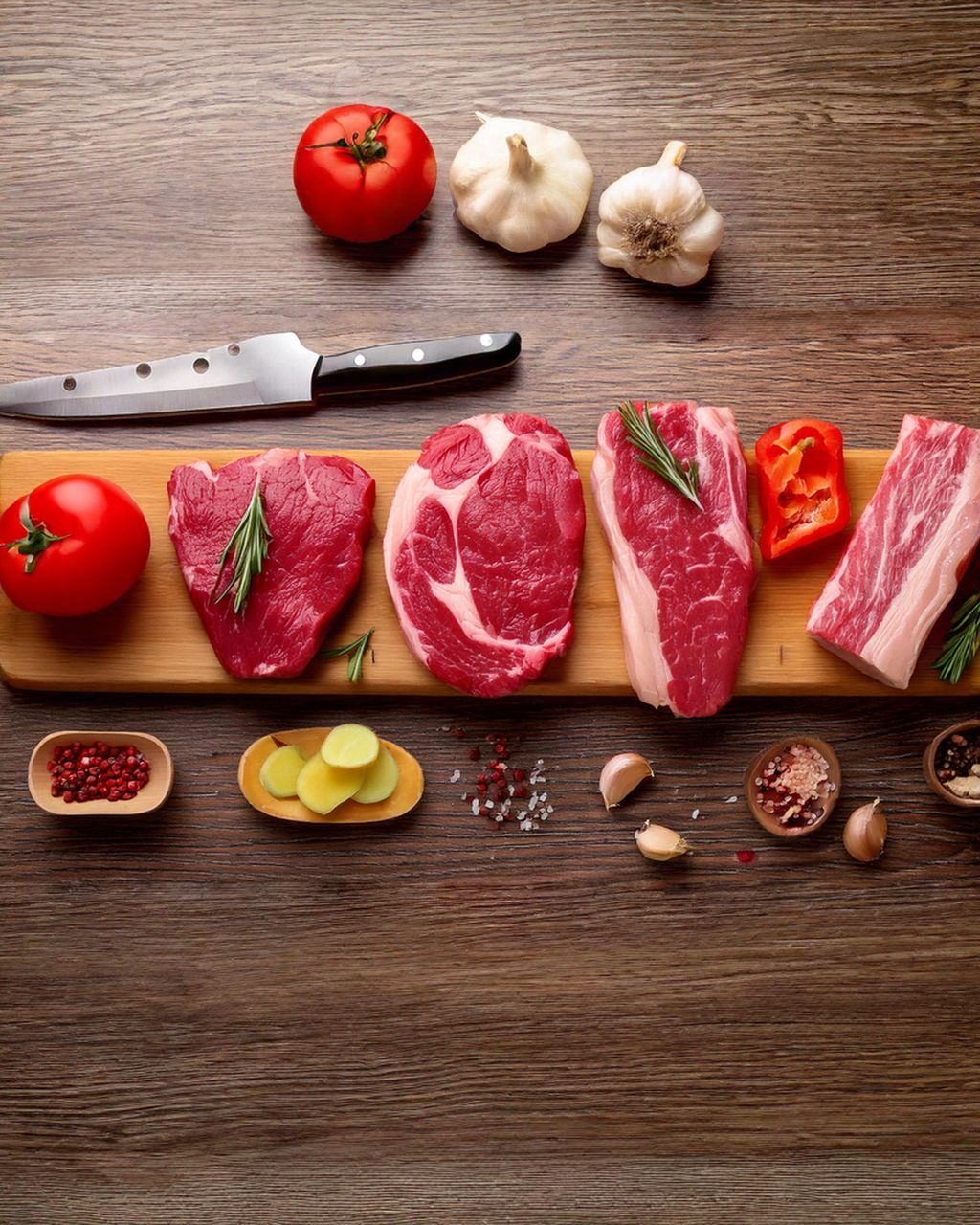
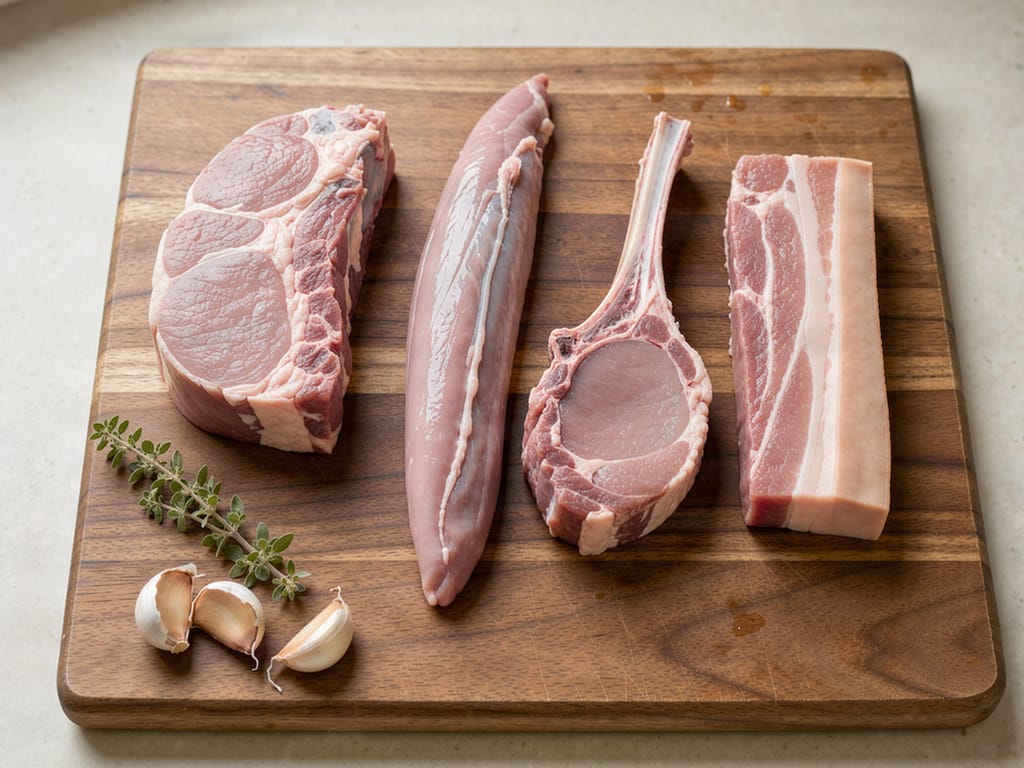
Pork cuts are divided by how much connective tissue and fat they contain, and everything else follows from that. Shoulder, tails and pork belly need long braising or slow roasting. Leg, the lean "walnut" cut, tenderloin and chops want short, precise cooking. Pork neck can handle both. Below you'll find a guide to which cut suits which dish, with classic Czech recipes for each.
The rule is: the harder a muscle worked during the pig's life, the longer you need to cook it. Meat from the shoulder and tail is full of collagen, which melts into gelatin during long braising and makes the meat tender. Lean muscle from the back, on the other hand, just dries out when cooked slowly.
Shoulder (plec): braising and slow roasting. Goulash, vepřo knedlo zelo (Czech roast pork with dumplings and sauerkraut), segedín (pork and sauerkraut goulash), Moravian sparrow (moravský vrabec, Czech braised pork), pulled pork.
Leg (kýta): braising in sauce, whole roasts, strips. Pork with mushrooms, roast with pan juices.
"Walnut" cut (ořech, the lean part of the leg): short frying and pan-searing. Breaded and plain schnitzels, slices, strips.
Neck (krkovice): grill, pan, whole roast. Grilled pork neck, pan-fried slices, roast pork neck.
Tenderloin (panenka): quick searing and a short finish. Medallions, whole tenderloin, tenderloin wrapped in bacon.
Chop (kotleta): pan and grill. Pan-fried chop, plain chop, grilled chop.
Pork belly (bůček): slow roasting for crispy crackling. Roast pork belly, pork belly roulade, vepřo knedlo zelo.
Pork tails (ocásky): long roasting, or parboiling and then finishing in the oven. Roasted tails with beer, honey or a BBQ glaze.
For the cuts that roast for a long time (shoulder, belly, tails), you'll find approximate temperatures and times in their sections. Exact timing depends on the size of the piece and on your oven, so treat it as a guideline and check tenderness with a fork or a thermometer.
We send seasonal cooking and baking plans and recipes made from everyday ingredients. Unsubscribe in one click.
Pork shoulder is the best cut for braising and slow roasting. It's marbled with fat and connective tissue, so after long cooking it stays juicy and falls apart under a fork. "Plecko" is the same meat under a different name. At the butcher's it's sold both bone-in and boneless.
Goulash and segedín: cut the shoulder into 3–4 cm (1¼–1½ inch) cubes. Smaller pieces fall apart before the sauce thickens.
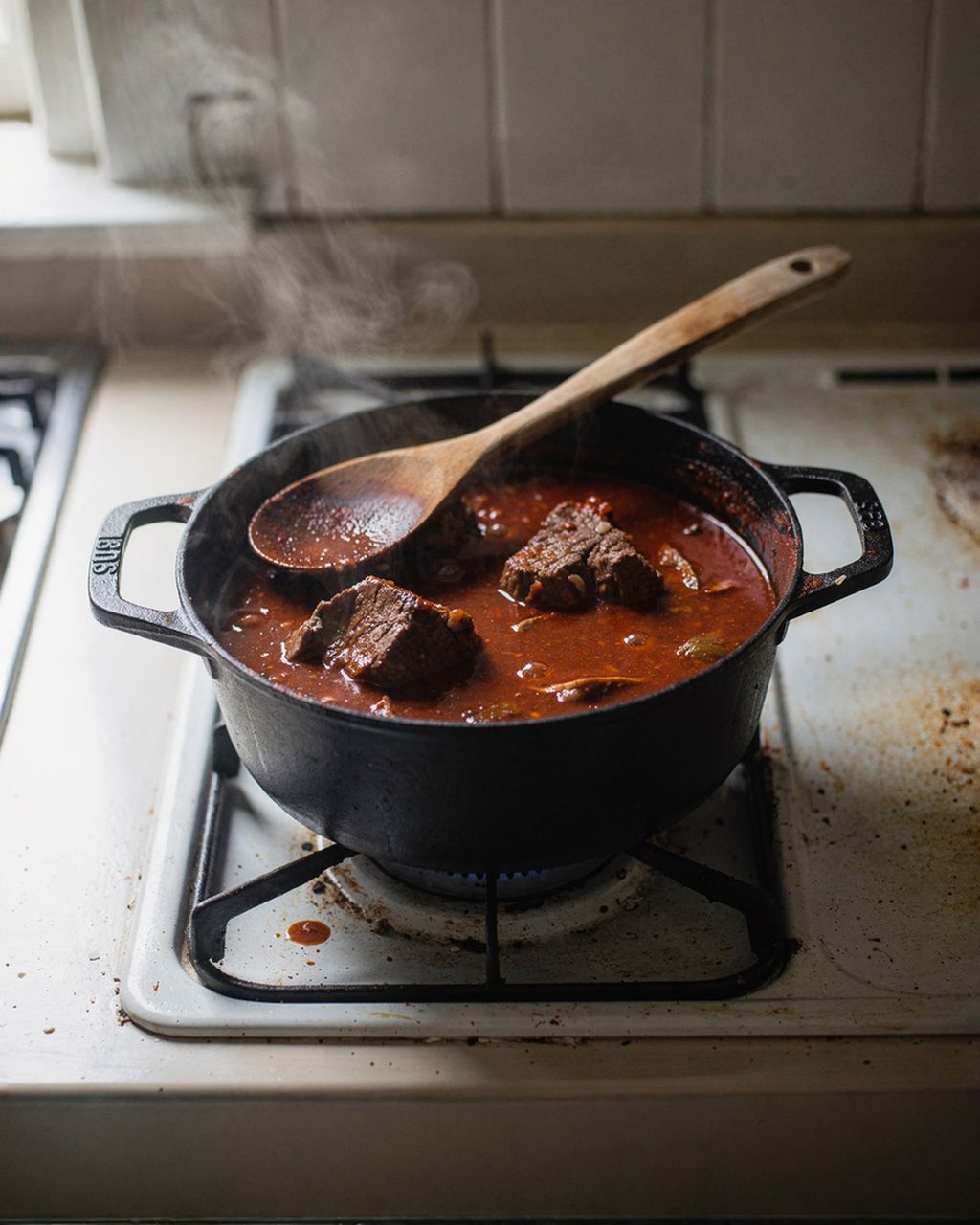
Vepřo knedlo zelo: a whole piece of shoulder with caraway, garlic and plenty of onion. Roast it slowly, covered, so juices form underneath.
Pulled pork: roast a whole shoulder at 120–150°C (250–300°F) for about 4–6 hours, until it can be shredded with two forks. The lower the temperature, the longer it takes, but the juicier the meat. Try very slow-roasted young pork shoulder with apples and onion or slow-roasted pork with red cabbage.
Moravian sparrow (moravský vrabec): cubes of shoulder tossed with garlic, caraway and lard, baked until golden.
Don't rush shoulder. If it's tough after an hour, you're not cooking it wrong, it just isn't done yet. We explain why, and what to do about it, in our article why goulash turns out tough and the meat won't soften.
Pork leg is lean meat from the hind leg, suited to whole roasts, braising in sauce and cutting into strips. The butcher divides it into smaller parts: top and bottom round, the "walnut" and the roll. If you want schnitzel, ask directly for the "walnut" or the round. Any part will work for braising.
Leg has little fat, so it dries out easily. That's why it suits a sauce that protects it. The classic is pork leg with mushrooms. If you want to roast it whole, choose a piece with a layer of fat and don't cook it longer than necessary. For a quick pan or wok dish, slice it into thin strips across the grain. If a roast does end up dry, our article how to rescue overcooked meat from the oven will help.
The pork "walnut" is a lean, tender part of the leg that makes excellent schnitzel. It has a fine, even grain, no sinews, and slices easily into pieces of equal thickness.
Fried schnitzel: slices about 1 cm (⅜ inch) thick, pounded lightly, breaded and fried briefly.
Plain schnitzel: sear the slice in butter and add broth. Watch the time: this cut turns tough after a few minutes of needless simmering.
Slices and strips: for the pan with onion, for curry or into a vegetable stir-fry.
The "walnut" isn't suited to long braising. It has nothing to turn into gelatin, so it simply dries out and ends up dry and stringy.
Pork neck is the most versatile pork cut: marbled with fat, so it stands up to grilling and roasting without drying out. It comes from the neck and upper part of the back. The fat acts as insurance when you leave it on the fire a moment too long.
On the grill: slices 1.5–2 cm (½–¾ inch) thick, marinated beforehand. For inspiration: grilled orange pork neck with chili.
In the pan: slices seared hard, then a short time over gentle heat. For example pan-fried pork neck in mustard with root vegetables.
Whole: roast pork neck is a juicier alternative to roast shoulder and is done sooner.
You can also use pork neck for goulash or vepřo knedlo zelo. It will be fattier, but tender.
Pork tenderloin is the most tender and most expensive pork cut, and it needs the shortest possible cooking. It's a long, narrow muscle beneath the spine that hardly does any work. It has only minimal fat and connective tissue, so nothing can save it if you overcook it.
Whole: seared hard on all sides, then finished briefly and rested.
Medallions: slices 2–3 cm (¾–1¼ inch) thick in the pan, a few minutes per side.
Wrapped in bacon: the bacon adds the fat that tenderloin lacks. Try pork tenderloin with prunes and back bacon or grilled pork tenderloin in mustard.
Cold in a salad: lentil salad with pork tenderloin.
Tenderloin doesn't have to be gray inside. According to the US food safety agency USDA/FSIS, it's enough for a whole piece of pork to reach 63°C (145°F) inside and then rest for 3 minutes. The center may stay slightly pink. You can't tell for sure without a thermometer, and tenderloin is exactly where a thermometer pays off most.
A pork chop is a slice of the pork loin (back) with the bone, and it tastes best briefly seared in a pan or on the grill. It's lean with a rim of fat, so it sits somewhere between neck and tenderloin.
Pan-fried chop: a thicker cut (at least 2 cm / ¾ inch) seared hard and finished briefly. A thin chop dries out before it browns.
Plain chop: seared, deglazed with broth or wine and seasoned with the pan juices.
On the grill: score the fat rim every 2–3 cm (about 1 inch) so the chop doesn't curl as it cooks.
Schnitzel from the loin: boneless loin roast is, alongside the "walnut", the second classic meat for schnitzel.
The bone slows down cooking of the meat around it, so measure the temperature only at the end, in the thickest spot but not right next to the bone.
Pork belly is the fattiest pork cut and tastes best roasted slowly, until the fat renders and the skin crackles. The layers of fat and meat need time: if belly is roasted briefly, it stays rubbery.
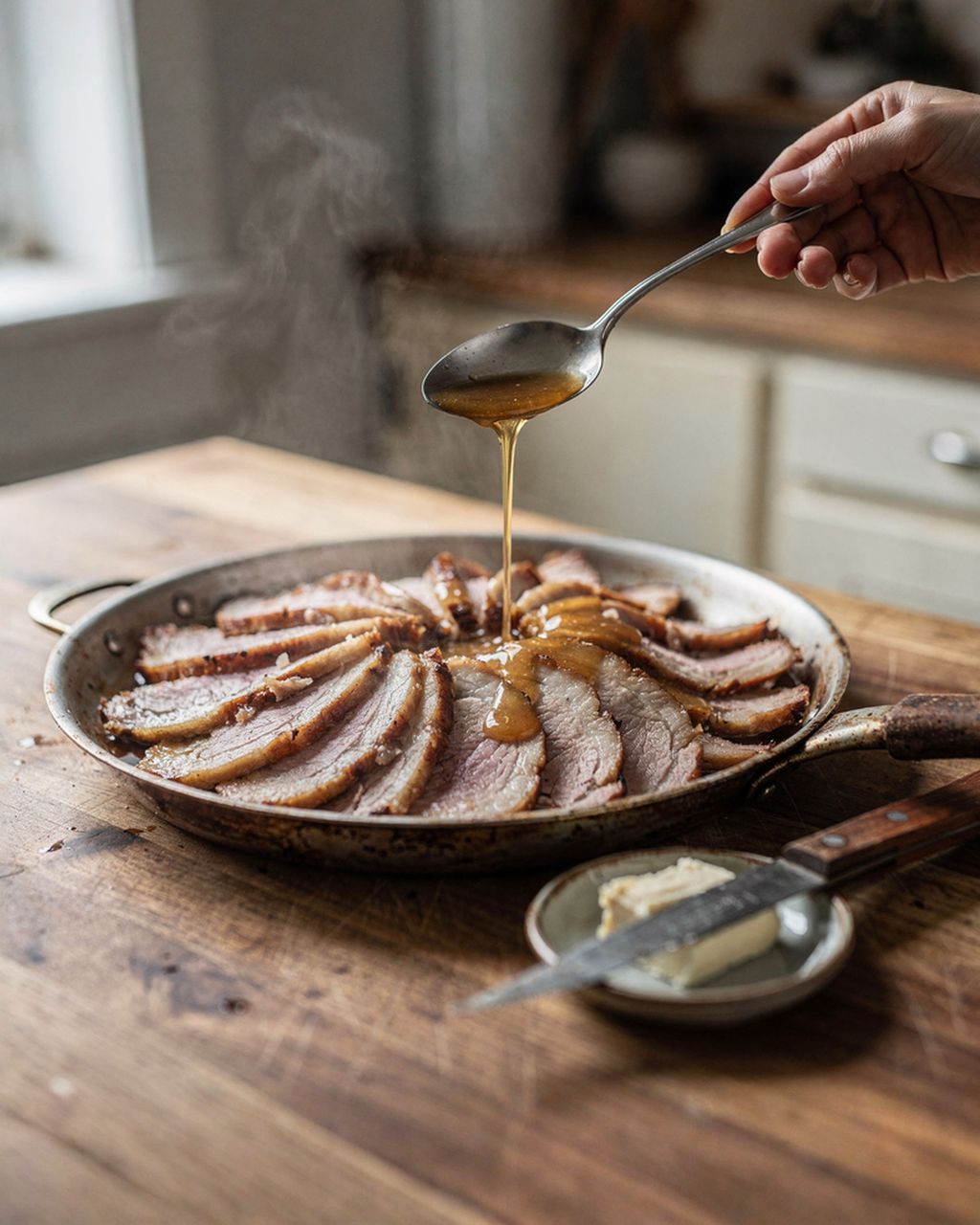
Roast pork belly with crackling: score the skin in a crosshatch and salt it. First roast slowly at 150–160°C (300–320°F) for about 2–3 hours (depending on the size of the piece), until the meat is tender. At the end raise the heat to 220–240°C (425–465°F) for 15–30 minutes and watch that the skin puffs up and crackles. Try crispy roast pork belly with homemade gnocchi and spinach.
On the grill: thin slices or a part-roasted piece. For example Asian-style grilled pork belly.
Pork belly roulade: a sheet of belly rubbed with seasoning, rolled up and slowly roasted. Careful: rolling brings the surface of the meat inside. A roulade without stuffing therefore needs 71°C (160°F) at the core, like ground meat, and a stuffed roulade 74°C (165°F) in the stuffing (temperatures below).
Vepřo knedlo zelo: a piece of belly alongside the shoulder adds fat and flavor to the juices.
Pork tails are an inexpensive cut full of collagen that needs long roasting or parboiling to turn tender. There's little meat on them, but plenty of skin and gelatin. Well-made tails are sticky and soft, and the meat slides off the small bones.
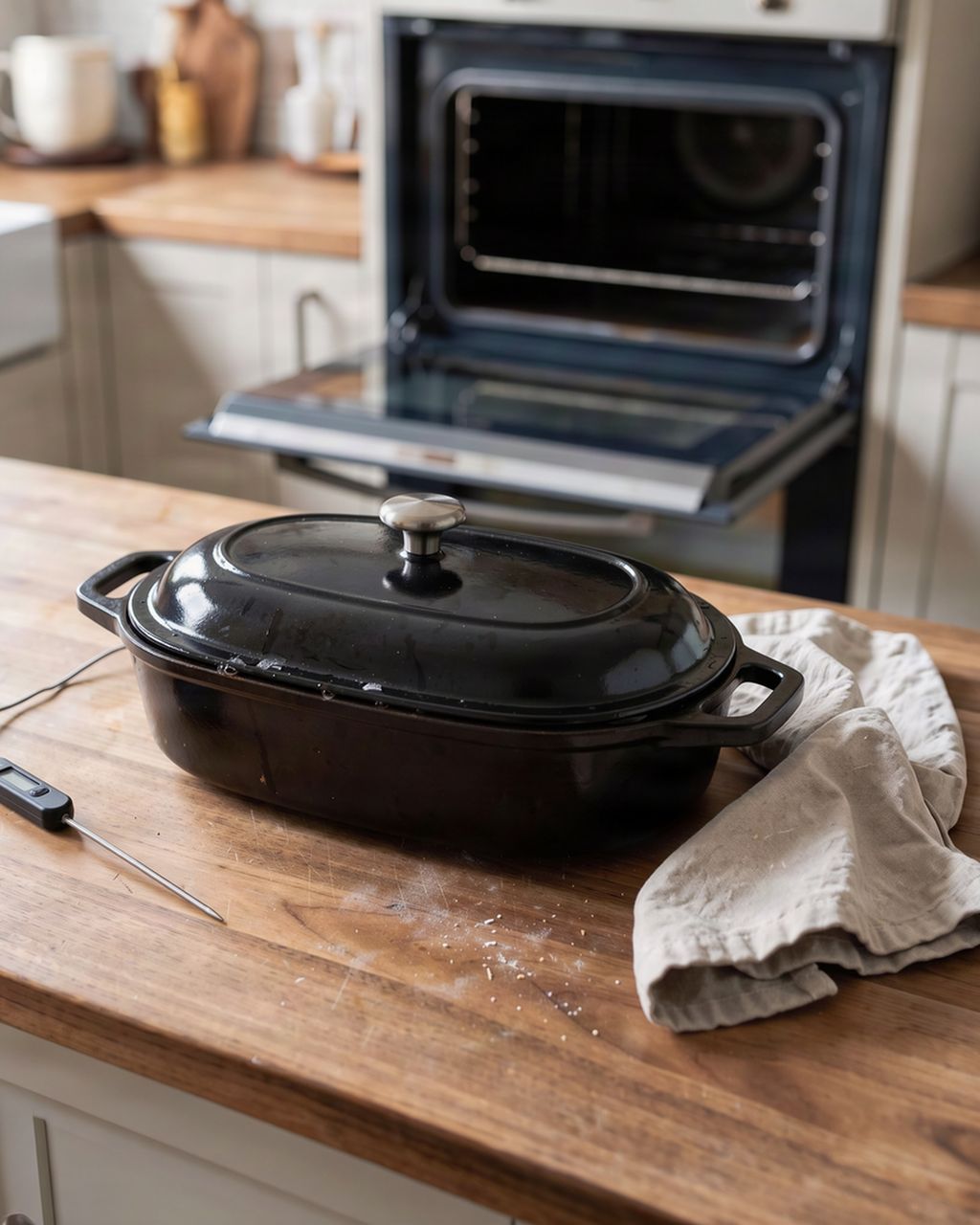
The tried-and-true method has two steps. First, tenderize the tails: either boil them for 1–1.5 hours in water with seasoning, or roast them covered at 150–160°C (300–320°F) for about 2–3 hours. Then finish them uncovered with a glaze of beer, honey, mustard or BBQ sauce, at 200–220°C (400–425°F) for about 15–25 minutes, until the glaze thickens and the tails start to shine. Add the glaze only at the end, or the sugar in it would burn. Ribs work on the same logic, for example roast pork ribs with hard cider and BBQ sauce.
Whole cuts of pork (slices, chops, tenderloin, roasts) are safe at 63°C (145°F) at the core with a 3-minute rest. Ground meat needs 71°C (160°F) and the stuffing of stuffed meat 74°C (165°F). These values are recommended by the US food safety agency USDA/FSIS.
Whole cut: 63°C (145°F) in the thickest spot, then a 3-minute rest (USDA/FSIS). During the rest the temperature keeps rising, and bacteria on the surface, where they live, have long since been destroyed.
Ground meat: 71°C (160°F) (USDA/FSIS). Grinding mixes the surface through the whole mass.
Roulade without stuffing: stick to 71°C (160°F) as with ground meat, because rolling brings the original surface into the center.
Stuffed meat: the stuffing must reach at least 74°C (165°F) at the core (USDA/FSIS).
With braised and slow-roasted cuts (shoulder, belly, tails) you needn't worry about whether they're cooked through. The meat is tender at a much higher temperature than safety requires.
Good pork has a healthy pink color, firm white fat and slices of even thickness. If you don't know what you'll cook, buy pork neck. If you do, tell the butcher the dish. "For goulash," "for schnitzel" or "for a whole roast" is a clearer request to a good butcher than the name of a cut, because names differ from region to region.
Color: healthy pink. Fat white and firm.
Slices of even thickness: otherwise one overcooks while another stays raw.
For slow cooking, buy a larger piece. Roast shoulder loses a lot of weight, and vepřo knedlo zelo made from a kilo of meat feeds fewer people than you'd expect.
How long pork keeps in the fridge and when to throw it out is covered in our article how long pork keeps in the fridge. For beef we have a similar guide: cuts of beef and which part to use for goulash, steak and svíčková (Czech beef in a root-vegetable cream sauce).
Bone-in pork shoulder takes a little longer to roast but tends to be juicier and more flavorful, while boneless shoulder is easier to slice and cooks more evenly. The bone slows down cooking of the meat around it and adds flavor to the juices during a long roast. Buy a larger piece when it's bone-in, because part of the weight is bone you won't eat. For goulash, segedín or cubed meat, boneless shoulder is more practical; for pulled pork and whole roasts, bone-in shoulder is a fine choice.
Pork neck is marbled with fat and handles quick cooking on the grill or in a pan, whereas shoulder has more connective tissue and needs long braising or slow roasting. Neck comes from the neck and upper part of the back, shoulder from the front leg. Both work for goulash and vepřo knedlo zelo (Czech roast pork with dumplings and sauerkraut): shoulder turns stickier and more tender after long cooking and is usually cheaper, while neck is fattier and ready sooner.
Pork neck is the safer choice for the pan, because its marbled fat forgives a minute or two extra, whereas a leaner chop dries out much more easily. A chop tastes meatier and looks good on the plate with the bone in, but it needs a thicker cut and precise timing. If you're cooking for the first time or for several people at once, go for neck. Save chops for when you can stand at the pan and check the temperature.
Make a thin pork chop into a schnitzel: coat it and fry it briefly. Or sear it quickly in a pan with onion and add a splash of broth. A thin cut dries out before it can brown properly, and the coating or a quick pan sauce protects it. For a plain seared chop, buy a cut at least 2 cm (¾ inch) thick next time.
You can make schnitzel from pork tenderloin, but goulash makes no sense. Medallions pounded thin for schnitzel are tender and fry quickly. With long braising, though, tenderloin doesn't have enough collagen to melt, so it dries out and turns tough. For goulash, buy shoulder: it has more flavor and is cheaper too.
One recipe worth heating the oven for, one tip, and one deal from the shop. Nothing else.