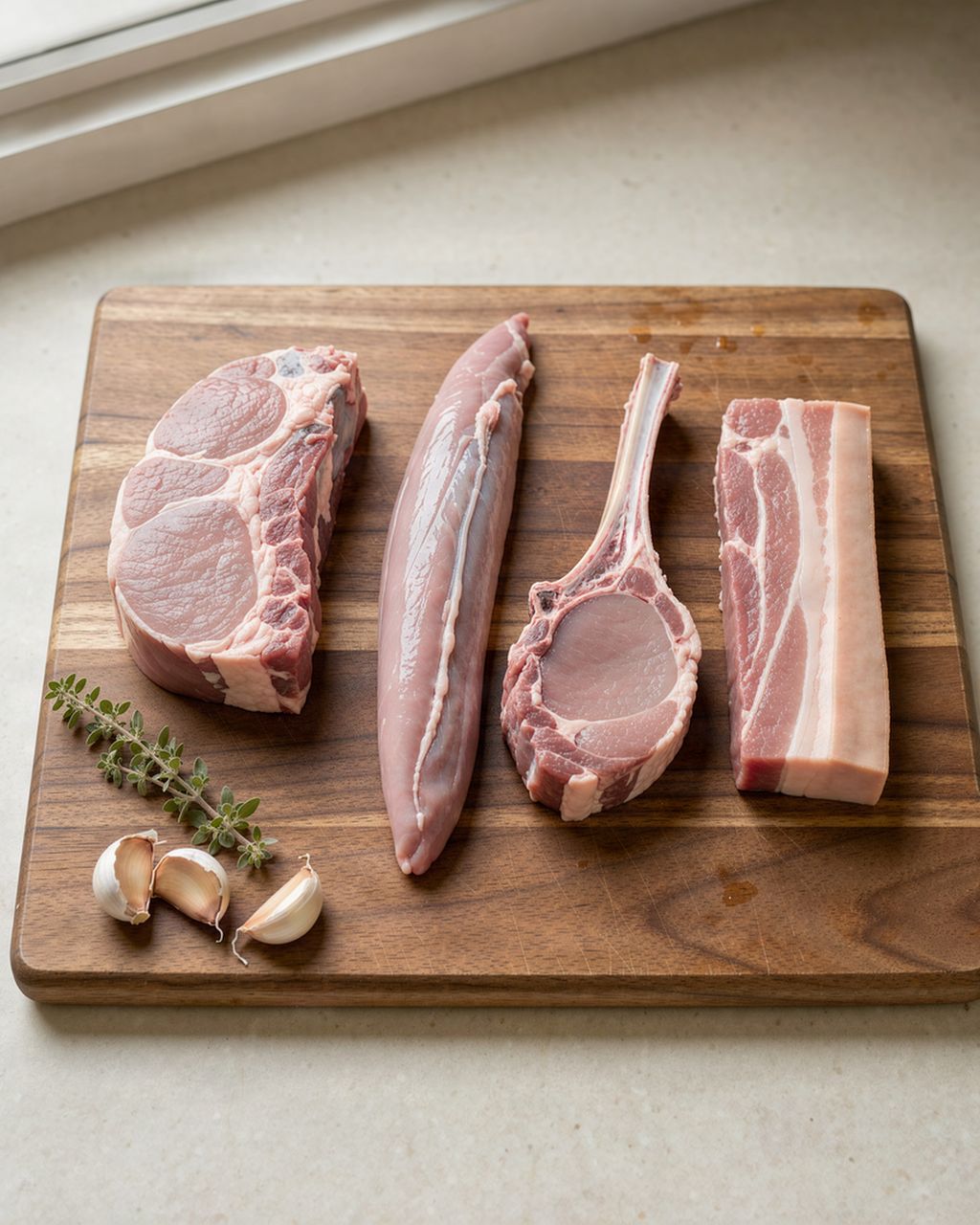
Cuts of Pork: What to Cook from Shoulder, Leg, Neck, Tenderloin and Loin
Roast Pork in the Oven: Temperatures for Pork Neck, Tenderloin, Leg and Shoulder
Updated Nov 17, 2026
Roast pork is done when the inside reaches the right temperature, not when a certain number of minutes has passed. For whole cuts of pork, the USDA/FSIS gives a minimum of 63 °C (145 °F) followed by a 3-minute rest. The UK's FSA gives 70 °C (158 °F) held for 2 minutes, and 70 °C is also the usual target in Czech kitchens. Oven temperature and minutes per kilo do differ by cut, though. Tenderloin handles high heat and is done in under half an hour, while pork neck (krkovice) and shoulder need a gentler oven and an hour and a half or more. Here's an overview by cut, and where each number comes from.
According to the USDA/FSIS charts, pork is roasted at 163–230 °C (325–450 °F) depending on the cut: tenderloin at 220–230 °C briefly, shoulder (and so also pork neck) at 177 °C, bone-in leg at 163 °C. In short, a thin lean cut goes into high heat for a short time, while a thick, well-marbled cut goes into a moderate oven for a long time. The times and oven temperatures come from the USDA/FSIS roasting charts for fresh pork, converted from pounds and °F to kilograms and °C. The USDA has no chart for pork belly or výpečky (Czech pan-roasted pork cubes), so for those I give only approximate values from common kitchen practice, and you tell doneness by the internal temperature.
Pork tenderloin (0.25–0.7 kg): 220–230 °C, 20–27 minutes in total, uncovered (USDA/FSIS).
Whole pork neck (krkovice): the USDA doesn't list it separately. It comes from the top part of the shoulder, which Americans sell as "Boston butt," so the same row applies: 177 °C, about 100 minutes per kilo for a 1.4–2.7 kg piece (USDA/FSIS).
Shoulder (top part, 1.4–2.7 kg): 177 °C, about 100 minutes per kilo (USDA/FSIS).
Bone-in leg, half (2.3–3.6 kg): 163 °C, 77–88 minutes per kilo (USDA/FSIS, "fresh ham").
Bone-in leg, whole (5.4–7.3 kg): 163 °C, 48–57 minutes per kilo (USDA/FSIS).
Smaller boneless piece of leg: the closest row in the chart is boneless pork loin roast 0.9–2.3 kg, 177 °C, about 44 minutes per kilo (USDA/FSIS). Take this as an estimate only and go by the thermometer.
Outside the USDA charts, as a rough guide from kitchen practice:
Pork belly: 150–160 °C until tender, then 220–240 °C to crisp the skin.
Výpečky: 170–180 °C, covered and then uncovered.
All times are approximate. You can only tell the meat is done by its internal temperature, measured with a thermometer in the thickest spot, away from the bone.
Seasonal baking plans, tested recipes and kitchen tricks that save you time. Unsubscribe in one click.
According to the USDA/FSIS, a whole cut of pork (roast, slices, chops) is safe at 63 °C (145 °F) inside, as long as you then let it rest for at least 3 minutes before slicing. In 2011 the USDA lowered its recommendation from 71 °C. By its figures, 63 °C with a rest destroys bacteria just as reliably as a higher temperature without one.
In Czech cooking, pork is roasted longer, to 70 °C inside. The UK's FSA gives the same number: meat is safely cooked at 70 °C held for 2 minutes. The Ministry of Agriculture's food safety portal bezpecnostpotravin.cz gives 71 °C for medium-done pork.
63 °C + 3 min rest (USDA/FSIS): lean tenderloin and leg, juicy, and it may be slightly pink in the middle.
70 °C for 2 minutes (UK FSA), as is commonly roasted in Czech kitchens: cooked through the classic way. Perfectly fine for pork neck, shoulder and belly, where the fat and connective tissue keep the meat juicy.
Ground pork follows different numbers and doesn't belong in this overview.
You can't judge doneness by color. The USDA points out that pork cooked to a safe temperature can still be pink inside. Only a thermometer will tell you reliably.
Pork neck (krkovice) stays juicy when you take it out of the oven as soon as the inside reaches the target temperature and let it rest. It usually dries out because it gets "just a little longer to be safe." Marbled pork neck can take a lot, but if it roasts for a long time at high heat, even it loses all its juices.
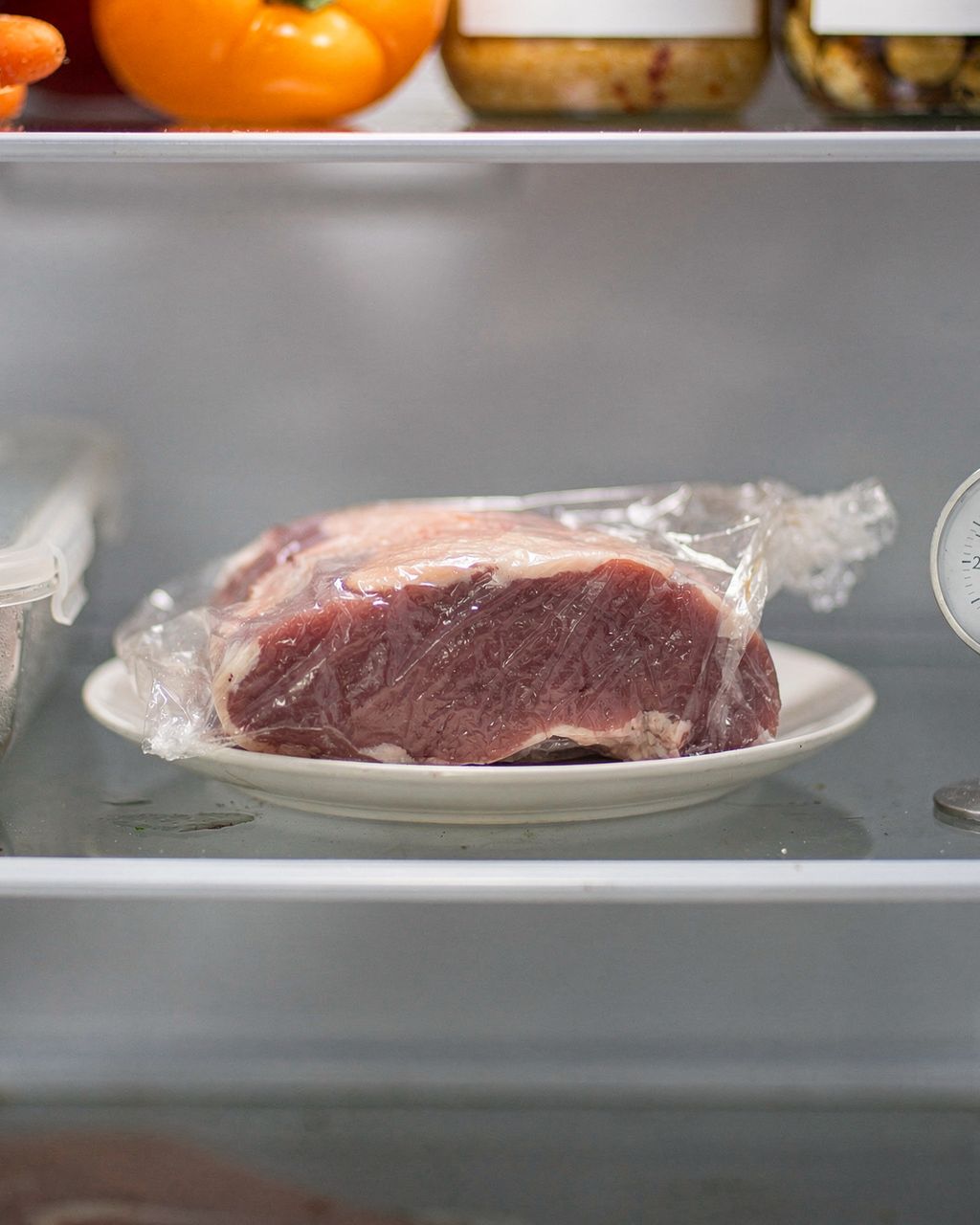
Take it out of the fridge earlier. A piece that isn't ice-cold cooks more evenly. The outside doesn't dry out while the center is still warming up.
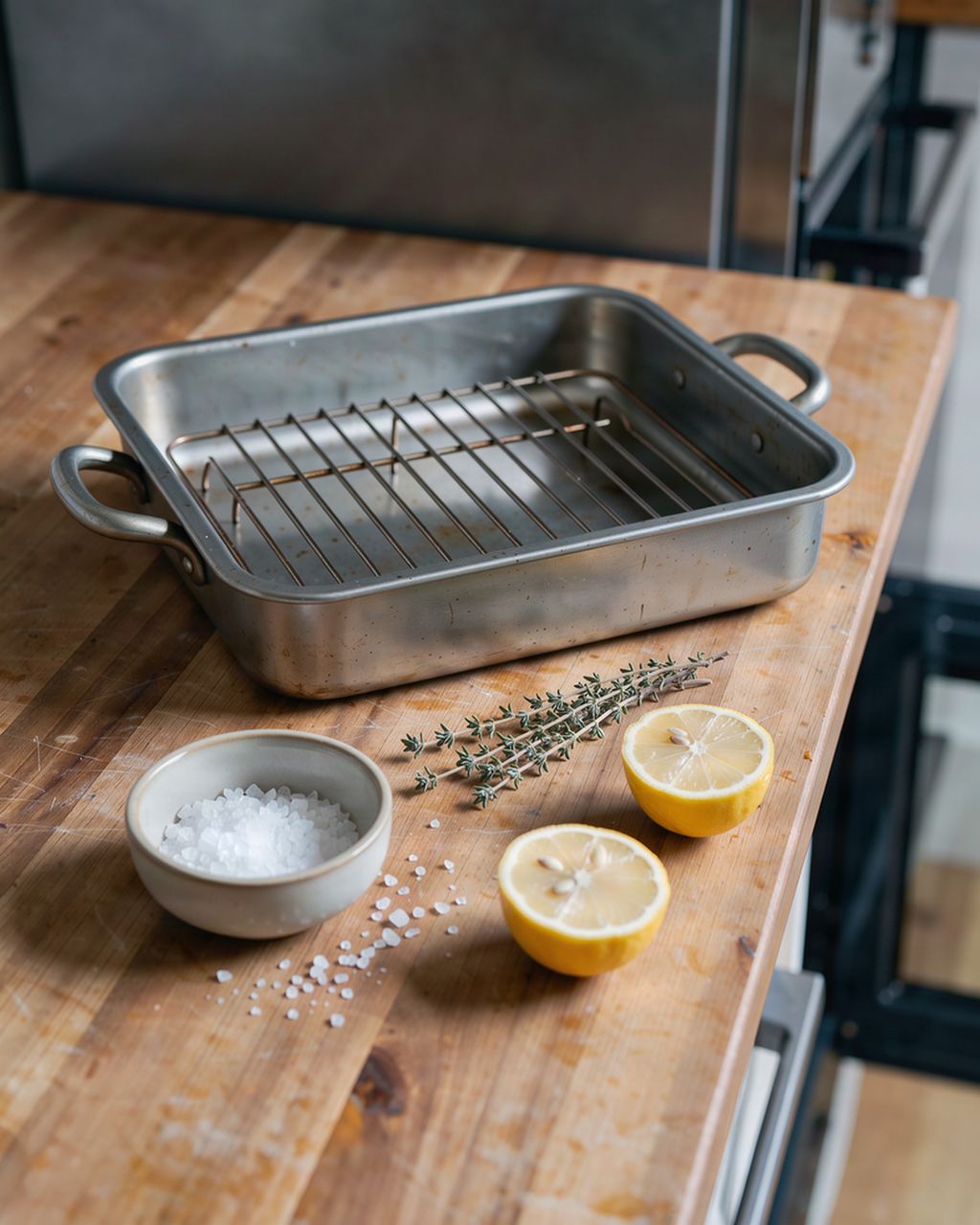
Salt it ahead. Salt on the surface a few hours ahead (or a day ahead in the fridge) works its way inside and helps the meat hold more water as it roasts.
Start covered, finish uncovered. Under a lid or aluminum foil and with a little liquid added, the pork neck roasts in steam. Toward the end, uncover it so the surface browns to a golden color.
Start measuring halfway through the estimated time. For a whole pork neck, that's the USDA row for top shoulder: 177 °C and about 100 minutes per kilo. Check the thermometer before the time is up.
Let it rest. At least 3 minutes according to the USDA, and for a large piece happily longer under loosely laid foil. In the meantime the juices redistribute through the meat instead of running out onto the board.
Searing pork neck in a pan first makes sense for flavor, not for juiciness. Why searing doesn't "seal in" the juices is explained in the article why meat is browned before braising.
We don't have a recipe for a whole roast pork neck yet. We do have two for sliced pork neck, though: pork neck in mustard with root vegetables in a pan and grilled orange pork neck with chili. If your pork neck dries out even so, the article how to rescue overcooked, dried-out meat from the oven can help.
Pork tenderloin is roasted briefly in high heat: according to the USDA/FSIS, 220–230 °C and 20–27 minutes in total for a tenderloin of 0.25–0.7 kg. It's the leanest cut of pork and has no fat to protect it. Every extra minute dries it out.
Trim the silverskin. Cut the silvery membrane along the tenderloin off with a thin knife. In the oven it shrinks and makes the tenderloin curl.
Tuck the thin end under so the piece has the same thickness all along and cooks evenly.
Roast it uncovered. You want a browned surface and a short cooking time, and steam doesn't help here.
Take it out at 63 °C and let it rest for 3 minutes (USDA/FSIS). The middle will be slightly pink, juicy and, according to the USDA, safe. If you want it cooked through, roast it to 70 °C (UK FSA).
Bacon-wrapped tenderloin takes longer because the bacon insulates it. So watch doneness with a thermometer, not the clock. You can see what to go by in the pork tenderloin with plums and English bacon. On the grill, try it as grilled pork tenderloin in mustard, and slice any leftovers into a lentil salad with pork tenderloin.
Pork leg and shoulder are roasted in a moderate oven at 163–177 °C: bone-in leg at 163 °C, shoulder at 177 °C (USDA/FSIS), and a smaller boneless leg roughly at 177 °C as well. But leg is lean and shoulder is marbled. So keep an eye on the leg with a thermometer so it doesn't dry out. Shoulder tolerates roasting well beyond the target temperature.
Leg. For bone-in leg, USDA/FSIS gives 163 °C: a whole leg (5.4–7.3 kg) takes about 48–57 minutes per kilo, a half (2.3–3.6 kg) 77–88 minutes per kilo. The times are approximate, so go by the thermometer. At home, though, you more often roast a smaller boneless piece. For that, use the boneless roast row (177 °C, about 44 minutes per kilo; an estimate based on pork loin, so go by the thermometer) and take it out at 63–70 °C. Covered and with liquid, the leg stays more tender, as you can see in the pork leg with mushrooms.
Shoulder. Roast the top part of the shoulder according to USDA/FSIS at 177 °C for about 100 minutes per kilo (a 1.4–2.7 kg piece). At 70 °C inside it's safely done and can be sliced. If you keep roasting, the connective tissue melts and the meat starts to fall apart into strands. That's how pulled pork comes about; a recipe for it is still in the works. For inspiration, see slow-roasted pork with red cabbage and very slowly roasted piglet shoulder with apples and onion. Piglet shoulder is smaller and more delicate than shoulder from a full-grown pig, so it roasts for a shorter time.
Pork belly and výpečky (Czech pan-roasted pork cubes) are done when they reach at least 63 °C inside plus a 3-minute rest (USDA/FSIS), or 70 °C for 2 minutes (UK FSA), as is commonly roasted in Czech kitchens. For safety they're done sooner than they're good, though. They contain a lot of fat and connective tissue, which melt only with long roasting. Official charts don't give a time per kilo for them. The oven temperatures below are therefore approximate values from kitchen practice, and the linked recipe will give you the exact method.
Pork belly is done when the meat is tender and the skin crisp. Score the skin ahead down to the fat, without piercing the meat, and keep it dry. Damp skin won't crisp. Roast it first at 150–160 °C until the fat softens and the meat gives, and finish at 220–240 °C until the skin puffs up and crackles. Watch this last stage, because the skin burns quickly. You'll find the step-by-step method in the recipe for crispy roast pork belly with homemade gnocchi and spinach.
Výpečky are cubes of shoulder or belly. Roast them covered at 170–180 °C with onion and 100–200 ml of water until tender. Top up the water as needed so the bottom doesn't burn. Then uncover them so the edges brown. Check doneness with a thermometer in the largest cube, or by seeing whether a cube mashes easily with a fork.
Roast pork covered when it needs to become tender and uncovered when it should brown. Most cuts need both, in that order.
Covered (lid, aluminum foil, roasting pan with a lid): steam and added liquid help marbled cuts, such as pork neck, shoulder and výpečky, turn tender without drying out.
Uncovered: the surface browns and crisps. Tenderloin roasts uncovered the whole time (it's done quickly), and belly is uncovered at the end (for the skin).
Covered, finished uncovered: the all-purpose method for pork neck, leg and shoulder. Take the lid off for the last third of roasting.
After taking pork out of the oven, let it rest, for two reasons: safety and juiciness. The USDA/FSIS 63 °C figure counts on exactly 3 minutes of rest, during which the meat holds its temperature and keeps destroying bacteria. From kitchen practice, the temperature inside a large piece also keeps rising during the rest, roughly by 2–5 °C, as heat moves from the surface toward the center.
In practice: take a large piece out when the inside is 2–5 °C below the target temperature. For 70 °C, that's roughly at 65–68 °C. Note that this doesn't apply to the USDA minimum of 63 °C: take the meat out only at 63 °C, because the 3 minutes of rest are already built into that number. A thin tenderloin or slices rise only a little, so take them out right at the target temperature. Put the meat on a board under loosely laid foil so it doesn't steam and the crust doesn't turn soft, and slice it only afterward. Thinly, across the grain. If you'll be storing leftovers, follow the article how long pork keeps in the fridge.
Pork neck slices (krkovice) are done at 63 °C (145 °F) inside followed by a 3-minute rest (USDA/FSIS), or 70 °C (158 °F) held for 2 minutes (UK FSA) if you want them cooked through the classic way. Thin slices (under 2 cm) cook better in a hot pan or on a grill. In the oven, cook them covered with a little liquid so they don't dry out, and measure the temperature in the thickest slice.
Based on common kitchen practice, roast bacon-wrapped pork tenderloin at 200–220 °C (400–430 °F) for about 30–40 minutes, and take it out when the inside reaches 63 °C (USDA/FSIS), or 70 °C if you want it cooked through. The bacon insulates the meat, so the tenderloin takes longer than a plain one (20–27 minutes according to the USDA). Treat the time as a guide only and go by the thermometer.
Yes, pork tenderloin can be slightly pink inside if it has reached 63 °C and rested for 3 minutes (USDA/FSIS). Color is not a reliable sign of doneness; what matters is the temperature measured with a thermometer. If you want it cooked through the classic way, roast it to 70 °C (UK FSA). It may stay slightly pink even then.
Yes, you can roast pork neck (krkovice) straight from frozen; just allow roughly half as much time again (USDA/FSIS). The target internal temperature stays the same (63 °C + 3 min, or 70 °C). A piece thawed in the fridge, however, cooks more evenly and can be salted ahead of time.
One recipe worth heating the oven for, one tip, and one deal from the shop. Nothing else.