Classic beef goulash with chilli and bread dumpling
Why You Sear Meat Before Braising (and Why It Doesn't "Seal In" the Juices)
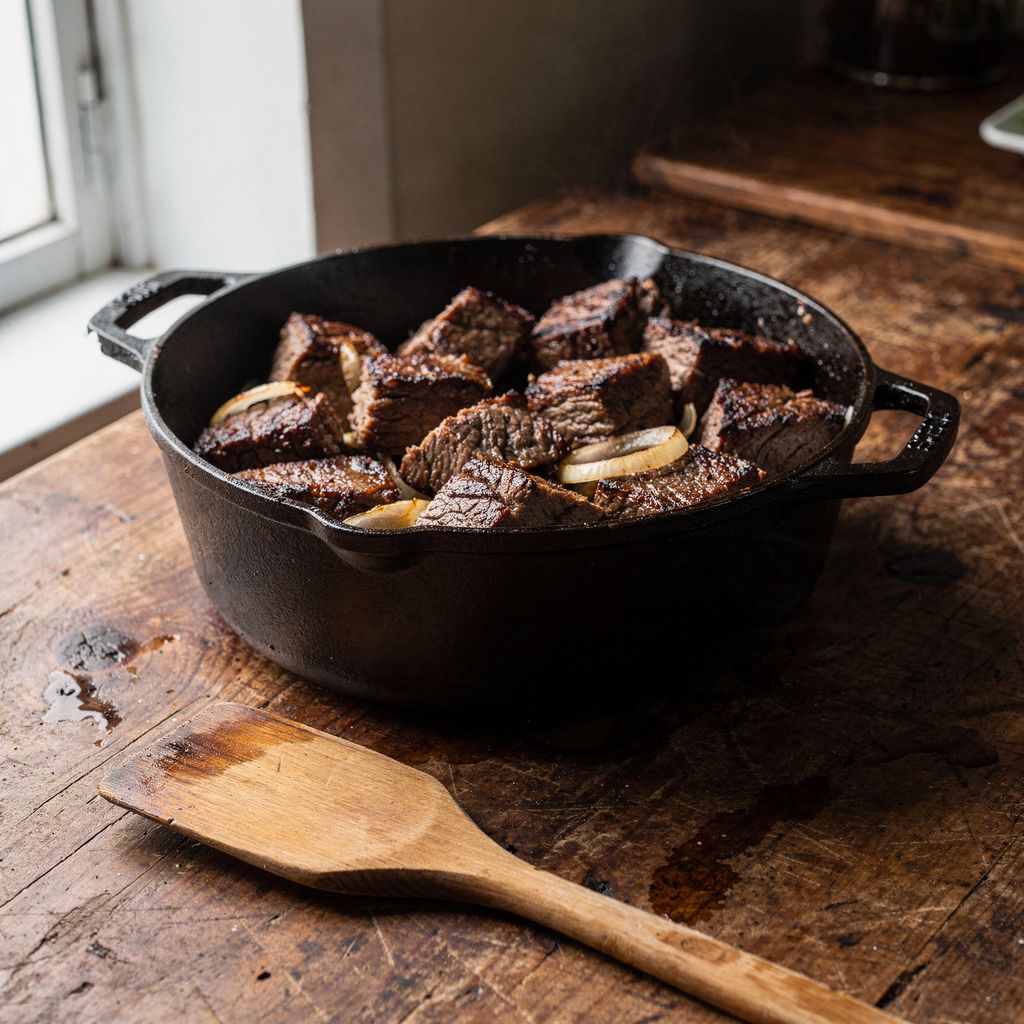
Updated Oct 6, 2026
Meat gets seared before braising for the sake of flavour: on a hot pan, above roughly 140°C/280°F, a brown crust forms and hundreds of new aromatic compounds appear that could never develop in water at 100°C/212°F. Searing doesn't "seal in" the juices — that's a century-old myth. What it does leave behind is a layer of browned bits stuck to the bottom of the pot, which gives the sauce depth and colour. Below, you'll find exactly what happens in the pan, how to sear meat so it actually browns, and when you can skip the step altogether.
Searing triggers the Maillard reaction on the surface of the meat — proteins and sugars react with each other at high heat, creating a brown colour and hundreds of new flavour and aroma compounds. That's where the roasted, nutty, meaty taste comes from — a taste raw or boiled meat simply doesn't have.
Temperature is key:
below 100°C/212°F — the meat just boils, turns grey and sheds water
around 140°C/280°F — the Maillard reaction kicks in
150–180°C/300–355°F — the reaction runs at full speed, the surface browns quickly
above 200°C/390°F for too long — brown turns to black and bitter
And here's the whole reason meat is seared before braising: in a pot with liquid, the temperature can never climb above 100°C/212°F, because water simply can't get any hotter. So braising alone will never brown the meat. If you want that browned flavour in your goulash, you have to build it in at the start, in a dry pan with fat.
Seared meat doesn't "seal in" its juices — the crust isn't watertight and moisture still escapes through it. Experiments by food scientists (from Harold McGee to Modernist Cuisine) have shown again and again that a seared piece of meat loses just as much water as an unseared one cooked to the same internal temperature — sometimes even more. In fact, all that sizzling and spitting in the pan is exactly the juice leaving the meat.
With braising, "juiciness" in the classic sense isn't really the point anyway: the meat cooks for hours, the muscle fibres contract, and water gets squeezed out regardless. What makes braised meat juicy is the melted collagen and the sauce it sits in — not a crust formed in the first minute of cooking.
So you can let that myth go. Sear your meat because it tastes better — that's reason enough.
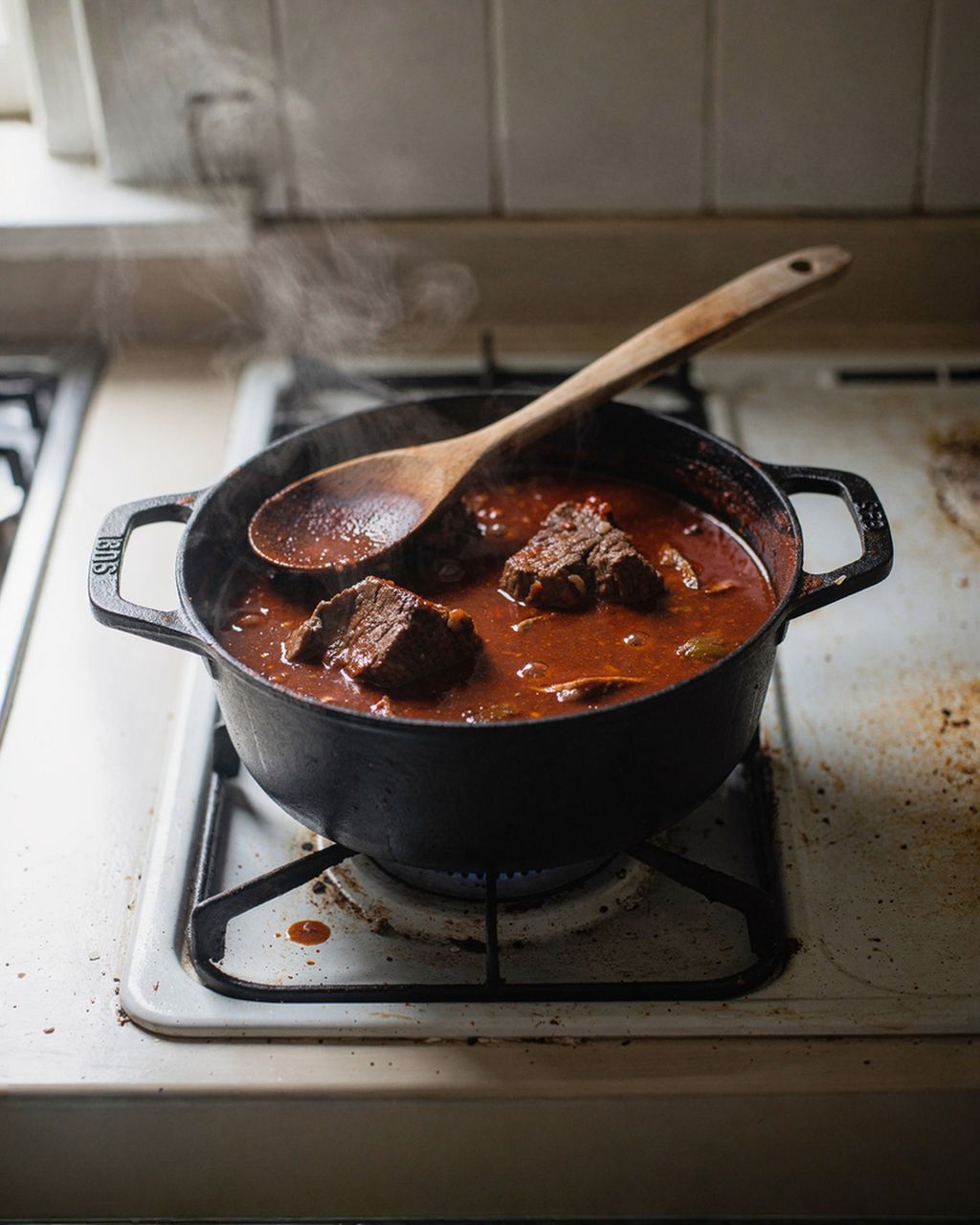
The fond is the browned, stuck-on residue left at the bottom of the pot after searing meat — concentrated Maillard flavour and the foundation of a good sauce. You deglaze the pot to dissolve that fond and carry its flavour into the sauce; otherwise it just stays stuck to the bottom.
The method is simple: after searing, deglaze the pot with a splash of water, stock or wine, and scrape up the fond with a wooden spoon until it dissolves. At that point, it becomes the flavour and colour of your whole sauce. Skip this step and you lose a big part of the reason you seared the meat in the first place.
Just watch the line between brown and black: dark brown fond is pure gold, but if it's black and sharp-smelling, it's burnt, and it'll turn your sauce bitter. Wipe it out and start again with a clean pot.
Meat only browns properly when its surface is dry, it has enough room, and the pot is properly hot. Here's how:
Pat the meat dry. Use paper towels, thoroughly. A wet surface has to evaporate first, and while it's evaporating it stays at around 100°C/212°F — so the meat steams instead of browning.
Cut it into larger pieces. For goulash, cubes of roughly 3–4cm/1.2–1.6in. Small pieces will overcook before they get a chance to brown.
Preheat the pot first. Get a heavy pot or cast iron pan on medium-high to high heat, then add 1–2 tablespoons of fat. The fat is ready when it's shimmering and just starting to ripple.
Sear in batches. Lay the cubes in so they don't touch — leave at least 1cm/0.4in between pieces. For a 24cm/9.5in pot, that's about 300–400g (10–14oz) of meat at a time. An overcrowded pot cools down, and the meat releases water and starts simmering in a grey puddle instead of browning.
Leave it alone. Don't touch the meat for the first 2–3 minutes. If it's sticking to the bottom, it's not ready yet — once the crust forms, it releases on its own.
You just need colour, not a cooked-through piece. You're after a deep golden-brown crust on two or three sides. The inside can still be raw — it'll finish cooking during braising.
Remove and keep going. Transfer the seared meat to a plate (along with any juices that run out — you'll add those back to the pot later) and sear the next batch.
Once all the meat is browned, it's time for the onions, the deglazing, and the fond — then the meat goes back into the pot to braise.
Searing doesn't tenderise meat — tenderness during braising comes from the slow breakdown of collagen into gelatine, a process that kicks in at around 70°C/160°F and, for beef shoulder or shin, takes 2–3 hours or more. Searing takes a few minutes and has nothing to do with this process at all.
So if your goulash turns out tough, don't blame the searing. It's almost always down to too little cooking time, too fierce a simmer, or the wrong cut of meat. Searing handles flavour, braising handles tenderness — you need both.
You skip searing meat before braising when the dish needs to stay pale and delicate. Typical cases:
White stews and fricassées — veal or chicken in a cream sauce (French blanquette) should be pale and smooth; browned notes would throw it off.
Meat boiled for stock — for beef going into soup, you want a clean, meaty flavour and a clear broth, not roasted notes.
Delicate fish and seafood in sauces — searing would break them apart and overcook them.
In every other case — goulash, beef stroganoff-style braises, beef in wine, or pork ragù slow-braised in red wine — searing is worth the effort. And if you're really pressed for time, sear at least part of the meat and really caramelise the onions well: you'll still get a good hit of Maillard flavour in a fraction of the time.
The best place to taste what searing meat before braising does is in a goulash — the meat browns right at the start, the onions caramelise, and the fond dissolves into a thick, rich sauce. For a slower-paced dinner, try oven-braised beef with wine and vegetables or a homemade beef stroganoff-style braise.
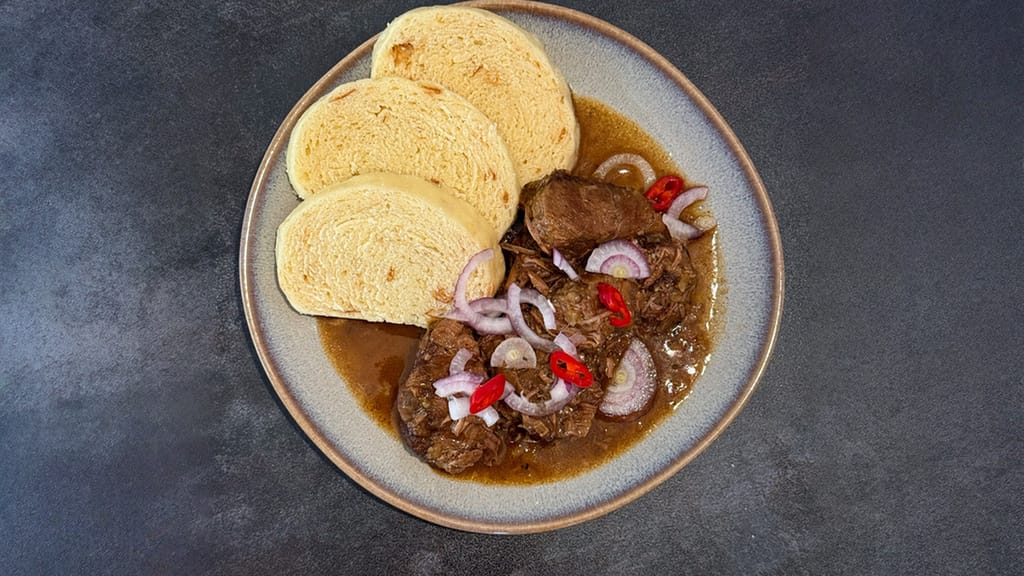
Classic beef goulash with chilli and bread dumpling
Classic beef goulash with seared meat and bread dumplings
You don't have to coat meat in flour before searing it for braising, but a thin layer of plain flour browns quickly and will lightly thicken the sauce later on. The downside is that flour burns easily on the bottom of the pot, so keep an eye on the heat and shake off any excess flour before the meat goes in.
Yes, searing meat before slow-cooking is worth it, because a slow cooker holds the temperature below boiling point, so the meat inside it will never brown on its own. Sear it in a pan first, deglaze the pan with a splash of stock, and pour both the stock and the browned bits into the slow cooker along with the meat.
Salt meat for searing either right before it goes into the pan, or at least 40 minutes ahead of time. Salt first draws water out to the surface of the meat, and after about 40 minutes that moisture gets reabsorbed back in. If you salt the meat and then start searing it after only 10–15 minutes, it'll still be wet and won't brown properly.
Yes, you can sear meat for braising in the oven instead of on the stovetop: spread the cubes out with gaps between them on a baking tray and roast at 220–230°C/430–450°F for about 15–20 minutes, until browned. For large quantities this saves effort — toss the meat in a little oil beforehand, then deglaze the browned bits on the tray with a splash of water and pour it into the pot.
One recipe worth heating the oven for, one tip, and one deal from the shop. Nothing else.