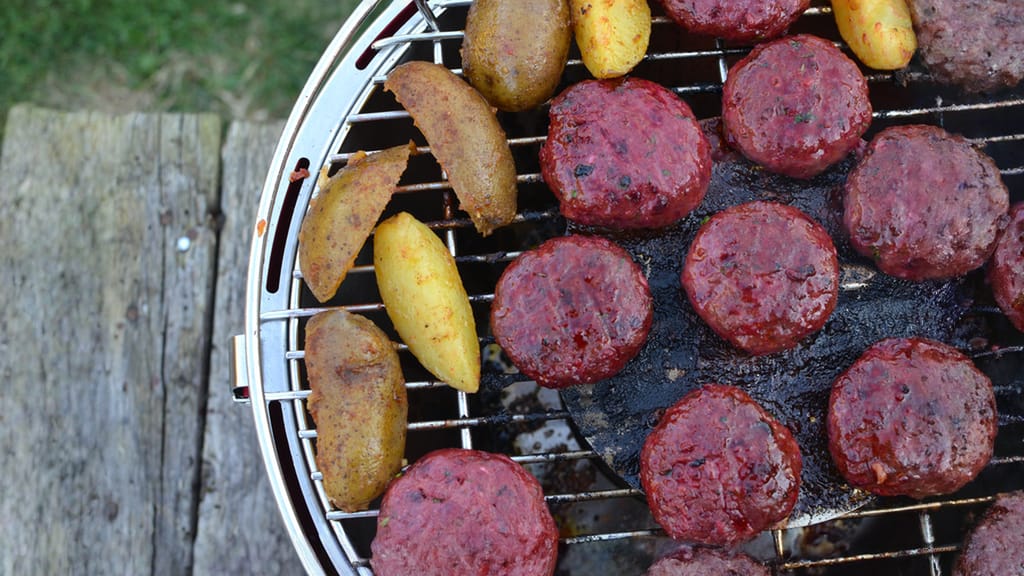
Weekend tip: beetroot beef burgers

Updated Jul 19, 2026
Cuts of beef differ in one simple way: how much fat and connective tissue they have, and how hard that muscle worked during the animal's life. That's exactly what decides whether a piece is destined for a quick sear or hours in the pot. Front-end cuts (neck, shoulder, short ribs, shin) are cheaper, tougher, and made for slow cooking; hind cuts (fillet, sirloin, rump) are lean, tender, and perfect for the grill or roasting. In this guide, we'll walk through each cut, what it's best suited for, how to spot quality at the butcher's counter, and how to cook beef so it turns out right every time.
The simplified rule is this: front cuts belong in the pot for slow cooking, while hind cuts go on the pan, grill, or into a hot oven for a quick cook. The reason lies in how hard the muscle worked — the more active it was during the animal's life, the more connective tissue it has, and the longer it needs to become tender.
Front-end beef includes the neck, shoulder, short ribs, and shin. It's cheaper, more marbled with fat and collagen, and develops its most intense flavour after long braising or simmering — which is why it's the backbone of goulash, pot roasts, and stock.
Hind-end beef is made up of fillet, sirloin, and rump. It's leaner and more tender, so it suits steaks, roast beef, and quick roasting. There's very little connective tissue here, so long cooking will dry it out rather than tenderise it.
A quick rundown of the most common cuts and their ideal use:
Neck — lots of connective tissue and fat; great for mincing, goulash, and long cooking.
Shoulder — versatile and well-marbled; slow roasting, braising, goulash.
Short rib (rib section) — juicy, on the bone; oven roasting, stock, short ribs.
Shin — the most collagen of any cut; soups, stock, and fall-apart goulash.
Sirloin (upper and lower) — marbled; steaks, roast beef, roasting.
Fillet — the most tender muscle; steaks, tartare, quick cooking.
Rump (topside, silverside, thick flank) — lean; roast beef, schnitzels, braising.
Brisket — well-marbled with fat; slow roasting, smoking, stock.
Weekend tip: beetroot beef burgers
Beef and beetroot meatballs from minced meat — what to do with neck and shoulder cuts
Three cuts show up most often on menus and at the butcher's counter — fillet, sirloin, and neck. Each calls for a different approach; here's how to handle them.
Fillet is the most tender muscle in the whole animal — tucked away along the spine, it barely gets used during the animal's life, which is why it's so soft. It has very little fat, so it only needs a quick sear and minimal seasoning: salt, pepper, and a knob of butter at the end. Don't overcook it — aim for a core temperature around 54–56°C (medium-rare). Thanks to its clean flavour and fine texture, it's also the top choice for steak tartare, where freshness is absolutely essential.
A note on naming: the classic Czech-style creamy pot roast (svíčková) is nowadays usually made from rump or lower sirloin rather than true fillet — the name stuck, but the cut got cheaper.
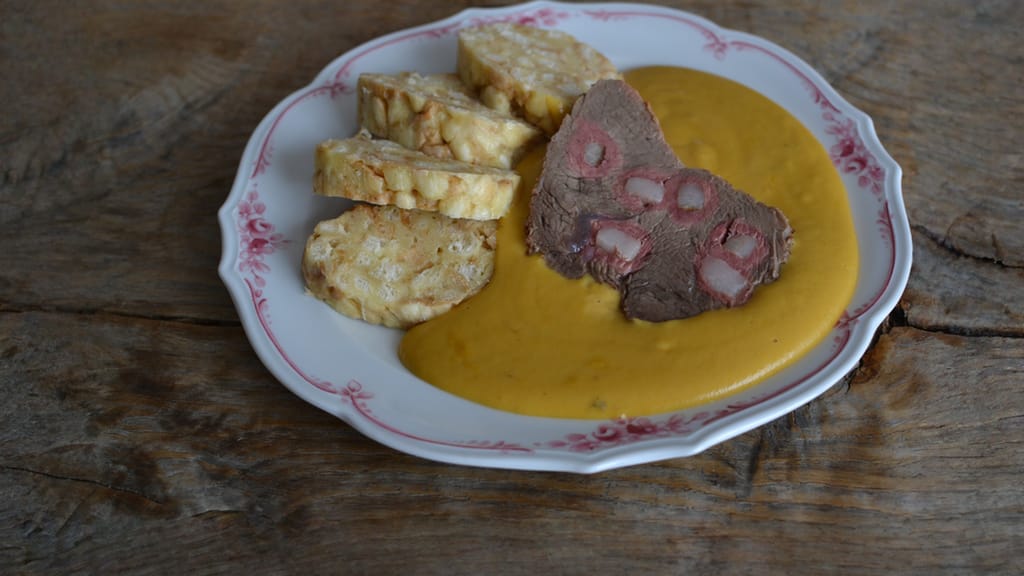
Sunday lunch: perfect homemade svíčková (czech beef sirloin in creamy vegetable sauce)
Sunday pot roast with creamy sauce — the proper recipe, step by step
Thanks to its rich marbling, ribeye is the juiciest steak around — the fat melts as it cooks, keeping the meat wonderfully moist. Just salt and pepper, a hard sear on both sides, and finish at 54–57°C. High heat at the start builds that crust (the Maillard reaction), which carries most of the flavour.
Want a completely foolproof steak method? Check out our guide to the perfect beef steak.
Neck cuts are packed with fat and collagen, which turns to gelatine during long cooking, making the meat fall-apart tender. A quick sear alone won't cut it here — they need time, low heat, and plenty of liquid. They work beautifully in slow-braised sauces and stews; red wine or a dark stock deepens the flavour even further. Shoulder and short rib cuts also make excellent roast beef — slow-roasted in the oven with wine and root vegetables.
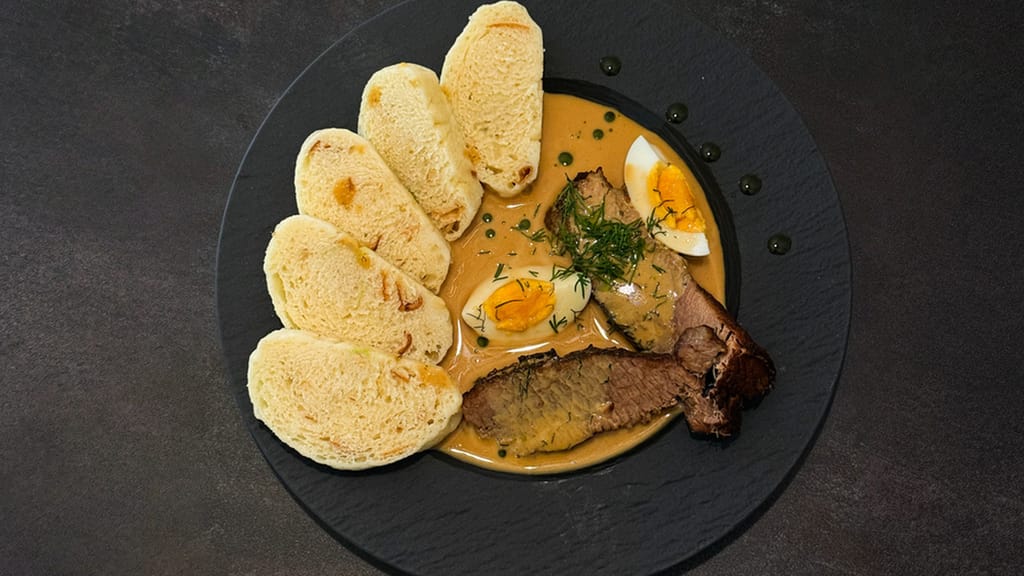
Dill sauce with slow-roasted beef
Dill sauce with slow-roasted beef — tender meat from a cheaper cut
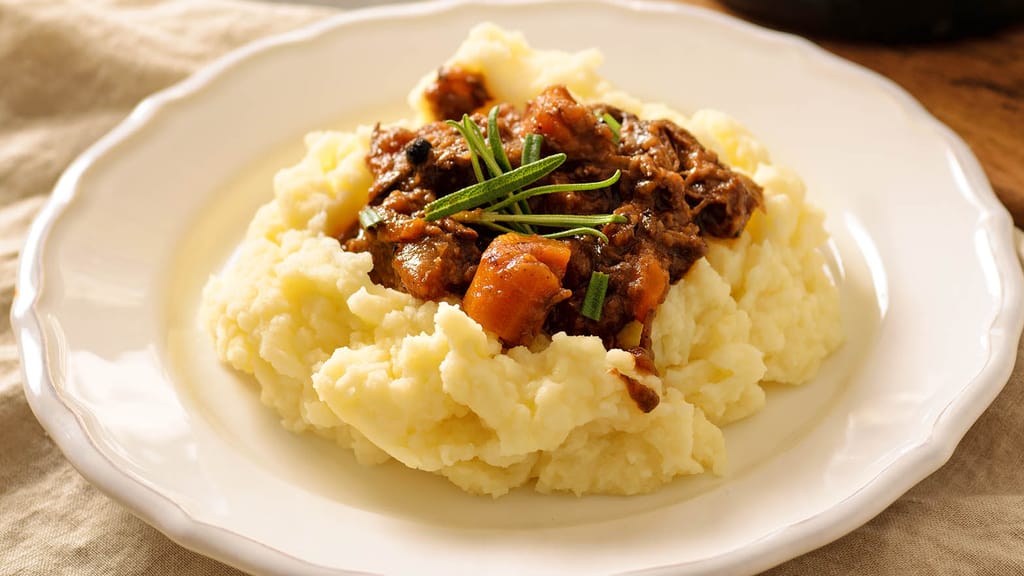
Oven-braised beef in red wine with vegetables
Beef roasted in wine with vegetables — a slow pot roast from the shoulder
The best flavour is often hiding in the cheapest cuts. Worth getting to know:
Topside sits in the rump, is lean and fibrous, and soaks up marinade beautifully — great for braising and goulash. Try a marinade of paprika, garlic, and cumin.
Shin is threaded through with collagen — after hours of cooking, it breaks down and thickens the stock; ideal for soup and goulash alike.
Brisket from the lower belly is well-marbled with fat, so it stays juicy even after long roasting or smoking. It pairs beautifully with honey and mustard.
They all have one thing in common: they need time. Let them sit in a marinade before cooking, then braise or roast slowly — you'll save money without compromising on quality.
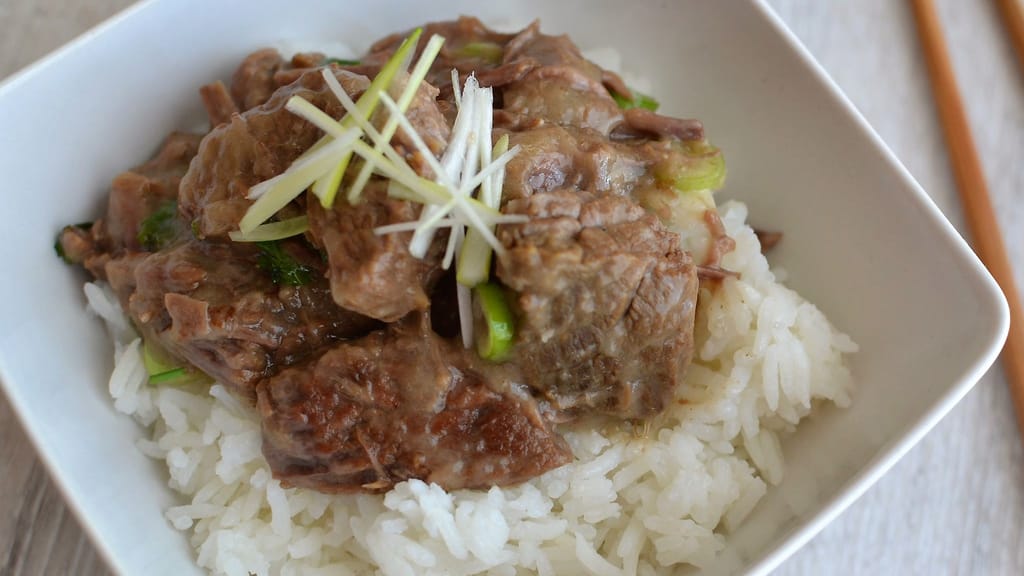
Beef chunks braised in coconut milk
Beef pieces braised in coconut milk — how to get the most out of a cheaper cut
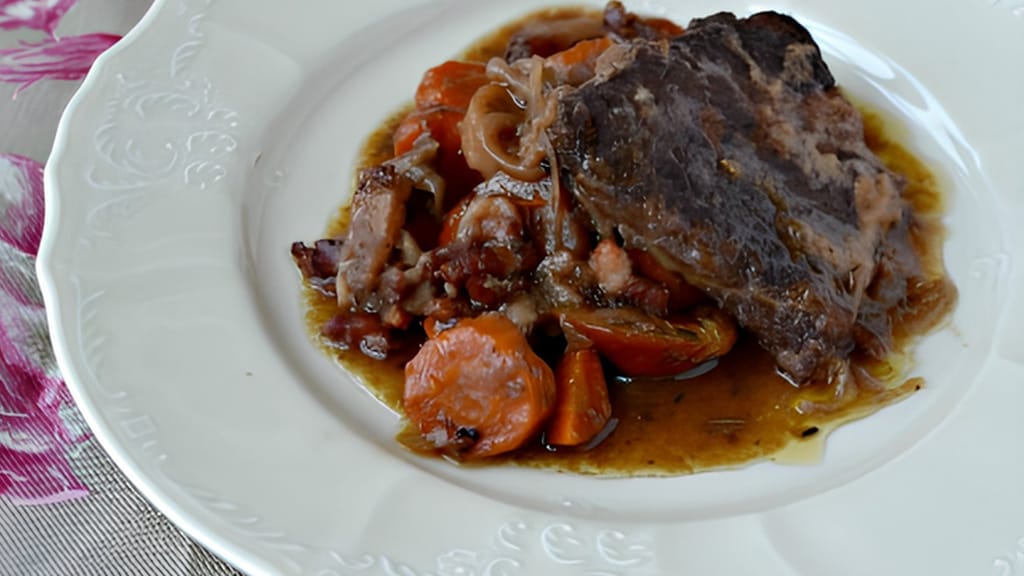
Provençal beef with root vegetables
Provençal-style braised beef with vegetables
You can spot good beef at the counter by four signs — colour, smell, fat, and ageing:
Colour — deep red to dark cherry. A freshly cut surface often looks darker at first and turns redder within a few minutes of air exposure; a grey-green tinge signals old meat.
Smell — mild, faintly sweet. Anything sour or ammonia-like is a red flag.
Fat and marbling — fat should be creamy white and firm, not yellow and soft. Fine streaks of fat running through the muscle (marbling) signal juiciness in steak cuts.
Ageing — aged beef is more tender and flavourful. During dry-ageing (even just 3–4 weeks), enzymes break down connective tissue and intensify the flavour; wet-ageing (in vacuum packaging) is milder and cheaper.
Ask about provenance too. Meat from local farms tends to be fresher and easier to trace, and organic certification guarantees stricter farming standards under EU rules.
The right method depends on the cut: lean, tender pieces need quick cooking to pink, while marbled, tough ones need long, slow cooking until tender. Stick to this one rule and your beef will turn out right almost every time.
Lean steak cuts want high heat and a short cooking time. Get your pan or grill properly hot — intense heat builds a good crust while keeping the inside juicy. Flip only once, and go by internal temperature, not by the clock:
Rare — 50–52°C
Medium-rare — 54–57°C
Medium — 60–63°C
Well done — 68°C and above
Pull the meat off the heat 2–3°C before your target temperature — residual heat (carryover cooking) will finish the job.
Marbled, tough cuts need the opposite approach: low heat and plenty of time. Above roughly 70°C, the collagen in the connective tissue gradually turns to gelatine, coating the meat and making it fall-apart tender — but that takes hours, not minutes. Sear the meat hard first for flavour, then add stock or wine and let it simmer gently, just below boiling point. The less it bubbles, the better.
A marinade adds flavour and, for leaner cuts, can also help with tenderness. Oil, garlic, and herbs work well on delicate cuts, while a punchier mix with chilli and lime suits the grill. The acidic component (wine, vinegar, citrus) softens the surface of the meat, but don't overdo the time — after many hours, the surface turns unpleasantly mushy. Topside and rump can happily marinate overnight, while fillet only needs a couple of hours.
For steak and quick roasting: fillet, sirloin, rump.
For goulash and braising: neck, shoulder, shin, topside.
For stock and soup: shin, short rib, brisket.
For mince and burgers: neck and shoulder.
Choose your cut based on the cooking method, keep an eye on the internal temperature, and let the meat rest — after that, it's all just the joy of cooking.
The best goulash comes from shin, chuck, or neck — cuts rich in collagen, which breaks down into gelatine during long, slow cooking until the meat falls apart. Lean hind cuts like fillet aren't suited to goulash, since they'll dry out long before they turn tender.
Fresh beef steaks and roasts keep for about 3–5 days in the fridge at 0–4°C, while minced beef lasts only 1–2 days. In the freezer at −18°C, whole cuts hold their quality for 6–12 months, and mince for roughly 3–4 months. Always thaw slowly in the fridge, never at room temperature.
Swap fillet for rump steak or a well-aged topside — both are cheaper and still develop a great crust in the pan. And for a classic creamy pot roast, you don't even need true fillet: it's traditionally made from rump anyway.
For a whole muscle cut, yes — bacteria live only on the surface, and searing seals that off, so a pink centre is perfectly safe. This doesn't apply to minced beef or meat that's been pierced with a needle, though: in those cases, surface bacteria can get pushed inside, so cook them through thoroughly.
For tartare, go for fresh, lean fillet from a butcher you trust — freshness and provenance matter far more here than with cooked meat, since it stays raw. Buy it just before you plan to prepare it and use it straightaway.
One recipe worth heating the oven for, one tip, and one deal from the shop. Nothing else.