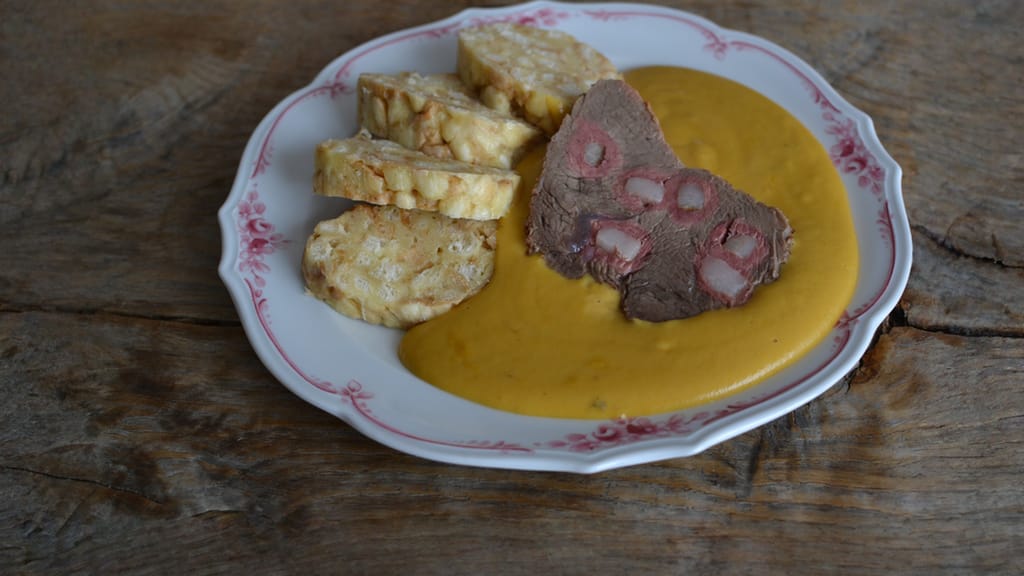
Sunday lunch: perfect homemade svíčková (czech beef sirloin in creamy vegetable sauce)

Updated Jul 19, 2026
Beef round comes from the rear quarter of the animal – it includes cuts like tenderloin, sirloin and topside/silverside, and each one calls for a different cooking method. In this guide you'll learn how to tell the cuts apart, what to look for when buying quality meat from the butcher, and how to turn beef round into juicy, flavourful dishes through roasting, grilling or slow braising. For every technique you'll find specific temperatures plus links to tried-and-tested recipes.
Beef round comes from the rear quarter of the animal – spanning the loin, back and leg. Compared to the forequarter, it's leaner and has a more pronounced flavour, but each muscle suits a different cooking method. How much a particular muscle was used during the animal's life tells you whether it's destined for a quick steak or a long, slow braise.
The main beef round cuts and what to use them for:
Tenderloin – the most tender cut with minimal connective tissue; perfect for steaks, tartare, carpaccio and a special-occasion creamy beef tenderloin.
Sirloin (top and bottom) – nicely marbled and juicy; ideal for roast beef, grilled steaks and oven-roasted sirloin.
Rump steak (tri-tip) – lean with a bold, beefy flavour; wants high heat and should be sliced against the grain.
Topside, silverside and thick flank – lean and holds its shape well; great for schnitzels, quick pan-fried cuts, slow braising and goulash.
Sunday lunch: perfect homemade svíčková (czech beef sirloin in creamy vegetable sauce)
Classic creamy beef tenderloin (svíčková)
You can spot quality beef round by its deep red colour, fine marbling, fresh smell and traceable origin. Four things to check at the counter:
Fresh beef round should be a deep red, matte in appearance and springy to the touch. Skip anything too dark, or on the other hand greyish and dried-out looking; any unpleasant sheen or sliminess is a clear no. A slightly darker outer layer on aged meat, however, is perfectly normal.
Fine streaks of fat running through the muscle (marbling) melt during cooking and keep the meat juicy and flavourful. With sirloin, visible marbling is a good sign. Lean cuts from the round won't have much of it – all the more reason not to overcook them.
Fresh beef should have only a mild, slightly mineral or iron-like smell. Any sour, ammonia-like or sickly stale odour means you should leave it on the shelf. Your nose is a more reliable guide here than the date on the label.
Ageing makes beef more tender and flavourful, as enzymes gradually break down connective tissue. Wet ageing (in vacuum-sealed packaging) is common and more affordable; dry ageing removes some of the moisture from the meat, concentrating a nutty depth of flavour, and tends to be pricier. For tenderloin or roast beef, a well-aged cut is worth the splurge.
Your best bet for traceable, quality meat is a butcher or a farm direct-seller, where you can ask about the breed, how the animal was raised and how long the meat was aged. A good butcher will also cut the meat to size for whatever you're cooking – just ask for the specific cut your recipe calls for (sirloin for steak, topside for goulash).
There are three main ways to cook beef round: quick high-heat cooking or steaks for tender cuts (tenderloin, sirloin, rump), slow-roasting a whole joint for roast beef, and long braising for lean topside. The key principle stays the same: tender cuts cooked briefly and hot, lean and sinewy cuts cooked long and slow.
Cook tender cuts briefly over high heat: a hot pan or grill, meat patted dry and seasoned with salt, and let a good brown crust form (the Maillard reaction), which is where the flavour comes from. Sear rump or sirloin for roughly 3–4 minutes per side, and go by internal temperature rather than time.
Approximate internal temperatures (check with a meat thermometer):
Rare: 50–52°C (122–126°F)
Medium rare: 52–55°C (126–131°F) – pink and juicy, ideal for rump and sirloin
Medium: 57–60°C (135–140°F)
Well done: 68°C (154°F) and above – for lean round cuts, this will already start to dry the meat out
Take the meat off the heat a few degrees early: during a 5–10 minute rest, the internal temperature will typically rise a further 3–5°C (so-called carryover cooking), and the juices have time to redistribute back through the fibres. For more on technique, check out our guide on how to cook the perfect steak like a pro.
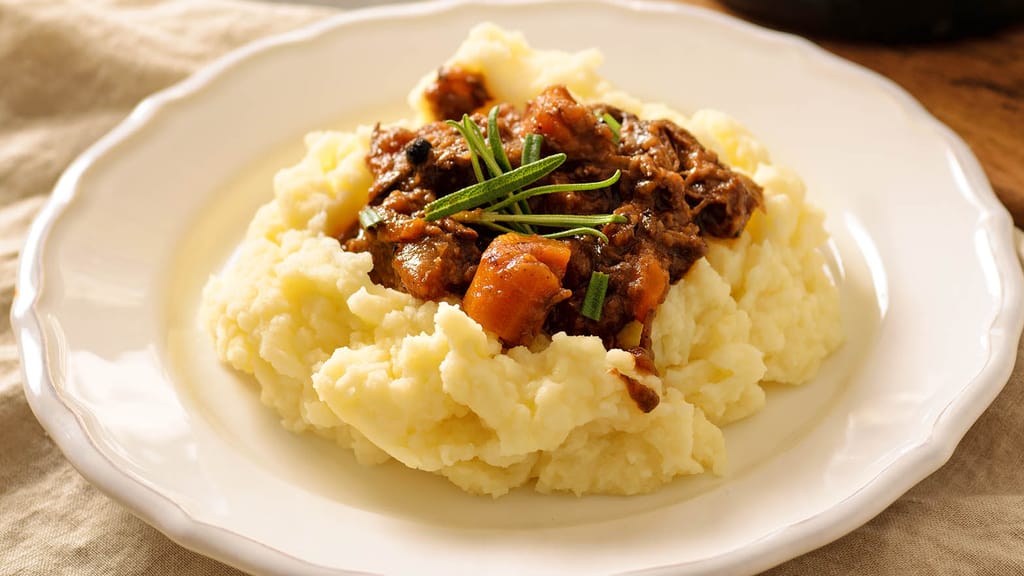
Oven-braised beef in red wine with vegetables
Slow-roasted beef round with wine and vegetables
Roast beef made from top sirloin turns out best cooked low and slow: set the oven to 120–140°C (250–285°F) and roast until the centre reaches 52–55°C (126–131°F) for medium-rare. Either sear the surface in a hot pan before roasting, or finish it with a quick, hard sear at the end. The low temperature keeps the meat pink all the way from the edge to the centre.
Lean, sinewy cuts from the round need time: braise them covered at a gentle simmer (around 90°C/195°F) for as long as 2–3 hours, until the connective tissue turns fork-tender. This is how you get classic braised beef, dill sauce, or goulash. Diced topside or rump steak makes a hearty goulash – the base is onions browned to a deep gold, sweet paprika taken off direct heat so it doesn't turn bitter, caraway, marjoram and plenty of time. Always slice and serve the meat against the grain.
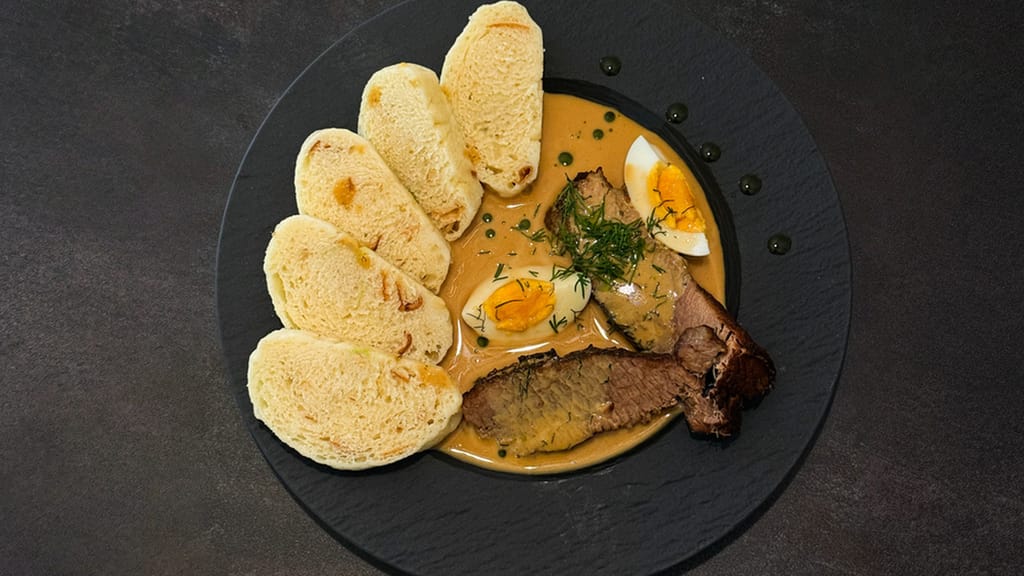
Dill sauce with slow-roasted beef
Dill sauce with slow-roasted beef round
Beef round pairs beautifully with potatoes, fresh vegetables, a bold sauce and a full-bodied red wine. The goal with any side dish is to complement the meat, not overpower it.
Creamy mashed potatoes, roast potatoes or grilled vegetables (peppers, courgette, asparagus) all work well with steak and roasts alike. Braised dishes and goulash call for bread dumplings, bread or pasta to soak up the sauce.
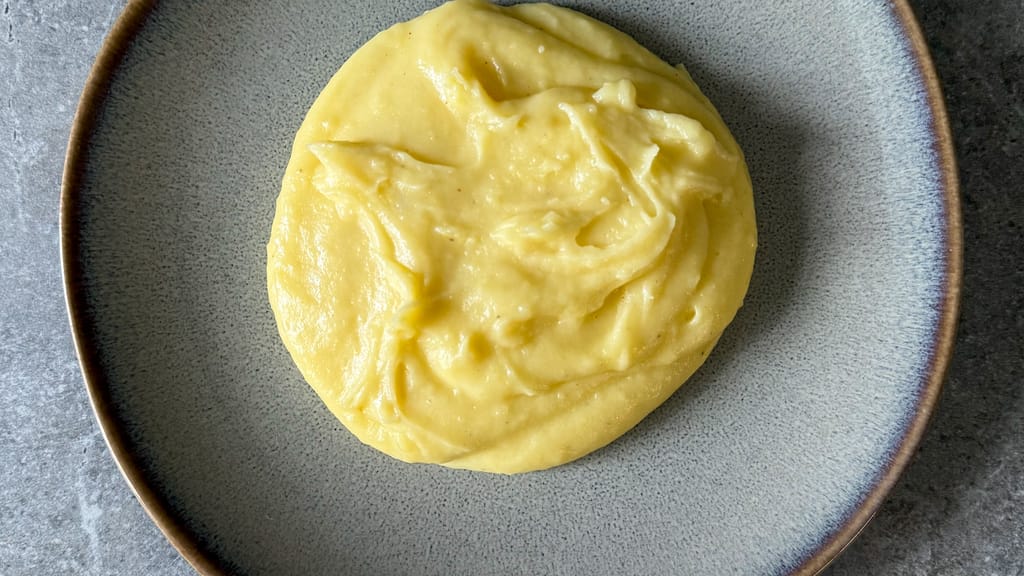
Silky creamy mashed potatoes with nutmeg
Silky creamy mashed potatoes as a side for beef
Lean round cuts pair well with a bold sauce or herb butter: peppercorn sauce, chimichurri (parsley, coriander, garlic, vinegar or lime, olive oil, chilli), or simple thyme butter spooned over the steak in the pan. Sharper sauces like chimichurri or a tomato-based dip nicely cut through richer cuts.
Reach for a full-bodied dry red with beef round – Cabernet Sauvignon or Merlot have enough tannins to stand up to the meat's robust flavour. A lighter Pinot Noir also works well with a more delicate creamy tenderloin dish.
Beef round is one of the leaner beef cuts and is a rich source of protein and easily absorbed iron. According to food composition databases, 100g of cooked lean round provides roughly 26–30g of protein, along with iron, zinc and vitamin B12, all with a relatively low fat content. For an even leaner option, choose topside or silverside and trim off any excess fat.
Here's beef round in brief:
Choose the cut to match the dish: tenderloin and sirloin for steaks, topside for braising and goulash.
Buy meat that's deep red, marbled and fresh-smelling, ideally aged and from a butcher.
Cook tender cuts briefly and hot (medium-rare 52–55°C/126–131°F); cook lean, sinewy cuts long and slow.
Always let the meat rest, and slice against the grain.
Beef round (hindquarter) is leaner and more tender, making it great for steaks, roasts and quick-cooking dishes, while forequarter cuts (like chuck, neck or short rib) have more connective tissue and need long braising or simmering. In short: hindquarter cuts can go quick or slow depending on the cut, forequarter cuts are mainly for slow cooking.
The best substitutes for rump steak are bottom sirloin (or top sirloin) and tri-tip, both of which have a similarly lean, richly beefy flavour. For braised dishes, you can swap it for diced topside/silverside or neck – but with forequarter cuts, allow for a longer braising time.
Fresh raw beef round keeps for around 3–5 days in the fridge at 0–4°C (32–39°F), and can be frozen at -18°C (0°F) for several months without issue. Thaw it slowly in the fridge rather than at room temperature, so it stays juicy and safe to eat.
The most common cause is using the wrong technique for the cut – you probably overcooked a lean topside like a steak, or braised a tender tenderloin for far too long. Cook tender cuts quickly to medium-rare, cook tougher, sinewy cuts long and slow, and always slice against the grain.
Yes – let your steak or roast sit at room temperature for 30–60 minutes before cooking, so it cooks more evenly and doesn't stay cold in the middle. Then pat the surface completely dry to get a good crust.
One recipe worth heating the oven for, one tip, and one deal from the shop. Nothing else.