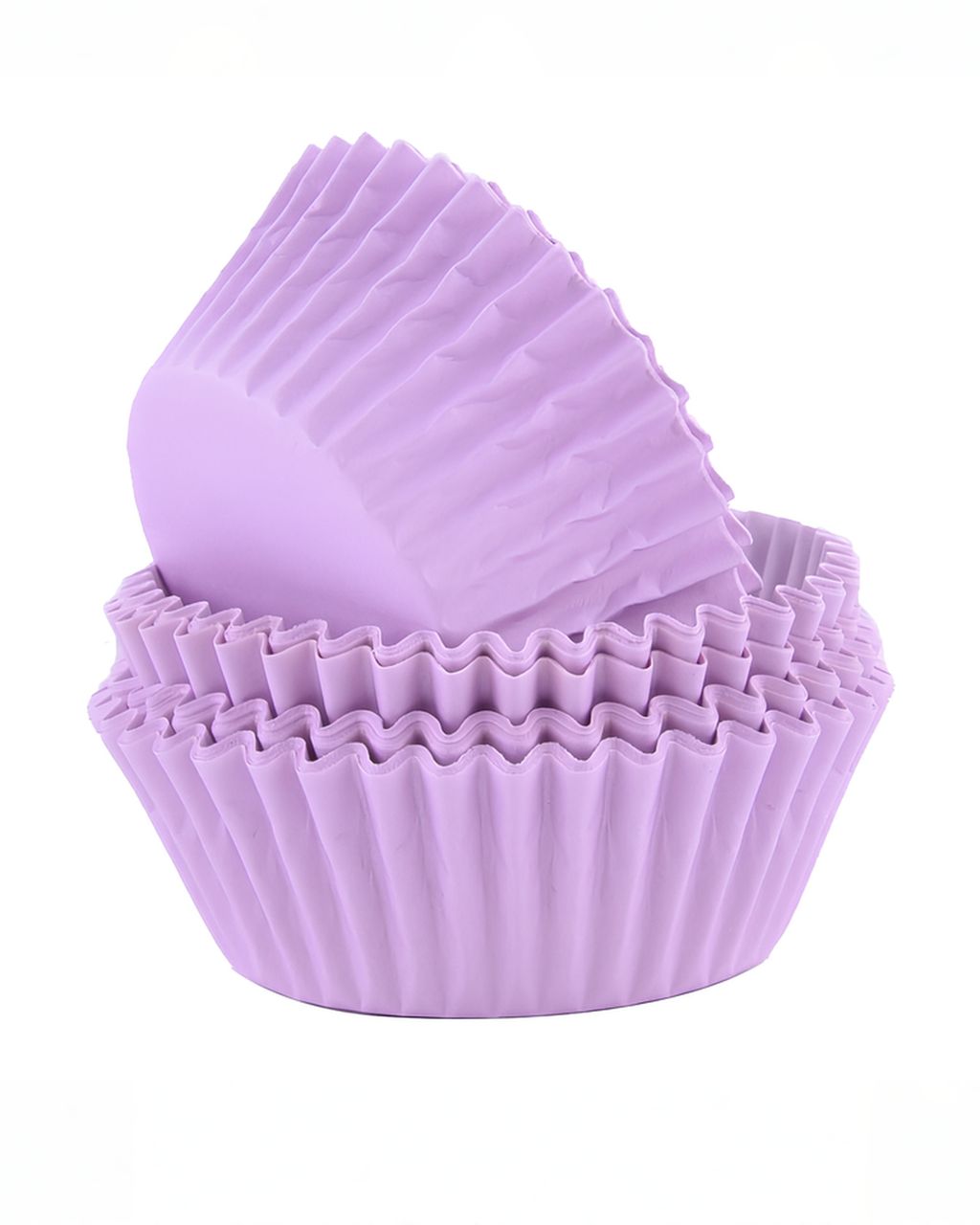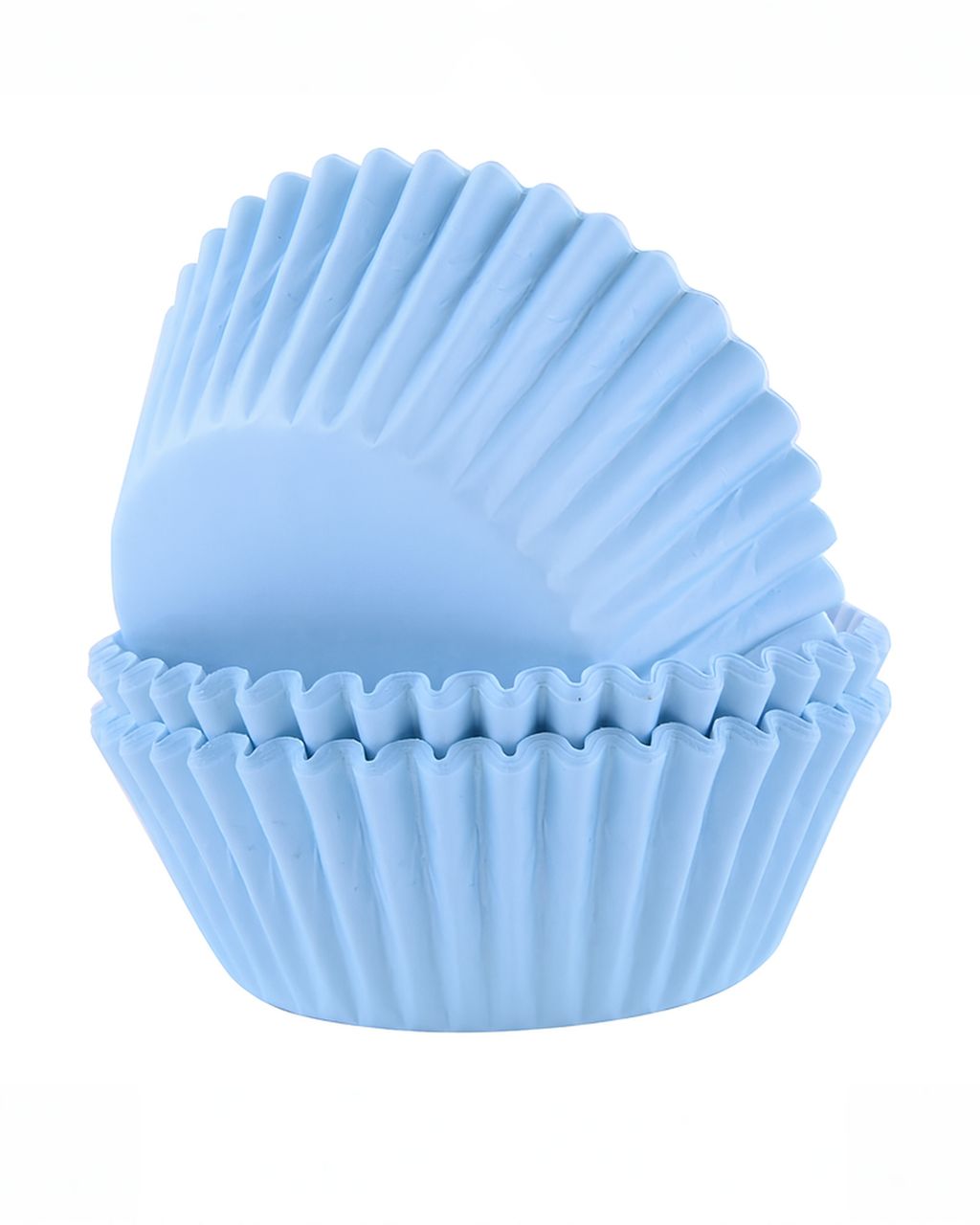
PME Paper Cupcake Cases – Light Blue (60 pcs)
Cupcakes vs. Muffins: What's the Difference?
Updated Oct 8, 2026
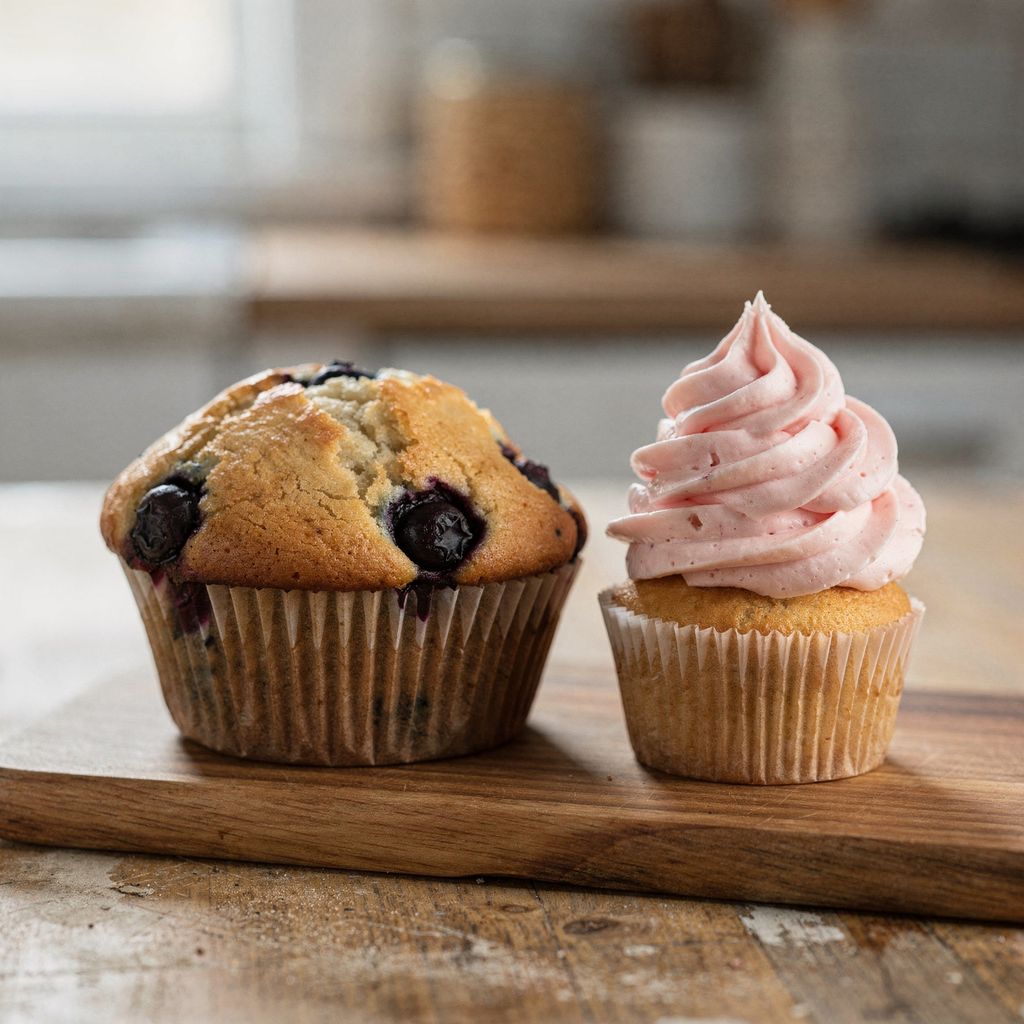
Cupcakes and muffins differ mainly in how the batter comes together: cupcakes are small cakes made from creamed batter (butter beaten with sugar until fluffy), giving a fine crumb topped with frosting, while muffins are quick bread, where wet and dry ingredients are only briefly combined, resulting in a coarser, denser crumb, less sugar, and a domed top with no frosting. They bake in the same tin, but behave completely differently. Here's exactly what sets them apart, and why it matters once you're standing over the bowl.
Cupcakes and muffins differ in five main ways: mixing method, sugar-to-fat ratio, crumb, top, and occasion.
Mixing – cupcakes: creamed batter, with butter beaten with sugar until fluffy. Muffins: wet and dry ingredients mixed separately, then folded together with just a few strokes (the muffin method).
Sugar and fat – cupcakes have noticeably more of both, often as much sugar as flour. Muffins have roughly a third to half that amount.
Crumb – a cupcake is fine, light and even, like a cake. A muffin is coarser, moister and a bit denser, able to carry chunks of fruit, nuts or cheese.
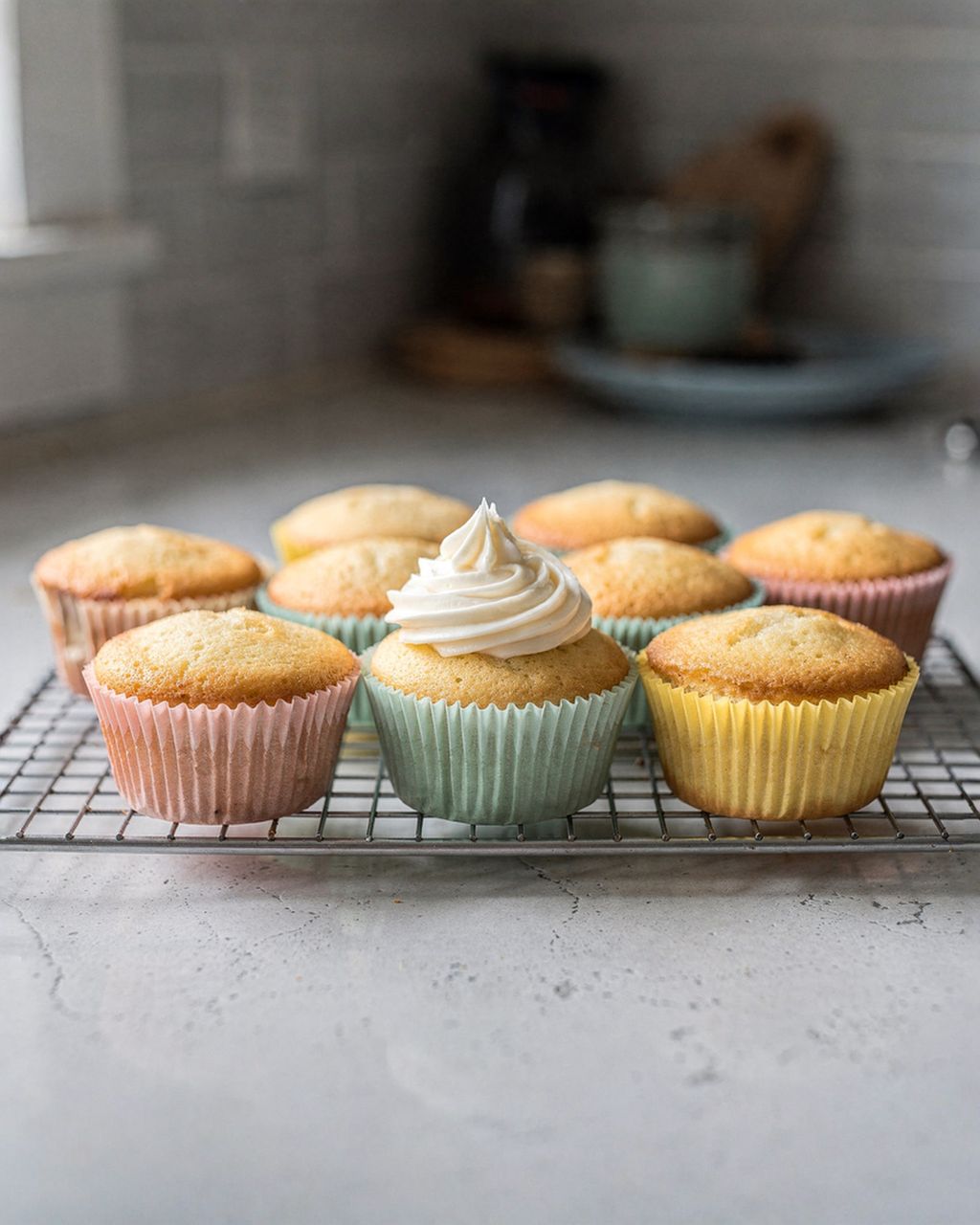
Top – a cupcake bakes up with a flatter top so frosting has somewhere to sit. A muffin gets a domed, cracked top, at most finished with a crumb topping or sugar.
Occasion – a cupcake is a celebration dessert, while a muffin is breakfast, a snack, or (in a savoury version) a side for soup.
Muffin batter is mixed as little as possible, while cupcake batter is beaten — and that single difference is where everything else comes from.
The muffin method: whisk flour, baking powder, salt and sugar together in one bowl, and in another combine eggs, milk or yogurt and melted butter or oil. Pour the wet mixture into the dry and fold with a spatula for just 10–15 strokes. The batter should stay lumpy, with a few streaks of flour still visible. Mix it smooth and you'll develop the gluten, giving you rubbery muffins with long holes (tunnels) running through them and pointed tops.
Creamed batter (cupcakes): beat softened butter (around 18–20°C/64–68°F) with sugar until fluffy — about 3–5 minutes with a hand mixer (just 2–3 in a stand mixer), until it turns pale and increases in volume. The sugar crystals cut tiny air pockets into the fat, which the baking powder then expands in the oven. Add the eggs one at a time, then alternate flour and milk — mixing only briefly so the batter stays airy. The result is smooth, pale and creamy.
The shortcut: lumpy batter = muffin, smooth and airy = cupcake. Bake cupcake batter as "muffins" and all you get is an undecorated cupcake.
A classic cupcake batter has roughly the same weight of sugar as flour, while a muffin usually has just a third to half of that — in a typical recipe, say 250g flour to 80–125g sugar. Fat follows the same pattern: cupcakes rely on butter, while muffins need only a modest amount of oil or melted butter, with moistness coming from yogurt, buttermilk, milk, or grated fruit and vegetables.
Sugar isn't just there for sweetness. It binds water, slows protein coagulation and keeps the crumb tender and fine — which is exactly why a cupcake feels "cakey" and a muffin feels "bready".
One thing to watch for: a muffin from a café or supermarket often has little in common with a homemade one. It tends to be large and almost as sweet as cake — closer to a cupcake in both taste and size than to a homemade muffin.
A muffin domes because the liner is filled right to the rim and baked in a hot oven. A cupcake is filled only two-thirds full and baked at a gentler temperature, so the top rises more slowly and evenly.
Muffins: fill the liner right up to the top. A common trick is baking at 210–220°C (410–430°F) for the first 5–7 minutes, then dropping the heat to 180°C (355°F). That initial blast of heat quickly releases steam and gas from the baking powder, so the top shoots up before the crumb has a chance to set, creating a tall, cracked dome.
Cupcakes: fill to about 2/3 full and bake at 170–180°C (340–355°F) for roughly 18–22 minutes. The batter rises more gradually, leaving a low, smooth top — the perfect base for frosting.
If your cupcakes still peak into a point, the usual culprits are an oven running too hot or too much baking powder. You'll find the full step-by-step method in Flat-Top Cupcakes: How to Bake Them Ready for Decorating. And since a few degrees make a real difference here, it's worth knowing why your oven doesn't actually show the real temperature.
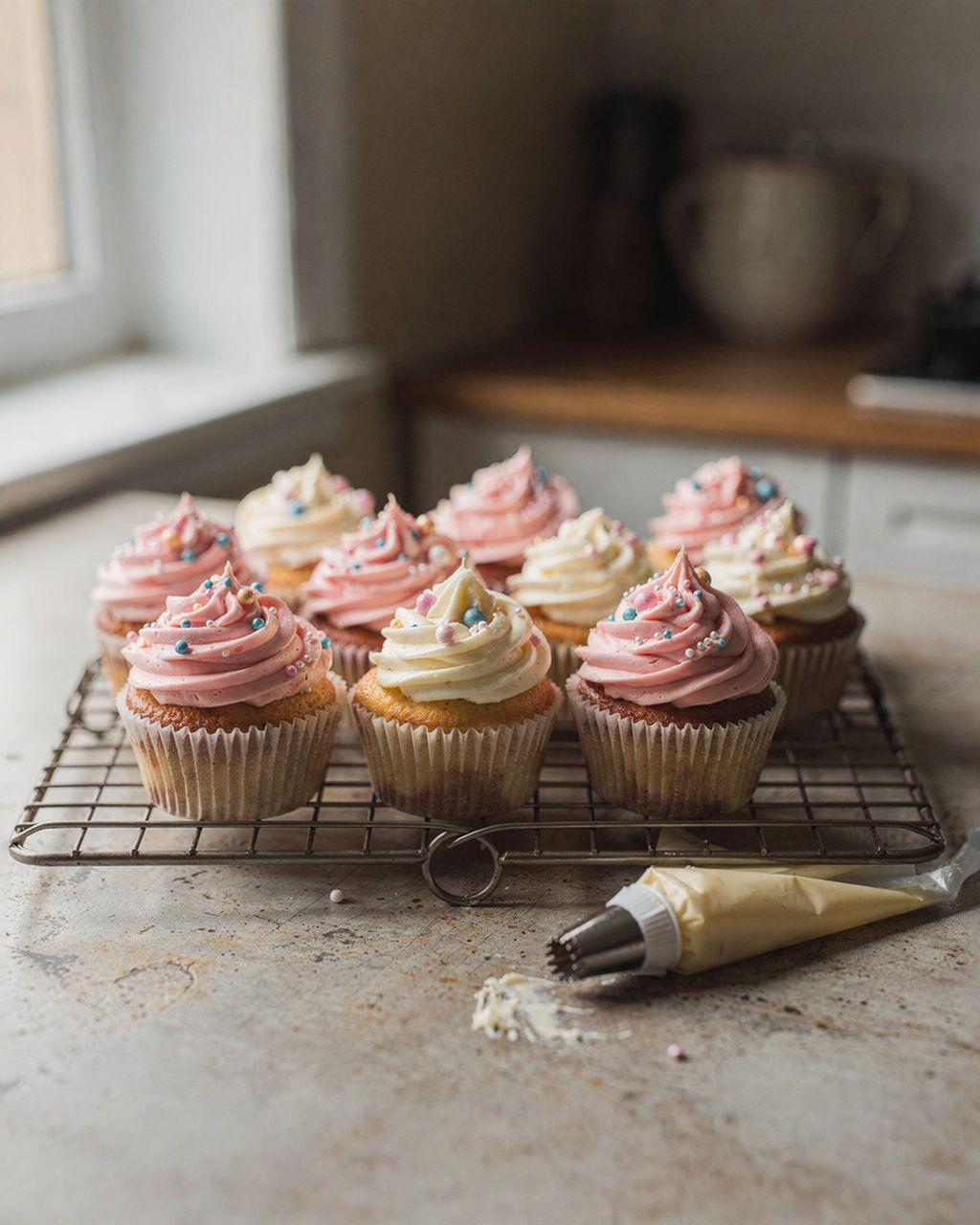
Cupcakes are decorated with frosting piped on after baking, while muffins are sprinkled with a crumb topping, sugar or seeds before they even go in the oven. Cupcake frosting — buttercream, mascarpone, cream cheese, or quark-based — is piped on with a piping bag and tip, and can easily make up a third of the whole treat.
Muffin toppings — streusel, cane sugar, oats, almonds or seeds — bake into a crisp finish right on top. A muffin with frosting on top is really already halfway to being a cupcake.
Inspiration for both camps:
Chocolate Cupcakes with Caramel Frosting – a classic cupcake with frosting
Pistachio Cupcakes with Lemon Curd and Mascarpone Frosting – cupcakes with a filling inside
Easy Redcurrant Yogurt Muffins – quick fruity muffins made with yogurt
Orange-Scented Carrot Muffins – moist muffins made with grated carrot
If you're just starting to pipe frosting, this guide to piping bags and tip sizes will help.
Savoury muffins are common — think cheese, ham or vegetables — but savoury cupcakes are much rarer, since a cupcake is, by its very nature, a sweet little cake. The muffin method, with its light hand on sugar, happily takes on cheese, ham, vegetables or herbs — just leave out the sugar, or use only a teaspoon. Savoury cupcakes, like a cheddar version topped with cream cheese frosting, do exist, but they're the exception rather than the rule.
Try these cheese and vegetable muffins, or in spring, these wild garlic muffins with three cheeses.
Cupcakes suit shallow paper liners, while muffins suit tall tulip-style liners — though a greased tin or silicone works too. Here's the breakdown:
Paper cupcake liners – shallow, with a crimped edge, holding the batter's shape well and showing off the frosting neatly on top. Good-quality paper cupcake liners, like those from PME, are made from a sturdier paper that doesn't go see-through with grease after baking and keeps its colour — on cupcakes, where the liner is part of the look, that difference is obvious at a glance.
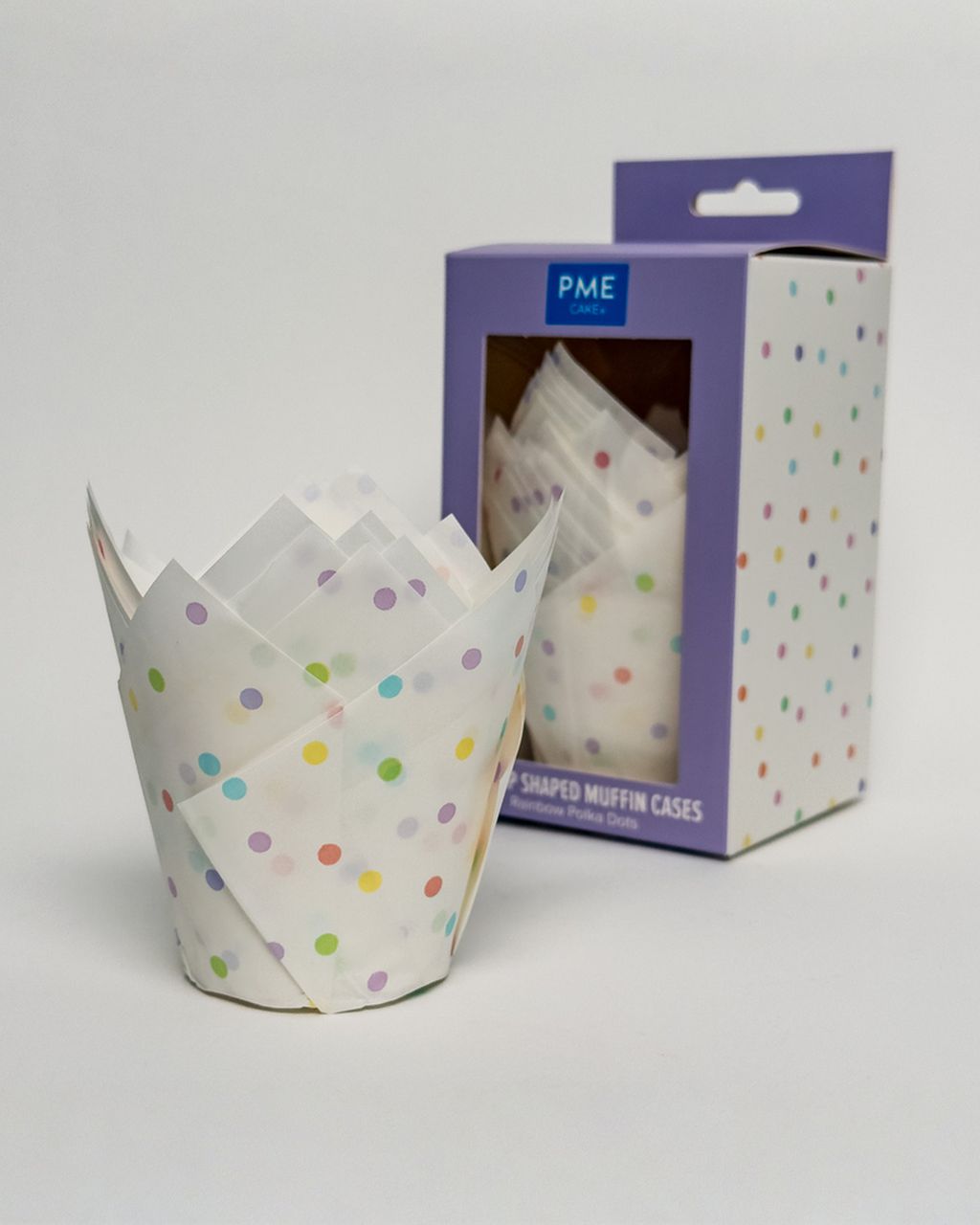
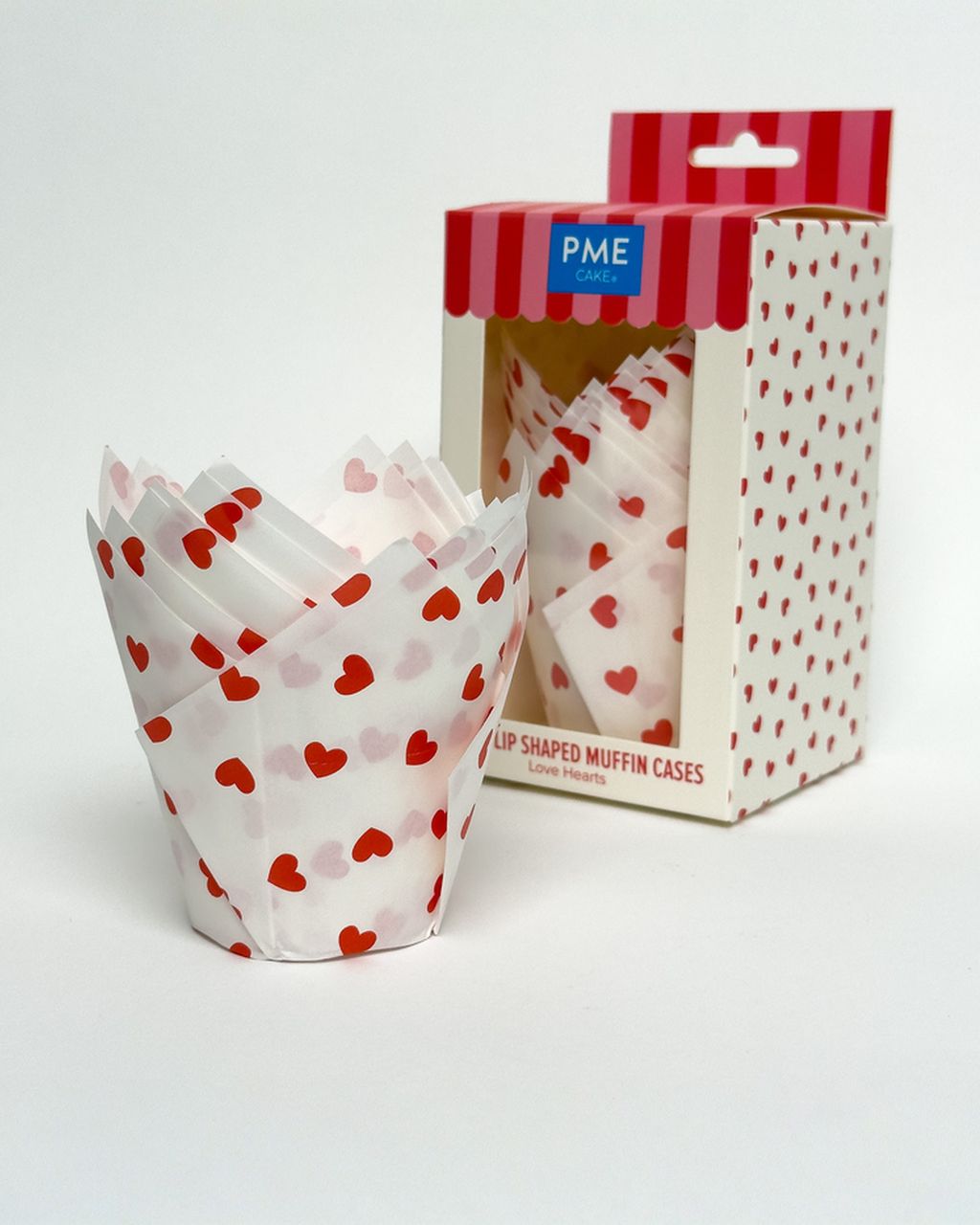
Tulip liners – taller, with points that extend above the rim of the tin. A muffin baked in one rises higher, giving that classic café-style shape. They don't suit cupcakes well, as the frosting would get lost among the points.
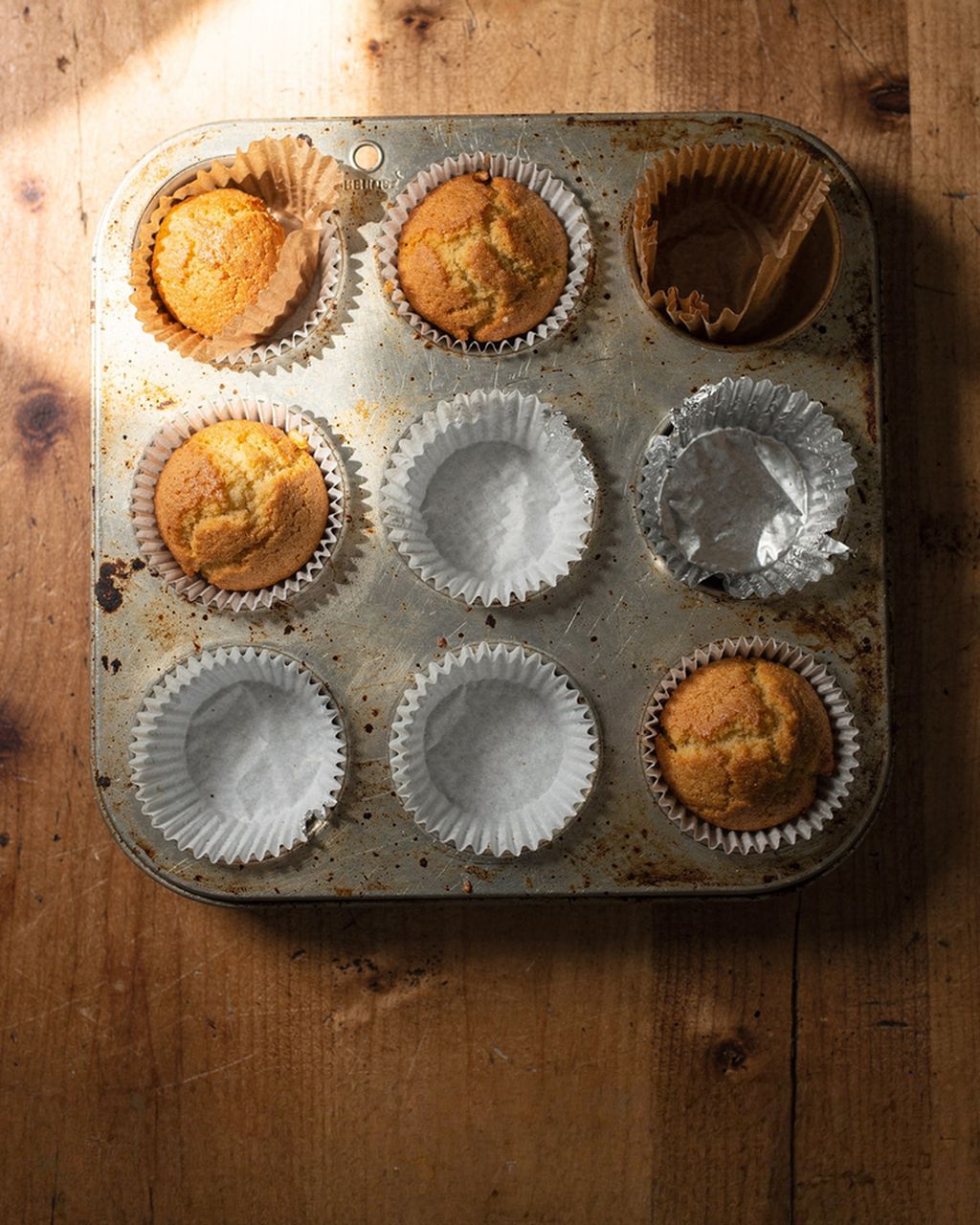
Foil liners – sturdy enough to stand on a flat tray without a tin, and grease-proof. Good for richer batters and great for picnics. Widely sold in supermarkets.
Silicone moulds – reusable, but they bake more slowly and tops tend to come out paler. If that's what you have, it's fine — just allow a few extra minutes.
No liner at all – grease the tin with butter and dust with flour. This gives muffins crispy sides they wouldn't otherwise have. It's not worth doing for cupcakes, since a decorated one is harder to handle without a liner.
You'll find a detailed comparison of materials in Muffin and Cupcake Liners: Paper, Foil, or Tulip?
Not quite – muffin batter gives you a decorated muffin, not a true cupcake. It has a coarser, denser crumb and a domed top that frosting doesn't sit well on. For real cupcakes you need creamed batter, where butter is beaten with sugar until fluffy.
American and English muffins aren't the same thing: an English muffin is a flat, yeasted bun cooked on a griddle, while an American muffin is a sweet quick bread baked in a liner and leavened with baking powder. English muffins are split in half, toasted, and served mainly at breakfast with eggs.
Yes, muffin batter keeps overnight covered in the fridge. Baking powder releases most of its gas once it hits the heat of the oven, so the muffins will still rise properly. In the morning, don't stir the batter again — just scoop it into the liners, and since it's cold, allow a few extra minutes of baking time.
Cupcakes most often sink when they're underbaked or when the oven door is opened too soon. Too much baking powder or too much sugar can also be to blame — the batter rises faster than it can set, then collapses. They're done when a skewer inserted in the centre comes out dry and the top springs back after a light press.
Muffins keep in a sealed container at room temperature for 2–3 days, and unfrosted cupcakes keep the same way for 2–3 days. Decorated cupcakes with cream, mascarpone or quark-based frosting belong in the fridge and should be eaten within 2 days. Both muffins and unfrosted cupcakes can be frozen for up to 3 months.
One recipe worth heating the oven for, one tip, and one deal from the shop. Nothing else.