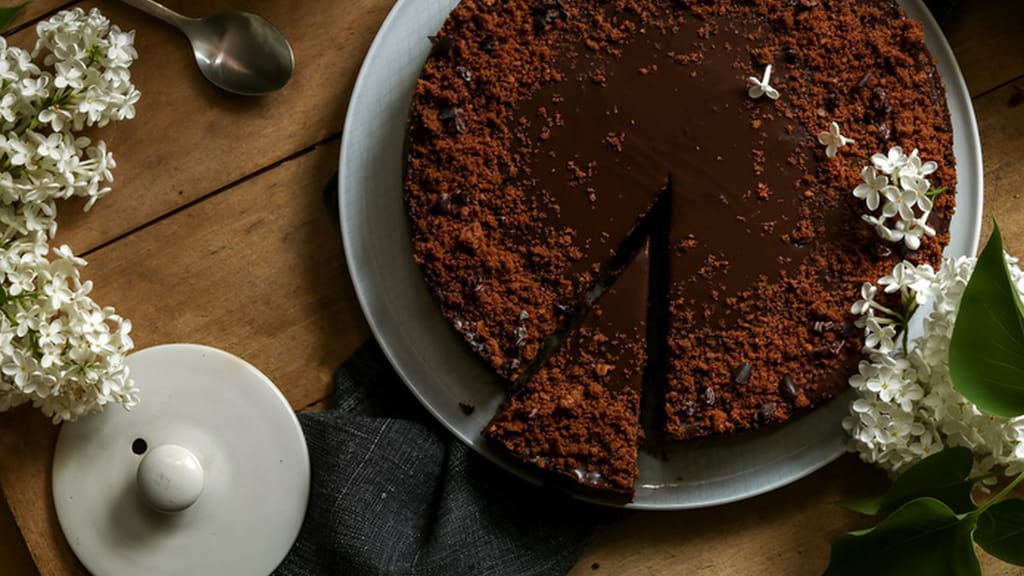
Simple chocolate cake
Edible Gold & Shimmer Dust for Cakes: What's Actually Edible and What's Just Decoration
Updated Sep 25, 2026
Edible gold is real gold, either rolled into paper-thin sheets or ground into a fine powder. In the EU it's approved as the food colouring E175. But not everything that glitters on a cake is meant to be eaten. A lot of glitter sold "for cakes" carries small print on the packaging that says "non-toxic" or "decorative use only" — and that means only one thing: don't eat it. Here's how to spot genuinely edible decoration on a label, what to steer clear of, and how to apply gold to a cake so it looks expensive rather than like scattered foil.
Edible gold is the food colouring E175: pure gold, usually 22–24 carat, approved for decorating the outside of confectionery, chocolate, and liqueurs. At home, use it purely as a surface decoration on cakes — especially on chocolate, ganache, and icings. It's approved in the EU under the food additives regulation (1333/2008). EFSA re-evaluated it in 2016 and found the data too limited for a full risk assessment, but given how poorly metallic gold dissolves, it doesn't expect any effects in the body. Gold is one of the most chemically stable elements around, so it doesn't react with food or alter its flavour.
Don't think of it as an ingredient, though. It has no aroma or nutritional value — it's decoration, full stop. You'll find it in three forms:
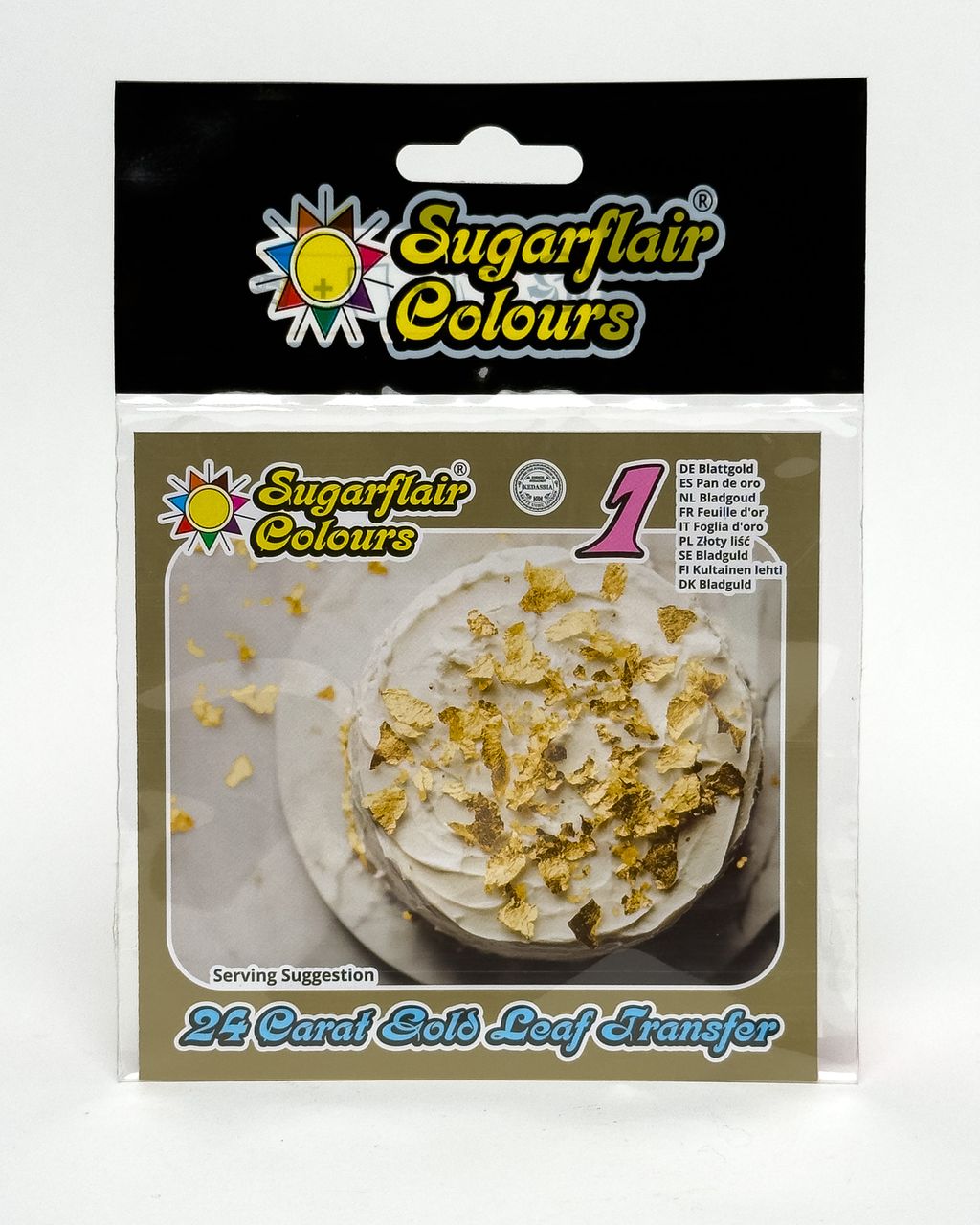
Sheets (leaf) – thin sheets, typically 8 × 8 cm, sandwiched between backing papers. These give you an unbroken, mirror-like surface.
Flakes – irregular little shards. Easiest to apply, and they look the most natural on a cake.
Powder/dust – finely milled gold for dry dusting. The least commonly bought — pricey and understated.
Watch out for mix-ups: gold shimmer dust is not gold. It's a mineral pigment that just mimics gold (more on that below). It's easy to tell them apart on the label: real gold is listed as E175, while shimmer dust is usually E555 and E172.
Edible glitter and dusts will say "edible" explicitly on the packaging, along with a full ingredients list showing E-numbers approved for food use. If it only says "non-toxic" or "decorative use only", it doesn't belong on food. This is the single most important distinction when it comes to decorating.
What to check before you sprinkle it on your cake:
The word "edible". "Non-toxic" only means a small amount probably won't poison you. That's the same labelling used on craft glitter made for children.
A full ingredients list. An edible product must list its ingredients just like any other food. If there's none, don't buy it.
E-numbers that actually make sense. Typically sugar, starch, maltodextrin, gum arabic, E555 (potassium aluminium silicate) paired with E172 (iron oxides), or possibly E175 (gold) or E174 (silver).
No E171. Titanium dioxide is banned in food across the EU (more on this below).
"Decorative use only", "not for consumption", "remove before eating". This is decoration in the same category as a candle or cake topper — not something you sprinkle on.
Inedible glitter is often made from plastic (PET) or pigments that have no place in food. That's why the US FDA warns bakers to only use cake dusts and glitters when they're explicitly labelled as edible. And once glitter's been sprinkled on, there's no picking it back out of the icing.
Titanium dioxide (E171) has been banned as a food additive across the EU since February 2022; since 7 August 2022, products made under the old rules can no longer be placed on the market either (though existing stock already on shelves could be sold through until its use-by date). This applies to cake dusts and glitters too. The European Commission withdrew it under Regulation 2022/63 after EFSA concluded it could no longer be considered safe, since genotoxicity — damage to genetic material — couldn't be ruled out.
For home baking, the rule of thumb is simple: if a dust, glitter, pearl sprinkle, or powder colouring lists E171 (or "titanium dioxide", "CI 77891") in its ingredients, don't use it on food. You're most likely to run into it:
in older stock that's been sitting in the cupboard for a few years,
in products from outside the EU (orders from Asian webshops, American brands), where E171 is still permitted,
in pearlescent and white powders, where it used to be responsible for the bright white shine.
Nowadays, pearlescent pigments in the EU get their shimmer from E555 coated with iron oxide E172. That's why edible "gold", "bronze", and "copper" shades are easy to find, while a truly white or silvery pearl finish without E171 is much harder to come by.
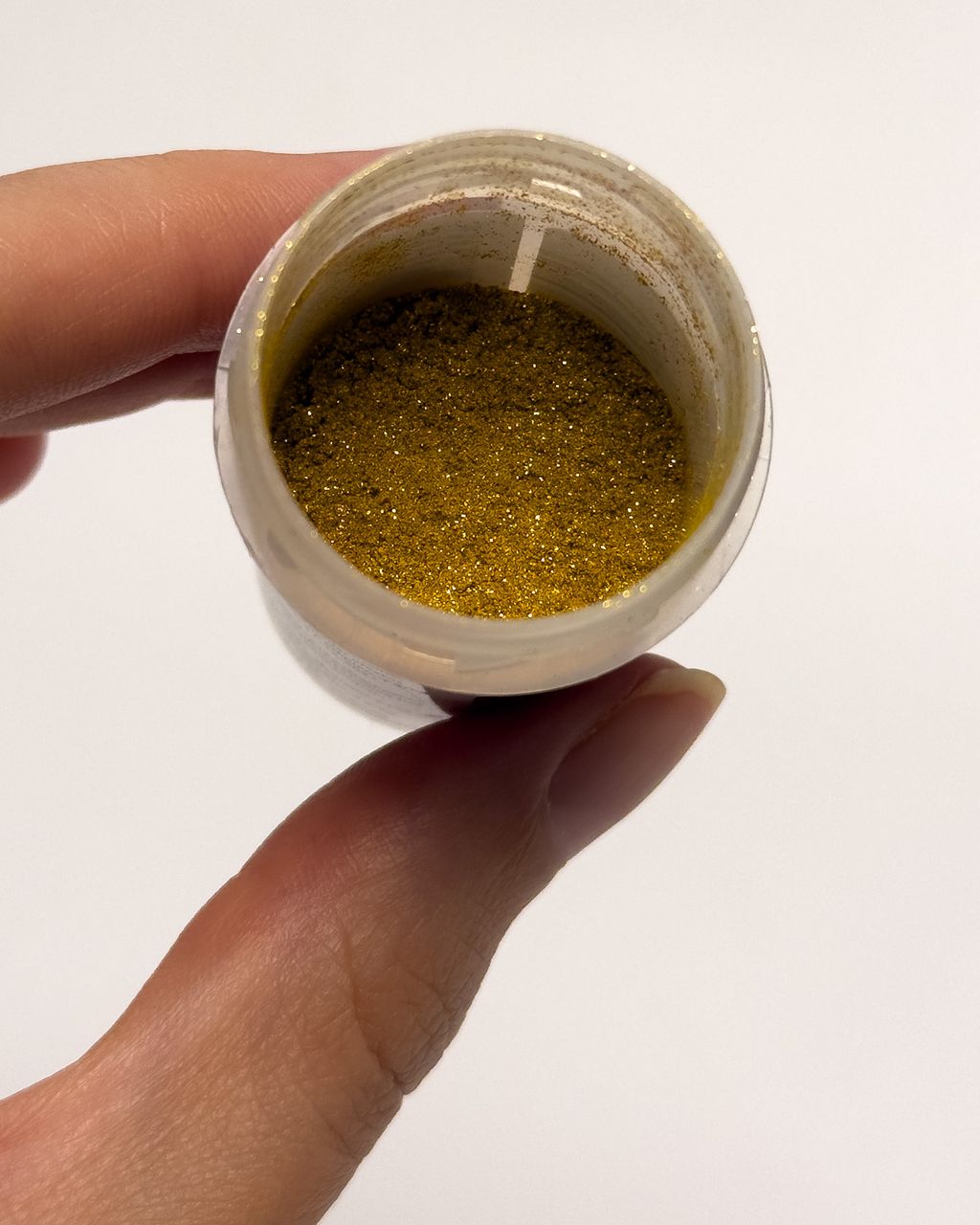
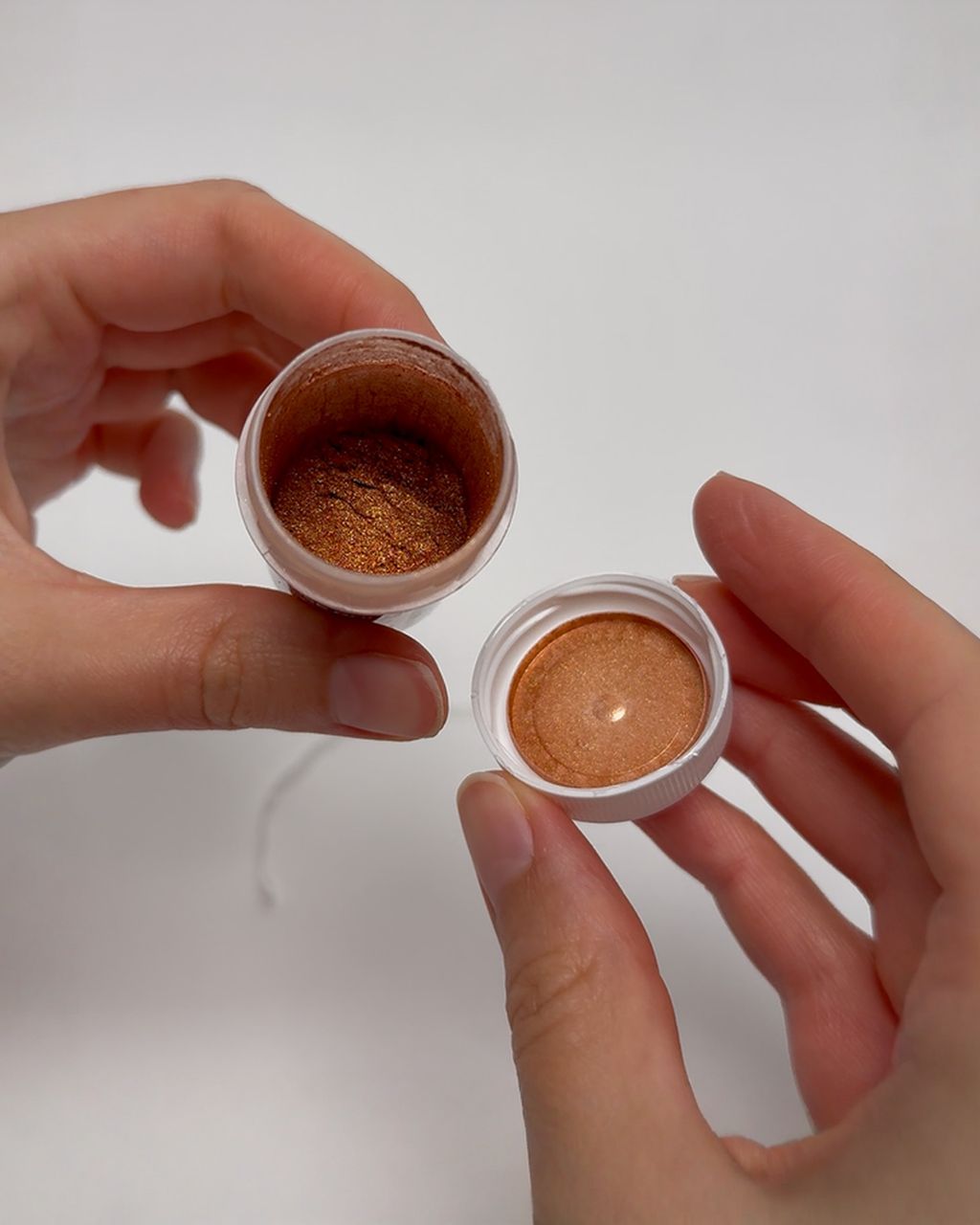
Edible shimmer dust (lustre dust) is made of fine flakes of the mineral potassium aluminium silicate (E555), coated with a coloured iron oxide (E172). It's this thin oxide coating — not metal — that gives it a gold-like shine. It may also contain sugar or starch as a carrier.
In practice, it differs from real gold in a few ways:
Look: dust gives a satiny to pearlescent shimmer, while gold gives a hard, metallic reflection.
Application: you can paint or dust an entire surface with powder, but gold works best just as an accent.
Price: dust is a fraction of the cost — one tin will get you through dozens of cakes.
Still, use dust sparingly and with some care. It's approved and labelled edible, but when EFSA re-evaluated E555 in 2020, it couldn't confirm its safety due to a lack of toxicological data, and it flagged aluminium intake as a concern. A thin shimmer on icing is a very different dose from a teaspoon of dust stirred into buttercream. Dust belongs on the surface, not mixed through the batter or filling.
Use gold leaf for large, glossy surfaces, flakes for a natural-looking accent, and shimmer dust for colouring whole surfaces or fine details. In more detail:
Gold leaf: the edge of a cake, a gold drip, a whole chocolate, wrapping around a chocolate decoration. One or two sheets is plenty for a single accent on a 20cm cake.
Flakes: dusting the top, a finishing touch alongside fruit. These are the most forgiving option for beginners, since unevenness just looks intentional.
Dry shimmer dust: dusted over a finished chocolate decoration, fondant, or glaze. Gives a soft shine without adding much colour.
Shimmer dust as paint: a gold drip, lettering, outlines, painted patterns on fondant or royal icing.
Apply gold leaf with dry tweezers or a dry brush onto a slightly tacky, well-chilled surface, then press it down with a brush. Never touch it with bare fingers — it'll stick straight to them. Here's how:
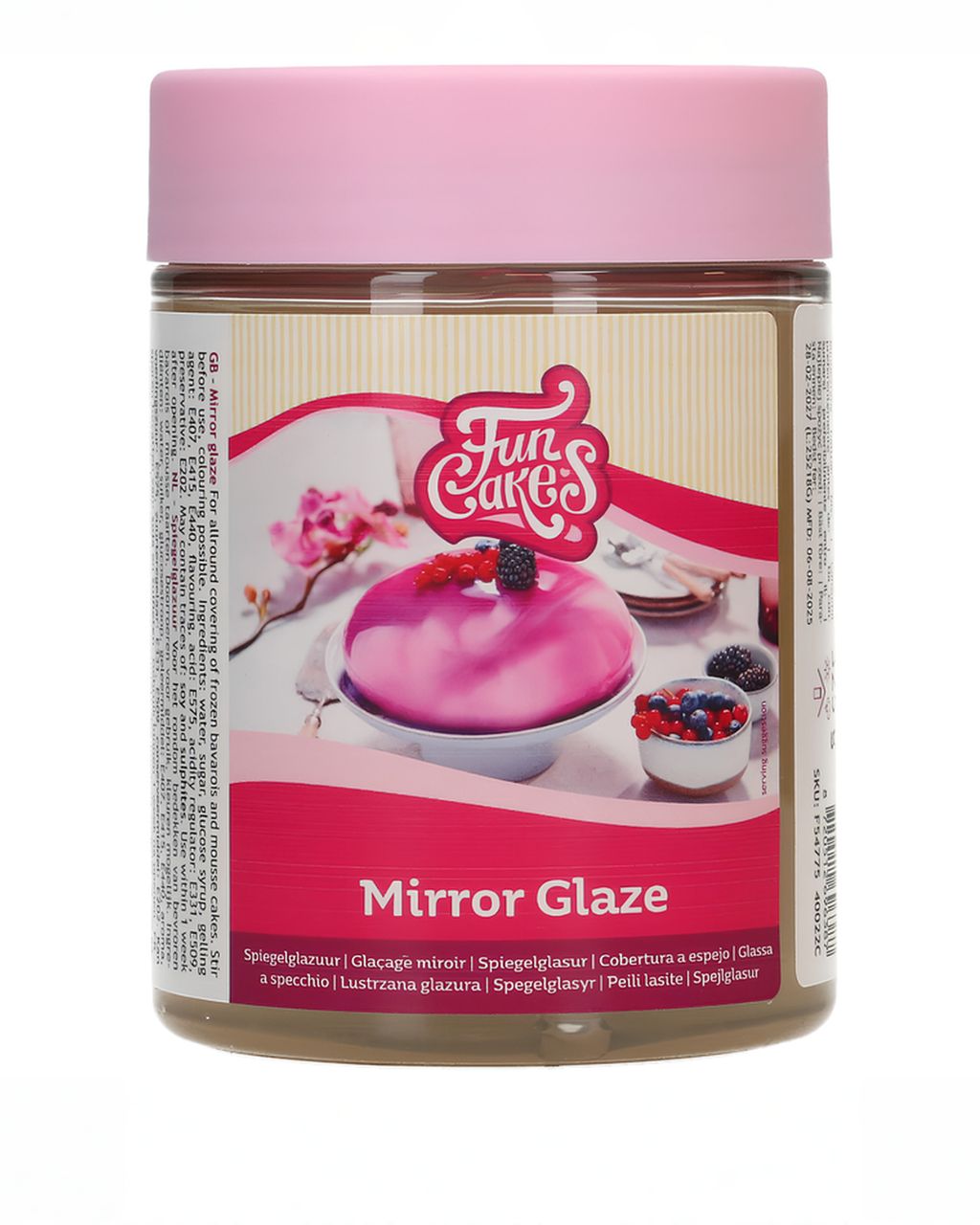
Prep the surface. Ganache, mirror glaze, or buttercream should be chilled and firm. If it's still slightly tacky, the gold will grab on its own. For dry fondant or chocolate, brush it very lightly with water or a bit of syrup first.
Shut the window, and don't breathe on it. The leaf is only a fraction of a micron thick and will blow away even with a gentle exhale.
Peel back the top sheet and let the leaf sit on the backing paper.
Transfer it. Tear off a piece with dry tweezers, or lay the whole leaf, still on its backing paper, face-down onto the cake and run a finger over the back of the paper.
Press it down with a dry, soft brush. Tap gently — don't drag. Dragging will tear the gold apart.
Don't throw away the scraps. Brush any fallen pieces into a bowl and reuse them elsewhere as flakes.
Gold wilts and creases on whipped cream or soft frosting. In that case, use flakes instead, and add them just before serving. Watch out for condensation too: if you've just taken the cake out of the fridge, wait for any surface droplets to disappear before adding gold, otherwise it'll pucker up around them.
To paint with gold dust, mix it with a few drops of pure alcohol (vodka, 40%) or an alcohol-based lemon extract to make a thick paint, then apply it with a brush onto a firm, dry surface. The alcohol evaporates, leaving just the shiny pigment behind. Don't use water for this — it dissolves the sugar in the mix, leaving streaky, dull-looking colour.
Ratio: start with a pinch up to ¼ teaspoon of dust and add alcohol drop by drop (usually 3–6 drops) until it forms a thick paint. Aim for a consistency like tempera paint, not ink.
Layers: the first coat will look translucent. Let it dry until it looks matte and no longer feels tacky, then apply again — usually two to three coats in total.
Where it works: chilled ganache, mirror glaze, fondant, royal icing, chocolate. On whipped cream or soft buttercream, the colour will just bleed.
For chocolate decorations and truffles, mix the dust into a drop of melted cocoa butter instead of alcohol. This creates a glossy coating that won't rub off.
Dry application: dust finished decorations with a dry fan brush. Blow off any excess so it doesn't fall onto the plate.
To make a gold drip, first coat the cake in chilled ganache (you'll find the method in our article Modern Cake Decorating: Naked, Drip and Ombré) and only paint the drips gold once they've set.
Edible gold shows up best against a dark, smooth, glossy surface: chocolate ganache, mirror glaze, or tempered chocolate. On white frosting, gold can look pale and washed out; on pale green or pastel shades, it can easily tip into gaudy territory.
Less is more. Three flakes along the edge and a single gold drip will do more for a cake than gilding the entire top. Gold looks its best as a contrast — next to a raspberry, a mint leaf, or a glossy chocolate decoration. For chocolates and truffles, flakes pressed into still-wet chocolate work well; you'll find more on this in our article Homemade Chocolate Truffles.
Simple chocolate cake
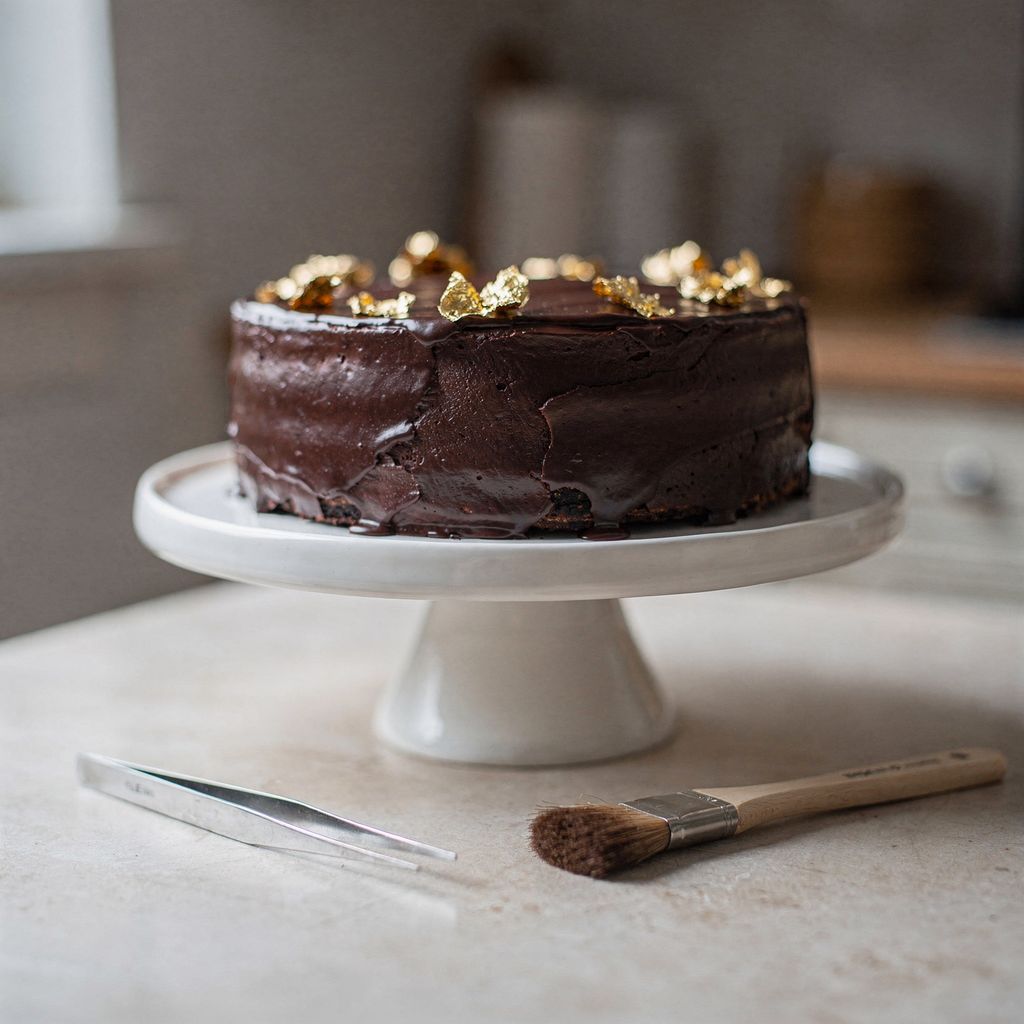
Simple Chocolate Cake: A Dark Base for Edible Gold
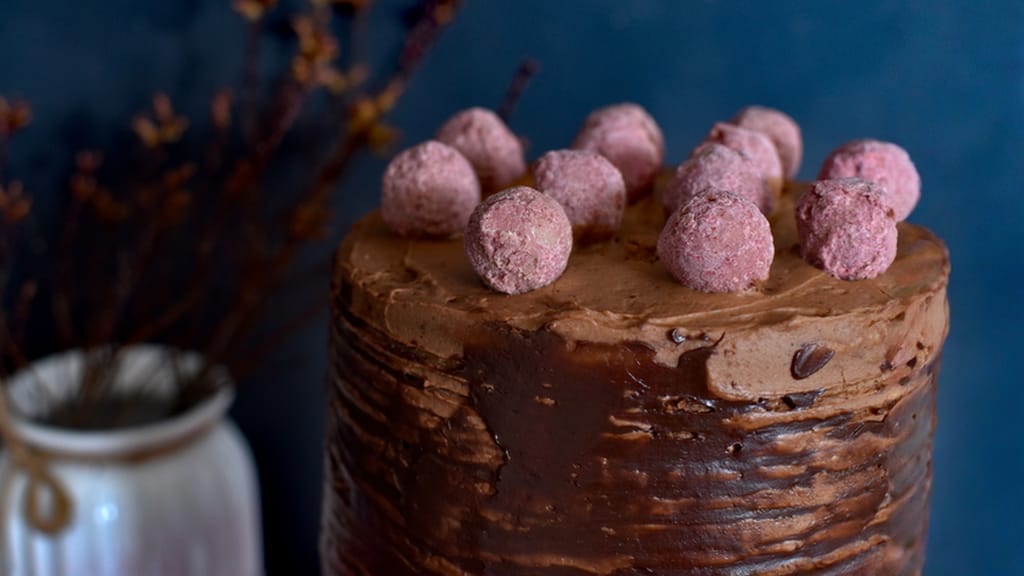
Chocolate cake with chocolate and raspberry pralines
Chocolate Cake with Raspberry Truffles: Decorated with Edible Gold Flakes
Edible gold has no taste or smell at all, since it's chemically inert. You'll barely notice it on your tongue, maybe just a faint papery texture. It's a purely visual flourish and won't change the flavour of your cake in the slightest.
At the amounts typically used on a cake, EFSA suggests edible gold (E175) is unlikely to pose a problem even for children or pregnant women, since it's practically insoluble and no effects in the body are expected — though EFSA notes the data available is limited. A whole cake usually carries only a handful to a few dozen milligrams of gold (one 8×8cm leaf weighs around 12mg). That said, be cautious with shimmer powders around kids and during pregnancy: they need to be explicitly labelled edible and free of E171.
Edible gold doesn't spoil — it doesn't corrode or oxidise. Keep it in its original booklet or tin, somewhere dry, away from drafts and out of the fridge, where moisture could stick the leaves to the backing paper. Keep shimmer dust tightly sealed too, otherwise it'll pick up moisture and clump.
Yes — simple edible glitter can be made from rice paper. Brush it with food colouring, let it dry, then crush or snip it into flakes. It won't have the metallic shine of powder, but it's made from simple food ingredients with no question marks over what's in it. Coloured sanding sugar also works well as a sprinkle.
Don't eat a cake decorated with inedible ("non-toxic") glitter that can't be fully removed. If it's only on a removable part, like a topper or pick, take that off before slicing. If it's mixed directly into the buttercream or icing, remove the entire decorated layer. If someone's eaten a small amount and feels unwell, call your local poison control centre straight away.
One recipe worth heating the oven for, one tip, and one deal from the shop. Nothing else.