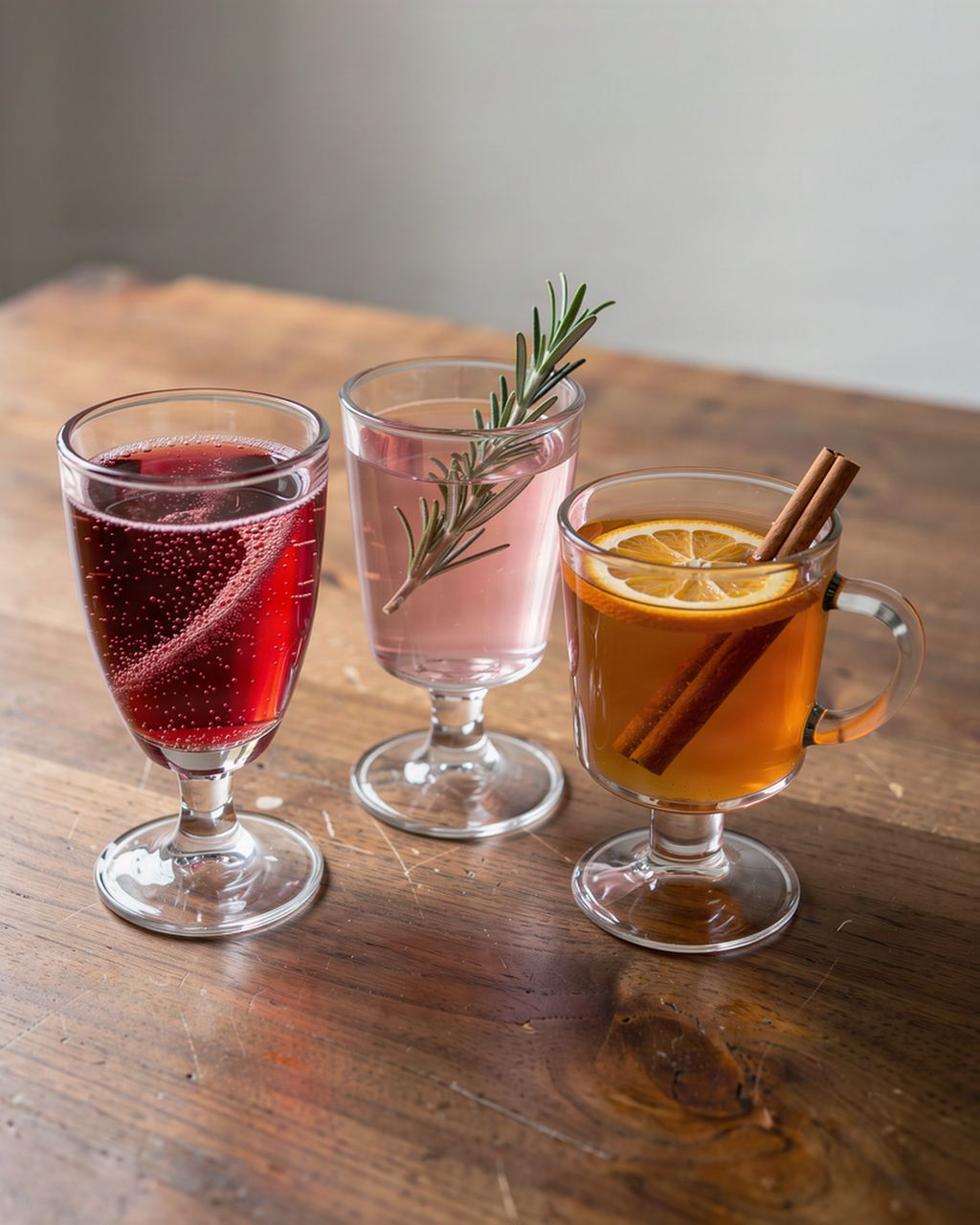
Kir – my favorite french cocktail
Edible Glitter for Drinks: How Much to Use and How to Make Sparkling New Year's Eve Cocktails
Updated Nov 2, 2026
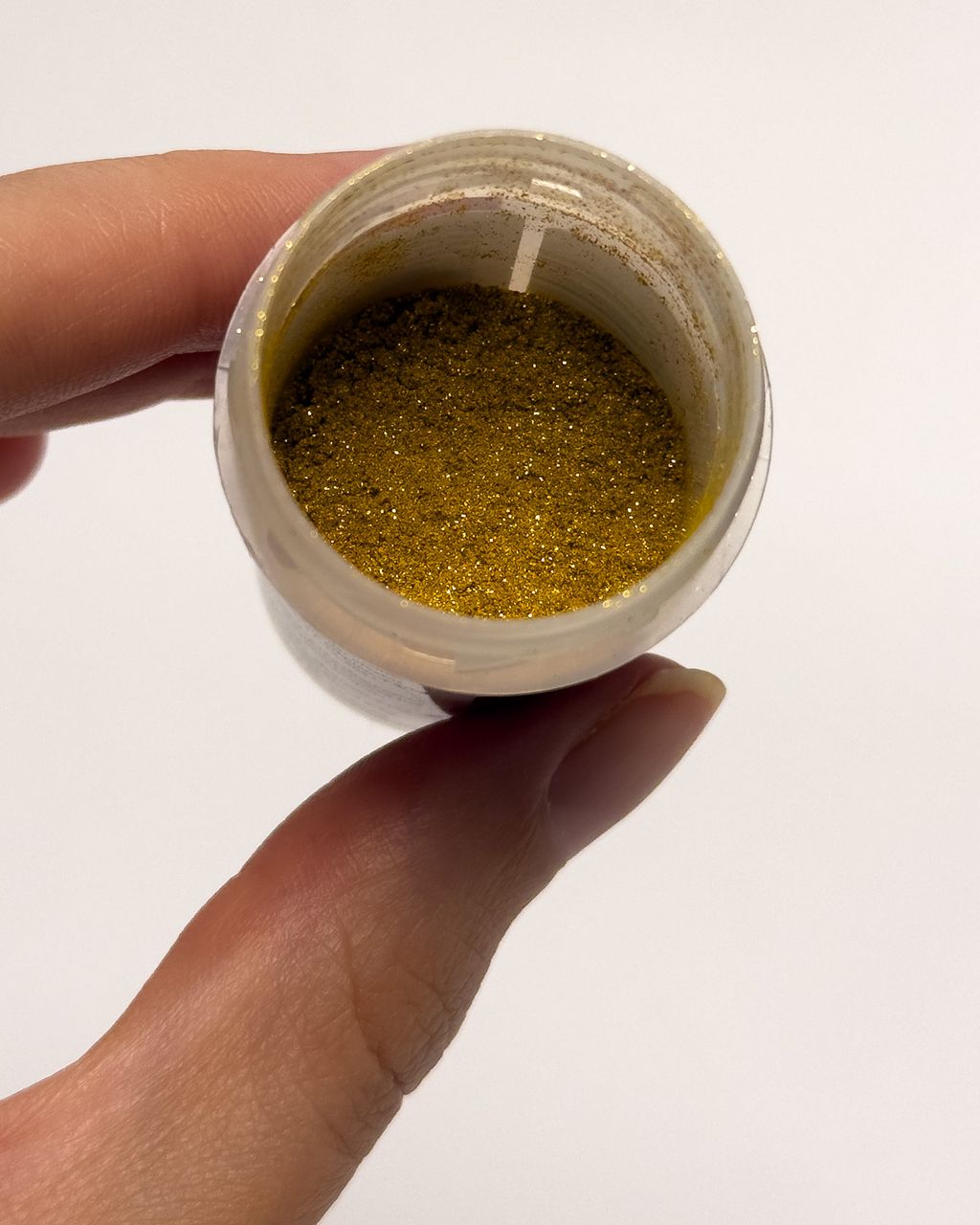
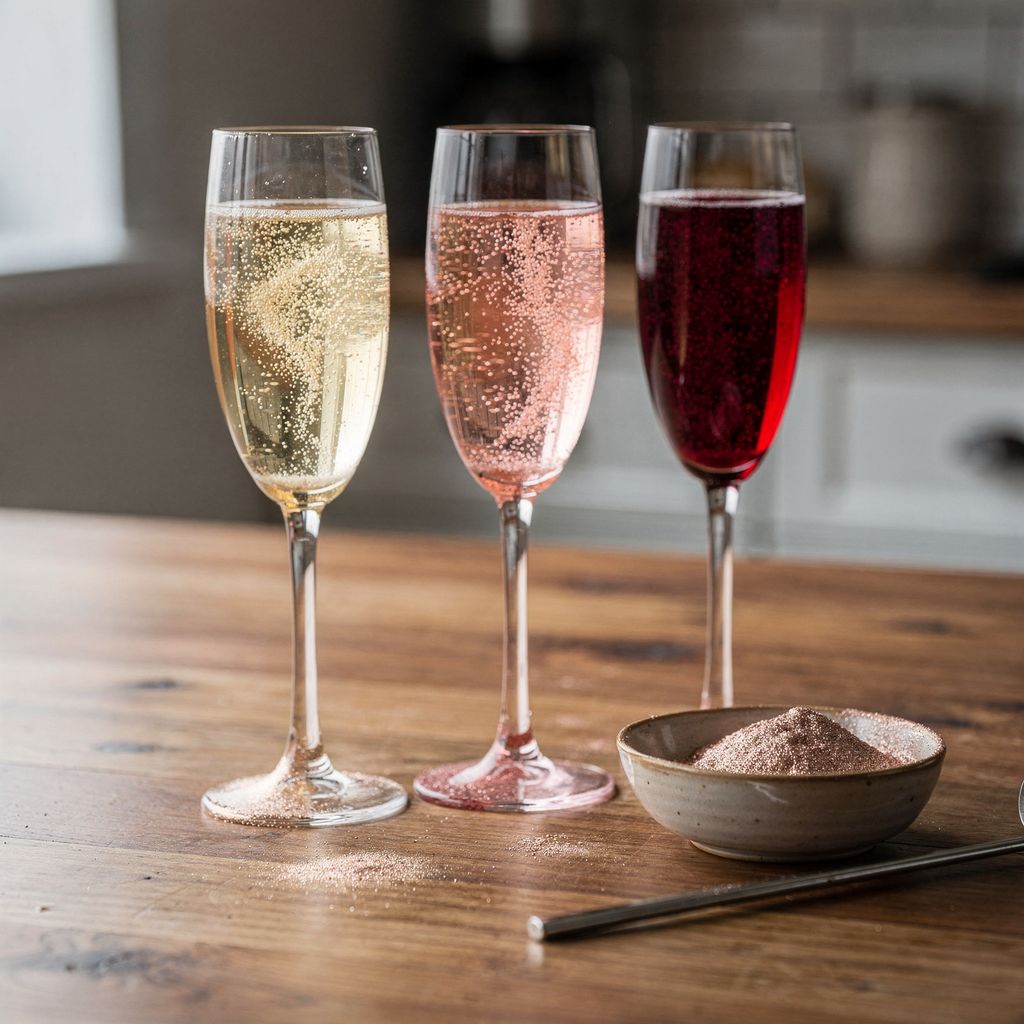
Edible glitter for drinks is a finely ground shimmer powder made from food colourings. It doesn't dissolve in liquid. It hangs suspended in it and sparkles when you swirl the glass. A small pinch per glass is plenty, and never more than the packaging allows: for Sugarflair gold powder, no more than 2 g per kilogram of drink, which works out to 0.3 g for a 150 ml flute of sparkling wine. For Christmas red, it's 1 g per kilogram. First stir the powder into a spoonful of alcohol or syrup, then top up with something fizzy. Sparkling wine, tonic and clear lemonade carry it best. Below you'll find how to tell whether glitter is truly edible, how much to use, how to add it without clumps, and which colour to choose for a New Year's Eve toast or a kids' alcohol-free drink.
Edible glitter for drinks is a very finely ground shimmer powder made from food colourings, often with an anti-caking agent. It doesn't dissolve in liquid; it only hangs in it for a while. Our Sugarflair powders, for example, contain iron oxides (E172) and silicon dioxide (E551). The gold also contains tartrazine (E102), and the Christmas red contains tartrazine and ponceau 4R (E124). The tiny particles reflect the light, which is why the drink sparkles when you swirl the glass.
In shops you'll find two kinds, and only one of them belongs in a glass:
Shimmer powder (lustre dust) – a fine powder that disperses in the drink. This is what you want for cocktails.
Edible glitter, or flakes – larger pieces that tend to float on the surface or sink to the bottom. They suit cakes and cookies, but in a drink they just look like litter.
The powder doesn't dissolve in alcohol or water, it only floats in them. That's why it gradually settles, and why it matters how you get it into the glass (see below).
You can tell edible glitter by its label: it must state that it's a food or food decoration, and it must have a full ingredients list with E-numbers and details of the manufacturer or importer. If any of this is missing, don't put it in a drink.
What to look for:
"Edible" – fine, it's meant to be eaten.
"Non-toxic" – careful, this is not the same thing. It only means the product won't harm you if you swallow it by accident, not that it's meant to be eaten.
"For decoration only" – this belongs on a cake that's removed before slicing, not in a glass.
Maximum dosage – for powders with azo dyes or iron oxides, the packaging often gives it in grams per kilogram of food. Treat it as a ceiling, not a recommendation.
Ingredients – since 2022, titanium dioxide (E171) may no longer be added to food in the EU, because the European Food Safety Authority (EFSA) could not rule out that it damages the genetic material in cells (genotoxicity). A powder sold as food in the EU shouldn't contain it.
We go into more detail on what you can eat and what is only decoration in the article Edible gold and shimmer powder for cakes: what you can eat and what is just decoration.
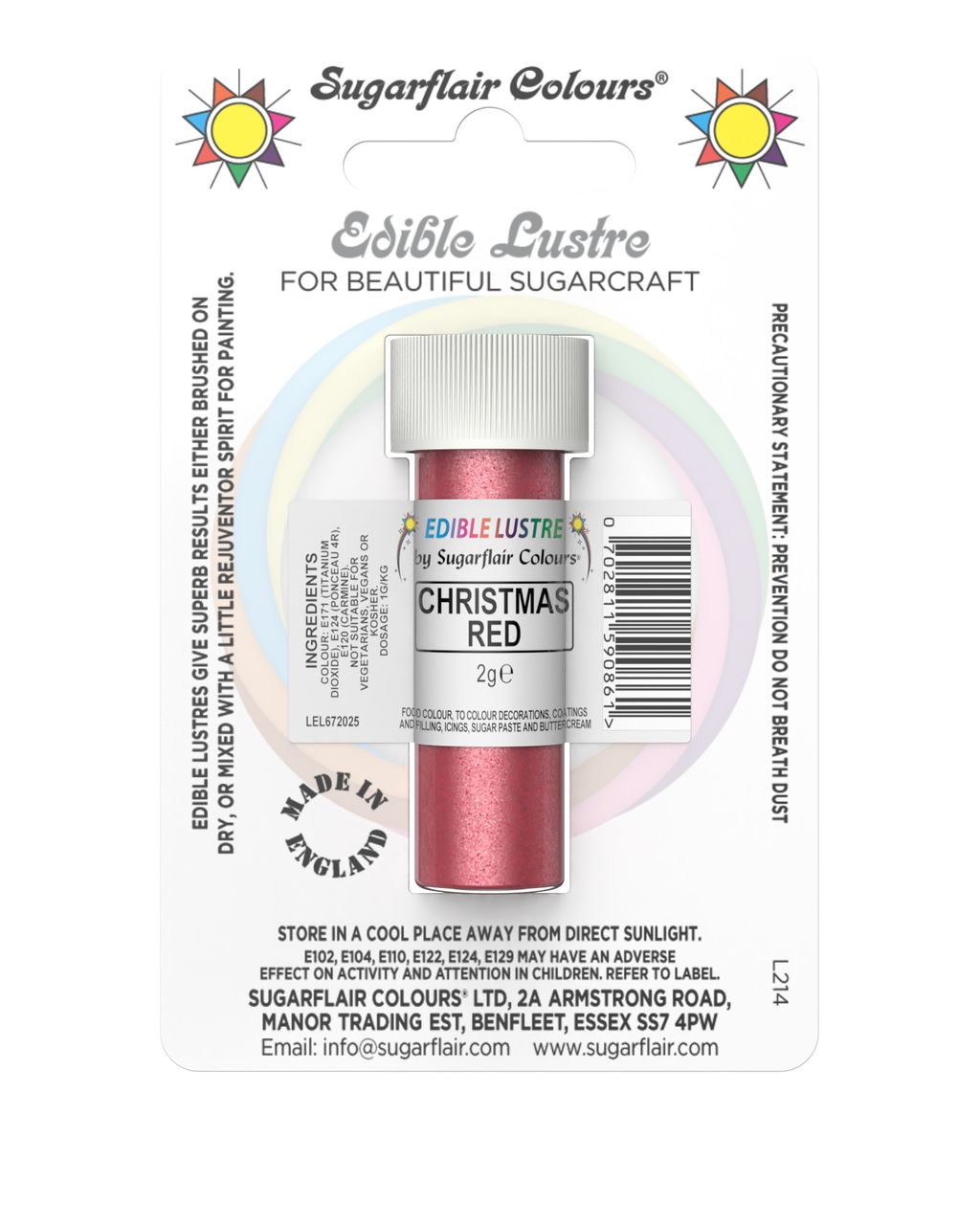
Use no more edible glitter than the maximum dosage on the packaging allows: for Sugarflair gold powder that's 2 g per kilogram of drink (roughly per litre), and for Christmas red 1 g per kilogram. Rose gold has no numerical limit (the packaging says "quantum satis", meaning only as much as needed), but a small pinch is plenty there too. Per glass, it works out like this:
Flute of sparkling wine (150 ml): gold powder no more than 0.3 g, red no more than 0.15 g
Tall glass with tonic or lemonade (250–300 ml): gold no more than 0.5–0.6 g, red no more than 0.25–0.3 g
Party carafe or punch bowl (1 l): gold no more than 2 g (half of a 4 g jar), red no more than 1 g (a quarter of the jar)
An ordinary kitchen scale can't weigh amounts this small, so work out the dose from the jar: 4 g of gold powder is enough for at least 2 litres of drink (about 13 flutes of sparkling wine), and 4 g of red for at least 4 litres. For a single glass, use just a small pinch between two fingers, and for several glasses make a glitter base from a measured part of the jar (the method is in the next section).
More powder doesn't mean more sparkle: the drink turns cloudy and the swirls blur into a haze.
The trick is to first stir the powder into a little liquid until it forms a smooth paste, and only then top up with the rest of the drink. Sprinkled straight onto the surface, it clumps and floats on top.
Put the powder in the bottom of the glass and add 1–2 tablespoons of alcohol (gin, vodka, liqueur) or syrup. The powder disperses most easily in alcohol.
Stir with a bar spoon until the clumps disappear – it takes a few seconds.
Add ice, if you want it in your drink.
Slowly pour in the rest, ideally something fizzy – sparkling wine, tonic or soda water. The bubbles carry the particles upward and keep the shimmer moving longer than in a still drink.
Serve right away. After a few minutes the powder starts to sink. No problem – one swirl of the glass and the eddies are back. Tell your guests, it's half the fun.
Glitter base for a party: stir 2 g of gold powder (half of a 4 g jar) or 1 g of red into 100 ml of alcohol or syrup in a small bottle, and shake it before each pour. Drip a teaspoon of the base (5 ml) into a glass and top up. A teaspoon of base contains roughly 0.1 g of gold or 0.05 g of red powder, so you stay under the limit even in a 150 ml flute, and the base is enough for about 20 glasses.
Edible glitter looks best in clear, light-coloured and fizzy drinks: sparkling wine, prosecco and crémant, gin and tonic, clear lemonades, syrup with soda water and iced tea.
It suits milky and cloudy drinks (smoothies, juices with pulp, eggnog) less – the shimmer gets lost there. For dark drinks such as cola or mulled wine, reach for gold powder, which shows through even a darker liquid.
Of our recipes, these go well with a bit of sparkle:
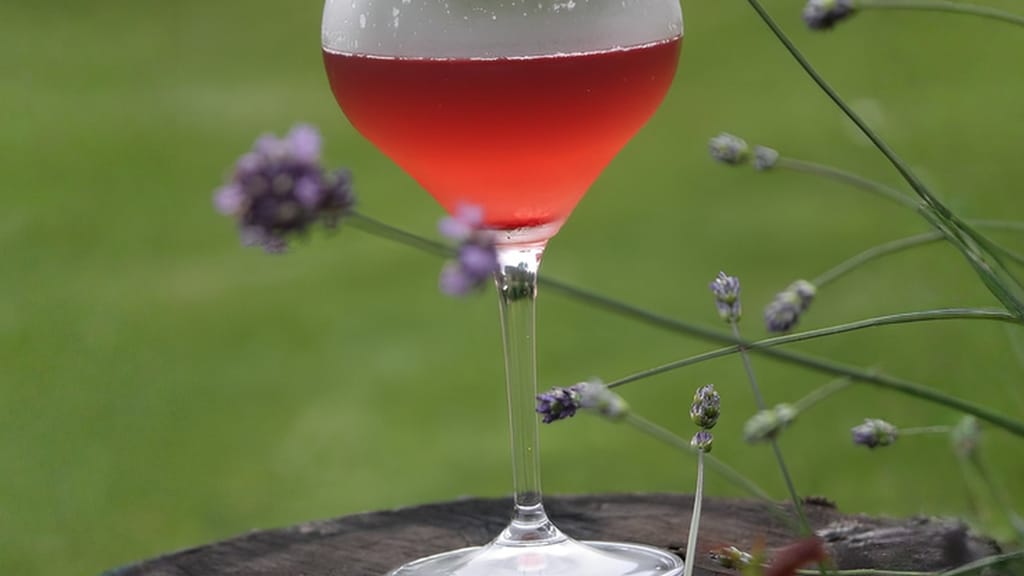
The simplest sparkling cocktail is a Kir Royal: blackcurrant liqueur topped with champagne (sparkling wine works fine at home) instead of white wine, with a small pinch of rose gold powder. The liqueur gives the colour, and the bubbles set the shimmer swirling. You'll find the basics in the recipe for Kir – the French cocktail with blackcurrant liqueur.
Other tried-and-tested combinations:
Sparkling wine or prosecco + gold powder – the classic for a midnight toast.
Gin and tonic + gold powder + a slice of lemon – tonic is fizzy, so the shimmer lasts a long time.
Sparkling wine + cranberry or pomegranate syrup + Christmas red powder – ruby swirls. The red powder has the lowest limit, 1 g per litre, so go easiest here.
Kir – my favorite french cocktail
Kir – the French cocktail that becomes a Kir Royal with bubbles and edible glitter
You can make a sparkling alcohol-free drink from homemade syrup, sparkling water and a pinch of edible powder stirred right into the syrup – then just top up with soda. For children, choose rose gold, which contains no azo dyes. Gold and Christmas red powders contain tartrazine (E102), and the red also ponceau 4R (E124), and products like these must carry a warning that they "may have an adverse effect on activity and attention in children".
The pink alcohol-free ginger and rose cocktail with a pinch of rose gold powder looks like champagne.
Homemade lemonade and syrups are clear and tart – rose gold looks beautiful in them.
Elderflower cordial with soda water is light, fragrant and clear.
You'll find more ideas for an alcohol-free midnight toast in the article Alcohol-free drinks for New Year's Eve.
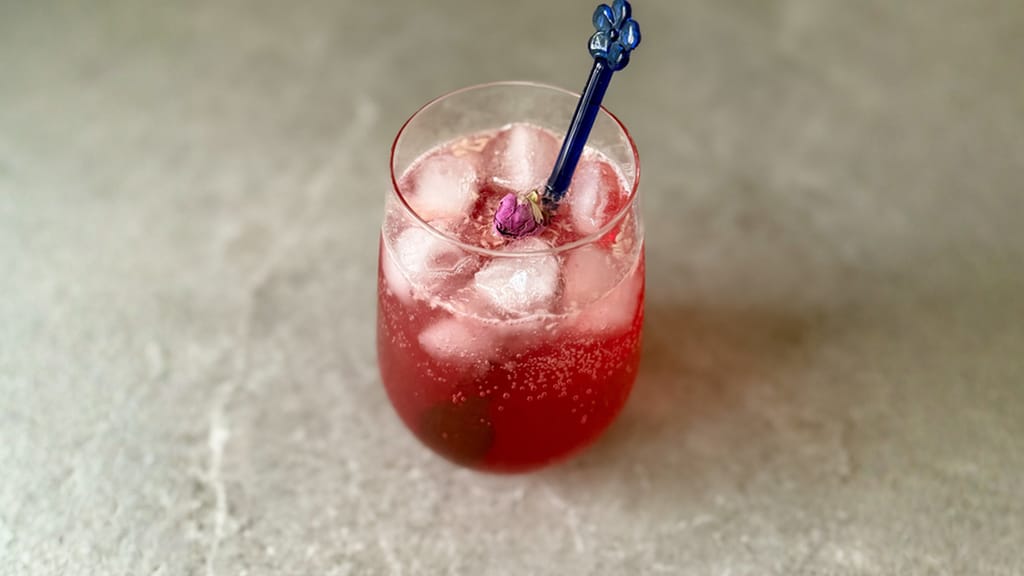
Homemade rose mocktail with ginger and rose petals
Homemade pink alcohol-free ginger cocktail – a sparkling New Year's Eve drink without alcohol
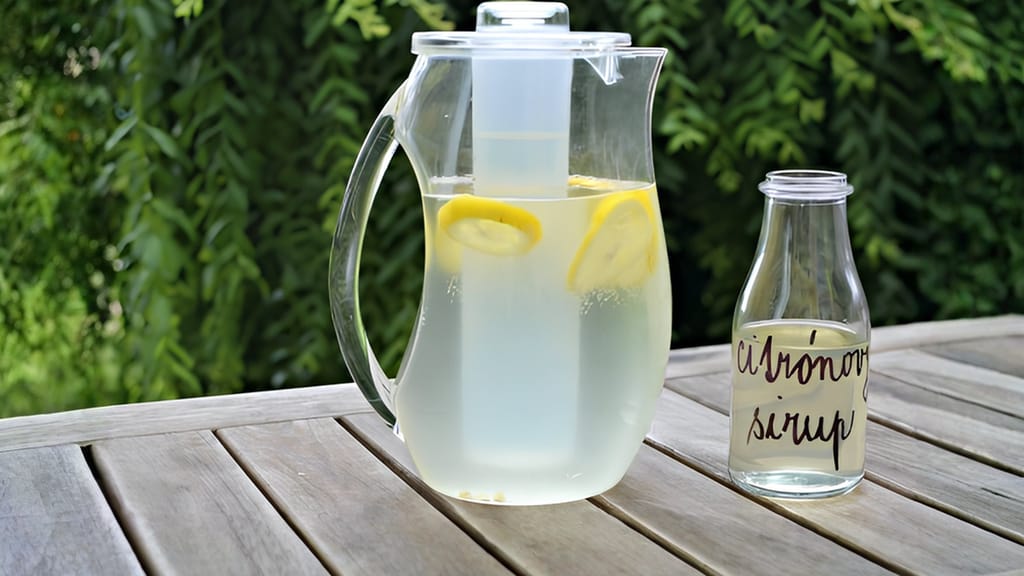
Homemade lemonade syrup and other fruit syrups
Homemade lemonade – a clear base for a sparkling alcohol-free drink
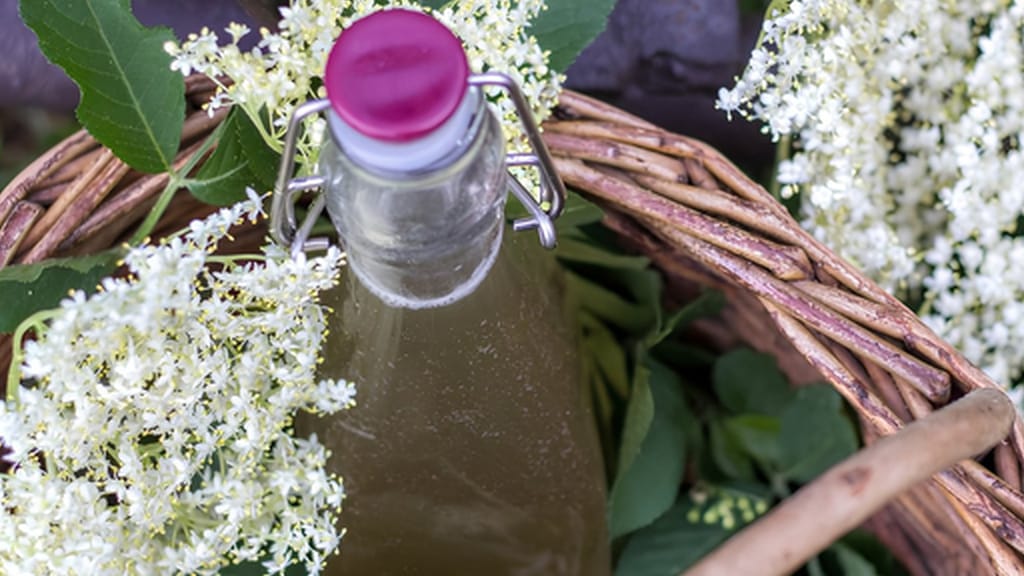
Elderflower cordial (aka bezináda)
Elderflower cordial with soda water and edible shimmer powder
Choose the colour according to the drink and to who will be drinking it: gold for light bubbly drinks and tonic, rose gold for pink and fruity drinks and for kids' alcohol-free drinks, Christmas red for cranberry and pomegranate cocktails.
Gold – the most versatile. It sparkles gold in a glass of sparkling wine and shows through even a darker drink. Limit 2 g per kilogram, contains tartrazine (E102). E102: may have an adverse effect on activity and attention in children.
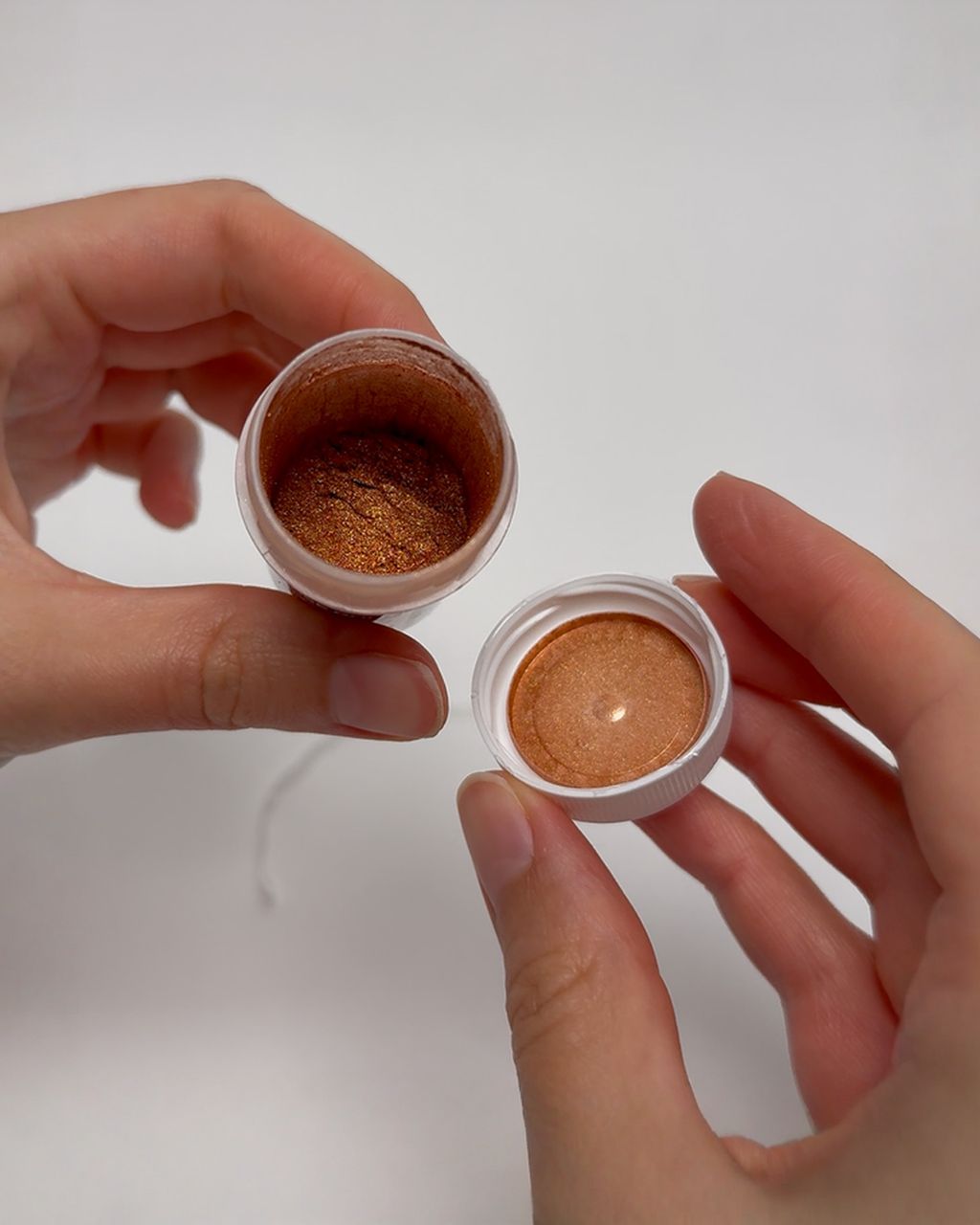
Rose gold – a softer, warm shade. It suits pink sparkling wine, Kir, and strawberry and raspberry drinks. The colouring is iron oxides (E172) only, and the dosage has no numerical limit.
Christmas red – the powder tints the drink itself a little too. In a clear tonic drink it makes red swirls, and in a cranberry cocktail it deepens the colour to ruby. Limit 1 g per kilogram, contains tartrazine (E102) and ponceau 4R (E124). E102 and E124: may have an adverse effect on activity and attention in children.
You'll find the full selection of powders, edible gold and glitter on the edible gold and glitter page.
Make a sparkling rim from sugar mixed with rose gold powder: rub the rim with lemon and press it into the mixture. Gold and red powder don't suit a rim – their limits of 2 and 1 g per kilogram apply to the sugar as well, and in such a small amount they wouldn't show on the rim.
Pour 2–3 tablespoons of granulated sugar onto a small plate and mix in a pinch of rose gold powder until you like the colour.
Run a wedge of lemon or lime around the rim of the glass (for an alcohol-free drink, a little syrup will do).
Turn the glass upside down and press the rim into the sugar, twisting slightly.
Let it dry for a few minutes before pouring the drink, otherwise the sugar will run down inside.
A more delicate version: brush the rim with syrup and apply the powder with a dry brush.
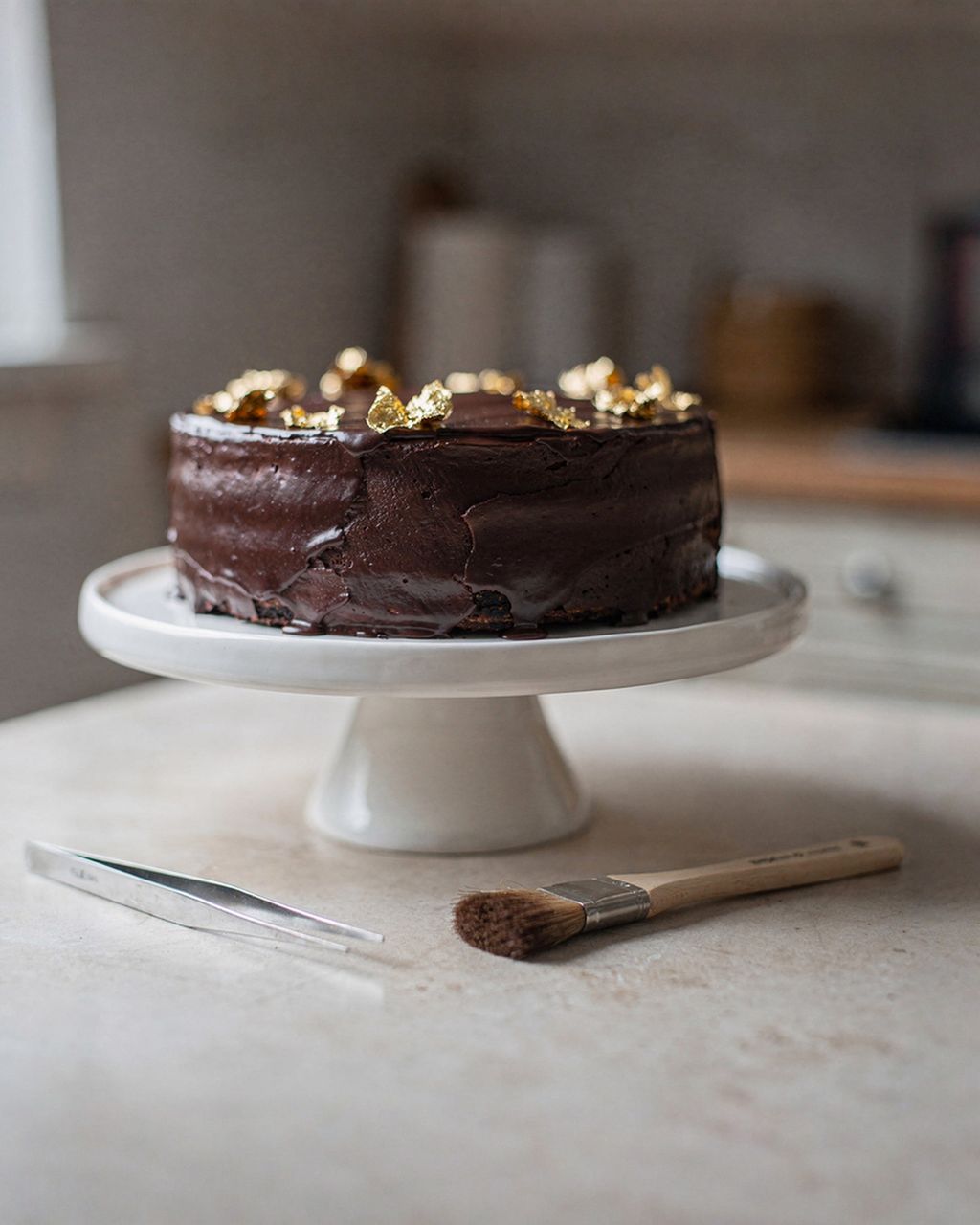
You can use the same powder as edible glitter for cakes, macarons or cookies: apply it with a dry brush to chocolate, icing or fondant, or stir it into a drop of alcohol and paint details with it. For gold and red powder the same limit applies as in drinks, so use them to highlight edges and details, not whole surfaces. You'll find ideas for the New Year's Eve table in the article Sparkling New Year's Eve desserts.
Yes, children can have a drink with edible glitter, as long as the powder is labelled as a food and you stick to the dosage on the packaging. For kids' alcohol-free drinks, choose a shade without azo dyes, such as rose gold. Powders containing tartrazine (E102) or ponceau 4R (E124) carry a warning that they may have an adverse effect on activity and attention in children.
You can put edible glitter in a hot drink too, though it shows up less in dark mulled wine. Add the powder to the drink once it's poured into the glass, not into the pot while it heats, and stir before serving. The maximum dosage on the packaging applies just as it does for cold drinks.
Once opened, edible shimmer powder usually keeps until the best-before date on the packaging, provided you store it somewhere dry and dark, tightly closed. Keep it away from moisture and steam from pots, and don't scoop it with a wet spoon, because damp makes it clump together.
Edible glitter is vegan only if it contains neither carmine (E120) nor shellac (E904). Both are of animal origin, so check the ingredients. Carmine, a colouring obtained from insects, appears mainly in some red shades. Shellac, a resin secreted by insects, is used in some powders as a glaze or binder. The manufacturer lists our three Sugarflair powders as suitable for vegans.
Edible glitter settles because it doesn't dissolve. The powder particles are heavier than the liquid and sink after a few minutes. In a fizzy drink it stays suspended longer, because the bubbles carry it. Just swirl the glass and the sparkling eddies come back.
One recipe worth heating the oven for, one tip, and one deal from the shop. Nothing else.