Pork Knuckle: How Long to Boil It and What Temperature to Roast It At for Tender Meat
Smoked Pork: How to Boil and Roast Neck, Leg, Ribs and Hock
Updated Nov 17, 2026
We recommend boiling or roasting smoked meat until the center reaches 70°C (158°F). You don't need to pre-boil it for safety. You boil it for the salt and for tenderness. Roast pork neck and leg straight away, but boil hock, ribs and tongue first. Below you'll find times by cut and how to turn the broth into soup.
Ordinary smoked meat from the butcher is usually raw, meaning it has only been cured and cold- or hot-smoked. It shouldn't be eaten without cooking. Under Czech Decree 69/2016 (opens in a new tab), it's a "heat-untreated meat product for cooking", meaning meat that hasn't been fully heated, in all its parts, to 70°C (158°F) for 10 minutes.
You can tell by the label:
"for cooking", "raw smoked", "smoked for boiling": you have to boil or roast it.
"heat-treated", "cooked smoked", "ham" (except raw ham): it's ready to eat, you only need to heat it.
If there's no label (for example a piece sold by weight at the butcher's), ask, or treat it as raw. Cooking meat that's already cooked does no harm, but eating raw meat can.
Seasonal baking plans, tested recipes and kitchen tricks that save you time. Unsubscribe in one click.
You don't have to boil smoked meat before roasting: it's safe once the center passes 70°C (158°F), and the oven can manage that. Pre-boiling has two other purposes:
Salt. Some of the salt goes into the water, so the meat is milder and the broth is good for soup.
Collagen. Cuts with a lot of connective tissue and skin (hock, ribs, tongue) need long, gentle cooking to become tender. The dry heat of the oven would dry them out first.
In practice it works like this:
Pork neck, leg, shoulder: roast straight away, covered and with a little liquid. You can pre-boil them if the meat is very salty.
Hock, ribs, beef tongue: boil until tender first, then finish briefly in the oven until crisp (the tongue is just peeled).
Pork belly: both ways work. Pre-boiled will be more tender, roasted straight will have a crisper crackling.
If smoked meat is too salty, soak it in cold water in the fridge or pre-boil it, because the salt moves into the water. According to manufacturers' labels, smoked meat usually contains roughly 2–3 g of salt per 100 g. A 150 g portion therefore contains roughly 3–4.5 g of salt. EFSA considers a safe and adequate intake for adults to be 2 g of sodium a day, which corresponds to roughly 5 g of salt.
How to reduce the salt:
Soak it in cold water in the fridge, not on the counter at room temperature. For very salty, dry-cured ham, USDA FSIS recommends soaking 4–12 hours or longer in the fridge. Ordinary brined smoked meat is usually less salty, so a few hours in the fridge is often enough.
Taste a trimming. Cut a thin slice, fry it in a pan and taste it. You'll know right away whether the meat needs soaking or can go straight in the oven.
Pre-boil it starting from cold water. The salt moves into the water, so taste the broth before cooking with it further and don't salt it blindly.
Quick answer: set the oven to at least 163°C (325°F) and allow 40–90 minutes per kilogram, depending on the size of the piece and whether it has a bone. A smaller piece needs more time per kilogram than a large one. These times come from the USDA FSIS chart for "cook-before-eating" smoked ham, meaning raw ham that needs cooking. We converted them from pounds to kilograms:
Boneless pork neck, 0.9–1.8 kg (in the chart, "shoulder roll/butt"): 77–88 min/kg
Boneless shoulder, 2.3–3.6 kg (in the chart, "arm picnic shoulder, boneless"): 66–77 min/kg
Bone-in piece of leg, 1.4–1.8 kg (in the chart, "shank or butt portion"): 77–88 min/kg
Half a bone-in leg, 2.3–3.2 kg: 49–55 min/kg
Whole bone-in leg, 4.5–6.4 kg: 40–44 min/kg
The USDA times are for 63°C (145°F) in the center. For 70°C (158°F), allow a bit longer; the thermometer decides. Consider the meat done only when the thermometer shows 70°C in the center. If you've pre-boiled the meat, you're roasting it just for color and crackling.
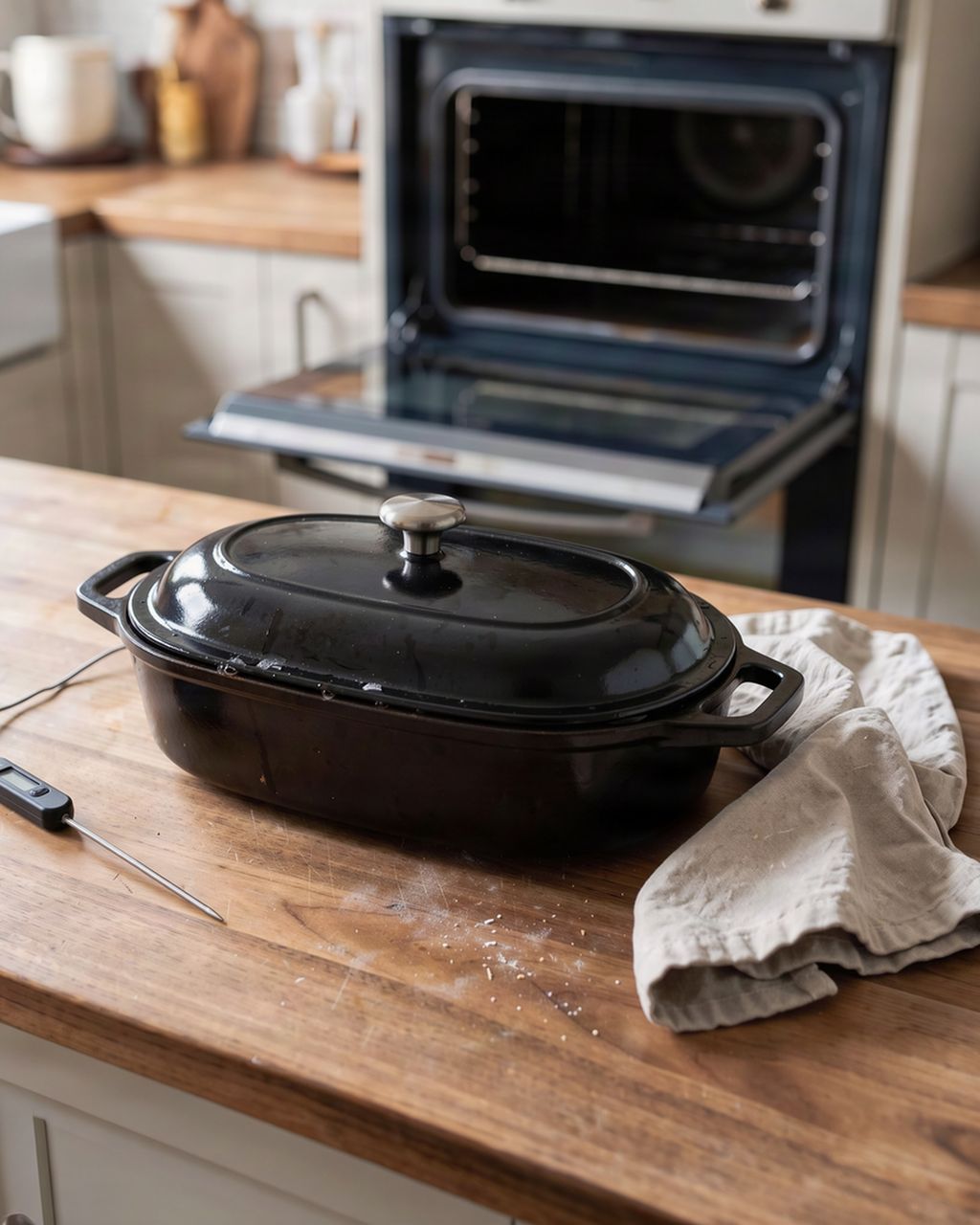
Roast smoked pork neck or leg covered in a roasting pan with about 1 cm (½ in) of liquid at 165°C (325°F) until the center shows 70°C (158°F), then uncover it for the last 15–20 minutes. Pork neck is more forgiving thanks to its marbling, while leg is leaner, so it needs more moisture.
Put the meat in the pan skin or fat side up and add about 1 cm of water, beer or broth. Scatter onion and garlic around it.
Cover it with a lid or foil and roast at 165°C (325°F) according to the chart above. Steam keeps the meat from drying out, and the center heats through more slowly in it. For leg, this is a must.
Roast uncovered for the last 15–20 minutes so the surface turns golden. Feel free to brush it with mustard and honey.
Let it rest for 10 minutes under foil, and only then slice across the grain. USDA FSIS recommends resting meat for at least 3 minutes. Rested meat loses less juice when sliced.
Be careful with the pan juices, which are often very salty. Taste them and dilute with water if needed before making a sauce from them.
Smoked ribs are best done in two stages: first simmer them gently for roughly 1–1.5 hours, until the meat starts to pull back from the ends of the bones, then roast them briefly in a hot oven. Lift the rack out of the water, pat it dry, brush it with a glaze (mustard, honey, caraway, a little broth) and put it in the oven. After cooking, USDA FSIS gives a finishing step for dry-cured ham of 205°C (400°F) for about 15 minutes. Take it as a rough guide only; for ribs it works out similarly. They're done when the glaze caramelizes and the edges start to crisp.
How to tell the ribs are cooked enough: try bending the rack slightly between two bones. The meat should start to crack. If it holds firm like rubber, keep cooking. For pork belly with crisp crackling, see our separate guide to roast pork belly.
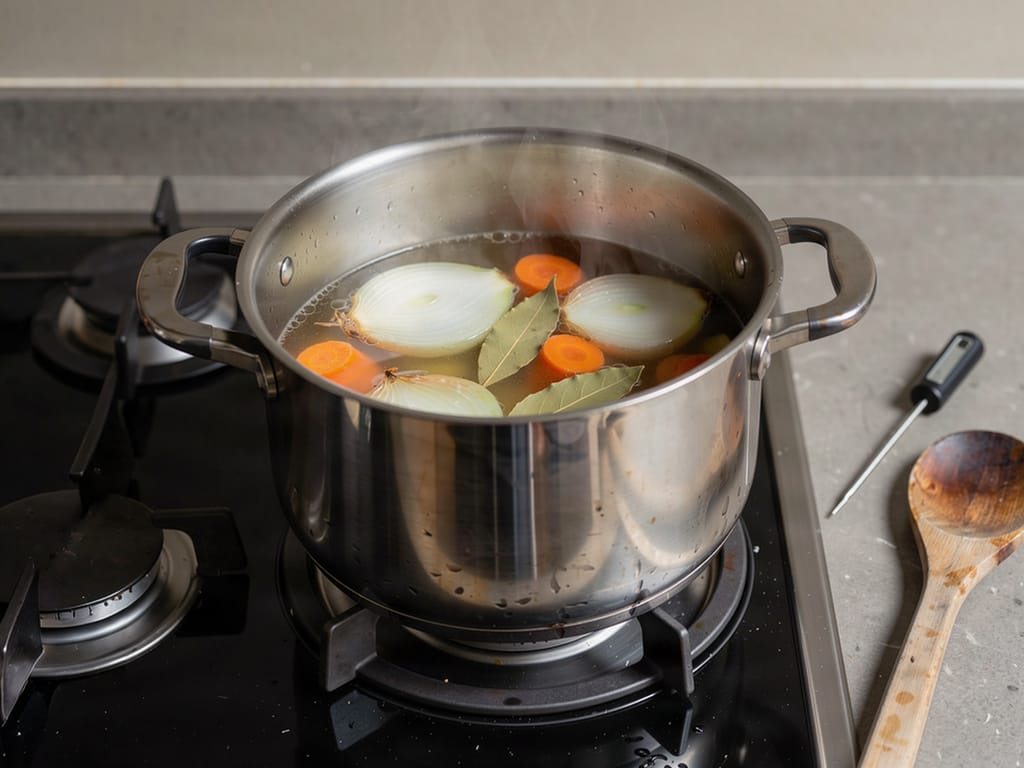
Cover the smoked hock in a pot with cold water, add onion, carrot, celery, bay leaf, allspice and caraway, and simmer gently until the meat pulls away from the bone by itself. The water should only bubble lightly; at a hard boil the meat tightens and toughens. For a typical smoked hock weighing 1–1.5 kg, allow roughly 2–3 hours of gentle simmering. The time is a guide; the center temperature (70°C/158°F) and tenderness decide. Hock has a lot of collagen, so cook it until:
the meat pulls away from the bone by itself,
a fork slides into the meat without resistance,
the skin softens and starts to look glossy.
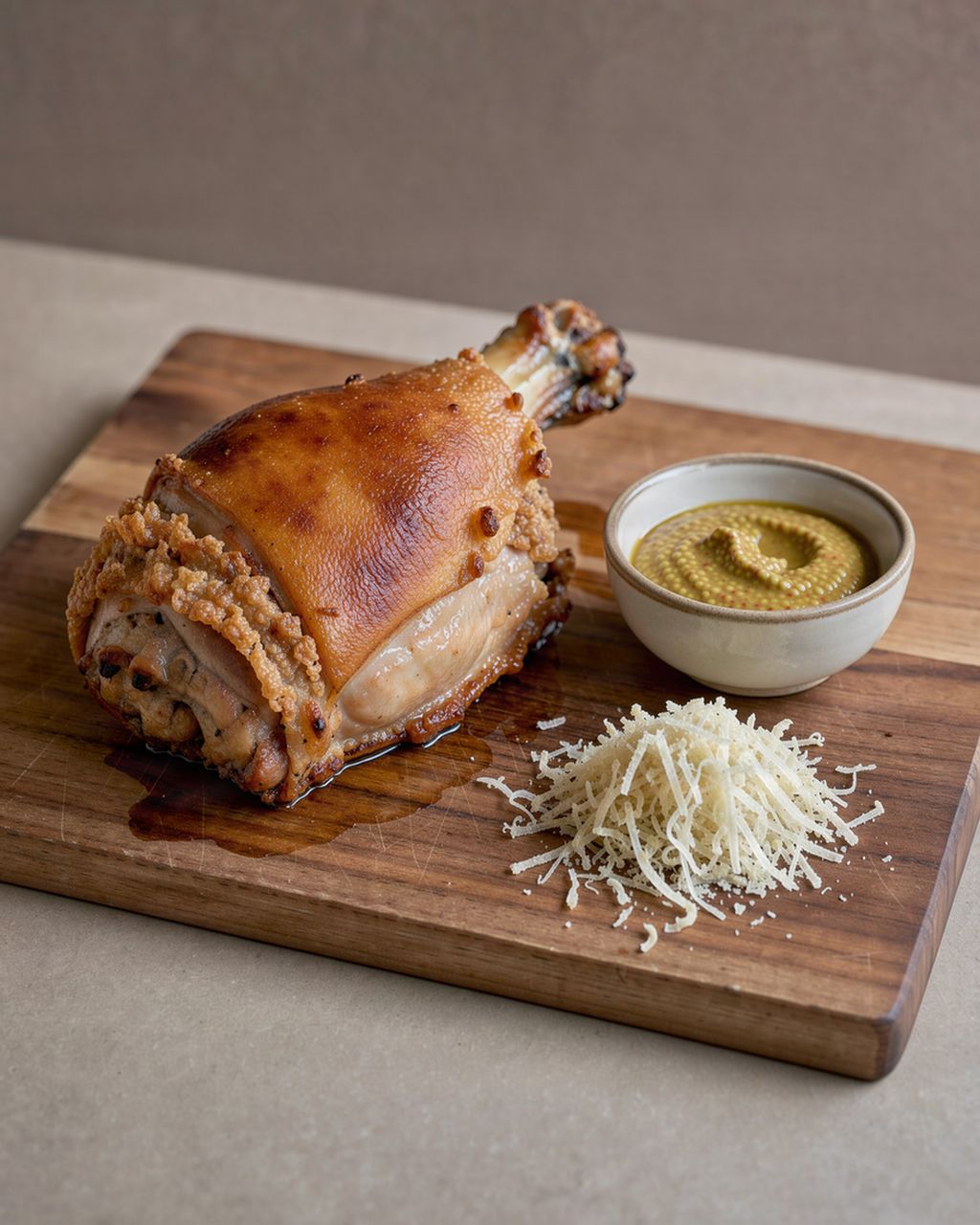
Then lift out the hock, let it drain, score the skin in a crosshatch and finish it until crisp at 205°C (400°F) for about 15 minutes (a rough guide based on the USDA FSIS finishing step for dry-cured ham). Keep the broth, it's the base for a soup. For fresh, unsmoked hock, see our article on pork hock.
Cook smoked beef tongue slowly in water with vegetables and spices until the tip of the tongue is tender. The tip is the toughest part, so when it gives, the whole tongue is done. A tongue is a large, dense muscle, so allow usually 2.5–4 hours depending on size. If the manufacturer gives a cooking time on the packaging, follow it. The center should reach at least 70°C (158°F).
The skin only comes off while it's hot:
Lift the tongue out of the hot broth and cool it briefly under cold water so you can hold it.
Slit the skin along the top and pull it off with your fingers. On a well-cooked tongue it comes off almost by itself.
If it holds on, return the tongue to the broth and keep cooking. Once the tongue has cooled, it's hard to peel.
Return the peeled tongue to the broth so it doesn't dry out, and slice it on the diagonal into thin slices. With horseradish sauce, or with mustard and bread, it's a classic.
Broth from smoked meat is a ready-made soup base. It's salty and smoky, and it has gelatin from the skin and bones. Taste it first, and if it's too salty, dilute it with water at roughly 1:1. Only then add legumes or potatoes.
Where it works well:
Pea soup: the traditional pairing, where smoked broth replaces both the salt and the smoky flavoring.
Lentil soup: for which lentils and spices to choose, see the article on what goes into lentil soup.
Bramboračka (Czech potato soup), zelňačka (Czech sauerkraut soup) and kyselo (Czech sour soup): try replacing the water with smoked broth, for instance in a quick potato soup. Add the salt only at the end, after tasting.
Cool the broth and refrigerate it within 2 hours of cooking. According to USDA FSIS, perishable food shouldn't stay at room temperature any longer than that. Lift off the fat that sets on top of the chilled broth with a spoon. Use the finished soup within 3–4 days from the fridge, according to USDA FSIS.
Smoked meat goes well with something sour or sweet-and-sour to balance the salt and fat. Cabbage is the classic, for instance sweet-and-sour braised red cabbage, with a dumpling or creamy mashed potatoes with nutmeg.
What to do with leftovers:
Shred them into beans: pulled smoked meat with beans and tomatoes.
Dice them into pasta: šunkofleky (Czech baked pasta with ham) with sauerkraut taste just as good with cooked smoked meat as with ham.
Bake them into a tart: whole-grain quiche with broccoli and smoked ham.
Cooked or roasted smoked meat keeps 3–5 days in the fridge, according to USDA FSIS. The article how long smoked meat keeps in the fridge covers it in detail, including raw pieces and the freezer.
Cover the smoked bones with cold water so they're fully submerged, and simmer them gently with vegetables and spices until the meat comes away and the broth takes on a smoky flavor. Smoked bones are often raw, so cook them until any scraps of meat are completely cooked through (we recommend 70°C/158°F in the center). Taste the broth before cooking it further, as it often needs diluting with water. Fish out the bones, return the picked meat to the soup, and refrigerate the broth within 2 hours (USDA FSIS).
Roast smoked pork belly covered at 165°C (325°F) with about 1 cm (½ in) of liquid in the roasting pan until tender, and only uncover it at the end to crisp it up. Tenderness and a thermometer (70°C/158°F in the center) decide when it's done, not the clock. If you want very tender belly, pre-boil it like ribs and just finish it in the oven at 205°C (400°F) for about 15 minutes (a rough guide based on the USDA FSIS finishing step for dry-cured ham). For a detailed method for crackling, see our guide to roast pork belly.
Reheat cooked smoked meat gently and with moisture: in a little broth under a lid on the stovetop, or covered in a roasting pan with a little broth in the oven. Dry heat without a lid and a hard boil will dry the meat out and make it tough. It reheats best in slices submerged in the broth it was cooked in, because they warm quickly and evenly. Heat it all the way through, not just on the surface.
Cover the smoked pork neck with cold water, add vegetables and spices, bring it to a gentle simmer and cook until the center reaches 70°C (158°F). Starting in cold water draws out more salt. A thermometer decides, not the clock. Boiled pork neck is tender and less salty, and it slices nicely to serve with horseradish, mustard or sauerkraut, and you keep the broth for soup.
Yes, you can boil smoked meat a day ahead, as long as you refrigerate it within 2 hours of cooking once it has cooled (USDA FSIS). The next day, finish it in the oven until crisp and heat it all the way through. Chilled meat is also easier to slice and portion. According to USDA FSIS, cooked smoked meat keeps 3–5 days in the fridge.
One recipe worth heating the oven for, one tip, and one deal from the shop. Nothing else.