- Season
- Year-round
- Price
- Low
Calories and nutrition per 100 g
- 364 kcal
- 6 g protein
- 0.6 g fat
- 80.2 g carbs
Rice noodles (dry)
Dried rice noodles are noodles made from rice flour or ground rice and water, sold dry, from thin vermicelli to flat noodles 3–10 mm wide. They are naturally gluten-free, are mostly soaked in hot water rather than boiled, and go into pho and pad thai.
Dry and cool; an opened pack in an airtight container. Use by the best-before date.
Dry noodles do not belong in the fridge. Refrigerate cooked noodles within an hour and eat them within 24 hours.
Dry noodles need no freezing. Cooked noodles can be frozen and keep their quality for 1–2 months, but are softer after thawing.
Choose whole noodles without many broken bits or much dust in the pack. Check the width on the pack for what you want to cook, and the ingredients; the simplest are rice and water. With coeliac disease, buy only noodles labelled "gluten-free".
Mung bean glass noodles. They are soaked in a similar way but are translucent and more elastic.
Thin egg noodles or udon, though these are boiled in boiling water and contain gluten.
Pour over hot water at about 80–90 °C and stir straight away: vermicelli 3–5 minutes, flat noodles 6–10 minutes, for the wok only 4–6 minutes. Then rinse with cold water, drain and toss with a teaspoon of oil per 200–250 g of noodles so they do not stick.
Tip the broken bits from the bottom of the pack into soup or a jar of homemade instant soup; they soften quickly. Stir-fry leftover cooked noodles within 24 hours with vegetables and egg.
Roughly what one measure weighs, scooped the way you normally would in the kitchen.
Rice noodles are soaked in hot water or briefly boiled, rinsed with cold water and then added to soup (pho, coconut milk soups), to stir-fried noodles (pad thai) or to cold herb salads with lime. Prepare them a little firmer for the wok and fully soft for soup.
Dried rice noodles are pasta made from rice flour or ground rice and water, sometimes with salt or tapioca starch. They are sold dry and brittle, as thin vermicelli, flat noodles 3–5 mm wide (often labelled banh pho) or wide noodles of around 10 mm. Before eating they are soaked in hot water or briefly boiled, and they belong mainly to Southeast Asian cooking, such as Vietnamese pho and Thai pad thai.
They taste mild, almost neutral, faintly of rice. They do not set the flavour of a dish themselves but soak up broth, sauce and seasoning. Once soaked they are soft, smooth and slightly springy; overcooked, they stick and break.
Seasonal baking plans, tested recipes and kitchen tricks that save you time. Unsubscribe in one click.
3 min read
Dried rice noodles differ mainly in width. Hair-thin ones are sold as vermicelli. Flat noodles 3–5 mm wide are the pad thai and pho type; Vietnamese brands label them banh pho. Wide flat noodles of around 10 mm suit stir-fried noodle dishes.
The ingredient list is short: rice flour or ground rice and water, sometimes salt. Some products also contain tapioca starch, which makes the noodles more elastic. Cooked rice noodles are white and opaque; translucent, slippery noodles are glass noodles made from starch, most often mung bean.
Rice noodles are mostly soaked rather than boiled like spaghetti. Put them in a large bowl, pour over hot water at about 80–90 °C (from a kettle left to stand briefly) and stir straight away so the bundle comes apart. Thin vermicelli soften in roughly 3–5 minutes, flat 3–5 mm noodles in 6–10 minutes. Then drain them, rinse with cold water and let them drip dry.
Pack instructions vary a lot; some makers say boil for 3–5 minutes, others for 8–10. So start from the pack and taste a minute early. They are ready when they are pliable but still slightly springy in the middle. The full method and times for rice, glass and udon noodles are in how to cook rice, glass and udon noodles.
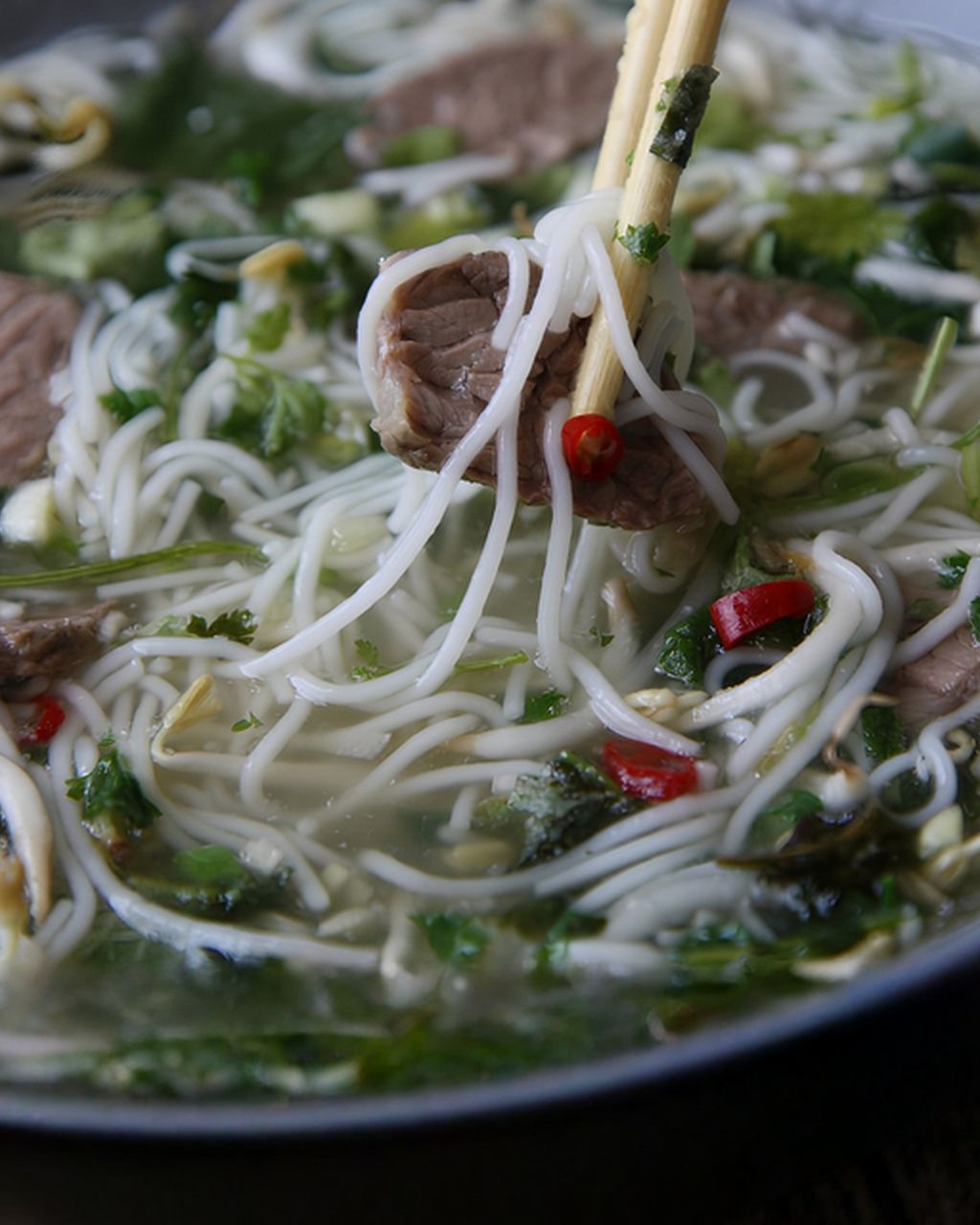
For the wok, take flat noodles out early, at the "pliable but firm" stage, after about 4–6 minutes, because they keep softening in the sauce. For soup, soften them fully, put them straight into the bowl and pour the hot broth on top. That is how pho bo, Vietnamese beef noodle soup is served. Do not cook the noodles in the whole pot of soup; by the next day they soak up the broth and go soft.
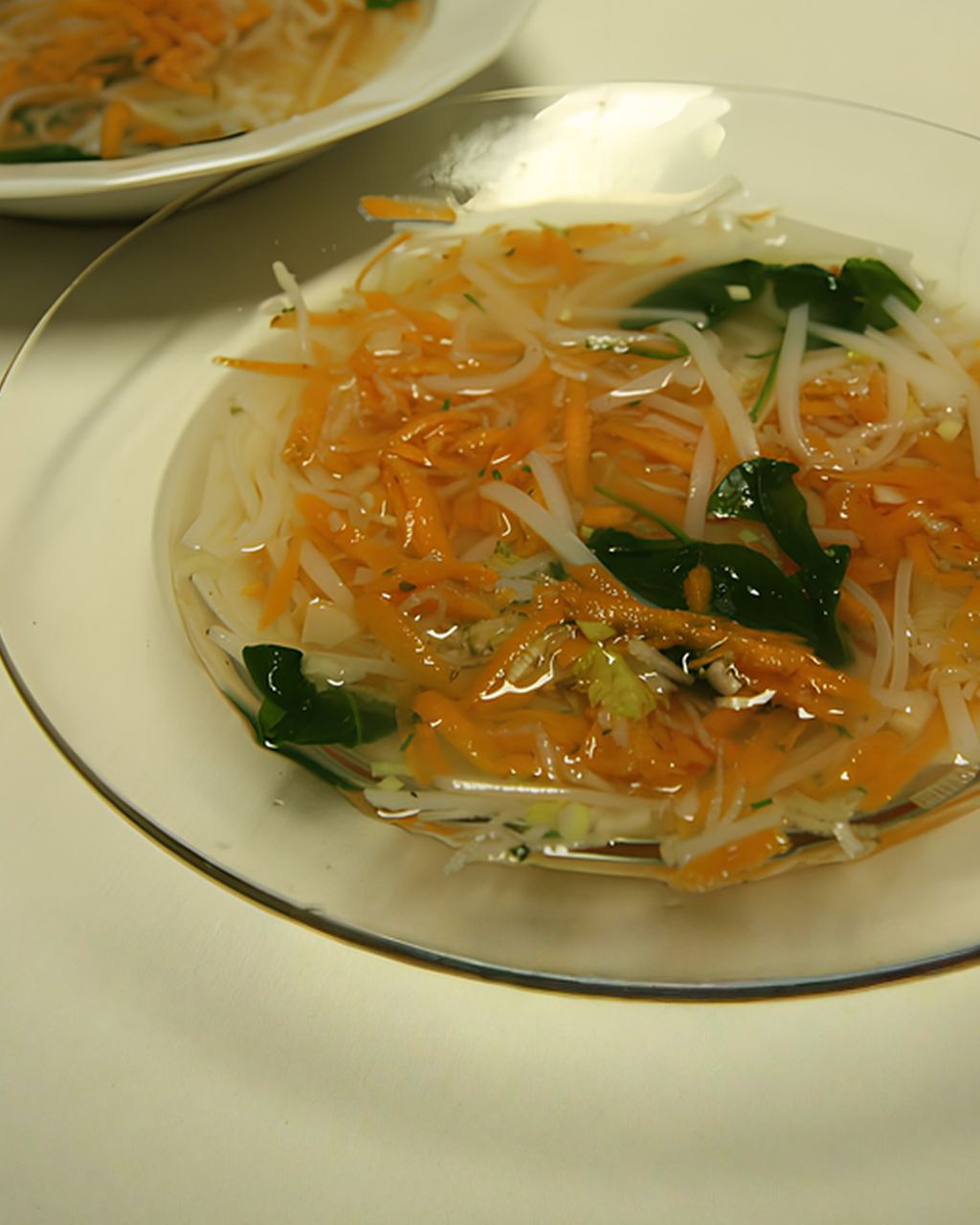
Thin noodles soften even in plain hot water, so they suit a homemade instant soup in a jar: in the evening you add vegetables, broken noodles and seasoning, and at lunch you just pour in hot water.
Rice is naturally gluten-free, so noodles made only from rice flour, water and salt contain no gluten. Rice is, however, often processed on the same lines as wheat in mills and factories. For people with coeliac disease, only products explicitly labelled "gluten-free" or with the crossed-grain symbol are safe; under EU Regulation 828/2014 they may contain no more than 20 mg of gluten per kilogram. More on gluten-free ingredients in the gluten-free flour guide.
According to labels, dried rice noodles have about 336–347 kcal per 100 g, 76–80 g carbohydrates, 4–7 g protein and less than 1 g fat. They absorb water when soaked, so 100 g of cooked noodles has much less.
Store dried rice noodles somewhere dry and cool, away from strong smells. Tip an opened pack into an airtight container or seal the bag well, and use them by the best-before date. Dry noodles need neither the fridge nor the freezer.
Cooked noodles are a different matter. They are made from rice, and cooked rice comes with stricter rules because of Bacillus cereus: its spores survive cooking and at room temperature produce a toxin that reheating does not destroy. So cool cooked noodles quickly, refrigerate them within an hour and eat them within 24 hours, as the UK NHS and FSA advise for cooked rice. Reheat them only once, until steaming hot.