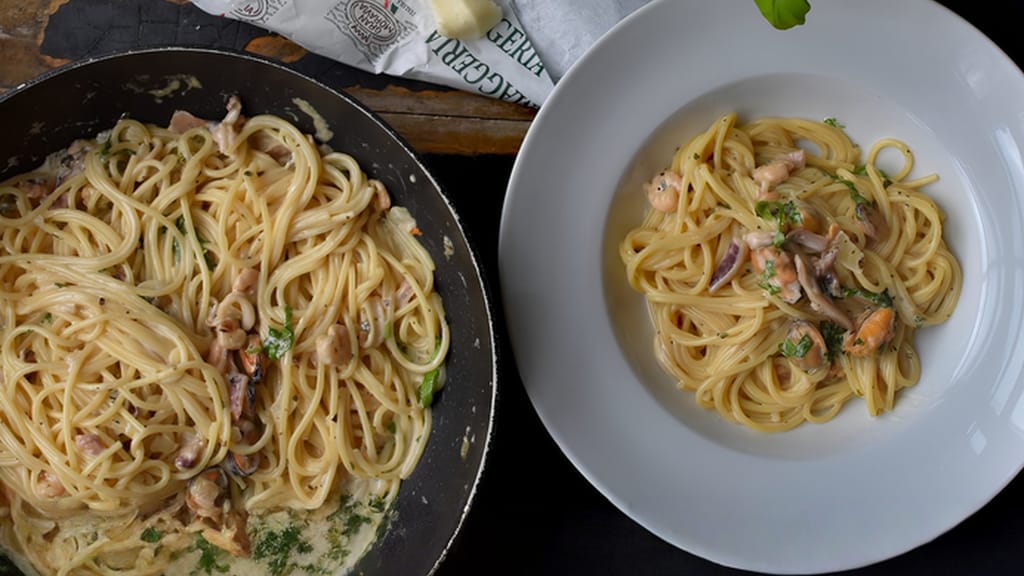
Spaghetti with seafood and gran moravia furfante cheese
Shrimp Recipes: Pan-Seared, with Pasta, Risotto or in Coconut Milk
Updated Nov 20, 2026
Shrimp recipes all share one rule: shrimp need only a few minutes over the heat, and once they turn pink and opaque white inside, they're done. Everything else, whether it's garlic butter, pasta, risotto, cream or coconut milk, you prepare ahead and add the shrimp right at the end. Here you'll find what to make with shrimp in ten minutes or for a relaxed evening, which shrimp to buy, how to thaw them, and how to tell when they're cooked but still juicy.
You can make six tried-and-true dishes with shrimp: pan-seared garlic butter shrimp, pasta with shrimp, shrimp in cream sauce, seafood risotto, shrimp in coconut milk, and an Asian salad with shrimp and mango.
Under 10 minutes: garlic butter shrimp, served with a baguette or a salad.
Under 25 minutes: spaghetti with seafood, shrimp in cream sauce with gnocchi, Asian salad with shrimp and mango.
Under 45 minutes: shrimp in coconut milk with noodles.
For a relaxed evening: asparagus and seafood risotto.
The same logic applies every time: prepare the base first (sauce, rice, pasta, vegetables) and add the shrimp for just the last few minutes. Cooking them longer adds nothing, it only makes them tough and rubbery.
Seasonal baking plans, tested recipes and kitchen tricks that save you time. Unsubscribe in one click.
For most recipes, buy raw, peeled, frozen, medium-sized shrimp. They're the most versatile, hold their juices best and brown well in a pan. Every recipe in this article is built on the same shrimp; the only difference is what surrounds them.
What to look for on the package:
Raw or cooked. Raw shrimp are grayish or translucent, while cooked ones are already pink. Cooked shrimp only need warming through; cook them again and they turn tough.
Size. Numbers such as 16/20 or 26/30 give the count per unit of weight (pound or kilogram, depending on the package). The smaller the number, the bigger the shrimp. Large ones suit the pan and grill, medium ones sauces and risotto, and small ones salads.
Head-on, shell-on or peeled. Shell-on shrimp have more flavor, and you can make a quick broth from the heads and shells. Peeled ones save time.
Glaze. Frozen shrimp are often coated in a thin layer of ice to keep them from drying out. Under EU food labeling rules, glazed products must state the net weight without the glaze, so look for that figure on the package. It tells you how much shrimp you're actually buying.
In a landlocked country, buy frozen shrimp. Shrimp are caught or farmed far from us and travel a long way to the counter, so the "fresh" ones on ice have often already been thawed once; if you're not sure, ask the staff. Frozen shrimp are always on hand in your freezer, you thaw exactly as many as you need, and when properly thawed they're hardly different from fresh in the finished dish. Buy thawed shrimp from the counter only on the day you cook them, and use them right away.
A few signs of good frozen shrimp: they should be loose in the bag, not stuck together in one block, and there should be no snow or large ice crystals in the package. Both suggest that the package partly thawed and refroze along the way, and the shrimp are then often dry and mealy.
There are two safe ways to thaw shrimp: slowly in the fridge overnight, or quickly in a sealed bag in cold water in 20–40 minutes, depending on size. Never thaw them on the counter at room temperature.
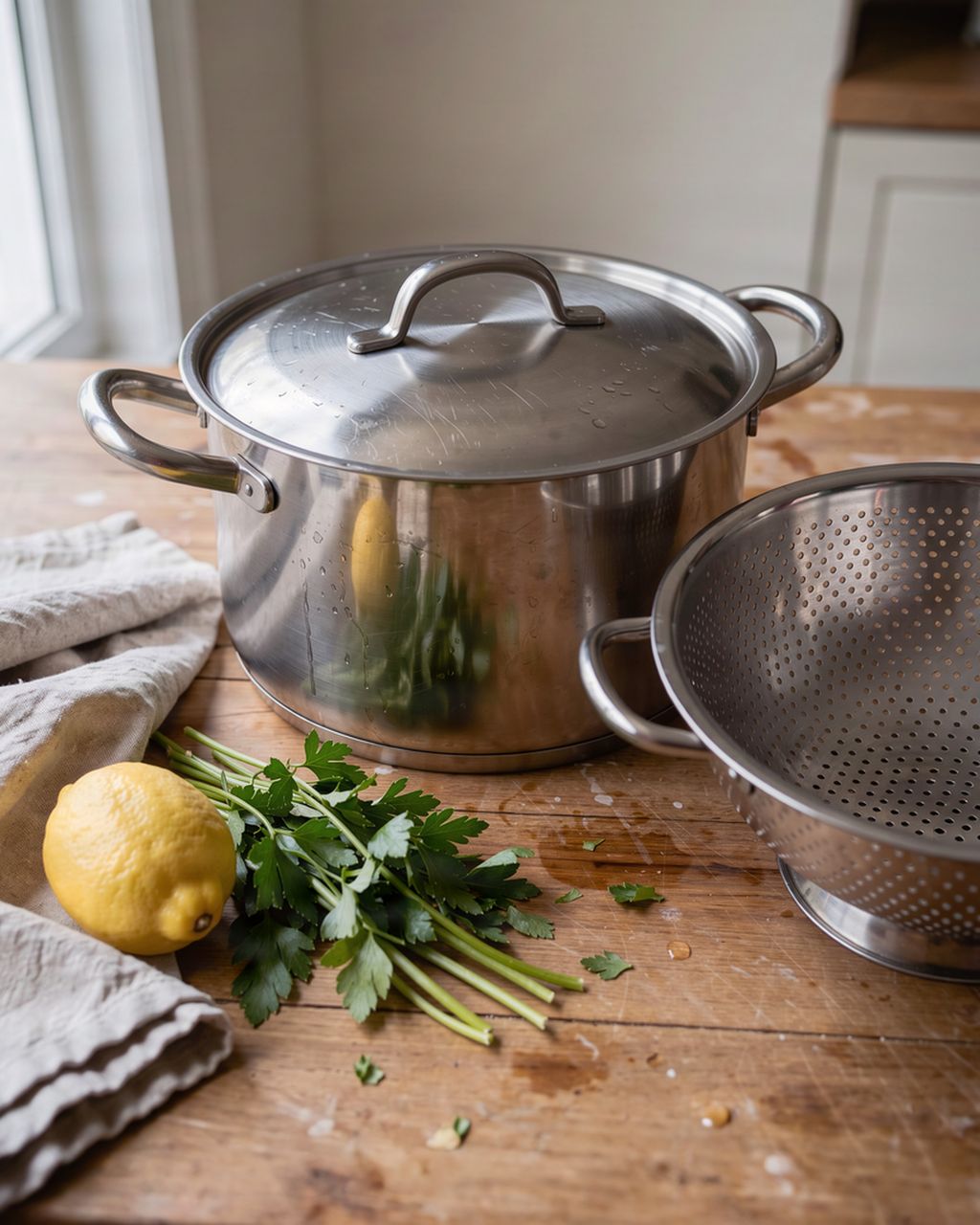
In the fridge (gentlest): put the shrimp in a colander over a bowl so they don't sit in meltwater, and leave them in the fridge overnight. The US Food and Drug Administration (FDA) recommends this method. According to the USDA FSIS, seafood thawed in the fridge keeps for another 1–2 days before you need to cook it.
In cold water (when you're in a hurry): put the shrimp in a resealable bag, press out the air and submerge it in a bowl of cold tap water. Small and medium shrimp thaw in 20–30 minutes, large ones in 30–40 minutes. For longer thawing, change the water about every half hour so it stays cold. According to the FDA, shrimp thawed this way need to be cooked right away.
In the microwave (in an emergency): the FDA allows it only if you cook the shrimp immediately afterward. Shrimp easily start to cook around the edges and turn tough, so this method isn't a great fit for the pan.
However you thaw them, always dry the shrimp afterward. The water they release is the main reason they steam in the pan instead of searing.
To peel a shrimp, twist off the head, pull the shell away from the little legs, and leave the tail on if you'll be eating them with your hands. A dark vein runs along the back; cut along the back with a sharp knife about 2 mm (1/16 in) deep and lift the vein out with the tip of the knife. Then comes the step that decides the result: dry the shrimp thoroughly with a paper towel. Wet shrimp cool the pan down and cook in their own water instead of searing. The recipes below stress exactly this.
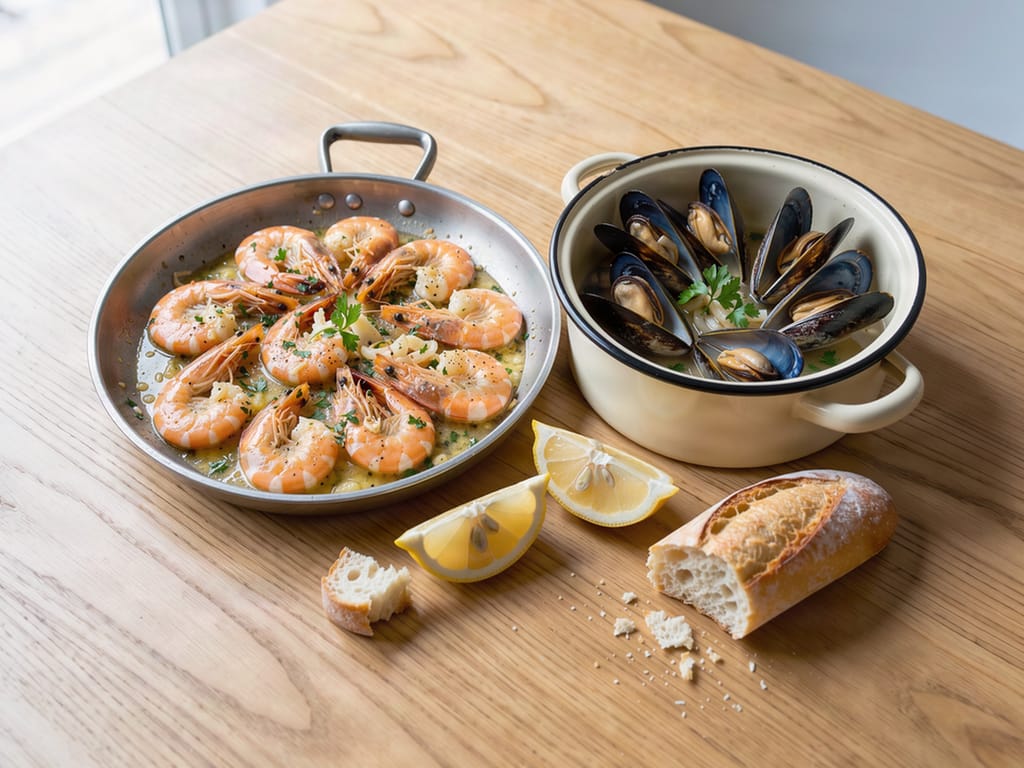
Pan-seared garlic butter shrimp are ready in a few minutes: a hot pan, a single layer of shrimp, a short time on each side, and the garlic butter only at the end. It's the fastest way to cook shrimp, and also the best test of whether you've got the technique down.
The whole technique rests on three principles:
A hot pan and oil. Sear in oil, not butter. Butter would burn at high heat before the shrimp take on any color.
One layer, no moving them around. Dried shrimp must not overlap. Leave them until the underside turns pink, and only then flip them.
Butter and garlic off the high heat. After flipping, turn the heat down and add sliced garlic and cold butter. Pressed garlic would turn bitter in hot fat within seconds. Cold butter stirred in at a lower temperature thickens the sauce and gives it a shine. Season with lemon and parsley and serve immediately.
The Spanish version (gambas al ajillo): the shrimp simmer in plenty of olive oil with sliced garlic and a dried chili pepper, and are served in the oil, which you mop up with bread. It's a tapa, not a main course, and works with smaller shrimp too.
With wine and herbs: after flipping the shrimp, deglaze the pan with a splash of dry white wine and let it boil vigorously for a moment before adding the butter. The wine dissolves the browned bits from the bottom of the pan and gives the sauce depth.
What to serve garlic butter shrimp with: a baguette for mopping, a vegetable salad, or toss them into pasta. That's two meals from one pan.
Shrimp are done when they're opaque all the way through and firm. The FDA describes cooked shrimp as flesh that is "firm, pearly and opaque", and gives an internal temperature of 145°F, or 63°C, for most seafood.
The kitchen rule of thumb is shape: a shrimp curled into a loose C is just right; one curled into a tight O is overcooked. Be careful with Argentine red shrimp: they're pink-red even when raw, so color won't warn you. With those, check whether the flesh has turned white and is no longer glassy. For more detail on timing and technique for shrimp, mussels and octopus, see our article how to cook shrimp, mussels and octopus so they aren't rubbery.
You can make shrimp with pasta in 25 minutes: while the pasta cooks, you sauté the shrimp or seafood and bring the sauce together with pasta water. Shrimp and pasta is the most searched-for combination, and deservedly so: the starchy pasta water makes the sauce creamy even without cream.
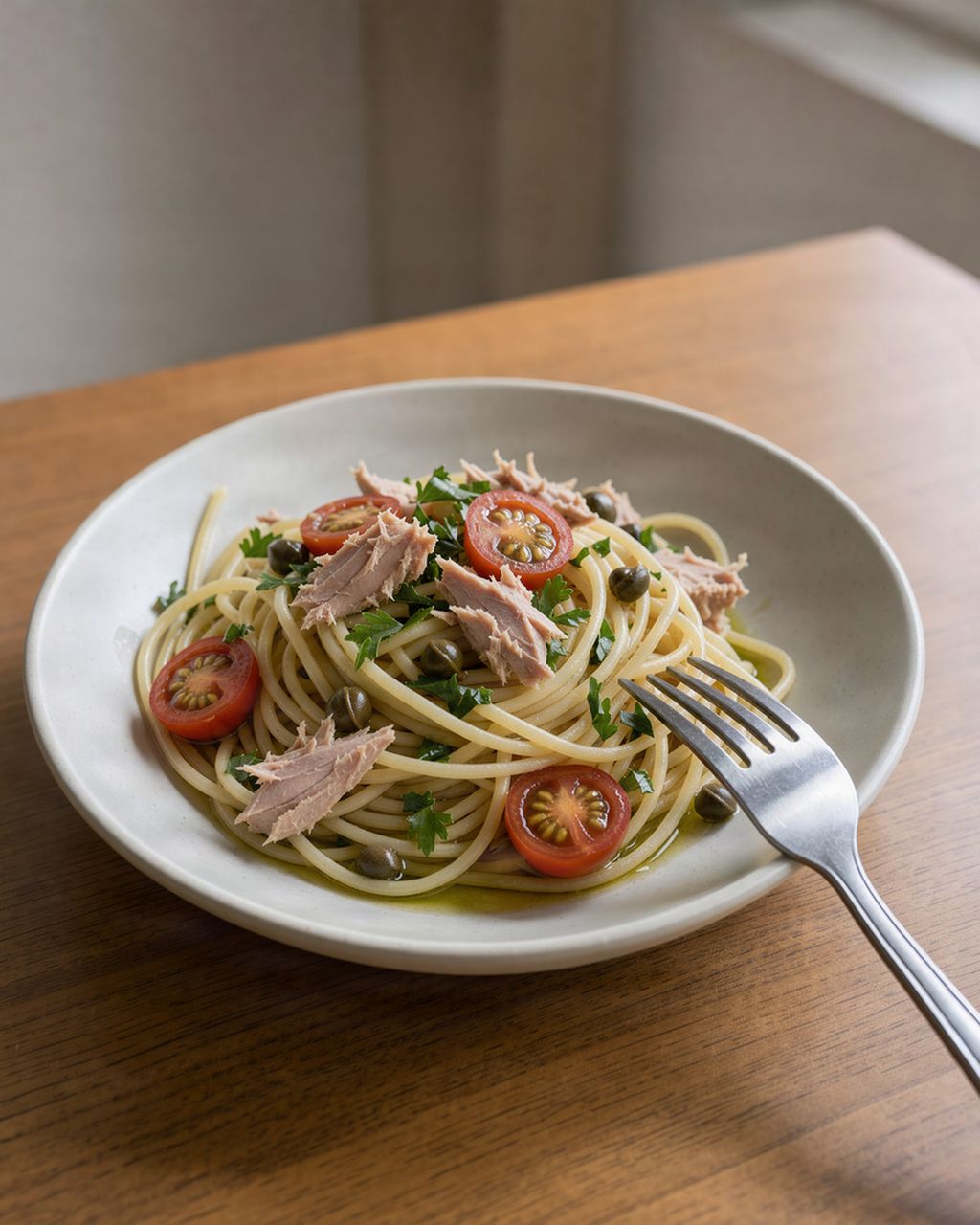
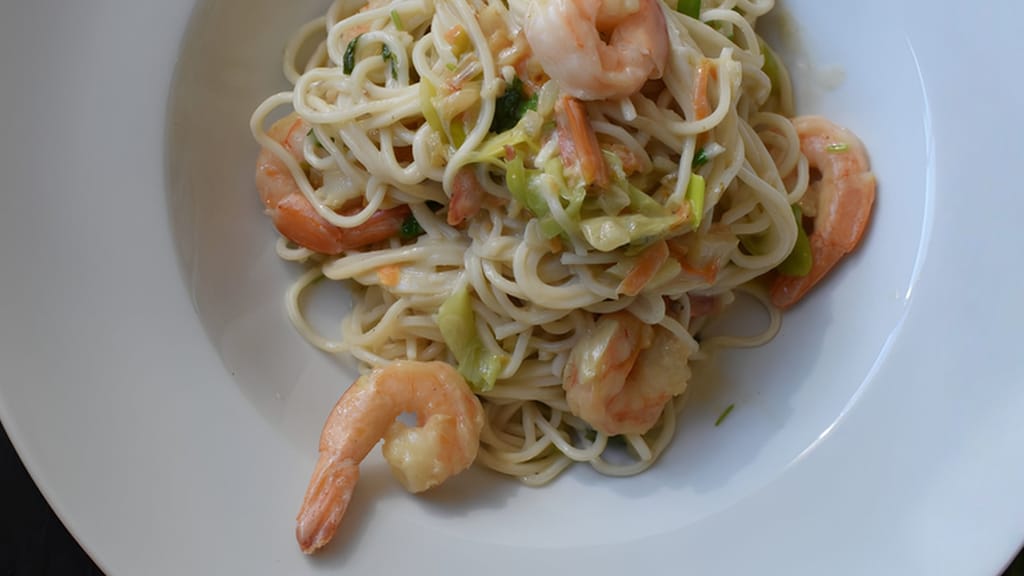
Our recipe for spaghetti with seafood and cheese is exactly this type. The spaghetti cooks in salted water and a cup of the water is set aside. Shallot is sautéed in olive oil, a frozen seafood mix is added, seasoned with salt and pepper and fried for about five minutes, then splashed with lemon juice and deglazed with half of the reserved water. Finally, the spaghetti goes into the pan, the rest of the water is added as needed, and the sauce is finished with sour cream, grated cheese and parsley. The whole thing takes about 25 minutes.
Three things that make a difference with shrimp pasta:
Finish the pasta in the pan. Drain it a minute early and finish cooking it in the sauce. It soaks up flavor and the sauce clings to it.
Pasta water is an ingredient. Add it a little at a time and stir; the starch binds it with the fat into a smooth sauce.
Sear raw shrimp separately. If you're using raw shrimp instead of a frozen mix, sear them separately, take them out and return them to the pan only with the pasta. Otherwise they overcook before the sauce thickens.
A simple version with tomatoes and chili: sauté sliced garlic and a pinch of chili in olive oil, add halved cherry tomatoes and let them break down for a few minutes. Then toss in the shrimp, and as soon as they turn pink, stir in the cooked spaghetti with a little pasta water and parsley.
Spaghetti with seafood and gran moravia furfante cheese
Spaghetti with Seafood, Sour Cream and Cheese in 25 Minutes
Shrimp in cream sauce are made by adding the shrimp to bubbling cream only for the last three to four minutes. Whipping cream with 33% fat doesn't curdle when cooked and thickens on its own, which is why it's better for a sauce than a lighter cooking cream.
Our radicchio, salmon and shrimp recipe shows how to balance the cream so it isn't heavy. Cubes of salmon are briefly seared in butter, just until they lighten. Leek rounds and torn radicchio (a bitter chicory) soften in the pan juices, and its bitterness balances the cream beautifully. Then the salmon goes back in, peeled shrimp are added, 200 ml of whipping cream is poured over, and it simmers gently for three to four minutes. It's served with potato gnocchi and is ready in 22 minutes.
Why it works: cream carries flavor but is flat on its own. It needs a counterweight, whether bitter (radicchio), sour (lemon, wine) or sharp (pepper, chili). Without one, shrimp in cream sauce taste like kids' food.
Shrimp in cream sauce with pasta: the same principle without the salmon. Sauté shallot and garlic in butter, deglaze with a splash of white wine and let it evaporate, pour in whipping cream and let it thicken. Add the shrimp for the last three minutes, season with lemon zest and toss with tagliatelle or penne.
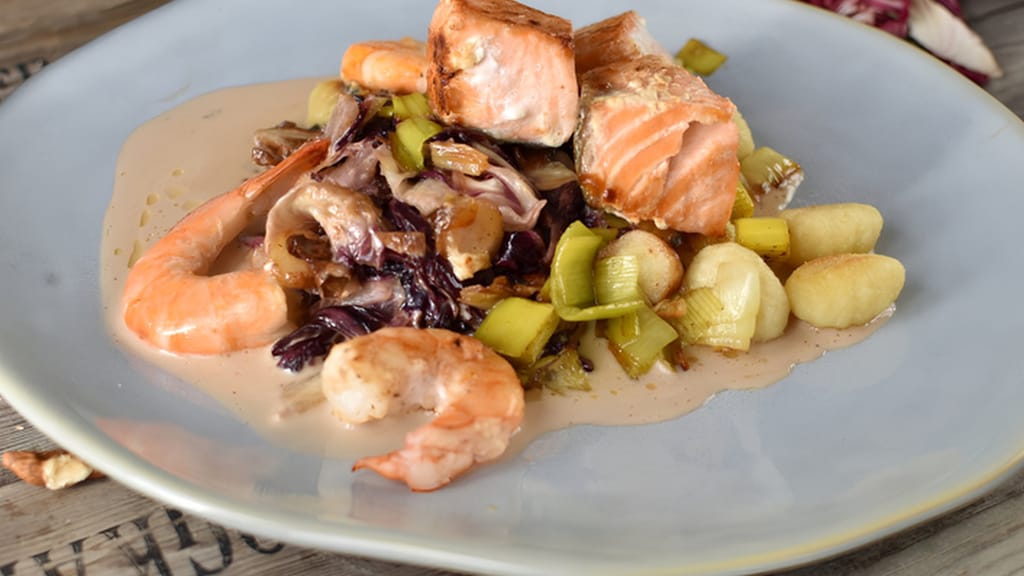
Radicchio, salmon and shrimp
Salmon and Shrimp in Cream Sauce with Radicchio and Potato Gnocchi
Shrimp with rice is at its best as risotto: the rice cooks slowly in wine and broth, and the shrimp or seafood go in only in the second half of cooking. The rice soaks up the flavor of the broth, and the seafood stays juicy.
Our recipe for risotto with green asparagus and seafood is a classic arborio rice risotto. Shallot is sautéed in olive oil until translucent, dry rice is added and toasted for two to three minutes, stirring constantly. It's deglazed with white wine, which is cooked off completely, and then hot chicken broth is added a ladleful at a time, always so the rice is just below the surface. After about ten minutes the asparagus stalks go in, then chopped tomato and a frozen seafood mix; the risotto cooks for about 20–25 minutes in total. At the end, cold butter and Parmesan are stirred in, and the asparagus tips are warmed through on top. Allow 76 minutes.
Note: the recipe relies on chicken broth. If you're cooking for someone who eats fish but not meat, swap the broth for fish or vegetable broth, or make your own from shrimp shells.
Shell broth in 20 minutes: sauté shrimp heads and shells in a spoonful of oil until they turn red, add a piece of onion and pour in about a liter (4 cups) of water. Simmer for 15–20 minutes and strain. This broth gives a risotto or sauce more shrimp flavor than anything from a store.
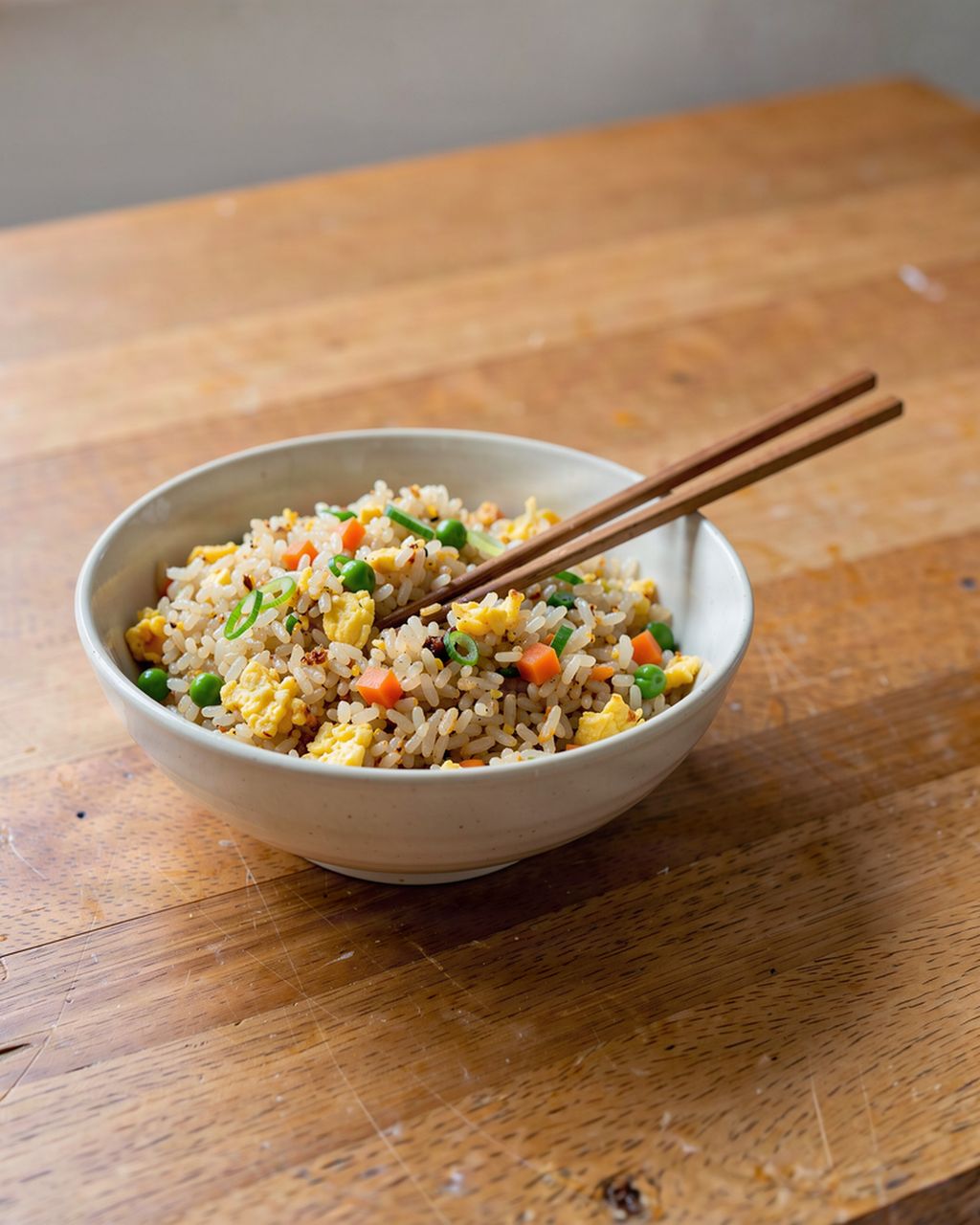
Quick shrimp fried rice in a pan: if you don't have time for risotto, fry cooked rice from the fridge (chilled within an hour of cooking and no more than a day old) in a pan with scallions and peas and heat it until piping hot all the way through, push it to the side, sear the shrimp, stir in a beaten egg and season with soy sauce. Cold rice is drier, so it fries rather than clumping.
You'll find more ideas, from meat dishes to ways to use leftover rice, in the article what to cook with rice.
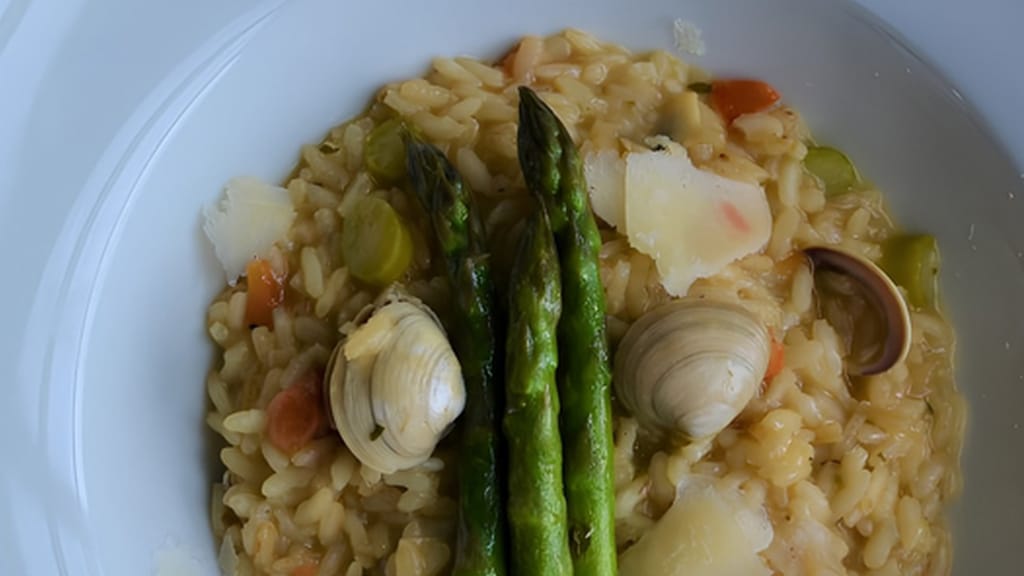
Green asparagus and seafood risotto
Risotto with Green Asparagus and Seafood Made with Arborio Rice
Shrimp in coconut milk are ready after three minutes of gentle simmering: the shrimp are first coated in spices, then covered with coconut milk and cooked just until pink. Coconut milk softens sharp spices and gives the sauce a velvety thickness that clings beautifully to noodles and rice.
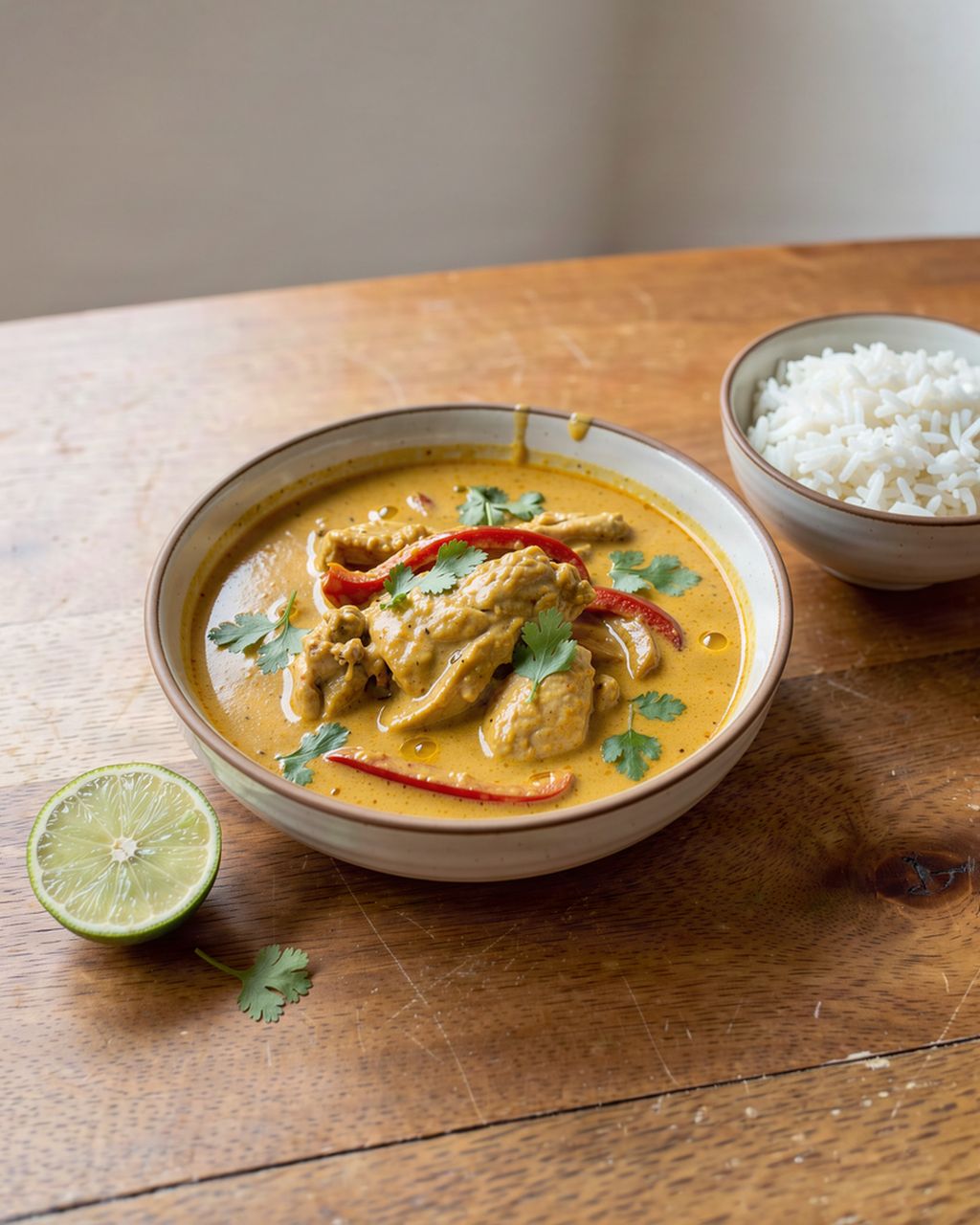
Our recipe for shrimp in coconut milk is served with egg noodles and takes 43 minutes. Finely chopped onion and coarsely grated carrot are sautéed in oil until the onion starts to turn golden. Thawed and dried shrimp are added and sprinkled with ground ginger and garam masala. Then 450 g of coconut milk is poured in, the pan is covered, and everything simmers gently for about three minutes until the shrimp are pink all over. Finally, drained noodles are stirred in; the recipe's aromatics also include scallions, lemongrass and fresh cilantro.
Tips that take the sauce further:
Toast the spices in the fat. Garam masala and ginger only release their aroma in fat. If you pour them straight into the coconut milk, they taste dusty.
Don't boil the coconut milk hard. A strong boil can make the fat separate. A gentle simmer is enough.
Acidity at the end. A drop of lime juice just before serving wakes the sauce up, even though it isn't in the recipe.
Rice instead of noodles. The sauce also goes well with jasmine rice. The noodles in this recipe are egg noodles, so if you avoid eggs, rice is an easy swap.
Shrimp in coconut milk
Shrimp in Coconut Milk with Garam Masala and Egg Noodles
Cocktail shrimp are small shrimp, usually already cooked and peeled, so you only need to thaw and use them cold, or warm them briefly. They suit salads, open-faced sandwiches (chlebíčky) and shrimp cocktail; for a pan where shrimp need to brown, they're too small and dry out.
Our Asian salad with mango and shrimp is ready in 23 minutes and relies on a contrast of sweet, salty, sour and hot. Iceberg lettuce, cucumber, scallions and mango are cut into thin strips, because the thinner they are, the better the dressing coats them. The dressing is made from lime juice, fish sauce and light soy sauce, canola oil and finely chopped chili. Thawed shrimp are dried and briefly seared in oil, and the salad is finished with cilantro and unsalted peanuts. With cocktail shrimp, just shorten the searing to a quick warm-through.
Classic shrimp cocktail: put shredded iceberg lettuce in a glass, top with cocktail shrimp and pour over a sauce of mayonnaise, ketchup, a drop of lemon juice and a pinch of paprika. Serve chilled with a lemon slice. It's a retro starter, but it works when the shrimp are well drained and dried; otherwise they thin out the sauce.
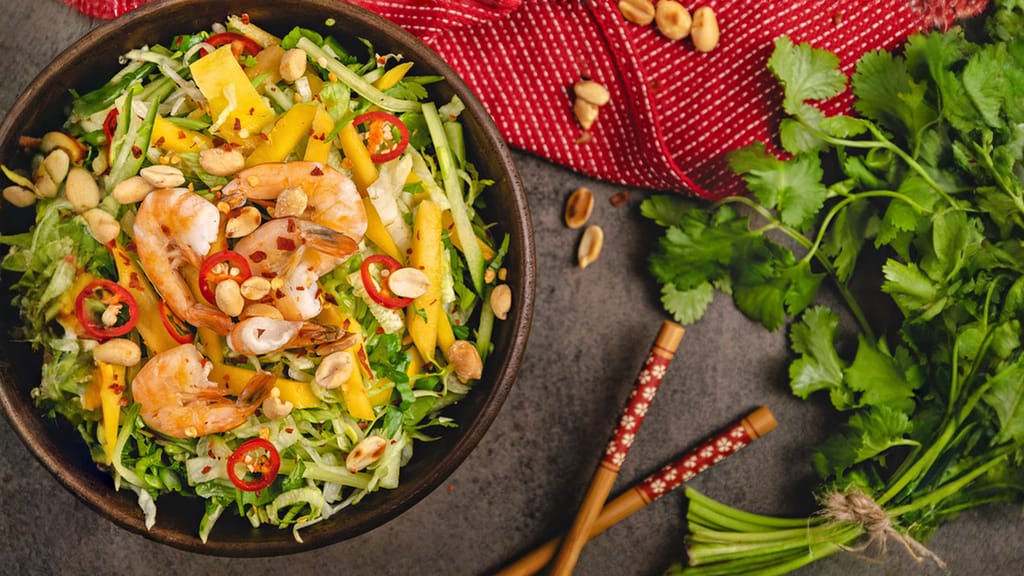
Asian mango and shrimp salad
Asian Salad with Shrimp, Mango, Lime Dressing and Peanuts
Mussels are nearly as quick to prepare as shrimp: in a covered pot with wine they cook in five to eight minutes, until the shells open. Unlike shrimp, though, mussels are sold live, and that brings a few rules with it.
Our recipe for mussels in white wine with garlic and cherry tomatoes is a classic for sharing. In a wide pot, shallot and garlic are slowly sautéed in olive oil with a piece of butter. 200 ml of dry white wine is added and boiled hard until reduced by about half, then halved cherry tomatoes go in. Then a kilo of mussels is added, the pot is covered, and they cook over full heat for five to eight minutes until the shells open. For pregnant women, small children, older people and people with weakened immunity, cook them for another 4–5 minutes after they open, as our recipe advises. Serve with the broth and a baguette for mopping; allow 55 minutes in total, including cleaning.
What to watch for with mussels:
Before cooking: the FDA says live mussels close when you tap the shell. So tap a slightly open mussel on the edge of the counter; if it doesn't close, throw it away.
After cooking: according to the FDA, shells open during cooking, and those that don't open go in the trash. Don't pry them open.
Storing before cooking: our recipe advises keeping mussels in the fridge in a bowl covered with a damp towel, not in water or in a sealed bag where they'd suffocate, and cooking them as soon as possible after buying.
A frozen seafood mix (usually shrimp, squid rings, mussels and baby octopus) is a handy shortcut for pasta and risotto, as both recipes above show. Squid and baby octopus have the same problem as shrimp: either quickly over high heat, or long and slow. Anything in between makes them rubbery.
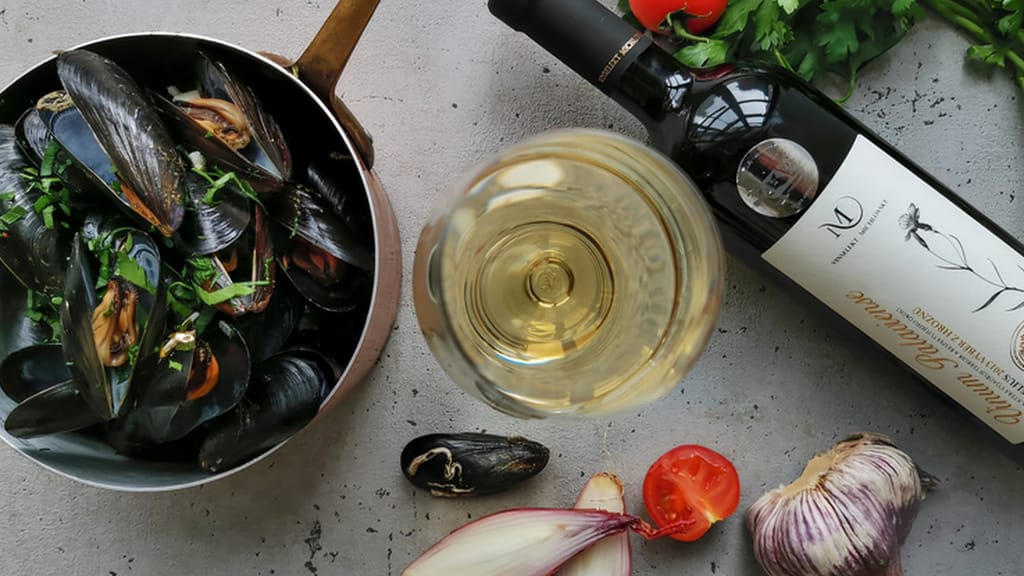
Mussels in white wine with garlic and cherry tomatoes
Mussels in White Wine with Garlic, Shallot and Cherry Tomatoes
Shrimp have a delicate, slightly sweet flavor, so they need fat, acidity and one distinctive aroma. These five combinations always work:
Garlic, butter, lemon, parsley: the Mediterranean classic for the pan and for pasta.
Chili, garlic, olive oil: the base of gambas al ajillo and spicy pasta.
Ginger, lemongrass, cilantro, coconut milk: the Asian sauce used for shrimp in coconut milk.
Lime, fish sauce, soy, chili: a salty-sour dressing for salads and cold shrimp.
White wine, shallot, cream: a delicate sauce that goes well with gnocchi or tagliatelle.
Why these pairs work: shrimp on their own have little acidity and a lot of sweetness, which acid balances out. Fat (butter, oil, coconut milk), in turn, dissolves the aromatic compounds in garlic, ginger and chili and carries them through the whole dish. That's why spices are always briefly toasted in fat first, and lemon or lime goes in at the end, while it still smells fresh.
How to marinate shrimp: it's enough to coat shrimp in oil and spices 15–30 minutes before cooking. Don't leave them in an acidic marinade with lemon or lime for long, because the acid starts to "cook" the shrimp right in the bowl, and after an hour they have a mealy, crumbly texture. It's better to add lemon after searing.
The most common mistake with shrimp is overcooking; right behind it come a wet pan and too many shrimp at once.
You cook the shrimp too long. Add them to sauces, risotto and pasta only at the end. Larger shrimp need just a few minutes, small ones even less.
The shrimp aren't dried. Water from thawed shrimp cools the pan, and the shrimp steam instead of searing.
An overcrowded pan. When shrimp overlap, the pan loses heat. Sear them in batches, in a single layer.
You cook already cooked shrimp. Pink shrimp from the store are done; you only need to warm them through.
You thaw them on the counter. Put the shrimp in the fridge the day before, or thaw them in a sealed bag in cold water and cook right away.
There's no acidity. Lemon, lime or wine at the end give shrimp the freshness they lack on their own.
Shrimp thawed in the fridge can be refrozen, but they lose some of their juiciness and turn mealy. Don't refreeze raw shrimp that were thawed in cold water or in the microwave; cook them first, and you can freeze the finished dish.
For a main course, allow roughly 150–200 g (5–7 oz) of peeled shrimp per person. For pasta, risotto or a salad with other ingredients, about 100 g (3.5 oz) is enough. Shrimp with shells and heads weigh about twice as much as the clean meat, so buy proportionally more.
You can add a frozen seafood mix to pasta straight from the freezer, as our spaghetti with seafood recipe does, but expect it to release water and thin the sauce a little. For a pan where shrimp need to brown, though, always thaw and dry them first, otherwise they steam in the pan rather than sear.
Reheat shrimp leftovers only once, in a pan with a spoonful of water, broth or cream, until piping hot all the way through (at least 70 °C / 158°F in the center for 2 minutes). Tougher shrimp are the price of safe reheating; they overcook less if you add them to the sauce only at the end of reheating. In the microwave, stir the dish partway through.
The best substitute for white wine is a broth made from the shells, or vegetable broth with a spoonful of lemon juice. Wine gives a sauce acidity and depth, so water alone won't do; add acidity with lemon or a splash of white wine vinegar.
Yes. Crustaceans, which include shrimp, are one of the 14 allergens that must be declared on packaging under EU rules, and also for unpackaged food, such as in a restaurant. Mollusks, such as mussels, squid and octopus, are listed as a separate allergen. If you're cooking for guests, ask about allergies in advance.
One recipe worth heating the oven for, one tip, and one deal from the shop. Nothing else.