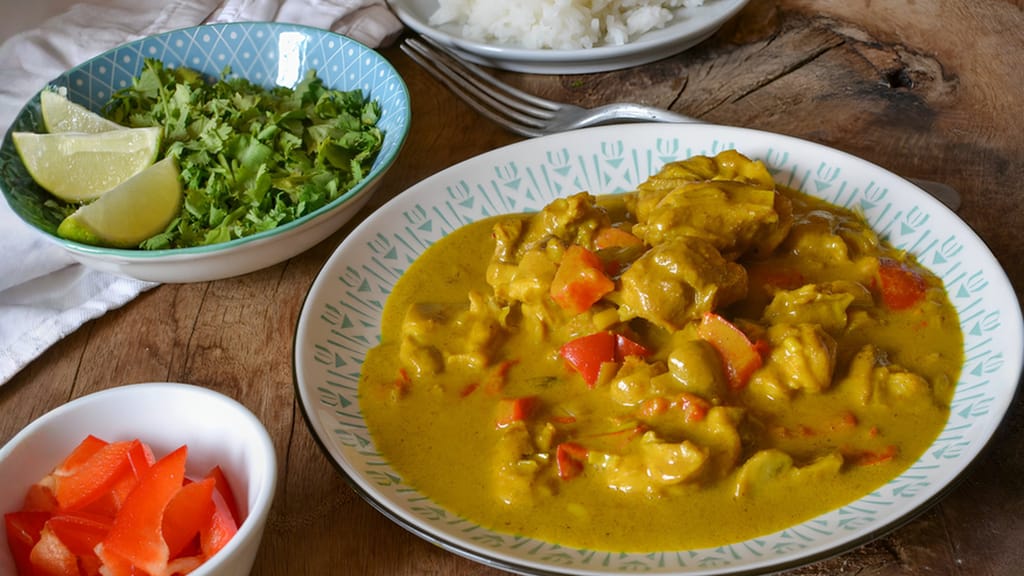
Chicken curry with coconut milk
What to Cook with Coconut Milk: Curries, Soups, Shrimp and Dal
Updated Nov 20, 2026
Coconut milk goes into five main types of dish: curries with meat or vegetables, creamy soups, lentil dal, shrimp in coconut sauce and slow-braised meat. They all rely on the same trick: the fat in coconut milk releases the aroma of the spices and gives the sauce a velvety body with no flour and no cream. One can means dinner in half an hour, or a Sunday pot that simmers away on its own.
On Yumsto, coconut milk goes into five tried-and-tested types of dish. Each gets its own section below:
Curries – chicken curry with vegetables or coconut chicken with lime, ready in half an hour.
Creamy soups – red lentil soup with chili, creamy carrot soup with ginger, and cream of broccoli soup.
Shrimp in coconut milk – a skillet with noodles, lemongrass and garam masala.
Lentil dal – a thick Indian stew of red lentils, tomatoes and spices.
Meat braised in coconut milk – beef shin simmered until tender, with no cream needed.
They have one thing in common: in all of them, coconut milk is both the fat and the liquid. Spices bloom in the fat, and the milk then thickens the sauce and rounds off the heat. That's why chili, ginger, curry paste and coconut meet in kitchens from Thailand to southern India. One 400 ml (about 13.5 fl oz) can is usually enough for a sauce for four.
We send seasonal cooking and baking plans and recipes made from everyday ingredients. Unsubscribe in one click.
A coconut milk curry is a sauce in which the spices are first fried in fat and then covered with coconut milk. The meat or vegetables simmer briefly in it. It's the quickest route from can to dinner, and also the dish that best shows what coconut milk can do: it softens sharpness, carries a lot of spice and won't split as long as you let it bubble gently.
A coconut milk curry has three fixed steps, whatever you cook:
Aromatic base – garlic, ginger, shallot or lemongrass briefly in fat until fragrant.
Spices in fat – curry powder, turmeric or paste fried for a few dozen seconds. Only heat releases their aroma.
Coconut milk and seasoning – pour it in, simmer gently, and at the end balance saltiness, sweetness and acidity.
The third step decides everything. Coconut milk is sweet and rich on its own. Without a touch of sour and salty, the curry tastes flat; with them, it comes alive.
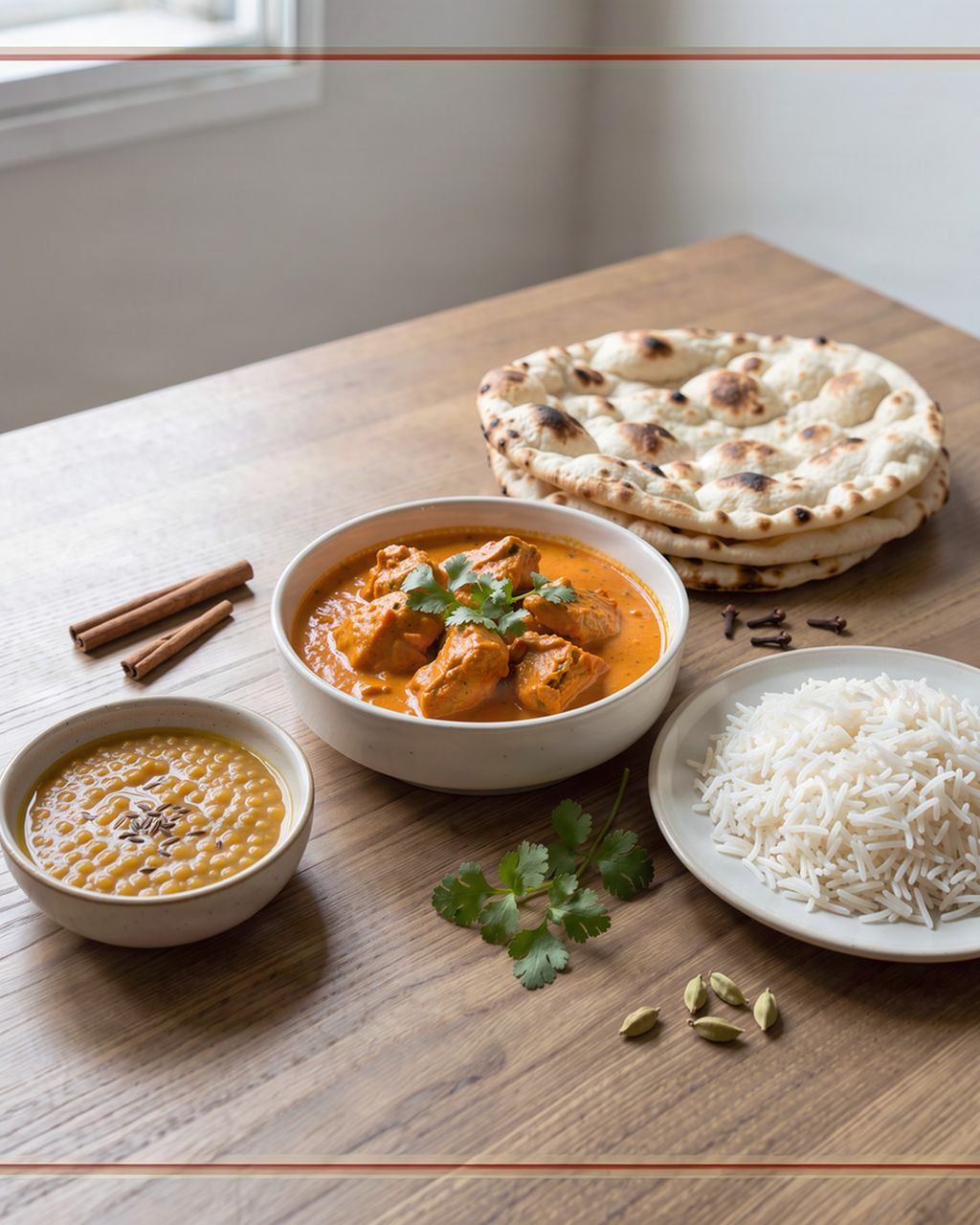
Chicken curry with coconut milk and vegetables is ready in 27 minutes and feeds four. The key trick: pour only half the coconut milk over the curry powder and turmeric first, so they disperse without lumps, and only then add the chicken, the rest of the milk and the vegetables.
At the end, season the curry with cane sugar, fish sauce and lime. Start cautiously with the fish sauce, because it also salts the curry. The recipe reminds you that the chicken must be cooked through, with no pink at the cut and at least 74°C (165°F) inside.
Chicken curry with coconut milk
Chicken curry with coconut milk, mushrooms, cherry tomatoes and bell pepper in 27 minutes
Coconut chicken with lime and cilantro is the simpler sibling of curry: ten ingredients, no curry powder, and on the table in 26 minutes. It's all made in one skillet: you brown the chicken breasts until golden, then build a sauce in the drippings from shallot, chili, ginger, lime and coconut milk. The acidity of the lime cuts through the rich sauce, and cilantro adds a fresh aroma.
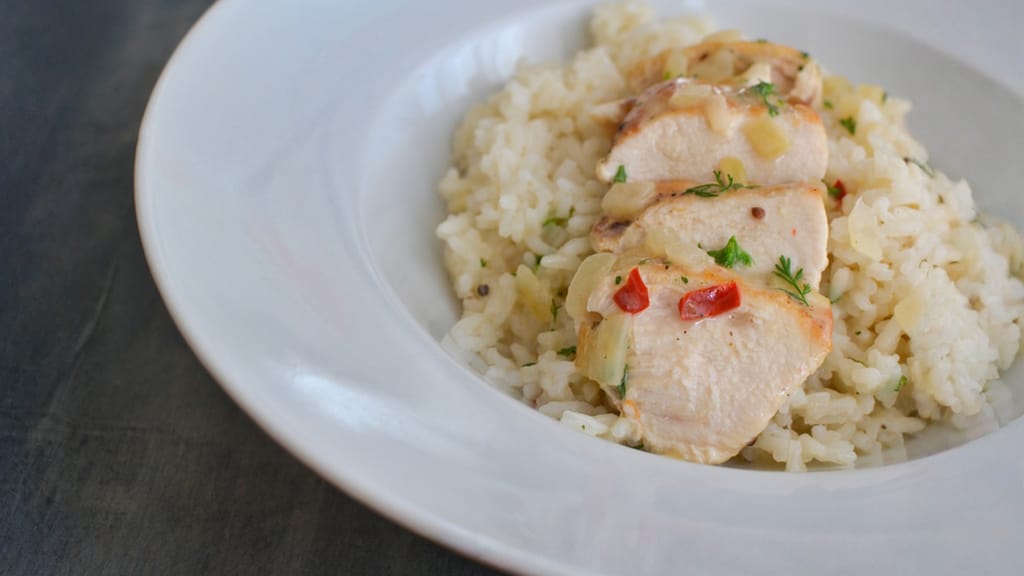
Coconut lime chicken with cilantro
Coconut chicken with lime and cilantro in one skillet in 26 minutes
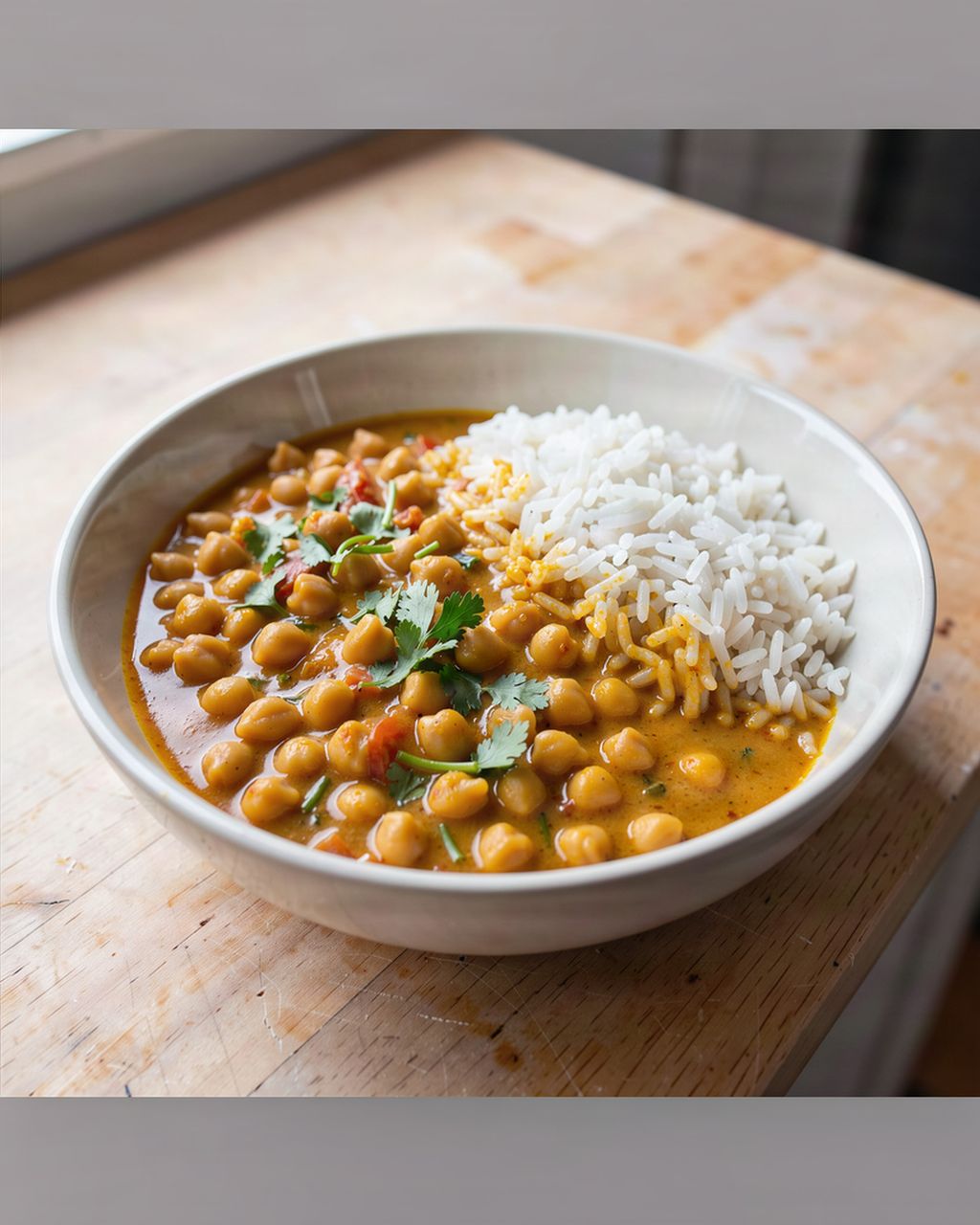
If you want a curry without meat, reach for legumes. Chickpea curry with coconut cream and apple fresh is vegan and uses thicker coconut cream instead of milk. The key point: the chickpeas first simmer for half an hour with tomatoes and apple juice, and the coconut cream is stirred in only at the end, so it has no time to split. For more ideas on what to do with chickpeas, see our article what to cook with chickpeas.
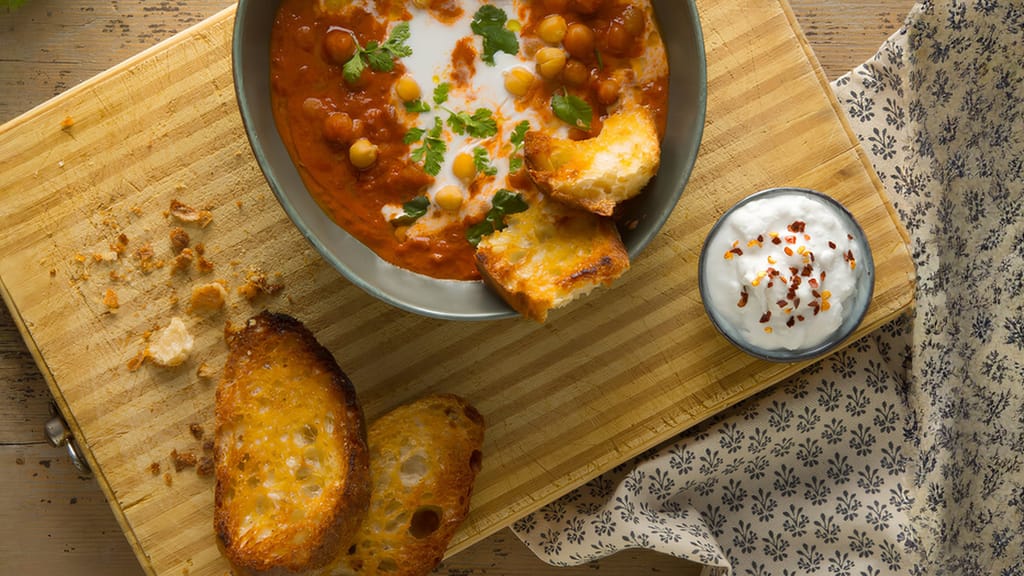
Chickpea curry with coconut cream and fresh apple juice
Vegan chickpea curry with coconut cream, tomatoes and apple fresh
A coconut milk soup is most often creamy: vegetables or lentils are cooked in the milk with a little water and then either blended or left to cook down on their own. Coconut milk replaces cream here, and because it's plant-based, such soups are easily vegan. On Yumsto you'll find three worth making:
red lentil soup with coconut milk and chili – thick, spicy, in 35 minutes,
creamy carrot soup with ginger – sweet and warming, garnished with carrot rosettes,
cream of broccoli soup – the fastest, in 25 minutes, with toasted pumpkin seeds.
All three share one rule: once the coconut milk is in, the soup only bubbles gently. Hard boiling doesn't suit the milk; more on that below.
Red lentil soup with coconut milk and chili needs just seven ingredients and is vegan. Fry the shallot in coconut oil until golden, because browned shallot gives the soup a sweet depth. Scald the red lentils three times with boiling water beforehand, draining the water each time.
Lentils soak up liquid quickly, so after five minutes of boiling add another cup of hot water. Add the curry paste little by little, letting the soup simmer for a while after each addition before you taste. It's hotter than it seems. Red lentils break down as they cook and thicken the soup themselves, so you don't need a blender.
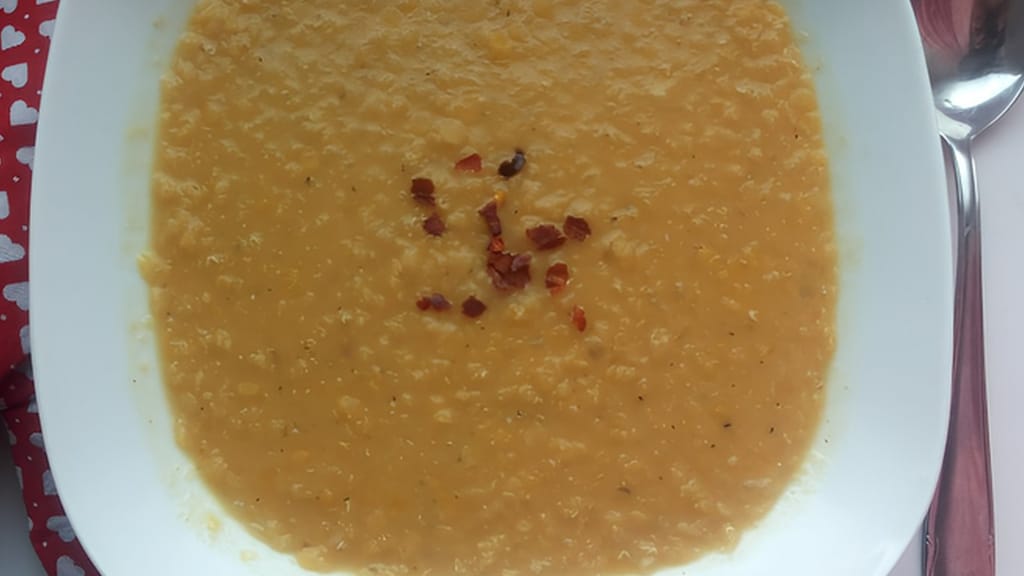
Red lentil soup with coconut milk and chilli
Vegan red lentil soup with coconut milk and red curry paste
Creamy carrot soup with ginger and coconut milk is vegan and ready in 40 minutes. The key trick: grate the carrots coarsely instead of slicing them into rounds. Grated carrot softens faster, becomes fragrant with the ginger in the coconut fat within minutes, and the soup then blends smoothly. It's done when a piece of carrot can be mashed against the side of the pot with a spoon.
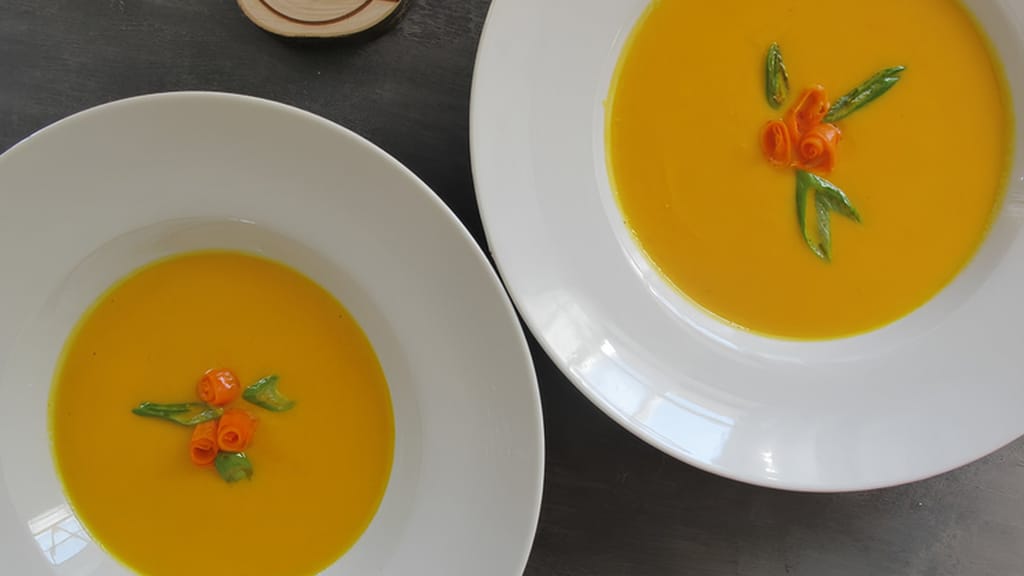
Carrot cream soup with ginger and coconut milk
Vegan creamy carrot soup with ginger and coconut milk with carrot rosettes
Cream of broccoli soup with coconut milk is the fastest soup in this article: vegan and ready in 25 minutes. Don't throw away the stalk: peeled and chopped, it goes into the soup too, and you can tell the soup is done when a knife slides into it without resistance. The recipe warns that coconut milk could split at a hard boil, so keep the soup at a gentle simmer.
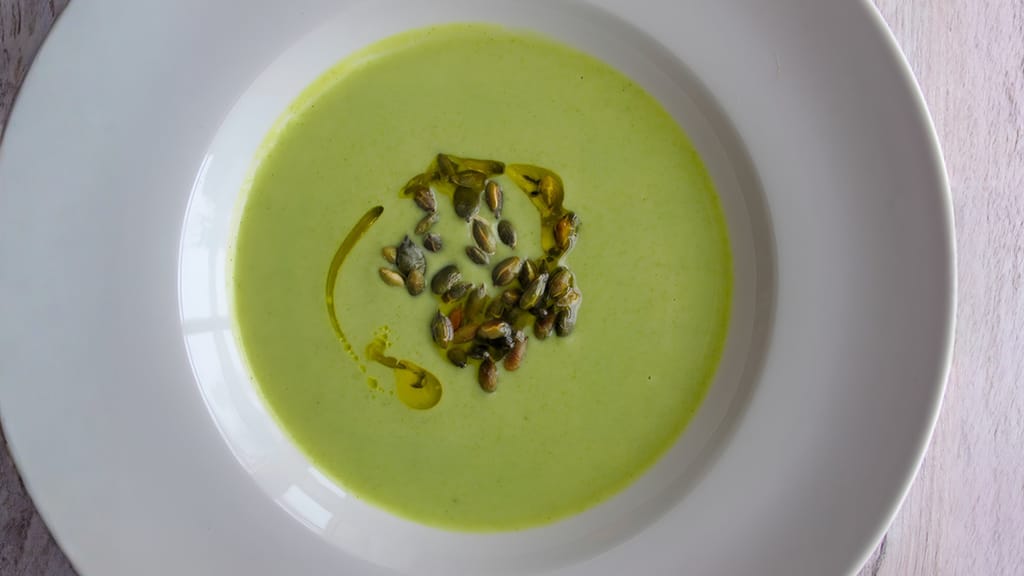
Creamy broccoli soup with coconut milk
Vegan cream of broccoli soup with coconut milk and toasted pumpkin seeds in 25 minutes
Shrimp in coconut milk rely on a simple principle: the shrimp themselves cook for only a few minutes, and the coconut sauce keeps them juicy. Shrimp in coconut milk with noodles serves four and takes 43 minutes. You'll find the full method in the recipe; here are the four things that matter:
Thaw the shrimp in the fridge beforehand and pat them dry with a paper towel, so they sear rather than stew in their own water.
Leave them in the coconut milk for only about three minutes, gently bubbling under a lid. Longer cooking won't help them.
They're done when they turn pink all over and are no longer glassy inside but opaque.
Drain the noodles only at the end, just before adding them to the skillet, so they don't stick together.
For more ideas, see the article Shrimp and seafood: recipes in a skillet, with pasta, risotto and in coconut milk.
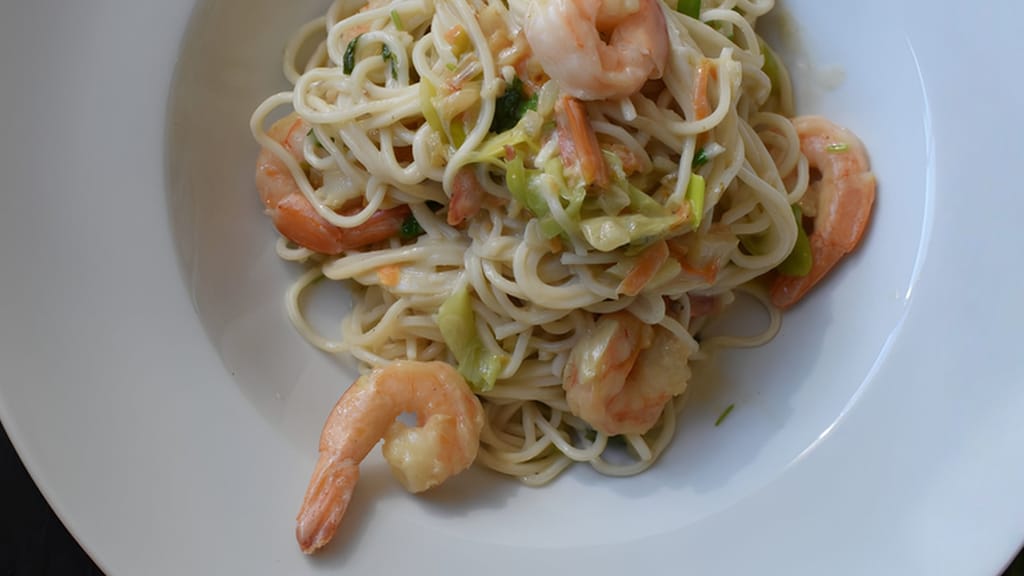
Shrimp in coconut milk
Shrimp in coconut milk with egg noodles, garam masala and lemongrass
Lentil dal is a thick Indian stew of legumes. Red lentils cook down in it with tomatoes and spices, and coconut milk adds creaminess at the end. It turns a cheap ingredient into a proper dinner, and a full pot in the fridge tastes even better the next day.
Lentil dal with coconut milk serves four and takes 47 minutes. The whole method is in the recipe; three things are key:
Rinse the lentils in a sieve until the water runs clear. This washes off dust and some of the substances that would foam during cooking.
Pour in the coconut milk only when the lentils are soft and have absorbed almost all the liquid.
Then let the dal bubble only gently until it comes together into a thick cream.
Note: the recipe tops the dal with shrimp, so this version isn't meatless. If you want a meat-free dal, leave out the shrimp and you're left with lentils topped with roasted carrot and vegetables. For more Indian dishes, see the article Indian food at home: curry, dal, butter chicken and naan.
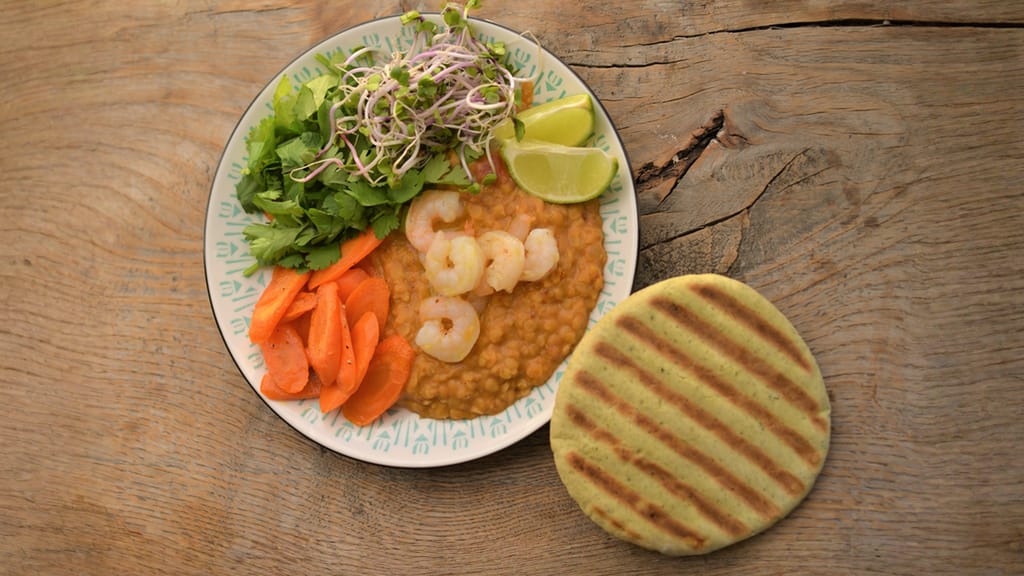
Lentil dhal with coconut milk
Lentil dal with coconut milk, roasted carrot and shrimp
Meat braised in coconut milk is the slow version: a tough cut of beef first simmers in water, and the coconut milk comes in only for the second half. The sauce thickens as a result and doesn't overcook. Beef pieces braised in coconut milk are made from beef shin, serve four, and take an hour and a half in total.
The key point: pour in the coconut milk only when the water has almost evaporated, and keep braising over low heat. The meat is done when a piece falls apart easily with a fork. The sauce is lightly thickened by the cornstarch you sprinkle over the meat right after searing. If you want more beef ideas, see the article What to cook with beef.
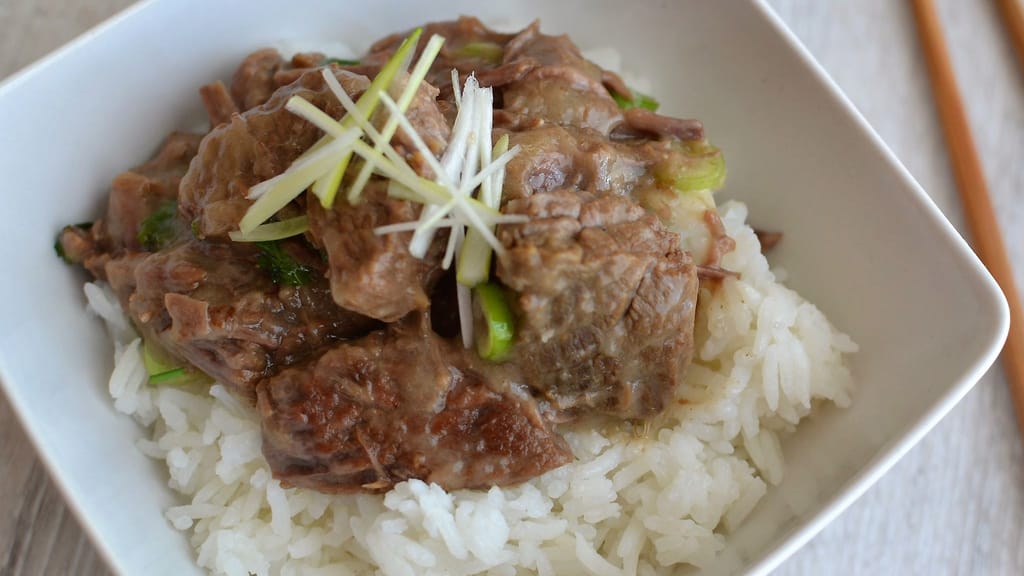
Beef chunks braised in coconut milk
Beef shin braised in coconut milk with leek and jasmine rice
Without meat, coconut milk mostly goes into soups and legume curries. Of the recipes above, these four are vegan:
red lentil soup with coconut milk and chili – shallot, lentils, coconut milk and red curry paste,
creamy carrot soup with ginger – carrot, ginger, chili and coconut milk,
cream of broccoli soup – broccoli, onion, cumin, pumpkin seeds and flaxseed oil,
chickpea curry with coconut cream – chickpeas, tomatoes, apple juice and coconut cream, with toasted ciabatta.
Coconut milk gives them creamy body and full flavor, so soups without meat or cream don't taste bland. If you want a soup even thicker, a legume will do it: red lentils thicken it on their own, without changing the method.
Watch out for the lentil dal: at first glance it looks meatless, but according to the recipe it's topped with shrimp. And if you swap tofu or vegetables for the chicken in the chicken curry, it still won't be vegan, because it's seasoned with fish sauce. Replace that with soy sauce or salt.
Within 30 minutes you can make three dishes from this article with coconut milk:
cream of broccoli soup – 25 minutes,
coconut chicken with lime and cilantro – 26 minutes,
chicken curry with vegetables – 27 minutes.
They're quick for the same reason: both chicken breast and broccoli need only a few minutes in coconut milk, and nothing has to be soaked or simmered for long. To really get them done that fast, have everything chopped before you turn on the stove. Curry powder fries in the fat in seconds, and garlic burns easily if you're still hunting for the bell pepper. The red lentil soup is done in just over half an hour (35 minutes). Dal and shrimp with noodles take about three quarters of an hour. Beef shin needs an hour and a half, but mostly it simmers under the lid by itself.
Coconut milk won't split if, once added, you let it bubble only gently and don't boil it hard. That's also the advice the recipes above keep repeating. Hard boiling and long cooking at high heat separate the fat from the water, and the sauce then looks grainy and greasy. It won't spoil the flavor, but it does spoil the look.
Five rules that work in curry, soup and dal:
Shake the can before opening, or whisk the contents in a bowl. The fat floats to the top and sets. It should go into the sauce evenly.
Add the milk after the aromatic base. The spices toast in the fat, and the coconut milk then just carries their flavor.
Low heat. The surface should only tremble and bubble now and then. Hard boiling is the most common reason milk splits.
Legumes and tough meat go in water first. The lentils in dal and the beef shin soften in water, and the coconut milk comes in for the second half.
Acidity at the end. Add lime to the finished sauce and taste.
If the sauce separates anyway, take it off the heat and whisk. That stirs the greasy layer on top back in, or in a curry you can simply leave it; it does the flavor no harm.
You season coconut milk dishes with four things: sour, salty, sweet and a fresh herb. Coconut itself is mildly sweet and rich, so without a counterweight the sauce tastes bland. That's why the same ingredients keep appearing in the recipes above:
Sour: lime is the obvious choice. The juice balances the fat and the zest adds aroma. In the chickpea curry, tomatoes with apple juice do the same job.
Salty: salt, or fish sauce as in the chicken curry. Fish sauce also adds deep savory flavor, so a smaller amount is enough.
Sweet: a pinch of cane sugar evens out the acidity of lime and the sharpness of chili. Browned shallot or carrot brings sweetness naturally.
Herbs and heat: fresh cilantro, scallions, chili, ginger. Add cilantro at the end, as cooking dulls its aroma.
In practice: season at the end, in small amounts, and always taste after a short simmer. Curry paste is hotter than it seems, and the heat only shows after a while of cooking.
The best side for coconut milk dishes is one that soaks up the sauce: rice, naan bread or noodles. These are exactly the ones the recipes in this article choose:
Jasmine rice – with the beef braised in coconut milk. It's lightly fragrant and slightly sticky, so it holds the sauce.
Cooked rice – with the chicken curry and the coconut chicken with lime. Neutral, it lets the spices stand out.
Naan – with dal. A torn piece of bread works as a spoon.
Egg noodles – mixed straight in with the shrimp in coconut sauce, so the side is part of the dish.
Toasted ciabatta – with the chickpea curry, drizzled with olive oil and pan-toasted until golden.
Soups need no side. If you like, add a piece of bread or sprinkle toasted seeds on top, as in the cream of broccoli soup.
Canned coconut milk, coconut cream and boxed coconut drink are three different things. They differ in the ratio of coconut to water, and so in fat content. The international food standard Codex Alimentarius sets minimum values for coconut milk and cream:
Coconut milk (canned) – for cooking. Under the Codex standard, coconut milk has at least 10% fat and light coconut milk at least 5%. The actual fat content varies between brands; you'll find it in the nutrition information on the can. It suits curries, soups and dal.
Coconut cream – thicker, with a higher share of coconut, at least 20% fat under the Codex standard. It suits thickening and softening at the end, as in the chickpea curry above, and desserts too, such as cardamom rice with coconut cream and mango.
Coconut drink (carton) – thin, meant for drinking or for porridge and coffee. It's too watery for curry and won't thicken a sauce.
Light coconut milk has less coconut and more water. It works in soup, but a curry made with it will be thinner and the spices won't stand out as much. One 400 ml (about 13.5 fl oz) can is usually enough for a sauce for four; for a curry with lots of vegetables, use two.
For cooking, choose regular (not light) canned coconut milk with the shortest ingredient list possible: coconut and water, possibly a stabilizer. A few pointers for the store:
Coconut content. It's often listed on the label as a percentage. The higher it is, the thicker the milk and the creamier the sauce.
Regular rather than "light." Regular suits curry and dal better; light dilutes the sauce.
A 400 ml can is the standard size. Most of the recipes above count on this amount, for example the coconut chicken, the carrot and broccoli soups, the dal or the beef pieces. The chicken curry with vegetables for four uses two.
You can judge thickness by shaking. If the can barely sloshes, there's a lot of set coconut cream inside. That's a good sign.
Don't buy coconut drink from the plant-based "milk" shelf for cooking. It's thin and won't thicken a sauce.
In a sauce, cooking cream or thick plain yogurt is the best substitute for coconut milk. Stir the yogurt in at the end, off the boil. The dish will lose the coconut sweetness, so season it with a little sugar and extra lime. For a vegan version, use soaked cashews blended with water. Boxed coconut drink is too thin for sauces.
Pour opened coconut milk from the can into a glass or plastic container with a lid, keep it in the fridge and use it within a few days. The exact time is given by the manufacturer on the packaging. If the milk smells sour or tastes sour, throw it out.
Yes, you can freeze coconut milk, ideally in small portions in a sealed container or in ice cube trays. After thawing, the fat usually separates from the water and the milk looks grainy, so whisk it or blend it. It is no longer good for drinking, but it works just as well in curry, soup or dal.
Coconut milk contains no lactose, because it is a plant-based product made from coconut flesh and water, not animal milk. That is why it is often used instead of cream in soups and sauces. If you are dealing with an allergy or another medical diet, check the ingredients on the packaging and consult your doctor or a nutrition therapist.
Canned coconut milk separates because the fat rises to the top and sets in the cold into a white layer, with thinner liquid underneath. This is natural and tends to indicate a milk with a high coconut content. Before cooking, shake the can or whisk the contents in a bowl; you can also use the solid layer separately as coconut cream.
Yes, coconut milk also makes sweet dishes, typically rice puddings and creams. Canned coconut milk works in a rice pudding cooked to a thick, pudding-like consistency, sweetened and served with fruit. On Yumsto you will find cardamom rice with coconut cream and mango, which uses thicker coconut cream.
One recipe worth heating the oven for, one tip, and one deal from the shop. Nothing else.