- Season
- Year-round
- Price
- Low
Calories and nutrition per 100 g
- 53 kcal
- 8.1 g protein
- 0.6 g fat
- 4.9 g carbs
Shoyu Soy Sauce
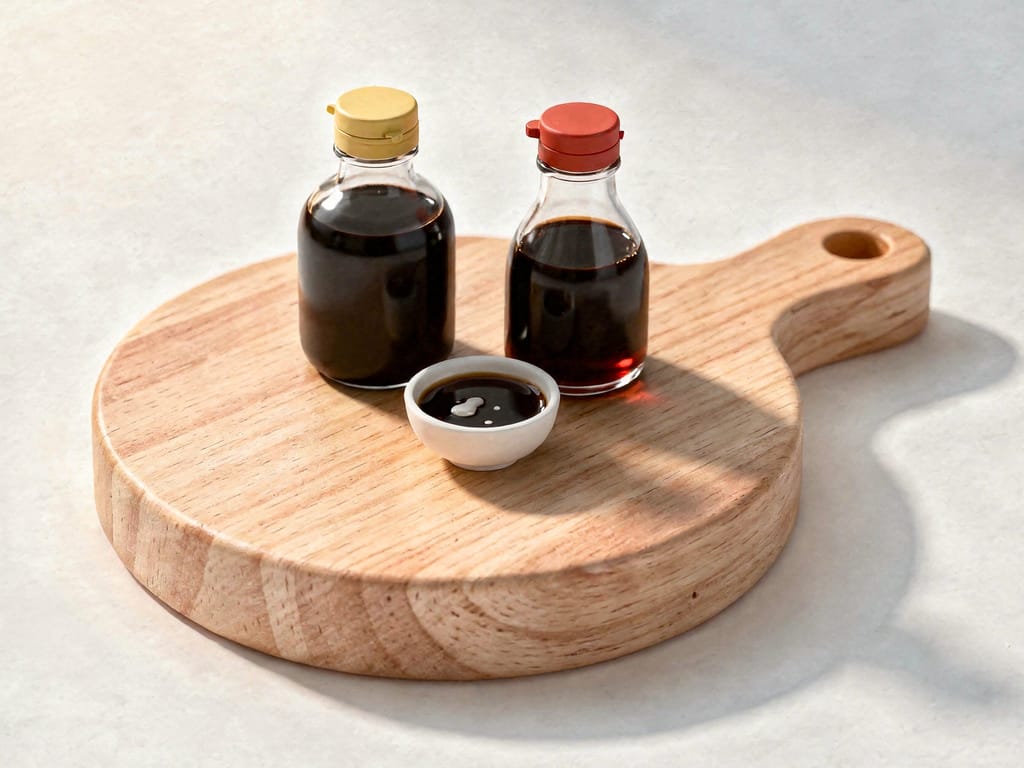
Shoyu is the Japanese word for soy sauce; on labels it means Japanese-style soy sauce brewed from soybeans, wheat, salt and water. It is not a brand or a special type, it contains soy and gluten, and it has about 16–17 g of salt per 100 ml.
Keep an unopened bottle somewhere dry and dark, away from heat and direct sun, and use it by the best-before date.
Once opened, keep it in the fridge, tightly closed. Kikkoman says its soy sauce should be kept in the fridge after opening and used within 2 months; follow the instructions on your bottle.
There is no need to freeze it.
Read the ingredients: traditional shoyu contains only water, soybeans, wheat and salt. Honjōzō on the label means the sauce is entirely brewed. Cheaper sauces are made by acid hydrolysis of plant protein instead of fermentation; look for "hydrolysed protein" in the ingredients. Japanese-style does not mean made in Japan: according to Rohlík, Alnatura Shoyu-Art is made in China and Natural Jihlava Shoyu san-J in Japan.
Another Japanese soy sauce (koikuchi) such as Kikkoman, 1:1, as it is the same style. If you need a wheat-free sauce, use tamari labelled gluten-free, also 1:1.
Chinese light soy sauce, 1:1. Coconut aminos are sweeter and less salty, so use more and add salt. Do not swap in Chinese dark soy sauce, which would make the dish brown and sweet.
Use shoyu straight from the bottle. Season a teaspoon at a time: a tablespoon contains roughly 2.5 g of salt. Add it at the end of a stir-fry, and at the start for marinades and braises.
Mix the last of the bottle with rice vinegar, a little sugar and sesame oil for a cucumber salad dressing or a dumpling dip.
Roughly what one measure weighs, scooped the way you normally would in the kitchen.
Shoyu is the salty seasoning for almost anything: marinades for meat and fish, stir-fries, soups and braises, and as a dip for sushi, dumplings and tempura. With mirin and sugar it becomes teriyaki sauce, with citrus juice ponzu.
Shōyu (醤油) is the Japanese name for soy sauce. The Japanese Agricultural Standard (JAS) divides it into five main types, and the vast majority of what Japan produces is the classic dark koikuchi. Most Japanese soy sauces are brewed from soy and wheat, fermented with koji mould (Aspergillus oryzae or A. sojae) and matured in brine. On Czech shelves the word appears, for example, on Alnatura Shoyu-Art and Natural Jihlava Shoyu san-J.
Shoyu is strongly salty with a full umami taste. It is thin and dark; Natural Jihlava describes its Shoyu san-J as having a sharp, spicy aroma and a red colour.
Seasonal baking plans, tested recipes and kitchen tricks that save you time. Unsubscribe in one click.
2 min read
Shōyu simply means "soy sauce" in Japanese. On bottles and in recipes, though, the word usually means Japanese-style soy sauce, the kind most made in Japan: brewed from soybeans and wheat. It is not a brand. Kikkoman is a Japanese-style soy sauce (koikuchi) even though the word shoyu is not on the bottle, while Alnatura Shoyu-Art is made to a Japanese recipe in China.
The ingredients are similar in every case: water, soybeans, wheat and salt. Kikkoman lists 16.9 g of salt per 100 ml, Alnatura Shoyu-Art 15.9 g.
The Japanese Agricultural Standard (JAS) divides shoyu into five main types. Koikuchi, dark and all-purpose, makes up over 80% of Japanese production. Usukuchi, lighter in colour but saltier, accounts for almost 14%. The rest is tamari (about 1.5%), saishikomi (about 0.8%) and pale shiro (about 0.7%).
When a recipe or label just says "shoyu", it almost always means koikuchi. Tamari is made mainly from soy and traditionally without wheat, but it is gluten-free only when the label says so.
Cooked soybeans are mixed with wheat and inoculated with koji mould (Aspergillus oryzae or A. sojae). The mix is covered with brine, left to ferment and mature, and finally pressed. Kikkoman describes its sauce as made by fermenting and pressing soybeans and roasted wheat.
Japanese labelling distinguishes honjōzō, sauce made entirely by brewing, from kongō-jōzō, where the brewed base is mixed with 30–50% hydrolysed plant protein. Some cheap sauces are made by acid hydrolysis alone, with no brewing.
Allergens: shoyu contains soy and wheat, which means gluten. Both are highlighted as allergens on the Kikkoman, Alnatura and Natural Jihlava labels.
Chinese light soy sauce and dark soy sauce are a different style. Light is the main salty seasoning, and shoyu is its best swap in recipes; dark is thicker, sweeter and used mainly for colour. We cover the differences on their pages.
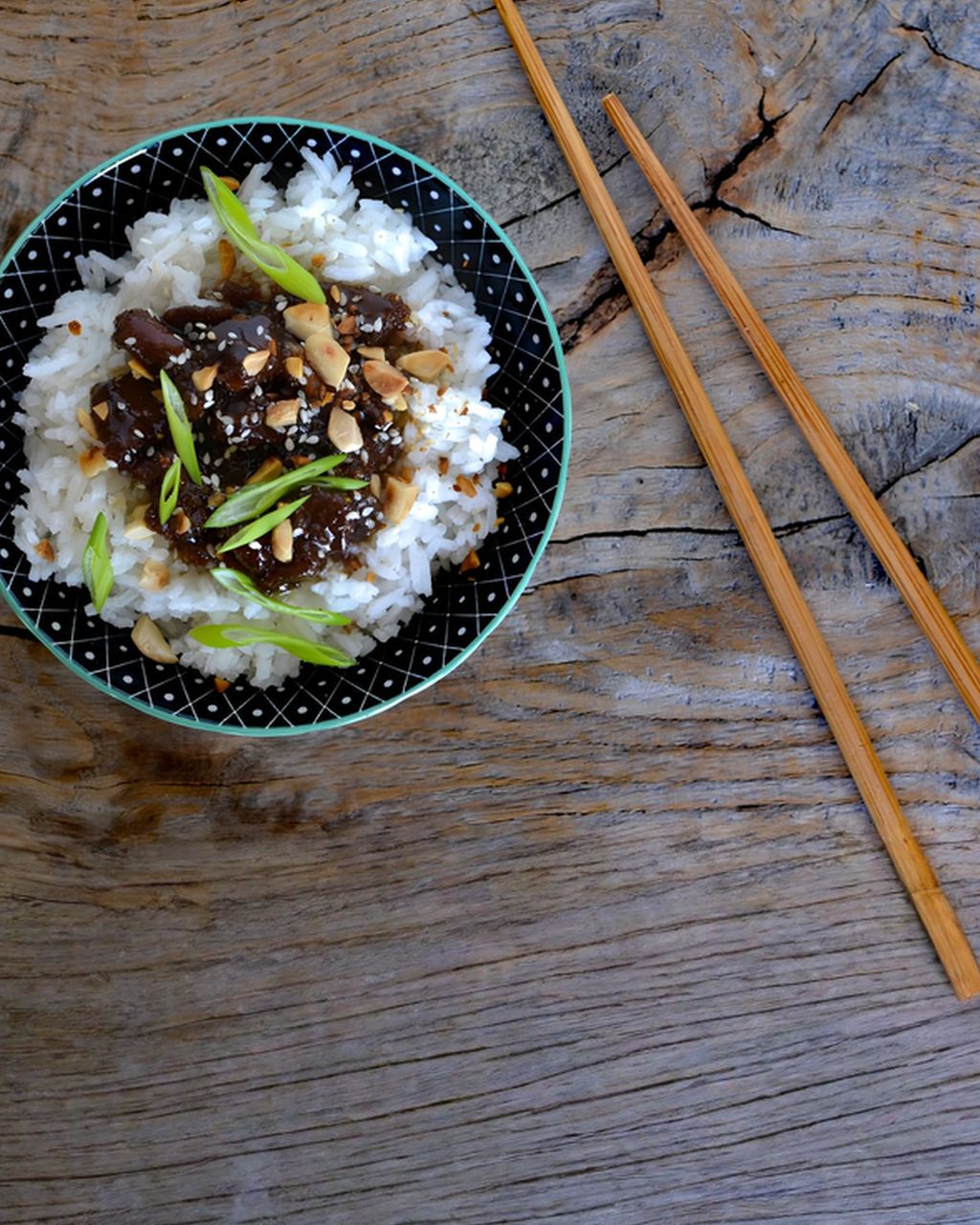
Shoyu is an all-round salty sauce: for marinades, stir-fries, soups and as a dip. How to marinate meat with it and thicken the sauce with starch is covered in our article on homemade Chinese stir-fry. Try it in fragrant Mongolian beef.