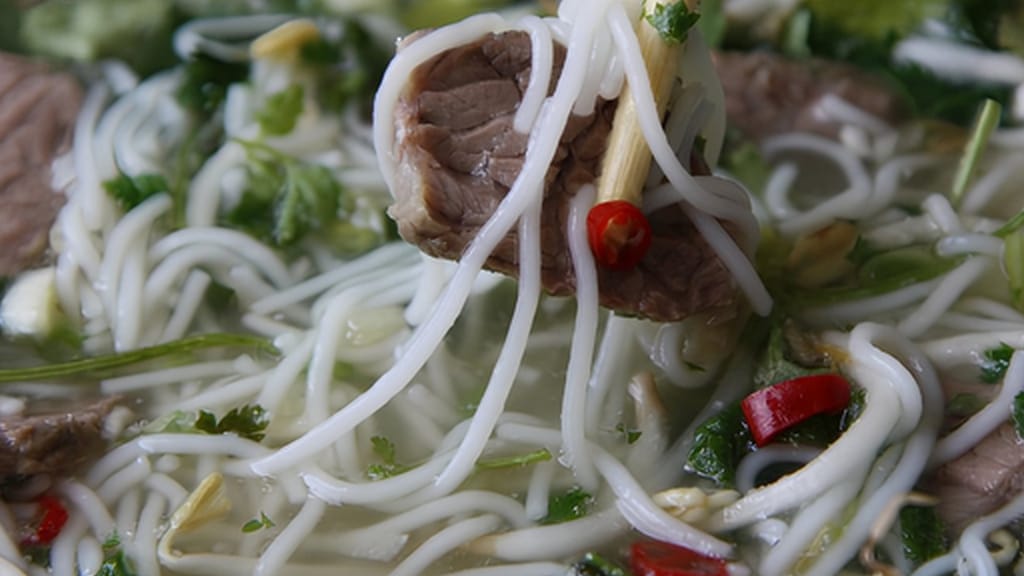
Pho bo – vietnamese beef noodle soup
Rice, Glass and Udon Noodles: How to Cook Them So They Don't Stick
Updated Nov 17, 2026
Rice noodles and glass noodles are usually soaked in hot water rather than boiled, while udon is boiled briefly and rinsed under cold water right away. Most sticky clumps happen when fine noodles are boiled like spaghetti, left sitting in a colander and added to the pan five minutes later. Below you'll find how to handle each type, how to adjust the time depending on whether the noodles are headed for a wok or a soup, and what to do to keep them loose.
The short answer: soak rice and glass noodles, boil udon. In detail:
Rice noodles (both flat and thin vermicelli): cover with hot water from the kettle; don't boil. For a wok, pull them out while still firm; for soup, let them soften completely.
Glass noodles (most often made from mung bean starch; Korean dangmyeon from sweet potato starch): soak thin ones in hot water or boil them briefly; boil thicker sweet potato noodles longer until they turn transparent and springy.
Udon noodles: boil dried ones in boiling water; fresh vacuum-packed or frozen ones only need a quick heat-through. Always rinse under cold water afterward.
Exact timing varies with thickness, so always start with the time on the manufacturer's package and taste a minute early. The times below are the typical ranges manufacturers give.
Seasonal baking plans, tested recipes and kitchen tricks that save you time. Unsubscribe in one click.
Rice noodles only need to be covered with hot but not boiling water (about 80–90°C / 175–195°F) and left to soften. Boiling them is the most common mistake: the surface overcooks before the center softens, the starch is released and the noodles fuse into one block.
Method:
Put the noodles in a large bowl and cover them completely with hot water at about 80–90°C (175–195°F) (from a kettle that has sat for a moment).
After the first few moments, loosen them with chopsticks or a fork so the bundle falls apart.
Go by texture, not the clock. They're done when they're pliable but still slightly springy in the center: you can wrap them around a finger without them snapping.
Drain, rinse under cold water and let them drip dry.
As a guide, based on manufacturers' packaging: thin rice vermicelli soften in hot water in roughly 3–5 minutes, flat noodles (3–5 mm wide, the pad thai type) in 6–10 minutes. Wide flat noodles of 1 cm or more need the upper end of the range, or a quick scald in boiling water after soaking.
Why not boil? Rice noodles have no gluten to hold them together. Only rice starch does, and in boiling water it quickly turns into a sticky gel on the surface. Slow soaking lets water reach the inside before the surface breaks down.
Soak thin glass noodles in hot water or boil them briefly; cook thicker Korean dangmyeon longer. The starch in glass noodles stands up to boiling better than rice starch does. You can tell when they're ready easily: the white, opaque strands become translucent, springy and slightly slippery.
Soaking (thin mung bean noodles): cover with hot water and let soften; manufacturers usually give 5–10 minutes. Ideal for salads and fillings, where the noodles should stay firmer.
Brief boil (thin mung bean noodles): in boiling water for 2–4 minutes (according to the package). Good when you want them going straight into soup or a hot dish.
Sweet potato dangmyeon: these are thicker and usually cook for 6–8 minutes according to the package. They're soft but still springy when you can bite through them without resistance and they don't tear when stretched.
Two things people forget:
Cut them with scissors. Glass noodles are very long and tangle once soft. A few snips right in the bowl will save you a fight on the plate.
Add them at the end. Glass noodles soak up liquid like a sponge. In a soup or sauce that sits for another half hour, the broth vanishes and you're left with mushy paste.
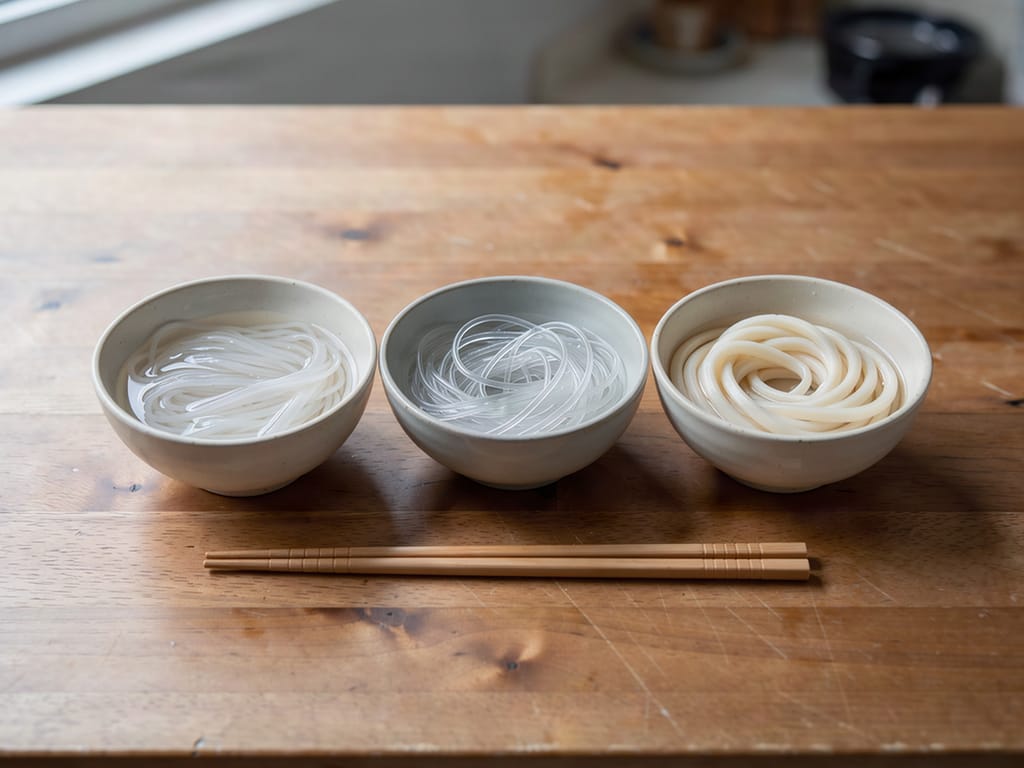
Glass noodles made from mung beans are also sold as cellophane noodles, bean thread noodles or mung bean noodles; Korean sweet potato noodles (dangmyeon) are thicker and springier and need longer cooking. Don't confuse them with thin rice vermicelli: those turn white, not translucent, when cooked.
Udon noodles are cooked in plenty of boiling water and rinsed under cold water right after cooking. They're thick wheat noodles, so unlike rice noodles they can handle a proper boil, and they need it.
It depends on which kind you have:
Dried udon: into boiling water; manufacturers usually give 8–12 minutes depending on thickness. Taste one: the center should be tender but with that characteristic springy bite.
Fresh, vacuum-packed (precooked): 1–3 minutes in boiling water is enough, just to warm them through and loosen them. You can also cover them with hot water in a bowl and gently separate them with chopsticks.
Frozen: add them straight from frozen to boiling water, usually for 1–2 minutes according to the package. Frozen udon tends to have the best texture of all the store-bought kinds.
Then drain and rinse under cold water, ideally rubbing them with your hands. This washes off the surface starch that would otherwise make the noodles gummy and the broth cloudy. For hot soup, just dip them back into hot water for a moment, or straight into the broth.
Rice, glass and udon noodles should almost always be rinsed under cold water after cooking: it stops the cooking and washes off sticky starch. With Italian pasta, surface starch is useful because it helps the sauce cling. With Asian noodles, though, it's exactly that starch which acts as the glue that turns them into a clump.
Cold water does two things:
stops the cooking, so the noodles don't keep softening from residual heat,
washes off surface starch, so the noodles stay loose and the broth stays clear.
The exception: if the noodles go straight from the pot into soup or a wok and are eaten right away, you don't need to rinse.
For a wok, pull the noodles out a little early, because they'll soften further in the sauce; for soup, prepare them fully and put them in the bowl separately. If noodles are already fully cooked when they go into the wok, they'll fall apart.
With noodle soups, the broth matters more than the noodles themselves. For the base for pho, see our guide to making a clear, rich beef broth.
For the wok (pad thai, yaki udon, stir-fried noodles with vegetables), prepare the noodles for less time than you would for soup: they'll finish cooking in the sauce.
Flat rice noodles: soak only until "pliable but firm", roughly 4–6 minutes.
Dried udon: boil for roughly 7–11 minutes, which is a minute less than the package says.
In the wok they finish cooking in the liquid from the sauce. If they're still tough, add a spoonful or two of water and cover them for a moment.
For soup (pho, udon in broth), prepare the noodles fully soft, separately, and pour the hot broth over them only in the bowl.
Flat rice noodles for soup: soak roughly 6–10 minutes, thin vermicelli 3–5 minutes; boil dried udon for the full time on the package, roughly 8–12 minutes.
Prepare the noodles separately, rinse them and put them straight into the bowl. Pour the hot broth over them at the table.
Don't cook them right in the whole pot of soup unless you'll eat it all at once. By the next day they soak up the broth and turn soft. This is exactly how Vietnamese pho bo with rice noodles is served: noodles in the bowl, broth on top.
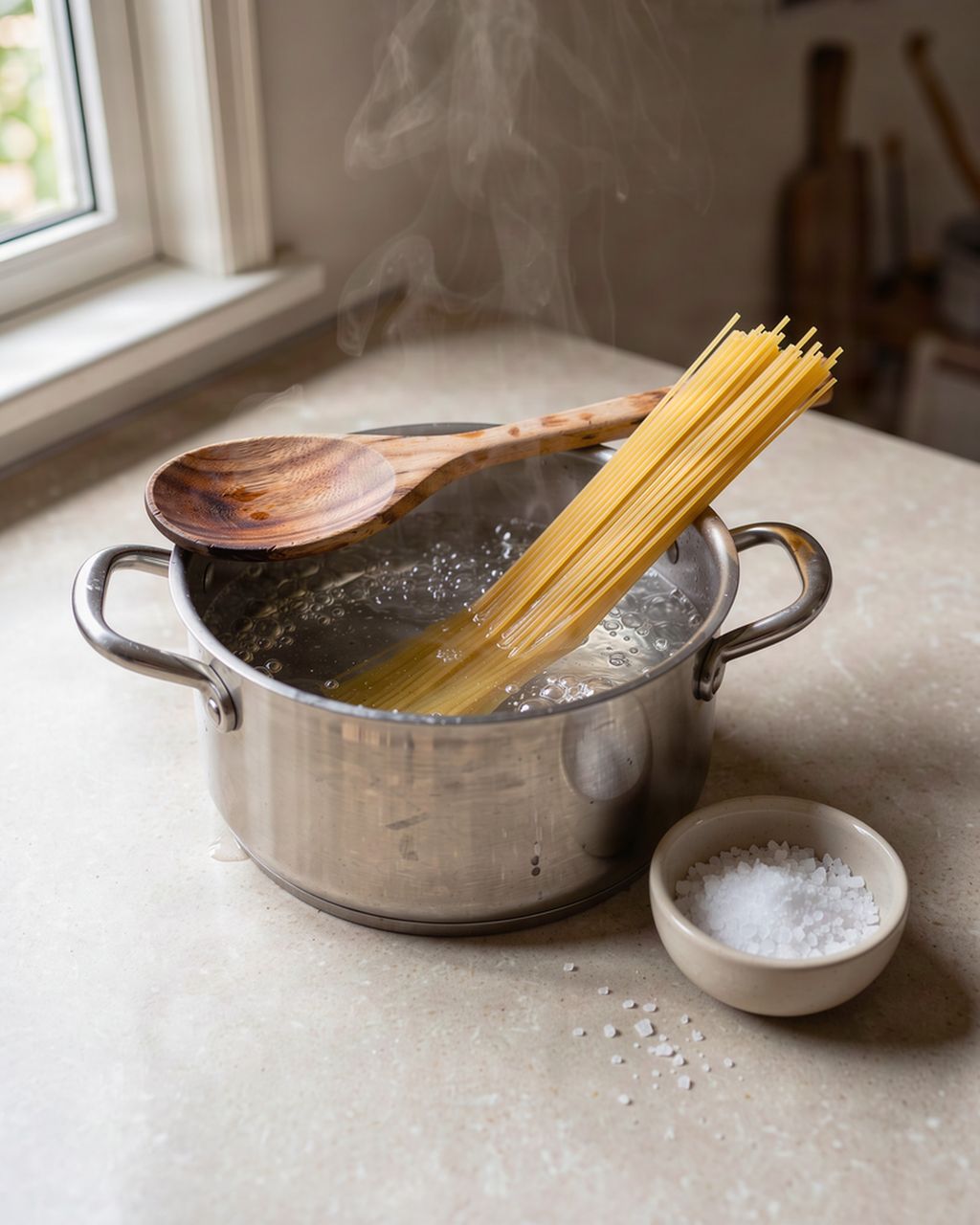
Noodles stick because starch stays on their surface and sets like glue as it cools. Five things help:
Lots of water. Boil udon in a large pot and soak rice noodles in a big bowl. In a small amount of water, there's too much starch.
Loosen them right at the start. The first 30 seconds decide it: after that, noodles that touch will fuse.
Rinse them under cold water and drain well.
A little oil. After draining, toss them with 1 teaspoon of neutral or sesame oil per 200–250 g (7–9 oz) of noodles. A thin film of oil keeps the noodles from joining up.
Time them to finish last. Prepare the noodles last, just as the vegetables and meat are done. Noodles waiting in a colander will always stick, even if you drizzle them with oil.
If they've already stuck, don't give up: cover them with hot water for a moment, gently loosen them with chopsticks and drain. With udon and glass noodles this works almost every time; with overcooked rice noodles, only halfway.
Rice noodles belong in soups like pho, in wok noodle dishes and in cold salads with herbs. Glass noodles suit salads with a lime dressing, spring rolls and broths; Korean sweet potato dangmyeon are the base of stir-fried japchae. Udon noodles are best in a hearty broth or pan-fried in a wok with vegetables and soy sauce.
Pho bo – vietnamese beef noodle soup
Pho bo – Vietnamese soup with rice noodles
For one main-course serving, allow roughly 70–100 g (2½–3½ oz) of dried rice noodles; for soup, 50–70 g (about 2–2½ oz) is enough. Noodles swell a lot once soaked, so a dry handful looks smaller than it really is. The same amounts apply to dried udon and glass noodles.
The best way to reheat cooked udon or rice noodles from the fridge is a quick dip in boiling water for 30–60 seconds, or a toss in a wok with a spoonful of water or sauce. This loosens them up and keeps them from drying out. Reheat them only once, and only until they're piping hot all the way through.
Yes, glass noodles soften in cold water too, it just takes longer: usually about 30 minutes instead of 5–10 minutes in hot water. Cold soaking suits salads in particular, and Korean dangmyeon, which are only briefly simmered afterward. The noodles stay firmer and stick less.
Glass noodles are made from starch, most often from mung beans, and Korean ones from sweet potatoes, and they turn transparent when cooked. Rice noodles are made from rice flour and stay white. Glass noodles are springier, slipperier and absorb more liquid. Rice noodles are more delicate and easily overcook.
Rice and glass noodles contain no gluten themselves: rice noodles are made from rice flour, glass noodles from mung bean or sweet potato starch. Udon noodles, on the other hand, are made from wheat, so they do contain gluten. If you can't have gluten, always check the ingredients and labeling on the package of the specific product.
One recipe worth heating the oven for, one tip, and one deal from the shop. Nothing else.