At a glance
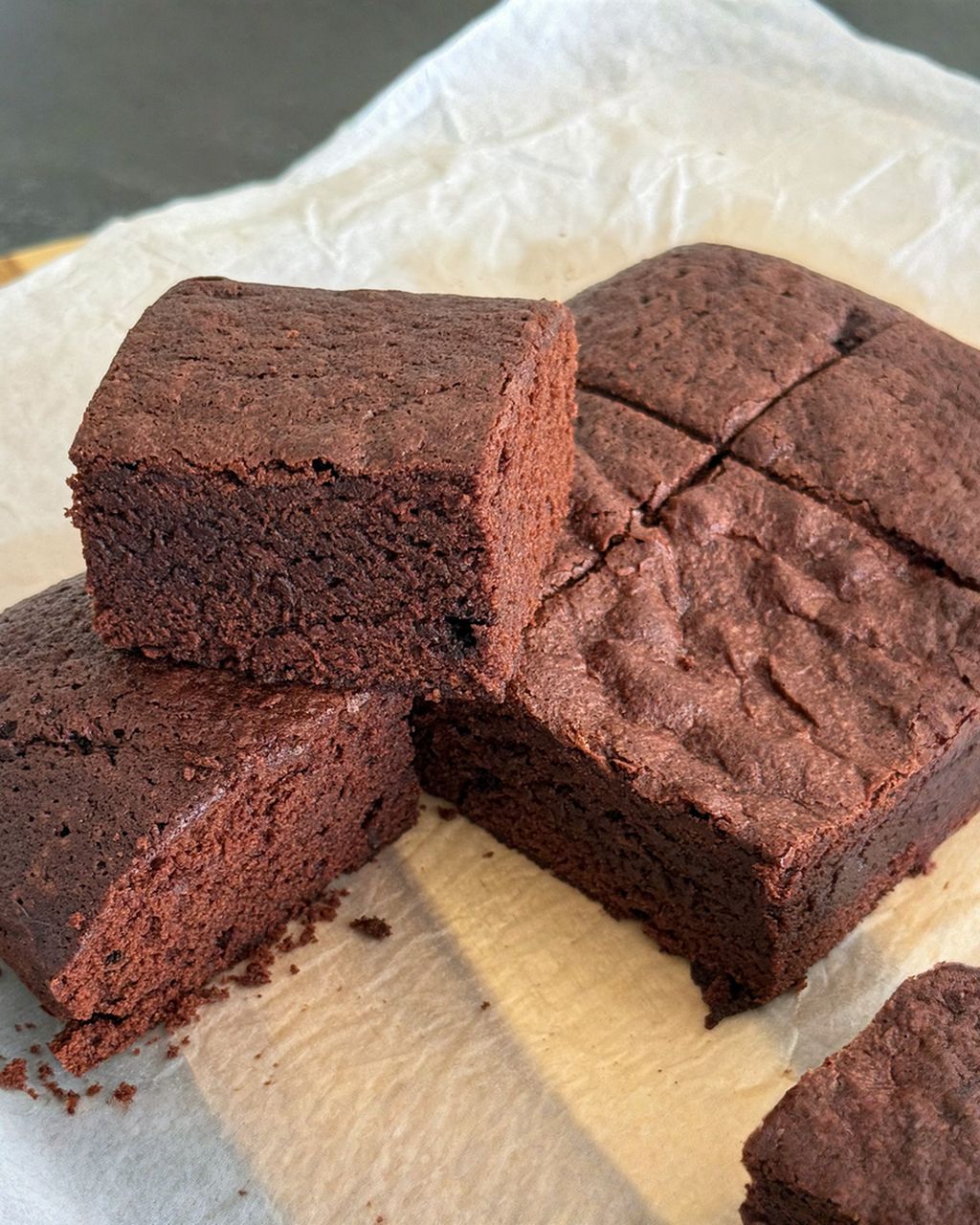
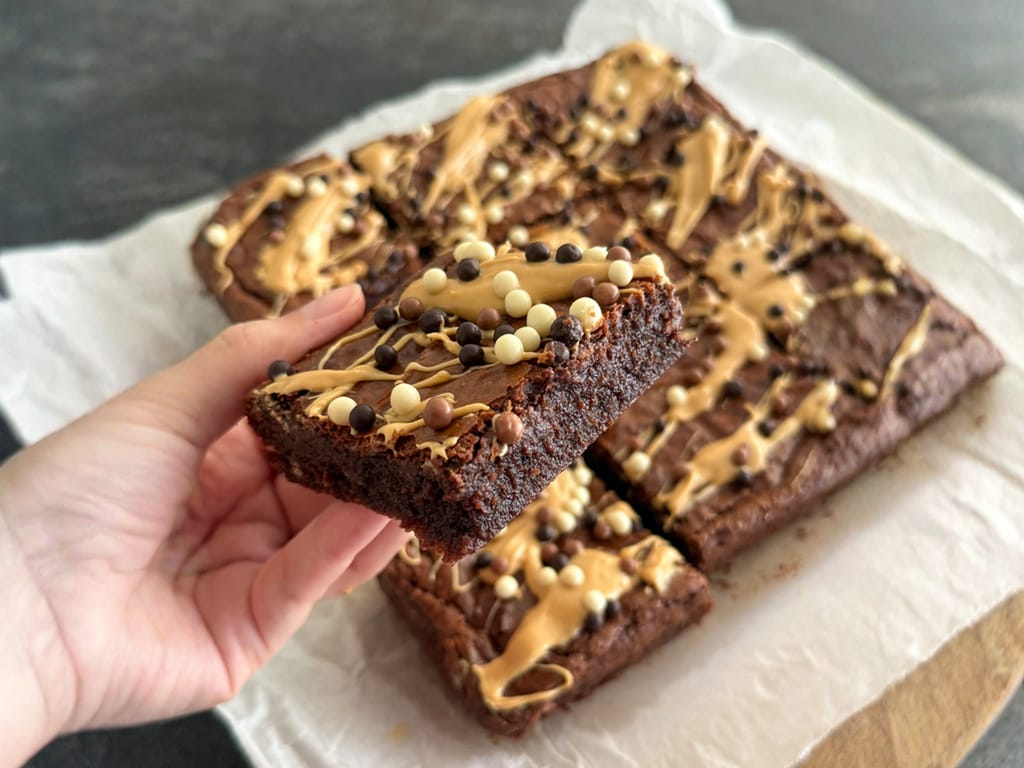
You're building fudgy, moist brownies that stay gloriously gooey thanks to invert sugar and careful folding. The magic happens when you whip eggs with multiple sugars until foamy (that creates the signature crackly crust), gently fold in melted chocolate, and bake until the centre is still slightly underbaked. Once cooled, you'll top them with a glossy peanut butter and white chocolate glaze, crunchy chocolate pieces, and flaky sea salt that perfectly balances all that richness.
1/7
Melt the chocolate
Set up a bain-marie and gently melt the dark chocolate together with the butter. Once the mixture is smooth and fully combined, remove it from the heat and let it cool slightly so it's no longer hot.
For this step
0/22/7
Whip the egg mixture for the crust
In a large bowl, whisk the eggs with caster sugar, brown sugar, invert sugar and vanilla. Whisk thoroughly for a few minutes until light, pale and foamy — this is what creates that famous thin, shiny crust on top.
For this step
0/53/7
Combine the wet ingredients
Very gently and slowly fold the cooled chocolate mixture into the fluffy egg foam. Work carefully and slowly so you don't knock too much air out of the eggs.
How it went
1 person tried it
Not enough tries for a success rate yet.
Be one of the first
Your result gets everyone closer to a success rate.
Anyone can answer, without signing in or buying. Answers aren't verified. The percentage is the share of “Worked out” answers, shown from 5 answers.
Tips from the Yumsto kitchen
Why it works
Eggs beaten with the sugars into a pale foam create the thin, shiny crust on top. There is little flour and it is folded in briefly, so you get a dense, fudgy brownie, not a sponge. Invert sugar holds on to moisture, which is why the brownies stay fudgy for days. A center that comes out slightly underbaked sets as it cools, and the salt brings out the chocolate.
Tips
Let the chocolate mixture cool before combining it with the eggs; hot, it would scramble them and collapse the foam. Test with a skewer: it should come out with moist crumbs, not liquid batter. The recipe uses a 23 × 23 cm pan. In a different size, the depth of batter and baking time change. Let the brownies cool completely, ideally an extra hour in the fridge, and cut with a knife dipped in hot water and wiped dry.
If they don't turn out
Dry: they baked too long; next time check from minute 25. No shiny crust: the eggs were not beaten long enough. Gooey to raw: the pan was smaller and the batter deeper, so bake longer. Topping too thick: warm it for 10 seconds in the microwave, as the recipe says.
Substitutions
Use the same amount of glucose syrup instead of invert sugar, or honey, which you will taste slightly. With darker chocolate around 70% the brownies are less sweet, more intense and a touch firmer. Natural cocoa instead of Dutch-processed gives a lighter color and a sharper flavor. Almond butter can replace peanut butter in the topping.
Storage
In a closed container they keep 3–4 days at room temperature; in warm weather, refrigerate. They freeze well in pieces. They contain gluten, egg, milk and peanuts. The chocolate and chocolate crispy balls can add soy or tree nuts, so check the labels.
Common questions
Why should the center be underbaked?
The center should stay soft but not liquid: a skewer comes out with moist crumbs. Brownies keep cooking in the pan and set as they cool. If you bake until a skewer comes out completely clean, they will be dry once cool.
Why didn't mine get a crackly top?
The eggs and sugars were not beaten long enough. Beat for several minutes until pale and fluffy.
Should I chill them before cutting?
Yes, chilled brownies cut cleanly. Warm, they crumble and stick to the knife.
Can I use a different pan?
Yes, but adjust the baking time. In a larger pan the batter is thinner and done sooner; in a smaller one it is deeper and needs longer.
Want a recipe like this every Thursday?
One recipe worth heating the oven for, and one tip that saves you time. Nothing else.