- Season
- Year-round; peak demand during winter holidays and Valentine's Day
- Price
- Medium
- Nutrition per 100 g
- 539 kcal
- 5.9 g protein
- 32.1 g fat
- 59.2 g carbs
White chocolate
Sweets
White chocolate
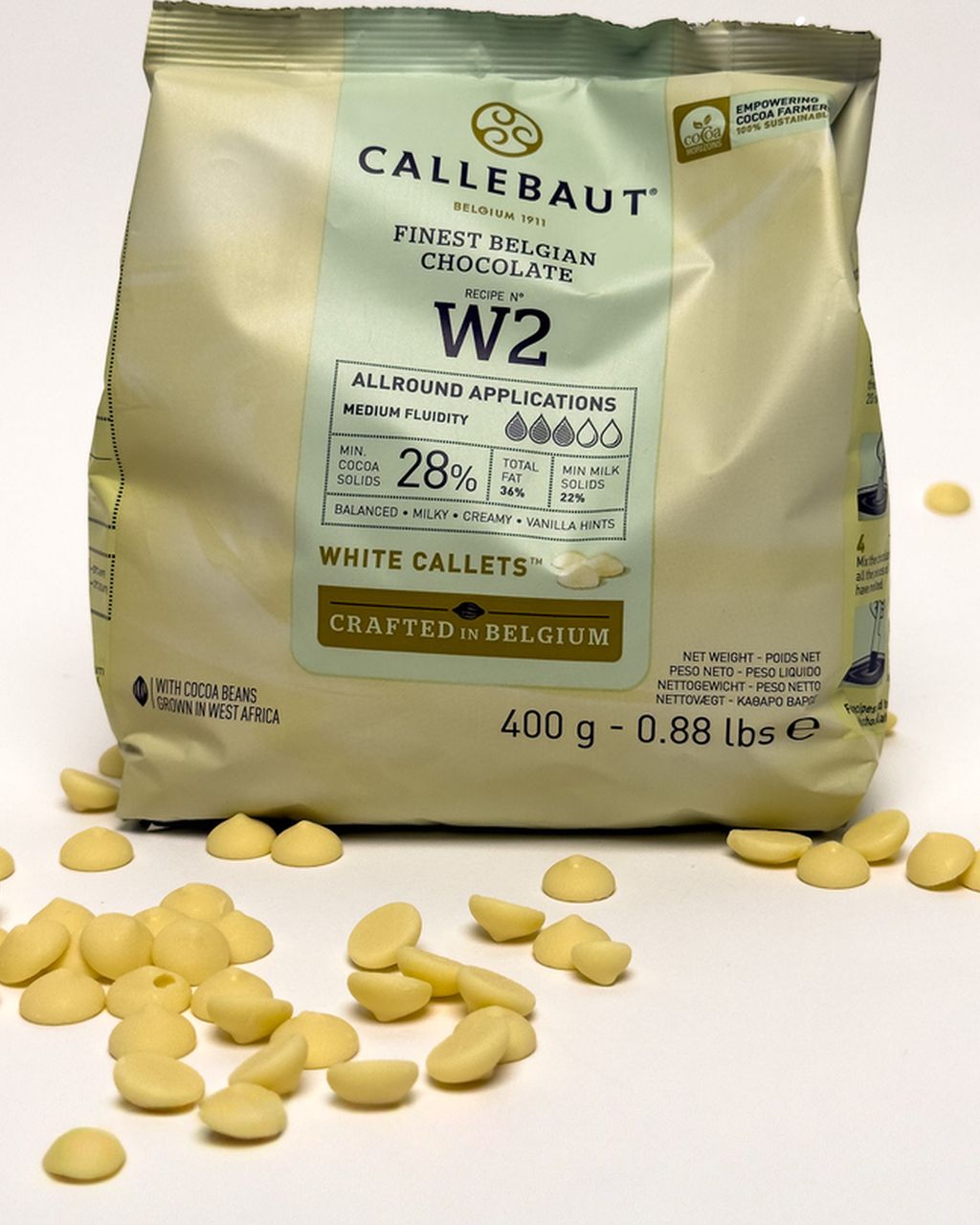
White chocolate is a confection made from cocoa butter, sugar, and milk solids—notably absent of the cocoa solids that define dark and milk chocolates. Under EU law (Directive 2000/36/EC), white chocolate must contain at least 20% cocoa butter and at least 14% milk solids, of which at least 3.5% is milk fat.
In practice
How to store
- On the counter
Store in a cool, dark place at 15–20 °C, tightly wrapped in an airtight container or plastic wrap. Keeps for 4–6 months when protected from light, heat, and strong odors.
- In the fridge
Refrigeration is generally not recommended as condensation can cause sugar bloom. If necessary, wrap tightly in multiple layers of plastic wrap and place in an airtight container. Allow to come to room temperature before unwrapping to prevent condensation. Keeps up to 6-8 months.
- In the freezer
Wrap tightly in plastic wrap and place in a freezer bag. Can be frozen for up to 12 months. Thaw gradually in the refrigerator, then bring to room temperature before unwrapping to prevent moisture damage.
How to choose
Seek out white chocolate with a minimum of 20% cocoa butter—the higher the percentage, the more luxurious the mouthfeel. Quality white chocolate should have a pale ivory to creamy yellow hue; stark white often indicates the use of vegetable fats or excessive processing. Look for a glossy surface and clean snap when broken. Check ingredient lists for cocoa butter as the primary fat source, avoiding products listing vegetable oils or palm kernel oil as substitutes. Couverture-grade white chocolate, with its higher cocoa butter content, is ideal for professional confectionery work.
What to swap in
Best swap
White chocolate chips or baking bars can be substituted 1:1 by weight; for melting applications, bars are preferable as chips contain stabilizers that may affect texture
In a pinch
Melt about 10 g cocoa butter and stir in about 8 g milk powder, 12 g icing sugar and a drop of vanilla extract to approximate 30 g of white chocolate; alternatively, use vanilla-flavored candy coating (though it lacks true cocoa butter)
Preparation
Chop white chocolate finely and evenly before melting to ensure uniform heat distribution. Melt gently using a double boiler or in short microwave bursts at 50% power, stirring frequently. White chocolate is more heat-sensitive than dark chocolate—never exceed 40–45 °C when melting, as it can thicken or turn grainy. For tempering, heat to 40–45 °C, cool to 25–26 °C, then reheat to 27–28 °C for proper crystallization and a glossy finish.
Don't toss it
Transform seized or overheated white chocolate into white chocolate butter by blending with softened butter for spreading on toast or pastries. White chocolate that has developed bloom (a grayish-white surface) is still perfectly safe to eat or use in baking—the bloom is merely cocoa butter that has migrated to the surface and does not affect flavor when melted into recipes.
Buy it from us
In the kitchen
Cooking
White chocolate excels in ganaches, mousses, and creamy desserts where its mild sweetness and silky texture can shine. It melts beautifully for dipping fruits, truffles, and confections—bars melt more smoothly than chips due to the absence of stabilizers. Use in cheesecakes, panna cotta, and ice cream bases for richness without competing chocolate flavor. White chocolate is ideal for creating decorative drizzles and molded confections when properly tempered. In baking, fold chips into blondies, cookies, and muffins; pair with tart fruits to balance sweetness. For savory applications, incorporate into cream sauces for subtle sweetness or use in white chocolate-wasabi combinations for contemporary fusion dishes.
Goes well with
- Raspberries
- Strawberries
- Passion fruit
- Lemon
- Macadamia nuts
- Matcha
- Cardamom
- Lavender
- Coconut
- Cranberries
- Pistachios
- Coffee
- Ginger
What it is
White chocolate is a confection made from cocoa butter, sugar, and milk solids—notably absent of the cocoa solids that define dark and milk chocolates. Under EU law (Directive 2000/36/EC), white chocolate must contain at least 20% cocoa butter and at least 14% milk solids, of which at least 3.5% is milk fat. Unlike its darker counterparts, white chocolate contains at most negligible traces of caffeine and theobromine, making it the mildest member of the chocolate family.
How it tastes
White chocolate offers a lush, creamy sweetness with delicate notes of vanilla, caramelized milk, and a subtle floral undertone from the cocoa butter. Its flavor is decidedly milder than milk or dark chocolate, with a buttery richness that melts luxuriously on the palate. Premium varieties showcase nuanced dairy notes and a clean, sweet finish, while lesser-quality versions may taste overly saccharine or waxy. The absence of cocoa solids means there is no bitterness to temper the sweetness, making it an acquired taste for some and a beloved indulgence for others.
Common questions
Is white chocolate really chocolate?
Why does my white chocolate sometimes turn grainy when melted?
Does white chocolate contain caffeine?
What is the white coating that sometimes appears on white chocolate?
What is blonde or caramelized white chocolate?
Deep dive
5 min read
Varieties
The white chocolate family has expanded beyond its classic form. Traditional white chocolate maintains the legally defined composition of cocoa butter, milk solids, and sugar with vanilla flavoring. Blonde or caramelized white chocolate, discovered by accident by Valrhona pastry chef Frédéric Bau in 2004 and launched by Valrhona as Dulcey in 2012 (Callebaut later released its own caramel-style Gold), is created by slowly roasting white chocolate for hours until the milk solids and sugars caramelize, yielding a toasted, butterscotch-like flavor with notes of shortbread and toffee. Couverture white chocolate contains higher cocoa butter percentages (typically about 28–40%), making it the professional's choice for enrobing and molding. Ruby chocolate, sometimes grouped with white chocolate because of its pale colour, is a distinct category launched by Barry Callebaut in 2017; it is made from specially processed cocoa beans and does contain cocoa solids, offering berry-like notes and a pink hue.
History
The origins of white chocolate remain somewhat murky, though the term first appeared in a December 1917 issue of Scientific American, describing a Swiss Army ration made entirely of cocoa butter and sugar. The International Confectioner magazine had mentioned rumors of a "snow white chocolate" being produced in Switzerland the previous December, with skeptics speculating it must be bleached with chlorine or sulphur fumes. The first commercially successful white chocolate emerged in 1936 when Nestlé launched Galak (known as Milkybar in the United Kingdom), reportedly developed as a way to utilize excess milk powder following World War I. White chocolate remained primarily a European children's confection until 1984, when Nestlé introduced Alpine White to the American market, targeting the "female indulgence" segment. The product's perceived lightness and delicacy—along with the wildly popular white chocolate macadamia cookies from Mrs. Fields—drove American adoption throughout the 1980s. In Europe, white chocolate had been defined in law since 1973 (Directive 73/241/EEC); in the United States it gained a formal standard of identity only in 2002, in force from 2004, distinguishing true white chocolate from imitation "confectionery coatings."
Science
White chocolate's unique character stems entirely from cocoa butter, the pale yellow fat extracted from cacao beans during chocolate processing. Cocoa butter possesses a remarkable crystalline structure—it can solidify into six different polymorphic forms, each with distinct melting points and textures. Only Form V (beta crystals) produces the glossy sheen, satisfying snap, and smooth melt that characterize quality chocolate, which is why proper tempering is essential. Tempered cocoa butter melts at around 34 °C, just below human body temperature, creating that signature melt-in-your-mouth sensation. The absence of cocoa solids means white chocolate lacks the antioxidant flavonoids and bitter alkaloids (theobromine and caffeine) found in dark chocolate, but it retains cocoa butter's fatty acid profile, including oleic acid (the same monounsaturated fatty acid found in olive oil), stearic acid, and palmitic acid. White chocolate is particularly susceptible to the Maillard reaction at elevated temperatures—the same browning reaction that creates toast's golden crust—which is why conching occurs at lower temperatures (40-50°C) than for dark chocolate, and why overheating during melting can introduce unwanted caramelized or burnt flavors. The high fat content also makes white chocolate prone to absorbing ambient odors and to rancidification from light exposure, necessitating careful storage.
Sourcing and ethics
White chocolate's primary ingredient, cocoa butter, shares the same supply chain concerns as all cacao products. The cacao industry has long faced scrutiny over labor practices, including child labor and unfair compensation for farmers, particularly in West Africa where approximately 70% of the world's cacao is grown. Ethical sourcing certifications—Fairtrade, Rainforest Alliance, and UTZ (now merged with Rainforest Alliance)—provide some assurance of better labor practices and environmental stewardship. Direct trade relationships, increasingly favored by craft chocolate makers, offer greater transparency and typically higher premiums to farmers. When selecting white chocolate, look for certifications indicating ethical cocoa butter sourcing. Some premium manufacturers now specify single-origin cocoa butter, allowing traceability to specific regions or cooperatives. The deodorization process used to create neutral-flavored cocoa butter for white chocolate is energy-intensive, adding an environmental consideration; some artisan producers opt for less-processed cocoa butter that retains more natural cacao aroma.