- Season
- Available year-round.
- Price
- Medium
- Nutrition per 100 g
- 546 kcal
- 4.9 g protein
- 31.3 g fat
- 61.2 g carbs
50% Dark Chocolate
Sweets
50% Dark Chocolate
Dark chocolate 50% denotes a chocolate with 50% total cocoa content (cocoa mass plus any added cocoa butter), the remainder being mostly sugar, with no milk solids. It occupies a pivotal position in the chocolate spectrum, neither fully dessert-sweet nor austerely bitter, and shows cacao character without overwhelming the palate.
In practice
How to store
- On the counter
Store at 15–18 °C in a dry, odor-free environment, away from light.
- In the fridge
Refrigeration is discouraged due to condensation and flavor absorption, though airtight wrapping mitigates risk.
- In the freezer
Freezing is possible if the chocolate is tightly wrapped. Thaw it slowly in the fridge and then at room temperature, still wrapped, to avoid condensation and sugar bloom.
How to choose
Select bars with a glossy surface and sharp snap, indicating proper tempering. Ingredient lists should be short: cocoa mass, sugar and cocoa butter, often with lecithin and vanilla. At 50%, sugar is frequently the largest single ingredient and may be listed first. Avoid bars with added vegetable fats or excessive emulsifiers, which blunt aroma and melt.
What to swap in
Best swap
A blend of 60% dark chocolate with a small addition of sugar approximates the balance.
In a pinch
Baking chocolate drops of around 45–55% cocoa, though these are often sweeter, less aromatic and formulated to hold their shape rather than melt fluidly.
Preparation
Chop finely for even melting. When melting, use gentle heat and keep dark chocolate below about 50 °C to avoid scorching. Once melted it loses its temper and must be re-tempered to set glossy and snappy.
Don't toss it
Use bloomed or visually imperfect chocolate in baking, sauces, or grated into hot beverages where cosmetic flaws are irrelevant.
Buy it from us
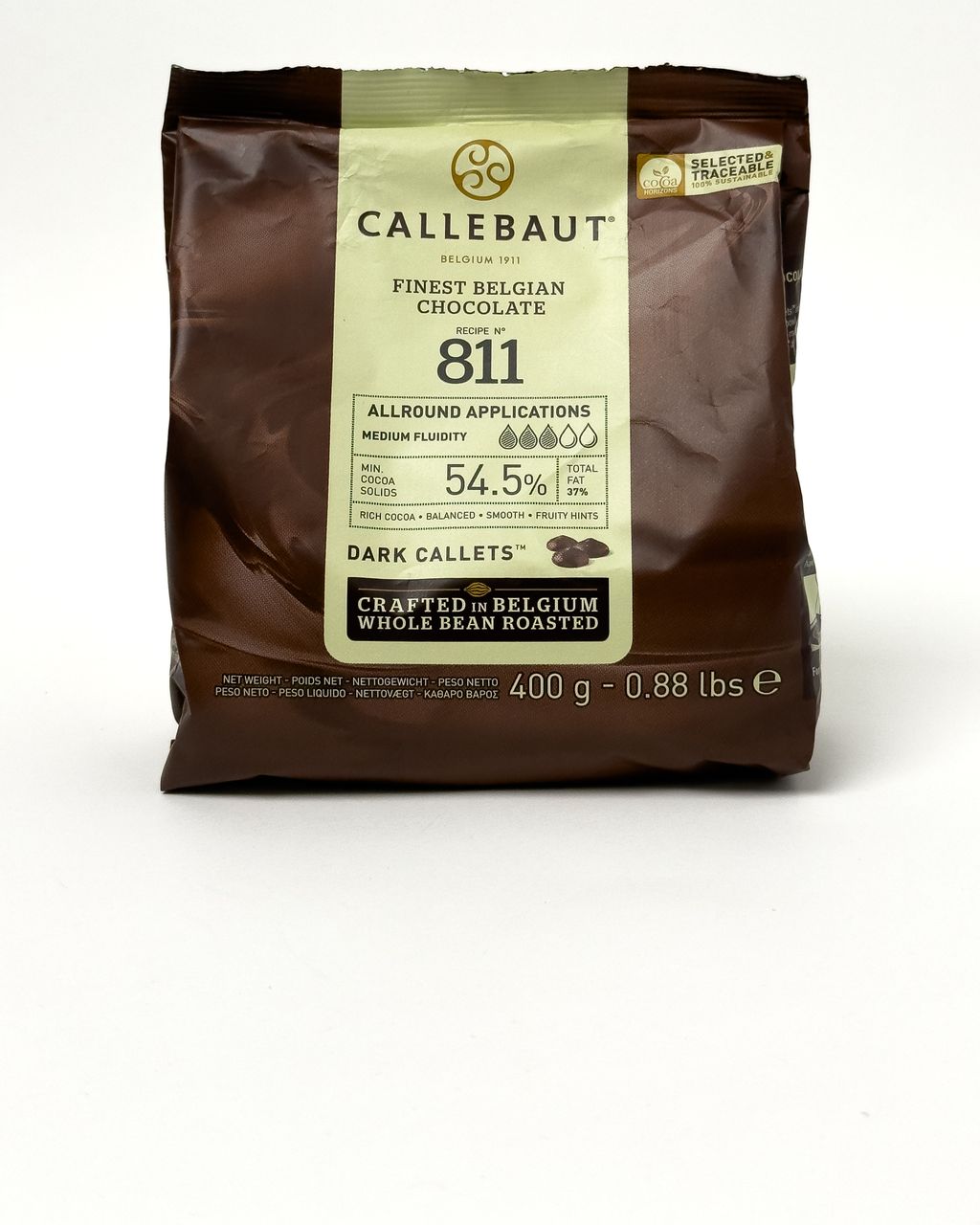
In the kitchen
Cooking
Suited to ganache, glazes, drinking chocolate, and moderate baking applications where sweetness must not dominate. Its balanced profile allows it to pair seamlessly with fruits and spices without overpowering them.
Goes well with
- Vanilla
- Hazelnut
- Orange Zest
- Cinnamon
- Coffee
- Sea Salt
What it is
Dark chocolate 50% denotes a chocolate with 50% total cocoa content (cocoa mass plus any added cocoa butter), the remainder being mostly sugar, with no milk solids. It occupies a pivotal position in the chocolate spectrum, neither fully dessert-sweet nor austerely bitter, and shows cacao character without overwhelming the palate.
How it tastes
The attack is immediately cocoa-driven yet softened by sucrose, presenting notes of toasted grain and mild coffee. The mid-palate reveals caramelized sugar, dried fruit, and faint nut oils as cocoa butter melts and disperses aroma compounds. The finish is short to medium, with restrained bitterness, a whisper of acidity, and a clean sweetness that recedes without cloying persistence.
Common questions
How does the sugar content of dark chocolate 50% compare with darker bars?
How does 50% differ from 70% dark chocolate?
Deep dive
3 min read
Varieties
While labeled uniformly as 50%, expressions vary markedly by origin and processing. West African cacao, particularly from Ghana and Côte d’Ivoire, yields a sturdy chocolate with notes of roasted peanut and biscuit, processed through heap fermentation and sun-drying that emphasize consistency over nuance. Ecuadorian Nacional cacao at 50% reveals floral top notes and honeyed sweetness, shaped by shorter fermentations and humid terroirs along the Guayas basin. Madagascan cacao introduces red fruit acidity, even at this modest cacao percentage, reflecting the Sambirano Valley's alluvial soils and meticulous box fermentation. Harvest methods, from hand-cut pods to communal fermentation heaps, imprint subtle differences that survive even generous sugar inclusion, making 50% an unexpected canvas for terroir expression.
History
In Ancient Mesoamerica, cacao was consumed unsweetened and bitter, far removed from the modern 50% formulation. Yet the concept of moderating cacao’s intensity emerged later. Cacao was unknown in the Old World until the sixteenth century, so the classical world never knew it, though the habit of softening bitter preparations with honey was an old one. After cacao reached Spain in the sixteenth century, following the conquest of Mexico, the Spanish court sweetened it with cane sugar, a practice that spread to other European courts in the seventeenth century. By the Modern era, industrial refinement and the democratization of sugar gave rise to standardized percentages. Plain dark eating chocolate of roughly this strength existed before milk chocolate, which dates from 1875. Stating the cocoa percentage on the label became common only in the late twentieth century, when the 50% bar came to sit between milk chocolate and the new high-cacao bars as an approachable step toward bitterness.
Science
At 50% cacao, the ratio of sugar to cocoa solids modulates polyphenol perception. Sugar suppresses bitterness by interacting with taste receptors, while cocoa butter facilitates aroma release through lipid solubility. The melt profile is governed by stable beta crystals formed during tempering, producing a clean snap and rapid oral dissolution. Flavanols remain present, though in lower amounts than in higher-percentage chocolate, contributing mild astringency without aggressive tannic grip.
Sourcing and ethics
Because 50% chocolate relies heavily on sugar, ethical considerations extend beyond cacao. Responsible producers prioritize traceable cacao, paying premiums that exceed commodity prices, while also sourcing cane sugar from fair labor systems. Transparency in labeling, including origin and fermentation practices, allows consumers to support sustainable agriculture and improved livelihoods in cacao-growing regions.