- Season
- Available all year; Czech home bakers use more of it before Christmas, when they make honey cakes and perník
- Price
- Medium
- Nutrition per 100 g
- 280 kcal
- 0 g protein
- 0 g fat
- 70 g carbs
Invert Sugar
Baking ingredients
Invert Sugar
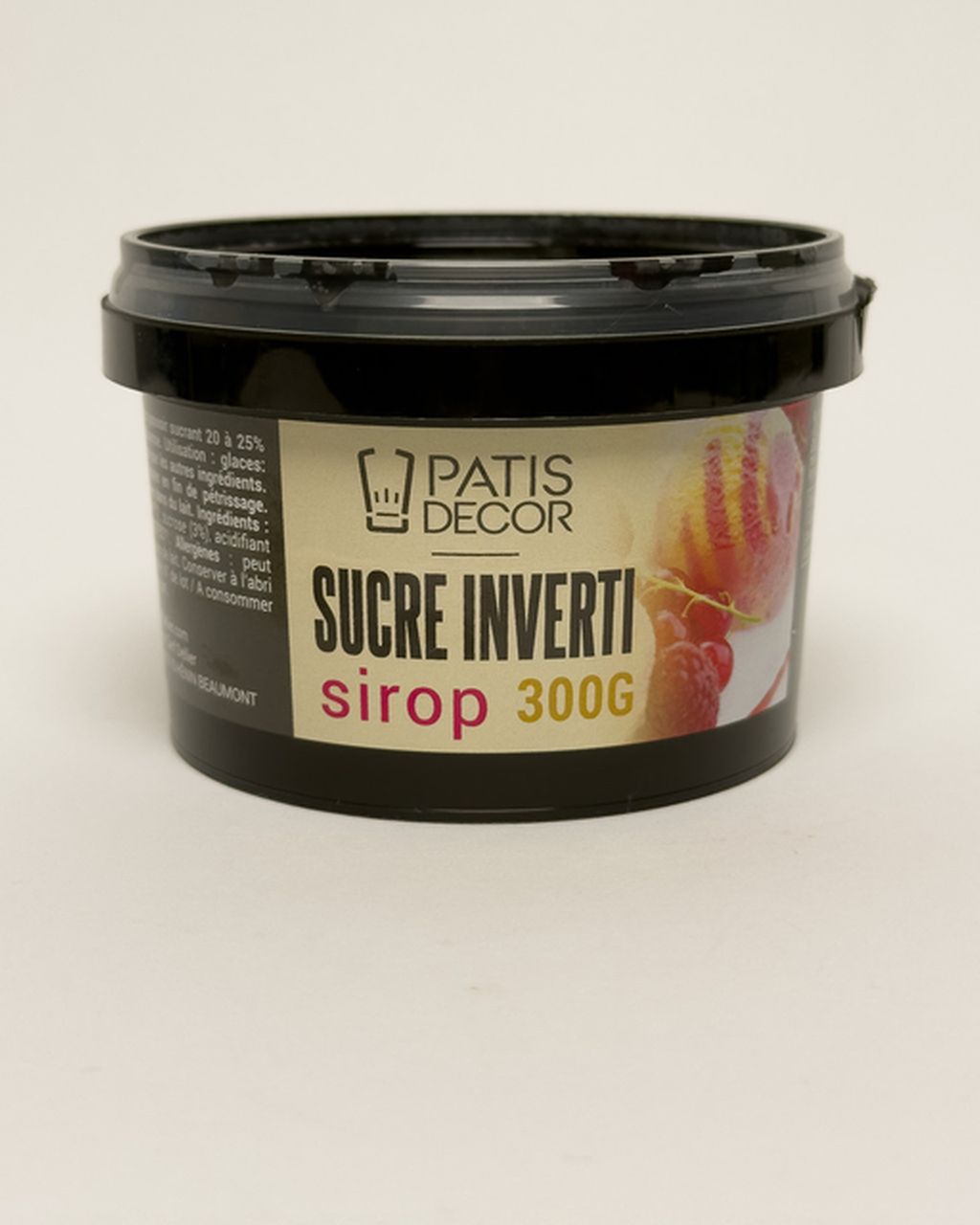
Invertní cukr is a thick, clear to pale-yellow syrup or paste of sugar that has been split into glucose and fructose. Czech shops sell it as a baking and confectionery ingredient, usually in 200 g tubs for home use and 1–5 kg tubs or buckets for professionals.
In practice
How to store
- On the counter
Keep it tightly closed at room temperature, ideally 15–25 °C, in a dry place away from direct sunlight. Invert sugar attracts moisture, so put the lid back on right away and use a clean, dry spoon. Follow the best-before date on the pack.
- In the fridge
Not needed, and not recommended. In the cold, for example in the fridge, the syrup can partly crystallise and become grainy. If that happens, warm the closed tub gently in a water bath until it is smooth again.
- In the freezer
Do not freeze. It gains nothing, and the texture can change.
How to choose
Read the label for the dry matter and the composition. Syrups at about 80 % dry matter, labelled for doughs, suit yeast doughs, sponges and cakes. Smooth white pastes and tubs labelled for ice cream and creams suit ganache, fillings and frozen desserts. Choose a plain product (invert sugar only, or sugar and water) unless you specifically want honey flavour for medovník or perník. Products with added honey are not vegan. The 200 g tubs are enough for occasional home baking. The 1–5 kg buckets are only worth buying if you bake often, because an opened tub has to be used before it dries out or picks up smells. Check the allergen statement: some packers state possible traces of milk, gluten, soy, egg, nuts and peanuts because of shared production lines.
What to swap in
Best swap
Light glucose syrup (glukózový sirup) does the same job of preventing crystallisation and is sold in the same Czech confectionery shops. It is less sweet and does not keep baked goods soft for as long.
In a pinch
Liquid acacia honey, or homemade inverted sugar syrup. Honey adds its own flavour and colour. In both cases, use slightly less than the invert sugar called for, and remember that honey makes baked goods brown faster.
Preparation
Weigh invert sugar rather than measuring it by volume. Professional recipes give it in grams. Because it is sweeter than ordinary sugar and contains water, most recipes replace only part of the sugar with it, often around 10–30 %, and do not replace sugar weight for weight. Warm the syrup slightly before weighing it, so it pours and mixes more easily. Stir it into the liquid part of a recipe, such as milk for an ice-cream base, cream for ganache, or eggs and butter for a cake batter, so it spreads evenly. To make a simple home version, gently simmer granulated sugar with about half its weight of water and a small pinch of citric acid for about 20–30 minutes, until the syrup is clear and slightly thickened. Then let it cool. The result is only partly inverted and less concentrated than commercial products. If you used acid, a tiny pinch of baking soda stirred into the cooled syrup will neutralise it. Hot sugar syrup causes severe burns, so keep children away from the stove while it cooks.
Don't toss it
Use up the last spoonfuls of an opened tub to sweeten syrup for soaking sponges (for example for řezy), lemonade or iced tea. Invert sugar dissolves instantly, even in cold liquids.
Buy it from us
In the kitchen
Cooking
Invert sugar is an ingredient in other preparations, not something you cook on its own. In ice cream and sorbet it keeps the texture scoopable and limits large ice crystals. In ganache, creams, fondant and fillings it keeps them smooth and stops them going grainy. In cakes, sponges and yeast doughs it holds moisture, so they stay soft longer, and it helps the crust brown. Czech confectionery suppliers also recommend it for turecký med, the chewy nougat sold at Czech fairs and Christmas markets. Because glucose and fructose brown more readily than sucrose, doughs and sponges containing invert sugar colour faster in the oven. Watch bakes closely and lower the temperature by about 10 °C if the crust darkens before the centre is cooked.
Goes well with
- Ice Cream And Sorbet
- Ganache
- Turecký Med (Czech Fair Nougat)
- Medovník
- Perník
- Sponge Cakes
- Yeast Doughs
- Fondant And Glazes
- Fruit Fillings
- Butter Creams
What it is
Invertní cukr is a thick, clear to pale-yellow syrup or paste of sugar that has been split into glucose and fructose. Czech shops sell it as a baking and confectionery ingredient, usually in 200 g tubs for home use and 1–5 kg tubs or buckets for professionals. It is made by heating a sucrose solution with a small amount of acid, or by treating it with the enzyme invertase. This breaks some or all of the sucrose into its two building blocks, glucose and fructose. In the Czech Republic it is sold mostly by confectionery-supply shops such as Pastry.cz, Cukrář-shop, Lodreko and Gastromania. Brands include Pastry, IRCA, SOSA and Monaco. Most products list a single ingredient (invertní cukr) or simply sugar and water, with a dry matter of around 73–80 %. Some bakery products, sold for honey cakes, add a small share of bee honey and acidity regulators. Invert sugar is not something you pour over food. Confectioners use it as a working ingredient: it keeps doughs, sponges, creams, fillings, glazes and ice cream soft and smooth, and it stops the sugar in them from crystallising.
How it tastes
Clean, rounded sweetness with no caramel or molasses notes, and slightly sweeter than ordinary sugar on a dry-weight basis. Products with honey added taste faintly of honey. Light-coloured syrups made with acid may taste slightly tart if they were not neutralised.
Common questions
What is invertní cukr used for?
Can I replace ordinary sugar with invert sugar one for one?
Where can I buy invert sugar in the Czech Republic?
Is invert sugar the same as honey or golden syrup?
Why has my invert sugar gone grainy?
Can I make invert sugar at home?
Deep dive
4 min read
Varieties
Invert sugar syrup for doughs (invertní cukerný sirup)
: a pourable syrup with about 80 % dry matter in which most of the sucrose has been inverted. It is usually labelled simply as sugar and water and is sold in 1 kg buckets for bakeries.
Invert sugar paste
: a smooth, white, creamy paste that has partly crystallised on purpose. Pastry chefs know it by the French trade name trimoline. It is mostly used for ice cream, ganache and fine pastry.
Invert sugar with honey
: a Czech bakery product made of invert sugar, water and a small share of bee honey (for example 5 %), with acidity regulators. It is sold for honey cakes and perník as an inexpensive honey-flavoured base and is not vegan.
Invert liquid sugar (tekutý invertní cukr)
: under EU sugar rules, this is the legal name for a less strongly inverted product, where invert sugar makes up between 3 % and 50 % of the dry matter. It is mostly an industrial ingredient and rarely appears in shops.
Related but different products
: golden syrup (zlatý sirup), the British table syrup sold in some Czech supermarkets, is a partly inverted cane-sugar syrup with a caramel flavour. It is eaten over pancakes and porridge and is not a neutral confectionery ingredient. Glucose syrup is made from starch and contains no fructose. Honey is a natural product whose sugars are largely glucose and fructose, but it cannot be labelled or sold as invert sugar.
History
The name comes from chemistry. When sucrose is split, the solution turns polarised light in the opposite direction from the original sugar, so the reaction became known as 'inversion' and the product as 'invert sugar'. Bees produce a similar mixture naturally when they make honey.
In Czechoslovakia, methods for making invert sugar were developed for industrial use, and Czechoslovak patent records describe both acid-based and enzyme-based processes. Today, Czech shoppers meet it almost only as an ingredient from confectionery-supply shops.
Science
Sucrose is a disaccharide: one glucose molecule joined to one fructose molecule. Heat with acid (such as citric acid), or the enzyme invertase, splits it into free glucose and fructose. This adds a water molecule, so 100 g of sucrose gives about 105 g of invert sugar. The degree of inversion depends on the acid, the temperature and the time.
The resulting syrup behaves differently from ordinary sugar for three reasons. First, a mixture of different sugars crystallises much less readily than pure sucrose, so creams, fondant and fillings stay smooth. Second, fructose attracts and holds water strongly, so baked goods stay moist longer. Third, glucose and fructose are reducing sugars, so they take part in Maillard reactions and caramelisation at lower temperatures, which gives faster browning.
Splitting each sucrose molecule into two also doubles the number of dissolved particles. This lowers the freezing point of ice-cream mixes more than the same weight of sucrose would, which keeps them softer straight from the freezer. Fructose also tastes sweeter than sucrose, so invert sugar is perceived as sweeter overall. At low temperatures the glucose can slowly crystallise out, which is why commercial syrups become grainy in the cold.
Sourcing and ethics
Invert sugar sold in the Czech Republic is made from refined sucrose, which in Central Europe comes mainly from sugar beet, though some brands are made from cane sugar. The label rarely says which. Brands sold through Czech confectionery shops include imported Italian and Spanish ones (IRCA, SOSA) as well as products packed for Czech suppliers.
In the EU, Directive 2001/111/EC defines the sales names for invert sugar products and their minimum dry matter. Allergen labelling follows Regulation (EU) No 1169/2011. Products with added honey should not be given to babies under 12 months, the same caution that applies to honey itself.