Gluten-Free Bundt Cake: How to Keep It Moist
Gluten-Free Vánočka and Mazanec: How to Bake Them Soft, Not Crumbly
Updated Sep 25, 2026
Gluten-free vánočka (Czech braided Christmas bread) can absolutely turn out soft and fragrant — you just can't treat it like wheat dough. It's missing gluten, that stretchy network that holds dough together and traps the bubbles from the yeast. Other binders have to step in to do its job (mainly psyllium, xanthan and eggs), the dough needs more liquid, it only rises once, and it bakes longer. Once you know that going in, you can nail both vánočka and its Easter cousin, mazanec, with no crumbling and a nice, soft crumb. Below you'll find which flour to use, how much binder to add, how to braid dough that's sticky by nature, and how to bake bread that's genuinely gluten-free.
Gluten-free vánočka crumbles because it lacks gluten, and nothing else fully replaces what it does. In wheat dough, gluten proteins form a stretchy network: it can be pulled, braided, and it traps the gas from the yeast. Rice flour, starches and buckwheat can't create anything like that.
In practice, that looks like this:
The dough has no stretch. When you pull it, it tears instead of springing back.
It's stickier. It needs more liquid (otherwise the baked crumb turns out dry), which makes it soft and tacky.
It can only handle one rise. If you work it again after it's risen, the bubbles won't re-form.
It goes stale fast. Starches "age" quickly after baking, so gluten-free bread is noticeably drier by the next day.
None of this can be forced past with sheer effort. If you add extra flour to the dough to stop it sticking, it'll bake up hard as a brick. What actually helps is the right binder and a different technique.
For gluten-free vánočka, the most reliable choice is a gluten-free bread or enriched-dough flour blend, or your own combination of fine flour and starch in roughly a 60:40 ratio. No single gluten-free flour on its own is enough for vánočka.
Fine rice flour is the base: neutral flavour and a firm structure. Coarsely ground rice flour leaves the finished vánočka gritty.
Starches (tapioca, potato, corn) add softness and a fine, bread-like crumb. Tapioca starch also helps bind the dough a little.
Buckwheat, millet or sorghum flour add flavour and colour. 10–20% is plenty — any more overpowers the vánočka and weighs it down.
Watch out with ready-made blends: many already contain xanthan, guar or psyllium. Check the ingredient list before adding your own binder, or the dough will turn rubbery. Only buy blends explicitly labelled "gluten-free" (often with the crossed-out wheat ear symbol). We cover flours and starches in more detail in our article What to Use Instead of Flour in Gluten-Free Cookies. The ratios there also apply to yeasted dough.
For braided vánočka, psyllium works best, ideally with a small amount of xanthan added. Psyllium (fibre from psyllium seeds) forms a springy gel with water that comes closest of all the binders to mimicking gluten. It's the only one that lets you roll and braid the dough at all.
Psyllium: roughly 3–5% of the flour's weight, so 15–25 g per 500 g of flour blend. Finely ground psyllium is stronger than whole husks, so you need less of it. Let it swell in warm liquid for 5–10 minutes before adding the flour.
Xanthan gum: roughly 0.5–1% (2.5–5 g per 500 g of flour blend). It firms up the dough and helps it hold on to the bubbles. Too much and the crumb turns rubbery and wet.
Guar gum behaves similarly to xanthan but is a bit softer. Use it if you don't have xanthan on hand.
Eggs firm up the structure, and vánočka made with them holds its shape better. They belong in enriched sweet dough anyway.
You can tell by feel: after resting, the dough should be soft but still shapeable with wet hands. If it's runny, it needs more binder or has too much liquid. If it's cracking, it needs more binder or the dough is too dry.
Mix gluten-free vánočka dough into a thick, soft mass, let it rest for 20–30 minutes, shape it, and then let it rise just once, already in its final shape.
Make the yeast starter as usual: warm milk, a bit of sugar and yeast. Wait until it starts to foam.
Let the psyllium swell in the rest of the liquid. Whisked into a gel, it distributes evenly through the dough.
Mix, don't knead. There's no gluten network to develop here. Three to five minutes with a stand mixer or a spoon is enough to bring everything together.
Add the butter softened, right at the end. Fat adds softness, but if you add it too early, the psyllium can't swell properly.
Let the dough rest covered for 20–30 minutes, in a cool spot is fine. The binder sets, the dough firms up, and only then is it workable.
Shape it and let it rise just once, somewhere warm, for about 45–75 minutes, until the dough grows by roughly half its size. Don't expect it to double — gluten-free dough doesn't have the strength for that.
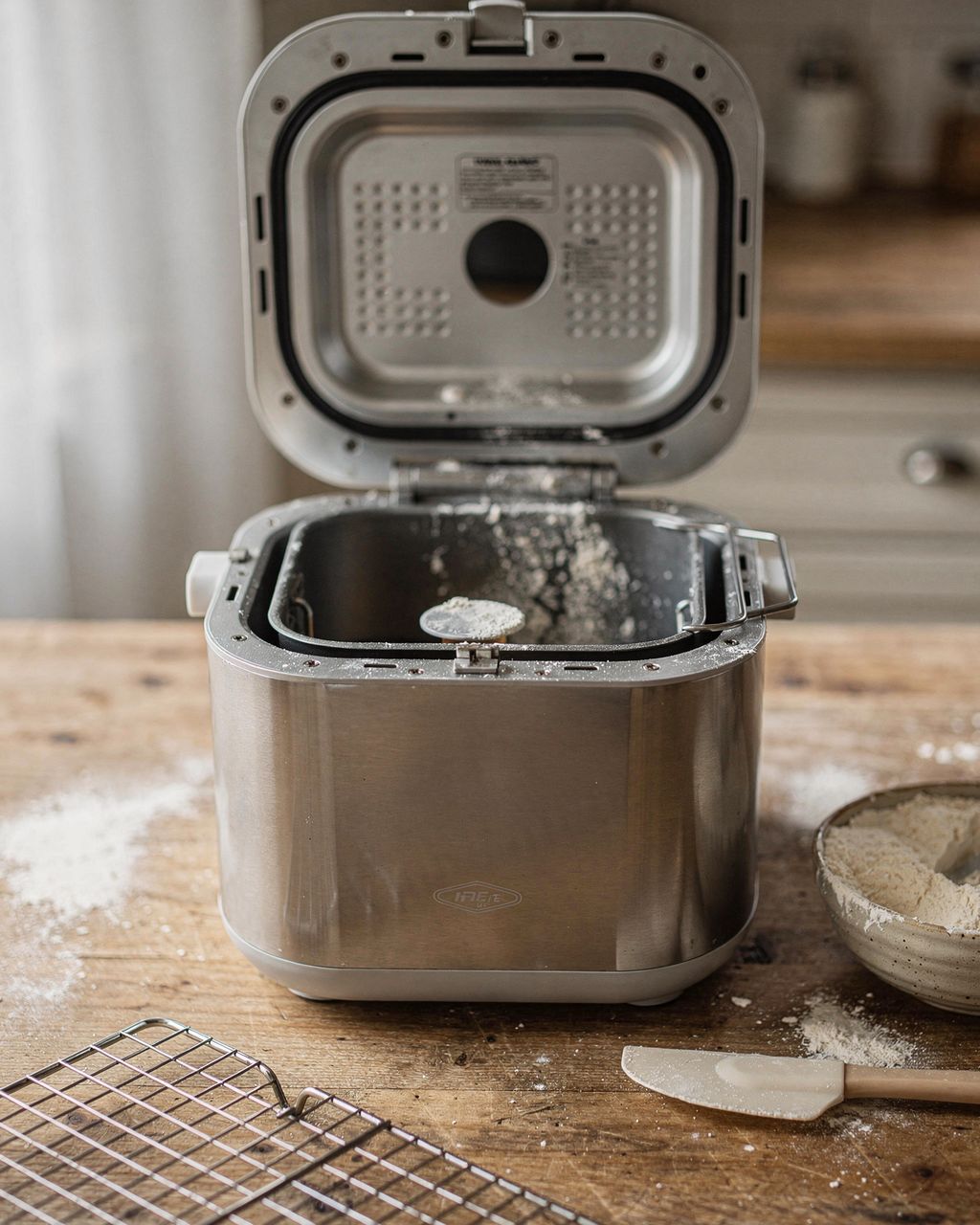
Don't over-prove it! Over-risen gluten-free dough will puff up nicely in the oven at first, then collapse. Gluten-free bread in a bread machine runs into the same problem.
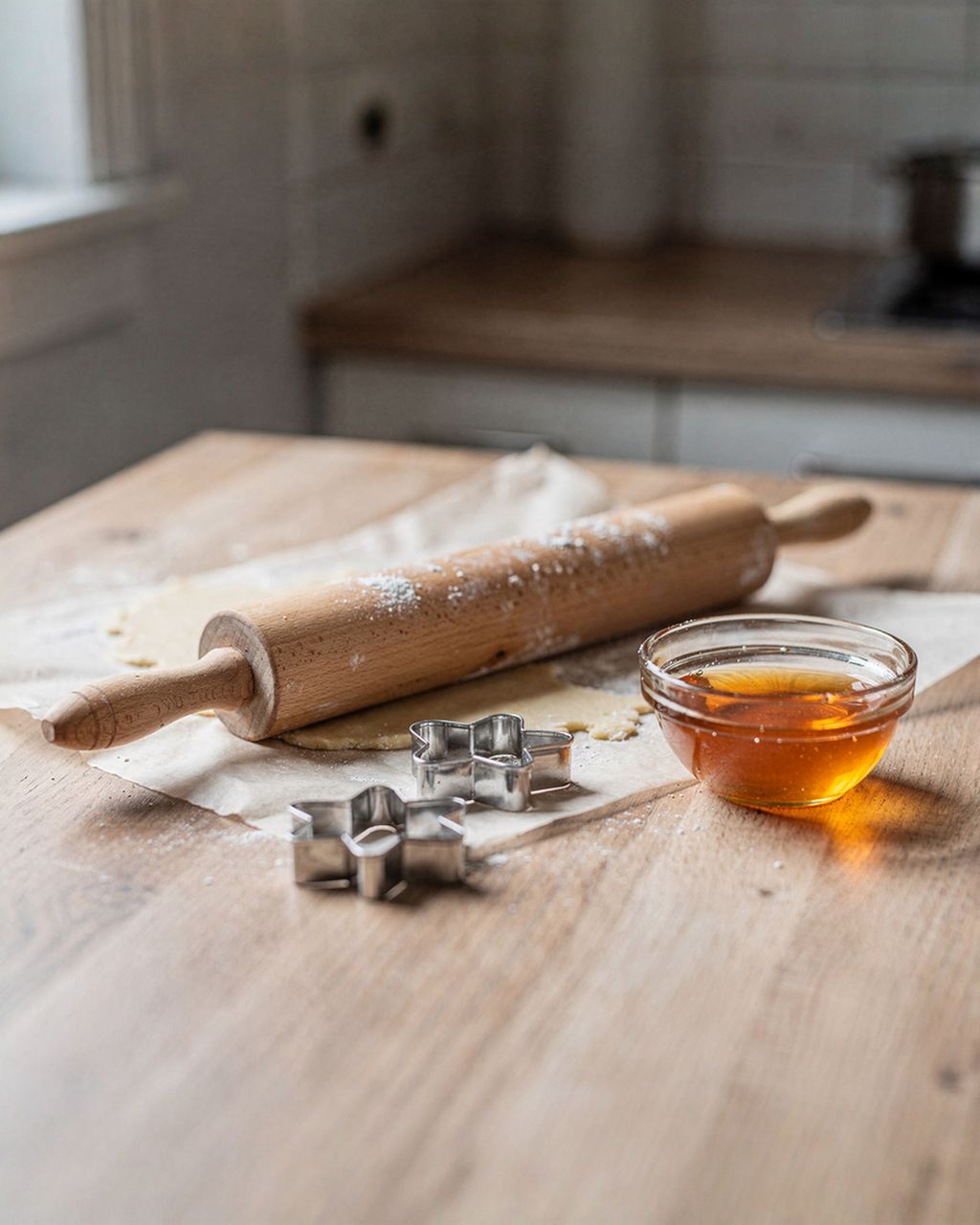
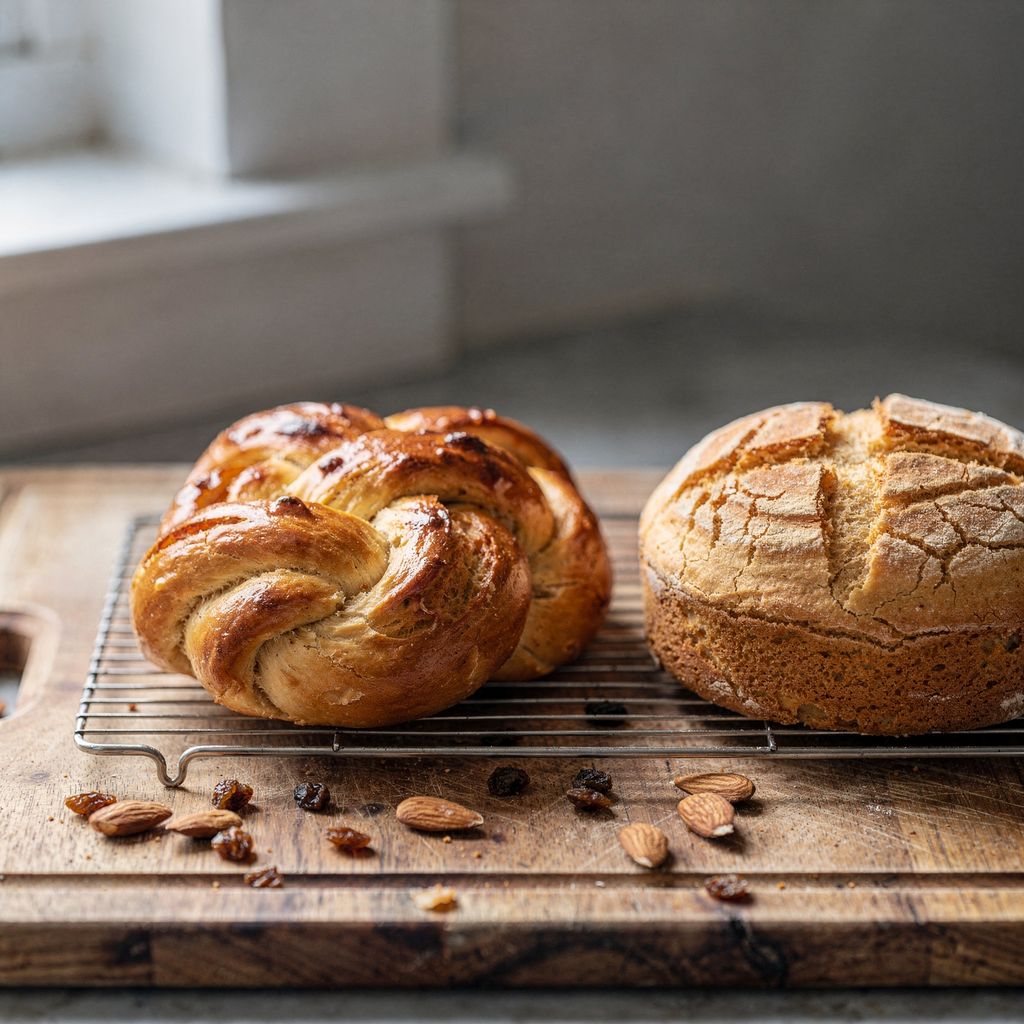
You can braid gluten-free vánočka if you work on baking paper, with wet or lightly oiled hands, using short, thick strands. If the dough keeps tearing, put it in a loaf tin and just suggest the braid on top.
Use water or oil instead of flour. Every handful of flour on the work surface leaves hard, dry streaks in the crumb.
Make the strands thick and short, roughly a third thicker than for a classic vánočka. A thin strand will simply snap while braiding.
One tier is enough. Three or four strands instead of the traditional three-tier "pyramid". Gluten-free dough can't support upper tiers — they'll just slide off.
Braid it directly on the baking tray, on baking paper. Don't try to move the braided vánočka afterwards.
Smooth over any tears with a wet finger. Nothing's ruined here — the dough is easy to patch up.
A fallback option: put the dough into a loaf tin and just lay a single braided strip on top, or twist two strands into a simple "rope". The tin supports the sides and keeps the vánočka at its softest.
The order after braiding is simple:
Right after braiding, you can pop the vánočka into the fridge for 15–20 minutes. The strands firm up and hold their shape better. This step is optional.
Then let it rise once somewhere warm, as described above. After chilling, it'll take a bit longer.
Once it's risen, brush it gently with beaten egg, sprinkle with almonds, and put it straight in the oven.
Gluten-free mazanec is easier to bake than vánočka because it's just a round loaf with no braiding involved. That makes it the ideal first attempt at gluten-free enriched dough. The dough is the same, sometimes with rum-soaked raisins, lemon zest and almonds added.
Shape it with wet hands into a round loaf and set it on baking paper.
To stop it spreading out, put it in a greased cake ring 18–20 cm across, or a shallow tin. The sides will hold its shape.
Score the cross only after it's risen, right before baking, with a sharp knife or razor blade, about 1 cm deep.
Toss the raisins in a bit of flour blend so they don't sink to the bottom. Gluten-free dough is softer, so they sink more easily.
You'll find the classic wheat version (that is, with gluten) in our recipe Easter Classic: Fragrant Mazanec. It's a good reference for flavour and spicing, but build the dough itself following the rules above.
Gluten-free vánočka is done when its internal temperature hits 96–98°C (205–208°F). The most reliable way to check is with a probe thermometer at the thickest point. Crust colour alone isn't enough — gluten-free dough browns before it's fully baked through.
Oven temperature: 160–170°C (320–340°F), top and bottom heat.
Time: expect it to bake 10–20 minutes longer than the wheat version. Vánočka made from 500 g of flour blend usually takes 50–65 minutes, mazanec 40–50 minutes.
If the crust is browning too fast, cover it with foil after 25–30 minutes.
Let it cool completely. Underbaked or still-warm gluten-free crumb is gummy — it finishes setting as it cools on a rack. Wait an hour or two before slicing.
The classic Mum's Vánočka (with gluten) bakes at a similar temperature — the gluten-free version just needs a bit more patience.
For vánočka to stay genuinely gluten-free, everything must be gluten-free — every ingredient and everything the dough touches. Even a bit of wheat flour drifting in the air or left on a spoon is enough to ruin it for someone with coeliac disease.
Always check the label on these:
yeast, baking powder and vanilla sugar (usually gluten-free, but not always)
almonds, raisins, candied fruit and decorative sprinkles (look for a "may contain gluten" warning)
oat products, which must be explicitly labelled gluten-free
In the kitchen, watch out for these especially:
Bake gluten-free first, before you start on any wheat baking. Flour dust lingers in the air for hours and settles on everything.
Wooden spoons, boards, sieves and brushes trap flour in their grooves. Keep a dedicated set for gluten-free baking, or use stainless steel and silicone tools instead.
Wash the mixer bowl and dough hooks thoroughly before use — dust clings even under the rim.
Always use baking paper, even on a tray you think is "clean".
Store the finished vánočka separately and slice it with a clean knife on a clean board.
Eat gluten-free vánočka within a day, or slice and freeze it. The starches in it go stale faster than in wheat bread, and after two days it's noticeably drier.
Room temperature, well wrapped (a bag, tea towel and airtight container): 1–2 days. Don't put it in the fridge — that's where it hardens fastest.
Freezer: slice it, layer the slices with baking paper between them, and freeze. It keeps for 1–2 months, and you can pull out just as much as you'll eat.
Thawing: leave a slice at room temperature for 20–30 minutes, or toast it briefly in a pan or a toaster you don't use for wheat bread.
Don't throw out vánočka that's gone a bit dry. Turn it into a gluten-free bread pudding with apples, or gluten-free French toast: dip slices in egg and milk and fry until golden.
You can only use oat flour that's explicitly labelled gluten-free in gluten-free vánočka. Regular oats are usually contaminated with wheat, and under EU Regulation No. 828/2014, oats may only appear in a gluten-free food if they've been specially produced and the gluten content stays under 20 mg/kg. Some people with coeliac disease still can't tolerate even gluten-free oats, so if you're baking for someone with coeliac disease, check with them first.
Yes, you can bake gluten-free vánočka using a gluten-free sourdough starter made from rice or buckwheat flour. It will rise more slowly — anywhere from 3 to 6 hours — and have a slightly tangy flavour. For sweet festive bread, it's often combined with a bit of yeast so the dough has enough strength and stays tender.
Gluten-free vánočka doesn't differ much in ingredients from the classic version — it has a similar amount of sugar, fat and calories. It's baked mainly for people with coeliac disease or gluten intolerance. If no one at your table needs it, feel free to just bake the classic version.
You can bake gluten-free vánočka without eggs, but it will be more delicate and less fluffy, since eggs help hold the structure together in gluten-free dough. Replace them with a bit more psyllium (roughly 1% more by weight of the flour) and a little extra liquid, and bake it in a loaf tin rather than braiding it on a tray. For the egg wash, use milk with a teaspoon of honey or syrup instead.
You can bake gluten-free vánočka in a bread machine, but only if it has a gluten-free setting with a single rise. A standard programme kneads the dough again after it's risen, and gluten-free dough will collapse if that happens. The loaf from a bread machine will come out as a plain rectangular loaf with no braiding, but the flavour and crumb can still be just as good.
One recipe worth heating the oven for, one tip, and one deal from the shop. Nothing else.