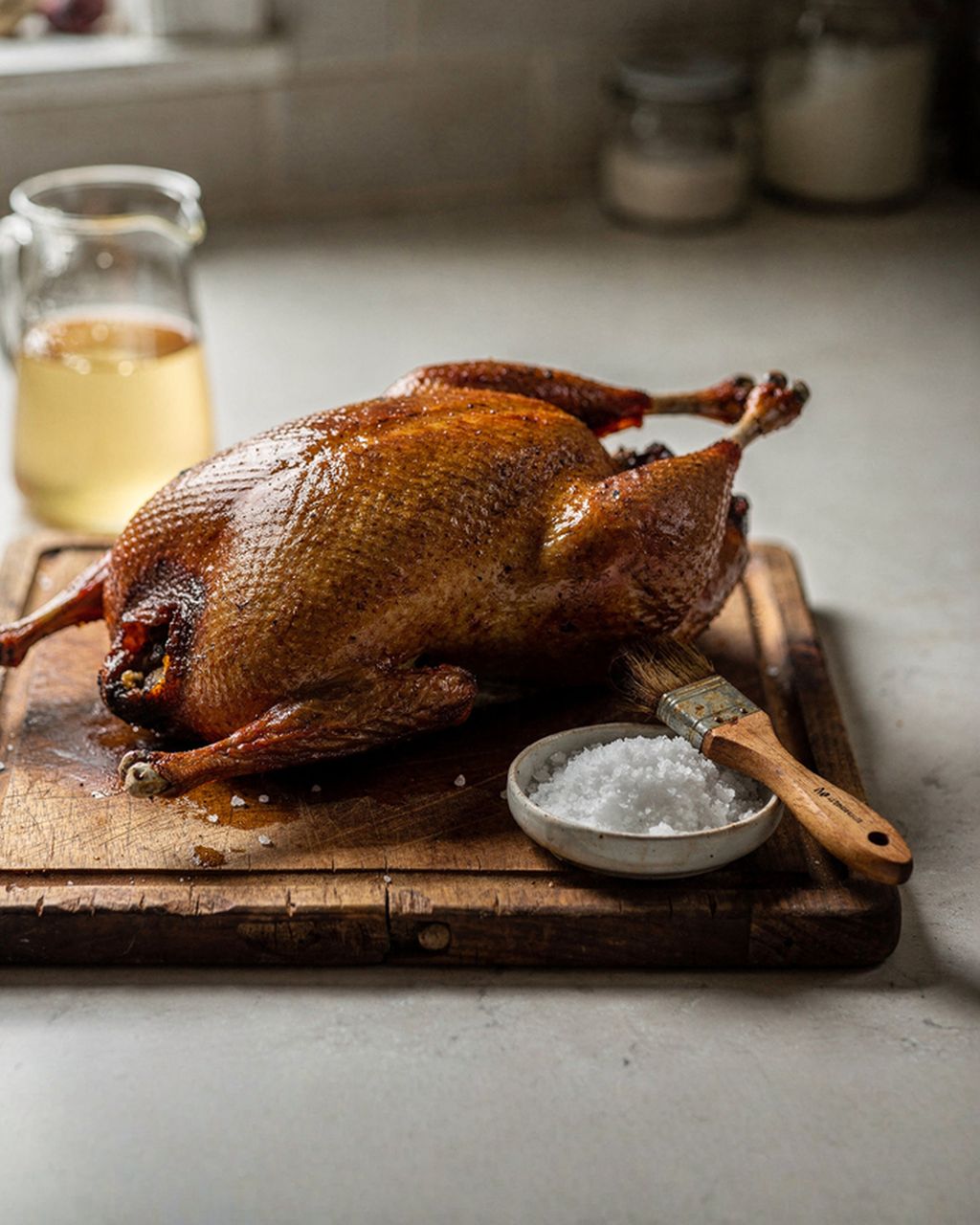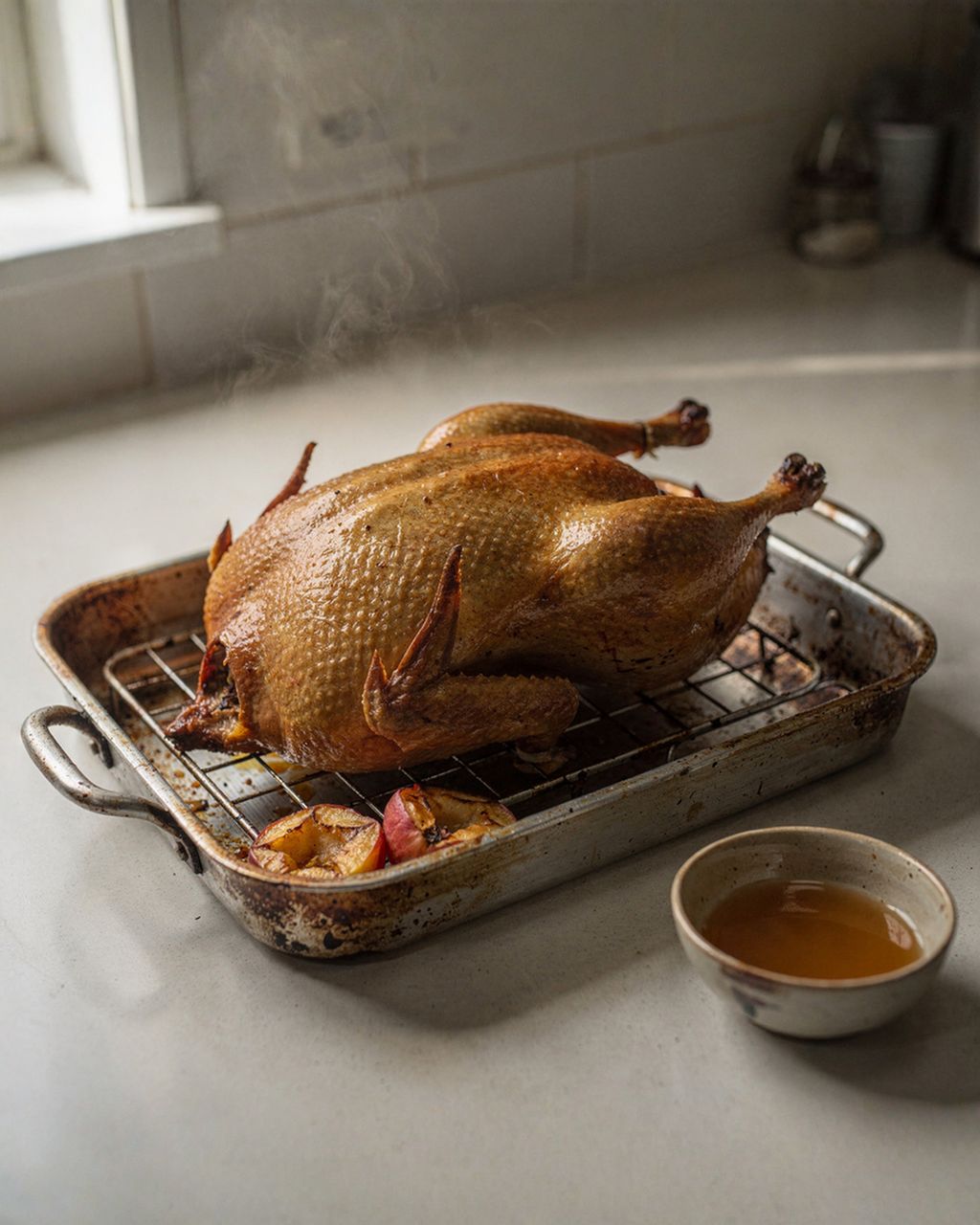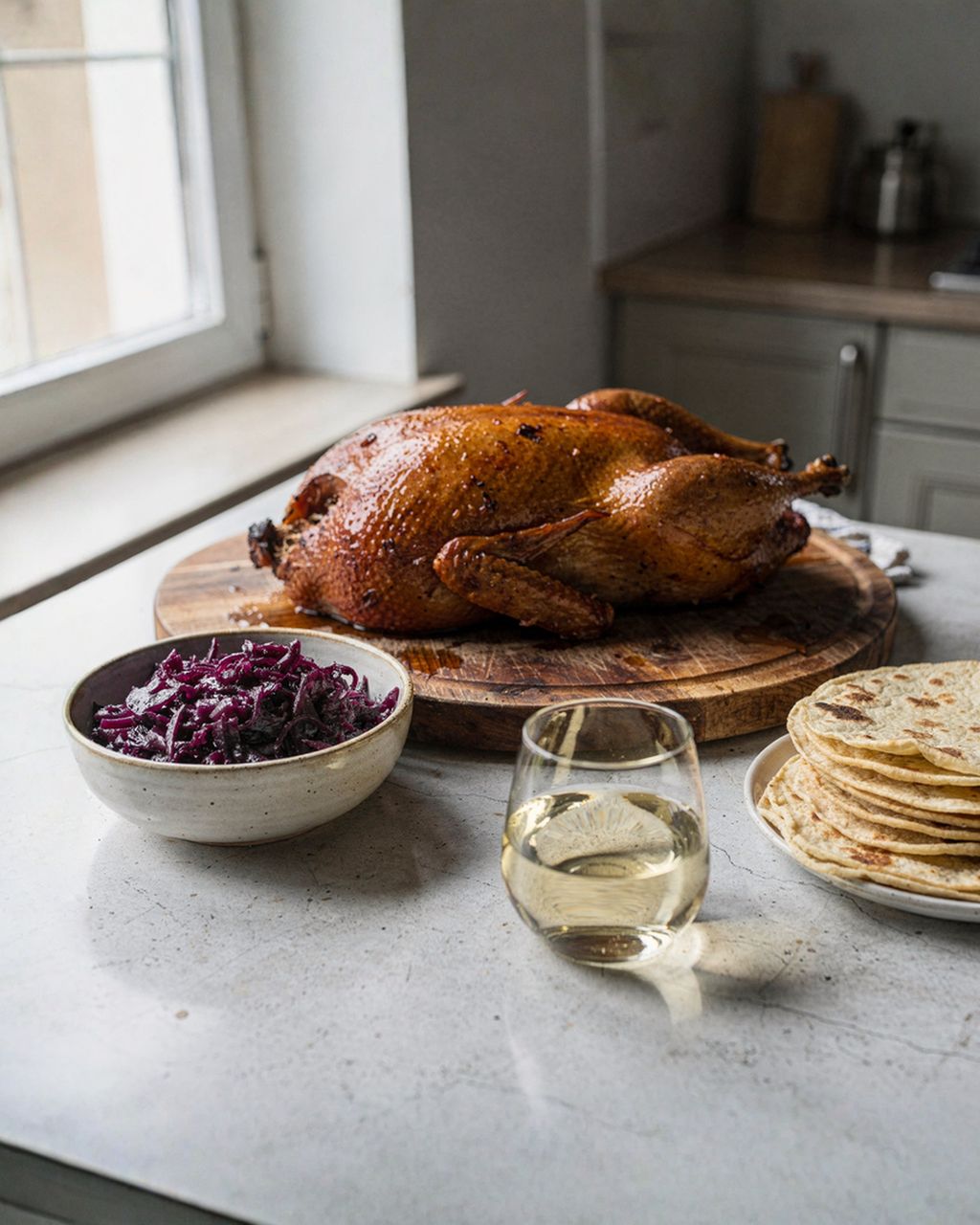
Goose breast on apples with potato lokše
St. Martin's Day Menu: Goose, Cabbage, Dumplings, Wine and More
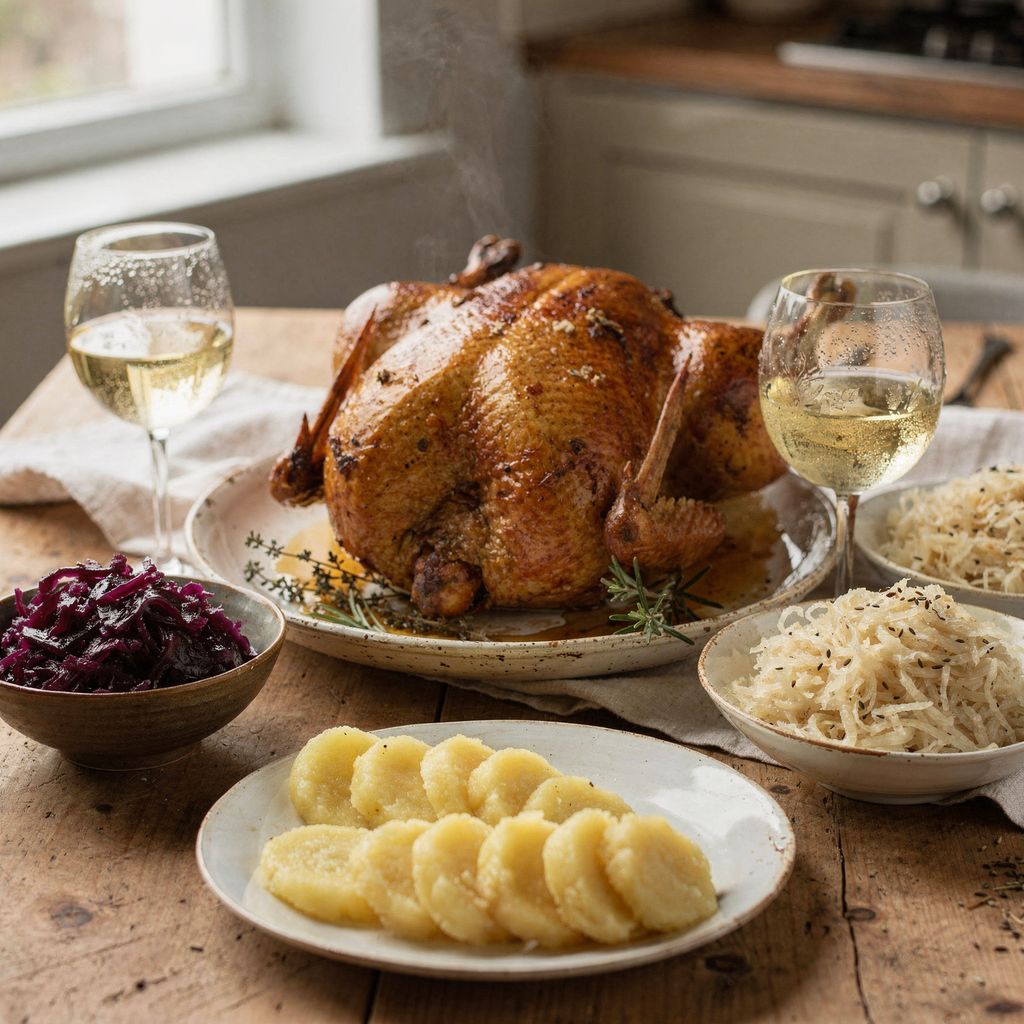
Updated Oct 6, 2026
The St. Martin's Day menu has a fixed structure: a goose giblet starter or soup, roast goose, braised cabbage, dumplings, St. Martin's sweet rolls, and young St. Martin's wine. It's celebrated on 11 November, the feast of St. Martin, and marks the last big feast before the Advent fast. Here's the whole menu, course by course: what to cook, how much to buy, what you can prep the day before, and how to pick the right wine.
The classic St. Martin's menu has three courses: a starter made from goose giblets, roast goose with cabbage and dumplings, and a sweet treat to finish, all washed down with St. Martin's wine.
1. Starter – goose giblet soup, goose liver, or a dripping (lard) spread. 2. Main course – roast goose, whole or just the legs, with sides: - cabbage – red, white, or both, - dumplings – potato, bread, or potato pancakes (lokše). 3. Dessert – St. Martin's sweet rolls.
The whole menu is served with young St. Martin's wine, which is traditionally opened on 11 November at 11:11.
You don't have to make everything. Goose, one type of cabbage and one type of dumpling are the core; the rest is a bonus depending on how many people you're feeding and how much time you have.
Goose is eaten on St. Martin's Day because 11 November marked the end of the farming year, when fattened geese were at their best. It was time to go to market, pay the farmhands their wages, and have one last proper feast before the Advent fast.
There's a legend behind it too: Martin of Tours is said to have hidden in a goose pen to avoid being made bishop, but the geese gave him away with their honking. So on his feast day, they "pay" for it on the roasting pan. The old saying "Martin rides in on a white horse" refers to the fact that the first snow often falls around 11 November.
The most traditional St. Martin's starter is goose giblet soup – a clear soup made from goose giblets (neck, heart, gizzard, wings) with root vegetables and liver dumplings. It makes use of everything that comes in the giblet bag with your goose, and leaves you with stock to baste the goose later.
If you'd rather keep things lighter, here are other options:
Goose liver pan-fried in lard with onion and marjoram, served on toast. Just be careful – the liver only needs 2–3 minutes per side, or it toughens up.
Dripping (lard) spread made from crispy lard bits, onion, and mustard, spread on bread.
Keep the starter small. Goose is rich and filling, so about 200 ml of soup or one slice of toast per person is plenty.
For St. Martin's goose, plan on roughly 700–800 g of raw goose per person, since goose has a lot of bone and loses a good amount of fat during roasting. A whole goose weighing 4–5 kg will feed 5–6 people.
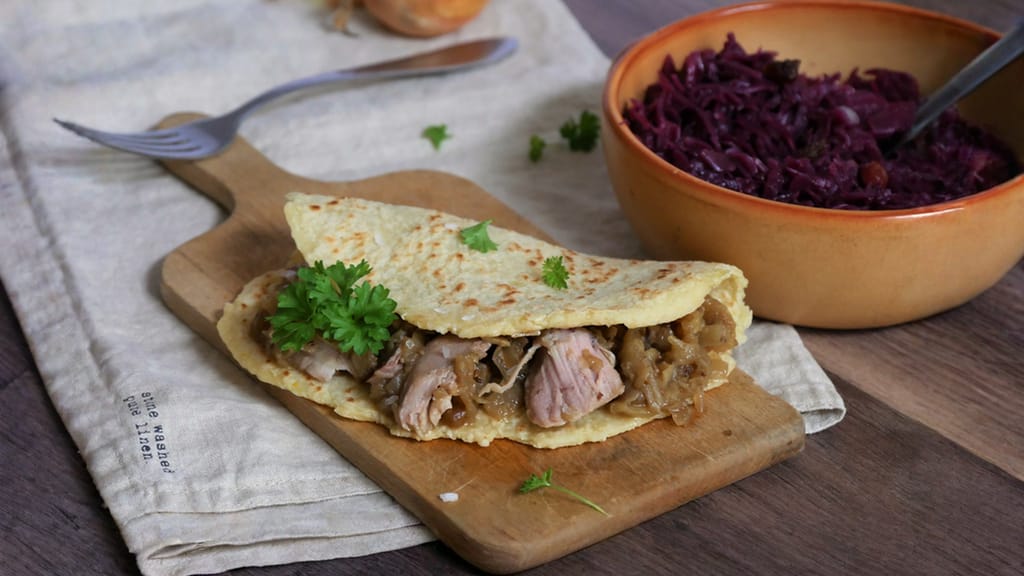
2–3 people: goose legs (one per person) or breast are enough – try goose breast with apples and potato lokše.
5–6 people: one whole goose, 4–5 kg.
8 or more people: two smaller geese, or one whole goose plus two extra legs, so everything fits in the oven.
Order a fresh goose from your butcher or a local farmer at least a week ahead – they sell out fast around St. Martin's Day. If using a frozen goose, thaw it in the fridge, allowing 24 hours for every 2 kg.
We won't repeat the roasting method here, as it has its own dedicated guides: what to baste the goose with for crispy skin and why roast goose turns out tough with skin that isn't crispy. If you don't want goose or can't find one, check out what to use instead of St. Martin's goose. And if you've bought a whole goose and want to carve it yourself, you'll find the method in how to carve a goose.
Goose breast on apples with potato lokše
Goose breast with apples and potato lokše – St. Martin's goose for 2–3 people
Both work well with St. Martin's goose: red cabbage is sweet-and-sour and milder, while white sauerkraut is sharper and cuts through the rich meat better. In Bohemia, red cabbage is more common; in Moravia, white – so for a festive table, feel free to serve both.
Why cabbage at all? The acidity from vinegar, wine, or fermentation balances out the goose fat, so each bite doesn't feel too heavy. That's why you should never let the cabbage taste flat – taste it at the end and adjust with a splash of vinegar or lemon juice if needed.
Red cabbage: braise with apple, onion, and a splash of vinegar or red wine, then sweeten with sugar or redcurrant jam. Try our sweet-and-sour braised red cabbage.
White cabbage: braise sauerkraut in goose fat with onion and caraway, thickened with grated raw potato or a roux.
Allow 150–200 g of cabbage per person. Cabbage also tastes best reheated – make it a day or two ahead and let it sit in the fridge overnight.
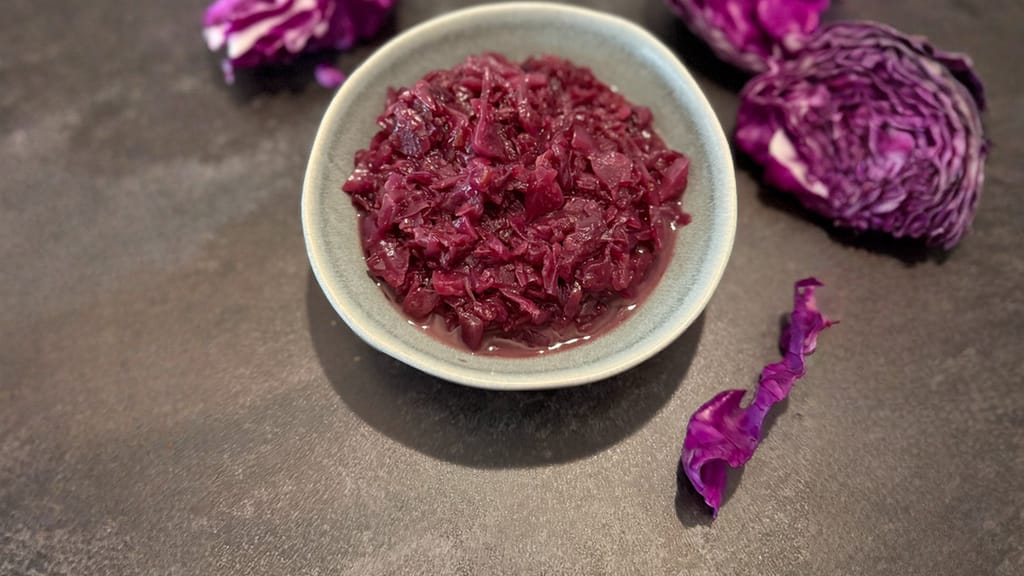
Sweet and sour braised red cabbage
Sweet-and-sour braised red cabbage with St. Martin's goose
St. Martin's goose is most often served with potato dumplings, since they soak up the drippings best and pair well with the cabbage. Bread dumplings are lighter and fluffier, while lokše are a quick option you can wrap around the goose meat.
Potato dumplings – made from boiled potatoes (boiled in their skins the day before works best, as they're drier), plain flour, and egg. Allow 2–3 slices per person.
Bread dumplings – light and fluffy, especially good with red cabbage. Follow our steamed bread dumpling recipe for a stress-free version.
Potato lokše – flatbreads made from potato dough, dry-cooked on a hot plate or pan, popular in Moravia and Slovakia.
Karlovy Vary dumpling – bread dumpling cooked wrapped in a cloth, a more festive take on the classic.
Don't hold back on dunking the dumplings into the goose drippings – that's really the whole point. Just strain the drippings and pour off any excess fat (save it as goose fat/schmaltz).
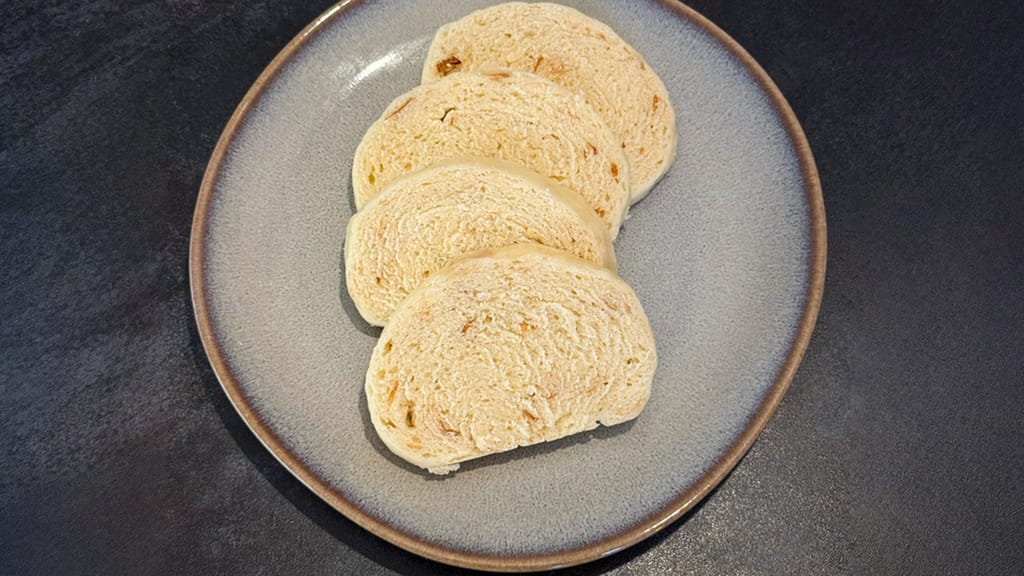
Steamed czech bread dumplings (houskový knedlík)
Steamed bread dumpling with St. Martin's goose
St. Martin's wine is a young wine from the current year's harvest that can only be opened on 11 November at 11:11. You'll recognise it by the logo of St. Martin on a white horse on the label – a protected designation given only to wines that pass an official evaluation.
The rules are strict: under the scheme, managed since 2005 by the Wine Fund of the Czech Republic, it may only be made from six grape varieties:
White: Müller Thurgau, Moravian Muscat, Early Red Veltliner.
Red, rosé and claret: Blauer Portugieser, Saint Laurent, Zweigelt.
Since 2019, under the scheme's rules, every wine must score at least 80 out of 100 points in the evaluation. It's sold only in bottles, never from a barrel.
How to pair it with goose: the young wine is fresh, fruity and nicely acidic, so just like the cabbage, it lightens up the rich meat.
With goose and red cabbage, reach for a St. Martin's Saint Laurent or Zweigelt – a light red with cherry fruit notes.
With goose and white sauerkraut, a St. Martin's Müller Thurgau or Early Red Veltliner works well.
Moravian Muscat is aromatic, so pour it with the starter or the sweet rolls instead.
Serve whites well chilled at 8–10°C (46–50°F), reds lightly chilled at 14–16°C (57–61°F).
The traditional dessert on a St. Martin's menu is St. Martin's sweet rolls – yeasted rolls filled with poppy seed, nuts, curd cheese, or plum jam. According to legend, their shape is meant to resemble the horseshoe of Martin's horse.
Bake the yeasted dough in the morning or the day before; the rolls keep for 2 days in a sealed container. The classic filling is plum jam – if you've got homemade plum butter from autumn, you're all set. Freshly ground poppy seed is best for the poppy filling.
After all that goose, the table's already full, so make the rolls on the smaller side – about 30–40 g of dough per roll, two per person.
You can get most of the St. Martin's menu done the day before, leaving just the goose-roasting and dumpling-cooking for the day itself.
The day before, prepare the following:
Cook the giblet soup or stock – once cooled, skim off the fat.
Make the cabbage – it's better the next day anyway.
Boil the potatoes for the dumplings in their skins and let them cool.
Salt and season the goose inside and out, then leave it uncovered in the fridge overnight – the skin will dry out and crisp up better.
Bake the sweet rolls.
On St. Martin's Day itself, all that's left is:
Take the goose out of the fridge an hour before roasting.
Roast the goose at 160–165°C (320–330°F), allowing roughly 45–55 minutes per kilogram. It's done once a thermometer inserted into the thickest part of the leg reads at least 74°C (165°F) – more detail in how long to roast a goose.
During the last 45 minutes, cook the dumplings and reheat the cabbage.
Let the roasted goose rest for 15–20 minutes under loosely tented foil while you finish off the drippings.
And what about leftovers? The carcass makes a great stock, and the fat makes a lovely spread – find tips in our article on leftover roast goose and duck.
St. Martin's Day falls on 11 November, and St. Martin's goose is traditionally served that day for lunch or dinner. Many restaurants offer a St. Martin's menu over the weekend around that date too, so at home feel free to shift it to the nearest Saturday.
St. Martin's wine is best drunk by spring, roughly by March or April after the harvest. It's a young wine made for freshness and fruitiness, and it won't improve with age, it will only lose character. Store it cool and dark, ideally lying down.
No, St. Martin's wine is a finished, fully fermented and bottled wine, while burčák is partially fermented grape must. Burčák can be sold from 1 August to 30 November, whereas St. Martin's wine can only be sold from 11 November at 11:11 and carries the St. Martin on horseback logo on its label.
Instead of dumplings, St. Martin's goose pairs well with potato lokše (potato pancakes), roast potatoes, or potato dumplings (šišky). You can tuck roast potatoes under the goose for the last 45 minutes so they soak up the drippings, saving you a pot.
For vegetarians, keep the sides — cabbage, dumplings and sweet rolls — and swap the goose for roasted pumpkin, celeriac, or a mushroom roast. Just braise the cabbage in butter or oil instead of goose fat, and replace the giblet soup with, say, a mushroom soup.
One recipe worth heating the oven for, one tip, and one deal from the shop. Nothing else.