- Season
- Early cabbage in summer; late heads September to November, from storage through winter
- Price
- Low
Calories and nutrition per 100 g
- 28 kcal
- 1 g protein
- 0.2 g fat
- 6.4 g carbs
White Cabbage
White cabbage (Brassica oleracea var. capitata) is a brassica with a firm head of tightly packed pale green leaves, used for sauerkraut, braised cabbage, coleslaw and cabbage soup. Early cabbage is in the shops in summer; firm late heads for fermenting and storing arrive in autumn.
Leave a whole head on the counter for only a few days; in a cool pantry or cellar it keeps longer. Cut cabbage belongs in the fridge.
Keep the whole unwashed head loosely wrapped in the vegetable drawer; it keeps for 1–2 weeks. Leave the outer leaves on to protect it. Wrap a cut head tightly in film or put it cut side down in a box, and thinly trim the darkened edge before use.
Cut raw cabbage, blanch it for 1.5 minutes, cool in iced water, drain and freeze. It keeps for 10–12 months at −18 °C. Thawed, it is soft and suits braised cabbage and soups, not salad. Cooked braised cabbage freezes even better.
Choose a head that feels heavy for its size, is firm and does not give when pressed, with fresh outer leaves free of cracks, brown spots and wilting. The cut end of the stem should be pale, not dark and dried out. Buy firm late heads for sauerkraut and storage; tender early cabbage suits salads and quick braising.
Savoy cabbage: its crinkled leaves are more tender and taste similar; it suits braising, soup and cabbage rolls.
Napa cabbage for salads and quick stir-fries; it is milder and sweeter. Red cabbage works in most recipes, it just colours the dish.
Remove the bruised outer leaves, quarter the head and cut out the hard core from each quarter. For salad and braising, shred the quarters into thin strips; for roasting, cut wedges. For cabbage rolls, simmer whole leaves for a few minutes in boiling salted water until pliable. 1 kg of whole cabbage gives roughly 800–850 g after trimming.
Slice the core thinly into stir-fried vegetables or simmer it in stock. Tough outer leaves can line a roasting tin or go into stock; the rest goes on the compost.
Roughly what one measure weighs, scooped the way you normally would in the kitchen.
White cabbage is eaten raw in coleslaw, braised as a side for roast pork, goose and duck, cooked in cabbage soup, baked with potatoes and meat, fried with bacon, roasted in wedges and fermented as sauerkraut. Shredded cabbage softens in a pan in 10–15 minutes; braised from a fresh head it takes 30–45 minutes.
White cabbage (Brassica oleracea var. capitata) is a biennial brassica that forms a firm head of tightly packed leaves in its first year. The outer leaves are pale green, the inner ones whitish to yellowish. In the Czech Republic it is one of the most common vegetables and the basis of sauerkraut, braised cabbage with roast pork and goose, cabbage soup (zelňačka) and cabbage salads. Early varieties have smaller, looser heads with tender leaves and reach the market in summer. Late varieties form large, dense, heavy heads, are harvested in autumn, and suit fermenting and storing through winter.
Raw white cabbage is crunchy, juicy and mildly sweet, with a light peppery bite. Braising makes it sweeter and softer; a quick stir-fry keeps it crisp. Fermentation gives it a pronounced sour flavour. Cooked for a long time, it releases the typical sulphurous smell.
Seasonal baking plans, tested recipes and kitchen tricks that save you time. Unsubscribe in one click.
3 min read
White cabbage is in the shops all year, but it is not always the same. Early cabbage arrives in summer: the heads are smaller and looser, the leaves tender and juicy, so it is best in salads and quick braises. It does not keep long.
Late cabbage is harvested in autumn, roughly September to November. The heads are large, dense and heavy, and they are the ones to buy for sauerkraut. The US National Center for Home Food Preservation (NCHFP) advises starting fermentation within 24–48 hours of harvest, while the cabbage is juicy. Firm late heads are also stored through winter in cellars or cold stores, which is why cabbage is still available in spring.
A whole head of cabbage keeps in the fridge for 1–2 weeks, according to the US FoodKeeper app (USDA/FSIS). Keep it unwashed in the vegetable drawer, loosely wrapped so it does not dry out, and leave the outer leaves on until you cook it. We do not recommend washing it before storing; moisture speeds spoilage.
Wrap a cut head tightly in film or put it cut side down in a box, and use it first. Thinly trim any edge that darkens or dries before cooking. Use shredded raw cabbage the same day or freeze it.
Cut raw cabbage and briefly scald it in boiling water, i.e. blanch it: shreds, thin wedges and separated leaves for 1.5 minutes, as NCHFP gives. Then cool it in iced water, drain well, divide into bags and press out the air. It keeps for 10–12 months at −18 °C according to FoodKeeper. Thawed, it is soft, so it only suits cooked dishes. Cooked braised cabbage freezes even better, as freezing barely changes it.
For sauerkraut you only need a firm late head, salt and time. Use 2–2.5 % salt by weight of trimmed cabbage, most often 20 g per 1 kg, and weigh the salt rather than measuring it by the spoon. Mix the shredded cabbage with the salt, pack or pound it until it releases its juice, and weigh it down so it stays under its own brine the whole time. At 21–24 °C it ferments in 3–4 weeks, at 15–18 °C in 5–6 weeks. Below 15 °C it may not ferment at all, and above 24 °C it may turn soft (NCHFP).
Move the finished sauerkraut to the fridge, where it keeps for several months, or freeze it. Why cabbage is pounded, how to tell harmless film from mould and what to do when the cabbage does not release enough juice are in our article homemade sauerkraut: why you pound it, how long it ferments and how long it keeps.
Fresh cabbage is not fermented, so you add the acidity yourself, usually with vinegar and sugar. Fry an onion golden in lard, add caraway, the shredded cabbage and salt (about a teaspoon per kilogram) and pour in 100–150 ml water. Braise covered for 30–45 minutes until tender, then season with 1–2 tablespoons of vinegar and sugar and thicken with grated raw potato or a roux. The method for cabbage from a jar, a bag and for red cabbage, and how to freeze braised cabbage, is in our article braised cabbage: how to cook it from a jar, a bag or a fresh head.
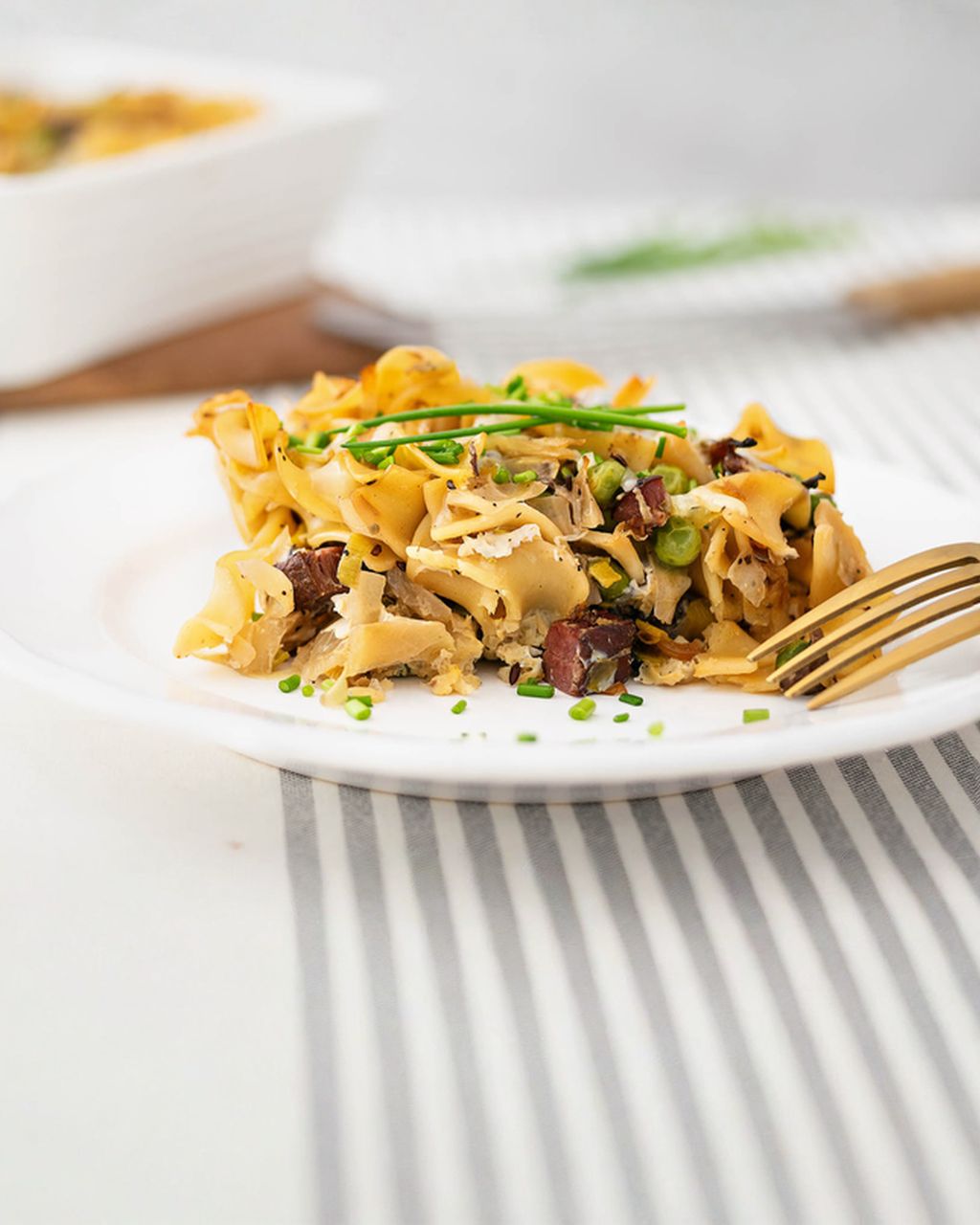
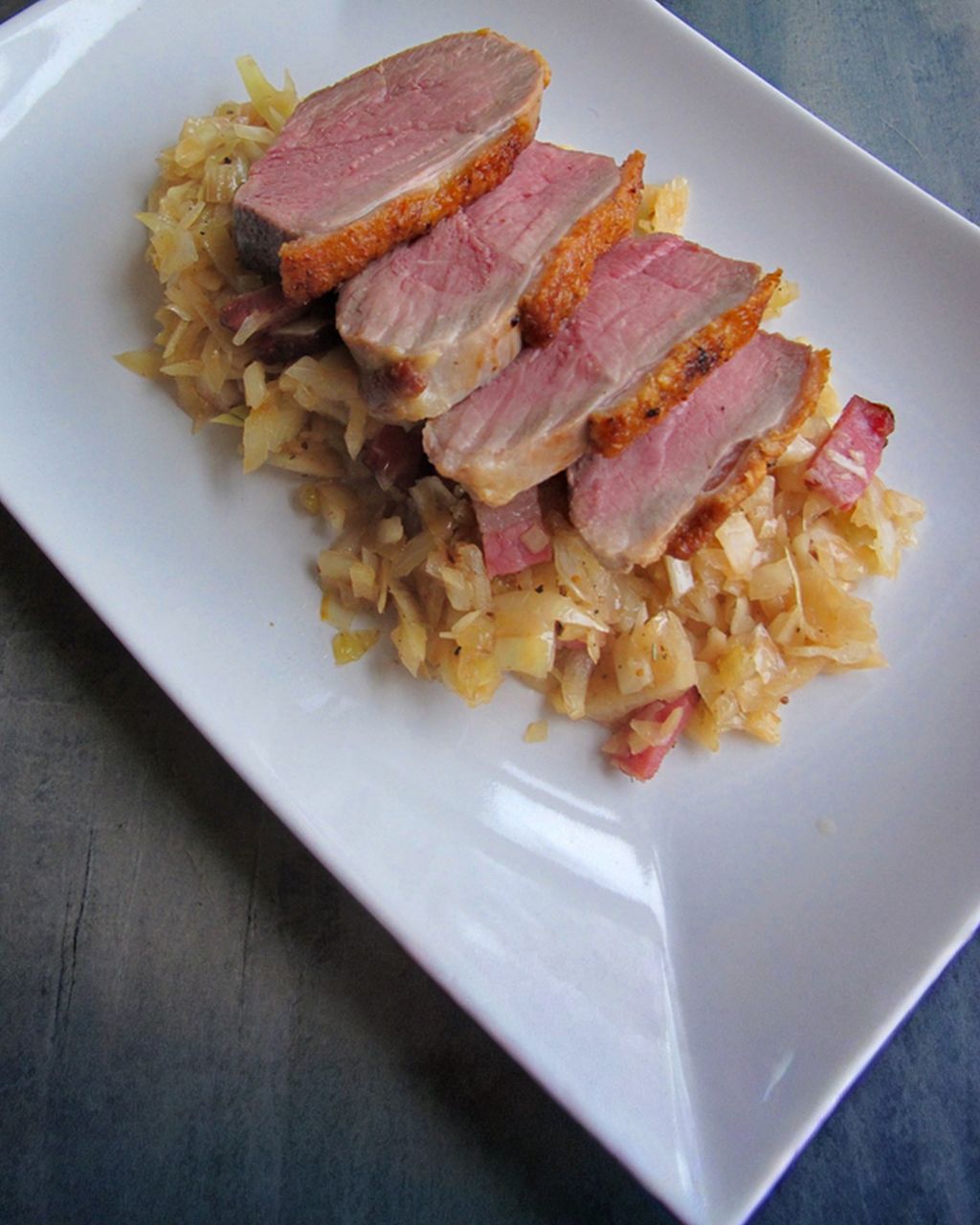
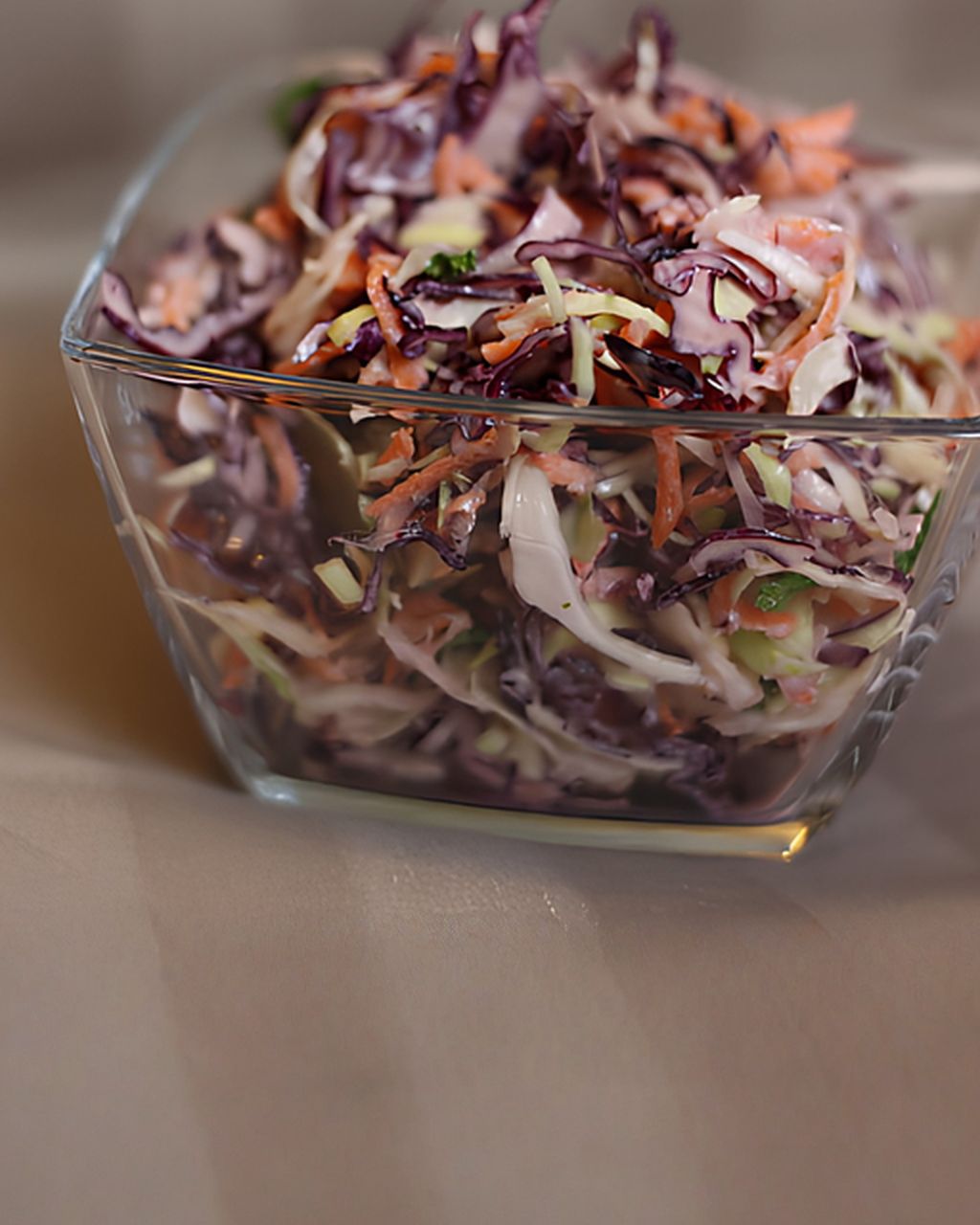
Raw shredded white and red cabbage with carrot, leek and a yoghurt and mustard dressing makes a rainbow cabbage salad. Cabbage seared briefly over high heat with bacon and onion is a crunchy side for fatty meat, as in duck breast with crispy cabbage and bacon salad. It also goes into cabbage soup, pasta bakes, cabbage fritters and cabbage rolls.