Black salsify spread with hazelnuts
Celery, Carrot and Beet Spreads: Ratios, Method and Seasoning
Updated Sep 18, 2026
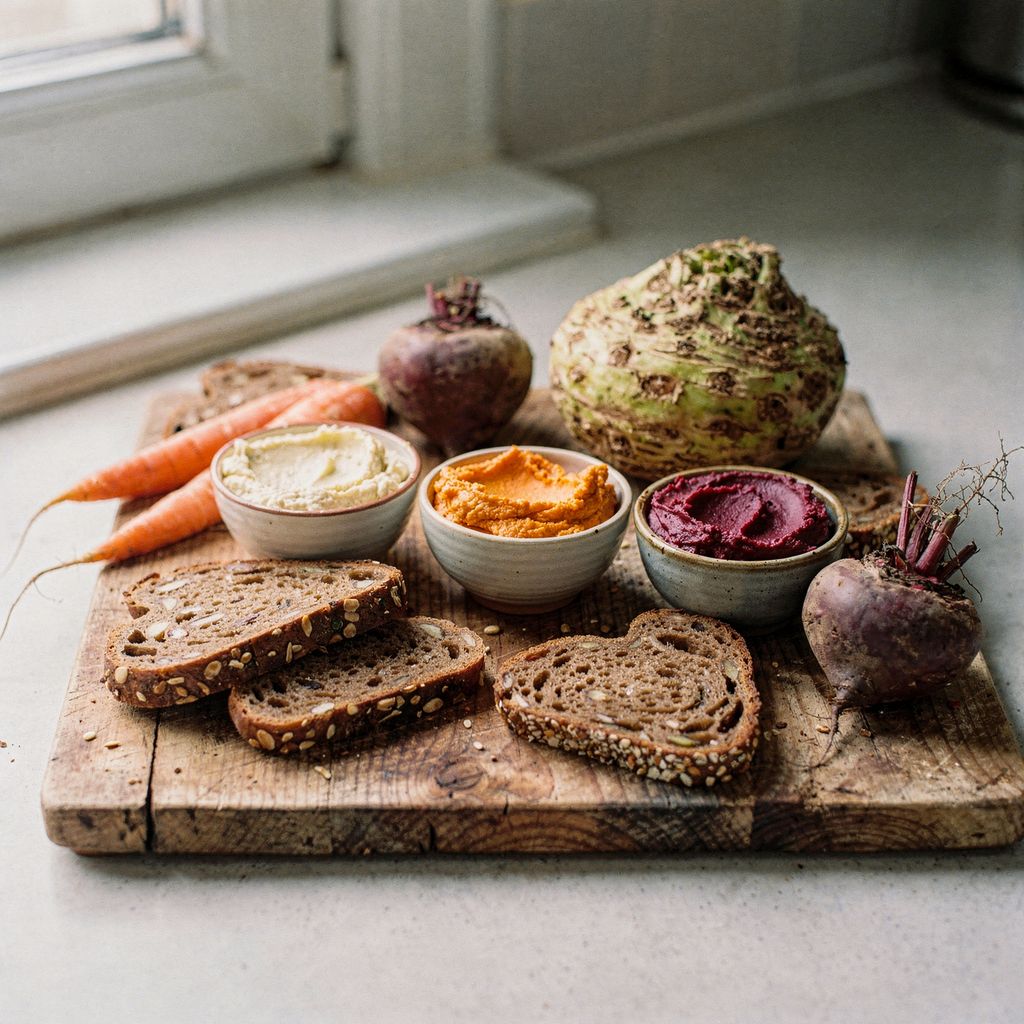
Celery, carrot and beet spreads all rest on the same foundation: prepped root vegetables blended with a creamy base in roughly a 2:1 ratio by weight, then brightened with acid and seasoned with salt. Once you know that ratio, you can make all three. The only real differences are how you prep the vegetable and what you use to season it — celery needs acid so it doesn't turn brown, carrot needs fat to taste fuller, and beet needs time in the oven to bring out its sweetness.
The basic ratio for a vegetable spread is 2:1 by weight — 300 g prepped vegetable to 150 g creamy base. That yields about 450 g of spread, enough for roughly eight slices of bread. For a looser texture on canapés, go 1.5:1; for a thick spread in a baguette, try 3:1.
Choose your creamy base based on how much water and fat it will bring to the spread:
Curd cheese (low-fat) — the most neutral option, holds its shape, roughly 10–13 g protein per 100 g depending on the brand. The default choice.
Cream cheese (e.g. Philadelphia-style) — richer and smoother, giving a silkier spread, but it softens faster at room temperature.
10% Greek-style yogurt — the richest of the dairy options (about 10 g fat per 100 g), and it also releases water. Drain it for an hour in a cloth-lined sieve.
16% sour cream — best used as an addition to curd cheese; on its own it's too thin.
Hummus base (chickpeas + tahini) — the vegan route, adding a nutty flavour and fat that pairs especially well with carrot.
The method is the same for all three spreads:
Prep the vegetable (boil, roast or finely grate it) and let it cool completely. Warm vegetable will melt the curd cheese and the spread will turn runny.
Blend or mash with a fork, depending on how coarse a texture you want.
Stir in the creamy base by hand, not with a blender — otherwise the curd cheese turns into a thin mush.
Season with acid and salt right at the end, tasting as you go. Root vegetables are naturally sweet and need more salt than you'd expect.
Let it rest in the fridge for at least 30 minutes. The flavours settle and the spread firms up.
Celery spread is made from 300 g celeriac and 150 g curd cheese, and the key step is squeezing lemon juice over the grated celeriac as soon as you peel it — otherwise it turns grey within minutes. The browning comes from an enzyme called polyphenol oxidase, which reacts with air the moment the flesh is cut; an acidic environment slows it down. A tablespoon of lemon juice per 300 g of celeriac is enough, and the spread wants that tang anyway.
There are two ways to prep celeriac, and each gives a different spread:
Raw, finely grated — fresh, slightly crunchy, with a strong, almost bitter, peppery flavour. Pairs well with ham and dark bread.
Roasted in 2 cm cubes, 200°C, 40–50 minutes — the celeriac caramelises, losing its sharpness and turning sweeter. Mash it with a fork. This is usually the version that wins over kids too.
Boiling in water works too (cubes for 20–25 minutes until soft), but celeriac releases a lot of flavour into the water this way, and the spread ends up watery. If you do boil it, drain well and let the cubes steam off for five minutes in the hot pot.
Celeriac itself is low in fat: according to USDA data, raw celeriac has about 42 kcal and 0.3 g fat per 100 g and is a good source of potassium. The richness of the spread comes mainly from the creamy base — and that's where you have room to choose.
Season celery spread with garlic, mustard, freshly ground pepper and chives. A tablespoon of grated horseradish works wonderfully with it too.
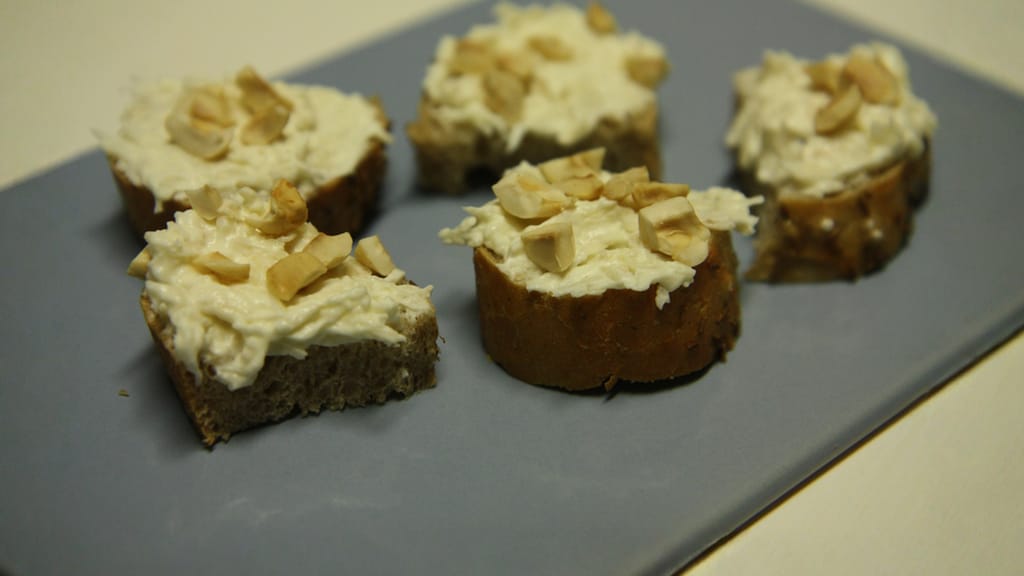
Black salsify spread with hazelnuts
Same technique, different root: black salsify spread with hazelnuts
Make carrot spread from roasted, not raw, carrots — 400 g carrot rounds, 2 tablespoons oil, 200°C, 25–30 minutes, until the edges turn brown. Roasting drives off water from the carrot, concentrates its sugars, and lets it blend to a smooth purée; raw grated carrot gives you more of a salad than a spread.
The second reason is flavour: roasting softens the earthy, slightly grassy sweetness of raw carrot, so you won't need to add honey or sugar to balance it. Roasting 400 g of raw carrot leaves you with roughly 300 g — to which you add 150 g of creamy base to keep the 2:1 ratio. Roasted, blended carrot has a fuller, sweeter flavour and pairs better with fat — which is why tahini or olive oil belong here.
That's why carrot calls for a richer base than celery:
Tahini (1–2 tablespoons per 400 g carrot) — a nutty bitterness that balances the carrot's sweetness
Olive oil stirred in at the end — 1 tablespoon adds smoothness
Coconut milk in place of some of the curd cheese, for a vegan version
Spices: cumin, paprika, a pinch of cinnamon, ginger. It needs a sharp acid — lemon juice or a few drops of apple cider vinegar. Without it, carrot spread tastes flatly sweet.
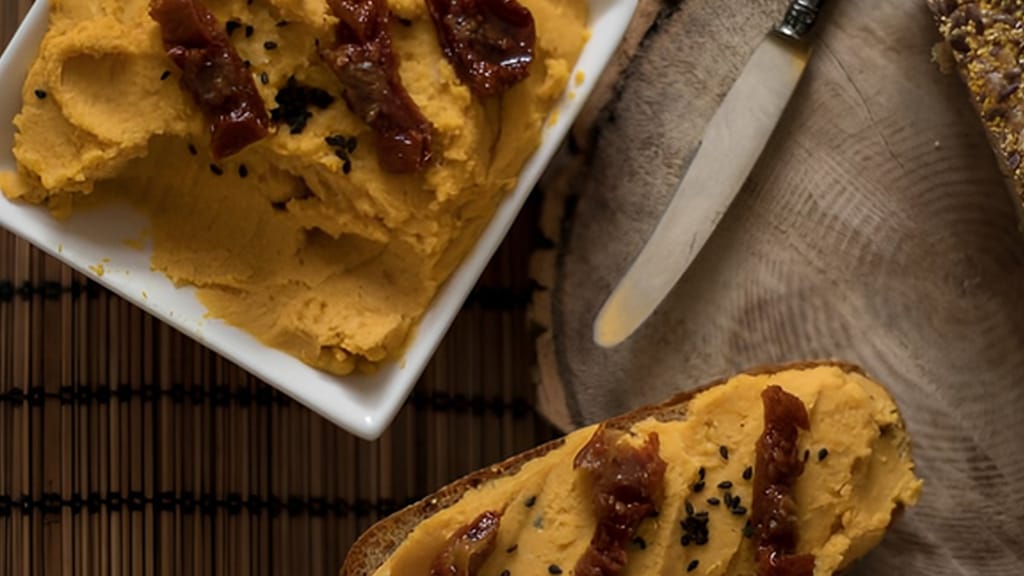
Carrot hummus
Ready-made vegan carrot spread recipe: carrot hummus with chickpeas and tahini
For beet spread, roast the beets wrapped in foil at 180°C for 60–90 minutes, depending on size — they're done when a skewer slides in with no resistance. Boiling works too, but takes much longer (small beets about an hour, large ones two to three), and a lot of flavour and colour leaches into the water.
Two things determine the colour:
Don't peel the beets beforehand. The skin holds in the betalains — the pigments that give beets their deep purple colour. Peel them after roasting, while still warm; the skin will slide off with your fingers.
Don't trim the root end or the leaf stems too close to the beet. Leave about a centimetre of stub, otherwise the beet will 'bleed' while roasting.
Beet spread is the sweetest of the three, so it needs something to balance it. Tried-and-tested combinations:
Beet + goat cheese + thyme — a classic; the cheese's tang cuts through the sweetness
Beet + horseradish + sour cream — a sharper version, great with roast meat
Beet + walnuts + garlic — hearty, with a Georgian-inspired flavour
Beet + feta + cumin — salty and spiced
Keep the same 2:1 ratio. Just watch the salt: beet absorbs more of it than celery or carrot do.
Every root vegetable spread needs four things: acid, salt, fat, and one strong flavour on top. Leave one out and it tastes flat — and people usually try to fix that with more salt, which doesn't actually help.
Acid — lemon juice, apple cider vinegar, finely chopped pickles, or a tablespoon of pickle brine. Start with 1 tablespoon per 450 g of spread and add more by the half-tablespoon.
Salt — aim for about 1% of the weight, so roughly 4–5 g per 450 g. Root vegetables are sweet, and salt is the only thing that keeps that sweetness in check.
Fat — a tablespoon of olive oil, tahini, or a richer creamy base. Fat carries flavour across your palate — a tablespoon of oil or tahini does a lot for a carrot spread.
A sharp note — garlic, horseradish, mustard, chilli flakes, chopped red onion. Pick one; two start to fight each other.
Add fresh herbs right before serving. Chopped chives, parsley or dill turn black and bitter in the spread after a day.
Homemade spread made with curd cheese or yogurt keeps in the fridge at 4°C for 2–3 days, the vegan version with chickpeas and oil for 3–4 days — a day or two longer than the curd-cheese version. Cooked or roasted vegetable on its own, unseasoned and in a sealed container, keeps for 3–4 days — only prep more than that if you know you'll use it in time, or freeze it.
A few things that help it last longer:
Store it in glass, not plastic. Beet especially will permanently stain plastic, and celery and carrot both pick up other smells from it.
Smooth the surface and drizzle a thin layer of oil over the top. This keeps air out and stops the surface from drying out.
Always scoop with a clean spoon. A spoon that's already spread bread crumbs into the container gives mould a head start.
Only the vegan version can be frozen. A spread made with chickpeas, oil and tahini keeps for three months in the freezer, and just needs a stir after slow-thawing in the fridge. Curd cheese and yogurt turn grainy and release water when frozen — the spread separates and there's no fixing it.
Signs it's time to toss it: a sour or yeasty smell, bubbles on the surface, a watery pool that won't stir back in, or any coloured film on top. With beet, colour alone doesn't tell you anything — it darkens naturally over time anyway.
Vegetable spreads most often go wrong in six ways: stirring the cream into warm vegetable, using raw grated carrot, blending the curd cheese together with the vegetable, forgetting the acid, under-salting, and boiling peeled beets. Each has an easy fix:
Stirring into warm vegetable. The curd cheese melts and the spread never firms up. Let the vegetable cool to room temperature first.
Using raw grated carrot. It releases water and the spread turns runny by the next day. Roast the carrot instead.
Blending everything together until smooth. A blender turns curd cheese into thin mush. Blend the vegetable, then stir in the cream by hand.
Forgetting the acid. The most common reason a root vegetable spread tastes flat. A tablespoon of lemon juice or vinegar fixes it.
Under-salting. Taste the spread cold, not the warm vegetable — cold mutes salt's flavour, and tasting it warm tricks you into under-seasoning.
Boiling peeled beets. You'll end up with pale beets and pink water in the pot. Roast them in their skins instead.
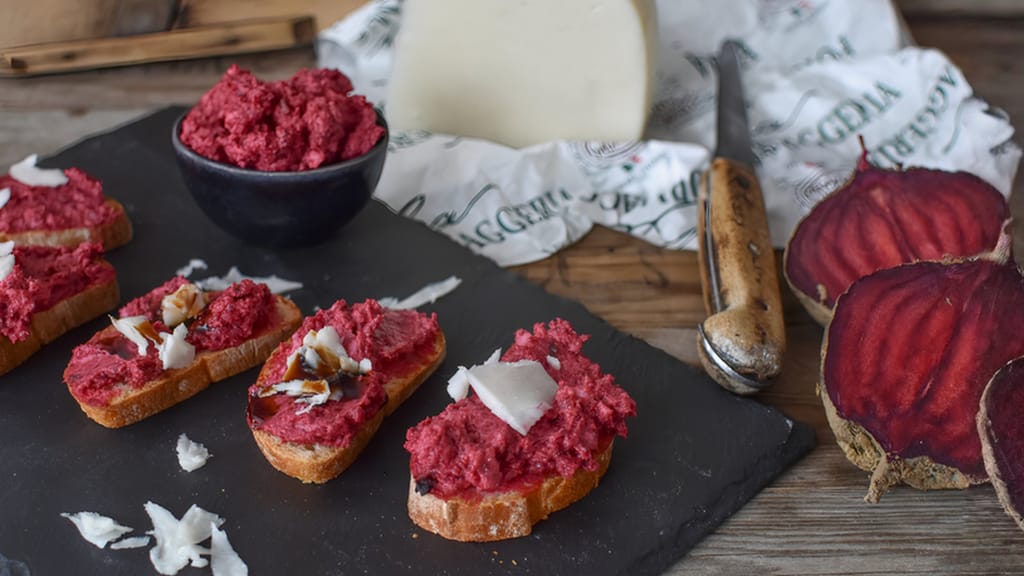
Roasted beetroot spread the whole family will love
Tried-and-tested recipe for beet spread made with roasted beets
Yes — swap the curd cheese for blended chickpeas with tahini, roughly 3 parts chickpeas to 1 part tahini, plus a tablespoon of olive oil. The vegan version also has a practical edge over the curd-cheese one: it keeps 3–4 days in the fridge instead of 2–3, and it's the only version you can freeze. Dairy-free yogurt alternatives or mashed avocado work too, though avocado browns by the next day.
You can, but drain them in a sieve for at least 15 minutes first, then pat dry with paper towel. Vacuum-packed beets are soaked in their liquid, and if you blend them straight away, the spread turns watery and sour. They also taste noticeably milder than roasted beets — compensate with a bit more garlic and a pinch of sugar or a drop of honey to get closer to that roasted flavour.
The closest substitute is drained 10% Greek-style yogurt in the same quantity, or alternatively cream cheese, ricotta, or mashed blue cheese for bolder combinations. Greek-style yogurt is richer than low-fat curd cheese and releases water — drain it for an hour in a cloth-lined sieve, otherwise the spread will turn runny by morning. Sour cream alone is too thin to use as a substitute; it only works as an addition.
It's called beeturia: the red pigment in beets (betanin) passes through digestion undigested and colours the urine. Research suggests it affects roughly 10–14% of people, with the colour typically appearing 2–8 hours after eating and clearing within 12–48 hours.
Yes, both can be finely chopped and stirred in at the end like a herb — celery leaves add a strong, peppery flavour, while carrot tops are milder, slightly bitter, and taste a bit like parsley. Use about a tablespoon of chopped leaves per 450 g of spread; more than that starts to taste grassy. The same allergen warning applies to celery leaves as to the root: it's a declarable allergen.
One recipe worth heating the oven for, one tip, and one deal from the shop. Nothing else.