Mom's christmas braid
Underbaked Vánočka: Why It's Raw Inside and How to Tell When It's Done
Updated Nov 3, 2026
An underbaked vánočka (Czech Christmas braided bread) is usually raw inside for one of two reasons: your oven runs cooler than its dial says, or it runs hotter, so the crust browns before the center bakes through and the loaf comes out based on color alone. It's only done when the thickest part reads 88–93 °C (190–199 °F), ideally 90–93 °C (194–199 °F). If you spot a raw center right away, put the loaf back in the oven at 160 °C (320 °F), loosely covered, for 10–15 minutes. Below you'll find every cause, how to tell raw crumb from merely soft crumb, and what to do with a loaf that can't be rescued.
A vánočka stays raw inside when the heat doesn't reach the center before you take it out. Usually one of these seven causes is behind it:
The oven runs cooler than it shows, or it wasn't properly preheated. The loaf bakes more slowly and the time in the recipe isn't enough.
The oven runs hotter than it shows. The crust browns within half an hour, and the loaf comes out based on color even though the center isn't done yet.
Taking it out by time or color without checking the center.
A big, tall loaf. A three-tier braid or a vánočka made with a kilo of flour needs much longer than a recipe for 500 g.
Underproofed dough. A dense loaf with no air in it bakes through more slowly and often splits in the oven too.
Heavy, wet dough. Too much liquid, soggy raisins, or a large amount of fruit hold water that the heat has to evaporate.
The baking sheet is too high. Not enough heat reaches the bottom, so the base stays pale with a gummy streak above it.
The good news: you can keep an eye on all of them with one cheap step – measure the oven temperature and the temperature in the center of the loaf.
Seasonal baking plans, tested recipes and kitchen tricks that save you time. Unsubscribe in one click.
Raw crumb is shiny, sticky, and heavy; gummy crumb is just moist and soft. You can tell the difference by touch and by eye:
Raw dough is shiny, grayish, and sticks to the knife. If you rub it between your fingers, it clumps into a smooth ball, just like before baking. It's usually in the center or forms a dense streak above the bottom crust (bakers call this a "zákal").
Gummy but baked crumb is matte and tender, and just squishes. This typically happens when you cut into a warm loaf: the crumb is still setting and steam is still escaping. After 1–2 hours on a wire rack it firms up.
Dense but fully baked crumb with no holes is a sign of underproofing or too much flour, not of underbaking. It's matte and not sticky.
If you're not sure, measure the temperature in the center. Below 88 °C (190 °F), the vánočka isn't done, even if it looks it.
A vánočka is done when the thickest part reads 88–93 °C (190–199 °F), ideally 90–93 °C (194–199 °F). Baking guides give exactly this range for rich yeasted doughs like vánočka or brioche; according to King Arthur Baking, brioche is done from 88 °C (190 °F) in the center.
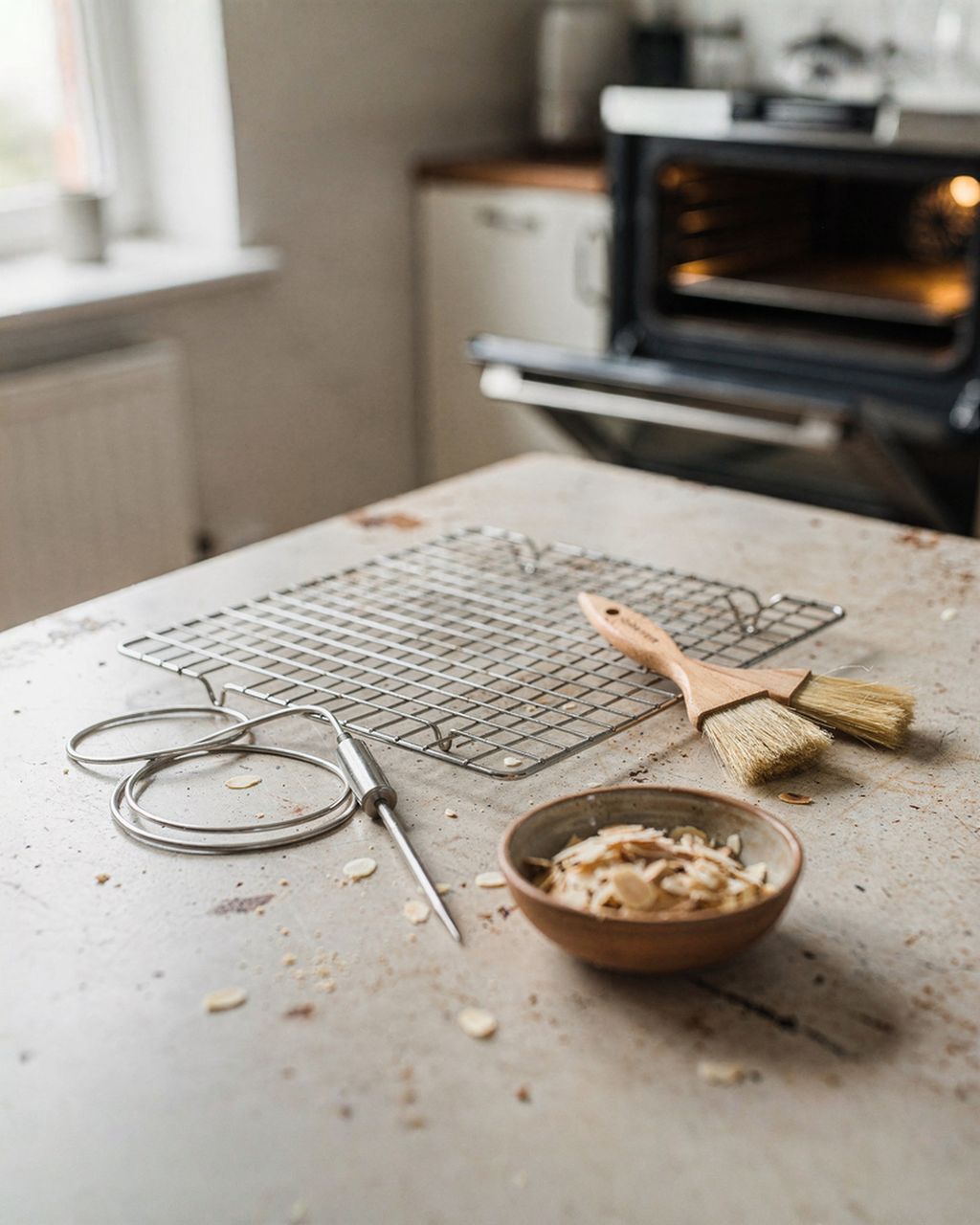
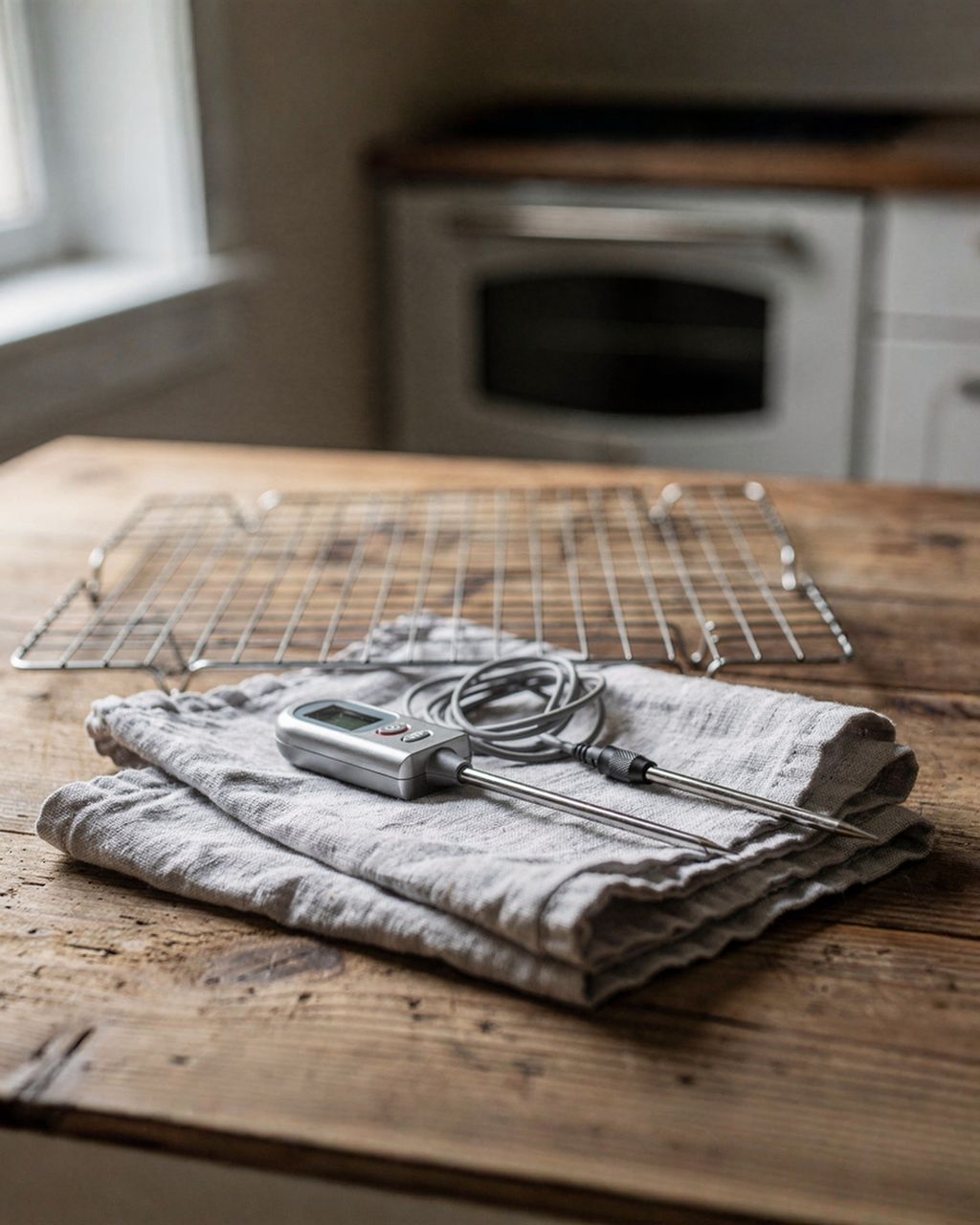
Instant-read thermometer: insert it from the side, horizontally, into the thickest part, not from the top into the gap between the strands. Measure about 5 minutes before the end of the baking time.
Without a thermometer, combine at least two signs: a hollow sound when you tap the bottom, light golden and springy gaps between the strands (not white and shiny), and sides that spring back when pressed.
A skewer is the most misleading test for vánočka. Melted butter makes it come out "clean" even when the center isn't done, so treat it only as a supplement.
You'll find the detailed measuring method and timings by size in our article on how long to bake vánočka and at what temperature.
Finish baking an underbaked vánočka right away: put it back in the oven at 160 °C (320 °F), loosely covered with parchment paper, for 10–15 minutes, until the center reads 88–93 °C (190–199 °F).
Not yet sliced: return the whole loaf to the baking sheet. The paper protects it so the crust doesn't darken any further.
Already sliced: cover the cut surface with a piece of foil so the crumb doesn't dry out, and bake the same way.
Already cooled: you can still finish baking it, but the center won't be fully fixed and the crust will dry out more. Plan on the upper end of the time range and check the temperature in the center.
Don't try to rescue an underbaked vánočka in the microwave. It heats unevenly, the crust goes soft, and the raw spots may not cook through.
If the vánočka is already sliced and cooled and you don't feel like baking it more, cut off the raw part and use the rest another way. Three options:
Toasted slices. Cut the vánočka into slices 1–1.5 cm (about ½ inch) thick and toast them in the oven at 170–180 °C (340–355 °F) until golden, or in a pan with a little butter. Thin slices bake through completely.
Sweet bread pudding. Cubes of vánočka soaked in milk and eggs bake in the oven for a long time and cook through completely, so even less successful pieces work well here.
Sweet breadcrumbs. Grind dried slices into crumbs and use them to dust a baking pan or in a crumble topping.
For a vánočka that's baked but dry, see our article vánočka: how long it keeps and how to keep it soft.
You can avoid an underbaked vánočka by checking your oven, baking at the right temperature, and taking the loaf out by its internal temperature, not by color. Here's a checklist:
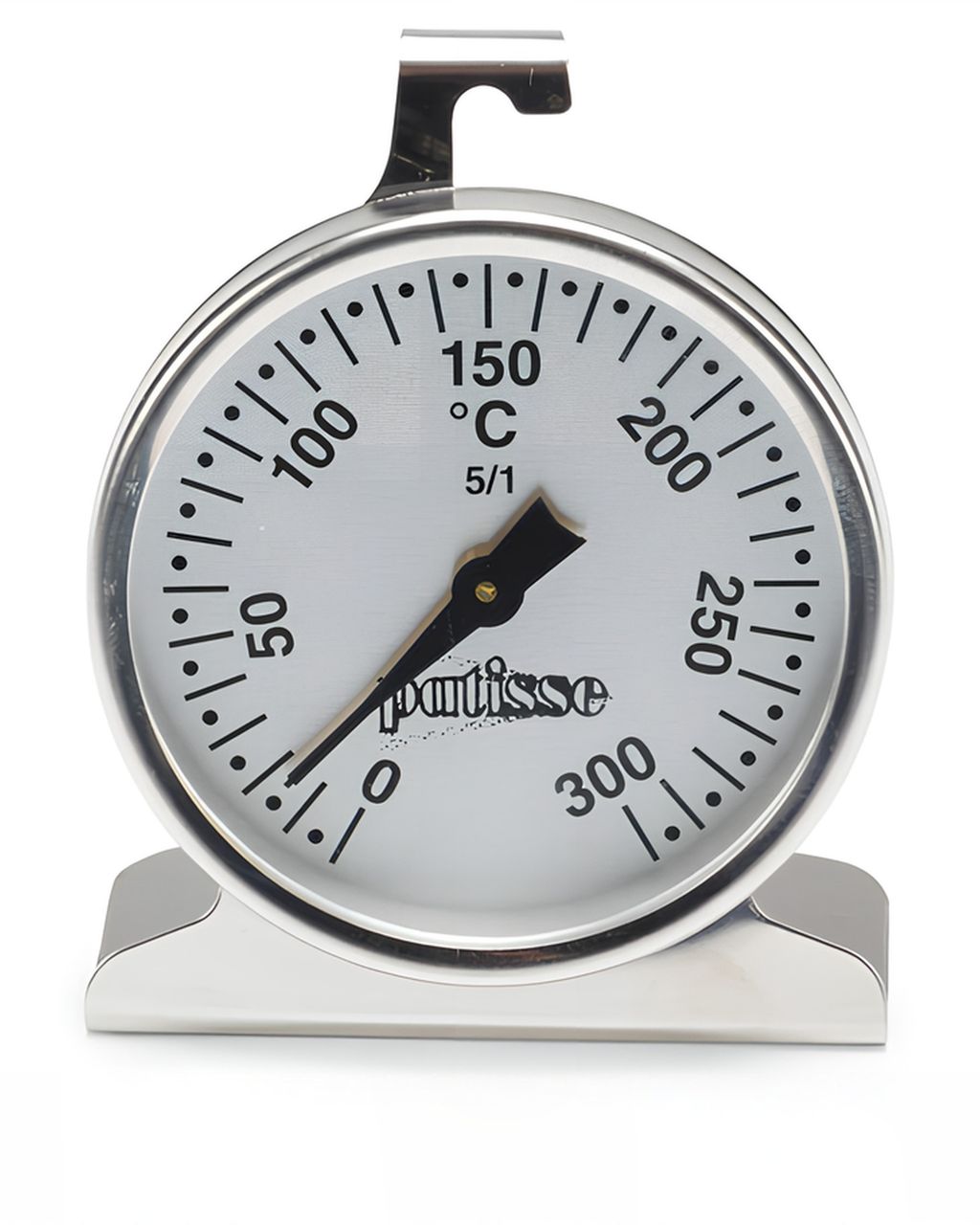
Check your oven with a thermometer. Home ovens commonly differ from the setting by 10–20 °C (18–36 °F). Place the Patisse oven thermometer in the middle of the rack and read it after 20 minutes of heating.
Preheat for at least 15 minutes, until the oven really reaches 170 °C (340 °F).
Bake at 170 °C (340 °F) with top and bottom heat (with a fan, at 155–160 °C / 310–320 °F). A higher temperature browns the crust before the center bakes through.
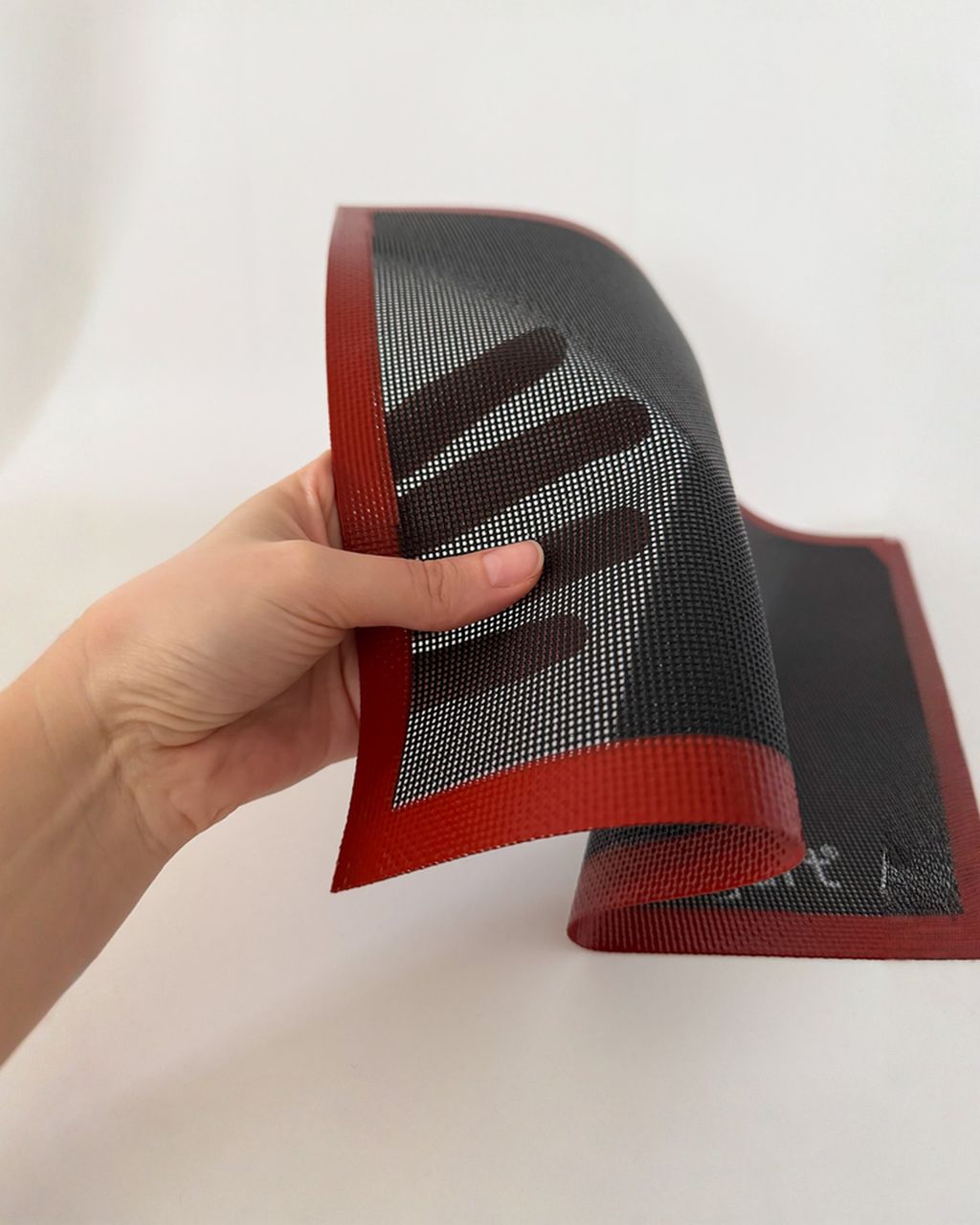
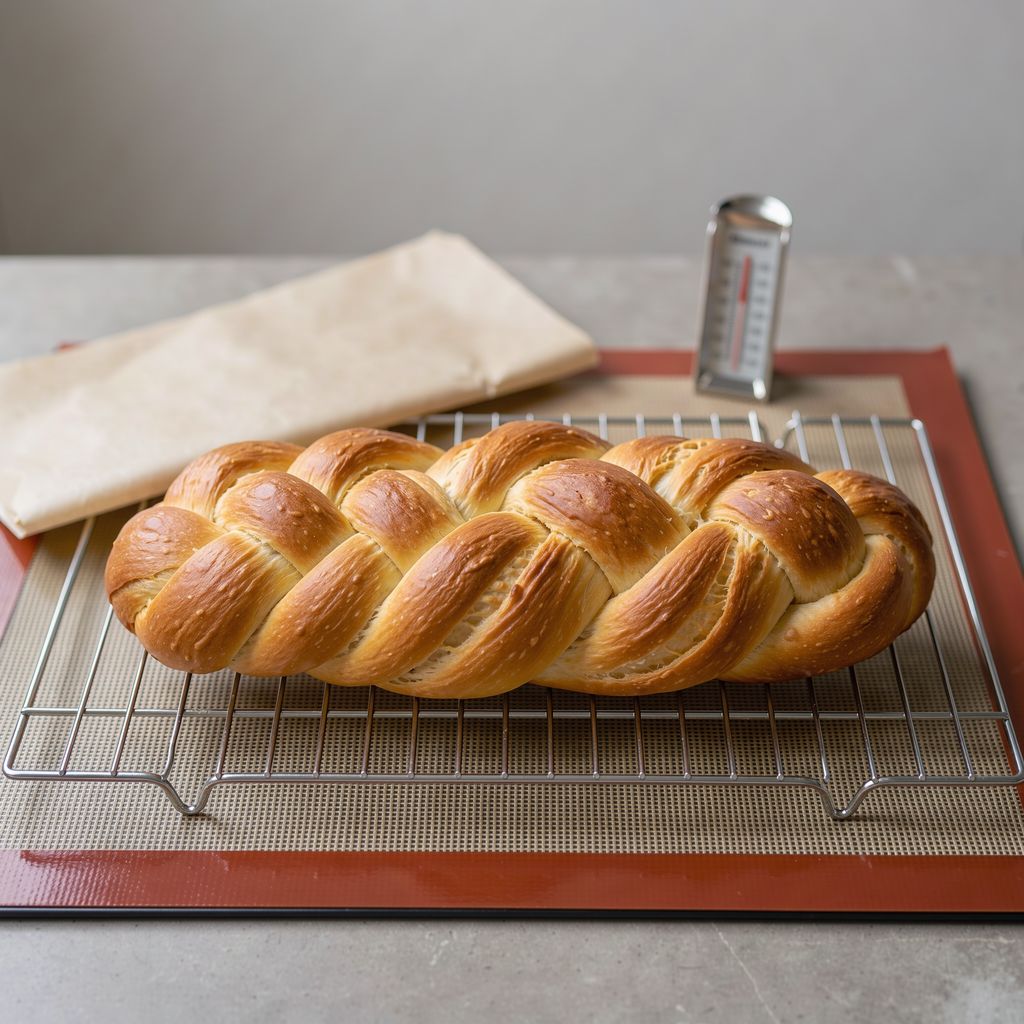
Put the baking sheet in the lower third to the middle of the oven. On a perforated silicone mat, more heat reaches the bottom and the base doesn't stay pale.
Cover the loaf as soon as it's golden brown, usually after 20–25 minutes, and keep baking.
Let the dough rise just right. A dent made with your finger should spring back slowly, not immediately.
Pat the raisins dry after soaking and don't overload the dough with liquid.
Measure the temperature in the center about 5 minutes before the end of the time, and take the loaf out only at 88–93 °C (190–199 °F).
Why vánočka cracks or spreads out is covered separately in why vánočka cracks and vánočka spread out. You'll find thermometers and mats among our pans and baking tools.
The times and temperatures in this article suit a classic butter dough, like this recipe:
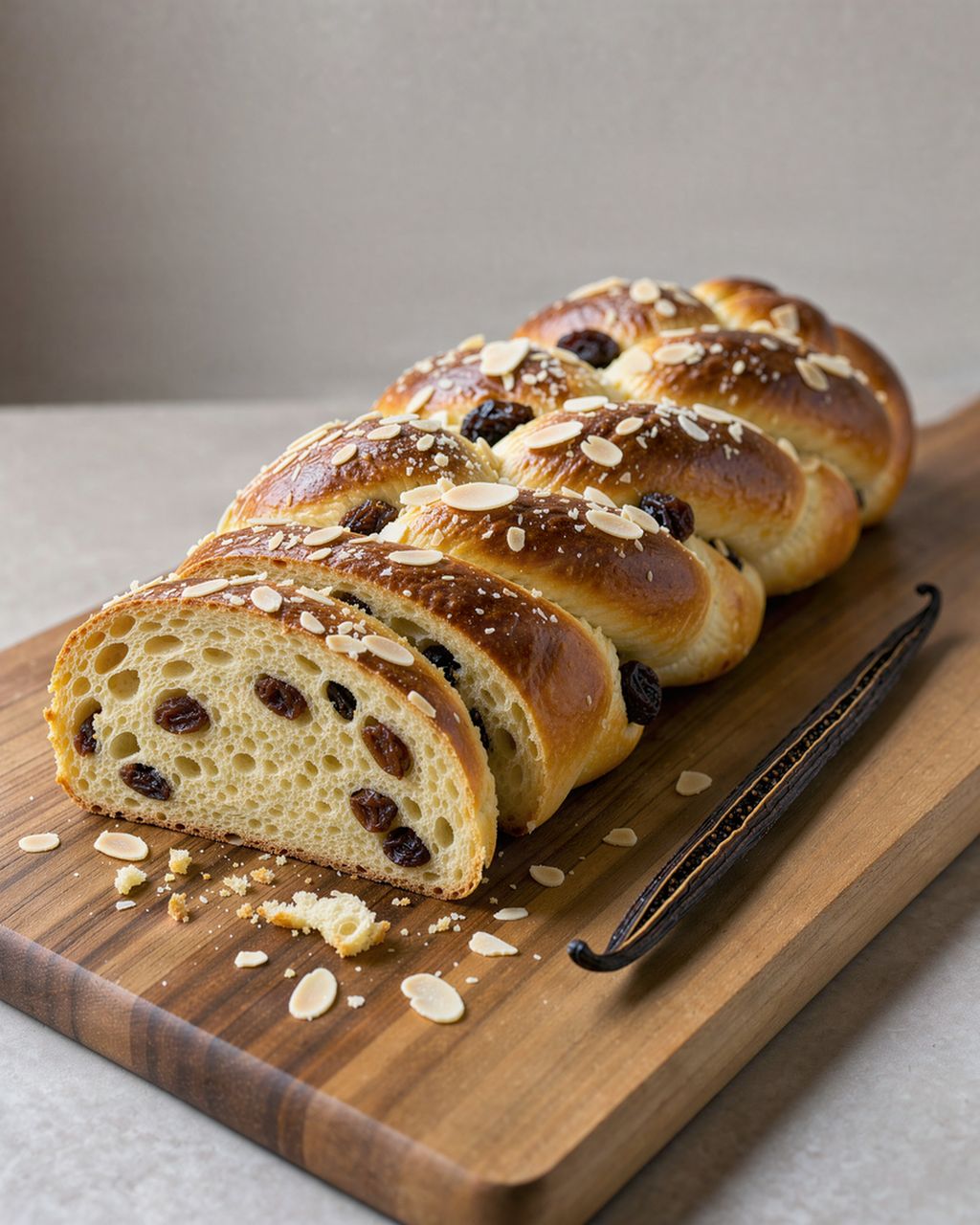
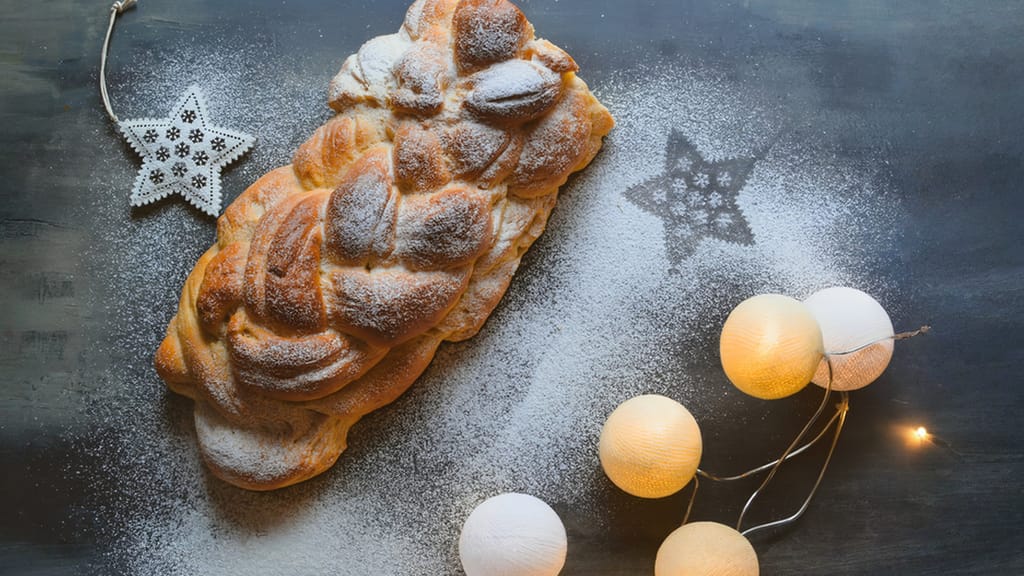
Mom's christmas braid
Mum's vánočka: a classic butter vánočka recipe
You shouldn't eat the raw part of a vánočka. It's unbaked dough made with raw flour and eggs, which, according to the US FDA, can carry Salmonella or E. coli. Finishing the bake removes the risk: a center at 88–93 °C (190–199 °F) is well above the 71 °C (160 °F) that the US Department of Agriculture (USDA) gives as the safe temperature for egg dishes.
It's not recommended. Freezing doesn't kill bacteria in raw dough, and once thawed the center will be even wetter. Finish baking it right away, or cut off the raw part and freeze the baked part.
A dense, gummy streak above the base (known as a "zákal" in Czech baking) forms when not enough heat reaches the bottom or when the dough hasn't proofed enough. Bake on a baking sheet in the lower third to the middle of the oven, let the dough rise just right, and don't slice the loaf until 1–2 hours after baking.
Most often because your oven runs hotter than it shows, or it's set higher than 170 °C (340 °F). The crust of a rich dough with butter and sugar browns quickly, so it darkens before the center bakes through. Check your oven with a thermometer, bake at 170 °C (340 °F), and cover the loaf after 20–25 minutes.
One recipe worth heating the oven for, one tip, and one deal from the shop. Nothing else.