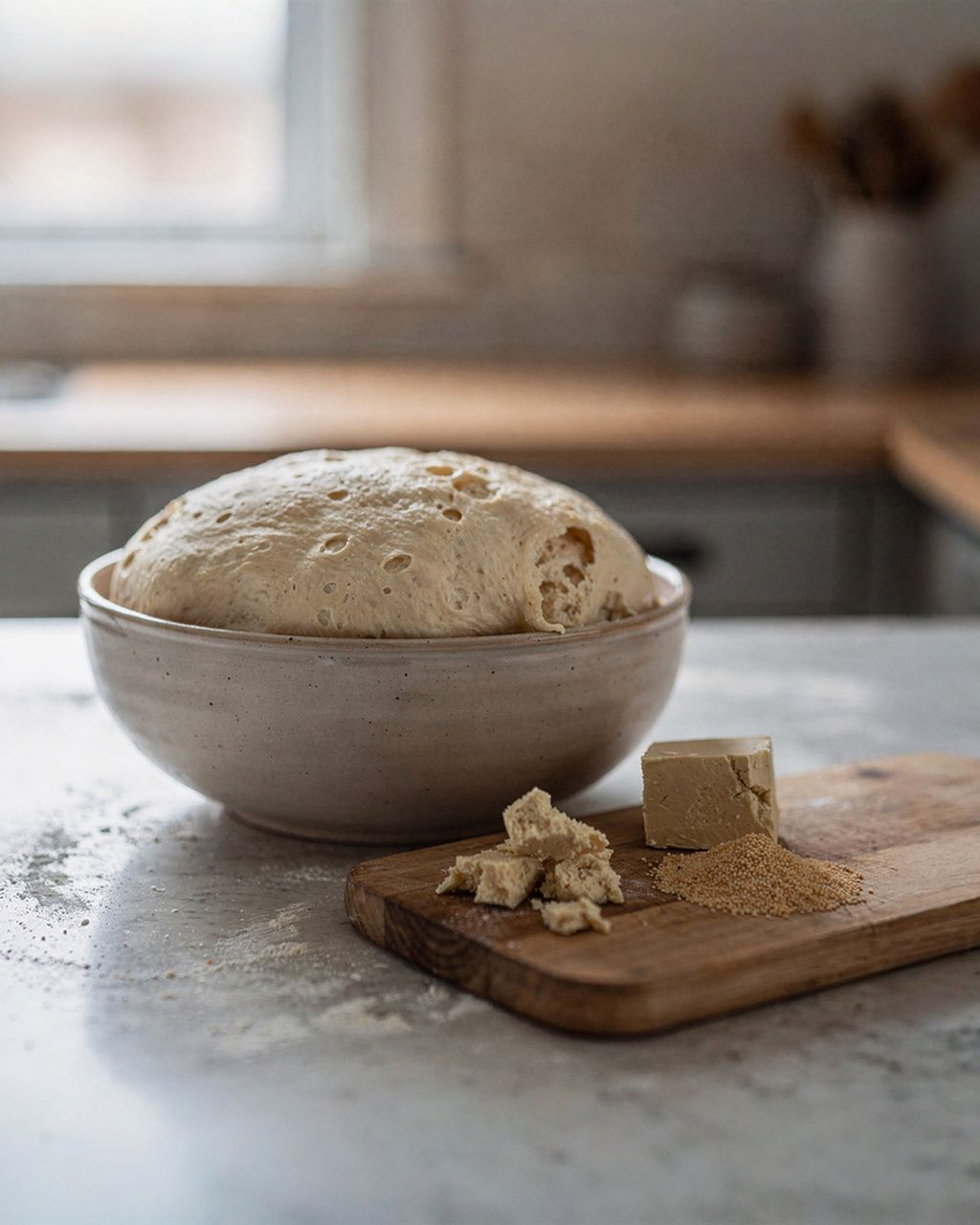
Dried vs. Fresh Yeast: How to Convert and Proof Dough with Each
Nutritional Yeast: What It Is, What It Tastes Like and How to Use It
Updated Oct 17, 2026
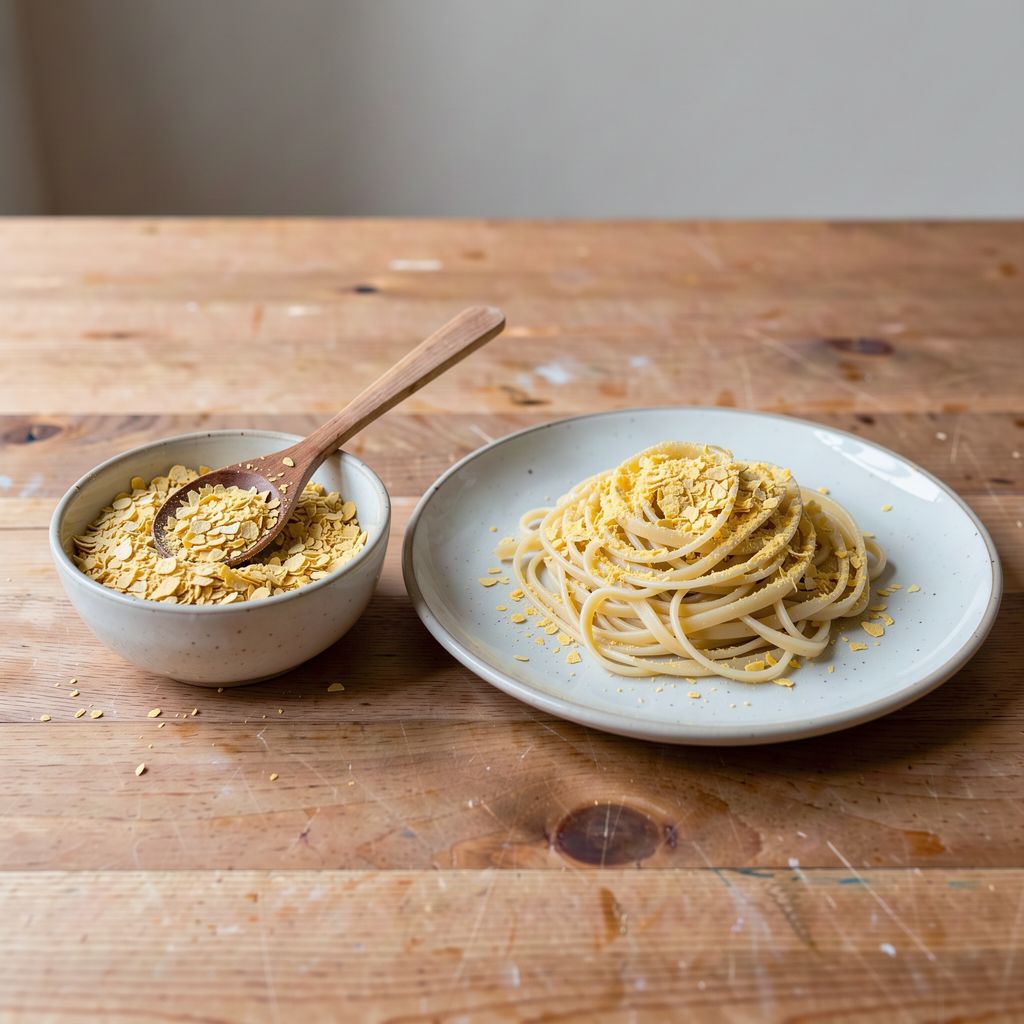
Nutritional yeast is a deactivated, dried yeast sold as yellow flakes or powder. It won't make dough rise and can't replace baking yeast. Instead, you sprinkle it over finished dishes for its nutty, cheesy, umami flavor and its B vitamins. In vegan cooking, it's the quickest stand-in for Parmesan you can reach for. Below, you'll find how it differs from baking yeast, what it tastes like, how much to use and what the real story is with vitamin B12.
Nutritional yeast is the same yeast as ordinary baking yeast – Saccharomyces cerevisiae – except that it has been deliberately deactivated with heat, so it's no longer alive and no longer ferments. It's grown on a sugary medium (typically sugar beet or cane molasses), then heated, dried and crushed into flakes or powder.
Color and form: pale to deep yellow flakes, or a fine powder.
Ingredients: just yeast; some products have added vitamin B12 or other vitamins (this is stated on the package).
Where to buy it: in drugstores (you can find it at dm, for example), organic shops and health food stores, usually in 100–250 g packs.
In English-speaking countries it's called nutritional yeast, or "nooch" for short among vegans. If you're looking up recipes from abroad, it's the very same product.
Nutritional yeast doesn't make dough rise because the yeast in it is dead – it can't ferment sugar into carbon dioxide. If you add it to dough in place of yeast, the dough will stay flat. No soaking in warm milk with sugar will "wake it up."
For rising, you need live yeast, fresh or dried – for how to convert between the two, see the article dried vs. fresh yeast: conversion and how to bake with them. And watch out for a third "yeast" in Czech recipes: cukrářské droždí, or ammonium carbonate (baker's ammonia), isn't yeast at all but a leavening salt used for gingerbread and linzer cookies.
You can add nutritional yeast to savory baked goods – but as a seasoning, not a leavener. A spoonful or two in the dough for crackers or breadsticks adds a cheesy flavor, but something else has to make the dough rise.
Nutritional yeast, baking yeast and brewer's yeast are all Saccharomyces cerevisiae, but only baking yeast is alive and makes dough rise; nutritional yeast is sprinkled on food, and brewer's yeast is a bitter dietary supplement.
Baking yeast (fresh, dried) – live yeast that leavens dough. Not eaten raw.
Nutritional yeast – inactive yeast grown specifically as food; a mild, nutty, cheesy flavor, sprinkled over dishes.
Brewer's yeast – inactive yeast that's a by-product of brewing beer; sold mainly as a dietary supplement and tastes distinctly bitter. Not suitable for sprinkling over pasta.
If a recipe calls for nutritional yeast, don't swap in brewer's yeast – the dish will turn bitter.
Yeast extract (spreads like Marmite, some bouillon cubes) is a category of its own: it isn't dried yeast but a concentrated, very salty "essence" made from yeast. It's related in flavor, just far more intense and salty – if you use it in place of nutritional yeast, add it in small pinches and cut back on the salt.
Nutritional yeast tastes nutty, slightly cheesy and above all umami – it recalls Parmesan, roasted cashews or a rich broth. The full flavor comes from free glutamic acid, which is released from the yeast during heating and drying – the same compound that makes aged cheese, tomatoes and mushrooms taste so savory.
On its own it's rather mild and a little dry, and almost not salty at all (unless the manufacturer added salt).
In food it opens up: with salt, garlic and a squeeze of lemon, it really starts to taste like cheese.
Flakes vs. powder: flakes look nicer sprinkled on top and give a slight crunch, while powder dissolves better in a sauce. You can crumble flakes between your fingers or in a grinder in a few seconds.
The aroma is pronounced, and some people find it reminiscent of fermented dough or cheese rind. If it seems odd the first time, don't eat it off a spoon – stir it into a sauce, where it shows what it can do.
Nutritional yeast works best on pasta, in "cheese" sauce, in pesto, in soups, on popcorn and roasted vegetables, and in spreads. In all of these it stands in for cheese or adds depth of flavor.
Sprinkle it instead of Parmesan – 1–2 tablespoons per serving of pasta, risotto or couscous with chickpeas and roasted vegetables. Sprinkle it on at the plate.
Vegan "cheese" sauce – the base is soaked cashews or boiled potatoes with carrots, blended with plant-based milk; for 250 ml of sauce, use 3–4 tablespoons of nutritional yeast, salt, garlic and a teaspoon of lemon juice. It's great on pasta, nachos and baked dishes.
Pesto without cheese – in wild garlic pesto, replace the Parmesan with 3–4 tablespoons of nutritional yeast and a pinch of extra salt.
Soups and sauces – a spoonful in red lentil soup with coconut milk or in a tomato sauce adds a "broth-like" fullness without meat.
Popcorn and roasted vegetables – drizzle popcorn with oil so the flakes stick, and toss on 2 tablespoons for a large bowl. Coat potatoes, cauliflower or chickpeas in oil with nutritional yeast and salt before roasting.
Spreads and dips – a spoonful in carrot hummus, in a tofu "egg" spread or in avocado.
A quick vegan topping to replace Parmesan: blend cashews and nutritional yeast in roughly a 1:1 ratio with a pinch of salt into a coarse crumb. In a sealed jar in the fridge, it keeps for a few weeks. For more ideas for dishes without animal ingredients, browse the vegan recipes.
Nutritional yeast works best when you pair it with salt and acid – on its own, its flavor is flat.
Add it gradually: start with a tablespoon per serving; more than 2 tablespoons per plate tends to overpower the dish.
Salt and acid: a pinch of salt and a few drops of lemon juice or a little mustard turn it into "cheese."
Toast it: 1–2 minutes in a dry pan, stirring constantly, deepens the nutty flavor. As soon as it smells good and darkens a shade, take it off the heat – burnt, it turns bitter.
Add it to sauces at the end: stir it in during the last few minutes and don't cook it for long; it thickens the sauce slightly, so thin it out if needed.
As a topping, it needs fat: it won't stick to a dry surface, but a drop of oil or some sauce solves that.
Nutritional yeast contains B vitamins and plenty of protein, but it contains vitamin B12 only if the manufacturer added it – yeast doesn't make it on its own. If you don't see B12 on the package, count on none.
Protein: roughly 45–55 g per 100 g, depending on the brand. One tablespoon of flakes (about 4–5 g) gives only around 2 g of protein, though – it's a seasoning, not a main source.
B vitamins: it contains vitamins B1, B2, B3, B6 and folic acid; fortified products have far more – the nutrition table on the package is what counts.
Fiber: around 20–25 g per 100 g, including beta-glucans from the yeast cell wall.
Fat and salt: about 5 g of fat per 100 g, and only traces of salt unless it's a flavored blend. A single tablespoon contains a negligible amount of either.
Vitamin content differs markedly between brands, so the table on the specific package is what decides. Fortified nutritional yeast does contain vitamin B12, but the amount varies a lot from brand to brand – check the table on the package to see how much is in a serving.
Nutritional yeast itself contains no gluten, because it's grown on molasses, not on grain. Cross-contamination can happen during production and packaging, though, so if you need to avoid gluten, buy only products labeled "gluten-free" or marked with the crossed-out grain symbol.
Stored dry and tightly sealed, nutritional yeast usually keeps for 1–2 years, so go by the date on the package. Keep it in an opaque container away from light and moisture: vitamin B2 breaks down in light, and damp flakes clump together. You don't need to refrigerate it.
Some of the B vitamins are lost with longer cooking, but brief heating does no harm. If vitamins matter to you, sprinkle nutritional yeast over the finished dish or stir it into a sauce at the end. For flavor alone, you can happily heat it.
The closest substitute for nutritional yeast is grated Parmesan, if you're not cooking vegan. For a vegan option, a teaspoon of light miso paste works in sauces, or you can sprinkle over ground cashews blended with salt and a squeeze of lemon.
Yes. Nutritional yeast is inactive and meant to be eaten as it is, so you can sprinkle it straight onto your plate with no cooking. This does not apply to fresh or dried baking yeast, which contains live yeast and shouldn't be eaten raw.
One recipe worth heating the oven for, one tip, and one deal from the shop. Nothing else.