- Season
- Year-round. Fresh and frozen chicken livers are widely sold, usually in 500 g packs.
- Price
- Low
Calories and nutrition
per 100 g
119 kcal
Calories
16.9 g
Protein
0.7 g
Carbs
4.8 g
Fat
Chicken Livers
Chicken livers are small, tender and inexpensive poultry livers with a mild, creamy flavour, gentler than pork or beef liver. They are good pan-fried with onions, with marjoram or in pâté, and must always be cooked until the centre reaches at least 70 °C for 2 minutes, because they often carry Campylobacter bacteria.
per 100 g
119 kcal
Calories
16.9 g
Protein
0.7 g
Carbs
4.8 g
Fat
Not recommended. Chicken livers spoil quickly and belong in the fridge straight away. Thaw them in the fridge, not on the counter.
Keep raw livers covered on the bottom shelf of the fridge at 0–4 °C, away from ready-to-eat food. Use packed livers by the use-by date and loose livers within 1–2 days of purchase. Once a pack is opened, cook them by the next day. Cooked livers keep for up to 2 days in the fridge, homemade pâté for 1–2 days.
Freeze raw livers in portions in sealed freezer bags or vacuum packs. They keep for 3–4 months. Thaw overnight in the fridge and do not refreeze once thawed. Freezing only reduces Campylobacter; it does not replace thorough cooking.
Choose livers that are firm and smooth, deep reddish-brown to mahogany, with a glossy surface. Paler, yellowish livers tend to be fattier and are fine for pâté. Avoid pieces with green patches (bile staining), a greyish tint, a sticky surface or a sour smell. On packed livers check the use-by date and that the pack is intact. Frozen livers are an equally good choice, especially for pâté.
Duck livers: similarly mild and creamy, just a little richer. Excellent for pâté or quick frying, and cooked through in the same way.
Turkey or pork livers. Pork liver tastes stronger and slightly bitter, so soak it longer in milk, and it needs cooking through just as thoroughly.
Pat the livers dry with paper towels. Do not rinse them, as splashing spreads bacteria from raw poultry. Trim off connective tissue, fat and any green-tinged spots from the bile, which taste bitter, and cut large livers into separate lobes so they cook evenly. For a milder taste you can soak them in milk in the fridge for 30 minutes to 2 hours. Salt them only at the end, as salting early dries them out. Wash the board, knife and your hands straight after handling raw liver.
Use the fat left in the pan after frying the livers to cook onions or enrich a sauce. Freeze trimmings and small pieces and collect them for pâté. Blend leftover cooked livers with butter into a spread and eat it within 1–2 days.
Roughly what one piece weighs.
40 g
1 piece
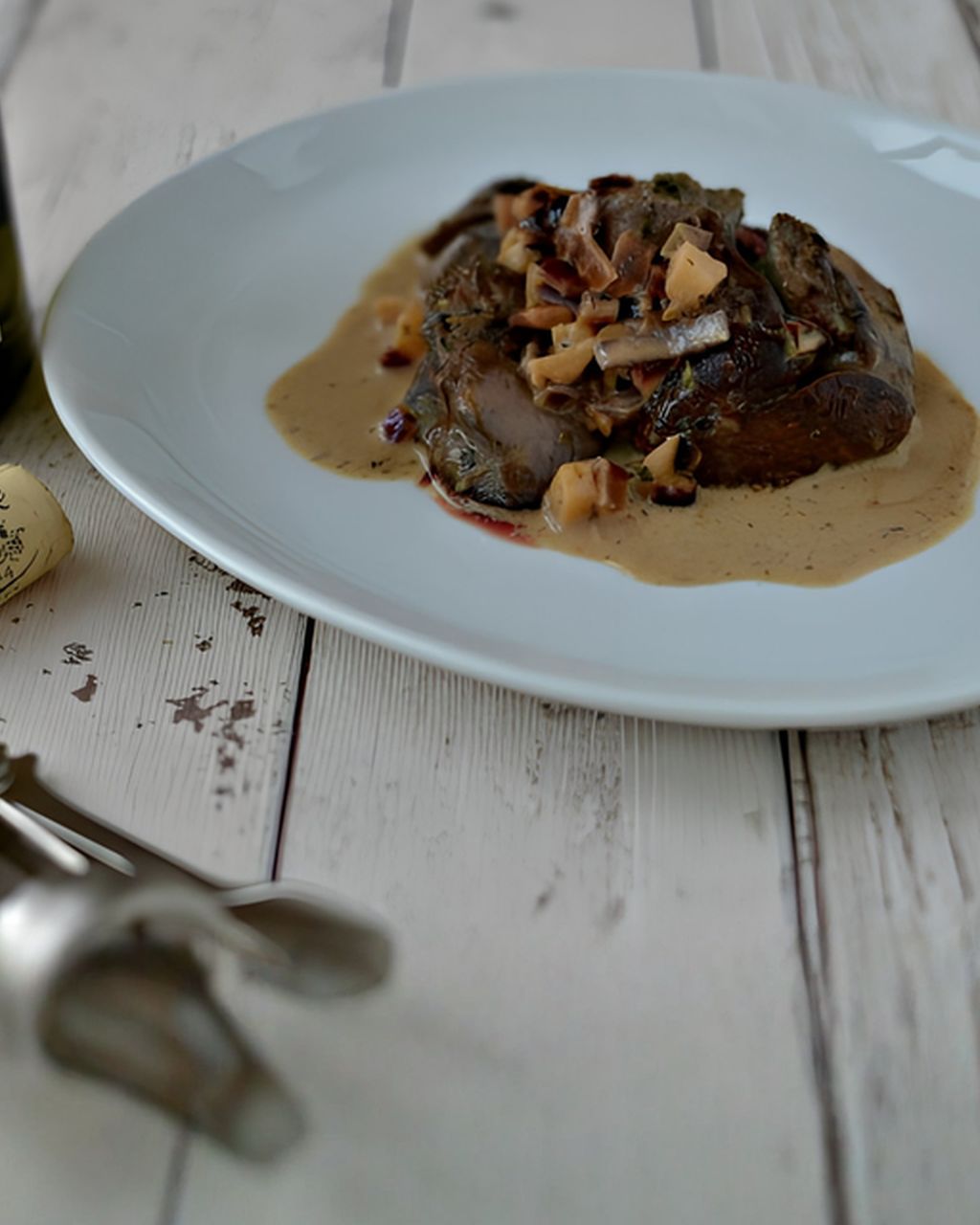
Chicken livers are best pan-fried quickly so the surface caramelises and the inside stays moist. Fry them over medium-high heat for about 4–6 minutes, turning often, until the centre reaches at least 70 °C for 2 minutes; the US USDA/FSIS gives 74 °C for poultry liver. Cut open, they must not be bloody inside and the juices should run clear. The Czech classics are poultry livers with onions or with marjoram, finished with a splash of water or stock and served with rice or potatoes. They can also be braised in wine, grilled on skewers or blended into pâté. Just do not sear them pink like a steak.
Chicken livers are small, tender and inexpensive poultry livers with a mild, creamy flavour, gentler than pork or beef liver. They are good pan-fried with onions, with marjoram or in pâté, and must always be cooked until the centre reaches at least 70 °C for 2 minutes, because they often carry Campylobacter bacteria. Each liver has two lobes and weighs roughly 30–50 g. They are sold fresh and frozen, usually already separated from the heart, sometimes with bits of fat or bile duct left on. Together with hearts and gizzards they make up poultry giblets.
Chicken livers have a rich, mildly earthy flavour, noticeably gentler than beef or pork liver and without much bitterness. Cooked well, they are velvety and almost creamy inside with a lightly caramelised surface. They go well with sweet onions, something sharp such as vinegar or apple, marjoram and warm spices. Overcooked, they turn grainy and dry.
4 min read
Fry chicken livers in hot fat over medium-high heat for about 4–6 minutes depending on size, turning them often. They are done when the centre reaches at least 70 °C for 2 minutes, they are no longer bloody inside and the juices run clear. A probe thermometer in the largest piece is the most reliable check.
For livers with onions, soften the onion first, then add the livers, brown them and add a splash of water or stock; let them finish under a lid for 2–3 minutes. Salt them only at the end. A step-by-step version is in our recipe for chicken livers with marjoram and in the article how to cook liver so it isn’t tough.
Chicken livers often carry Campylobacter bacteria, inside as well as on the surface. In studies of UK retail livers about 90% were contaminated internally, according to a review in Emerging Infectious Diseases (CDC, 2016). A quick sear in the pan is therefore not enough.
The UK Food Standards Agency (FSA) has repeatedly warned chefs about this: according to the Health Protection Agency, 11 of the 15 campylobacteriosis outbreaks reported from catering premises in 2010 were linked to poultry liver pâté or parfait. The livers had been only lightly cooked to keep them pink. The FSA advises cooking livers all the way through so the centre reaches 70 °C for 2 minutes, or an equivalent combination such as 75 °C for 30 seconds.
Food Standards Australia New Zealand adds that lightly searing the surface is not enough and that livers should never be bloody or look raw inside. Cut raw livers on a separate board and wash your hands, knife and board straight afterwards.
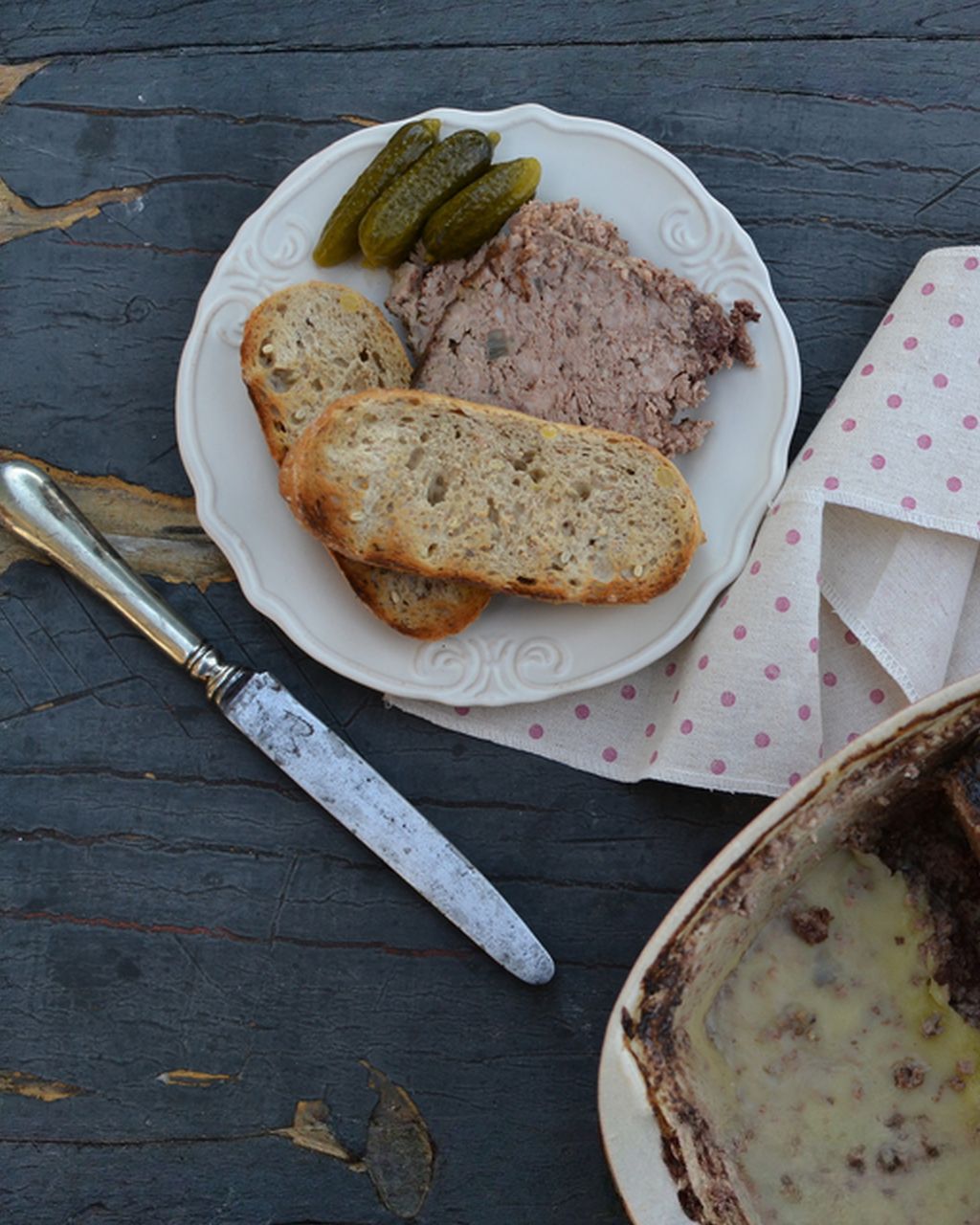
Chicken livers make excellent pâté: they are mild and cheap. It is only safe when the livers are cooked right through: first fry or braise them with onion until the centre reaches 70 °C for 2 minutes, and only then blend them with butter, cream or stock. The alternative is a terrine: the raw blended mixture goes into a tin and is baked in a water bath until the very centre of the tin reaches at least 70 °C for 2 minutes.
Pink, “silky” pâté made from seared livers is exactly the kind behind the Campylobacter outbreaks. Keep homemade pâté in the fridge at 0–4 °C and eat it within 1–2 days. For a version with chunks of meat, see our recipe for perfect homemade chunky pâté. Skip chicken liver pâté in pregnancy: the UK NHS advises pregnant women not to eat liver or liver products at all.
In Czech cooking, chicken and other poultry livers are most often cooked with onions or with marjoram and served with rice, potatoes or bread, and they are minced into pâtés and stuffings. French cooking turns them into smooth pâté and parfait with butter and cognac or Madeira. Ashkenazi Jewish cooking has chopped liver with schmaltz, caramelised onions and hard-boiled eggs. In Tuscany they are served on toasted bread as crostini toscani, and in Japan they are grilled on skewers as yakitori.
Liver has very little connective tissue, so its creaminess depends mostly on cooking it to the safe temperature and not much further. Cooked longer, the proteins tighten, squeeze out water and the liver turns grainy and dry. In a hot pan the Maillard reaction browns the surface and builds a roasted flavour. Freezing ruptures cell walls, so thawed livers release more liquid when fried; in pâté this does not matter.
Chicken livers are a by-product of poultry farming, so using them makes use of the whole bird. How the chickens lived still matters. Look for the EU organic leaf, the EU-regulated labels “free range” or “traditional free range”, or buy directly from farmers who describe their husbandry openly. It makes no difference to safety: free-range livers must be cooked through too.