- Season
- Autumn: they ripen in September, the main harvest is in October. Pre-cooked chestnuts and chestnut flour year-round.
- Price
- Medium
Calories and nutrition
per 100 g
174 kcal
Calories
2.8 g
Protein
34.3 g
Carbs
1.3 g
Fat
Chestnuts
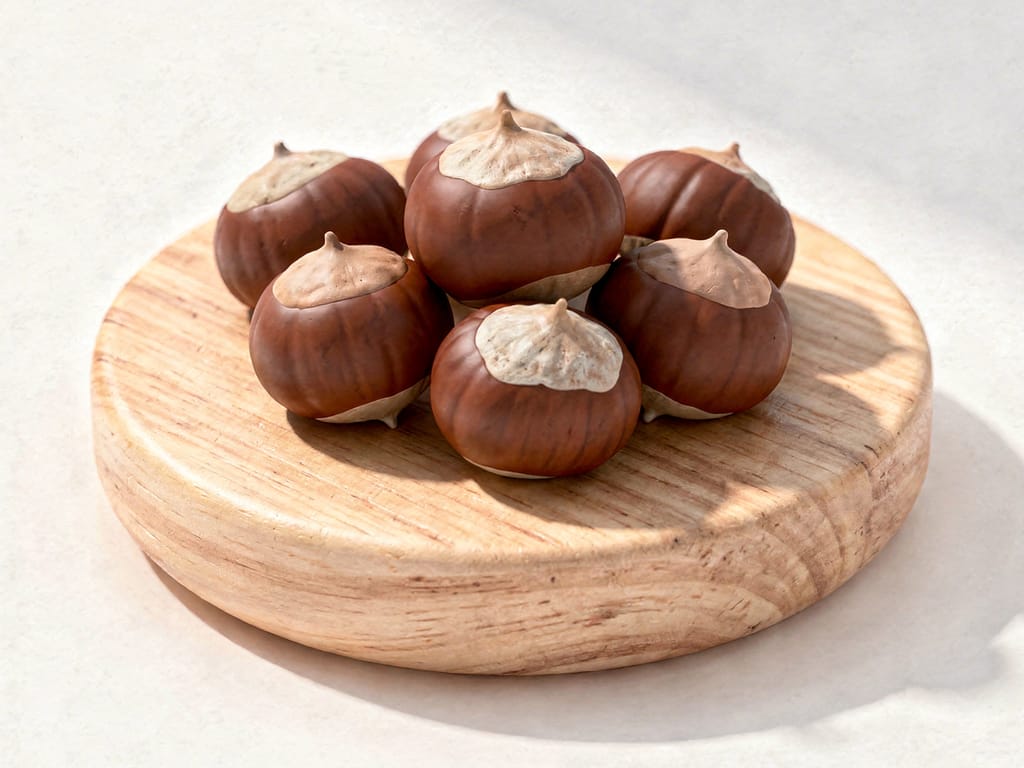
Sweet chestnuts are the nuts of the sweet chestnut tree (Castanea sativa), starchy and sweet once roasted, and they must be scored before roasting or boiling. Do not confuse them with the poisonous horse chestnut (conker) from parks.
per 100 g
174 kcal
Calories
2.8 g
Protein
34.3 g
Carbs
1.3 g
Fat
Raw chestnuts do not belong in the cupboard. They are high in water and at room temperature they dry out, harden and go mouldy. Put them in the fridge as soon as you get home.
Keep raw chestnuts in a perforated or loosely closed bag, ideally in the vegetable drawer, and use them within about 2 weeks. Store larger amounts in a net or paper bag; in closed plastic they go mouldy. Pick out any with mould or sprouts as you go.
Freeze raw chestnuts scored and in the shell, in bags or boxes. You can roast or boil them straight from frozen, without thawing.
Choose heavy chestnuts with glossy, taut shells free of holes, cracks and mould. A light chestnut with a loose shell is dried out inside. At home, throw away any that are dark, mouldy or musty inside.
Pre-cooked peeled chestnuts in vacuum packs. They taste similar and save the peeling; add them straight to soup, stuffing or cake.
Sweet potato or squash in soups and purées, hazelnuts in desserts. They taste different but bring similar sweetness and body.
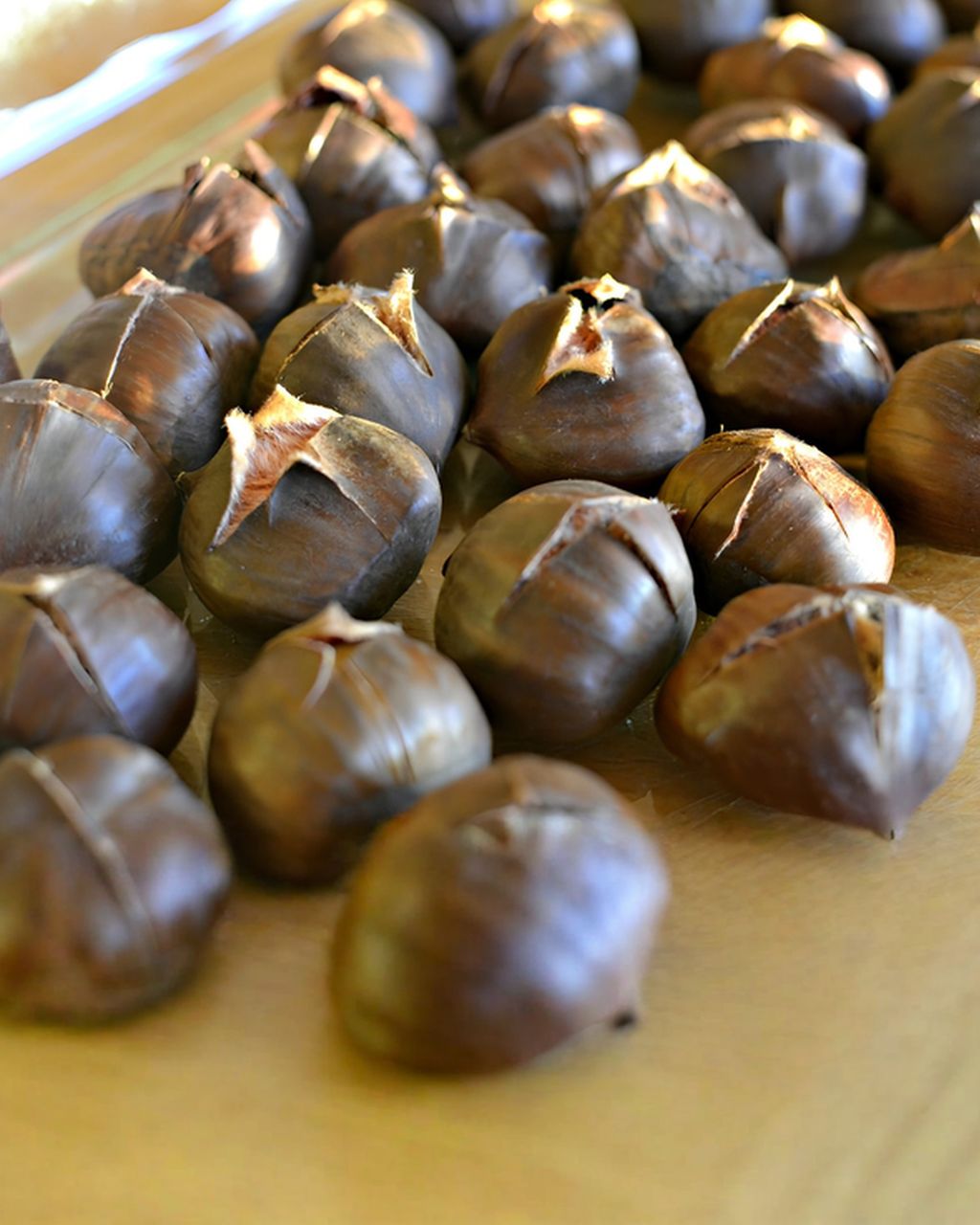
Score every chestnut first: lay it flat side down on a board and, on the domed side, cut through just the shell from edge to edge with a sharp knife, or cut a cross. An unscored chestnut bursts in the oven. Roast them in a single layer at 150–160 °C for 15–20 minutes, or boil them for 10–15 minutes. They are done when the shell opens at the cut and the kernel is soft. Peel them warm: wrap them in a towel for a few minutes, then remove both the shell and the brown skin.
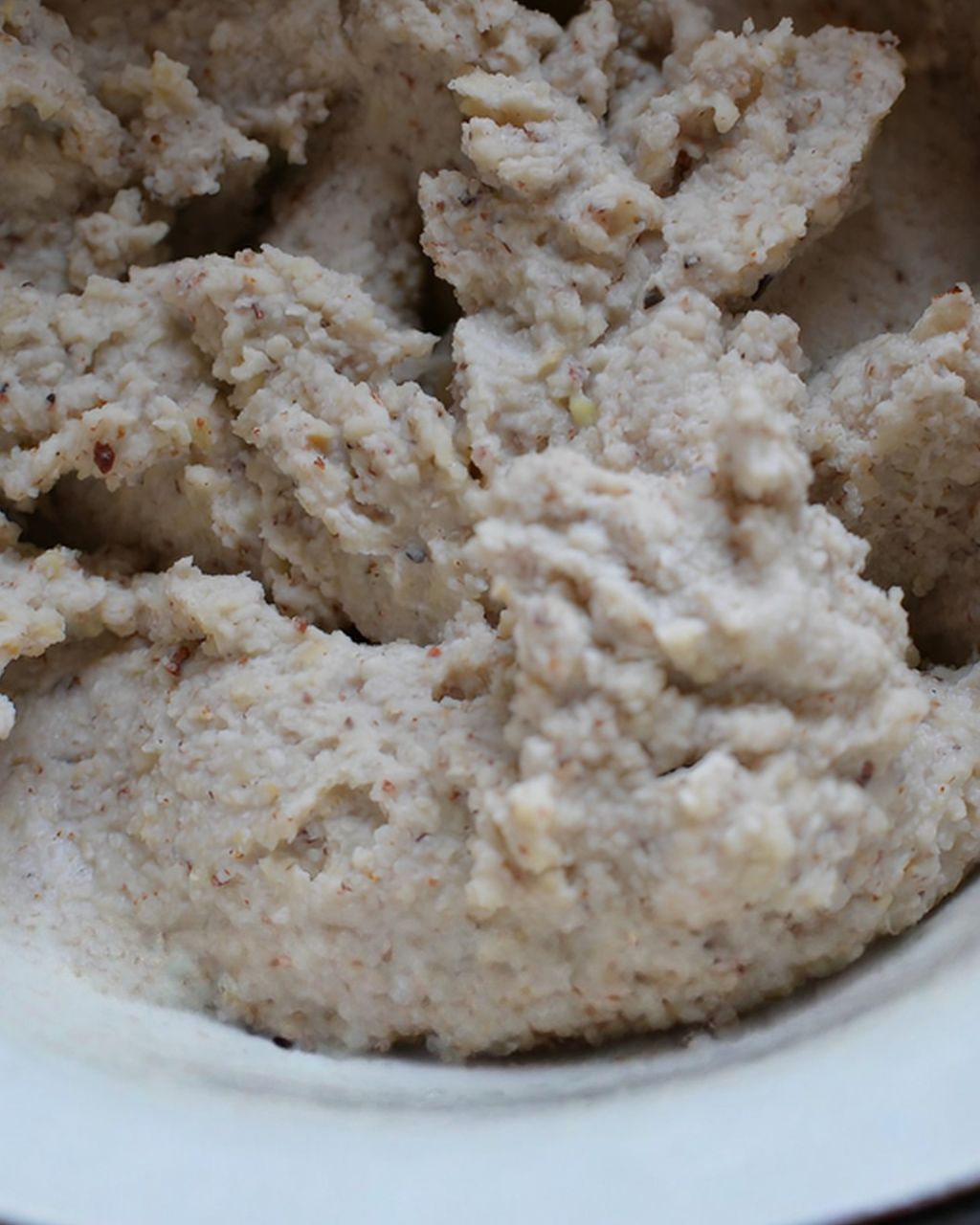
Compost the shells and skins. Blend leftover roasted chestnuts with stock into a purée or add them to soup or stuffing.
Roughly what a spoon or cup weighs, filled the way you usually would.
9.1 g
1 tablespoon
151 g
1 cup (250 ml)
The simplest way is to roast them in the oven and eat them warm with just salt. Boiled chestnuts are moister, so they suit purées, soup and stuffing for poultry. Peeled, they can be braised with meat and vegetables or sautéed with Brussels sprouts and bacon. For sweet dishes, blend them into a cake or cream; chestnut flour goes into doughs.
Sweet chestnuts are the nuts of the sweet chestnut tree (Castanea sativa). They grow two or three to a spiny burr, are glossy and dark brown, and under the shell sit in a thin bitter skin. Unlike other nuts they are high in water and starch and low in fat, so in the kitchen they behave more like potatoes. You can buy them fresh in the shell, mainly in autumn and winter, or pre-cooked and peeled in vacuum packs, ready to use. Dried and ground chestnuts make chestnut flour. The tree is grown mainly in southern Europe and western Asia; in Czechia it is planted in warm spots.
Roasted chestnuts are sweet, floury to creamy, with a gentle nutty flavour. Boiled ones are moister and milder. Raw ones are hard and astringent.
3 min read
Sweet chestnuts grow on the sweet chestnut tree. The "chestnut" from a park is almost always a horse chestnut (Aesculus hippocastanum), which is not edible. A sweet chestnut is smaller, flat on one side and has a tuft of hairs at the tip. Its burr is densely covered in fine spines like a hedgehog, with two or three nuts inside. A horse chestnut is large and round, with a wide pale scar and no tip, and its case has sparse short spikes.
Horse chestnuts contain the saponin aescin and irritate the gut; roasting or boiling does not make them edible. Chestnuts sold at markets and in shops are always sweet chestnuts; take care when you gather them yourself. More differences are in our guide edible chestnuts: how to roast, boil and store them. If a child eats a horse chestnut, call your poison information centre.
Score the chestnuts through the shell and roast them in a single layer at 150–160 °C for 15–20 minutes, as University of Illinois Extension advises. Larger and fresher ones need the longer time. They stay moister roasted slowly at 120 °C for 20–30 minutes with a little water in the tin. A tested step-by-step method is in our recipe for roasted chestnuts.
For boiled chestnuts, add them to boiling water and cook for 10–15 minutes; steaming takes the same time. Lift them out a few at a time and peel them while warm. Once they cool, the brown skin sticks to the kernel again.
Raw chestnuts belong in the fridge, not the cupboard. The University of Missouri Center for Agroforestry gives about 0 °C as ideal and use within about two weeks. Keep them in a perforated bag so they do not sweat, and check them.
For longer, freeze them raw and scored in the shell, then roast or boil them straight from frozen. Store pre-cooked vacuum-packed chestnuts as the pack says.
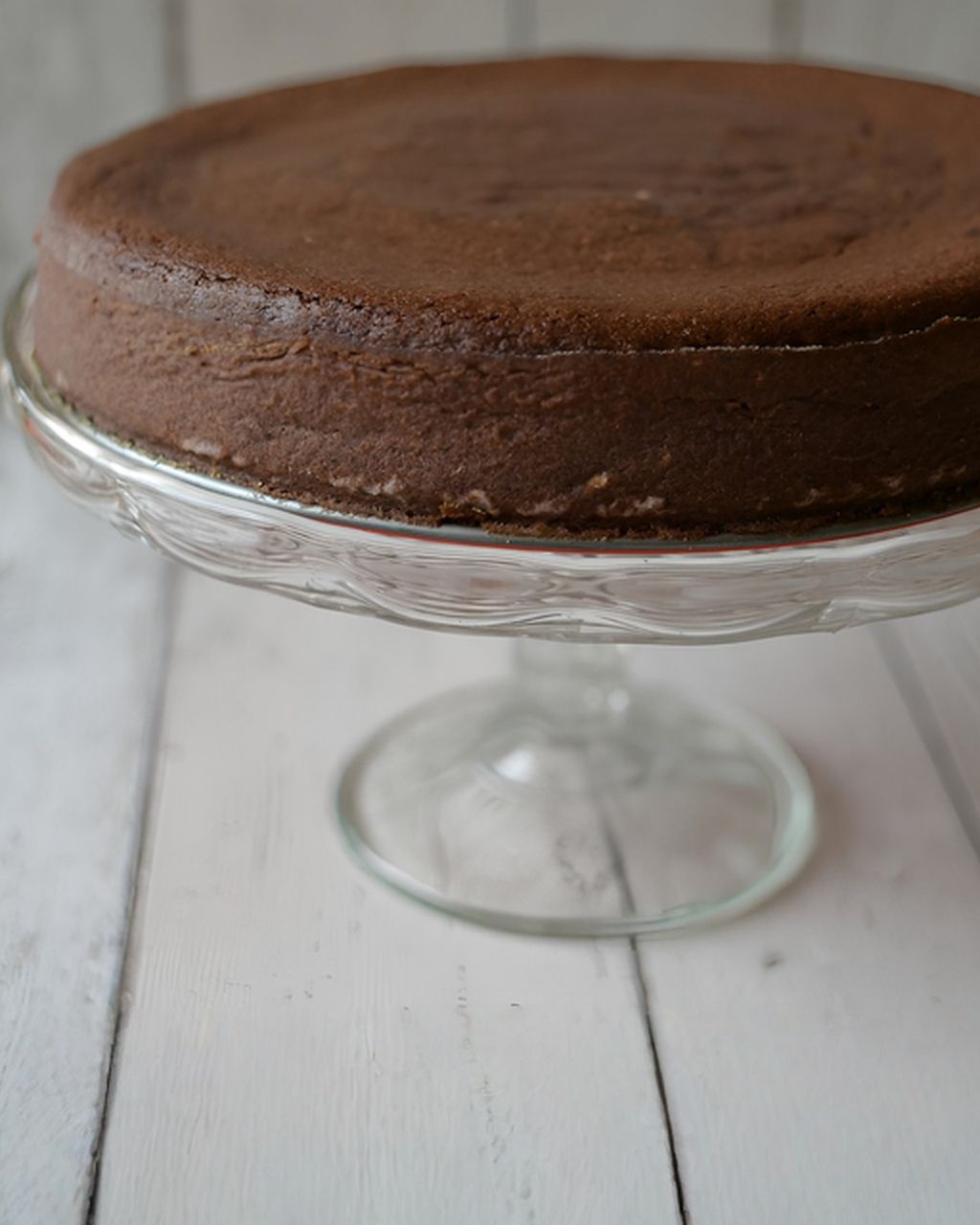
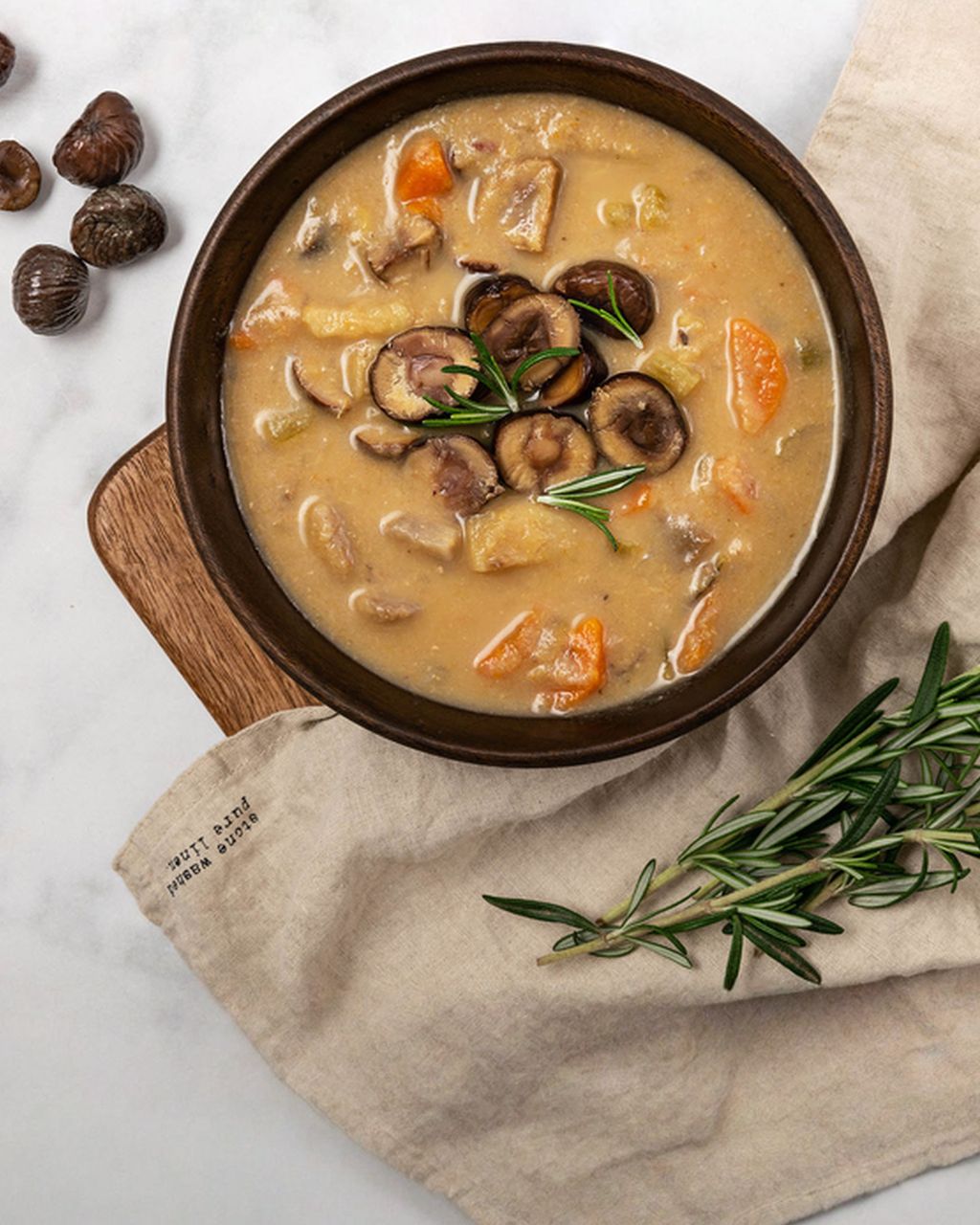
Boiled chestnuts make a thick chestnut vegetable soup, chestnut filling goes with roast poultry, and for something sweet there is chocolate chestnut cake. In southern Europe chestnuts are also eaten with vegetables, meat, butter and cheese, or as chestnut purée with game.
EU allergen labelling rules name eight tree nuts: almonds, hazelnuts, walnuts, cashews, pecans, Brazil nuts, pistachios and macadamias. Sweet chestnuts are not among them, so producers do not have to emphasise them as an allergen. If you have a nut allergy, ask your allergist about chestnuts.
People with a latex allergy often also react to banana, avocado, kiwi and sweet chestnuts, and cooking does not reliably help here. More in our guide to cross-reactive allergies.