Slow-roasted honey duck – juicy and crispy
What to Cook Instead of St. Martin's Goose: 7 Swaps by Headcount
Updated Sep 17, 2026
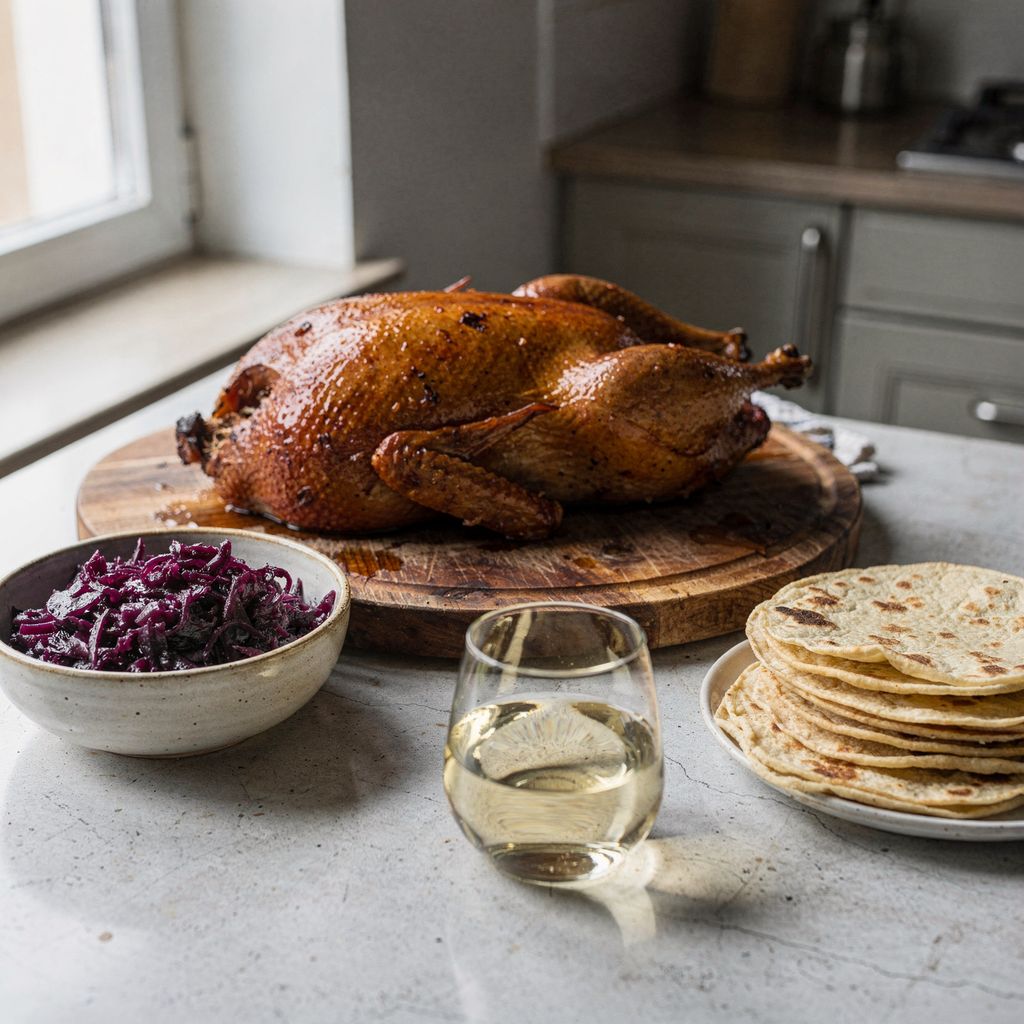
The easiest swaps for St. Martin's goose are duck, goose breast, turkey legs or a simple roast chicken — and if you're cooking for two, one confit goose leg is plenty. Goose isn't the only right answer for November 11th, just the priciest and most demanding one: a four-kilo bird ties up your oven for five hours and feeds 5–6 people, which is brilliant for a big gathering and overkill for Sunday lunch for three. Below are seven alternatives, ranked from closest in flavour to furthest, with how much meat to allow per person and what temperatures to hit so nothing ends up dry.
There are seven good ways to swap out St. Martin's goose — ranked here from closest in flavour to furthest:
Duck (2–2.5 kg) — the closest substitute. Same rich, fatty skin, same deep dark-meat flavour, an hour less in the oven. Feeds 3–4 people (2 kg for three, 2.5 kg for four).
Goose breast or legs — genuine goose flavour in a portion for 2–4 diners. Breast is done in an hour, legs in 2–2.5 hours — versus five hours for a whole goose.
Turkey legs — the most meat for the least money. The choice when you're cooking for six or more.
Turkey breast — the lean option for anyone who finds goose too rich. Needs a thermometer, or it dries out.
Roast chicken (1.5–1.8 kg) — the cheapest and quickest option, on the table within 90 minutes.
Slow-roast pork — for when someone at the table doesn't eat poultry.
Roast celeriac or hokkaido squash — a meat-free main that can carry exactly the same side dishes.
What really decides this isn't cost, but headcount and time. A 4kg goose needs 4–6 hours of slow roasting and feeds 5–6 people; cook it for three and you'll spend the whole day tied to the oven, then spend the next day wondering what to do with the leftover half.
Per adult, allow 700–800g raw goose, 600–700g duck, 400–450g chicken, 350–400g bone-in turkey leg, or 180–200g boneless breast. The differences are big because each bird has a different ratio of meat to bone and fat.
Goose: 700–800g per person → a 4kg goose feeds 5–6 people
Duck: 600–700g per person → a 2kg duck feeds 3, a 2.5kg duck feeds 4
Chicken: 400–450g per person → a 1.6kg chicken feeds 4
Bone-in turkey leg: 350–400g per person → a 1.4kg leg feeds 3–4
Boneless breast (goose, turkey): 180–200g per person
Pork shoulder or neck: 250–300g per person
Of all poultry, goose gives you the worst yield. Besides the carcass, half a litre or more of rendered fat cooks out of it — which is why a stunning four-kilo bird ends up putting surprisingly little meat on the plate. Don't throw the fat away, though: it's the best fat there is for potato lokše pancakes, for roast potatoes, and for dressing cabbage, and it keeps in the fridge for months.
Don't apply the same maths to boneless breast as you would to bone-in meat. Two 400g goose breasts give you four decent portions, because they're sliced on the diagonal and served fanned out with sauce — not plated as one solid piece.
Duck is the closest substitute for St. Martin's goose — it has the same rich, fatty skin, the same dark, punchy meat, and roasts about an hour faster. A 2.5kg duck feeds four, a 2kg duck feeds three — and both fit in a standard roasting pan, which isn't always true of goose.
The method only differs from goose in the timings:
Prick the skin, don't cut it. Use a knife tip or fork to prick just the fat layer under the skin over the breast and legs — don't go through into the meat, or the juices will escape.
Salt it the day before. Dry-salting (about 10g salt per kilo) draws moisture out of the skin, which then browns faster and more evenly in the oven.
Roast slow and covered. 140–150°C, 3–4 hours, with 2cm of water or stock in the base of the pan. Allow 4–6 hours for a whole goose.
Baste off the fat as you go. Ladle it out every hour — otherwise the meat ends up frying rather than roasting.
Uncover and finish. For the final 15–20 minutes, go uncovered at 200–220°C until the skin turns golden and starts to crackle.
The leg is done at 85–88°C at the core. Below that, dark duck and goose meat is still chewy even though it's long past food-safe — that last ten degrees is exactly what it takes to melt the collagen.
For reliably crisp skin, let the duck rest for 20 minutes after roasting before carving. The juices redistribute back through the meat, so they won't just pour out onto the board when you cut into it.
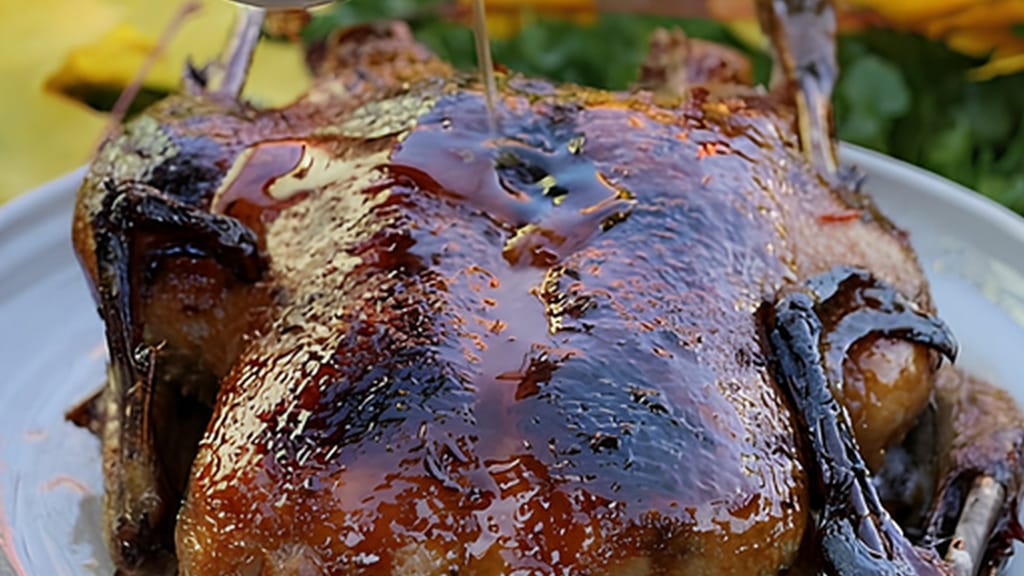
Slow-roasted honey duck – juicy and crispy
Slow-roast honey duck — crisp skin and juicy meat instead of St. Martin's goose
Turkey is the best goose substitute when you're cooking for six or more — one 1.2–1.5kg turkey leg feeds three to four people for a fraction of the cost of goose, and two legs fit comfortably in a single roasting pan.
Turkey legs are dark meat with plenty of collagen, so they behave much like goose: they want a long, slow roast. Go for 150°C for 2.5–3 hours, covered, with a little liquid in the base, aiming for a core temperature of 83–85°C. At the end, uncover and let the skin go golden at 210°C for 15 minutes.
Turkey breast is the opposite case, and the most common source of disappointment. It's lean, has virtually no collagen, and dries out fast above 78°C. Pull it from the oven at 72°C at the thickest point and let it rest for 15 minutes — residual heat will carry it to a food-safe 75°C on its own. It also helps to slide slices of butter or duck fat under the skin, to give the breast the fat it's lacking. And if it does end up overcooked, you can still rescue it: slice it thinly against the grain and warm it briefly through in hot stock or gravy.
The classic mistake is roasting a whole turkey as if it were a small goose. On a whole bird, the breast is done well before the legs — by the time the leg hits its 85°C, the breast has long since dried out. That's why, with turkey, it's better to buy the pieces separately rather than a whole bird.
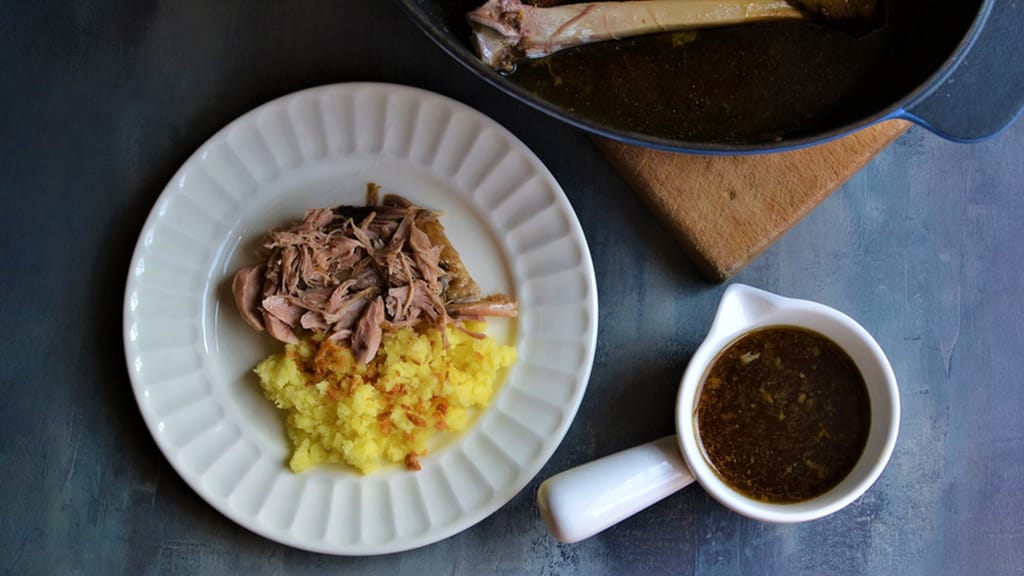
Slow-roasted turkey legs in beer
Turkey legs slow-roasted in beer — a cheap swap for St. Martin's goose when feeding a crowd
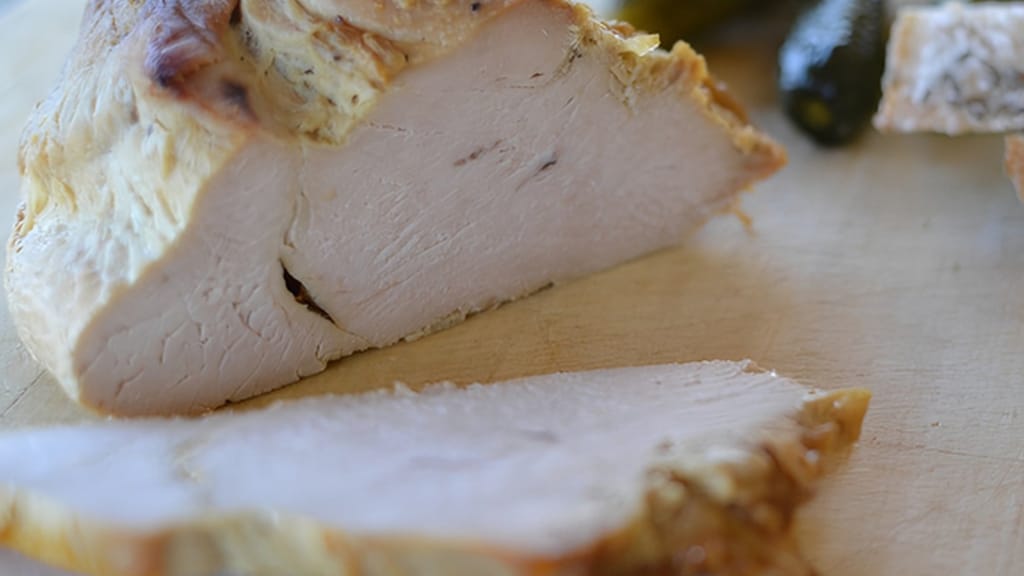
Slow-roasted turkey breast
Slow-roast turkey breast — the lean option for when goose feels too rich
Goose breast and legs taste exactly like a whole goose, cost a fraction as much, and the breast is done in an hour — no need to buy the whole bird. Goose legs take longer, 2–2.5 hours of slow roasting, but that's still half the time of a whole goose.
Goose breast is cooked like duck breast — as a steak, not a roast:
Score the skin in a crosshatch about 1cm apart — through the fat only, not the meat.
Place it skin-side down in a cold pan, then turn the heat on to low. The fat needs to render slowly, over 8–12 minutes, or the skin will burn before the fat has melted.
Pour off the rendered fat into a bowl as you go (save it for lokše pancakes).
Flip, cook 2 minutes on the meat side, then finish in a 180°C oven to a core temperature of 58–62°C.
Rest for 10 minutes and slice thinly on the diagonal.
Goose legs go the opposite route: slow, at 150°C, covered, for 2–2.5 hours, to 85°C at the core. The easiest option is confit — slow-cook the legs submerged in their own fat the day before, then just crisp them up in a hot oven on the day. It's the ideal portion for two, and most of the work is done in advance.
Small bonus: you can use the goose neck, wings and giblets to make kaldoun, the traditional St. Martin's soup, even if you don't have a whole bird.
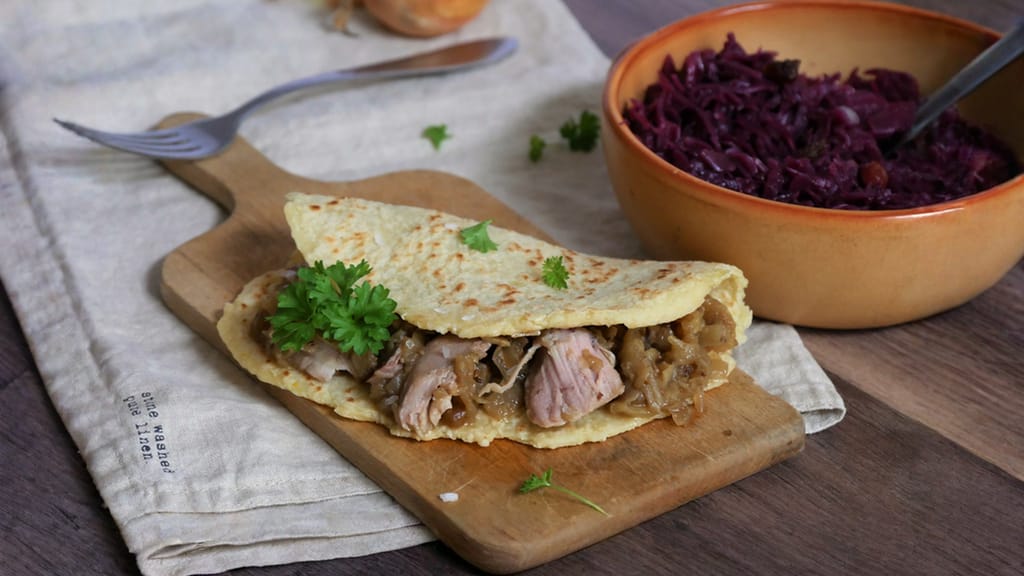
Goose breast on apples with potato lokše
Goose breast with apples and potato lokše pancakes — a whole St. Martin's plate sized for two
Roast chicken is the cheapest and fastest alternative to St. Martin's goose — a 1.5–1.8kg chicken roasts in 70–90 minutes at 190–200°C and feeds four people. If you're deciding at the last minute, this is your answer.
Chicken is lean compared to goose, so you need to add fat back in. The best way is to rub softened butter mixed with marjoram and salt under the breast skin — it melts slowly and protects the meat exactly where it dries out first. If you've got last year's goose or duck fat stashed away, use that instead for a result closest to the original.
In numbers: leg to 82–88°C, pull the breast from the oven at 72°C and rest the chicken for 10 minutes — residual heat carries the breast to a food-safe 75°C on its own, same as turkey. For crisp skin, leave the chicken uncovered in the fridge overnight — the air dries out the skin, which then browns better in the oven than skin that's still damp from the packaging.
And it doesn't have to be just a plain chicken. For a more festive result, roast it directly on top of the side dish: sitting the chicken on pasta or vegetables lets the juices drip down and gild the side as it cooks — you get your main and your side from one roasting pan.
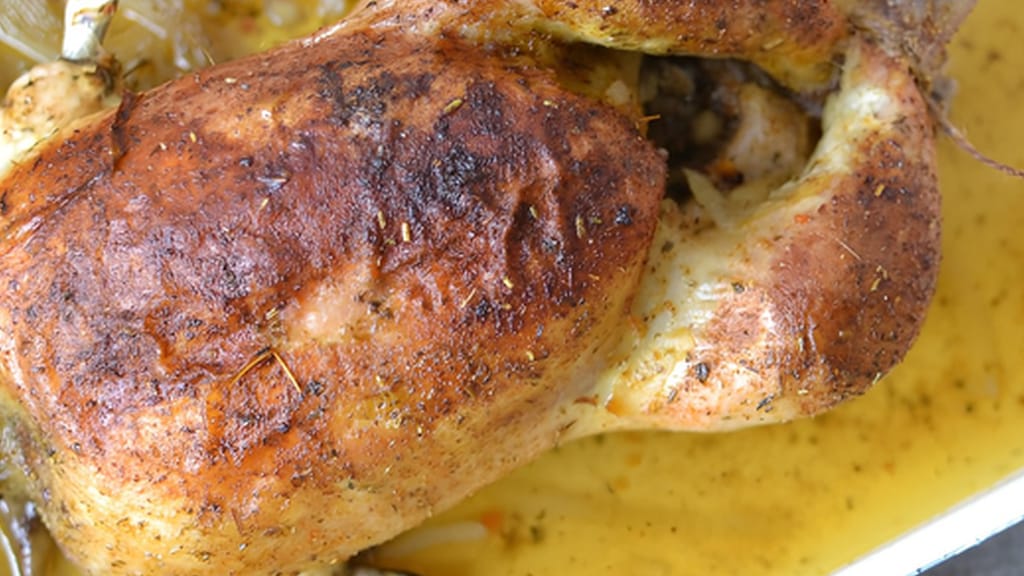
Roast chicken – impressive results, minimum effort
Low-effort roast chicken — a festive lunch instead of goose in ninety minutes
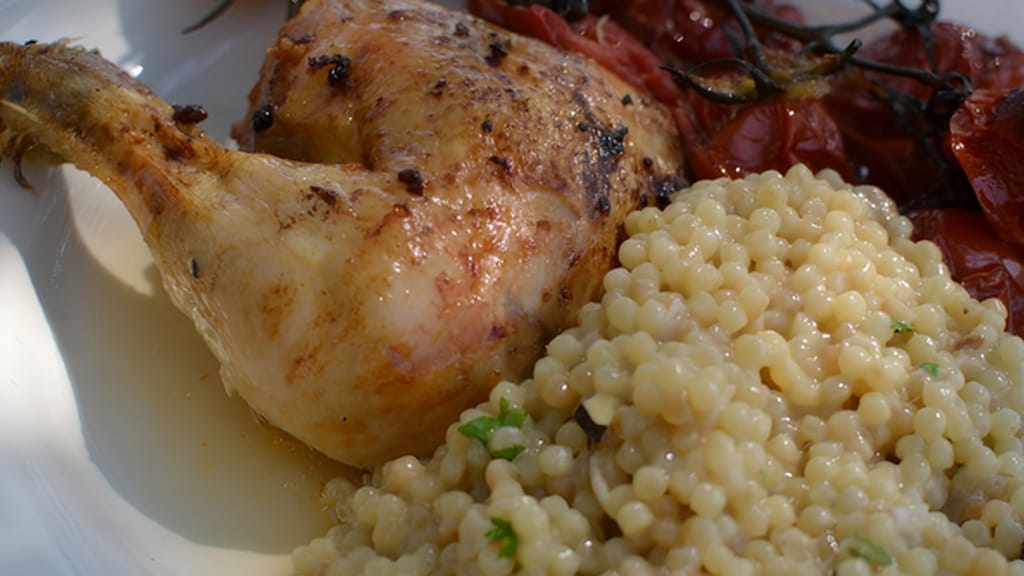
Roast chicken with creamy mushroom tarhonya
Roast chicken with mushroom tarhonya — main course and side from a single pan
Slow-roast pork neck or shoulder is the best goose substitute for a table where poultry is a no-go — it has the same rich, fatty flavour, pairs with the same sides, and looks after itself in the oven.
Allow 250–300g of raw meat per person and roast at 130–150°C for 4–5 hours. The target temperature here is different from poultry — you want 90–95°C at the core, well above the food-safe minimum. Only at that point does the collagen in the shoulder break down into gelatine and let the meat pull apart with a fork.
Pork neck with the skin on can even get that final crackle — the last 20 minutes uncovered at 230°C, with the skin scored in a crosshatch and salted coarsely. Served with red cabbage and dumplings, it's practically indistinguishable from the festive experience goose is roasted for.
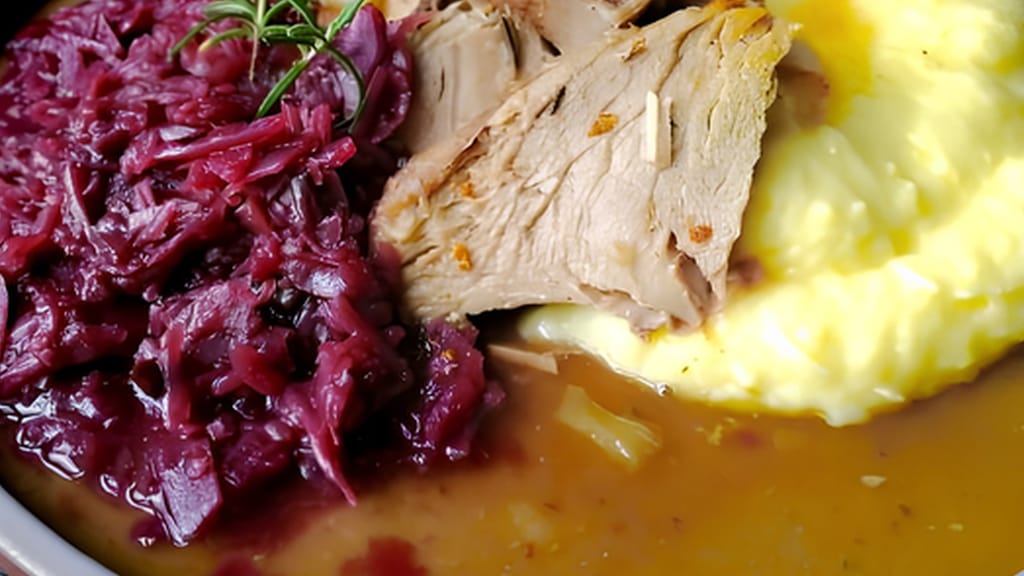
Slow-roasted pork with red cabbage
Slow-roast pork with red cabbage — a festive roast without the poultry
The best meat-free St. Martin's main is a whole roast celeriac bulb or a hokkaido squash — both roast at 190–200°C for about 60–75 minutes and both have enough natural sweetness and body to carry red cabbage, dumplings and a dark gravy — exactly what makes a St. Martin's plate a St. Martin's plate.
Celeriac: a 700–800g bulb is a main course for two; for four, roast two bulbs. Roast it whole, unpeeled, then slice into thick rounds like a roast.
Hokkaido squash: a 1.2–1.5kg squash feeds three to four. Simply halve it, scoop out the seeds, and roast cut-side down; don't peel the skin — it's soft and edible.
You'll know it's done by the knife test — it should slide through the centre with no resistance. Both can go in the oven alongside your sides, and both hold up on the table just as long as a roast, since they don't dry out as quickly as lean meat.
The same gravy that goes with poultry works with both — just build it on a mushroom or vegetable stock instead of pan drippings. Anyone who wants something crunchy on the plate can add toasted walnuts or pumpkin seeds.
You don't need to change the sides — red cabbage, dumplings and lokše pancakes work just as well with duck, turkey, chicken or roast celeriac as they do with goose. The St. Martin's feel comes more from the sides than from which bird sits in the middle of the table.
Braised red cabbage — its acidity cuts through the richness of the roast. It can be made two days ahead and is actually better the next day.
Lokše pancakes — traditionally brushed with goose fat. If you're roasting chicken or turkey, use duck fat or clarified butter instead; plain oil tastes flat here.
Bread or potato dumplings — the classic that soaks up the pan juices.
Mashed potato — the fastest option when there's no time for dumplings.
Watch out for one thing: if you roast leaner meat (turkey breast, chicken), you'll be left with very little pan juice for gravy. To fix this, scatter chopped onion, carrot and a clove of garlic under the meat in the roasting pan — they caramelise and give you a base for gravy that would otherwise come from goose fat.
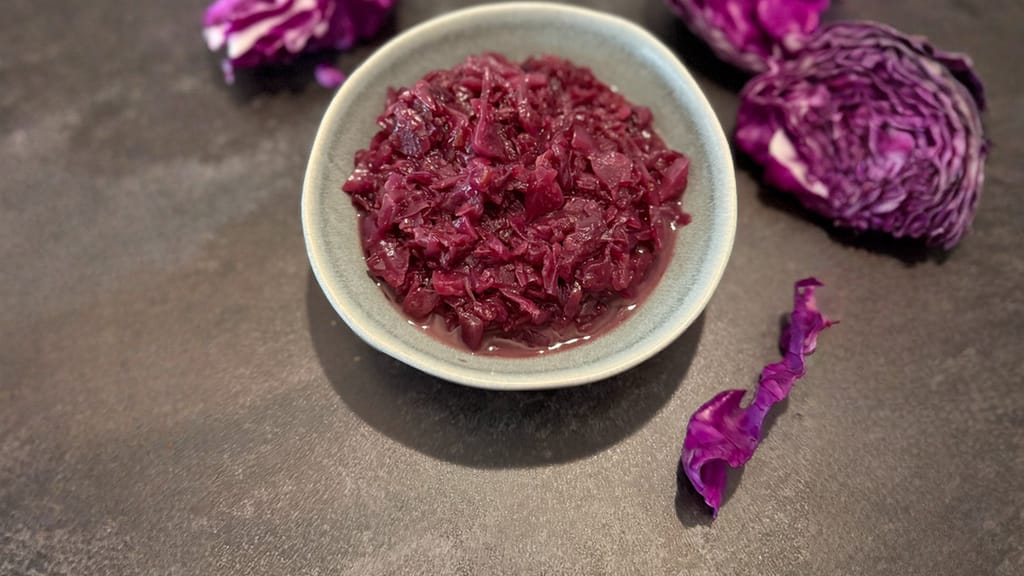
Sweet and sour braised red cabbage
Sweet-and-sour braised red cabbage — the side that cuts through the richness of any festive roast
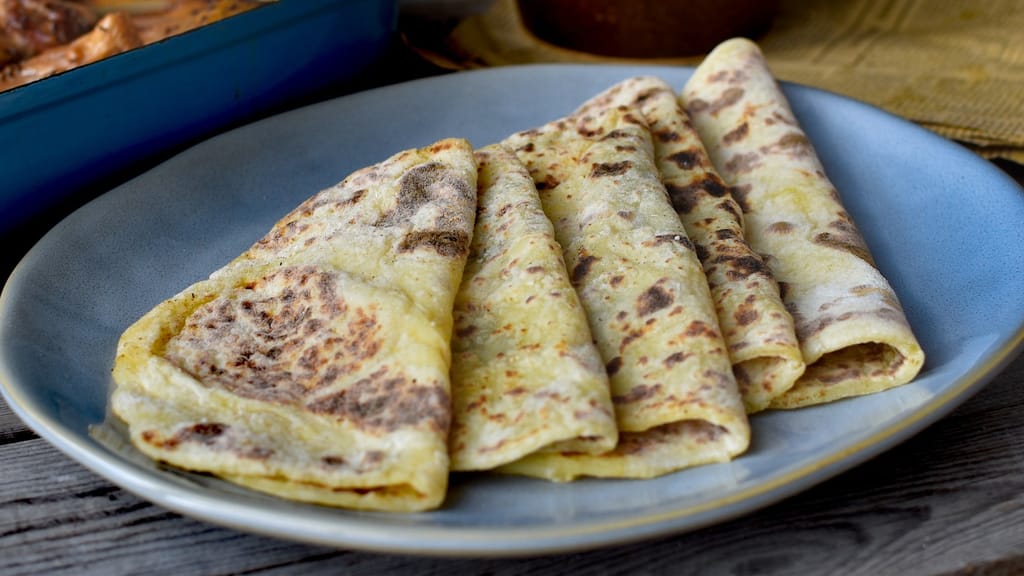
Lokše - savory potato flatbreads
Lokše — potato pancakes that belong with a St. Martin's roast just as much as dumplings do
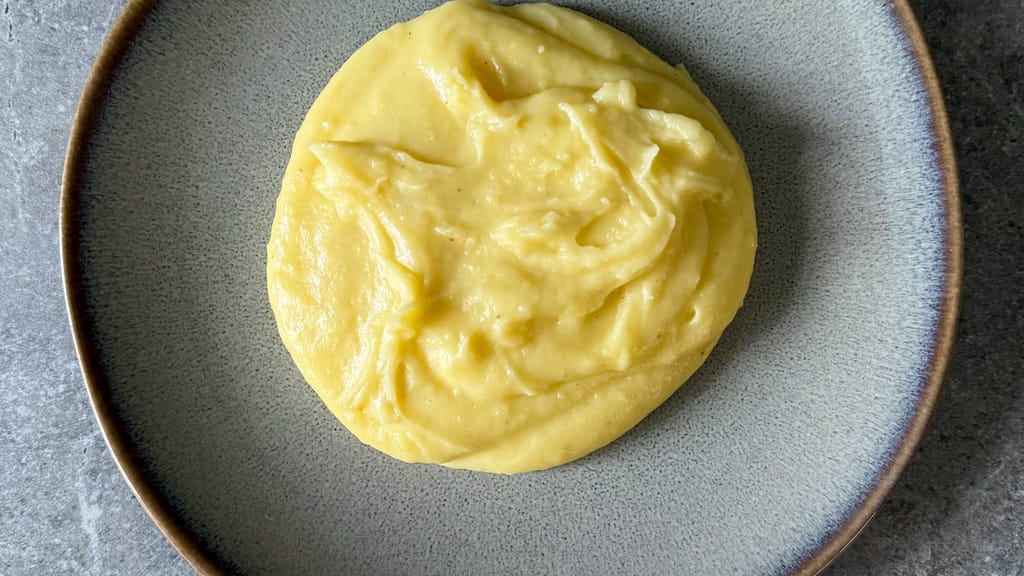
Silky smooth creamy mashed potatoes with nutmeg
Smooth mashed potato with nutmeg — a quick side instead of dumplings
Not at all — the tradition of November 11th is built around the date and the first young wine of the vintage, not one specific bird on the roasting tray. Goose is the best-known pairing thanks to the legend of St. Martin, who was given away by geese cackling, but duck has long been roasted just as commonly in Czech and Slovak homes on St. Martin's Day, simply because it's cheaper and fits in a smaller roasting pan. St. Martin's wine gets opened at 11am regardless of what's in your oven.
Yes, but plan the thawing well ahead — a whole frozen duck or goose needs 24 to 48 hours in the fridge, a turkey leg around 24 hours, and a whole chicken roughly 24 hours too. As a rule of thumb, allow about a day for every two kilograms. Always thaw on a plate in the fridge, never at room temperature and never in hot water. Poultry that goes into the oven thawed on the outside but still icy in the middle cooks unevenly — and that's exactly how you end up with dry breast meat and an undercooked leg.
You can do most of the work on a St. Martin's roast the day before and just crisp it up on the day itself. Roast the meat until tender, let it cool whole, and store it in the fridge along with the pan juices; the next day, pop it back in a 210°C oven for 20–30 minutes to heat through and re-crisp the skin. This works even better with confit legs and with red cabbage, which actually tastes better the next day than fresh.
The closest match to goose fat is duck fat, followed by pork lard, then clarified butter. All three handle high heat well and give lean meat the fat it's otherwise missing — allow roughly 30–50g per kilo of meat, rubbed under the breast skin. Plain sunflower oil will stop the meat drying out, but it won't add any flavour, so the result ends up merely roasted rather than festive.
With richer poultry (duck, goose breast), reach for a St. Martin's Saint Laurent or Blauer Portugieser; with leaner meat (turkey, chicken), go for Müller Thurgau or Moravian Muscat. Young St. Martin's wines are light and fresh, so they work more as a counterpoint to the fat than as a heavy pairing wine. Pork roast with red cabbage suits the same wines as goose — something with good acidity to cut through the richness.
One recipe worth heating the oven for, one tip, and one deal from the shop. Nothing else.