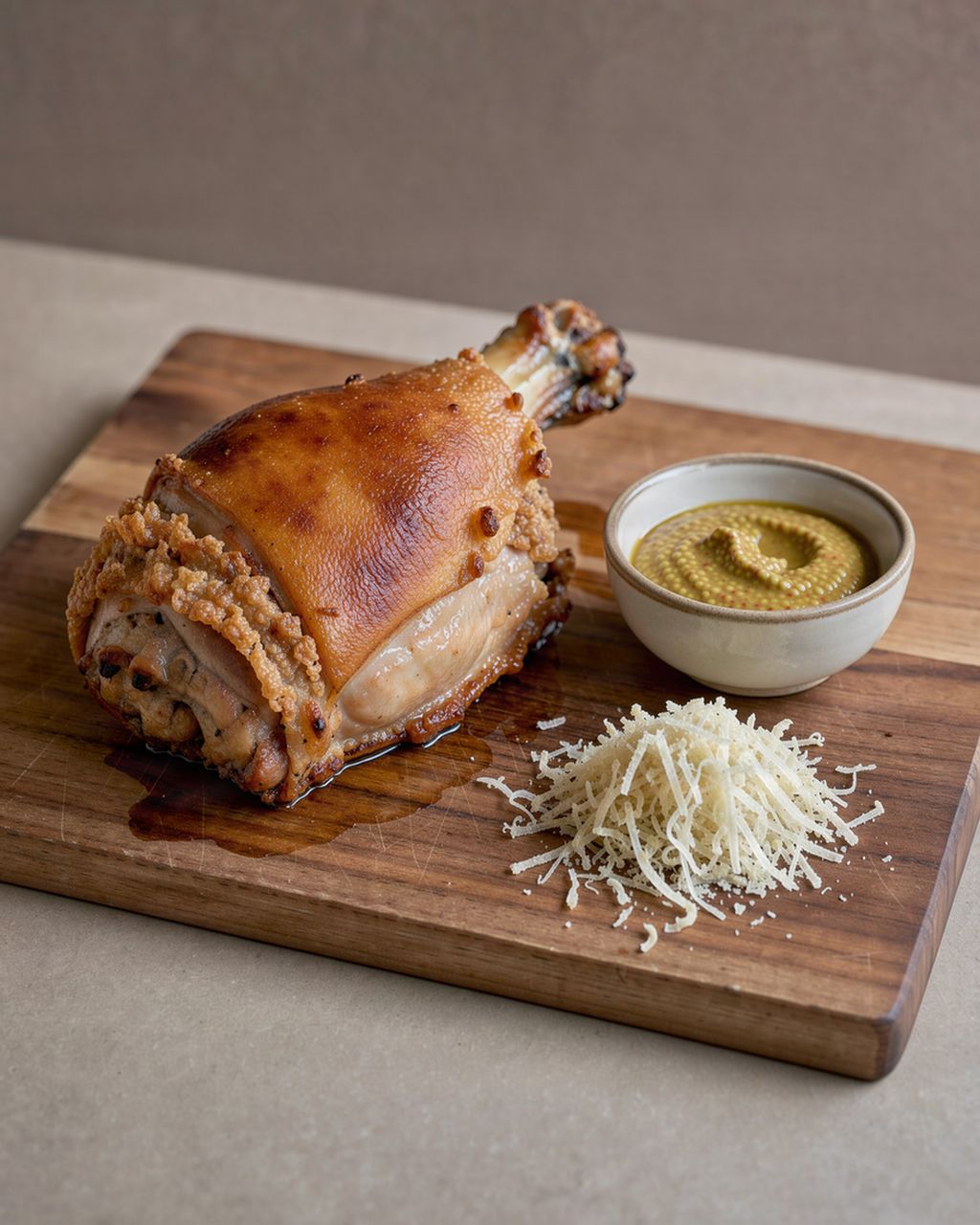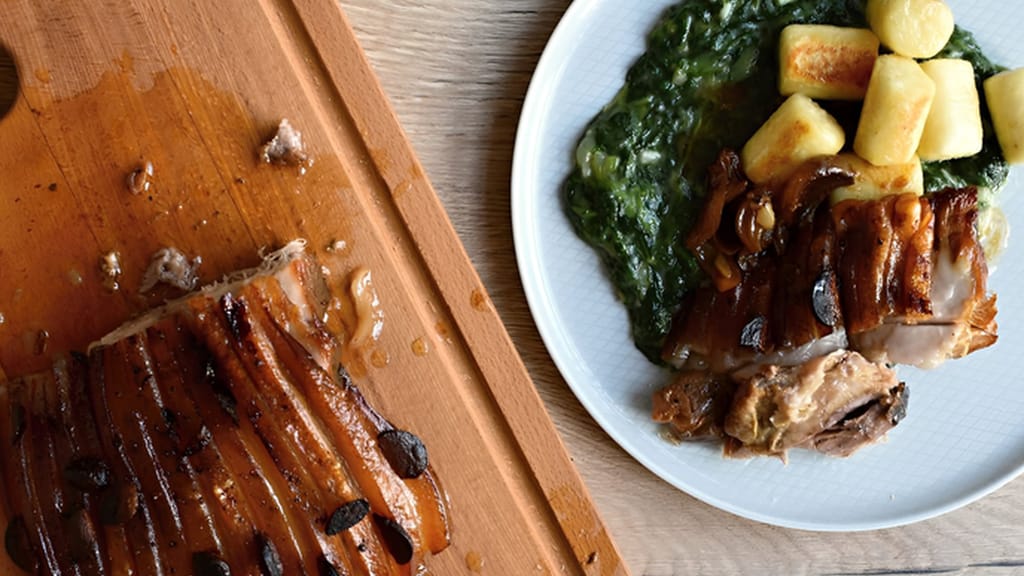
Crispy roast pork belly with homemade potato gnocchi and spinach
Oven-Roasted Pork Belly: What Temperature and How Long for Crackling That Shatters
Updated Nov 17, 2026
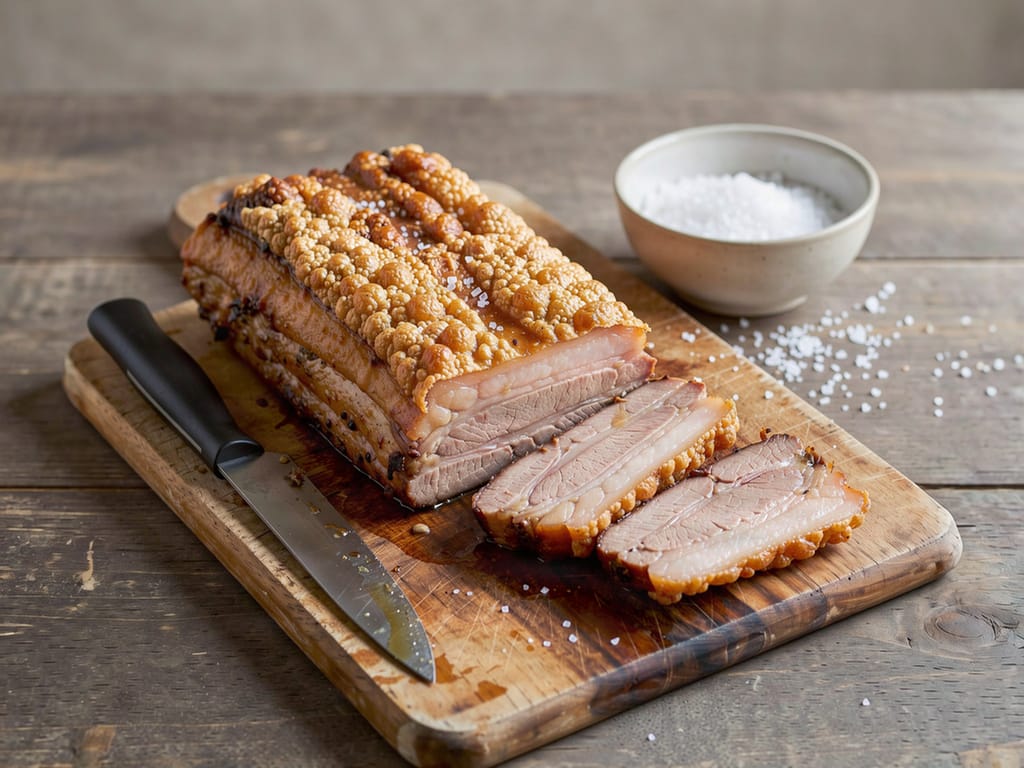
You roast pork belly in two stages: first low and slow at 150–160°C (300–320°F) for about 1–1.5 hours per kilo (2.2 lb) until the meat is tender, then 15–25 minutes at 220–230°C (425–450°F), when the skin puffs up and crackles. But the result also depends on what you do beforehand: score the skin properly, salt it and leave it to dry out overnight. Here's the whole method, why it works and what to do if the crackling still turns out rubbery.
Roast pork belly at two temperatures: 150–160°C (300–320°F) to tenderize the meat, then 220–230°C (425–450°F) for the crackling. One temperature isn't enough – at a low heat the skin won't crisp, and at a high heat it burns before the fat underneath has rendered and the meat has relaxed.
Stage 1 – slow roasting: 150–160°C (300–320°F) (10–20°C lower with a convection fan) until the meat is easy to pierce.
Stage 2 – final blast: 220–230°C (425–450°F) for 15–25 minutes, until the skin puffs up into bubbles.
Why it works: pork belly is about half fat and connective tissue. Collagen turns to gelatin only after a long time in moderate heat, hence the slow stage. The skin needs the opposite – a short, fierce blast of heat that flashes off the leftover water in it and puffs it up like popcorn.
Seasonal baking plans, tested recipes and kitchen tricks that save you time. Unsubscribe in one click.
Allow roughly 60–90 minutes per kilo (2.2 lb) in the slow stage, plus 15–25 minutes of final high heat. A thin slab (3–4 cm) is usually done sooner, a thick piece (5–6 cm or more) takes longer.
1 kg (2.2 lb): about 1–1.5 hours at 160°C (320°F) + 15–20 minutes at 230°C (450°F)
1.5 kg (3.3 lb): about 1.5–2 hours at 160°C (320°F) + 20 minutes at 230°C (450°F)
2 kg (4.4 lb): about 2–2.5 hours at 150–160°C (300–320°F) + 20–25 minutes at 230°C (450°F)
Time is only a guide; tenderness is what counts: a fork or skewer should slide into the meat without resistance. If you have a thermometer, pork belly is pleasantly tender at around 85–90°C (185–195°F) inside – that temperature is about the texture of the meat, not safety. The minimum safe temperature for whole cuts of pork according to USDA/FSIS is 63°C (145°F) inside, followed by at least 3 minutes of rest, so pork belly roasted until tender will always clear it with a wide margin.
After taking it out, let the meat rest uncovered for 10–15 minutes – foil would steam the crackling.
Score the skin with a sharp knife in a grid or in strips 1 cm (about ½ in) apart, cutting only through the skin into the fat, not into the meat. Then salt it and leave it uncovered in the fridge to dry out.
Scoring: a thin-bladed knife, a utility knife or a razor blade works best. In the heat, the skin spreads open along the cuts and fat runs out through them – that's why the skin fries from underneath in its own fat. If you cut all the way into the meat, juices run out and the meat dries out along the cuts.
Salt: pat the scored skin thoroughly dry with a paper towel, sprinkle it with coarse salt and rub it into the cuts. Salt draws water out of the surface, so it has to go on the skin before drying, not right before roasting. Season the meat on the underside separately – caraway, garlic, pepper – and put only salt on the skin, as spices would burn at the end.
Drying: leave the salted pork belly uncovered in the fridge overnight (at least 8–12 hours), skin side up. Moisture is the biggest enemy of crackling. According to USDA/FSIS, raw pork keeps 3–5 days in the fridge, so an extra night is no problem – more in our article on how long pork keeps in the fridge.
Tip: if you like, scald the skin with boiling water right after scoring and before salting. The cuts open up and the skin then puffs up better. So the order is: score → scald if you like → dry → salt → leave overnight in the fridge. After salting and drying, don't scald the skin again, as you'd wash off the salt and make it damp again.
For crisp crackling, the skin must be uncovered, dry and on top at the end of roasting – the surest way is to roast the pork belly uncovered, skin side up, the whole time. Covering it (with a lid or foil) turns roasting into braising – the meat is juicy, but the skin goes soft, so pork belly may be covered at most at the start.
The classic Czech method has two variants and both work:
The dry route (surest crackling): pork belly skin side up, with a little water (1–2 cm) in the bottom of the roasting pan so the fat doesn't scorch. You don't baste the skin. Water is topped up only at the bottom.
The wet route (most tender meat, an exception to the rule): score, salt and dry the belly overnight just as for the dry route. For the first hour, roast it skin side down in a little water, under a lid. Then turn it skin side up, pat the skin thoroughly dry with a paper towel and finish roasting uncovered. Don't salt the skin again – the salt has already dried it out in the fridge. The skin is soft and will puff up at the end, but it has to be dry again before the blast of heat.
Whichever you choose, never baste the skin with the pan juices at the end. And get it level – if the slab sits crooked, the fat runs to one spot and the skin there stays soft. Prop up the lower side with crumpled foil or a piece of onion.
Once the meat is tender, pour most of the pan juices into a bowl (for gravy or for dunking bread), raise the oven to 220–230°C (425–450°F) and roast for 15–25 minutes. The skin should puff into tiny bubbles and turn golden.
Get the pan juices out of the bottom – steam from the liquid makes the skin damp.
Put the pork belly on the upper third of the oven, closer to the top element.
Watch the last 5 minutes. There are only a few minutes between "crisp" and "burnt", especially at the edges.
Cover any edges that darken too fast with a strip of aluminum foil.
If the meat is done but the skin is rubbery, switch on the top broiler (grill) and put the pork belly under it for 5–10 minutes. Stay by the oven and watch – a broiler can burn the skin within a minute.
If that doesn't help, you have two rescue routes:
Take the skin off and finish it separately. Cut it off with a knife, lay it skin side up on a baking sheet, salt it and put it at 230°C (450°F) or under the broiler until it puffs up. Meanwhile the meat rests under loosely laid foil.
Pan-sear slices. Cut the pork belly into thick slices and sear them skin side down in a dry, hot pan. The skin fries in the fat that renders out of it.
And for next time: crackling most often fails because the skin wasn't dry, the pork belly sat crooked and the fat pooled in a puddle, or you basted it. A night in the fridge and a level position will help.
With poultry the physics is similar, but the skin is thinner. You'll find how in our article on how long and at what temperature to roast duck for crispy skin, and for goose in the guide why roast goose is tough and the skin isn't crisp.
Roast pork belly calls for a sour side to balance the fat – red cabbage, pickled vegetables or bread with mustard. To see the whole method in practice, go to the recipe for crispy roast pork belly with homemade gnocchi and spinach. A classic Czech plate pairs well with, for example, sweet-and-sour braised red cabbage.
If you want pork belly cooked some way other than in the oven, try Asian-style grilled pork belly.
Crispy roast pork belly with homemade potato gnocchi and spinach
Crispy roast pork belly with homemade gnocchi and spinach
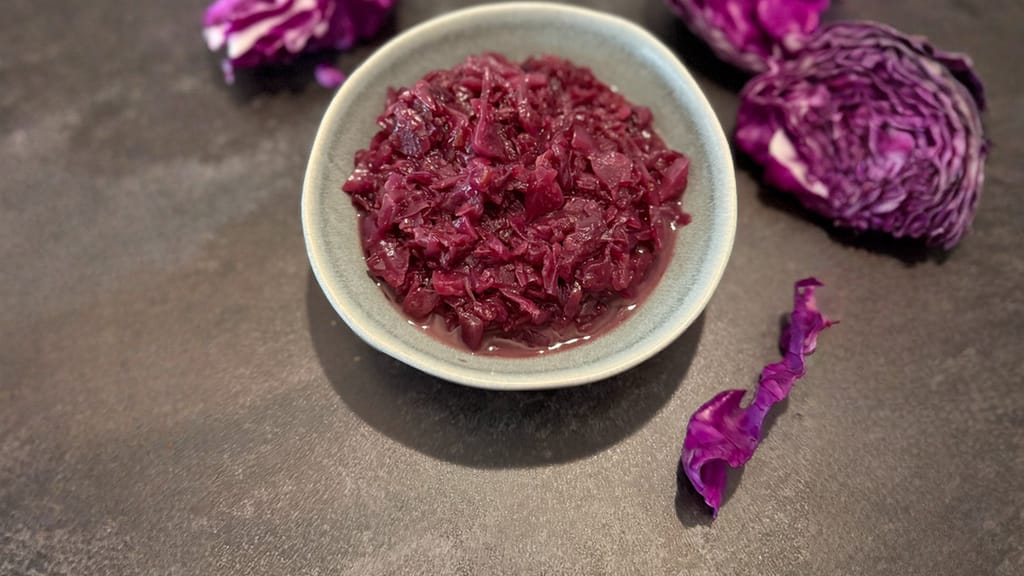
Sweet and sour braised red cabbage
Sweet-and-sour braised red cabbage as a side for roast pork belly
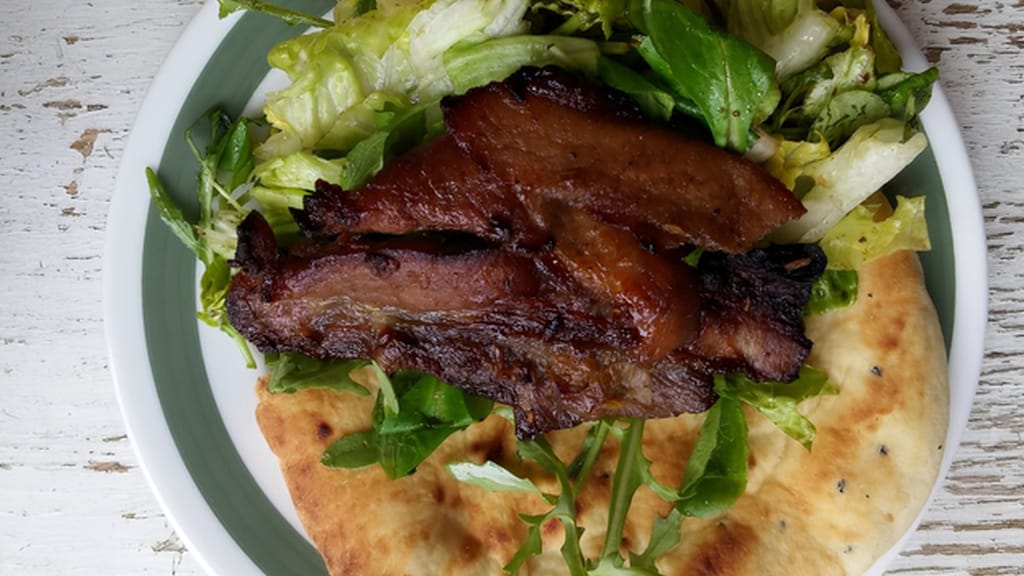
Grilled asian-style pork belly
Asian-style grilled pork belly
Put roasted pork belly in the fridge within 2 hours at room temperature (within 1 hour if it's above 32°C / 90°F) – that's what USDA/FSIS states. In the fridge it then keeps 3–4 days according to USDA/FSIS, and in the freezer 3–4 months at good quality.
Reheat it until it's hot all the way through – USDA/FSIS recommends 74°C (165°F) inside for leftovers. You can bring the crackling back to life in the oven at 200–220°C (400–425°F) uncovered, or in a dry pan skin side down. The microwave turns it rubbery.
For a main course, allow about 250–300 g (9–10 oz) of raw skin-on pork belly per person. Pork belly loses a lot of weight in the oven as the fat renders out and the water evaporates, so far less ends up on the plate. With hearty sides like dumplings and sauerkraut, the lower amount is enough.
No. Salt, caraway and garlic rubbed into the meat on the underside, plus just salt on the skin, is enough. A wet marinade on the skin does harm, because it makes the skin damp. If you do want to marinate the meat, brush it on only the underside and sides and keep the skin dry.
Choose skin-on pork belly, bone-in or boneless, at least 3–4 cm (1.2–1.6 in) thick, with even layers of meat and fat. The skin should be intact and free of bristles. A flat slab roasts more evenly than a curled piece.
Without overnight drying, scald the skin, dry it thoroughly, salt it and leave it uncovered in the fridge for at least an hour. Score the skin first, then scald it with boiling water and pat it dry with a paper towel, and only then salt it. In the slow stage, roast the belly uncovered so the skin keeps drying out in the oven.
Pork belly curls because the skin shrinks in the heat faster than the meat underneath. Scoring the skin more closely and weighing the slab down or propping it up with aluminum foil will keep the skin level so it cooks evenly.
One recipe worth heating the oven for, one tip, and one deal from the shop. Nothing else.