Homemade smoked salmon with gnocchi
Updated Sep 5, 2026
Smoked meat keeps in the fridge at 0–4°C (32–39°F) for roughly 3–5 days if it's raw and needs cooking, and 3–4 days if it's already cooked or otherwise heat-treated. Vacuum-packed smoked meats will hold for two to three weeks according to the date on the pack, but the moment you open it, the same short clock starts ticking as with everything else. Salt, nitrites and smoke only slow spoilage down — they don't stop it. Below you'll find a clear table of timeframes, an explanation of why the raw-versus-cooked distinction matters most with smoked meat, and how to store it so it lasts as long as possible.
Smoked meat keeps in the fridge at 0–4°C (32–39°F) for 3–5 days if it's raw and needs cooking, and 3–4 days if it's cooked.In more detail, by type:
Raw smoked meat (needs cooking) — pork collar, hock, belly, shoulder, rolled shoulder: 3–5 days whole
Cooked or otherwise heat-treated smoked meat (including anything you've cooked at home): 3–4 days
Sliced deli-counter smoked meats (ham, smoked belly, streaky slices): 2–3 days
Vacuum-packed, unopened: according to the date on the pack, typically 2–3 weeks
Vacuum-packed after opening: 3 days, but never past the use-by date — whichever comes first
Shelf-stable fermented products (Poličan, hunter's sausage, dried sausages): unopened 4–8 weeks per the date on the pack; once cut into, 2–3 weeks
Cold-smoked fish after opening (salmon, trout): up to 2 days
These timeframes assume the meat got home quickly and cold, was stored whole, and packed the way I describe further down. Every hour spent in a bag in a hot car eats into that window. And if the label says Use by, the manufacturer's date always beats any general rule of thumb.
Raw smoked meat meant for cooking keeps in the fridge for 3–5 days, cooked smoked meat only 3–4 days — the deciding factor is whether the meat has been through a heat process that kills bacteria.Czech-style "smoked meat" is actually two quite different categories of food, and they need to be stored differently.
Raw smoked meat meant for cooking keeps in the fridge at 0–4°C (32–39°F) for 3–5 days when left whole. Once sliced, it has a much bigger surface area for bacteria to get going on, and lasts roughly half as long.
The classic smoked meat you buy from the butcher for a cabbage soup or lentils is, in fact, raw meat. It's been through curing and either cold or hot smoke, but not a heat process that actually cooks it. That's why you need to cook it before eating — and why it behaves in the fridge much like raw pork, just a bit more forgiving, since salt and nitrites make life harder for bacteria.
> Practical tip: buy smoked meat as a whole piece and slice it only right before cooking. The difference in shelf life is noticeable, and it costs you nothing.
Cooked and heat-treated smoked meat keeps in the fridge at 0–4°C (32–39°F) for 3–4 days — the same window as any other ready-to-eat cooked dish. This covers ham, smoked belly, sausages, headcheese, and your own home-cooked collar too.
Boiling kills the everyday bacteria, but not their spores — those survive cooking and start growing again as the meat cools slowly. That's exactly why you should cool cooked smoked meat quickly and get it into the fridge within two hours: don't let the pot sit cooling on the stove all evening, transfer the meat to a smaller, shallower container instead.
The other route to spoilage is fresh contamination. From the moment you lift the meat out of the pot or unwrap it, bacteria from your hands, the cutting board and the air land on it — and on cooked, moist, sliced meat, they multiply happily.
Bacteria multiply fastest between roughly 4°C and 60°C (40–140°F) — this range is known as the danger zone. The warmer it gets, the faster it happens: at room temperature, bacteria numbers can double in as little as twenty minutes, while in the fridge that takes hours — which is why a few extra degrees eat into shelf life more than you'd expect. The difference between a fridge running at 4°C and one running at 8°C isn't "a few degrees" — it's half the shelf life.
So why 0–4°C rather than just "in the fridge":
EU food safety rules (Regulation (EC) No 853/2004) require chilled meat to be kept at no more than 7°C (45°F), and minced meat at as little as 2°C (36°F) — but those are distribution limits, not a target for your home fridge.
On smoked meat packaging you'll most often see store at 0–5°C (32–41°F). If your fridge doesn't hold that, the manufacturer's stated shelf life no longer applies.
Cold doesn't stop spoilage, it only slows it down. Listeria monocytogenes keeps growing even near freezing (down to about −0.4°C/31°F), so even a perfectly set fridge isn't a guarantee.
Salt, sodium nitrite and phenolic compounds from smoke all put up a fight against this: salt reduces available water, nitrite suppresses clostridia growth, and smoke has proven antimicrobial and antioxidant effects. But with Czech-style smoked meat, which has a high water content, that's still not enough to let it sit safely outside the fridge — unlike genuinely dry-cured salami, which relies on exactly that effect.
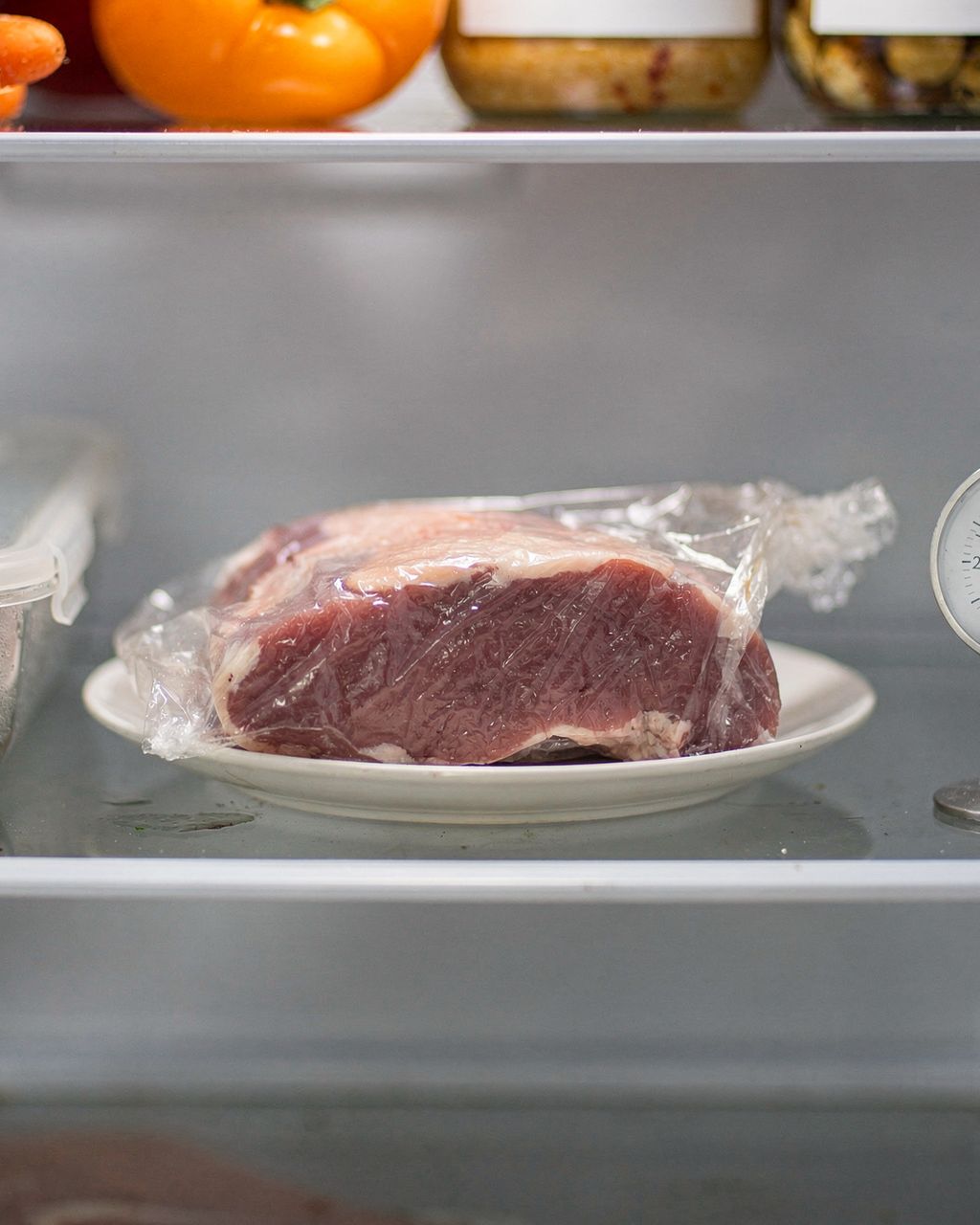
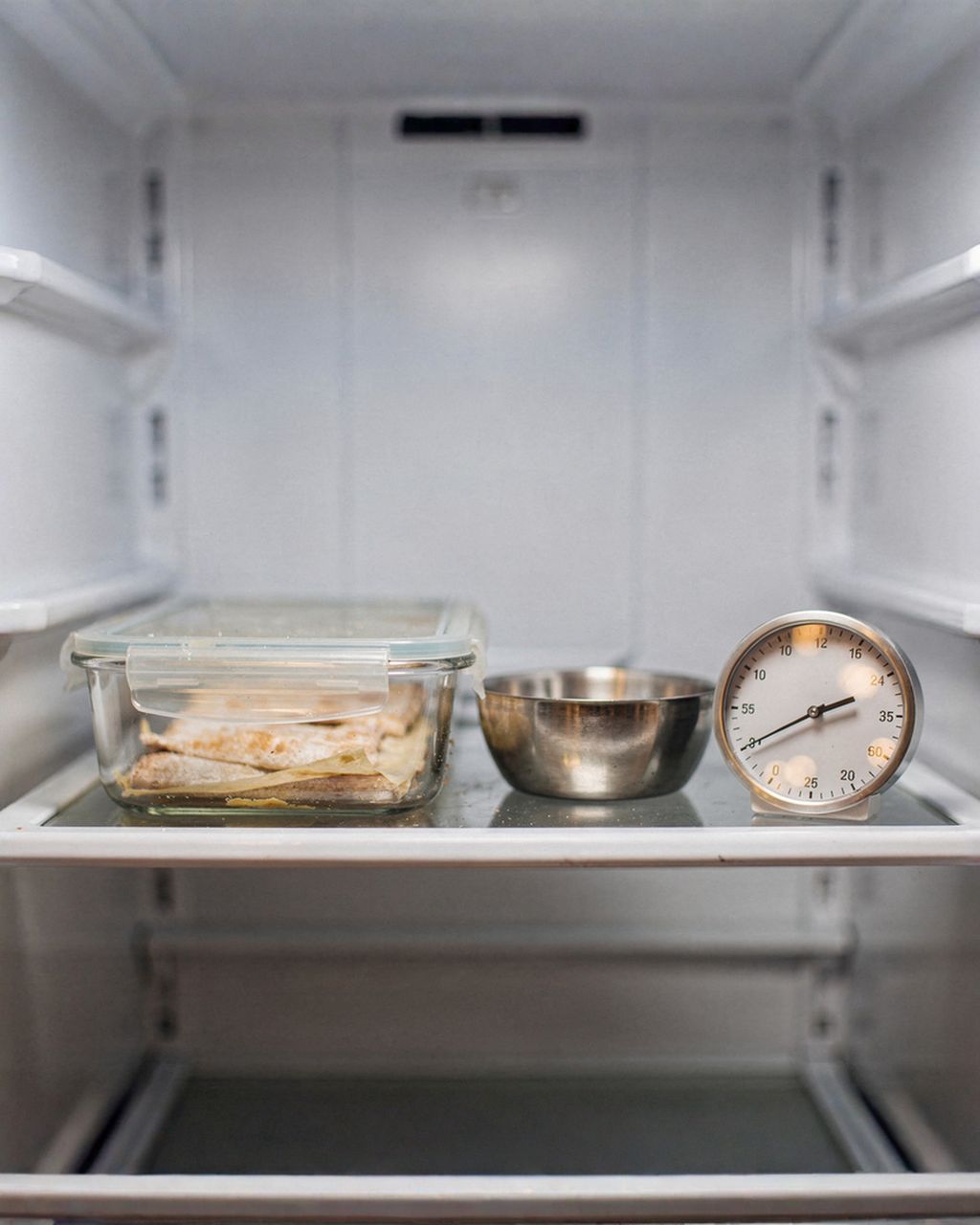
Actually check your fridge's temperature. A cheap fridge thermometer is the only real way to know; the dial setting is just a setting, not a measurement. Smoked meat belongs on the bottom shelf, just above the vegetable drawer or in the coldest zone — that's where it's coldest. Not in the door, where the temperature spikes every time it's opened.
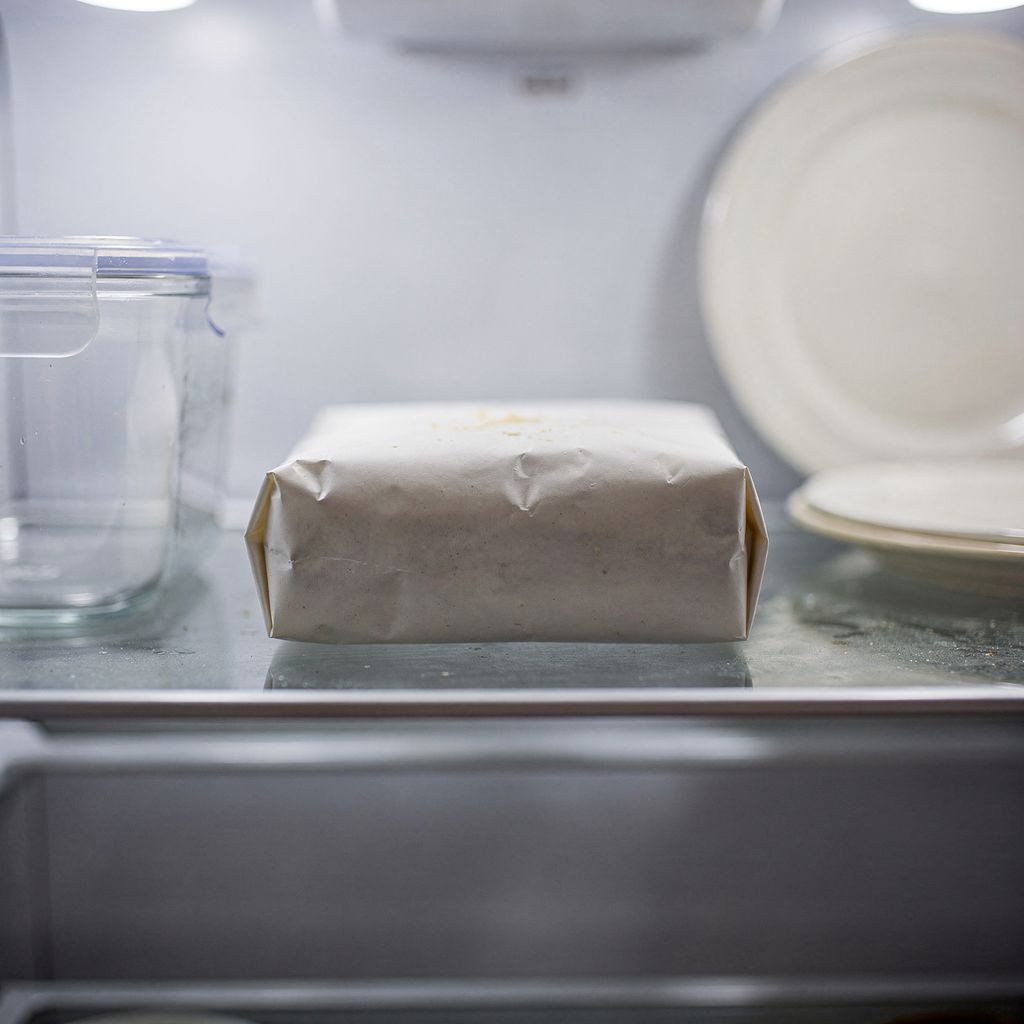
Smoked meat needs packaging that protects it from drying out while still letting it breathe — ideally butcher's paper or baking parchment, or a clean tea towel, followed by a loosely closed container. A sealed plastic bag is the worst option: the meat steams inside it, moisture condenses on the surface, and dampness is exactly what bacteria need.
What works, from best to worst:
Vacuum sealing. Slows down rancidity and mould growth, but doesn't bother anaerobic bacteria like listeria — the timeframes in the table above apply even to meat you've vacuum-sealed yourself at home.
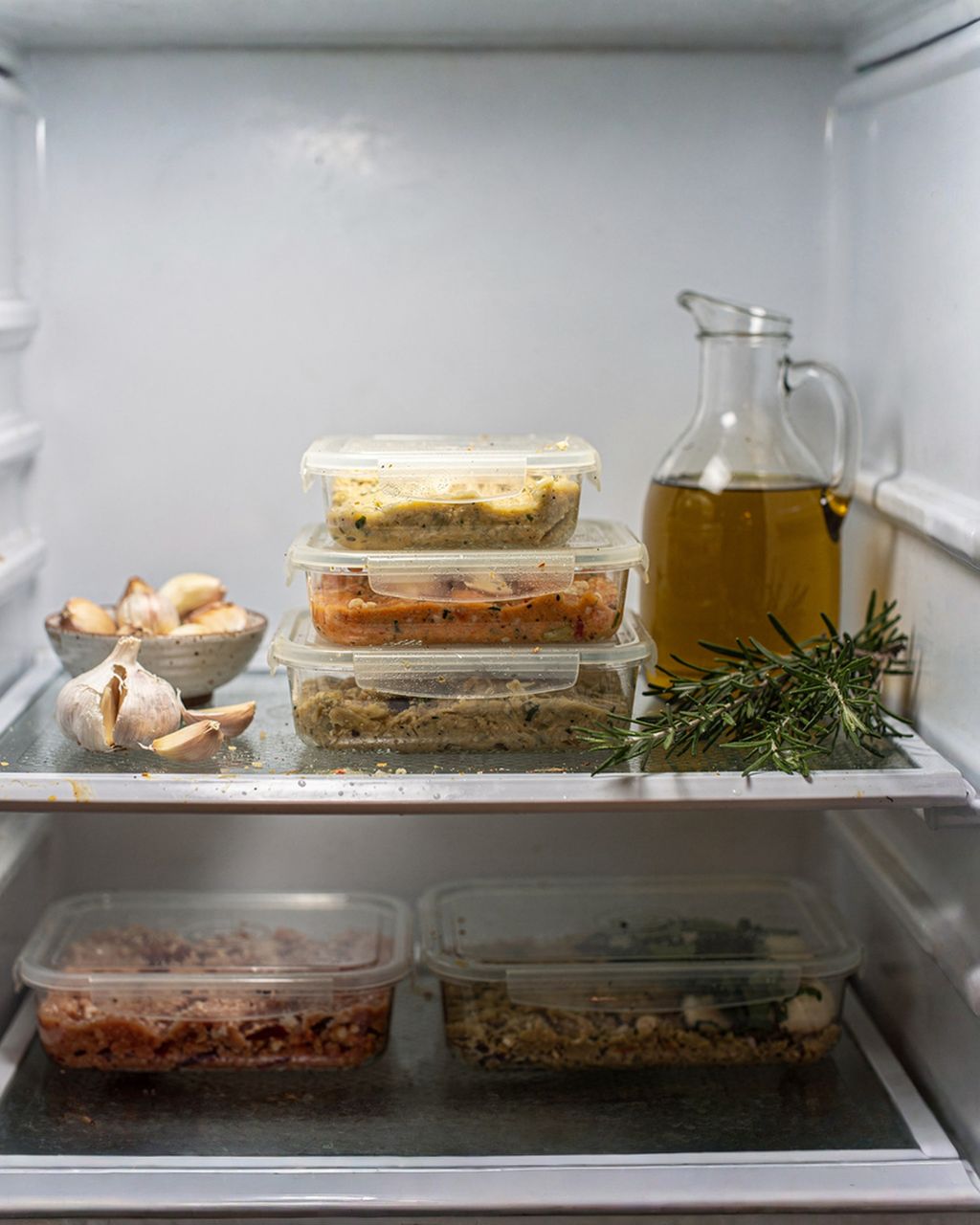
Butcher's paper plus a lidded container. The paper draws off surface moisture while the container prevents drying out and picking up other odours. The best low-tech compromise.
A lidded container on its own. Workable, but watch for pooling liquid at the bottom — if that happens, a sheet of paper under the meat solves it too.
A plastic bag. Fine for the trip home from the shop, but take it off as soon as you're home.
A few more things worth doing:
Don't rinse it. Water washes away the protective layer of salt and smoke on the surface and splashes bacteria around your sink.
Don't slice it ahead of time. Every cut creates a fresh surface where spoilage can start.
Move it out of the shop packaging. Swap the butcher's juice-soaked paper for a clean one.
Slip a paper towel underneath the meat and swap it out after two days if it's damp.
Write the date on it. Marker on the container lid. Three days from now, you genuinely won't remember when you bought it.
Look for "Use by" on smoked meat packaging — that's a genuine safety cut-off, and once it's passed, the food is considered unsafe. It's not a suggestion or a quality estimate the way "Best before" is. The difference matters a lot:
Use by — a genuine safety date, used for perishable foods including chilled smoked meats. Past this date, the food must not be sold or eaten.
Best before — you'll see this on shelf-stable salami and tinned goods. Past this date, the manufacturer no longer guarantees taste and texture, but the food may still be perfectly safe.
Two things people most often miss when it comes to vacuum packs:
The date only applies to an unopened pack. The moment you pierce the film, oxygen and airborne bacteria reach the meat and the clock resets — count on 3 days, even if the printed date is two weeks away.
Vacuum-packed meat smells different straight out of the pack. It can have a slightly sour, "closed-in" smell right after opening that fades within a few minutes in the air. That's normal. A smell that doesn't fade after airing out, or gets stronger, is not normal.
So the simple rule is: treat the date on the pack as a ceiling, not a promise. If the pack has sat in a hot car, or in a fridge running at 8°C, the stated shelf life no longer applies, because the conditions it was based on weren't actually met.
Eat cold-smoked fish within 2 days of opening — and always no later than the use-by date on the pack, whichever comes first. It's the shortest window of any smoked product, because it's never been heat-treated: cold smoke doesn't go above about 20–30°C (68–86°F), so the fish never actually cooks; it's held together purely by salt, smoke and cold.
Why it's treated more strictly than smoked pork collar:
Listeria can grow even in the fridge. Smoked salmon is one of the foods most closely monitored for listeriosis risk, precisely because it's eaten as-is, without cooking.
At-risk groups. Food safety guidance recommends that pregnant women, people over 65 and those with weakened immune systems avoid cold-smoked fish and deli-style smoked meats altogether, or only eat them after they've been cooked through.
An unopened pack keeps according to the date on it, typically several weeks — but that advantage disappears the moment you open it.
If you've got salmon nearing the end of its window, put it into a hot dish where it'll heat through.
Homemade smoked salmon with gnocchi
Homemade smoked salmon with gnocchi — a hot dish that uses up smoked salmon in one go
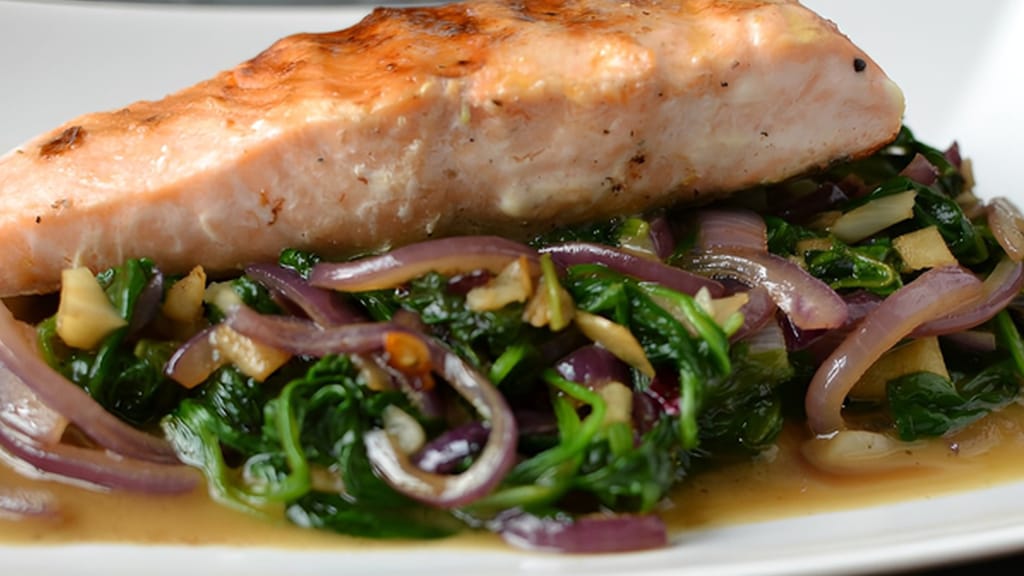
Smoky salmon with quick wilted spinach
Salmon with a smoky finish and quick sautéed spinach — a fast dinner for fish that's running out of time
The most reliable signs are a sticky or slimy surface, a sour or ammonia-like smell, and slimy, coloured mould. Smoked meat has one tricky quirk: the smoke and salt mask the meat's own smell, so the first warning sign is usually something you feel, not something you smell.
What to touch and smell for:
Surface. Good smoked meat feels dry or lightly greasy to the touch. A sticky film that clings to your fingers is a bacterial coating — that's the end of it.
Smell. A sour, vinegary, ammonia-like, or sickly stale smell is a clear red flag. The smoky aroma should be the first thing you notice, not an afterthought.
Colour. Smoked meat should look pinkish to reddish-brown. A greyish-green tinge, especially near the bone and in hard-to-reach spots, means it's breaking down.
Mould. A white, powdery coating on dry-cured salami is part of the process and perfectly fine. Fuzzy mould in green, black, orange or pink on smoked meat is never fine.
Liquid in the packaging. A little weeping juice is normal. Cloudy, stringy or foaming liquid is not.
And what to do about it: throw it out. Don't trim off the edge, don't rinse it, don't try to cook it harder to fix it. Wash the cutting board, knife and any container the meat sat in with hot, soapy water so the contamination doesn't spread to your next meal.
Smoked meat keeps well in the freezer at −18°C (0°F) for roughly 1–3 months — noticeably shorter than fresh pork, which comfortably lasts up to six months. This isn't about safety; at −18°C bacteria stop multiplying and the meat stays perfectly safe to eat almost indefinitely. It's about flavour.
The reason is chemical: salt speeds up fat oxidation. According to food science research, salt promotes the reactions that turn fat rancid — and smoked meat is both salted and often nicely marbled. Fat oxidation carries on slowly even in the freezer, since it doesn't need bacteria, just oxygen. Phenols from the smoke act as antioxidants and slow the process down, but they can't stop it entirely.
How to get the most out of it:
Vacuum-seal it, or double-wrap it. Oxygen is enemy number one. Cling film wrapped tightly, plus a freezer bag, is the bare minimum.
Split it into portions you'll use up in one go. Thawing and refreezing is the worst thing you can do to smoked meat.
Write the date on the bag. In the freezer, a three-month-old piece looks exactly like a week-old one.
Thaw it in the fridge, overnight, not on the counter. Slow thawing keeps the juices in the meat.
Sliced or portioned smoked meats should really be counted on for about 1 month — more surface area means they go rancid faster.
Use up smoked meat that's nearing its limit in cabbage soup, tangy lentils, baked pasta with cabbage, or pulled smoked meat with beans — all of these use it whole, in one go. Smoked meat is a flavour concentrate: a few hundred grams is enough to flavour a whole pot, and it works well with legumes, cabbage and pasta alike. Cook it whole and you also get a salty stock you can use as a soup base.
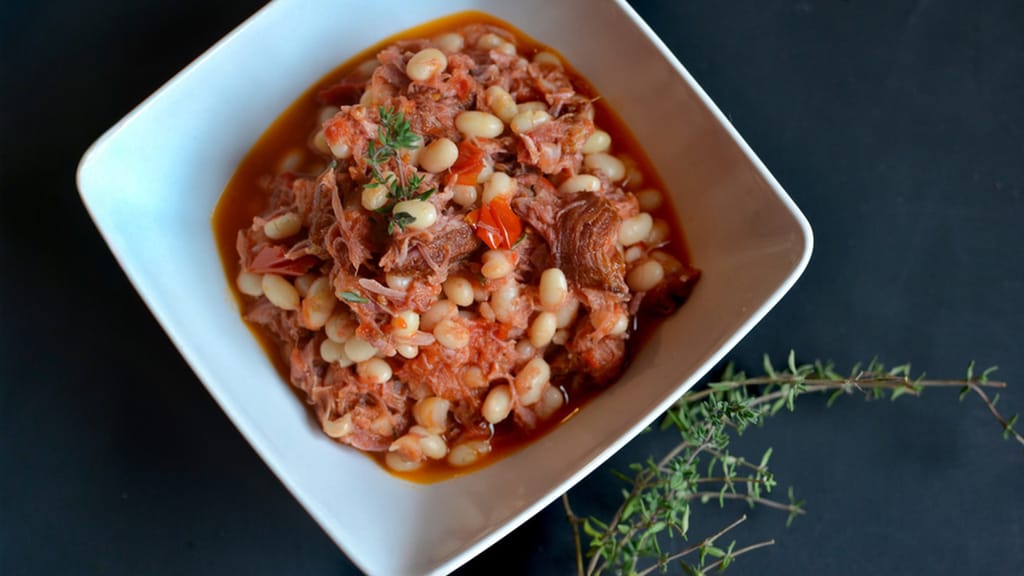
Pulled smoked meat with beans and tomatoes
Pulled smoked meat with beans and tomatoes — uses up a larger piece of smoked meat in one cook
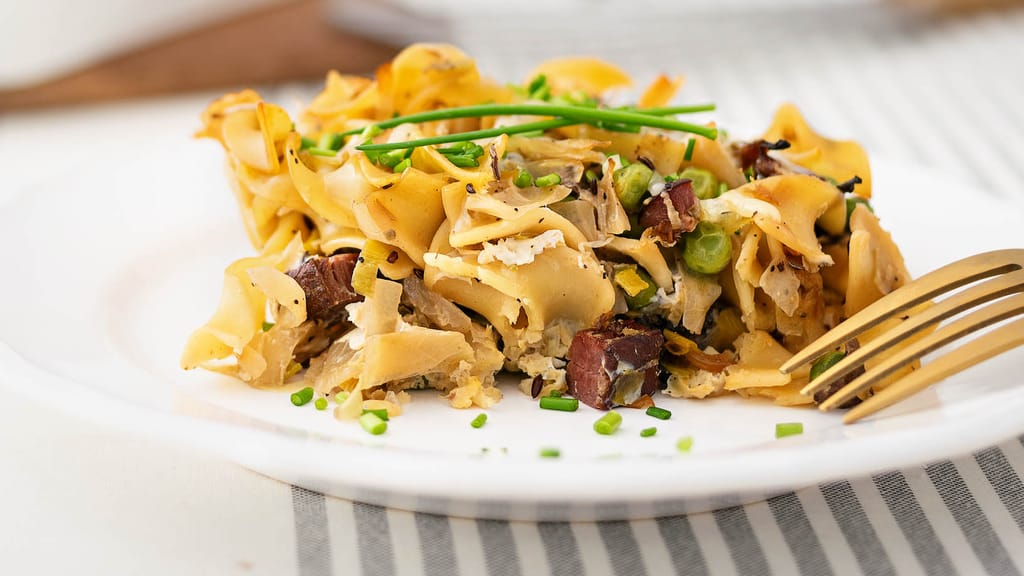
Ham and cabbage šunkofleky
Baked pasta with cabbage and smoked meat — a classic that's perfect for using up the last bits of smoked meat and ham
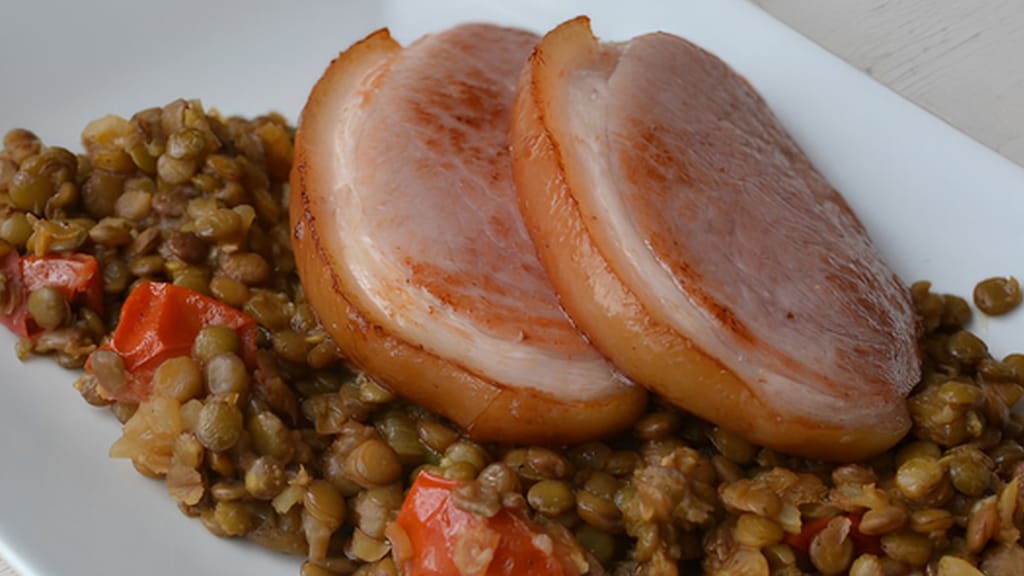
Prague ham with warm lentil salad
Prague ham with a warm lentil salad — a quick fix for an opened pack of smoked meat
Only refreeze thawed smoked meat if you thawed it in the fridge and no more than 24 hours have passed since — and expect a noticeable loss in juiciness. If the meat has warmed up to room temperature, it shouldn't go back in the freezer: any bacteria that multiplied in the meantime won't be killed by freezing, only put to sleep, and they'll pick up right where they left off once thawed again. The safe option is to cook the meat fully and freeze it once it's done — that always works.
No, the stock doesn't extend shelf life — cooked smoked meat left in its stock keeps for the same 3–4 days as meat that's been lifted out and dried off. A wet environment actually helps bacteria along, and a large pot full of hot liquid cools slowly, leaving the meat sitting in the danger zone for hours. Take the meat out, cool it separately in a smaller container, and store the stock separately too.
Homemade smoked meat usually keeps for a shorter time than store-bought, not longer. Commercial smoked products use precisely dosed curing mixes, tightly controlled processing, and often protective atmosphere packaging or vacuum sealing — and their shelf life is measured, not guessed. For homemade smoked meat made without a tested, proven recipe, plan on 3–4 days in the fridge and freeze the rest as quickly as possible. A longer shelf life for a homemade product only makes sense with genuinely dry-cured sausages, where the whole method relies on reduced moisture content.
Today's smoked meat doesn't belong in the pantry or on the balcony — it's a chilled food that needs a steady 0–4°C (32–39°F). The smoked meat that used to hang in the larder was far more heavily salted and, crucially, properly dried, so it had a much lower water content. Modern smoked meat is made juicy and soft, and without refrigeration it will spoil within a day or two. A balcony also swings with the weather, which is actually worse for meat than a stable room temperature.
Cooked smoked meat served hot is safe during pregnancy; the real concern is cold deli-style smoked meats and cold-smoked fish eaten without further cooking. Food safety guidance for pregnant women specifically advises avoiding these because of the risk of listeriosis — listeria can multiply even at fridge temperatures, with a growth minimum around −0.4°C (31°F), so cold alone won't stop it. In practice, that means: cook smoked pork shoulder or collar and eat it hot, and either skip sliced deli meats and smoked salmon or heat them through in a hot dish. Check with your doctor for advice specific to your situation.
One recipe worth heating the oven for, one tip, and one deal from the shop. Nothing else.