Smoked Pork: How to Boil and Roast Neck, Leg, Ribs and Hock
Pork Knuckle: How Long to Boil It and What Temperature to Roast It At for Tender Meat
Updated Nov 17, 2026
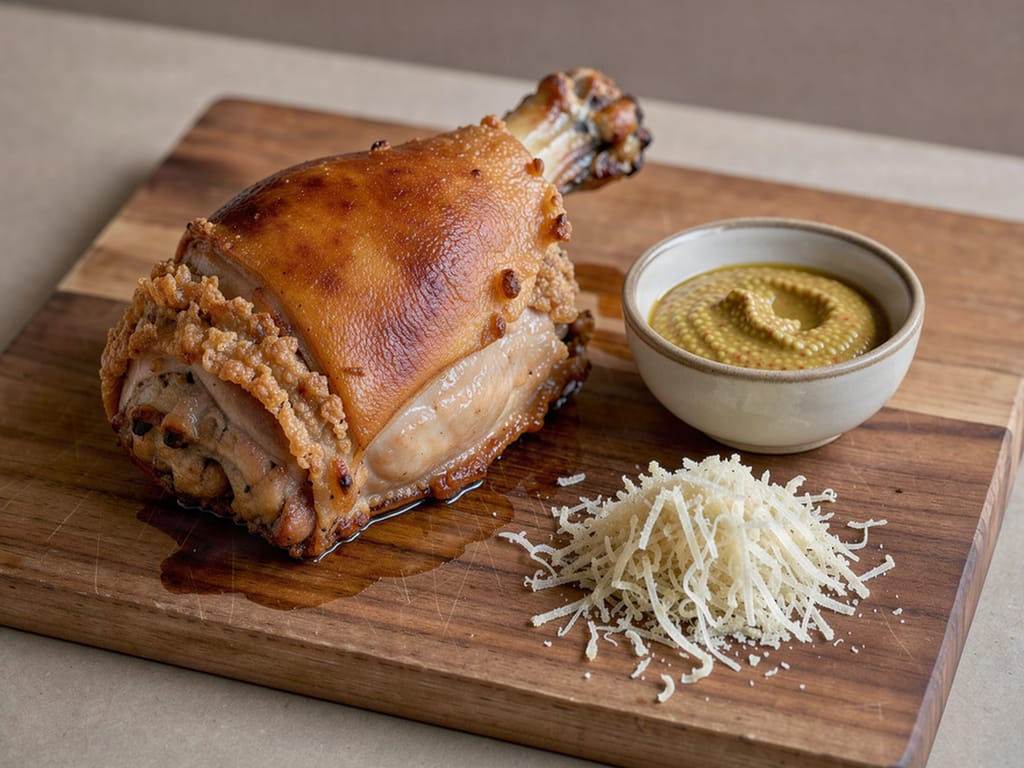
Pork knuckle is best when you first simmer it gently for 1.5–2 hours in a spiced broth, then roast it: 45–60 minutes at 180°C (350°F), finishing with 15–20 minutes at 220°C (425°F) so the skin puffs up crisp. Simmering makes the meat tender; the oven makes the crackling. Below you'll find timings by size, how to salt and season the broth, how to cook ovar (plain boiled pork) and what to do differently with smoked knuckle.
Pork knuckle is made in two steps: simmering tenderizes the meat and roasting makes the crackling. The knuckle is full of collagen and tendons, and in the dry heat of an oven they soften slowly. In water, they soften much faster.
The whole method at a glance:
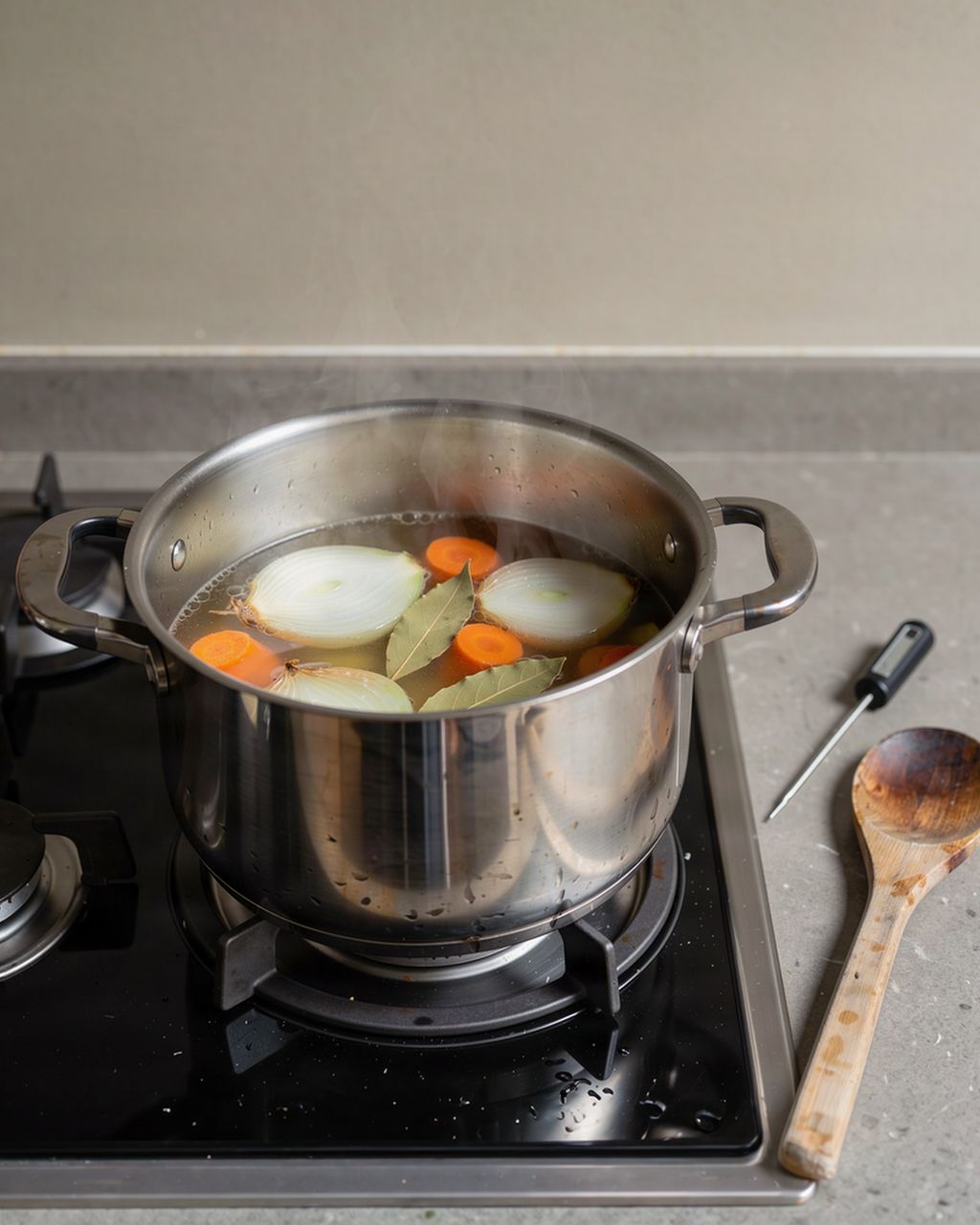
Simmer the knuckle for 1.5–2 hours in broth with salt and spices; the water should barely ripple.
Score and dry the skin.
Roast for 45–60 minutes at 180°C (350°F; 160°C/320°F convection), basting with broth or beer, but only the meat, not the skin.
Finish for 15–20 minutes at 220–230°C (425–450°F; 200–210°C/400–410°F convection) until the skin puffs up.
Rest for 5–10 minutes and serve.
Why it works: in moist heat, collagen starts turning into gelatin from about 71°C (160°F), and that process takes time. That's why a knuckle cooked only in the oven is often done on the outside but still tough near the bone.
Seasonal baking plans, tested recipes and kitchen tricks that save you time. Unsubscribe in one click.
Simmer a raw pork knuckle for 1.5–2 hours if it weighs 1–1.5 kg (2.2–3.3 lb). For a knuckle of around 2 kg (4.4 lb), allow 2–2.5 hours. If you're going to roast it afterward, it should be tender but still hold firmly on the bone. A fork slides into the meat near the bone with slight resistance, and the skin doesn't split.
Keep the simmer gentle. Let the water bubble quietly. A hard boil tears the skin and makes the meat stringy rather than juicy.
The water should cover the whole knuckle. Anything poking above the surface cooks less. Turn the knuckle over, or top up with hot water.
Put the knuckle into boiling water, not cold. It sets faster and there's less foam in the broth.
Skim the foam in the first 10–15 minutes. The broth stays clear and you can use it afterward.
Don't brown the knuckle beforehand. The color and flavor from browning come from the final hot roast. Braising is different – see why meat is browned before braising.
Salt the broth for a raw knuckle with about 1–2 teaspoons of salt per liter of water and add whole spices. That seasons the meat from the inside; you'll salt the skin again before roasting. And the broth stays just salty enough that you can turn it straight into soup.
Spices: 2–3 bay leaves, 5–6 allspice berries, a teaspoon of whole peppercorns, a teaspoon of caraway seeds
Vegetables: an onion halved with its skin on (for color), 3–4 garlic cloves, a carrot, a piece of celery root or parsley root
Extras, to taste: a piece of ginger, a few juniper berries, or a light beer in place of some of the water
Don't pour the broth away after cooking. It's rich and gelatinous and makes good soups. Keep a little for basting the knuckle in the oven.
Roast a boiled pork knuckle for 45–60 minutes at 180°C (350°F) (160°C/320°F convection), then 15–20 minutes at 220–230°C (425–450°F) (200–210°C/400–410°F convection). In the first stage the meat finishes cooking and turns golden. In the second, the skin puffs up and starts to crackle.
Pour 1–2 cm (about ½–¾ inch) of broth or beer into the bottom of the roasting pan so the drippings don't burn.
Baste the meat every 15–20 minutes, but keep the skin dry.
For the last 5 minutes you can switch on the broiler. Watch it closely, though, because the skin can blacken in a minute.
If you boil the knuckle for a shorter time, only to half-tender, extend the first stage to 1.5 hours and roast it covered.
If you're wondering about safety: the US agency USDA/FSIS gives a minimum internal temperature of 63°C (145°F) for pork, plus 3 minutes of rest. A boiled and roasted knuckle is long past that inside. Here the goal is tender meat.
Crisp crackling needs two things: dry skin and fierce heat at the end. Wet skin steams in the oven and stays rubbery.
Dry it. After boiling, let the knuckle drain for 10–15 minutes and pat the skin with a paper towel.
Score it with a sharp knife in a diamond pattern, cutting only into the fat. The fat then renders out and the skin can puff up.
Salt it with coarse salt, with ground caraway if you like. The salt draws the last of the moisture out of the skin.
Don't baste at the end. At 220°C (425°F), no liquid should touch the skin anymore.
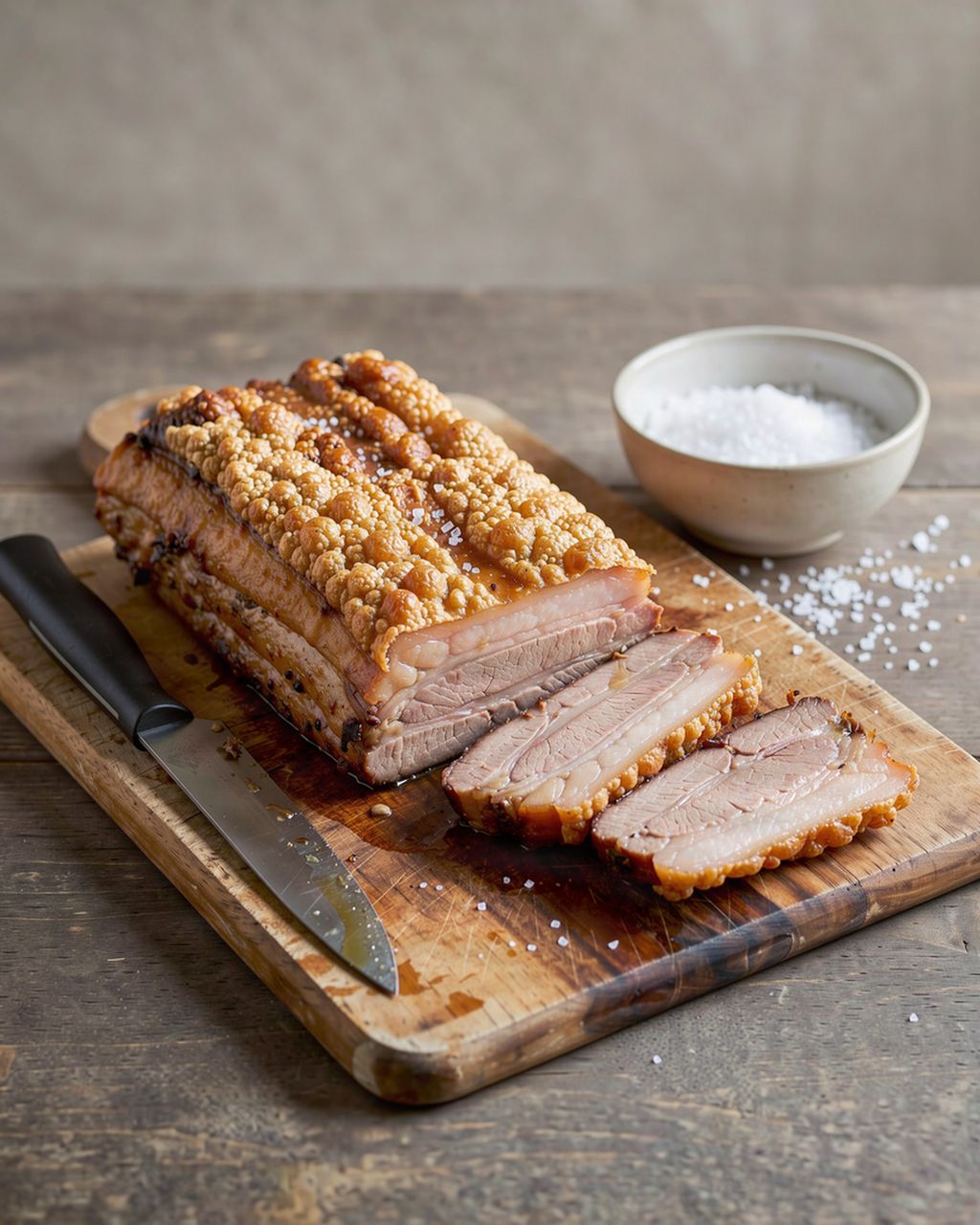
The same principle applies to pork belly. We cover it in detail in roast pork belly with crispy crackling.
Simmer ovar-style knuckle for 2.5–3 hours in salted water with caraway, a bay leaf and an onion, until it's tender but holds together, and serve it right away while warm. Ovar is pork boiled in salted water, traditionally the head, knuckles, belly and tongue from a pig slaughter. Ovar-style knuckle is a fresh, unsmoked knuckle prepared the same way, just without the roasting.
Cooking time: 2.5–3 hours, until the meat is tender but still springy and holds together. That's longer than for a knuckle to be roasted, because nothing else is coming after.
Broth: salt it more than for a roasting knuckle, because ovar is eaten straight from the water. Salt, caraway, bay leaf, allspice and onion are enough.
Serving: lift it from the water straight onto a board, sprinkle with salt and freshly ground pepper and serve with horseradish, whole-grain mustard, pickled onions in vinegar and fresh bread. Homemade sourdough bread goes well.
Ovar tastes best right away. Once it cools, the gelatin sets and the meat turns more jelly-like.
Smoked knuckle is cured and smoked but usually still raw, so simmer it for about as long as a fresh one, 1.5–2 hours, just don't salt the water. Add the same spices. If it's very salty, simmer it in one water for the first half hour, then drain it and carry on in fresh water.
It's roasted the same way, but a shorter first stage is enough, around 30 minutes at 180°C (350°F), because it already has color and flavor from the smokehouse. The skin on a smoked knuckle tends to be tougher and puffs up less. You'll find the method for other smoked cuts, such as pork neck, ham or ribs, in how to cook and roast smoked meat. How long raw smoked knuckle keeps is covered in how long smoked meat keeps in the fridge.
A tough knuckle is almost always undercooked, and rubbery skin is almost always wet or roasted at too low a temperature. A second round in the oven won't fix it; the mistake happens earlier.
The meat near the bone is tough: the simmer was too short. Return the knuckle to the broth for another 20–30 minutes, or finish it covered with a little liquid.
The meat falls apart and the skin is torn: it either boiled too hard or too long. Next time, lower the heat and start checking for tenderness after an hour and a quarter.
The skin is rubbery: it wasn't dried, it was basted, or the final phase at 220°C (425°F) was missing.
The skin is burnt and hard underneath: the broiler or high heat ran too long. Check every two minutes at the end.
The meat is dry: roasting at 180°C (350°F) went on too long without liquid in the pan. How to rescue meat like that is in how to rescue dried-out meat from the oven.
Roast pork knuckle is served like ovar: horseradish, mustard, pickled vegetables and bread. The sourness and sharpness balance the rich meat. On a board, you eat it with your hands and a knife.
The classic: grated horseradish, whole-grain and Kremser mustard, pickled peppers, dill pickles, dark bread
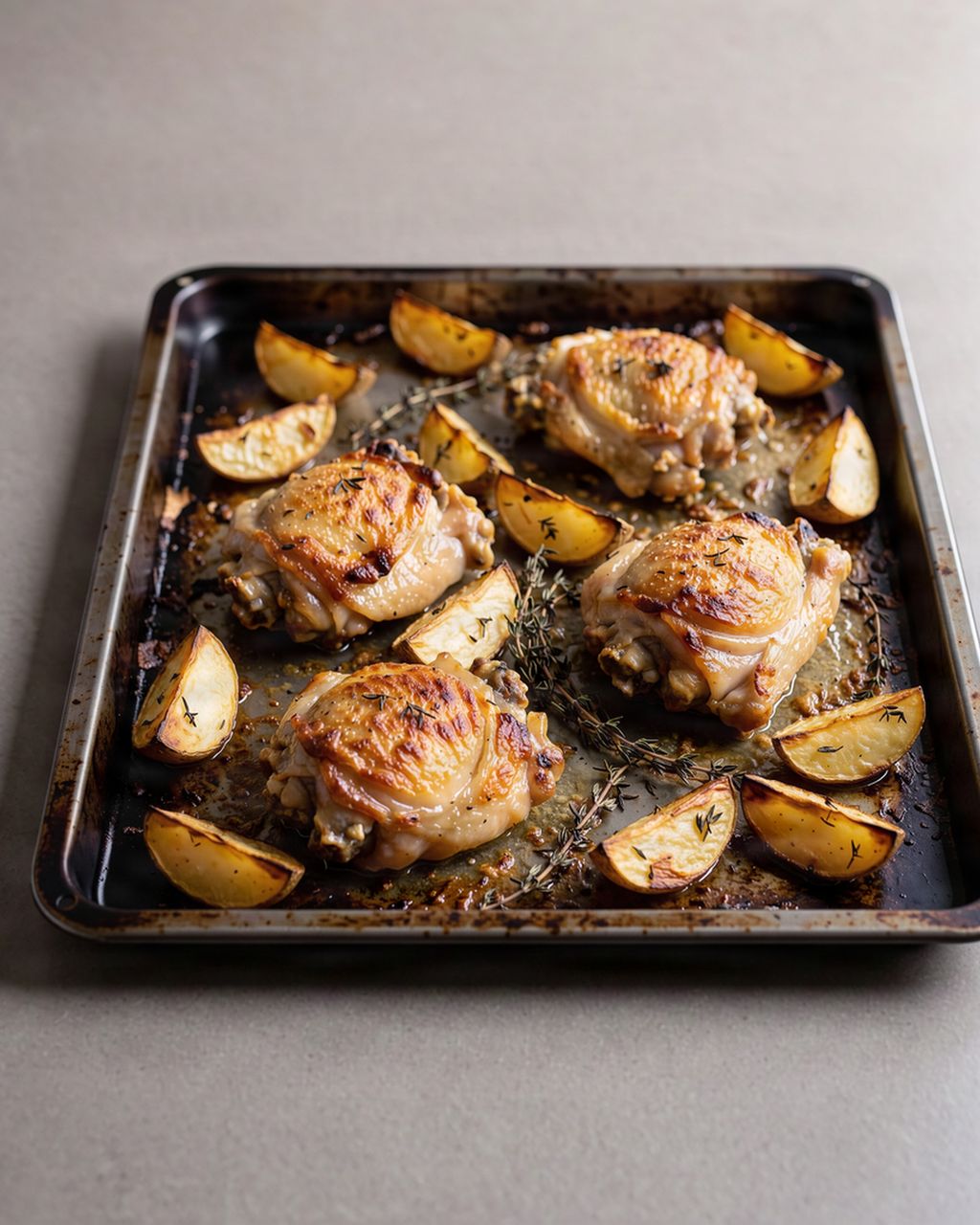
Warm side: braised cabbage, such as sweet-and-sour braised red cabbage, or roast potatoes from the same pan
To drink: a draft-style pilsner or lager, because the bitterness cleanses the palate after the fat
One knuckle weighing 1–1.5 kg (2.2–3.3 lb) will comfortably feed two people.
Put a boiled or roasted knuckle in the fridge within 2 hours of finishing. According to USDA/FSIS, cooked food shouldn't sit at room temperature any longer. That includes a knuckle left to cool in its broth.
Fridge: according to USDA/FSIS, cooked meat and broth keep 3–4 days. Put it in a shallow container so it cools faster.
Freezer: according to USDA/FSIS, leftovers keep their best quality for 3–4 months. Take the meat off the bone, wrap it and freeze it separately from the broth.
Reheating: USDA/FSIS recommends reheating leftovers to 74°C (165°F) inside. The crackling recovers best in an oven preheated to 220°C (425°F); in a microwave it turns rubbery.
You can roast pork knuckle without boiling it, but you have to cook it slowly and covered: about 3 hours at 150–160°C (300–320°F) with a little liquid in the roasting pan, then 15–20 minutes uncovered at 220°C (425°F) for the crackling. Without boiling it takes longer, and the meat near the bone tends to be a little less tender. The upside is that the knuckle has a stronger roasted flavor.
In a pressure cooker, pork knuckle takes about 45–60 minutes from the point it comes up to pressure, depending on its size and your cooker's manufacturer instructions. Season the broth the same way as you would in a pot. Then pat the knuckle dry and finish it in the oven at 220°C (425°F) so the skin crisps up.
For roasting, buy a hind pork knuckle: it is bigger, meatier and has fewer tendons. The front knuckle is smaller and more sinewy, so it suits ovar (plain boiled pork) or broth better. A front knuckle cooks in less time, so start checking for tenderness about half an hour sooner.
Pork knuckle broth is rich and gelatinous, which makes it a great base for sauerkraut soup or bramboračka (Czech potato soup). According to USDA/FSIS, it keeps 3–4 days in the fridge and holds its quality for 3–4 months in the freezer. Skim the solidified fat off the surface with a spoon and use it for frying.
One recipe worth heating the oven for, one tip, and one deal from the shop. Nothing else.