Easy cheese straws
Savory Christmas Cookies for Wine and New Year's Eve: What to Bake and How to Keep It Crisp
Updated Oct 17, 2026
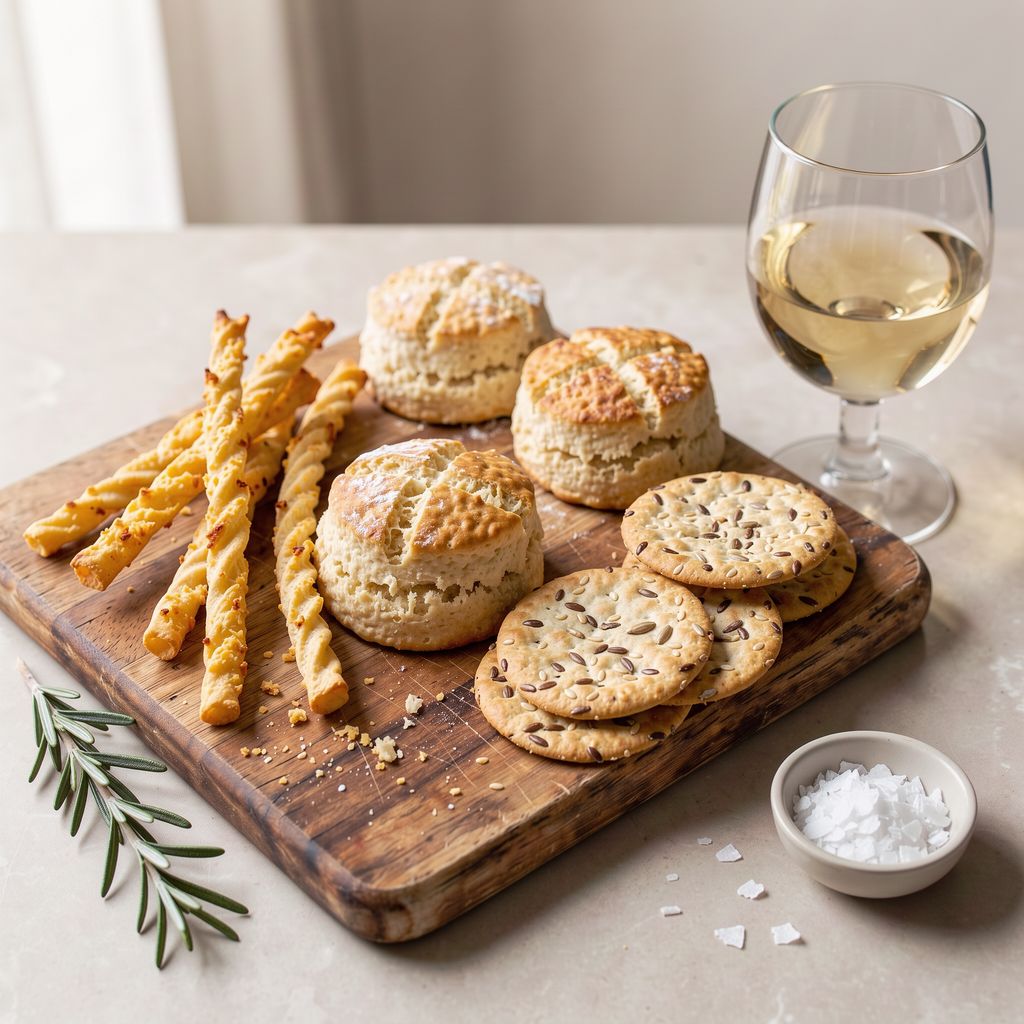
Savory Christmas cookies are small, crisp bites made from cheese, quark, yeast or puff pastry dough: cheese straws, pagáčky (Czech savory biscuits), crackers, pastry swirls and cheesy shortbread. They're served with wine or beer and on New Year's Eve, and after the third plate of vanilla crescents, everyone is glad to see them. To stay crisp for several days (crackers for weeks), they need three things: thin, fully baked dough, complete cooling on a wire rack, and a tin of their own, never the one with the sweet cookies.
Seven kinds work best as savory Christmas cookies: cheese straws, pagáčky, crackers, cheese shortbread, puff pastry swirls, mini pretzels and breadsticks. All can be baked ahead, and on a platter they look like cookies, not canapés.
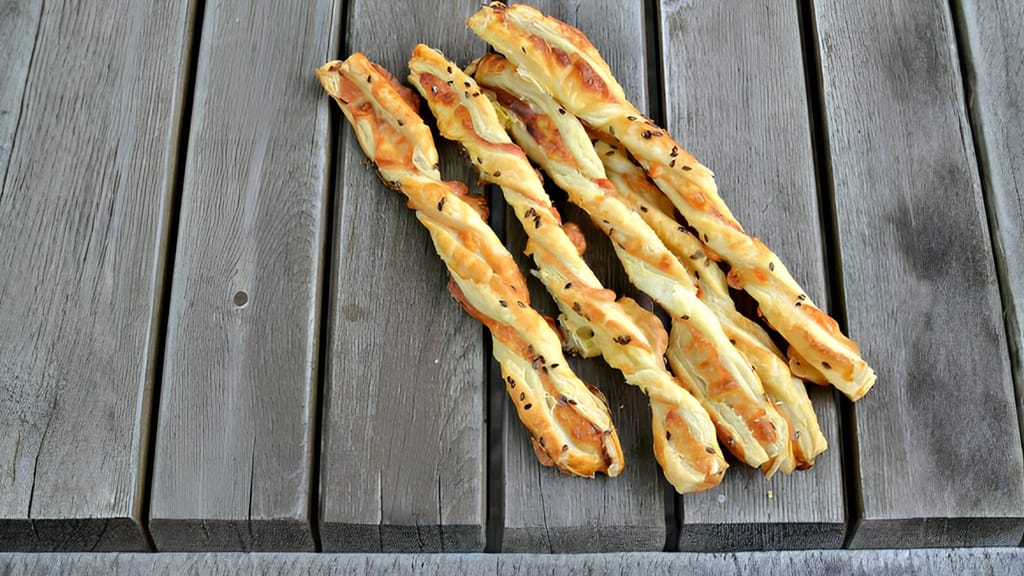
Cheese straws – butter or quark dough with grated cheese, cut into strips and topped with caraway, sesame or coarse salt. The easiest way to start is with easy cheese straws.
Pagáčky – small round biscuits, traditionally yeasted and made with pork cracklings, scored in a crosshatch on top and brushed with egg. They're the most filling, but also the first to go soft.
Crackers – paper-thin dough of flour, oil and water, often with seeds. They keep longer than anything else. For a wheat-free option, try pea flour crackers.
Cheese shortbread – French-style sablés made with butter, flour and Parmesan, cut out like linzer cookies. Tender and very cheesy.
Puff pastry swirls – a sheet spread with pesto or cheese, rolled up and sliced into rounds. Ready in 30 minutes.
Mini pretzels – yeast dough briefly dipped in a hot baking soda solution before baking (bakers use lye, which gives a darker, glossier crust).
Breadsticks – thin yeast sticks with no soda dip, crisp along their whole length. Try homemade grissini or crunchy breadsticks for kids and adults.
Easy cheese straws
Easy cheese straws – the foundation of savory Christmas cookies
The cookies that stay crisp longest are made from the doughs that hold the least water once baked – cracker dough and butter cheese dough; quark and yeast doughs go soft first. You can choose from five basic doughs: butter cheese, quark, yeast, puff pastry and cracker. Crackers keep for weeks, butter cheese dough for roughly a week to ten days, and yeast pagáčky only for a few days.
Butter cheese (shortcrust) dough – flour, cold butter and hard cheese in roughly a 1:1:1 ratio (say 150 g of each), plus an egg yolk and salt. No water, so once baked there's hardly anything left to soften it. Good for straws and cut-out cookies.
Quark dough – flour, butter and quark in a 1:1:1 ratio. The quark adds moisture, so the dough puffs into layers almost like puff pastry. It's lighter, but the moisture stays in, so it softens faster.
Yeast dough – for pagáčky and pretzels. It contains milk and yeast, and is soft and fragrant, but it dries out and softens fastest. Bake it only a few days ahead at most.
Puff pastry – store-bought, ideally made with butter rather than margarine. The least work; the result depends on how thoroughly you bake it through.
Cracker dough – flour, oil, water and salt, rolled out to 1–2 mm. The longest-lasting, because it practically dries out as it bakes.
Choose the cheese to suit the dough: for tender dough, a hard, aged cheese (Parmesan, Grana, 45% Edam); for sprinkling, anything that grates well. Soft cheeses like mozzarella release water and make the cookies rubbery.
For vegan versions, or a cheesy flavor without cheese, use nutritional yeast – stir a few spoonfuls into the cracker dough or sprinkle it on top instead of grated cheese.
Savory cookies go soft because they absorb moisture – from the air, from themselves, or from the sweet cookies next to them. The most common causes:
They're underbaked. A pale center means leftover water, which spreads through the whole piece within a few days.
You put them in the tin while still warm. Steam from the cooling dough condenses on the lid and drips back down.
They sit beside moist cookies. Cookies with cream (little cups, rum balls, filled walnuts), jam-filled linzer cookies or gingerbread give off moisture – and dry savory bites soak it up first when they share a box.
Salt and cheese on the surface. Salt attracts moisture, so heavily salted sticks go soft in a damp room sooner than unsalted ones.
They're in the fridge. The cold itself isn't a problem, but a fridge is humid, and water condenses on cold cookies once you take them out.
Crisp savory cookies are thin, baked golden brown and cooled in open air. Specifically:
Thickness of 3–5 mm for straws and cookies, 1–2 mm for crackers. Thicker pieces can't be baked through without the edges burning.
Temperature of 180–200 °C (355–390 °F), or 10–20 °C less with a fan oven. Bake until they're golden brown underneath too – lift one piece and check.
Drying out: after baking, switch off the oven and leave the tray inside for 5–10 minutes with the door slightly ajar. The leftover moisture escapes without the cookies scorching.
Cool on a wire rack, not on the tray, where they steam from underneath. Put them in the tin only when completely cold, even the next day.
Brush with egg and add toppings just before baking. Salt sprinkled on the dough too early dissolves and leaves the surface sticky.
You can bake crackers 2–3 weeks ahead, butter cheese straws about a week to ten days, quark and puff pastry pieces a week at most, and yeast pagáčky 2–3 days. Here's an overview for storage in a dry tin in a cool room:
Crackers: 2–3 weeks.
Butter cheese straws and cookies: roughly 7–10 days.
Quark straws, puff pastry swirls: 5–7 days.
Yeast pagáčky and pretzels: 2–3 days, then they turn hard and lose their crispness at the same time.
Cookies with cracklings or bacon: within a week – animal fat goes rancid over time, and you can taste it.
The best planning trick is the freezer. Raw dough (a rolled-out sheet, or cut straws on a tray, then into a bag) keeps frozen for roughly 1–3 months if well wrapped (cling film and a bag). Bake it straight from frozen, just 2–3 minutes longer. Freeze baked yeast pagáčky, then thaw and re-bake them before serving – they taste fresh.
Savory cookies belong in a metal tin of their own, never in the same box as sweet ones. Moisture and aromas travel both ways: the straws go soft from filled cookies, and vanilla crescents pick up caraway and garlic, because the fat in them readily absorbs smells.
A metal or glass container with a tight lid, with a paper napkin or parchment paper on the bottom to absorb leftover moisture.
Each kind separately, or at least divided with paper. Put yeast pagáčky in a different tin from crackers – a dry cracker will take moisture from them.
A cool, dry room – pantry, hallway, unheated spare room. Not the fridge, not a windowsill above a radiator.
Serve a little at a time: put out only as much as will be eaten in an evening. Don't return what survives a night on the table to the tin with the rest.
You can bring soft savory cookies back with 5–8 minutes in an oven heated to 150–160 °C (300–320 °F). Spread them in a single layer on a tray, let them warm through, then cool completely on a wire rack – they're only crisp once cooled, not straight from the oven. It works for straws, crackers and puff pastry swirls. With yeast pagáčky it only partly works: the surface crisps up, but the center stays rather firm.
For wine, the best savory cookies have a strong cheese or herb flavor; for New Year's Eve, choose bites you can eat with one hand. Tried-and-true pairings:
Cheese straws and Parmesan cookies – with sparkling wine. Salt and fat soften the bubbles.
Crackers with rosemary, sesame or nigella seeds – with dry white wines, such as Grüner Veltliner or Riesling.
Pagáčky with cracklings – with red wine or beer; they're hearty enough even for a late night.
Swirls with pesto or sun-dried tomatoes – with rosé and lighter reds.
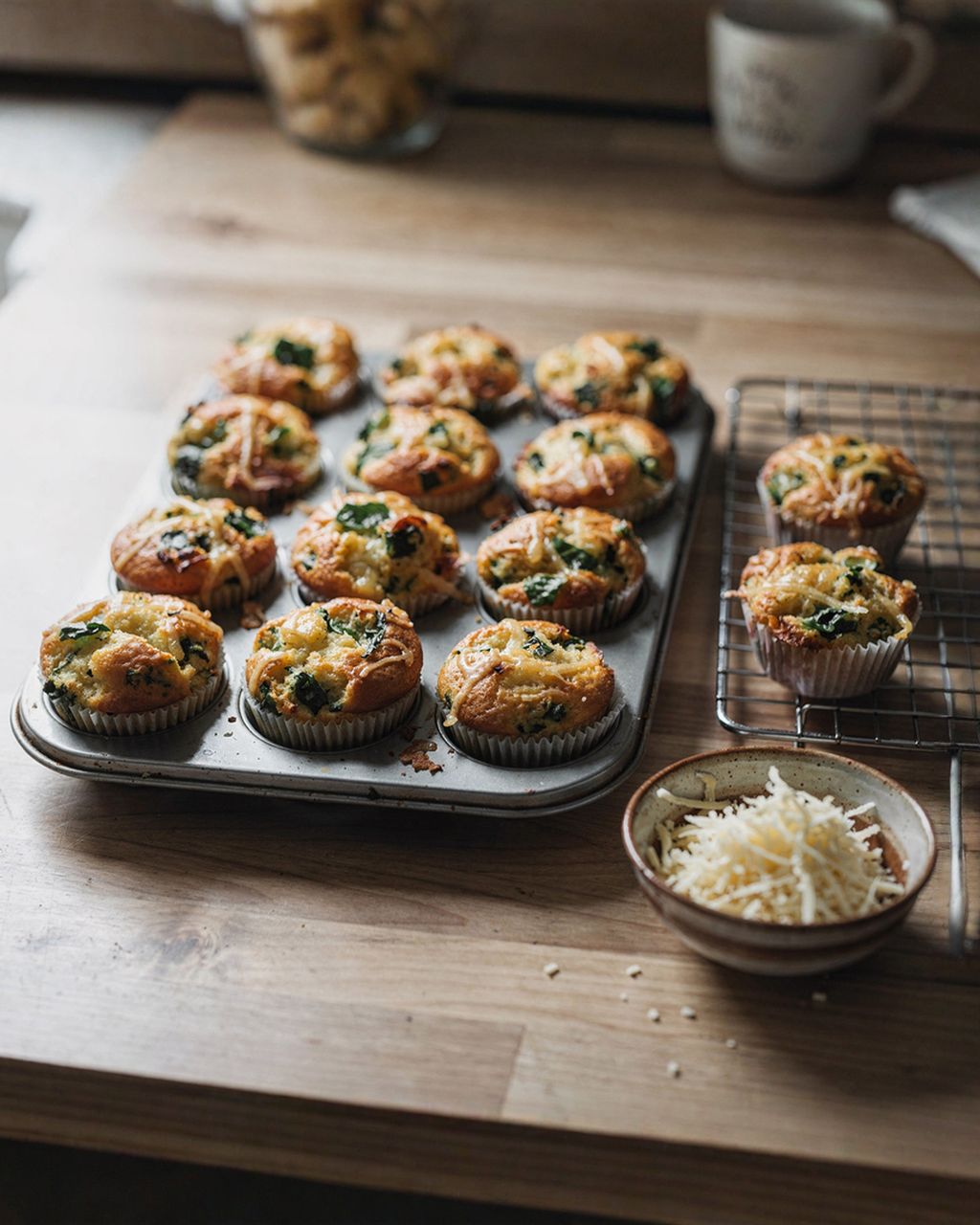
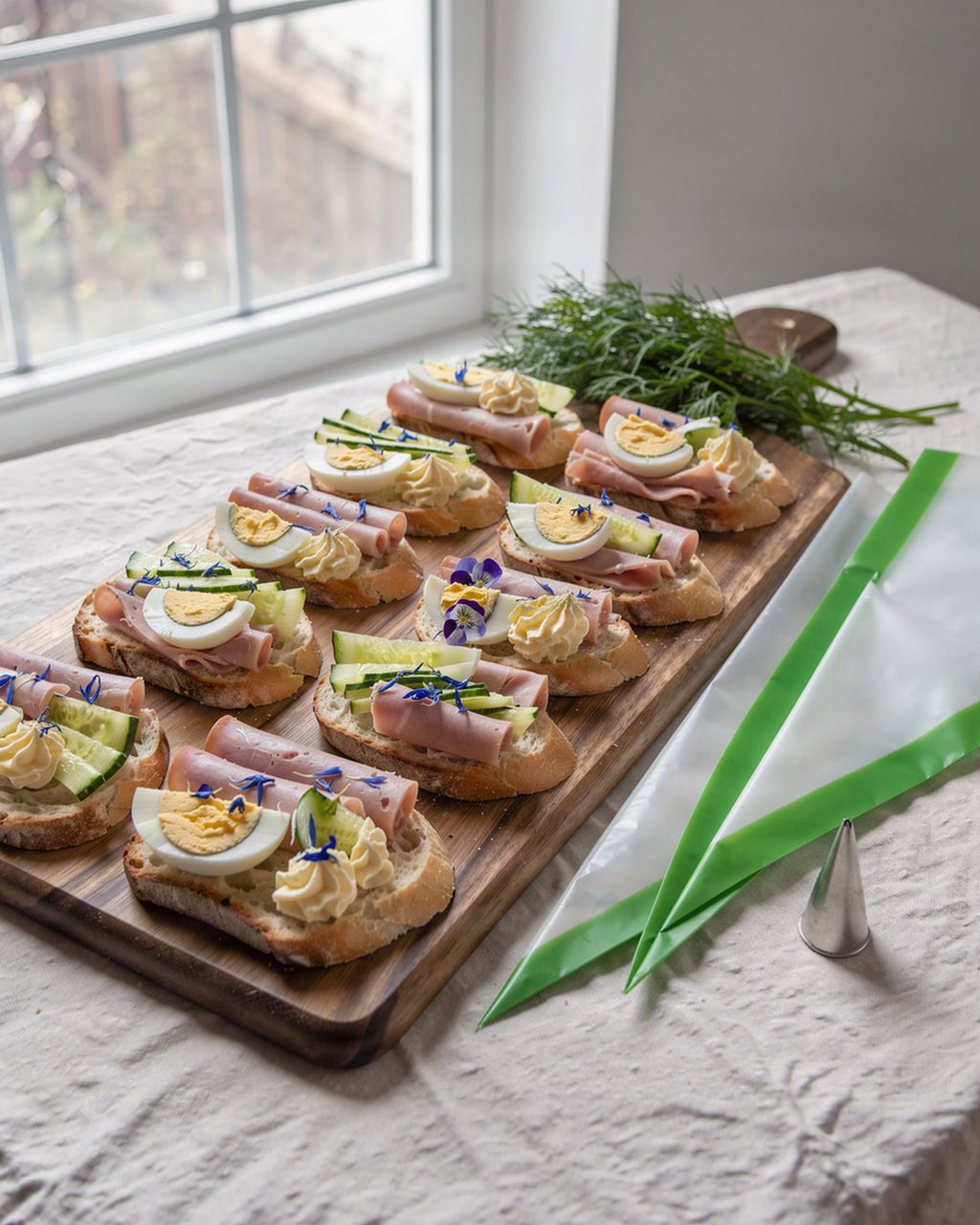
On a New Year's Eve table, savory cookies are a great match for make-ahead New Year's Eve finger food and warm savory party muffins.
The best choice is a hard, aged cheese such as Parmesan, Grana Padano, aged Edam or cheddar. It has little water and plenty of flavor, so the cookies stay crisp and tasty. Soft cheeses like mozzarella or blue cheese release water and soften the dough; use blue cheese only as a sprinkle, in small amounts.
Gluten-free savory Christmas cookies are easiest as crackers and cheesy shortbread. Crackers made with pea, chickpea or buckwheat flour hold their shape without gluten, and a gluten-free flour blend with a little potato starch works in a tender cheese dough. Yeast pagáčky and puff pastry are hard to replace without gluten.
For travel or parcels, crackers and butter cheese straws are the best savory options, and they're less prone to breaking: crackers keep for weeks, butter straws for about 7–10 days. Pack them in a metal tin lined with parchment paper, fill any gaps with crumpled paper, and don't put them in the same package as sweet filled cookies, which would make them soft.
Count on roughly 50–100 g of savory cookies per guest for an evening, which is about 8–15 pieces. The lower end applies when there's other food on the table; the upper end suits New Year's Eve, when people mostly nibble with wine. It's better to bake more of the longer-lasting kinds (crackers, butter straws), since leftovers keep: crackers for weeks, butter straws for about 7–10 days.
Savory cookies without butter work best as crackers, which are made with oil. In cheese straws, you can replace the butter with lard, which gives an even more tender result, or with a plant-based baking fat. With oil instead of butter, the cheese dough will be more crumbly and less supple.
One recipe worth heating the oven for, one tip, and one deal from the shop. Nothing else.