Egg spread – easy and incredibly good

Updated Jul 19, 2026
Don't throw out those leftover Easter eggs – hard-boiled eggs will keep in the fridge for a good week, still in their shells, and there's a ton you can make with them. Here's how to store them safely, whether you can freeze them (spoiler: yolks yes, whites no), and five recipes to help you work through a big batch of boiled eggs – from classic egg salad spread to Indian egg curry.
Hard-boiled eggs will keep in the fridge at temperatures below 5°C for about a week – whether still in their shells or already peeled. Peeled eggs dry out fast though, so eat those sooner rather than later. Refrigerate them within two hours of cooking, and store them on a shelf rather than in the door, where the temperature fluctuates the most.
A few rules to keep things safe:
Keep the fridge below 5°C. Above that, bacteria multiply quickly – don't leave eggs sitting out on the counter.
Refrigerate within 2 hours of cooking. Don't leave them out longer than that at a buffet or picnic.
Store on a shelf, not in the door – the temperature there swings every time the fridge is opened.
Leave the shell on as long as possible. It's a natural barrier against bacteria and moisture loss.
Once peeled, use an airtight container with a damp paper towel, to stop the eggs from drying out.
According to the USDA, hard-boiled eggs are safe to keep in the fridge for about a week – for peeled eggs, it's really drying out and taste, rather than safety, that becomes the limiting factor.
Shell on, without question. The shell and the membrane beneath it act as a natural wrapper – protecting the egg from bacteria and fridge odours, and slowing down moisture loss. Only peel eggs right before eating them or using them in a recipe. If you've already peeled some, pop them in a sealed container with a damp paper towel over the top, otherwise the surface turns grey and rubbery.
For more on storing both raw and cooked eggs, check out our article on how to store eggs properly to keep them fresh.
Pickling boiled eggs in a vinegar brine extends their shelf life to several weeks and gives them a tangy, punchy flavour. Cover peeled eggs with a brine of vinegar, water, salt and spices (bay leaf, pepper, onion), then let them sit in a sealed jar in the fridge – small eggs need 1–2 weeks, larger ones 2–4 weeks, for the flavour to really soak in. The acidity of the vinegar slows bacterial growth, but it's not enough on its own, which is why the strict rules below matter.
Yes, but only the yolks – the white of a hard-boiled egg turns watery and rubbery once frozen, so it's basically useless. Separate the yolks, whisk them gently with a fork (to prevent lumps forming when thawed) and, depending on how you'll use them, add a pinch of salt (for savoury dishes) or sugar (for sweet ones). Transfer to an airtight container or bag, label with the date, and they'll keep in the freezer for around 3 months.
Thaw slowly overnight in the fridge, not on the counter. Before using, always give them a sniff and a quick look – if anything seems off, throw them out. Frozen yolks are great in spreads, batters, sauces, or as a garnish.
Five reliable ways to use up a big batch of hard-boiled eggs: egg salad spread, deviled eggs, egg salad, Indian egg curry, and a fresh leafy salad with eggs. You'll find full recipes for the spread and the leafy salad below, and we'll walk you through the other three in brief.
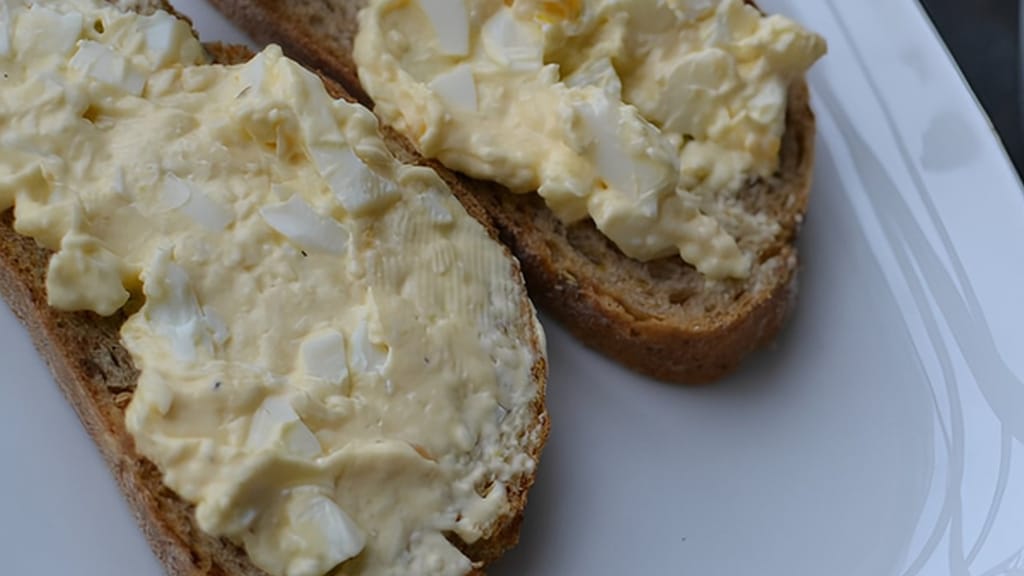
The fastest way to make half a tray of eggs disappear. Roughly chop the eggs and mix with a bit of mayonnaise or sour cream, mustard, salt and chives – then spread on fresh bread. The secret to a good spread is balance: keep it chunky rather than smooth, and don't overdo the mayo, so you can still taste the egg, not just the fat.
Egg spread – easy and incredibly good
Egg salad spread from leftover Easter eggs – easy and ready in minutes
A crowd-pleasing appetiser for celebrations and holiday tables alike. Slice the eggs lengthwise, mash the yolks with mayonnaise and mustard until smooth, then pipe the mixture back into the whites – a piping bag with a decorative tip gives the best finish. Brighten them up with a splash of lemon juice, a dusting of smoked paprika, and feel free to experiment: avocado and lime, smoked salmon, or a pinch of curry powder and turmeric for colour. Watch out for a filling that's too runny – overmixed yolks are hard to pipe neatly, so add the mayonnaise a teaspoon at a time.
You can make egg salad three different ways: classic, with avocado, and with tuna. It's heartier than the spread and ready in five minutes. The base: dice the eggs and add mayonnaise, Dijon mustard, a splash of lemon juice, salt, pepper, and spring onion or celery for crunch.
Classic – just eggs, mayonnaise, mustard and herbs; the timeless version everything else builds on.
With avocado – swap some of the mayonnaise for mashed avocado for extra creaminess and healthy fats.
With tuna – stir in drained canned tuna, red onion and capers, turning a light salad into a full-on lunch.
Serve on lettuce leaves, wholegrain bread, or in a baguette.
For when you're after something warm and full of flavour. Fry finely chopped onion in oil until golden, add curry paste (or turmeric, garam masala and fresh ginger and garlic) and cook briefly to release the spices' aroma. Pour in coconut milk, simmer for a few minutes, then add whole peeled eggs to the sauce so they warm through and soak up the flavour. Serve with rice or flatbread. Tip: score the surface of the eggs lightly so the sauce can seep inside.
The lightest option – perfect after a heavy holiday spread. Toss torn lettuce leaves with cucumber, cherry tomatoes and egg quarters, then dress with a yoghurt or vinaigrette dressing. Add flakes of salmon or roasted vegetables to turn it into a full spring lunch.
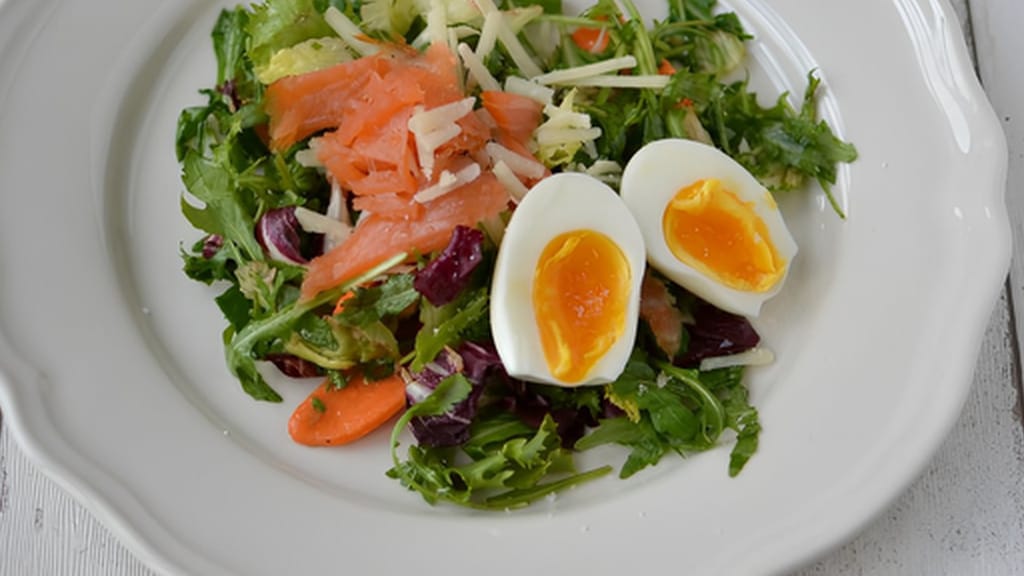
Summer recipe: leafy salad with salmon and eggs
Leafy salad with salmon and eggs – a fresh spring lunch from leftover Easter eggs
A spoiled hard-boiled egg is easiest to spot by smell – it'll have a sulphurous, rotten odour. Also watch out for a slimy or chalky-dry shell and any odd discolouration of the white. If you're ever in doubt, bin it – it's not worth the risk of tasting it.
That greenish-grey ring forms when an egg is overcooked – sulphur from the white reacts with iron in the yolk to form iron sulfide. The egg is still safe to eat, just a little less tasty. You can avoid it by cooking eggs for a shorter time and cooling them quickly in ice water afterwards.
Dyed Easter eggs are fine to eat as long as they were coloured with food-safe dye, the shell is intact, and they went into the fridge promptly. If they sat out on display for several hours at room temperature, or the shell is cracked, it's safer to toss them – with cracked shells, there's also no guarantee the dye hasn't seeped inside.
Eggs that aren't perfectly fresh, and that you've plunged into ice water straight after cooking, peel the easiest. The sudden temperature change loosens the membrane from the white. Gently crack the shell all over, roll the egg on the counter, then peel it under running water.
Both egg salad and egg spread keep for roughly 2–3 days in a sealed container in the fridge. Because of the mayonnaise and chopped egg, they spoil faster than whole eggs in their shells, so make smaller batches and don't leave them sitting out at room temperature.
One recipe worth heating the oven for, one tip, and one deal from the shop. Nothing else.