Why Is My Gravy Not Thickening? Flour vs Cornstarch Amounts per Cup
Roux vs Cornstarch Slurry vs Beurre Manié: Which Thickener and How Much
Updated Nov 20, 2026
Use a roux when you are building a sauce from the start and want an opaque, rich, stable result, a cornstarch slurry when you need to thicken at the end and want a glossy, clear sauce, and beurre manié when a finished sauce or stew is a little thin and you want to fix it with flour and butter. For a medium sauce, about 2 tablespoons each of butter and flour, or 1 tablespoon of cornstarch, thickens 1 US cup (236.6 ml) of liquid. Below are the ratios, how each behaves in the freezer, and what to use if you cook gluten-free.
Roux (flour cooked in butter or fat): best when you start a sauce from scratch, such as gravy, béchamel, cheese sauce, gumbo or a cream soup. Rich, opaque, very stable, reheats well. In Czech kitchens a roux is called jíška, and it is the classic base for many sauces and soups.
Cornstarch slurry (cornstarch stirred into cold water): best for fixing thickness at the end, stir-fry sauces, fruit fillings and glazes. Glossy and clear, thickens fast, but weaker in acidic sauces and does not freeze as well.
Beurre manié (raw butter and flour kneaded together): best for rescuing a finished braise, stew or pan sauce that is a little thin. Adds a touch of richness, needs a few minutes of simmering.
Cornstarch has roughly twice the thickening power of wheat flour, so use about half as much.
Seasonal baking plans, tested recipes and kitchen tricks that save you time. Unsubscribe in one click.
These amounts are per US cup (236.6 ml) of liquid. For a metric cup (250 ml) the difference is too small to change them. A tablespoon of all-purpose flour is about 7.9 g on our tool, butter about 14 g, and cornstarch about 8 g.
Roux, flour and butter in equal volumes:
Thin (cream soup): 1 tbsp butter + 1 tbsp flour (about 14 g + 8 g)
Medium (gravy, everyday sauce): 2 tbsp + 2 tbsp (about 28 g + 16 g)
Thick (binding, soufflé base): 3 tbsp + 3 tbsp (about 42 g + 24 g)
Cornstarch slurry:
Medium sauce: 1 tbsp cornstarch (about 8 g), stirred into about 2 tbsp cold water
Add up to 1 tsp more if needed; for a looser sauce, start with ½ tbsp
Beurre manié, butter and flour kneaded in equal volumes:
Start with about 1 tbsp of the paste per cup, and add more in small pieces up to about 2 tbsp of paste for a medium body.
Per litre, a medium sauce works out at about 65–70 g of flour in a roux, or about 30–35 g of cornstarch. Our cups and spoons to grams calculator converts other amounts, and our guide to thickening goulash has more per-litre figures.
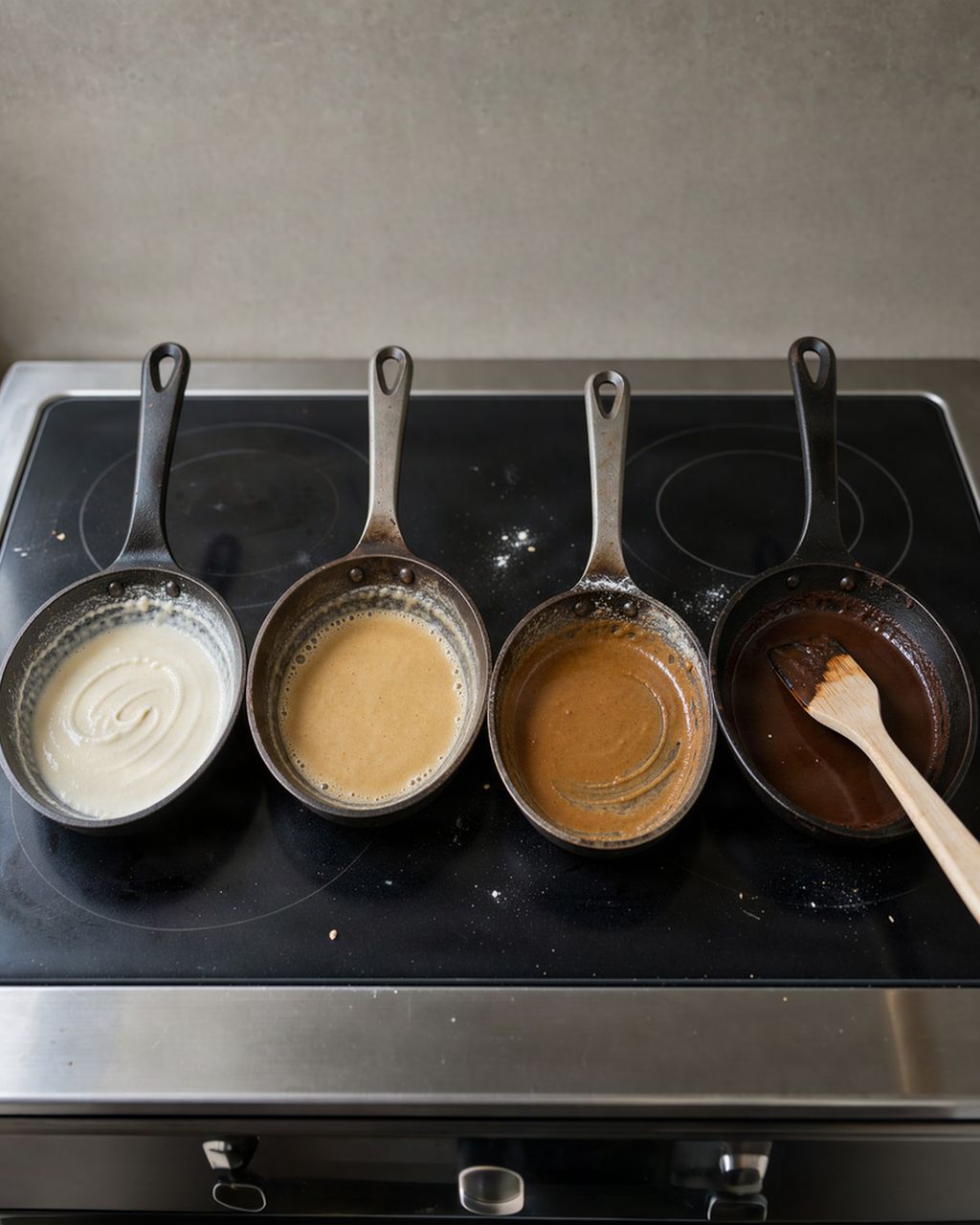
A roux is a mix of flour and fat cooked together before the liquid goes in. Cooking the flour removes its raw taste and coats the starch with fat, so it mixes into liquid without lumps.
White or blond roux (cooked a minute or two) for béchamel, cheese sauce, cream soups and pale gravy.
Brown roux (cooked longer) for darker gravies and stews. It tastes nuttier but thickens less, so you need more.
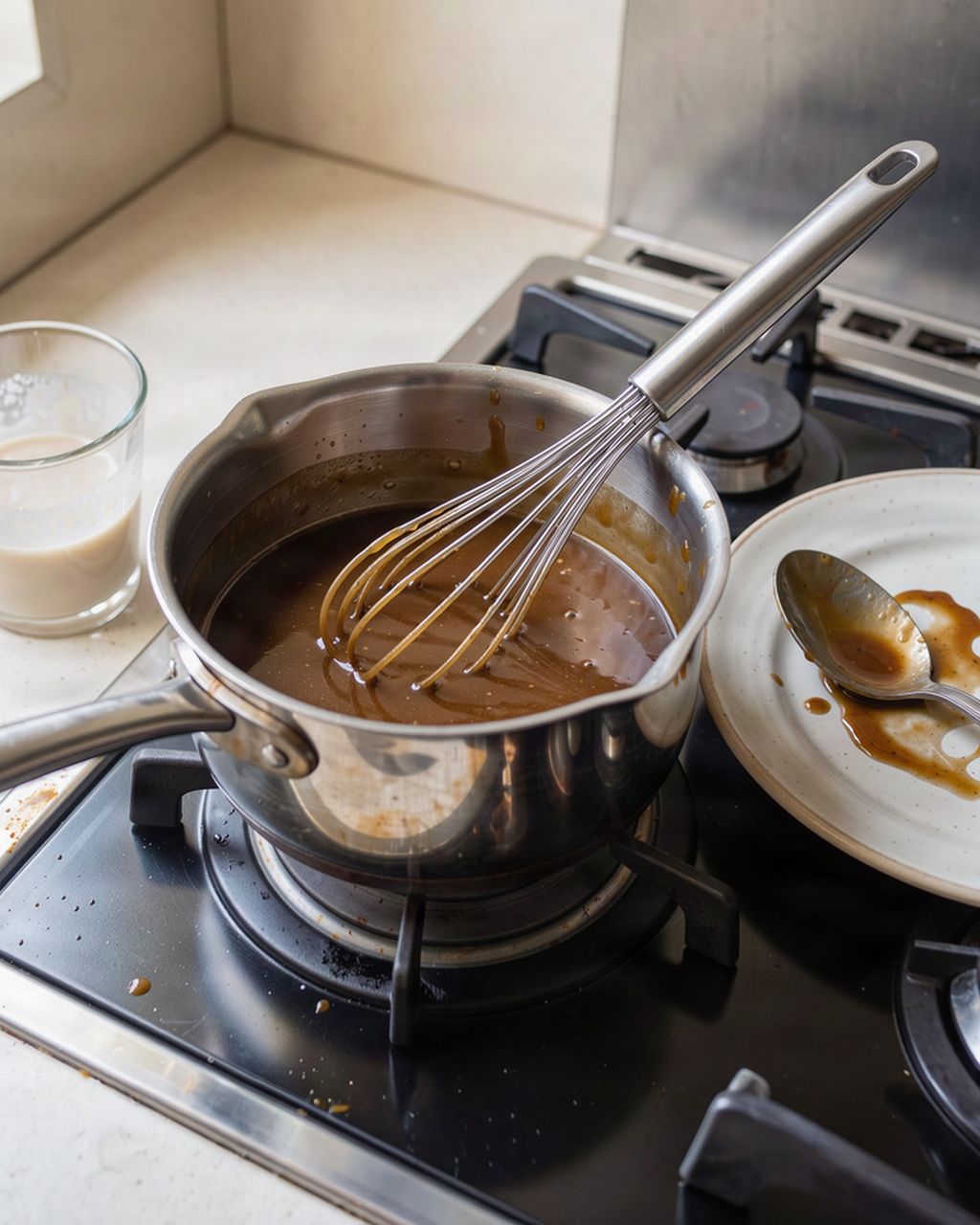
Add the liquid gradually, whisking, and simmer for a few minutes after it thickens. Roux sauces are stable: they stay smooth if kept hot on the stove, reheat well and tolerate some acid. If yours goes lumpy, our guide to lumpy sauce shows how to save it.
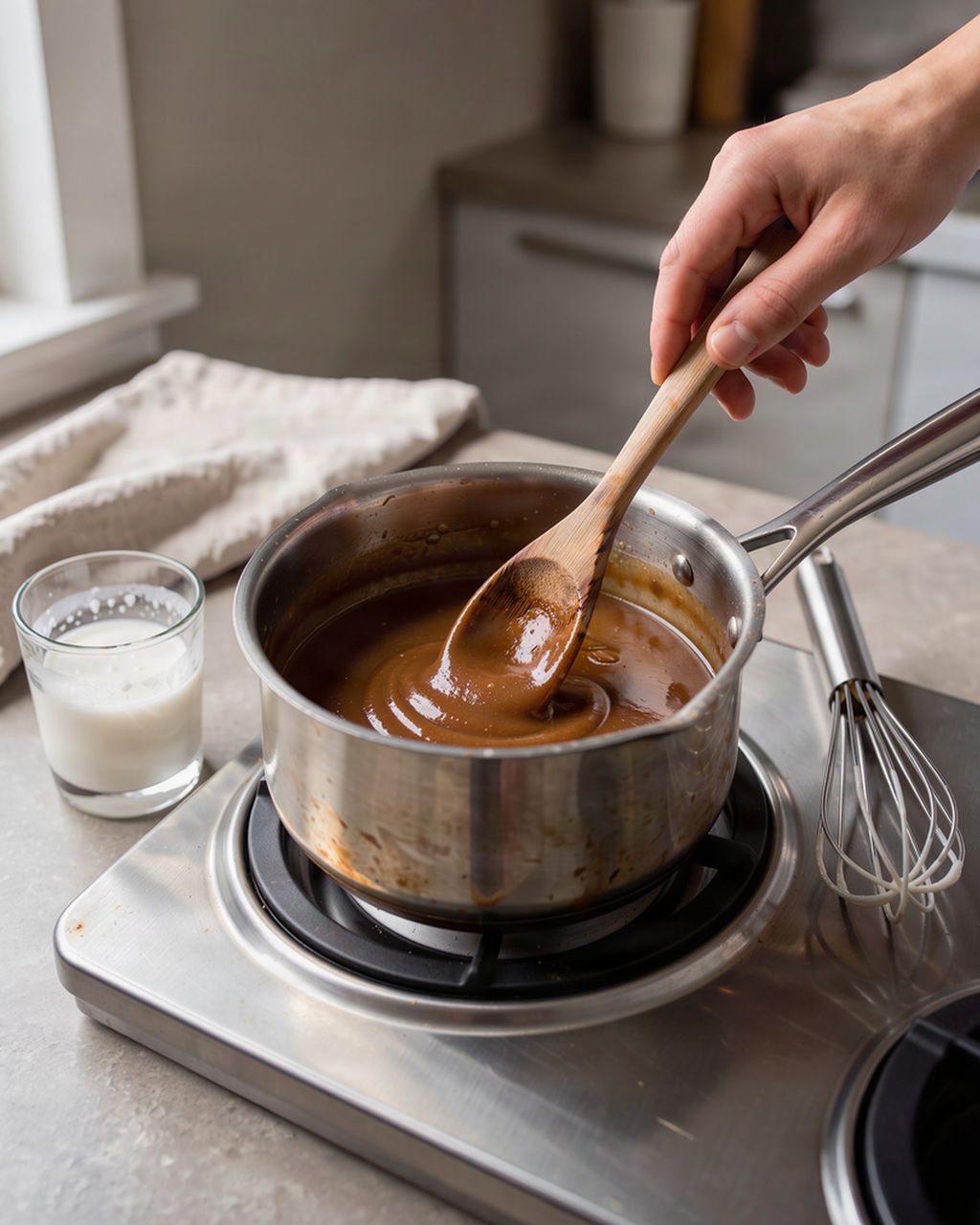
A slurry is cornstarch mixed into cold liquid, then whisked into a simmering sauce. Cornstarch can't go straight into hot liquid; it clumps instantly.
Use it when:
the sauce is finished and just needs more body
you want a clear, glossy result, as in stir-fries, sweet-and-sour sauce or fruit pie filling. Our stir-fry guide shows it in action
you want to avoid wheat
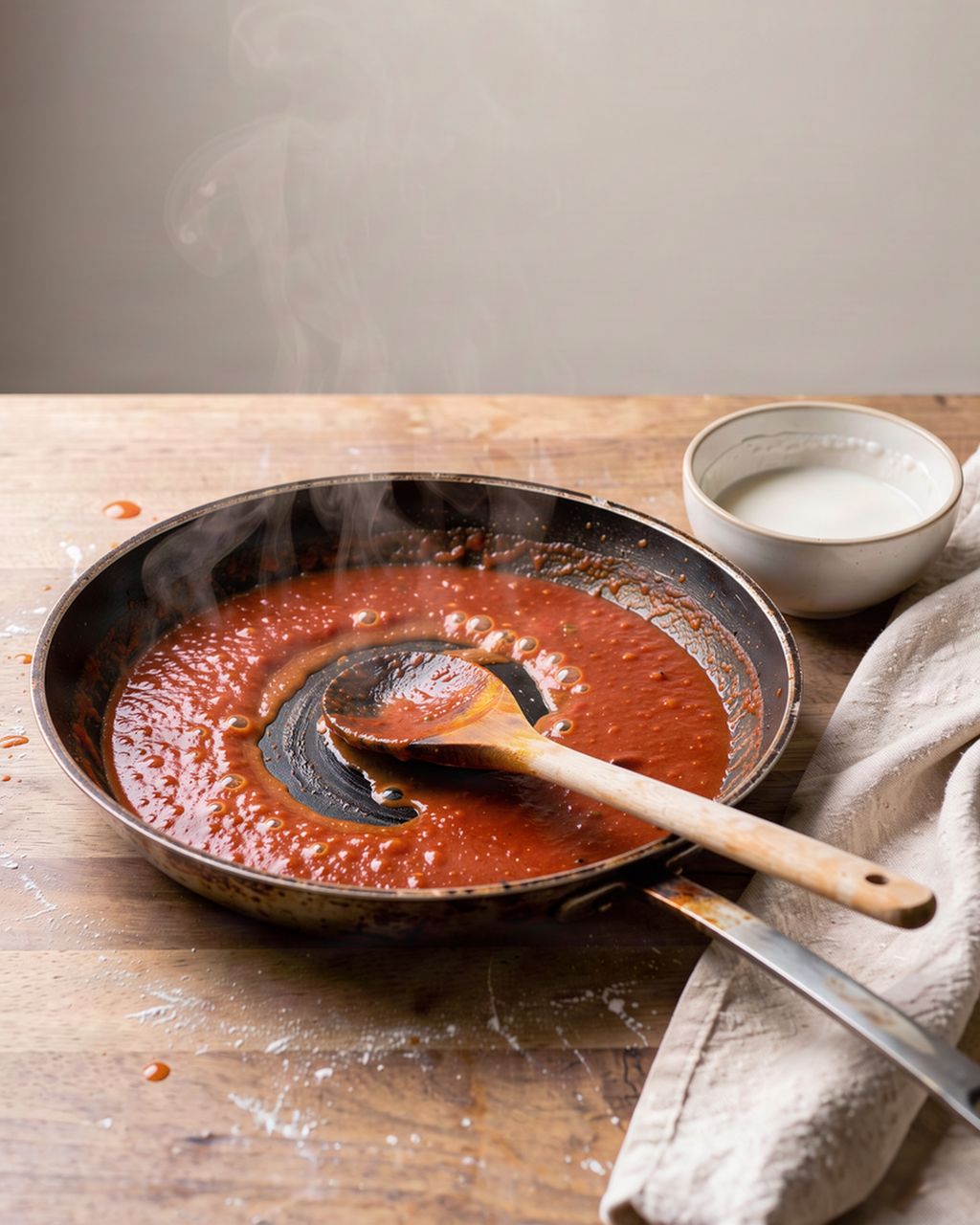
Cornstarch only thickens fully once the sauce comes to a simmer or gentle boil, about 95°C (203°F); give it about a minute, then stop. Then lower the heat. Prolonged hard boiling and heavy stirring can thin it again. Acidic liquids, such as wine, vinegar or citrus, weaken cornstarch noticeably, so you may need more. In the UK and Ireland, cornstarch is sold as cornflour. In Czech shops you'll also find potato starch (bramborový škrob), which thickens at a lower temperature and is popular in Czech kitchens; it is used much like cornstarch.
Beurre manié (French for kneaded butter) is soft butter and flour worked together into a paste with a fork or your fingers, in equal amounts.
Because every bit of flour is coated in butter, it melts into a hot sauce without clumping. That makes it the easiest way to rescue a stew, braise, pan sauce or soup that came out too thin, without starting a roux in another pan.
Whisk in a small piece at a time and let the sauce come back to a simmer between additions.
Simmer for a few minutes after the last piece, so the flour cooks and loses its raw taste.
Stop as soon as the sauce coats a spoon; it thickens a little more as it cools.
You can roll extra into small balls and freeze them, wrapped, to keep on hand.
Starch sauces change in the freezer. As they freeze and thaw, the starch molecules realign and squeeze out water, so sauces can weep or turn grainy.
Cornstarch does worst. In a study of white sauces, cornstarch sauces developed a marked spongy structure after freezing, while wheat flour ones were only slightly spongy.
Flour (roux and beurre manié) holds up better, but it isn't immune: America's Test Kitchen froze gravies thickened with flour and with cornstarch, and both wept.
Arrowroot and tapioca starch are often suggested for dishes you plan to freeze, though no starch is fully freeze-proof. Waxy rice flour (glutinous rice flour) holds up best in freeze–thaw tests.
Or skip the starch: freeze the sauce unthickened and thicken it after reheating.
To bring back a frozen sauce, thaw it in the fridge, then reheat it while whisking until it is steaming hot all the way through and bubbling; USDA advises reheating leftovers to 74°C (165°F); check with a food thermometer. If it is still thin, whisk in a little fresh slurry or beurre manié and let it simmer for a few minutes. Our guide to freezing soup and sauce covers which sauces split and why.
Roux and beurre manié are made with wheat flour, so they contain gluten. If you cook gluten-free:
Cornstarch, potato starch, arrowroot and tapioca starch all thicken without wheat. Choose packs labeled gluten-free and check for a may-contain warning.
Watch the word cornflour. In the UK it means cornstarch, but in Australia some products sold as wheaten cornflour are made from wheat. Read the ingredients.
A gluten-free roux can be made with a gluten-free flour blend or rice flour; it behaves a little differently, so add the liquid gradually.
Our guide to thickening a sauce without flour gives amounts for each starch.
A roux is flour cooked in fat before the liquid goes in, giving an opaque, rich sauce; a slurry is cornstarch stirred into cold liquid and added to a simmering sauce, giving a clear, glossy one. Cornstarch thickens about twice as strongly as flour, so you need roughly half as much.
About 1 tablespoon of cornstarch, roughly 8 g, thickens 1 US cup (236.6 ml) of liquid to a medium sauce. Stir it into about 2 tablespoons of cold water first, then whisk it into the simmering liquid and let it boil briefly.
For a medium sauce, cook 2 tablespoons of butter (about 28 g) with 2 tablespoons of flour (about 16 g) per US cup (236.6 ml) of liquid. Use 1 tablespoon of each for a thin sauce and 3 for a thick one.
Beurre manié, equal parts soft butter and flour kneaded into a paste, is used to thicken a sauce, stew or soup at the end of cooking. Whisk in small pieces, then simmer for a few minutes so the flour loses its raw taste.
Flour-thickened sauces usually hold up better than cornstarch ones, which can turn spongy and weep after freezing, though both can separate a little. Arrowroot and tapioca starch are often suggested instead, or freeze the sauce unthickened and thicken it after reheating it until steaming hot.
Pure corn (maize) starch contains no gluten, but check the package for a gluten-free label or a may-contain warning. In Australia, products sold as wheaten cornflour are made from wheat, so read the ingredients.
One recipe worth heating the oven for, one tip, and one deal from the shop. Nothing else.