Roux vs Cornstarch Slurry vs Beurre Manié: Which Thickener and How Much
How Dark Should a Roux Be? White, Blond, Brown and Dark Roux Explained
Updated Nov 20, 2026
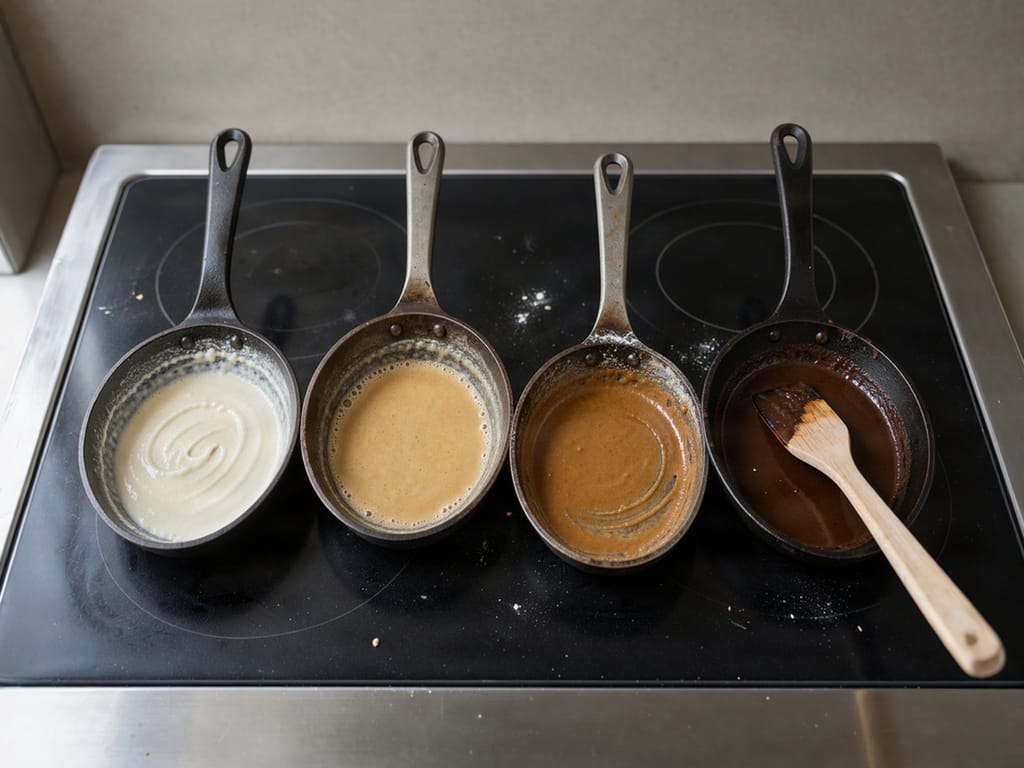
A roux should be as dark as the dish needs: white for béchamel and cream sauces, blond for gravies and light soups, brown for richer gravies and brown sauces, and dark chocolate-brown for gumbo. The darker it gets, the more nutty, toasty flavor it has and the less it thickens, so a dark roux needs more of it. Black specks or a sharp, burnt smell mean it has gone too far and needs to be started again.
A roux is flour cooked in fat, usually equal parts by weight. It is the base of béchamel, most gravies, gumbo and many Czech sauces and soups, where it is called jíška.
As it cooks, three things change:
The raw taste goes. Even a white roux needs a minute or two in the fat so the sauce does not taste floury.
Flavor and color build. The flour toasts, first smelling like biscuits, then popcorn and nuts, then roasted coffee or chocolate.
Thickening power drops. The heat breaks down the starch in the flour.
So the right color is a trade-off between flavor and thickening. Pale roux thickens most; dark roux tastes most.
Recipe of the week, one tip that saves you time and one deal from the shop. Unsubscribe in one click.
The next issue goes out on Thursday, November 26.
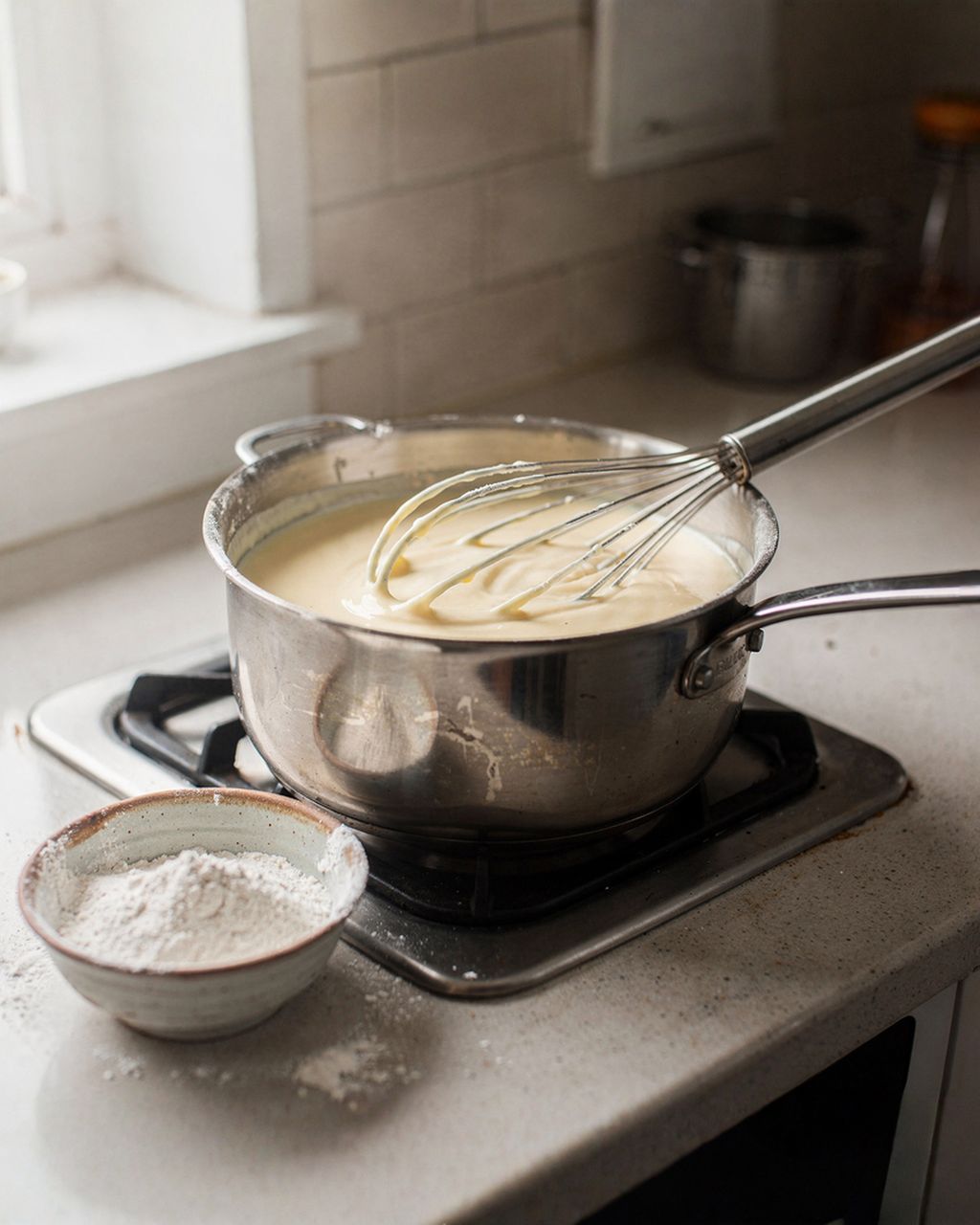
White roux: cooked for a minute or two, just until it smells cooked rather than raw, with no color. Use it for béchamel, cheese sauce for mac and cheese, and white sauces where color would look odd.
Blond roux: a few minutes more, pale golden and smelling of shortbread. Use it for velouté, chicken or turkey gravy, cream soups, and Czech dill sauce (koprová omáčka). This is the light Czech jíška.
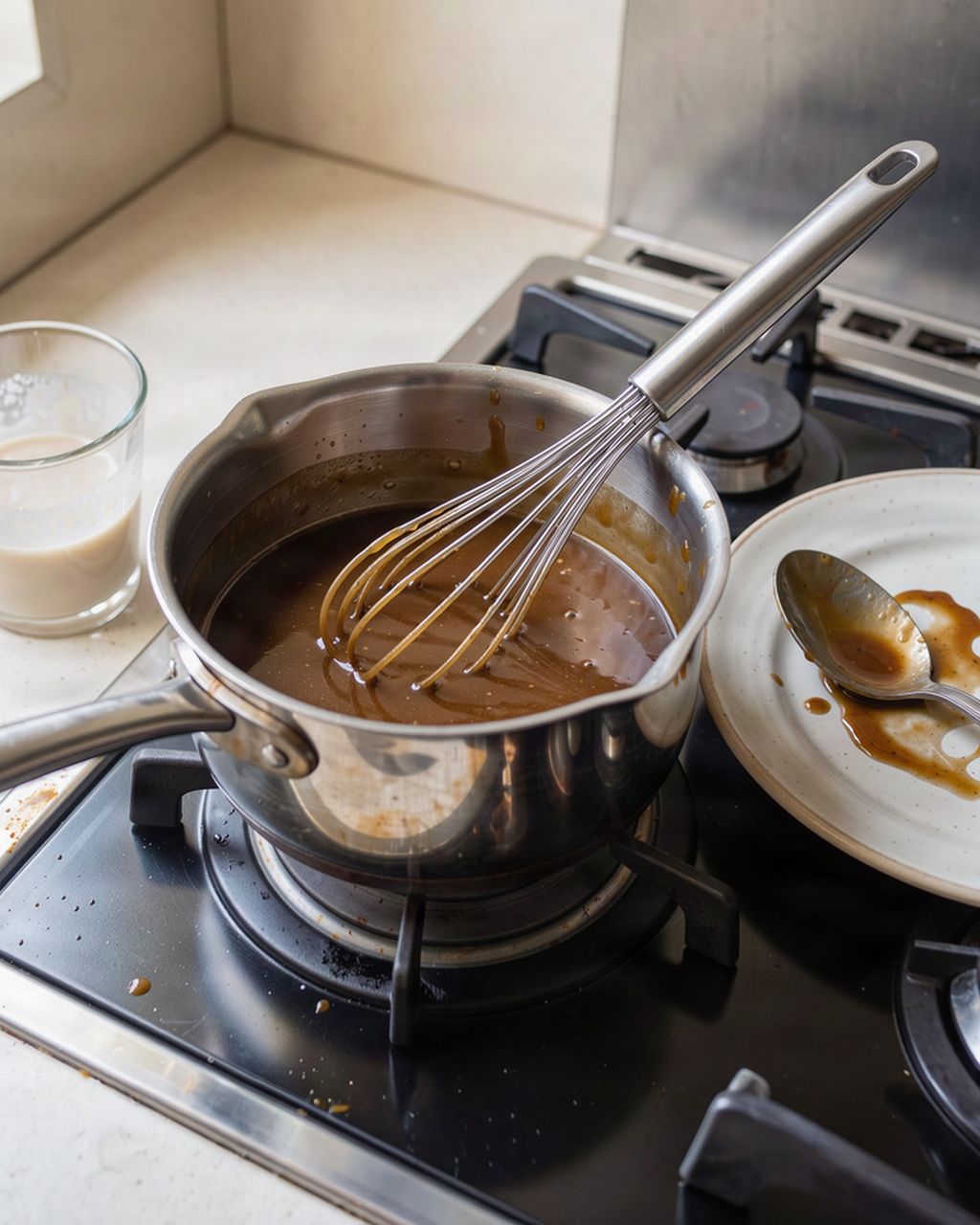
Brown roux: the color of peanut butter or a light hazelnut, with a toasty smell. Use it for beef gravy, brown sauces, and heartier soups.
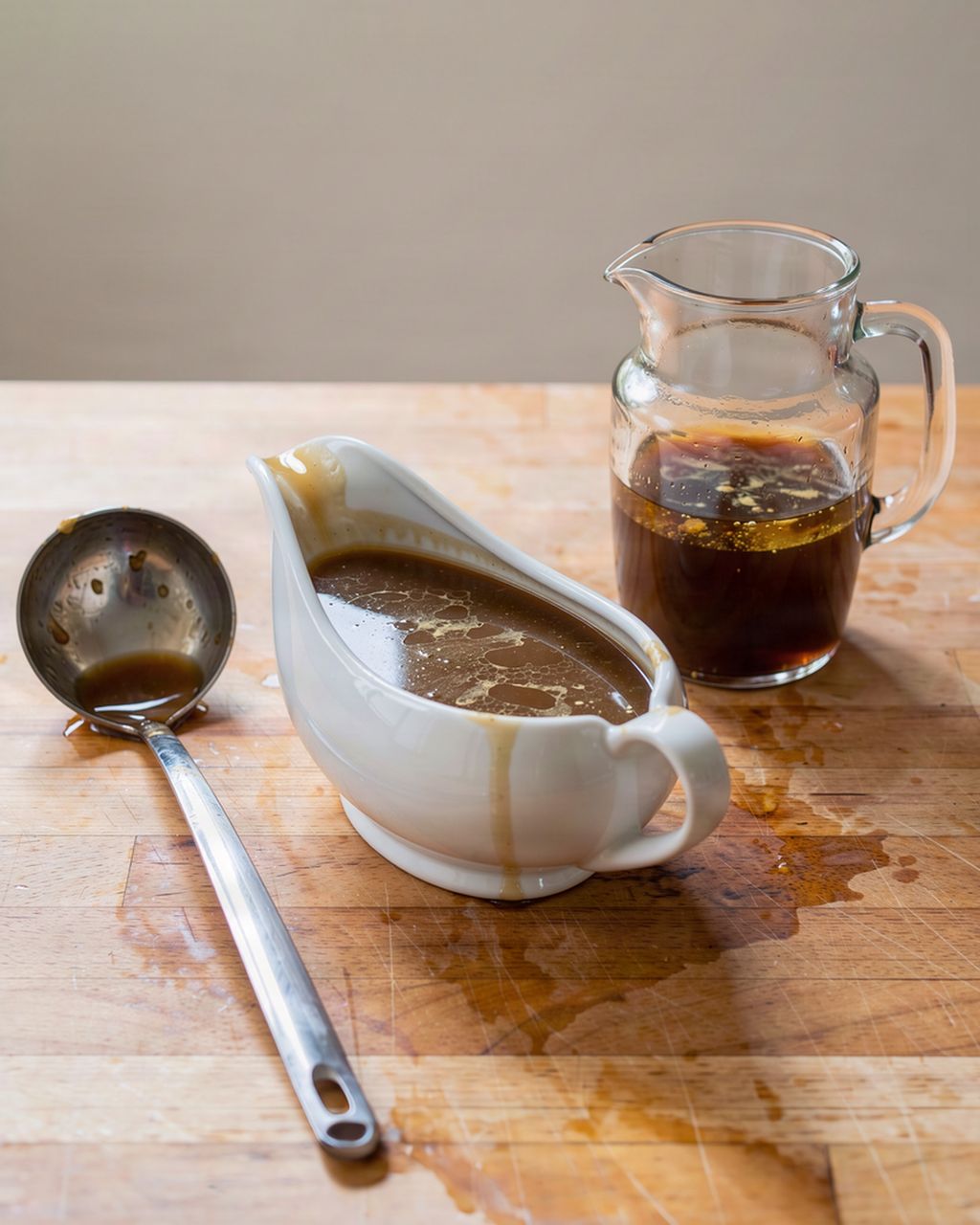
Dark roux: milk chocolate to dark chocolate, deeply nutty and roasted. It is the base of Cajun and Creole gumbo and some étouffées. It adds a lot of flavor but little body, so these dishes use plenty of it.
There is also a very dark, reddish-brown roux, sometimes called brick, used by some gumbo cooks. It is just short of burning, and we would not try it on a first attempt.
It depends far more on heat than on any clock. In America's Test Kitchen's small test batches, a roux reached blond in 3 minutes and peanut-butter brown in 5, which shows how fast it can go. At a steady medium heat at home, expect roughly:
White: 1 to 2 minutes.
Blond: 3 to 6 minutes.
Brown: 10 to 20 minutes.
Dark: 30 to 45 minutes or more over medium-low, the usual gumbo timing.
How to get there without burning it:
Use a heavy pan. Cast iron, enameled cast iron or thick stainless steel heats evenly. Thin pans scorch.
Stir all the time with a flat-edged wooden spatula, reaching into the corners.
Choose the right fat. For white and blond roux, butter is ideal. For brown and dark roux, use oil, lard or clarified butter. Whole butter contains milk solids that burn before the flour gets dark, and oil does not burn at those temperatures the way whole butter does.
Lower the heat as it darkens. The roux colors faster towards the end, so turn it down once it passes peanut-butter brown.
This surprises many cooks the first time a gumbo turns out thin. The heat that browns the flour also breaks its starch into smaller pieces, and smaller pieces thicken less.
The figures:
America's Test Kitchen measured a blond roux (cooked 3 minutes) at 14% less thickening power than a white roux cooked for 1 minute, and a peanut-butter colored roux (5 minutes) at 26% less.
A chocolate-colored roux has about one quarter of the thickening power of a white roux by weight, according to commonly cited cookbook figures.
In practice:
Use more roux for a dark sauce than for a white one of the same thickness.
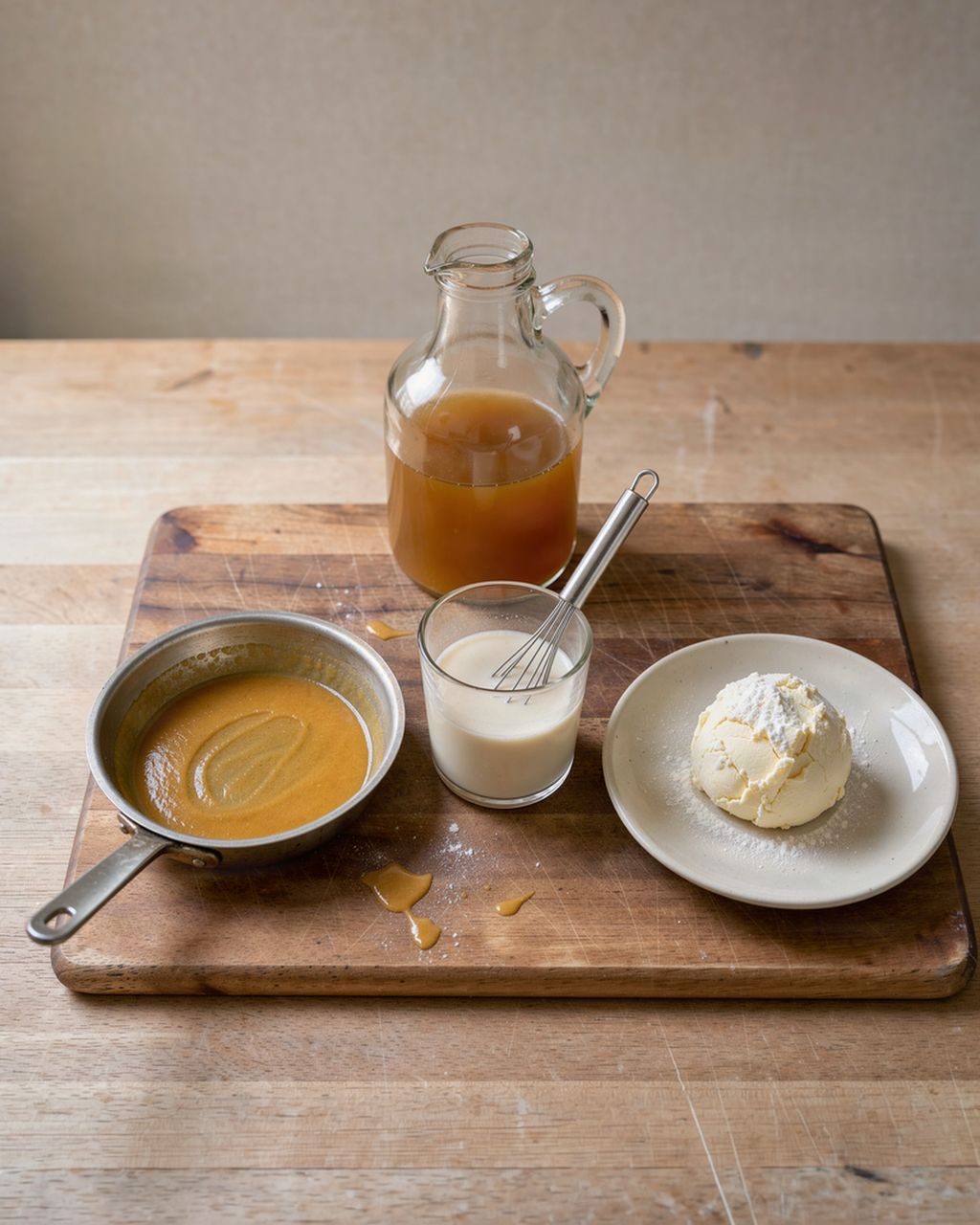
For a dark gravy that also needs body, combine a little dark roux for flavor with a blond roux or a cornstarch slurry for thickness.
If a dark-roux gravy is too thin, don't keep simmering it and hoping. Add a slurry or a little beurre manié (equal parts soft butter and flour).
Our guide to thickening goulash gives amounts per litre for other thickeners too.
A dark roux is close to burning by design, so learn the signs:
Black or very dark specks scattered through the roux.
A sharp, acrid smell, like burnt toast, instead of a warm, nutty one.
Smoke rising from the pan.
A bitter taste if you let a little cool on a spoon and try it.
A burnt roux cannot be saved. Its bitterness spreads through the whole pot, and no amount of seasoning hides it. Wipe out the pan and start again, a little lower and a little slower.
If instead a finished sauce has caught on the bottom of the pan, it may still be rescued: see how to save a scorched sauce.
Once the roux is the color you want, the liquid goes in.
Mix hot and cold. Add cool or room-temperature liquid to a hot roux, or let the roux cool a little and add hot liquid. Hot into hot tends to make lumps.
Add a little first. Whisk in a splash and work it into a smooth paste before adding the rest gradually.
Take care with a dark roux. It is very hot, and liquid hitting it spits and steams. Add vegetables or a little cool liquid first to bring the temperature down, stand back, and keep long sleeves on.
Simmer for a few minutes after the last addition so the sauce reaches full thickness.
If you do get lumps, our guide to lumpy sauce shows how to fix them. For a sauce with no roux at all, see svíčková without roux.
A blond roux takes a few minutes and a brown, peanut-butter colored roux usually 10 to 20 minutes over medium heat, while a dark gumbo roux often takes 30 to 45 minutes or more over medium-low. Timings vary a lot with the heat, the pan and the fat, so go by color and smell, not the clock.
The heat is probably too low, or it simply needs more time; a dark roux is slow. Butter can also burn before it gets dark, so for a dark roux use oil or another fat without milk solids and keep stirring over medium to medium-low heat.
Yes, the longer flour cooks in fat, the more its starch breaks down, so it thickens less. In America's Test Kitchen's test, a blond roux had 14% less thickening power than a white roux and a peanut-butter colored roux 26% less.
A burnt roux has black or dark specks, smells sharp and acrid rather than nutty, and may smoke. It tastes bitter and cannot be saved, so wipe out the pan and start again.
The heat was too high, or the pan was thin and has hot spots. Lower the heat, stir constantly and scrape the corners of the pan; for a white or blond roux, take it off the heat as soon as it reaches the color you want.
One recipe worth heating the oven for, one tip, and one deal from the shop. Nothing else.