Dill sauce with slow-roasted beef
Updated Aug 28, 2026
Lumps in a sauce aren't burnt flour or curdled cream — they're dry flour or starch sealed inside a shell of its own jelly. The moment starch grains hit hot liquid as a dry clump, their surface gelatinizes in a split second, sticks together, and traps raw powder inside that will never dissolve. The good news: almost any lumpy sauce can be rescued in under two minutes with a sieve, a whisk, or a stick blender. The even better news: one simple rule about temperature lets you skip the whole problem in the first place.
Lumpy sauce has five usual culprits: cold flour tipped into hot liquid, poorly mixed starch, curdled cream, a scorched pan bottom, and an undercooked roux. Four of these come down to starch, one to protein — and each needs a different fix.
A starch granule behaves like a tiny sponge. At roughly 55–70°C (wheat starch gelatinizes first, corn starch a bit later, potato starch somewhere in between), it soaks up water, swells to several times its size, and starts thickening the liquid. That process is called gelatinization, and it's the whole magic behind thickening a sauce.
The trouble is speed. The surface of a heap of flour gelatinizes instantly, forming a watertight gel shell around itself — water can't get inside anymore. What you then fish out of the sauce with a spoon is dry flour wrapped in a little gelatin pouch. That's why a lump still tastes powdery on the tongue even after the sauce has simmered for half an hour: the inside never actually met the liquid.
The most common culprit is a handful of plain flour tipped straight into a bubbling sauce. The old kitchen rule about temperature contrast holds true, and it really is reliable:
Pour cold liquid onto a hot roux.
Pour a cooled roux into hot liquid.
Hot into hot = the highest risk of lumps. Avoid that combination whenever you can.
Never tip dry flour straight into the pot — not even through a sieve, not even a pinch at a time. It always needs to be coated in fat first (a roux) or stirred into cold liquid.
A starch slurry turns lumpy when the starch settles at the bottom of the cup in the meantime: you end up pouring in almost clear water first, followed by a thick sediment that clumps instantly in the heat. Otherwise, it's the fastest way to thicken a sauce — roughly 1 part starch whisked into 2 parts cold water.
The fix: give the slurry a fresh stir right before pouring it in, add it in a thin stream, and whisk with your other hand at the same time. And never stir starch into warm liquid — it starts gelatinizing before you've finished mixing it.
The grains that show up after adding cream are something else entirely — and you can tell them apart by taste and appearance:
A flour lump is smooth, pale, tastes powdery, and squashes easily between your fingers.
Curdled cream is grainy like cottage cheese, the sauce looks broken, and fat often separates out on top.
Curdling comes down to acidity, salt, and above all a hard boil — not poorly mixed flour. A sieve won't fix it, because the problem is in the proteins, not dry powder. We cover the full fix in How to Rescue a Curdled Cream Sauce.
A roux-based sauce loves to catch on the bottom, especially in a thin pot. If you then stir with a wooden spoon right down to the bottom, you'll scrape up the scorched layer and scatter it through the sauce as brown flecks. They look like lumps, but they taste bitter — and once bitterness is in, there's no getting it back out.
Prevention is simple: a heavy-bottomed pot, gentle heat, and stirring that touches the bottom lightly and often, rather than one hard scrape every five minutes.
An undercooked roux stays grainy and tastes of raw flour, because the starch needs 15–20 minutes of gentle simmering for the granules to fully absorb water. A starch slurry only needs 2–3 minutes. Skip that and some of the granules only partly swell, leaving the sauce tasting powdery. No sieve or blender fixes this — only more time on the stove does.
Three tools will rescue a lumpy sauce: a sieve (the most reliable), a stick blender (the fastest), and a whisk (enough for small lumps). Pick one based on how big the lumps are and whether you want to keep any solid pieces in the sauce.
Take the pan off the heat.
Set a fine sieve over another pan or a bowl.
Pour the sauce through, then push whatever's left through with the back of a ladle or a rubber spatula — work in circles, not a straight push down.
Whatever stays behind in the sieve, throw it away. It's dry flour, and it has no place back in the sauce.
Return the sauce to a clean pan and let it bubble gently for another two minutes.
A sieve has one downside: it strains out solid pieces along with the lumps. For a dill sauce, mushroom sauce, or onion sauce, drain the solids off separately through a coarse strainer first, push just the sauce through the fine sieve, then stir the solids back in.
Take the pan off the heat (boiling sauce splatters under a running blender), tilt the pan, and submerge the blender head fully — otherwise you'll whip in a load of foam. Then blitz in short pulses, 10–15 seconds total. Most lumps disappear on the first go.
Watch out for two things:
Don't over-blend a potato-based sauce. Potato starch breaks down with prolonged blending and the sauce turns glassy and stringy — a texture that can't be fixed afterwards.
Blend cream sauces only briefly. Running the blender flat out for too long whips in air, lightens the colour, and the sauce sinks back down once it sits.
And obviously: a blender will also chop up mushrooms and dill. For sauces with solid pieces, reach for the sieve instead.
When the lumps are small and soft, a whisk is enough. Take the sauce off a hard boil and whisk briskly with a balloon whisk, focusing on the bottom and sides of the pan, where lumps tend to cling.
One trick that improves your odds: add a splash of cold liquid. A thinner sauce puts up less resistance against the whisk, so the lumps break up more easily. Let the sauce reduce for a bit afterwards to get the thickness back.
A wooden spoon can't do this job — it pushes lumps aside instead of breaking them apart. For thickening, a whisk is the tool for the job.
Choose the tool based on whether the sauce has solid pieces in it: a smooth sauce is rescued by a blender, a chunky one by a sieve, small lumps by a whisk.
A smooth sauce with no solids (béchamel, beef-in-gravy sauces) → blender, then a sieve for good measure.
A sauce with solids (mushroom, dill) → sieve, then stir the solids back in.
A few small lumps → whisk, done in ten seconds.
A scorched or bitter sauce → neither of the above — see below.
There's one principle that prevents lumps altogether: every single starch granule needs to be coated in fat or cold liquid before it ever meets heat. Everything else is just technique.
Never tip dry flour into a hot sauce. Not even a teaspoon, not even through a sieve.
Mix a roux 1:1 — equal weight of fat and flour. Stir the flour into melted fat, mix until smooth, and let it bubble for 1–3 minutes so it loses its raw taste.
Mind the temperature contrast. Hot roux plus cold liquid, or cold roux plus hot liquid.
Keep the first splash of liquid small. Work the roux into a thick, lump-free paste first, and only then pour in the rest. A paste is easy to smooth out — a full litre isn't.
Mix starch into cold liquid and give it one more stir right before pouring it in.
Whisk, don't stir with a spoon, and pay close attention to the edges of the pan bottom — that's where lumps start.
Sift flour that's gone clumpy. Flour that's sat in the bag for six months goes into the pot as a lump already.
Let the sauce simmer properly — 2–3 minutes for a starch slurry, 15–20 minutes for a roux, over gentle heat.
Temper cream and add it near the end, away from a hard boil. That saves you from the other kind of little grains.
Lumps show up most often in dill sauce, mushroom sauce, and béchamel; with a beef-and-gravy sauce, it depends on the recipe. The risk climbs with thick, roux-based classics and with any sauce containing solid pieces, since the whisk can't reach the bottom properly.
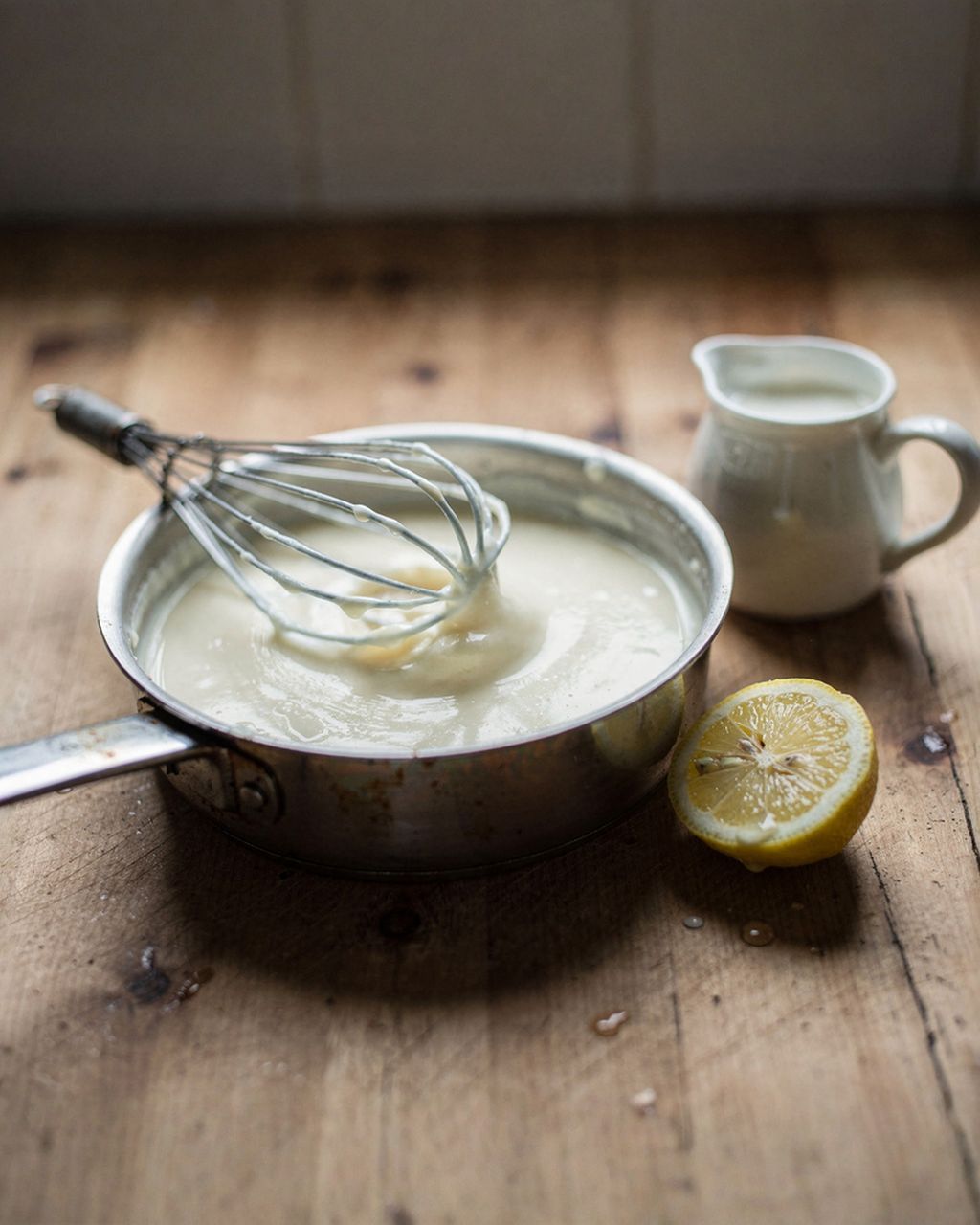
Dill sauce is the textbook case: a thick roux, milk and cream going in at once, plus dill that forms a screen inside the pan. Add the milk gradually, and stir the dill in right at the very end so it doesn't get in the way of whisking.
Mushroom sauce has the same issue — the mushrooms in the sauce block the whisk. Add the stock a ladleful at a time, whisking thoroughly between each addition.
Béchamel lives or dies by the first splashes of milk: work the roux into a thick paste first, then pour in the rest.
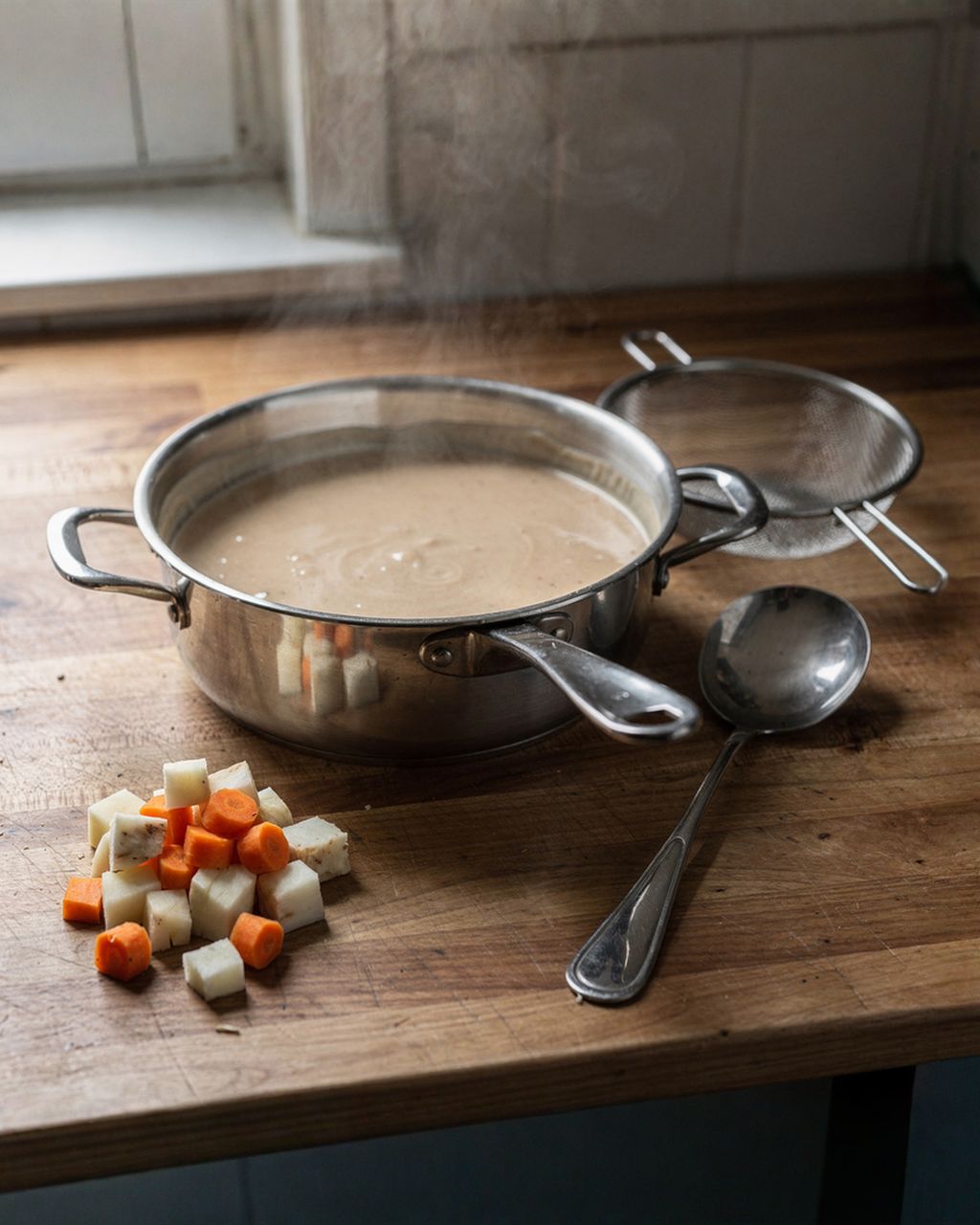
Beef-and-gravy sauce relies mainly on blended root vegetables and cream, but plenty of traditional recipes still finish it with a roux or with flour stirred into cream — in that case, the same rules apply as for any other roux-based sauce. A blender and a sieve aren't a rescue here so much as a normal part of the method.
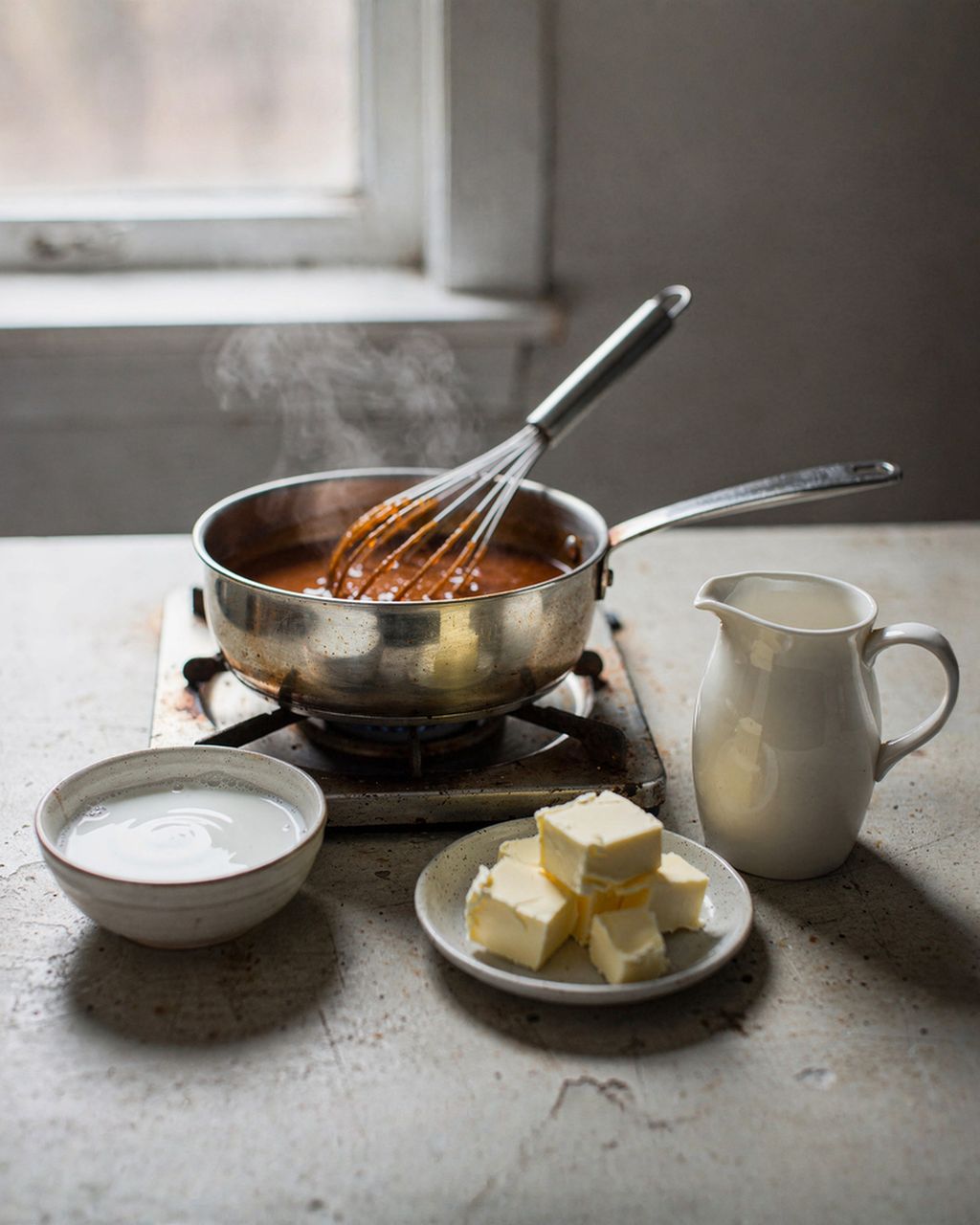
Dill sauce with slow-roasted beef
Dill sauce with slow-roasted beef — the classic where keeping an eye on the roux pays off the most
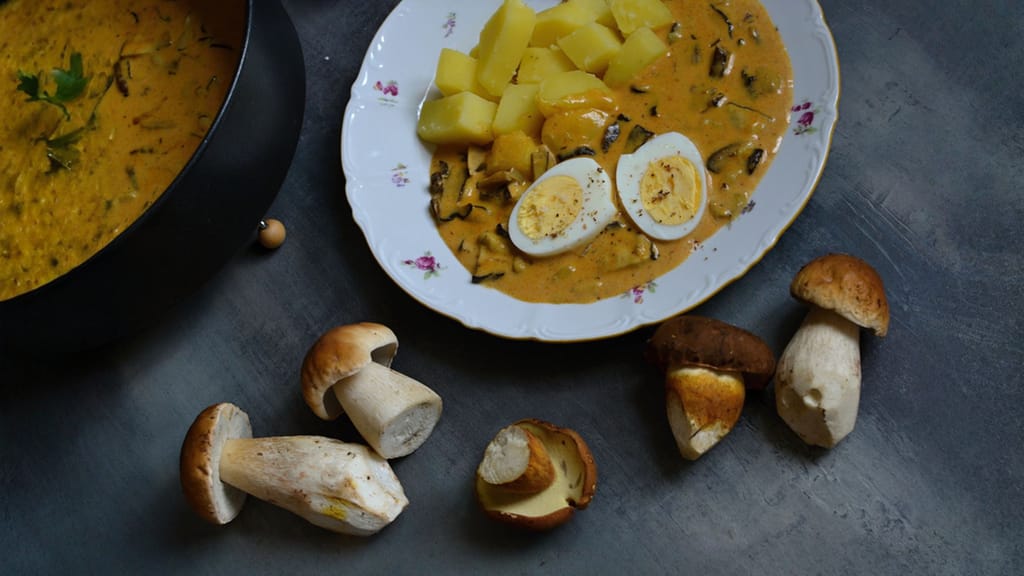
Mushroom sauce - an easy and wonderful autumn treat
Mushroom sauce: add the stock a little at a time so the whisk can reach the bottom
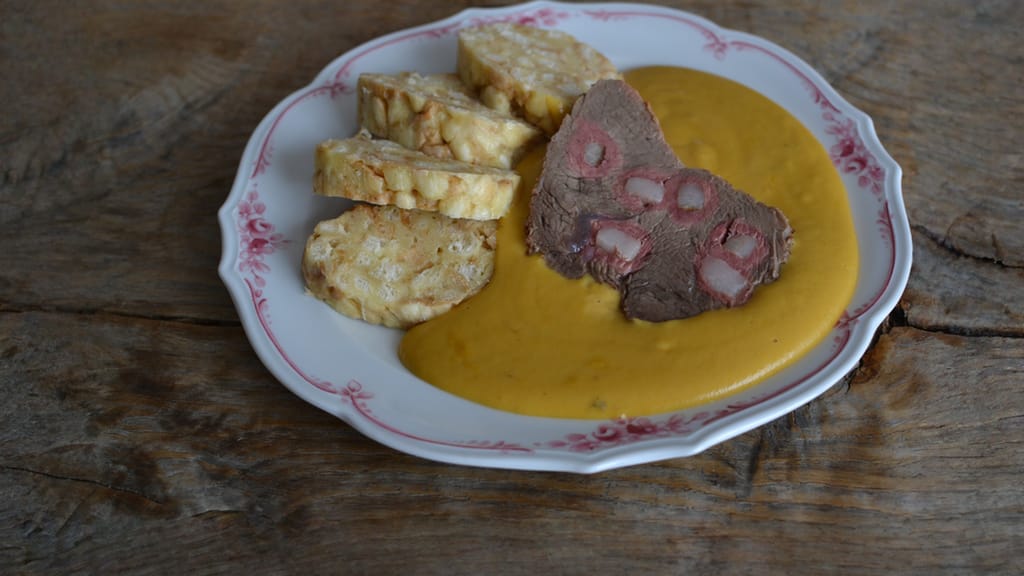
Sunday lunch: perfect homemade svíčková (czech beef sirloin in creamy vegetable sauce)
Perfect homemade beef-and-gravy sauce — the sauce is carried by blended vegetables and cream; if you're adding flour, stir it into the cream first, never tip it straight into a hot sauce
There are four ways to re-thicken a sauce that's gone thin: reduce it, use a starch slurry, use beurre manié, or blend in some vegetables — never by tipping in flour. That's exactly the problem you just fixed, and it will just happen again.
Reduce it. Let the sauce bubble gently, uncovered, so liquid evaporates off. Cleanest flavour, just takes time.
Starch slurry. A teaspoon of cornstarch mixed into two tablespoons of cold water, poured in while whisking constantly, then simmered for 2–3 minutes. Add potato starch away from a hard boil and let it thicken only briefly — long boiling breaks it down and thins the sauce right back out.
Beurre manié. Mix softened butter and flour cold, 1:1, into a paste, then whisk it into the boiling sauce in small pieces at a time. The flour is coated in fat, so it can't clump.
Blended vegetables from the sauce itself, or a spoonful of cream stirred in at the end.
We cover the exact ratios for each thickener in Sauce Thickeners and Their Ratios.
Because plain wheat flour isn't pure starch — it contains gluten, which clumps into stretchy, rubbery lumps in water before it has a chance to dissolve. For mixing into cold liquid, pure starch (cornstarch or potato starch) is more reliable, since it has no gluten. If you want to thicken with flour instead, coat it in fat first — as a roux or a beurre manié.
Yes, you can remove lumps from a sauce that's already gone cold — just reheat it first. After a night in the fridge, cold sauce is noticeably thicker (starch firms up as it cools), so a blender or sieve would have to fight through it unnecessarily. Warm it gently over low heat, splash in a little stock or milk, then push it through a sieve or blitz it with a stick blender.
A countertop blender will break up the lumps, but with hot sauce there's a real risk that steam blows the lid off along with the contents. Fill the jug no more than a third full, remove the small centre cap from the lid, cover the opening with a folded tea towel, and start on the lowest speed. Letting the sauce cool for five minutes first is a lot easier than cleaning the ceiling afterwards.
A flour lump is smooth, pale, squashes easily between your fingers, and feels powdery on the tongue, whereas curdled cream is finely grainy like cottage cheese, with fat visibly separating on the surface. The fix differs accordingly: press lumps through a sieve or blitz them with a blender, but a sieve won't fix curdled cream, since the problem lies in the proteins. Take the sauce off the heat, whisk in a spoonful of cold cream or a splash of cold milk, and don't let it boil hard again.
Sifting only breaks up clumps that formed in the bag — it does nothing about clumping in the pan, which happens the instant dry powder meets hot liquid. Every little heap of flour gelatinizes on the surface almost instantly, sealing the dry flour inside, and a sieve has no effect on that particular cause. Always coat flour in fat as a roux, or stir it into cold liquid, before it ever meets a hot sauce.
Reach for pure starch mixed into cold liquid, and stir it in near the end of cooking. Potato and tapioca starch gelatinize quickly and can't handle long boiling — they'll thin back out. Rice and corn starch, on the other hand, need a proper simmer to fully thicken. So the classic long-simmered-roux method doesn't translate one-to-one to gluten-free thickeners.
One recipe worth heating the oven for, one tip, and one deal from the shop. Nothing else.