Roux vs Cornstarch Slurry vs Beurre Manié: Which Thickener and How Much
Why Is My Gravy Not Thickening? Flour vs Cornstarch Amounts per Cup
Updated Nov 20, 2026
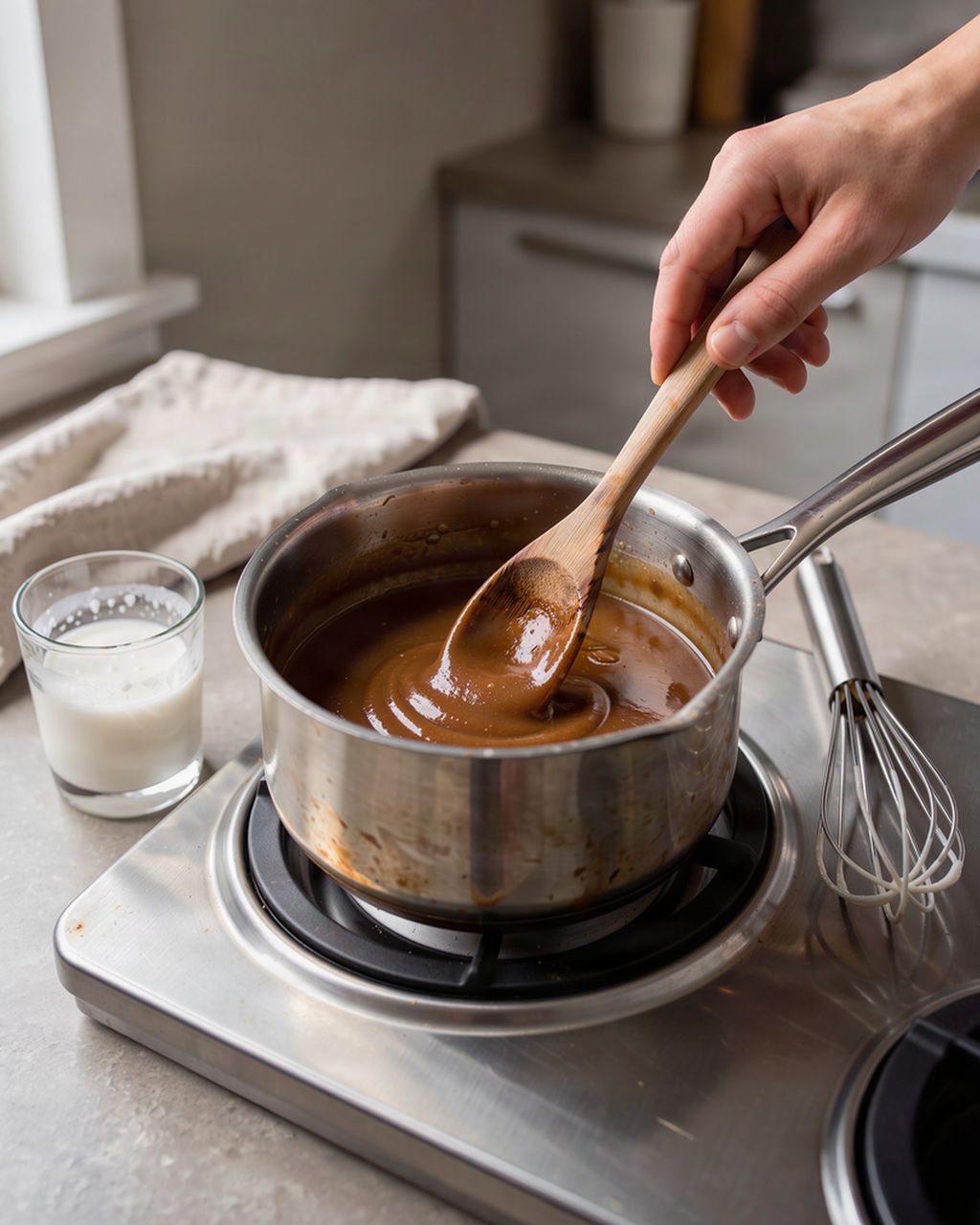
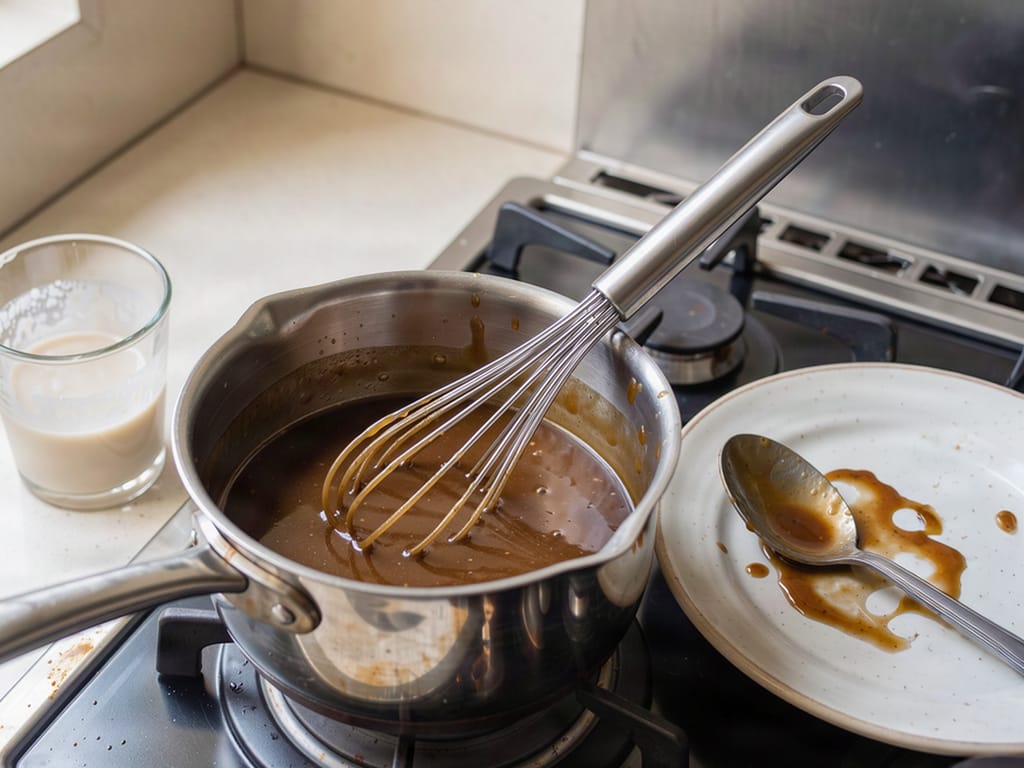
Gravy stays thin when there is too little thickener for the amount of liquid, or when the starch has not been heated enough to swell, or has been cooked or stirred so long that it breaks down again. For a medium gravy, use about 2 tablespoons of flour or 1 tablespoon of cornstarch per US cup (236.6 ml) of liquid. Flour needs a few minutes of simmering; cornstarch only thickens fully once the gravy comes to a simmer or gentle boil, about 95°C (203°F), and then needs gentle handling.
Gravy thickens when starch granules in flour or cornstarch soak up hot liquid, swell and burst. A thin gravy almost always comes down to one of these:
Not enough thickener for the amount of liquid. This is the most common cause, especially after adding extra stock or pan juices.
Not hot enough, or not long enough. Starch only swells close to a simmer or boil.
The starch broke down, from boiling too long, whisking hard after it set, or added acid.
A very dark roux, which has less thickening power than a pale one.
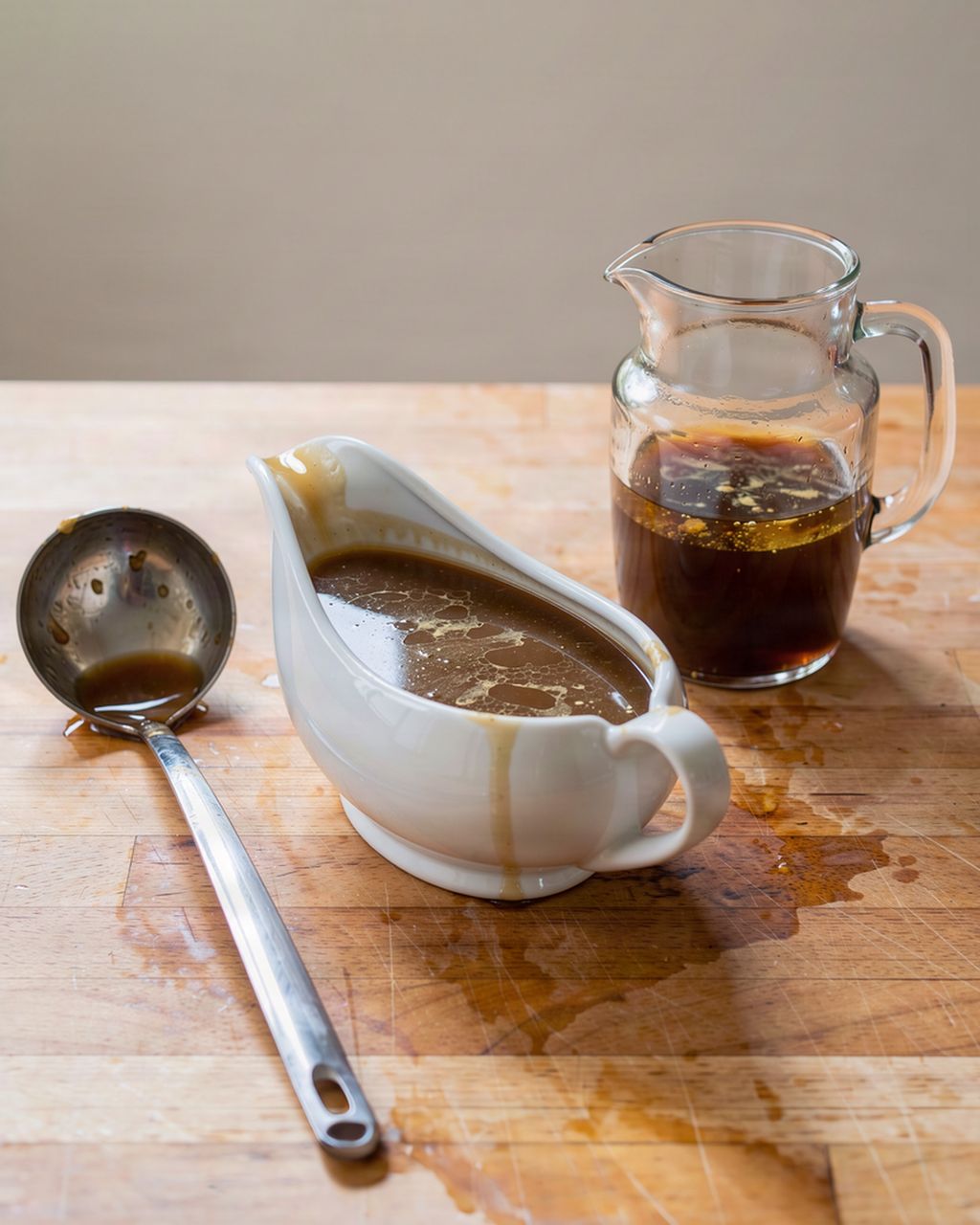
It also helps to remember that gravy thickens as it cools. Test it on a cold spoon or a chilled plate, not in the pan.
Seasonal baking plans, tested recipes and kitchen tricks that save you time. Unsubscribe in one click.
These amounts are for 1 US cup (236.6 ml) of stock, drippings or milk. A metric cup (250 ml) is close enough to use the same amounts.
Flour, thin gravy: 1 tablespoon (about 8 g).
Flour, medium gravy: 2 tablespoons (about 16 g). This is the standard for turkey or roast gravy, about 67 g per litre.
Flour, thick gravy: 3 tablespoons (about 24 g).
Cornstarch, medium gravy: 1 tablespoon (about 8 g), roughly 34 g per litre.
Potato starch: about the same as cornstarch. It thickens at a lower temperature but thins quickly if it keeps boiling.
Flour is only partly starch, so it takes about twice as much flour as cornstarch for the same thickness. Our tool uses 7.9 g of all-purpose flour per level tablespoon; see how many grams in a tablespoon of flour for other amounts. Cornstarch is called cornflour in the UK; see our cornstarch and potato starch pages.
Flour gravy needs a few minutes of gentle simmering after the last of the liquid goes in. That lets the starch swell fully and cooks out the raw, pasty taste. If you made a roux, the flour was already toasted in fat, but the gravy still needs to simmer to reach full thickness.
Cornstarch gravy is faster but fussier. Cornstarch only thickens fully once the gravy comes to a simmer or gentle boil, about 95°C (203°F); give it about a minute, then stop. You will see it turn glossy as it does.
Add a cornstarch slurry near the end, not at the start of a long simmer.
Stir gently once it has thickened. Hard whisking can break the starch network and thin the gravy again.
Don't keep it at a rolling boil. Long, hard boiling makes cornstarch break down.
That is starch breakdown, and it has a few causes.
Overcooking cornstarch. Boil a cornstarch gravy for too long and the swollen granules fall apart. The gravy goes back to almost its original thinness.
Too much stirring after the gravy has set, especially with cornstarch.
Acid. Wine, tomato or lemon added to a starch-thickened gravy can thin it. Add acidic ingredients early, before the starch, or taste and adjust at the very end.
A tasting spoon. Saliva contains an enzyme, amylase, that breaks starch down. A spoon that goes from your mouth back into the pan can thin a whole batch, so use a fresh spoon each time.
Freezing. Cornstarch gravy tends to weep and turn spongy after freezing, and flour gravy can separate too. If you plan to freeze, freeze the stock and thicken it on the day.
To rescue it, add a fresh slurry, bring it back to a simmer or gentle boil for about a minute and stop there.
Pick one, and add a little at a time, because you cannot easily take thickener back out.
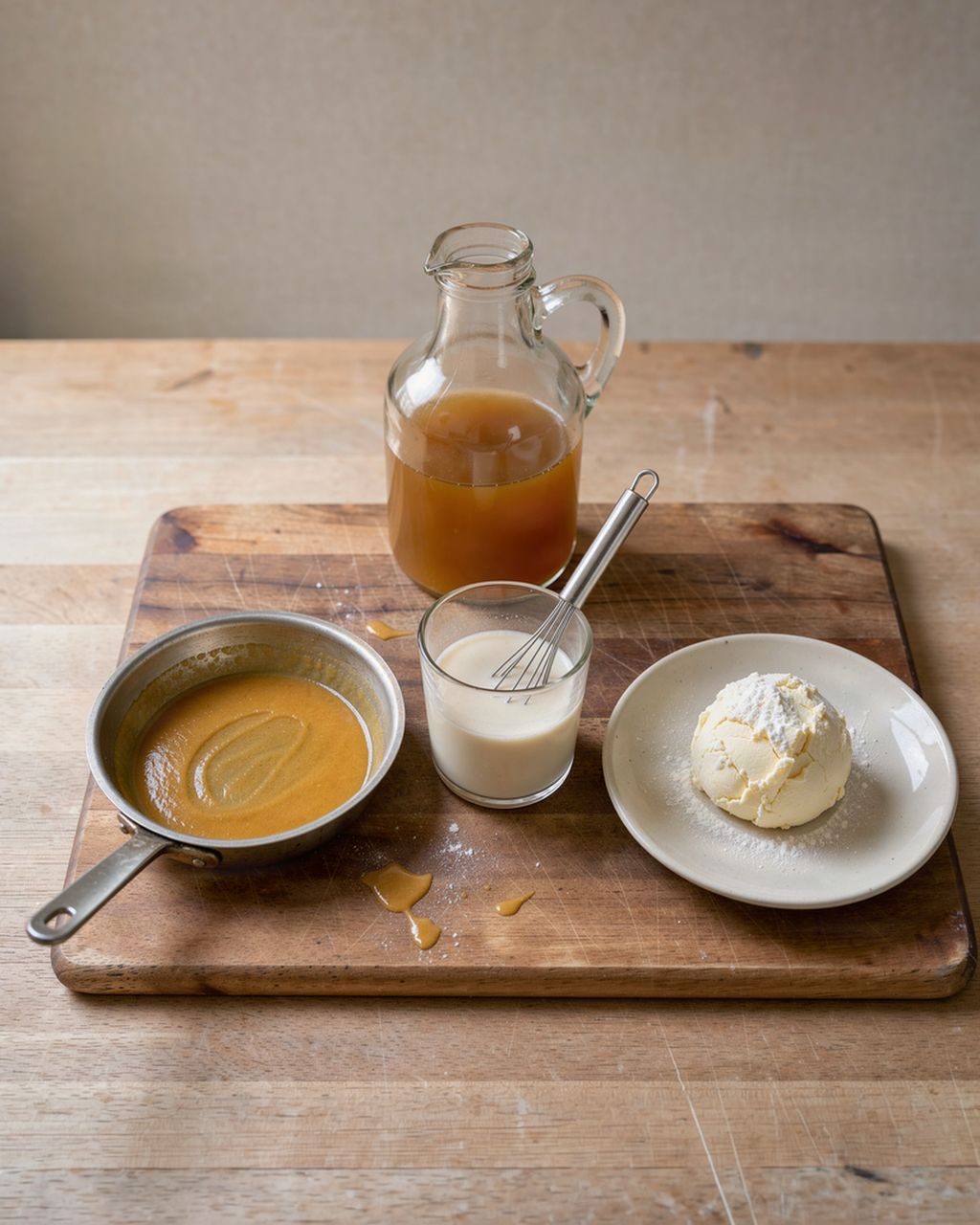
Cornstarch slurry, the fastest. For each US cup of gravy, whisk 1 tablespoon of cornstarch into 2 tablespoons of cold water until smooth. Pour it into the simmering gravy while stirring, bring it to a simmer or gentle boil, about 95°C (203°F), and cook for about a minute.
Flour slurry. Shake 2 tablespoons of flour with about 4 tablespoons of cold water in a jar, then whisk it into the simmering gravy and simmer for a few minutes.
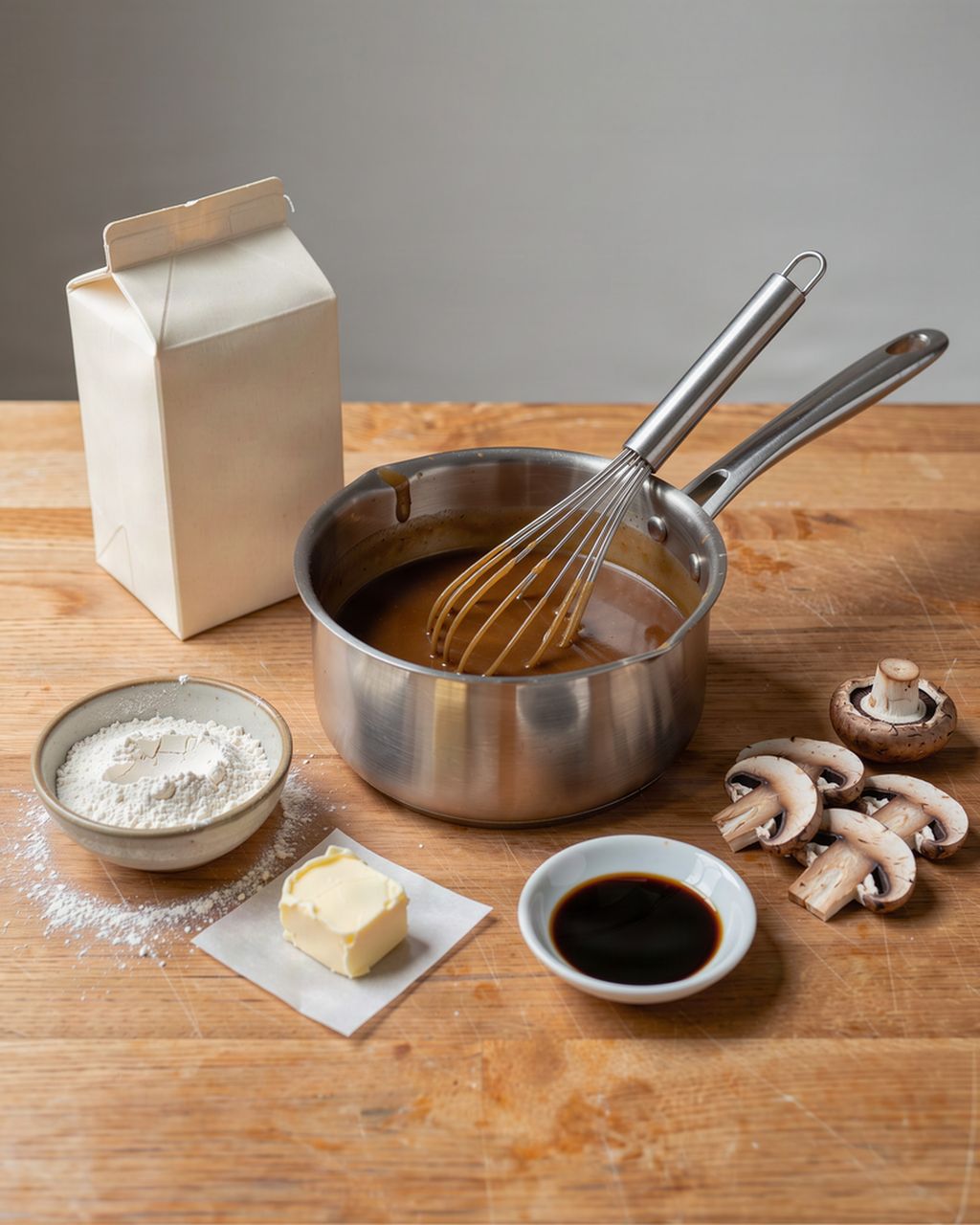
Beurre manié. Mash equal amounts of soft butter and flour into a paste, then whisk in small pieces until the gravy is thick enough. Simmer for a couple of minutes. It adds richness too.
Reduce it. Simmer uncovered until some water evaporates. This concentrates the flavor, so taste for salt as you go.
Never tip dry flour or cornstarch straight into hot gravy, because it clumps instantly. If that has already happened, our guide to lumpy sauce and how to fix it shows how to rescue it. For other thickeners, see how to thicken a sauce without flour.
Your gravy most likely has too little flour or cornstarch for the amount of liquid, or it has not simmered long enough for the starch to swell. Measure about 2 tablespoons of flour or 1 tablespoon of cornstarch per US cup of liquid and bring it to a simmer or gentle boil.
Use about 2 tablespoons of all-purpose flour (about 16 g) per US cup (236.6 ml) of liquid for a medium gravy. Use 1 tablespoon for a thin, pourable gravy and 3 for a thick one.
Use about 1 tablespoon of cornstarch (about 8 g) per US cup (236.6 ml) of liquid, mixed first with 2 tablespoons of cold water. Cornstarch has roughly twice the thickening power of flour, so you need about half as much.
Cornstarch only thickens fully once the gravy comes to a simmer or gentle boil, about 95°C (203°F); give it about a minute, then stop. If it thickened and then went thin, it was boiled too long or whisked too hard after setting, which breaks the starch down.
A cornstarch-thickened gravy reaches full thickness within about a minute at a simmer or gentle boil. A flour-thickened gravy needs a few minutes of simmering to reach full thickness and lose the raw flour taste, and both get thicker as they cool on the plate.
Flour gives an opaque, classic gravy that holds up well when reheated, while cornstarch gives a glossier, clearer gravy with half the amount. Cornstarch is the easier fix for a thin gravy at the last minute; flour is the better base.
One recipe worth heating the oven for, one tip, and one deal from the shop. Nothing else.