Roux vs Cornstarch Slurry vs Beurre Manié: Which Thickener and How Much
Why Is My Cornstarch Slurry Not Thickening? 6 Causes and Fixes
Updated Nov 20, 2026
A cornstarch slurry usually fails to thicken because the sauce never came to a boil, since cornstarch only thickens fully once the sauce comes to a simmer or gentle boil, about 95°C (203°F). If it thickened and then went thin again, it was boiled too long or whisked too hard, it is very acidic, or, in custards and pastry cream, enzymes in the egg yolks broke the starch down. Freezing can also make it weep. Here is how to tell which, and how to fix it.
Two very different problems look alike:
It never thickened. Usually:
The sauce wasn't hot enough. Cornstarch only thickens fully once the sauce comes to a simmer or gentle boil, about 95°C (203°F).
There wasn't enough cornstarch for the amount of liquid.
The slurry had settled, and half the starch stayed in the bottom of the glass.
It thickened, then thinned out. Usually:
It was boiled too long or whisked hard after thickening.
The sauce is very acidic.
It contains egg yolks that weren't cooked enough (custards, pastry cream).
It was frozen and thawed.
Each one has a fix below.
Recipe of the week, one tip that saves you time and one deal from the shop. Unsubscribe in one click.
The next issue goes out on Thursday, November 26.
This is the most common cause. Cornstarch granules swell and thicken as they heat. Cornstarch only thickens fully once the sauce comes to a simmer or gentle boil, about 95°C (203°F); give it about a minute, then stop.
So a sauce that is only steaming, or a slurry stirred into a sauce off the heat, stays thin and can taste chalky.
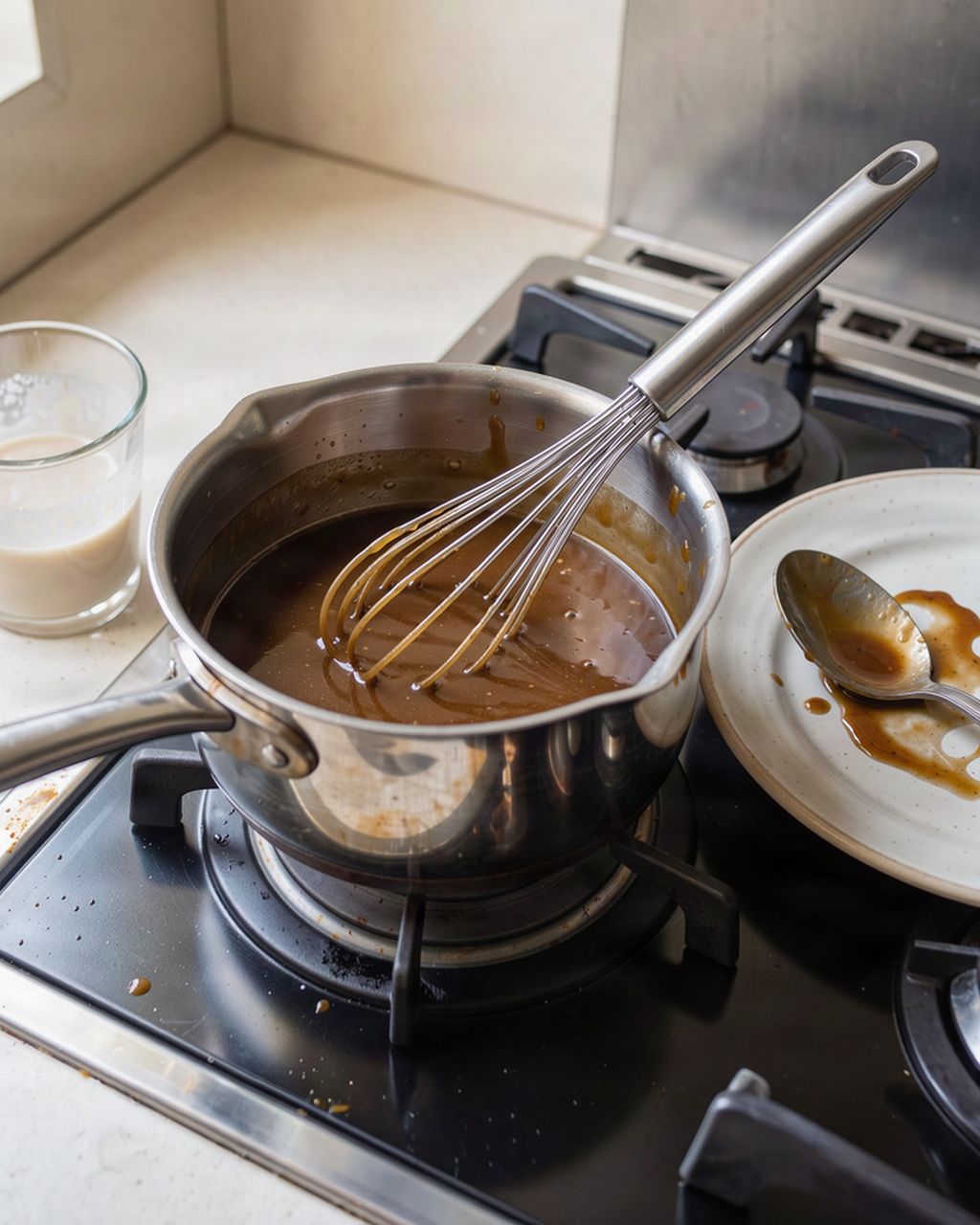
The fix: bring the sauce to a gentle boil while stirring, and let it bubble for about a minute. You'll see it turn from cloudy to glossy and clear as it thickens. Then lower the heat.
If it is boiling, glossy and still thin, add more slurry. As a guide, about 1 tablespoon of cornstarch (about 8 g) thickens 1 US cup (about 240 ml) of liquid to a medium sauce; that's about 30–35 g per litre. Our guide to thickening a sauce without flour has amounts for other starches.
Once cornstarch has thickened, the swollen granules are fragile. Two things break them:
Long, hard boiling. A minute of gentle bubbling is enough. Twenty minutes of simmering after the slurry goes in can leave the sauce thinner than it was.
Vigorous stirring or whisking after it has thickened, especially while it cools. Stir gently, and only as much as you need to stop it catching.
The fix: add the slurry near the end of cooking, not at the start. If a long-simmered sauce has thinned, stir in a little fresh slurry and bring it just back to a boil.
Acidic liquids, such as wine, vinegar, citrus juice and tomatoes, reduce cornstarch's thickening power. Acid can noticeably weaken a cornstarch sauce. Sweet-and-sour sauce, lemon filling and fruit sauces are typical trouble spots.
What helps:
Use a little more cornstarch in acidic sauces.
Where the recipe allows, thicken first and stir in the lemon juice or vinegar off the heat at the end.
For very acidic dishes, arrowroot is often recommended, because it is described as more acid-tolerant. Note that it thins with long cooking too.
Egg yolks contain an enzyme, amylase, that breaks starch down. In a custard or pastry cream thickened with cornstarch, that enzyme can turn a thick cream runny within hours, sometimes overnight in the fridge.
Heat destroys the enzyme. That's why most pastry cream recipes tell you to bring the cream to a boil after the yolks go in, whisking constantly. America's Test Kitchen cooks pastry cream to about 93°C (200°F), until it is thick and glossy with bubbles breaking the surface. The cornstarch protects the yolks from curdling at that temperature.
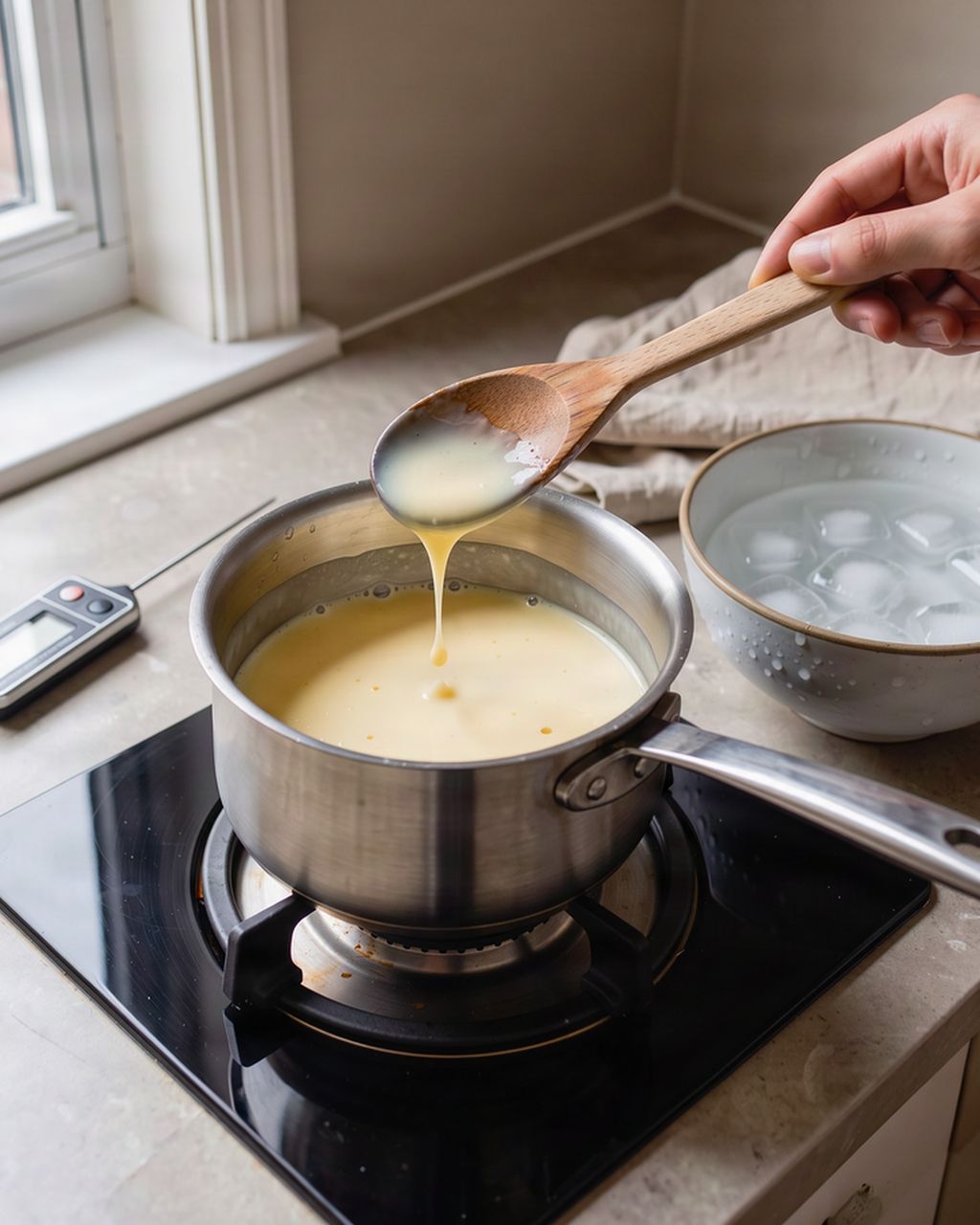
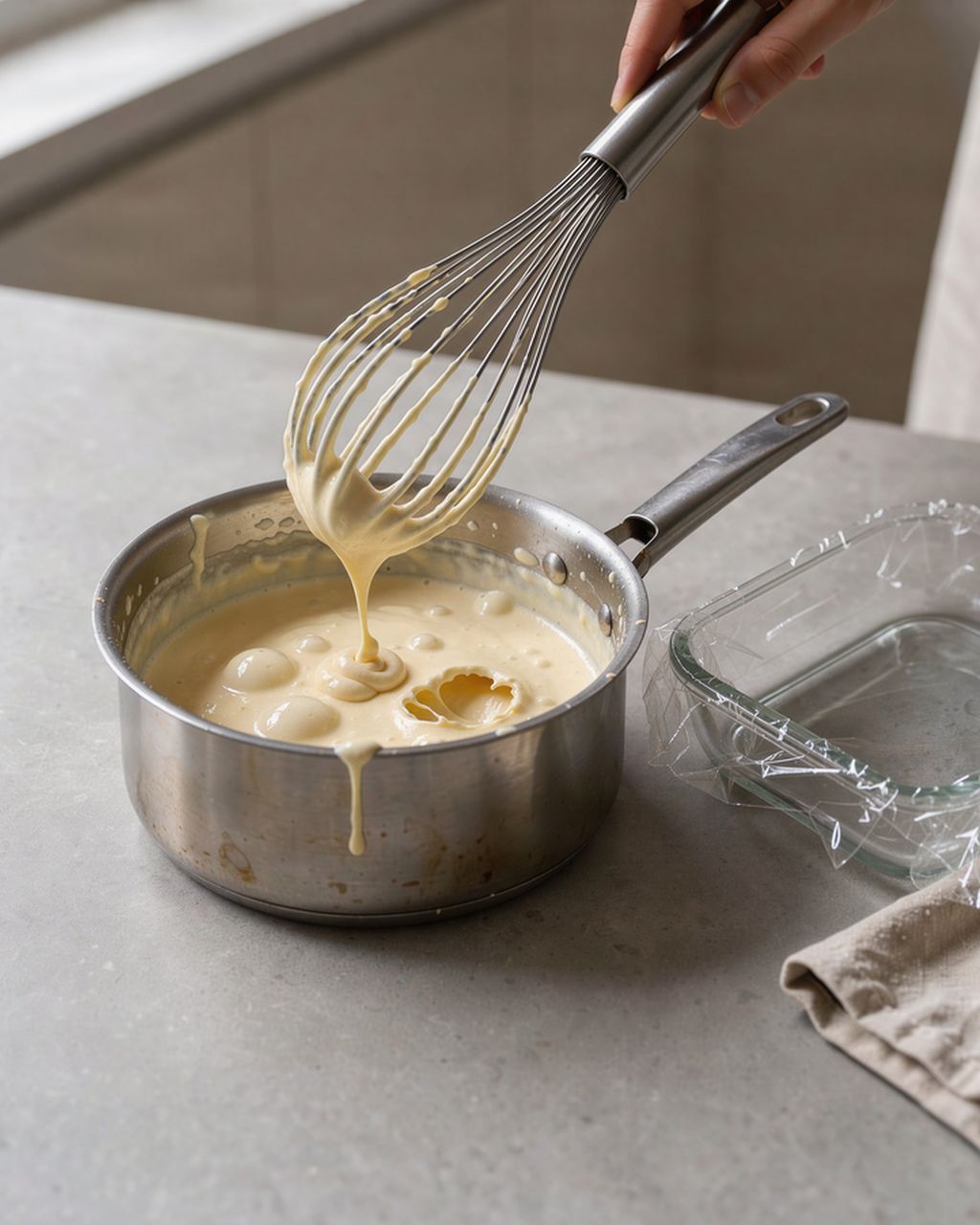
The fix: if your custard thinned, return it to the pan and bring it to a boil again, whisking, then cool it quickly, press plastic wrap onto the surface and refrigerate. Our guide to homemade pudding shows the method, and crème anglaise explains why an unthickened custard sauce is cooked more gently.
Cornstarch must be dispersed in cold liquid before it meets heat; dry cornstarch in hot sauce forms lumps with a raw center.
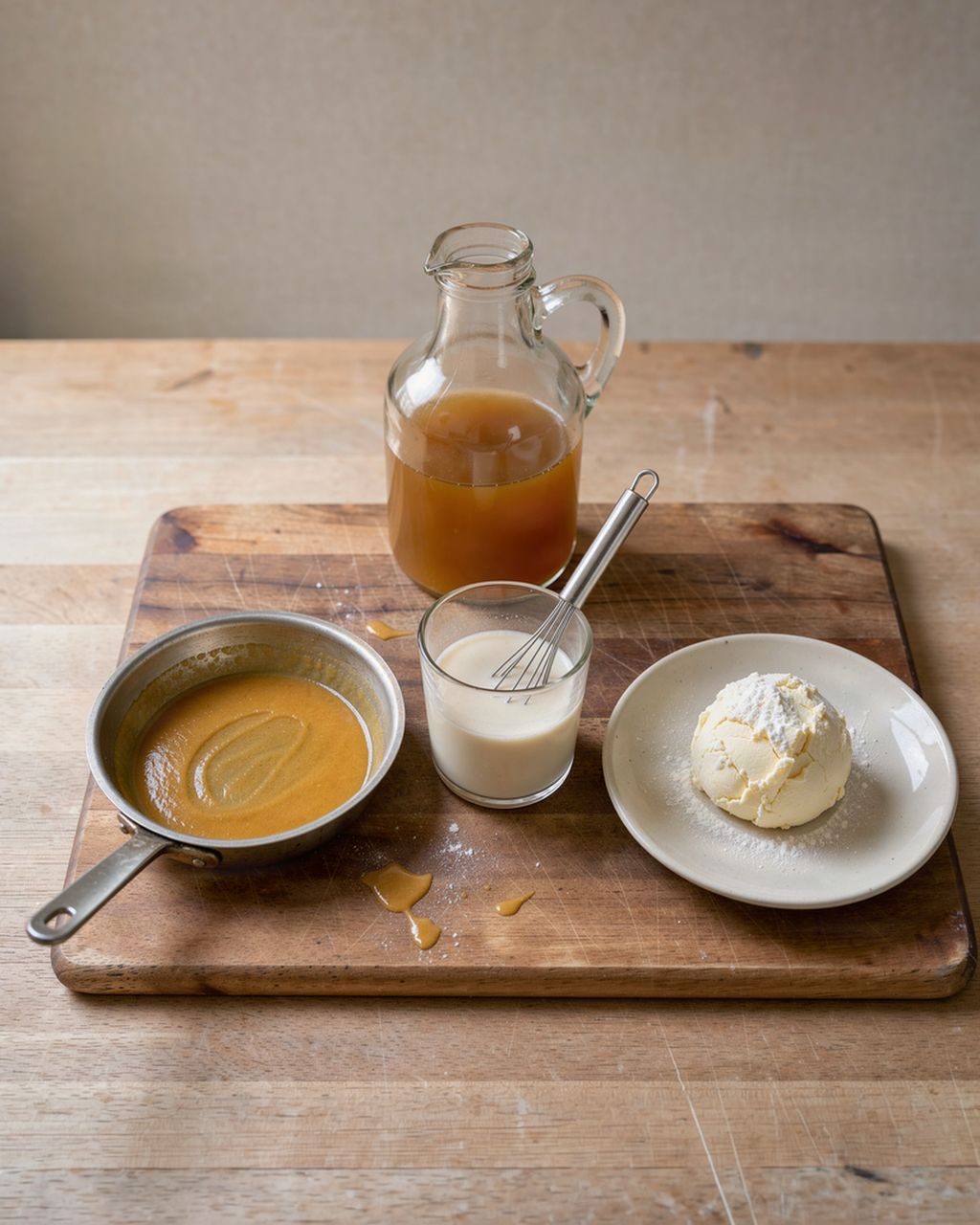
Stir the cornstarch into about twice its volume of cold water, stock or milk until smooth.
It settles fast, so stir it again right before you pour.
Pour it into the simmering sauce in a thin stream while stirring.
Bring back to a gentle boil.
If lumps form anyway, strain the sauce or blend it briefly. More on rescuing lumps in lumpy sauce.
Cornstarch is one of the starches that cope worst with freezing. As the sauce freezes and thaws, the starch molecules realign and squeeze out water. A study of white sauces found cornstarch versions turned markedly spongy after freezing, while wheat flour versions were only slightly affected, and America's Test Kitchen found that gravies thickened with either one wept after freezing.
To fix a thawed sauce: thaw it in the fridge, then reheat it while whisking until it is steaming hot all the way through and bubbling; USDA advises reheating leftovers to 74°C (165°F); check with a food thermometer. If it is still thin or watery, whisk in a little fresh slurry and let it simmer briefly.
If you plan to freeze, arrowroot or tapioca starch is often suggested instead, though no starch is fully freeze-proof. Waxy rice flour (glutinous rice flour) holds up best. Or freeze the sauce unthickened and thicken it after reheating. Our guide to freezing soup and sauce covers which sauces split.
Most often the sauce hasn't come to a simmer. Cornstarch only thickens fully once the sauce comes to a simmer or gentle boil, about 95°C (203°F); give it about a minute, then stop. If it is still thin after that, you probably need more cornstarch.
Once the sauce reaches a boil, cornstarch thickens within about a minute. A brief gentle boil helps it reach full thickness, but long, hard boiling breaks it down and thins the sauce again.
Cornstarch sauces thin again when they are boiled too long, stirred or whisked hard after thickening, or contain a lot of acid. In egg custards, an enzyme in the yolks can do the same unless the custard is brought to a boil.
Cornstarch clumps when it hits hot liquid dry or when the slurry has settled. Always mix it into cold liquid first, stir it again right before pouring, and whisk it into the sauce in a thin stream.
You can, but cornstarch sauces often turn spongy or weep after thawing. Reheat it while whisking until steaming hot throughout, and add a little fresh slurry if needed. If you plan to freeze, try arrowroot or tapioca starch, or freeze the sauce unthickened and thicken it after reheating.
Runny pastry cream usually wasn't cooked long enough after the yolks went in, so an enzyme in the yolks broke down the starch. Bring it back to a boil while whisking; America's Test Kitchen cooks pastry cream to about 93°C (200°F), until bubbles break the surface.
One recipe worth heating the oven for, one tip, and one deal from the shop. Nothing else.