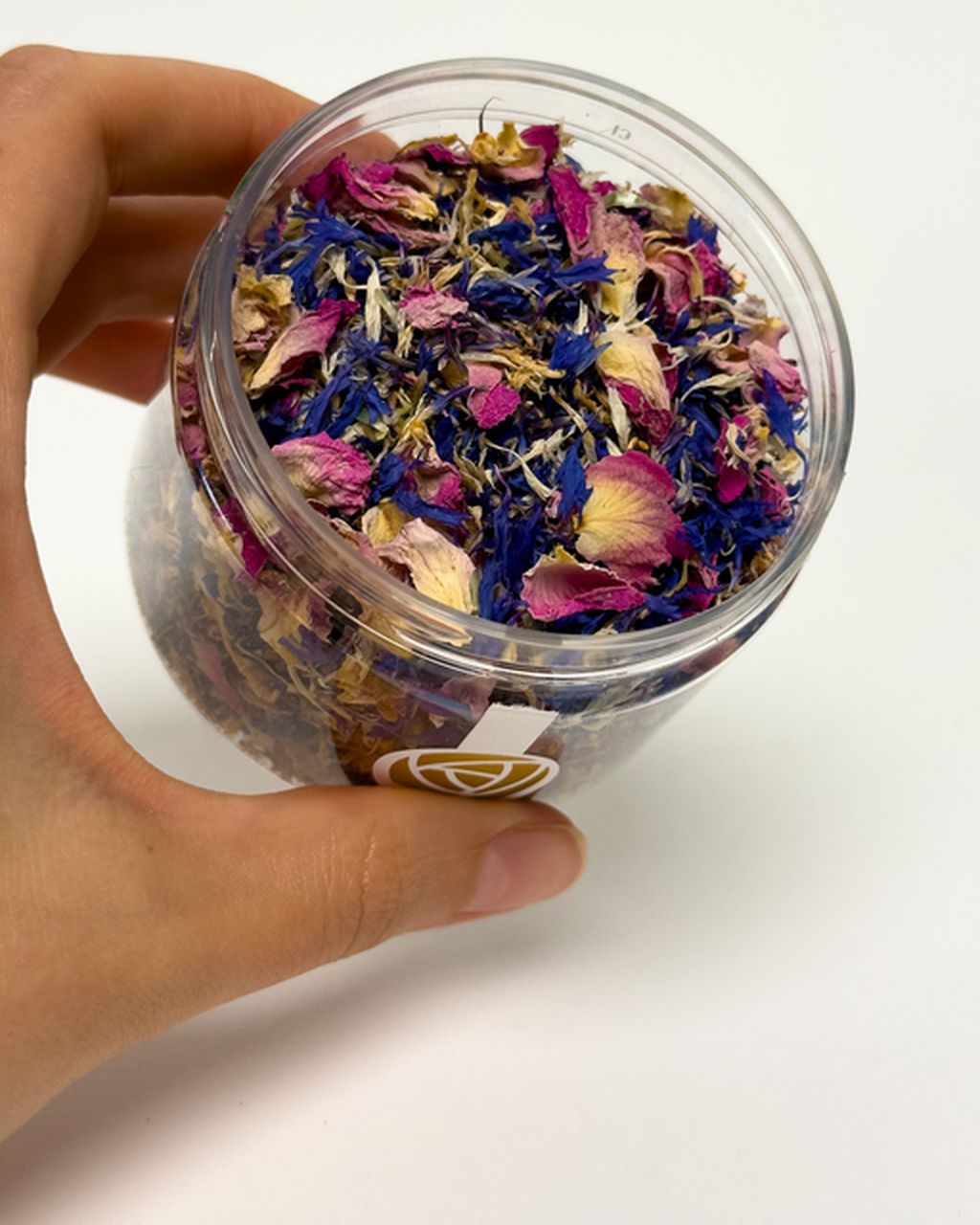
Damask Rose & Cornflower Blend – Sapphire Blue
Rose Cream and Dried Rose Ganache: How to Infuse Roses So They Don't Taste Like Soap
Updated Oct 15, 2026
Rose cream and dried rose ganache only taste like soap when you use too much rose, infuse it too hot or for too long, or give it nothing to balance it. Here's the formula: 2–3 g dried petals per 100 ml (scant ½ cup) of cream, heated to 80 °C (175 °F), infused for 10 minutes under a lid, strained, then finished with a touch of acid or raspberry. Below you'll find why it works, how to turn it into white chocolate ganache, whipped cream and mascarpone cream, and how to rescue a cream that already smells like a bathroom.
Rose in cream tastes like soap for three reasons: too large a dose, infusing too long or too hot, and no counterbalance to offset the rose. The soapy taste comes from the very same aroma compounds that make you want rose in the first place. Rose gets its scent mainly from a few compounds:
phenylethyl alcohol: honeyed and rosy. According to flavor literature, it tastes sweet and honeyed only at low concentrations; above roughly 40 ppm it turns "perfumey".
citronellol: fresh, purely rosy and slightly waxy, the note we know well from cosmetics.
geraniol: sweet and floral, with a light citrus edge.
β-damascenone: a note of dried fruit and baked apple. It only forms during distillation, which is why rose water tastes different from a petal infusion.
With too large a dose, the aroma jumps from "honeyed rose" to "perfume". With too long or too hot an infusion, the petals release not just fragrance but also bitter, astringent tannins, especially from the green sepals of the buds. And sweet, fatty cream with no acidity only amplifies the rose, with nothing to tame it.
Seasonal baking plans, tested recipes and kitchen tricks that save you time. Unsubscribe in one click.
You can flavor cream in four ways: with dried petals, rose water, rose flavoring or rose syrup. Petals give you the most control, because you set the strength of the infusion by both dose and time.
Dried petals or buds: the most delicate and most "real" rose, with the flavor dosed by the gram. The downside: you have to infuse and strain, and the petals soak up some of the cream.
Rose water: quick, with no infusing or straining. Buy rose water labeled as food, which you'll find mainly in Middle Eastern shops. Cosmetic rose water from a drugstore doesn't belong in cream.
Rose flavoring or food-grade rose essential oil: the strongest, and the closest to the soap line. A toothpick tip or a single drop is enough for the whole batch. If you reach for it, buy only oil labeled as suitable for food, never a cosmetic one.
Rose syrup: adds sugar and often coloring too, and suits whipped cream better than ganache.
If you want a gentle, rounded rose, infuse dried petals. Rose water is a last-minute rescue, and flavoring is for a more experienced hand.
Choose edible dried roses intended for food, ideally Damask rose (Rosa damascena). It's the rose used to make rose oil and rose water, so it has the most fragrance. Never use petals from a florist's bouquet: they're often treated with pesticides and don't belong in food. If you're not sure which flowers are safe to eat, see our overview of edible flowers and the ones you're better off not eating.
Here's what from our range works well for infusing:
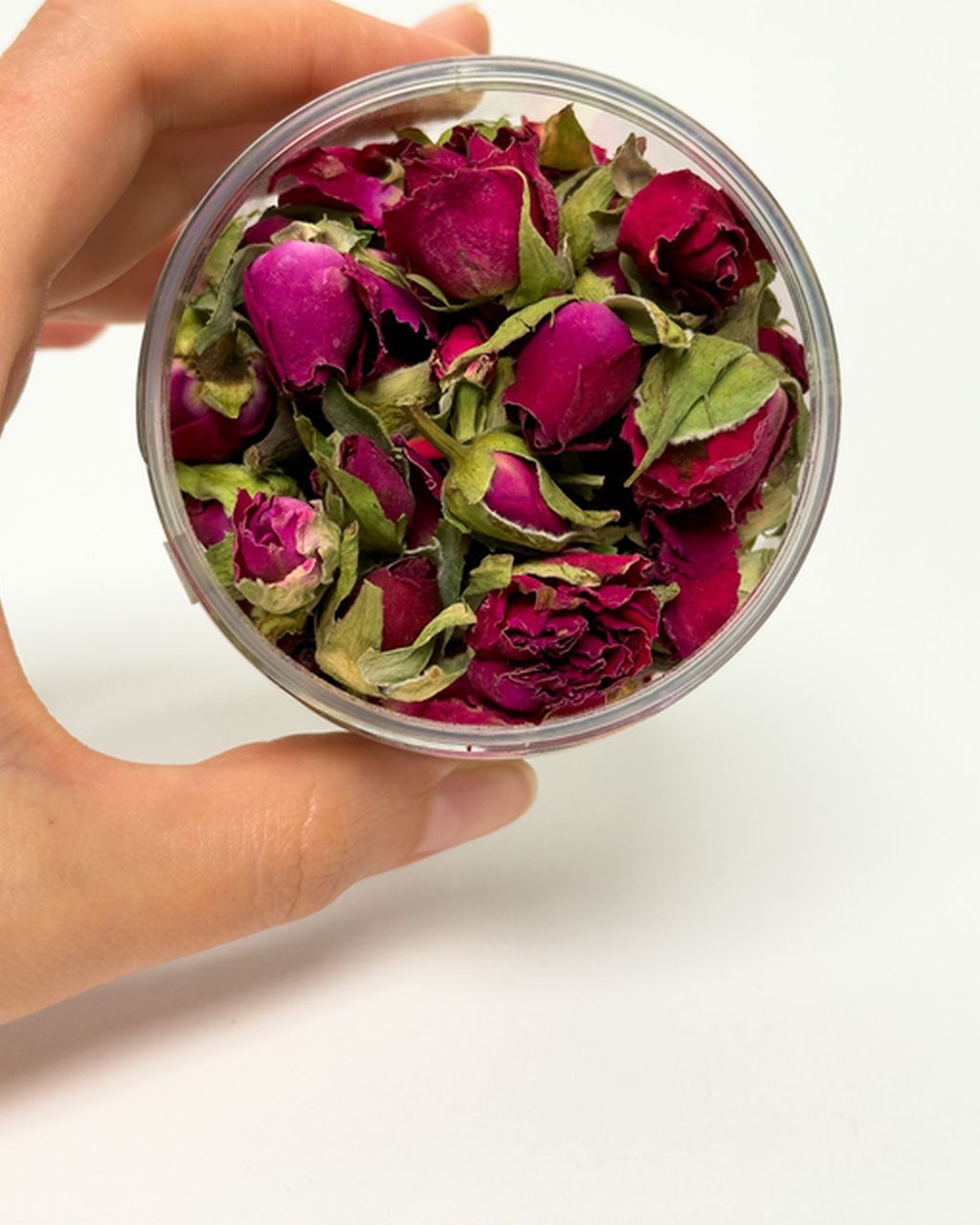
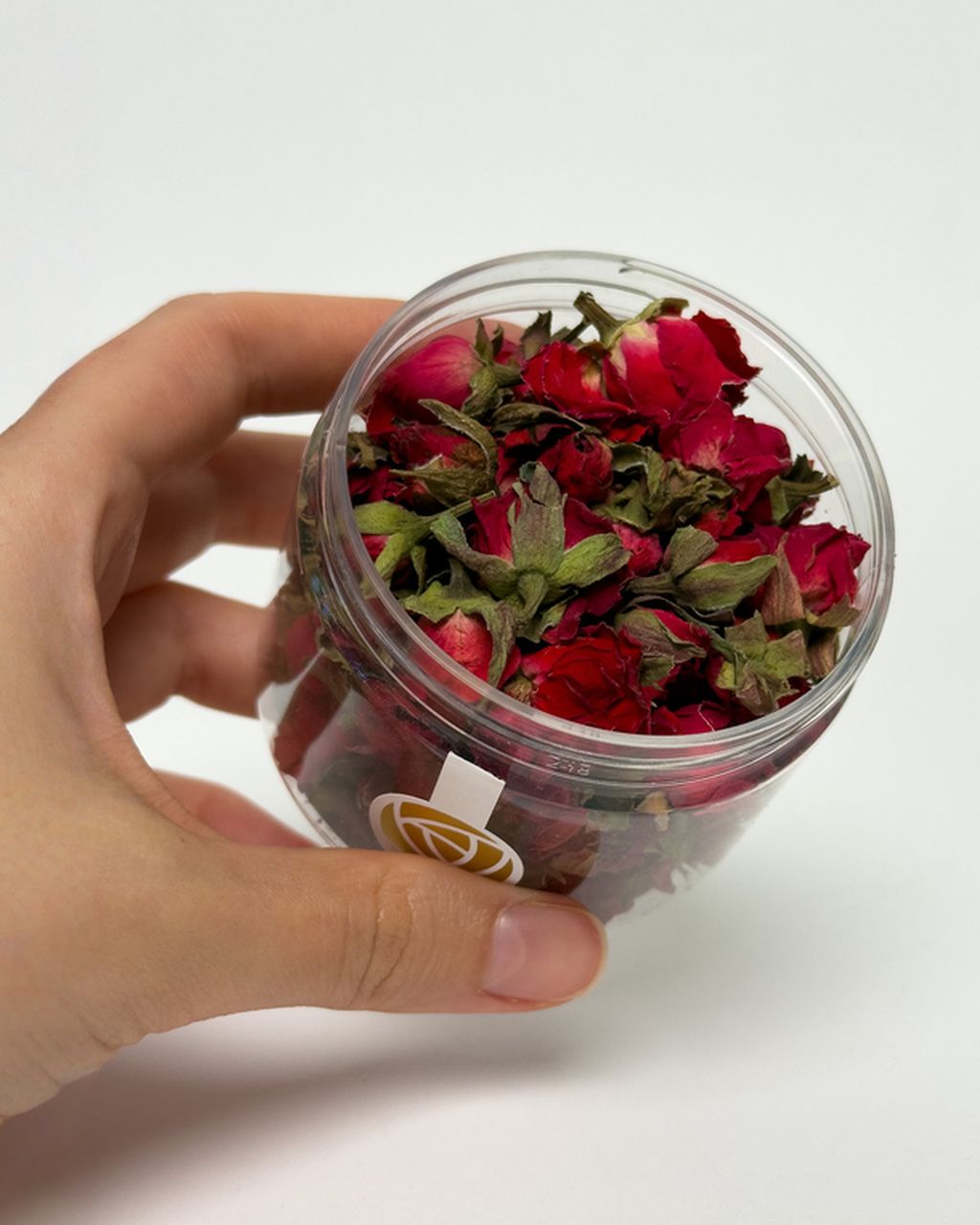
Rosie Rose Damask rose and cornflower blend: the Damask rose petals provide the aroma, while the cornflower adds blue petals for decoration. Cornflower is almost neutral in taste, so expect the flavor to come only from the rose part of the blend. It's the most practical choice for infusing, as these are ready-to-use petals.
Rosie Rose rosebuds: the aroma is concentrated in the center of the bud. Before infusing, crush the bud between your fingers and pull off the green sepals, as that's the most bitter part and the main source of astringency. Save whole buds to decorate the finished cake.
You'll find both, along with other blooms, on our page edible flowers for decorating and flavoring. If you'd like to use the buds in ways other than cream, we have an article on where to use dried edible flowers and rosebuds.
For 100 ml (scant ½ cup) of 33% cream you need 2–3 g of dried petals if you infuse hot, or 3–4 g if you infuse cold. 3 g is roughly 2 heaped tablespoons of petals or 8–10 rosebuds. The fat in cream binds rose's aroma compounds well, so infuse into cream, not into water or milk.
Hot infusion is faster and works best for ganache. Cold infusion takes longer, but the flavor turns out gentler, which you'll appreciate in whipped creams.
For a hot infusion, steep at 75–80 °C (167–175 °F) for 8–12 minutes under a lid, then strain and top the cream back up to its original weight.
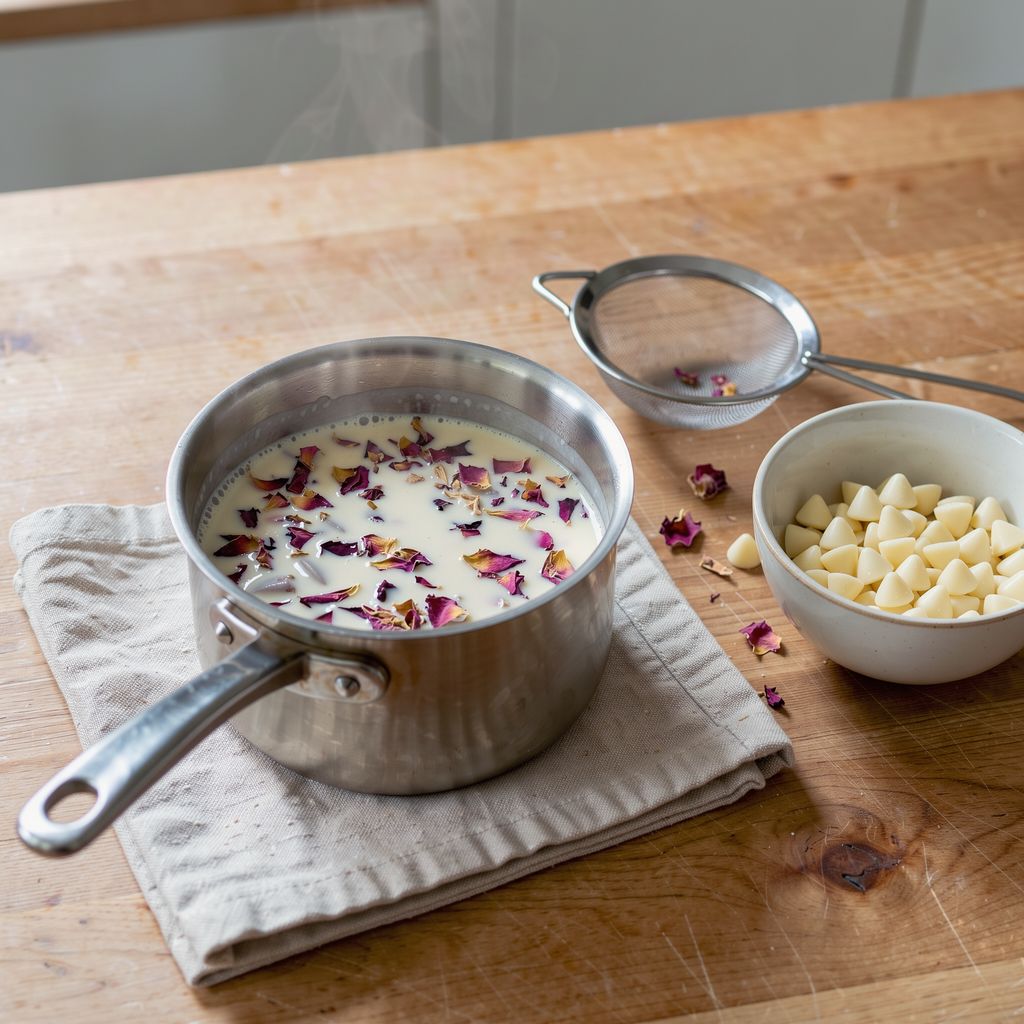
Heat the cream to 75–80 °C (167–175 °F), just before the first bubbles appear around the edges. Don't boil it, as boiling drives off the most delicate fragrance.
Take it off the heat, add the petals, stir, and cover with a lid or cling film so the aroma doesn't escape with the steam.
Infuse for 8–12 minutes. Start tasting at 10 minutes, and strain as soon as the rose tastes clear. By 20 minutes, bitterness creeps in.
Strain through a fine sieve and press the petals only lightly with a spoon. If you squeeze them hard, you'll push out the tannins too.
Weigh the strained cream. The petals absorb roughly 10–15% of it, so top it up with fresh cream to the original weight. Otherwise your ganache ratio won't be right.
Hot-infused cream must be chilled for at least 4 hours in the fridge before whipping, or it won't whip.
For a cold infusion, leave 3–4 g of petals in 100 ml (scant ½ cup) of cream for 12–24 hours in the fridge, then strain and top up the cream.
Add the petals to cold cream, cover, and refrigerate for 12–24 hours.
Strain, top the cream up to its original weight, and whip it right away or use it in ganache.
A cold infusion comes out fresher, more floral and almost free of bitterness, but it needs more petals and more time.
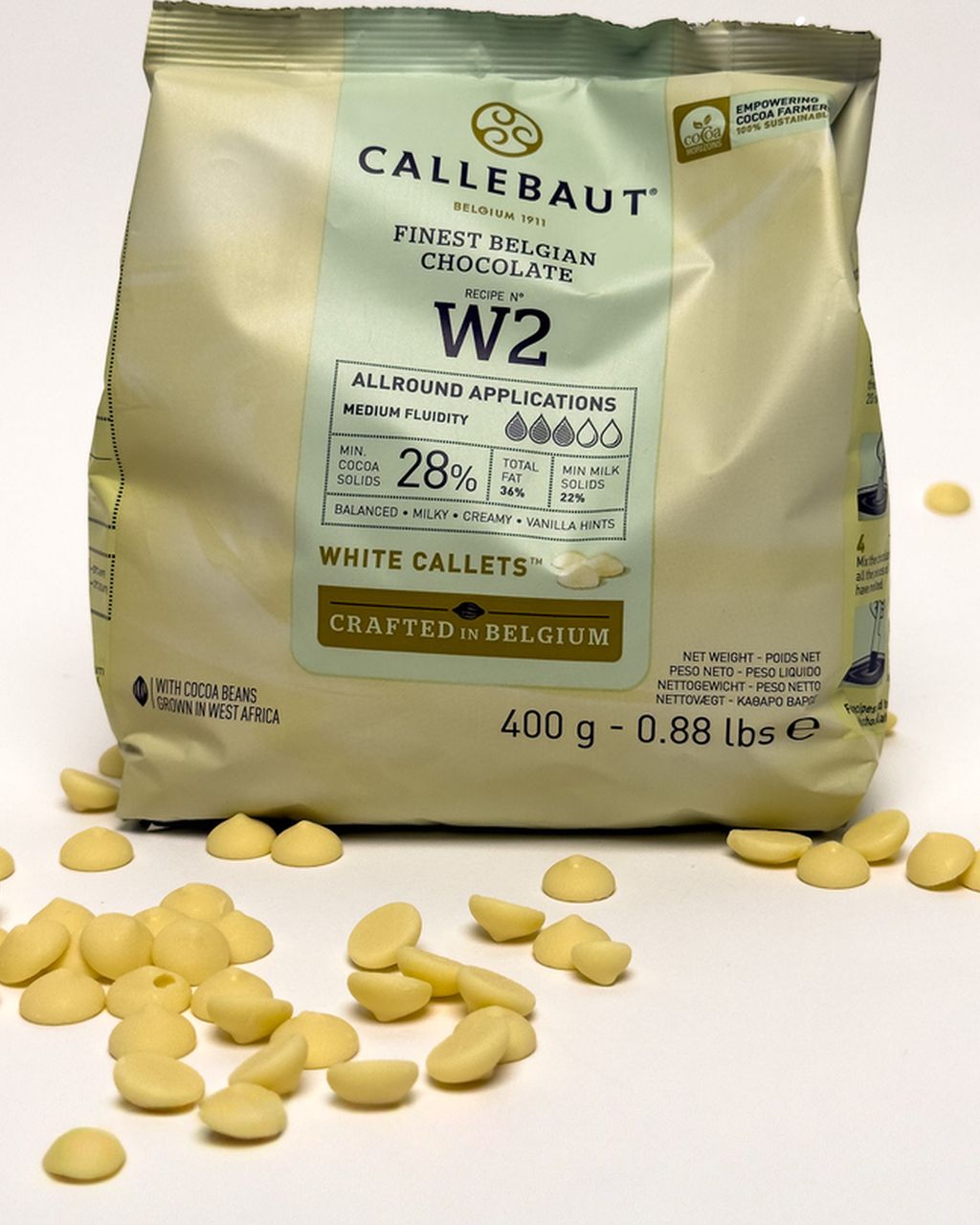
Use white chocolate for rose ganache. Dark chocolate overpowers the rose and milk chocolate muddies it, whereas white lets it shine. We make our ganache with Callebaut W2 because it's vanilla-forward, milky and not overly sweet. It's also medium-fluid, so it blends with the infused cream into a smooth emulsion.
Ratios (white chocolate : infused cream):
2 : 1, firm ganache: filling for macarons, pralines and truffles. For example, 200 g W2 and 100 g cream.
1.5 : 1, creamy ganache for coating a cake or filling between layers.
1 : 2, whipped ganache (montée): 100 g W2 and 200 g cream. Infuse 70 g of that cream hot, but use 5–6 g of petals (the dose for the whole 200 g), and pour in the remaining 130 g cold. Alternatively, cold-infuse the whole 200 g and then heat 70 g of it.
Here's how to make firm ganache:
Hot-infuse the cream as described above, strain it, and top it up to 100 g.
Heat it again to 70 °C (158 °F) and pour it over 200 g W2 in a tall container.
Let it stand for a minute, then blend with an immersion blender with the head kept below the surface, so you don't whip air into the ganache. It should be glossy and smooth.
If you like, stir in ½ teaspoon of lemon juice or 1 teaspoon of raspberry purée. The next section explains why.
Cover with cling film pressed directly onto the surface and leave to crystallize for 12 hours at 16–18 °C (61–64 °F). Then fill.
For whipped ganache, stir in the cold remainder of the cream right after emulsifying, leave it in the fridge for at least 6 hours, ideally overnight, and only then whip to soft peaks. If you overwhip it, it turns grainy. If your ganache splits into fat and liquid, our article on why ganache splits and how to rescue it will help. You'll find shelf life and more ratios for pralines in praline fillings: ganache, caramel and fruit pastes, and macarons have their own guide to macaron fillings.
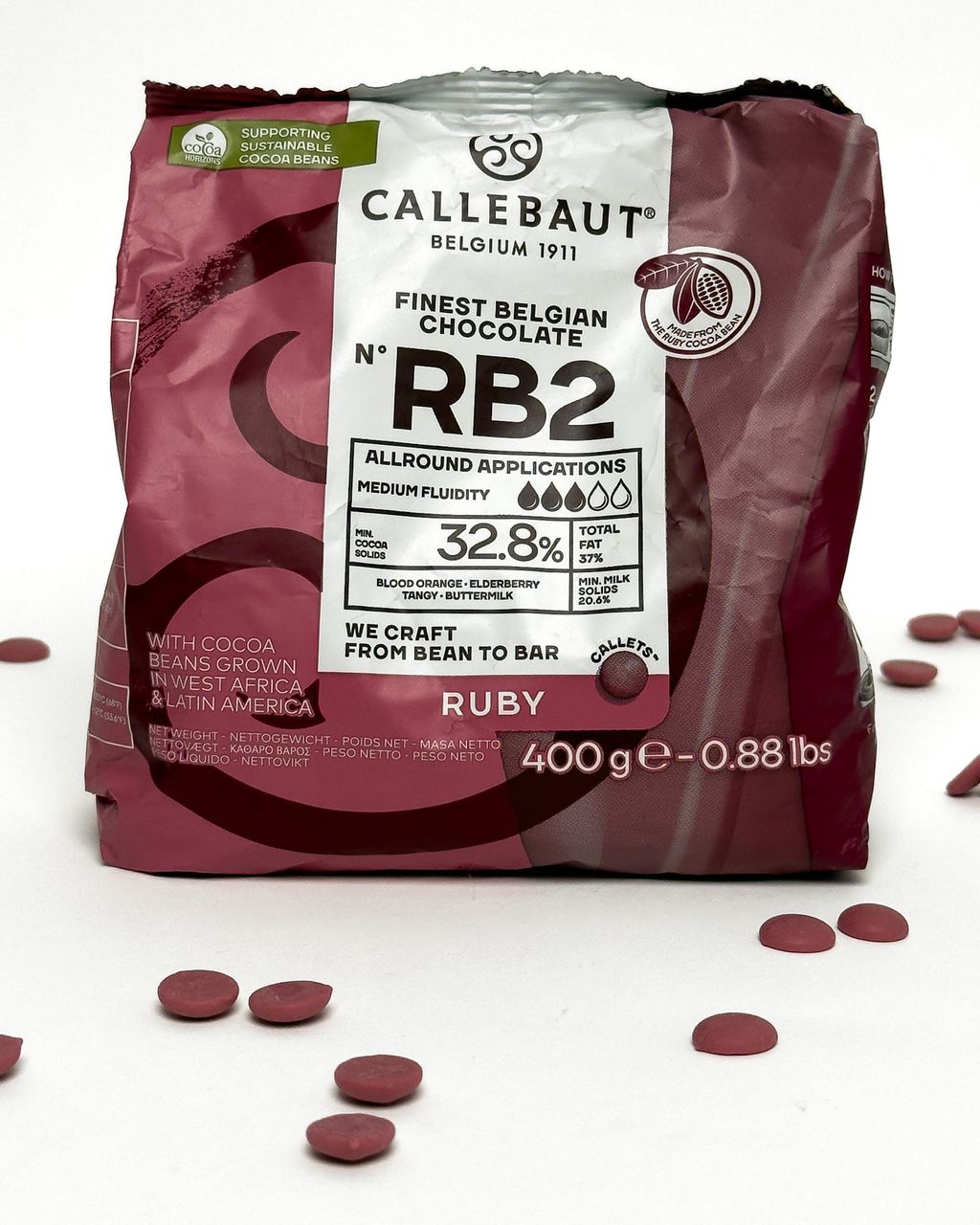
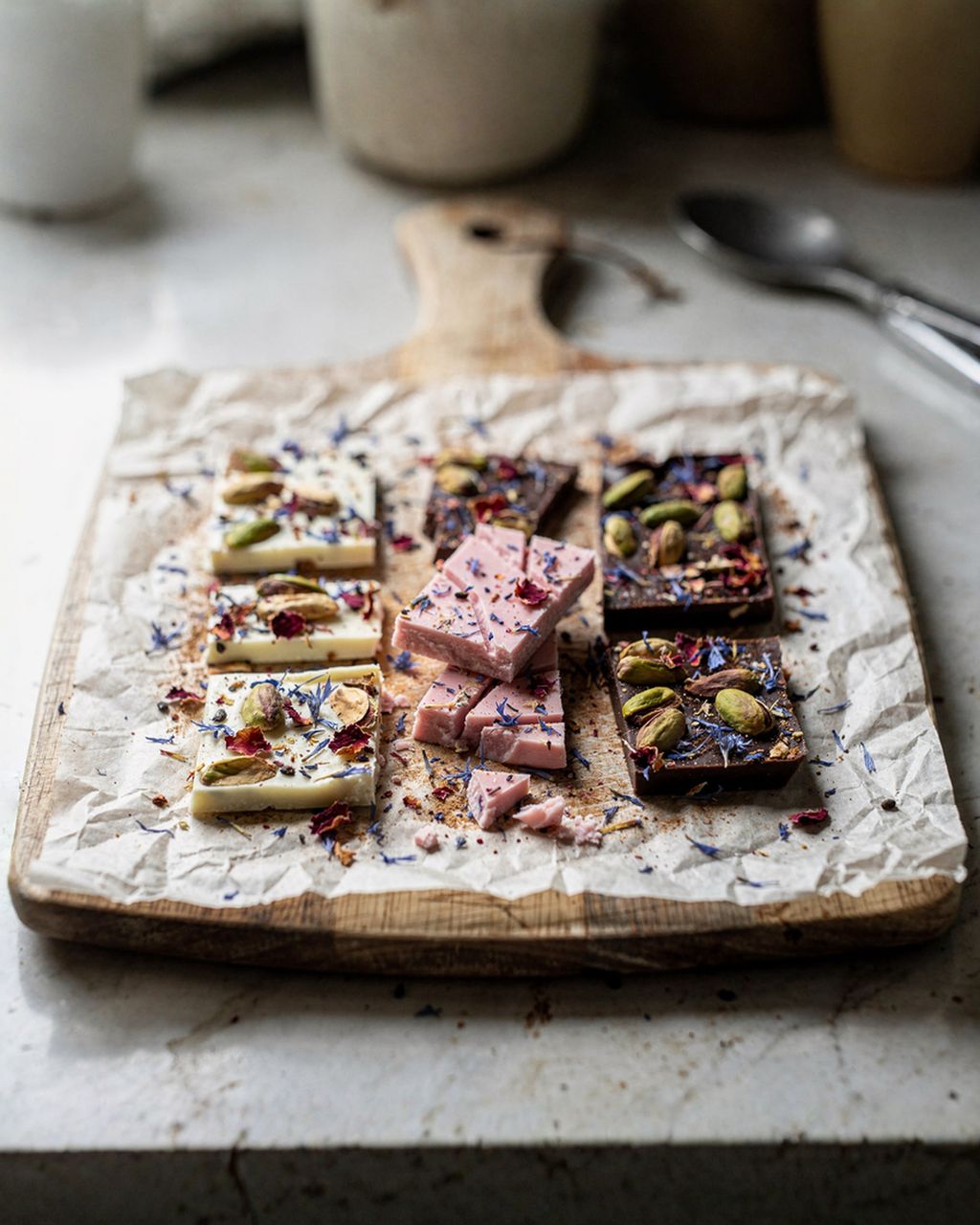
If you'd like the ganache pink in color too, try Callebaut ruby chocolate. It has a fruity acidity that pairs well with rose, and the ganache will turn naturally pinkish. Use slightly less cream with it.
To add rose to any cream made with cream or milk, infuse that ingredient first. The rest of the recipe stays the same.
Rose whipped cream: cold-infuse the cream (4 g per 100 ml, 12–24 h), strain, top up, and whip with 8–10% sugar. If you need it firmer, stabilize it following the article stable whipped cream frosting for cakes.
Mascarpone and white chocolate cream: infuse the cream you'll use to melt the chocolate, then follow the ratios in the article mascarpone and white chocolate cake cream. Mascarpone has a gentle tang, so it tames the rose on its own.
Crème anglaise, pudding and crème diplomate: infuse the milk at 80 °C (175 °F) for 10 minutes, then cook the custard as usual. Milk has less fat than cream, so use closer to 3 g of petals per 100 ml. You'll find the method in the article crème anglaise.
Panna cotta: hot-infuse the cream, strain it, and carry on with the recipe for panna cotta, a simple Italian dessert. Rose panna cotta with raspberry sauce is a textbook example of balancing rose with acid.
Rose also works where you have a white chocolate cream for macarons. Take the recipe for white chocolate and coffee macaron cream and infuse rose into the cream instead of coffee.
Acid, fruit and warm spices tame rose. Even ½ teaspoon of lemon juice per 300 g of cream helps. Acid shifts the perception from cosmetics back to food, and the cream then tastes like fruit with a fragrance, not like scented oil.
Tried-and-true combinations:
raspberry and lychee: the classic French pastry trio of rose, raspberry and lychee
pistachio: its nutty richness rounds out the rose
cardamom: a pinch on a knife tip, a familiar partner to rose in Middle Eastern desserts
vanilla: a gentle bridge between rose and white chocolate
a pinch of salt: cuts excess sweetness so the rose comes through more cleanly
If you've added too much rose, you can rescue the cream in three steps: dilute it, add acid and let it rest overnight.
Dilute it. Add an equal amount of unflavored base (cream, chocolate or custard in the same ratio). There's no more effective rescue.
Add acid: lemon or raspberry purée, a little at a time, tasting as you go.
Let it rest. Ganache and cream both mellow overnight in the fridge, as the sharpest aromatic notes fade. Judge the flavor the next day, not warm from the pot.
And one rule for next time: taste the infusion once it's cooled. Warm cream tastes weaker than the finished cold cream will, so adding "just a bit more" to warm cream is the most common road to soap.
An infusion of dried roses won't turn the cream pink. The pigments in the petals (anthocyanins) are sensitive to pH, and in neutral cream they come out more beige to gray-purple. If you want pink cream, add a drop of gel coloring. Our chart for mixing cream colors will help with shades. The other option is to use tart fruit or ruby chocolate, which color the cream on their own.
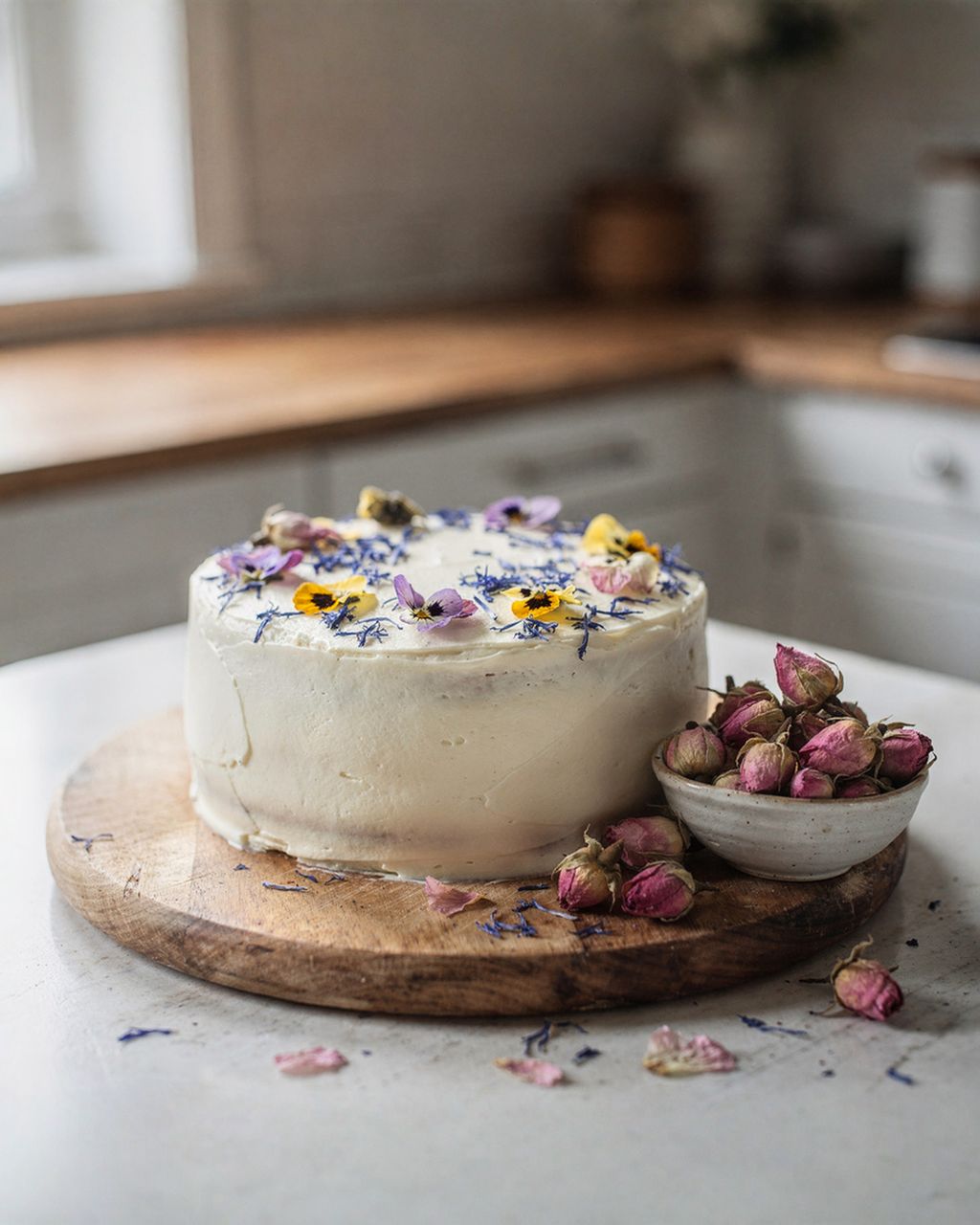
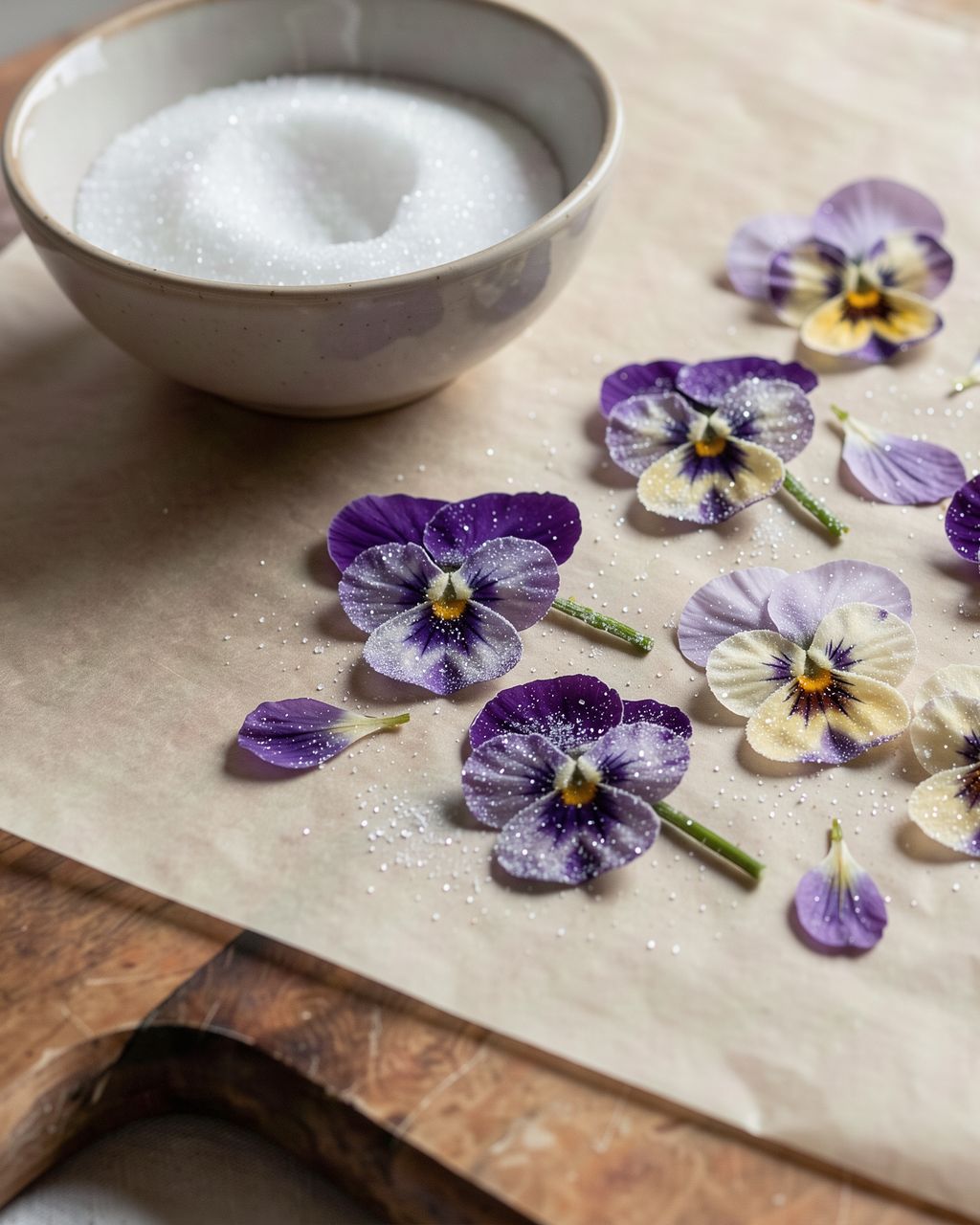
For decoration, use what you haven't infused: whole rosebuds on top of a cake or macarons, and blue cornflower petals from the Damask rose and cornflower blend sprinkled over ganache just before serving. On moist cream, petals soften over time and bleed color, so decorate at the very end. A longer-lasting decoration is sugared edible flowers.
You can use fresh garden roses for rose cream, as long as they're strongly scented and definitely unsprayed. Use roughly 4–5 times as many fresh petals as dried, so 10–15 g per 100 ml of cream, and snip off the white bases of the petals before infusing, as they're bitter. Fresh roses give a brighter, greener note, and every variety smells different, so the result is less predictable than with dried Damask rose.
White chocolate rose ganache keeps for 5–7 days in an airtight container in the fridge and about 3 months in the freezer. Let it thaw slowly in the fridge, then at room temperature, and give whipped ganache a short whisk again before using. The aromatic compounds in rose fade over time, so it tastes best within 3 days.
You can infuse rose into butter for buttercream: infuse melted butter with 4–5 g of petals per 200 g of butter at 50–60 °C (120–140 °F) for about 20 minutes. Then strain it, chill it in the fridge until it sets back to a soft consistency, and whip the buttercream as usual. Butter that has been melted and re-set won't whip up as fluffy as butter that was never melted, so it's easier to flavor cream or ganache with rose and add that to the butter.
You can leave dried edible rose petals in the cream and eat them. They aren't harmful, but they soak up the cream and turn leathery, so it's better to strain them out. If you'd like to see petals in the cream, crush a few dry petals in a mortar to a fine crumb and sprinkle it over the cream just before serving.
Start with ½ teaspoon of food-grade rose water per 250 g of finished, chilled cream and add ¼ teaspoon at a time until the rose tastes clear; more than 1–2 teaspoons per 250 g is usually only needed with weaker brands. Strength varies a lot between brands, so always taste the cream once it's chilled. Add only a little to ganache, because extra liquid will thin the emulsion.
One recipe worth heating the oven for, one tip, and one deal from the shop. Nothing else.