Dried Egg White
Sugared Edible Flowers: How to Coat Them in Egg White and Sugar So They Last
Updated Oct 15, 2026
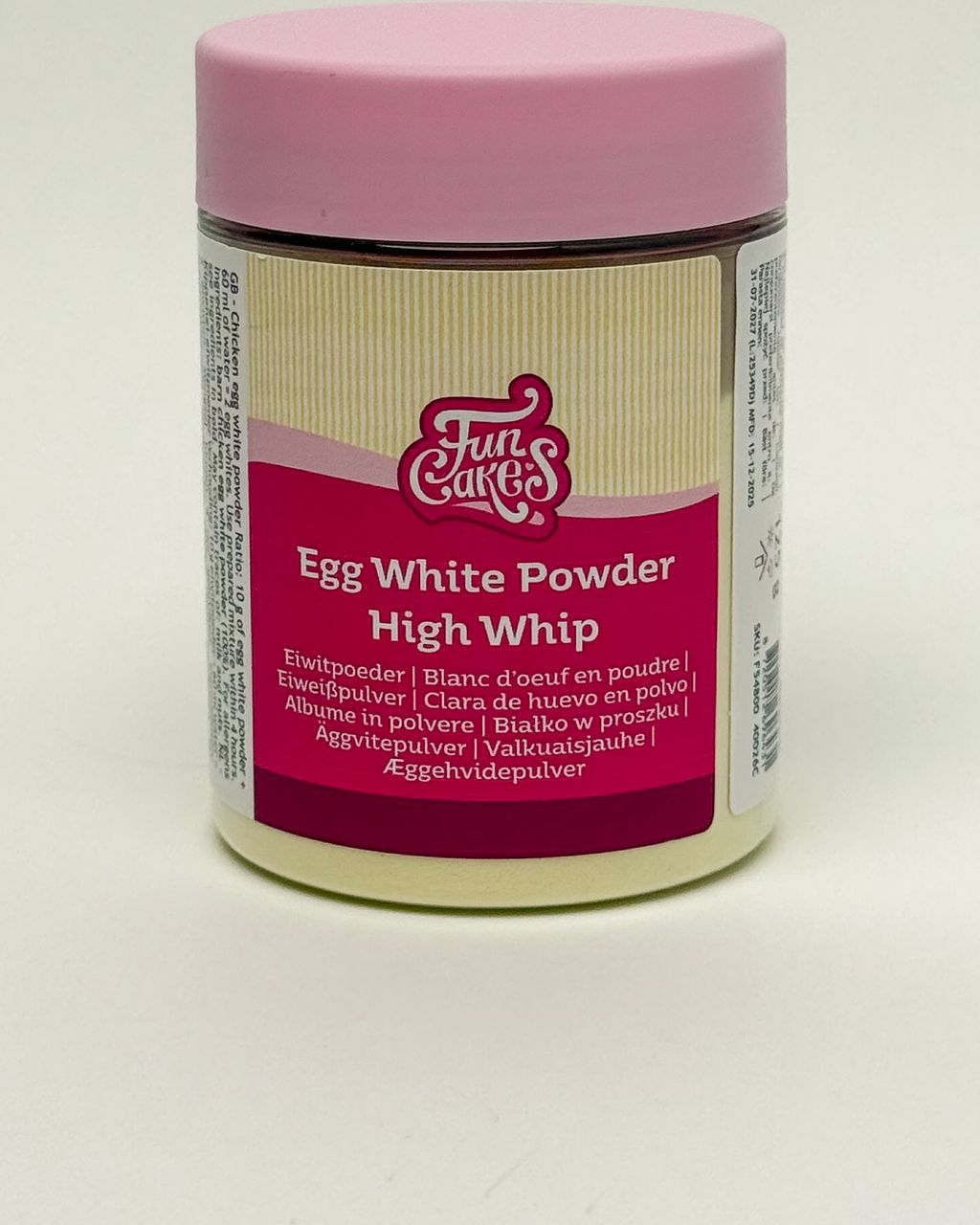
To make sugared edible flowers, brush fresh blooms with a thin layer of egg white, coat them in caster sugar and let them dry at room temperature for 12–36 hours. Three things help them last: the thinnest possible layer of egg white, a flower covered in sugar all over, and a dry, airtight container. Use dried egg white instead of raw, because the flowers are never cooked. Dried egg white is pasteurized, so it greatly reduces the risk of salmonella from raw egg.
The best flowers for sugaring are edible ones with thin, flat petals. They dry well and keep their shape:
violets and sweet violets, the pastry chef's classic,
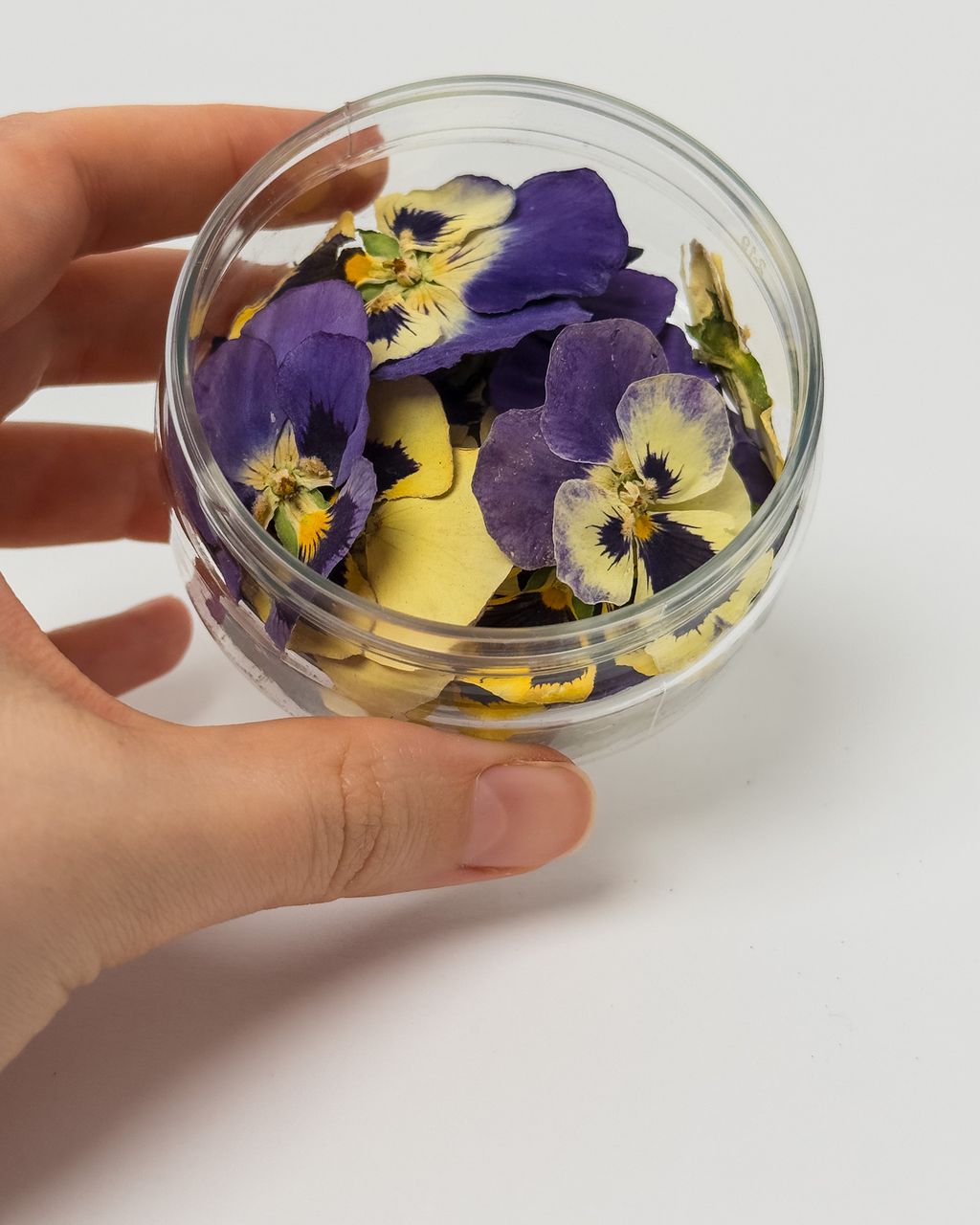
pansies, which have a large surface and hold their shape,
borage, with its tiny blue stars,
rose petals, but individually, not the whole bloom,
apple blossoms, which Michigan State University Extension recommends for sugaring.
Fleshy, dense flowers, such as a whole rose or a full peony, won't dry out inside. The sugar turns damp and the flower starts to rot from the inside. If you aren't sure whether a flower is edible, check it in our guide to which edible flowers are truly edible. Sugaring is only for fresh flowers. Dried flowers are brittle, soak up the egg white and fall apart.
Pick flowers in the morning, once the dew has dried, and use them the same day. Shake them gently and check for tiny bugs. If you rinse them, let them dry completely on a paper towel, because every drop of water will dissolve the sugar later.
Dried egg white is pasteurized, so it greatly reduces the risk of salmonella from raw egg. That matters with sugared flowers, because the egg white is never heated again and is eaten as is. According to an estimate from the US FDA, about 1 in 20,000 eggs in the US carries salmonella (Salmonella Enteritidis). For that reason, Colorado State University Extension recommends pasteurized dehydrated egg white for sugared flowers. Iowa State University Extension adds that dried egg white is pasteurized by heating it to a safe temperature.
It has practical advantages too:
Exact measuring. According to the manufacturer of FunCakes dried egg white, 10 g of powder and 60 ml of water equal 2 egg whites. So for one egg white you need 5 g of powder and 30 ml of water. That is plenty for one flower-sugaring session.
No leftovers. You mix only as much as you'll use, and you don't have to worry about what to do with the yolks.
Pantry storage. According to the manufacturer, store the powder somewhere cool and dry at 8–20 °C (46–68 °F), not in the fridge. Use the mixed egg white within 4 hours, which is also the manufacturer's guidance.
Pasteurized liquid egg white from a carton works too, but it is thinner, so brush it on carefully to keep it from running. After opening, it must go in the fridge, and the manufacturer states on the packaging how long it keeps there.
For sugared edible flowers, caster sugar is best, because it is fine, holds its shine and draws moisture out of the egg white. It sparkles beautifully. If you only have granulated sugar at home, blitz it in a blender for 5–10 seconds to make it finer, but don't grind it to a powder.
Powdered sugar doesn't work. It dissolves in the egg white into a dull paste, the flower clumps together and dries more slowly.
Coarse sugar, such as pearl sugar or demerara cane sugar, won't cling to small flowers, and the petals droop under its weight. Granulated sugar straight from the bag is also too coarse for them, so give it a quick blitz first.
Colored sugar can be used, but keep in mind that it will overpower the flower's natural color.
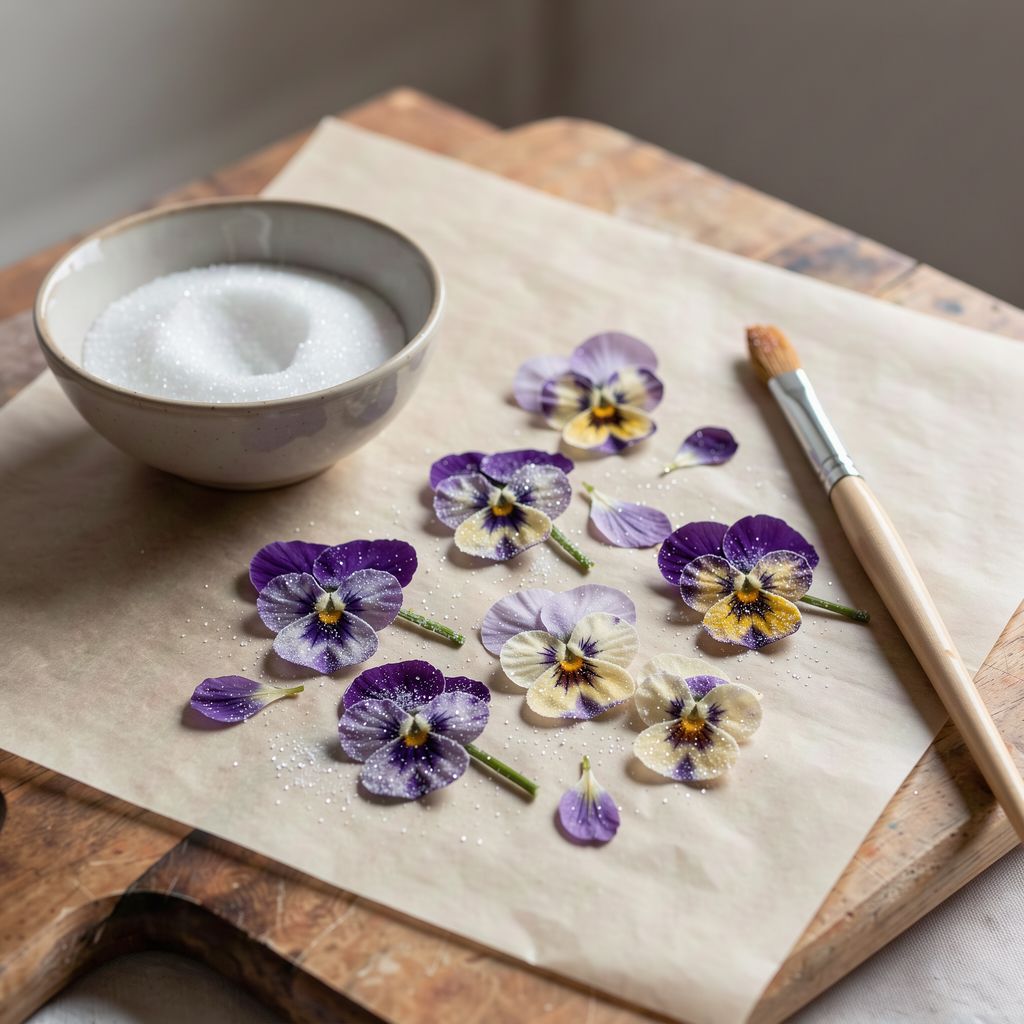
The method has six steps: prepare the egg white, brush the flower, coat it in sugar, shake off the excess, lay it down and let it dry.
Prepare the egg white. Mix 5 g of dried egg white into 30 ml of cold water and let it stand for 5–10 minutes so the powder dissolves. Then whisk it lightly with a fork until it foams. Don't whip it to peaks. You need a thin liquid, not a foam.
Brush the flower. Hold the flower with tweezers or by the stem and, with a soft brush, paint a thin layer of egg white on both sides of each petal and into the center of the flower. No drops should be left on it. Wherever the egg white pools, the flower turns brown and never dries.
Coat it in sugar. Hold the flower over a bowl and sprinkle sugar from above with a teaspoon so it covers all the petals evenly. If you dip the flower into the sugar, the petals stick together.
Shake off the excess. Tap the flower gently. You're looking for a thin, continuous layer with no shiny or wet spots left. Add a little more sugar to any uncovered spot.
Lay it on parchment paper or a rack. As you do, use a toothpick to arrange the petals into the shape you want the finished flower to have, because that is the shape it will dry in.
Let it dry. You'll find the drying details in the next section.
Sugared flowers dry in 12–36 hours at room temperature, depending on how humid the air is. This range comes from Michigan State University Extension. They're done when they are stiff and brittle, nothing sticks to them and they are dry even in the center of the flower.
Where to dry them: in a dry, warm room out of direct sun. A kitchen where you're cooking isn't suitable, because of the steam.
How to store them: in an airtight container in a cool, dark place, as Colorado State University Extension advises. Lay them in a single layer and line the container with parchment paper.
How long they last: according to Michigan State University Extension, perfectly dry sugared flowers keep in an airtight container for up to a year. That only holds if they have truly dried. If any moisture is left inside, they'll go moldy. They also fade over time, and their color is at its best in the first few weeks.
Not in the fridge: it's damp in there, and the sugar on the flowers goes soft and sticky.
Almost always the culprit is moisture: either there is too much egg white on the flower, the sugar didn't cover everything, or the flower didn't dry through.
Brown or translucent spots appear where there is too much egg white. Next time, brush on a thinner layer and wipe the excess off the petal with the brush.
Curled, darkened edges are spots the sugar didn't reach. Coat more carefully and check the undersides of the petals.
Sticky flowers after a few days mean moisture got into the container, or the flowers were sealed away before they had dried completely. Finish drying them on a rack and switch to a tighter container.
Mold shows up on fleshy flowers or on flowers that were already damp when you brushed them. Throw those away completely. Next time, choose thinner petals and dry the flowers well before brushing.
Put sugared flowers only on a dry or fatty surface, and as late as possible before serving. Sugar dissolves in water, not in fat:
They hold up well on ganache, buttercream, chocolate, fondant and glazes. On a cake covered in buttercream or ganache you can place them a day ahead, but only if the cake stays out of the fridge in a cool, dry spot. If the cake has to go in the fridge overnight, add the flowers after taking it out, just before serving. You'll find how to make that base in our article on chocolate ganache: ratios and method.
They soften quickly on whipped cream, cream cheese frosting, fresh fruit and jelly. Add them there right before serving.
On a light cream you can attach them with a small dot of melted chocolate.
They look lovely on cakes, flat-top cupcakes and macarons. For how to combine them with fruit, see decorating fruit cakes with edible flowers. They don't belong in batter before baking, since the sugar would melt and caramelize in the oven. For baking, fresh flowers pressed into the batter work better.
Sugared flowers from your own garden are the prettiest and cheapest. Dried flowers are the quickest and available all year. Store-bought sugared flowers are the most convenient, but also the most expensive. Here is how they differ:
Sugared at home from fresh flowers. They have full color, a crisp crunch and a sweet taste. They cost you an hour of work and a day of drying, and you can only make them in season: violets usually bloom March–April, pansies April–September, borage usually June–September and roses June–September.
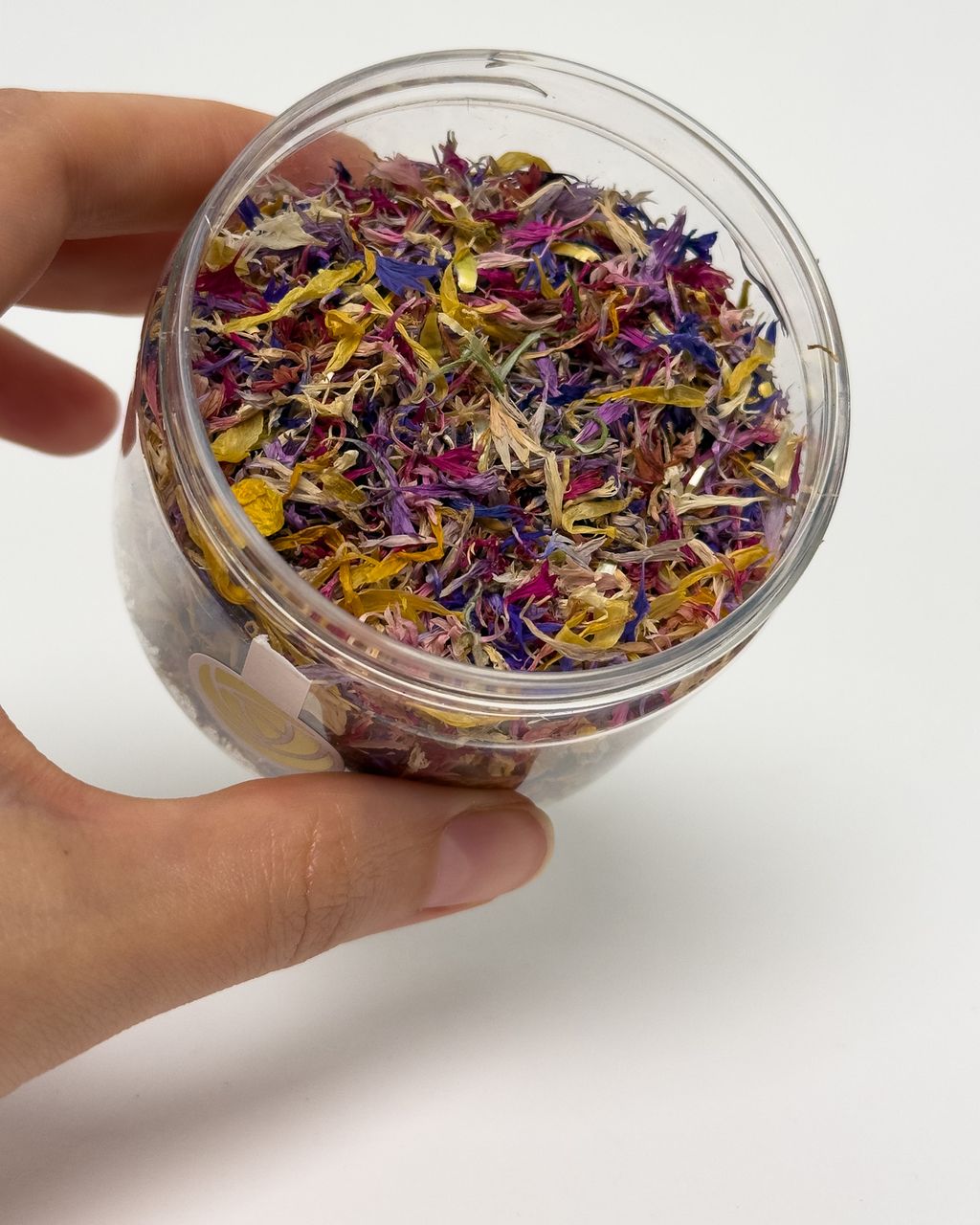
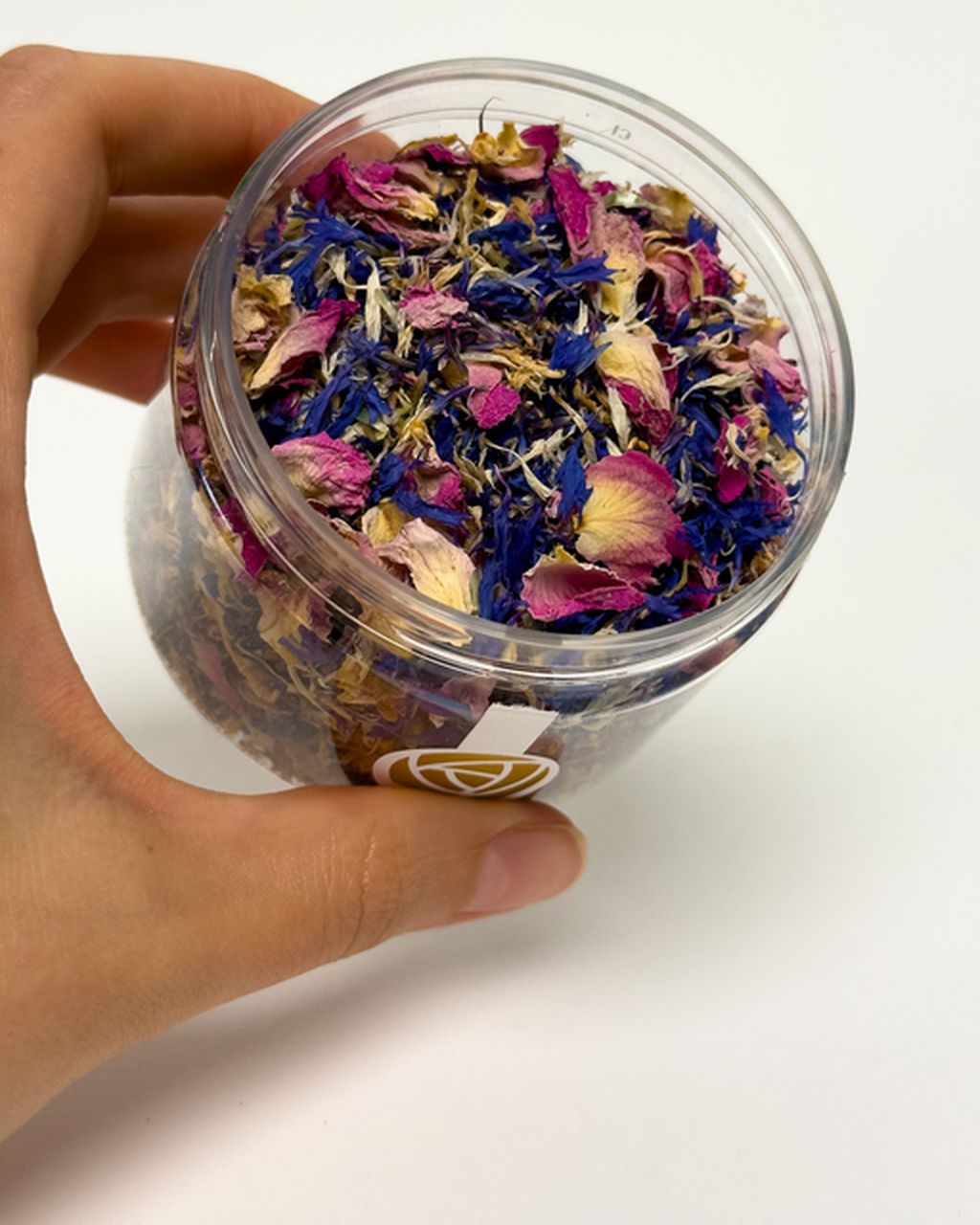
Dried edible flowers, such as Rosie Rose dried pansies or cornflower petals. They aren't candied, and you sprinkle them straight onto a cake, cream or chocolate. They aren't sweet and don't crunch, but they're ready instantly, even in winter. Don't sugar them, since a dried flower turns soggy in egg white. You'll find more on working with them in our article on dried edible flowers and rosebuds, and how to set them into chocolate in chocolate bars with edible flowers.
Store-bought sugared violets, such as the French tradition from Toulouse. They're ready-made and keep well, but cost more and you choose from only a few kinds. We don't sell them.
If you want to decorate a cake right away rather than tomorrow, reach for dried flowers. If you want that crunchy sugar effect, make sugared flowers yourself.
Yes. You can use a gum arabic solution or aquafaba (the liquid from a can of chickpeas) instead of egg white. You brush and coat in exactly the same way, but the layer takes a little longer to dry, so plan for the upper end of the drying time.
The easiest way is to leave the sugar in a closed jar with a split vanilla pod for 2–3 days. Mix in lemon or orange zest only when it is well dried, because fresh zest carries moisture and the sugar would turn sticky on the flowers. Add liquid flavorings to the egg white instead: 1–2 drops per 30 ml is enough.
We don't recommend freezing sugared edible flowers. When you take them out of the freezer, moisture condenses on them and the sugar dissolves. They keep better in an airtight container in a dry place at room temperature.
For a cake 18–20 cm (7–8 in) across, 10–20 small flowers in a cluster or wreath is usually enough. More looks overcrowded. Make a few extra sugared flowers, since they are fragile and some will break when you move them.
One recipe worth heating the oven for, one tip, and one deal from the shop. Nothing else.