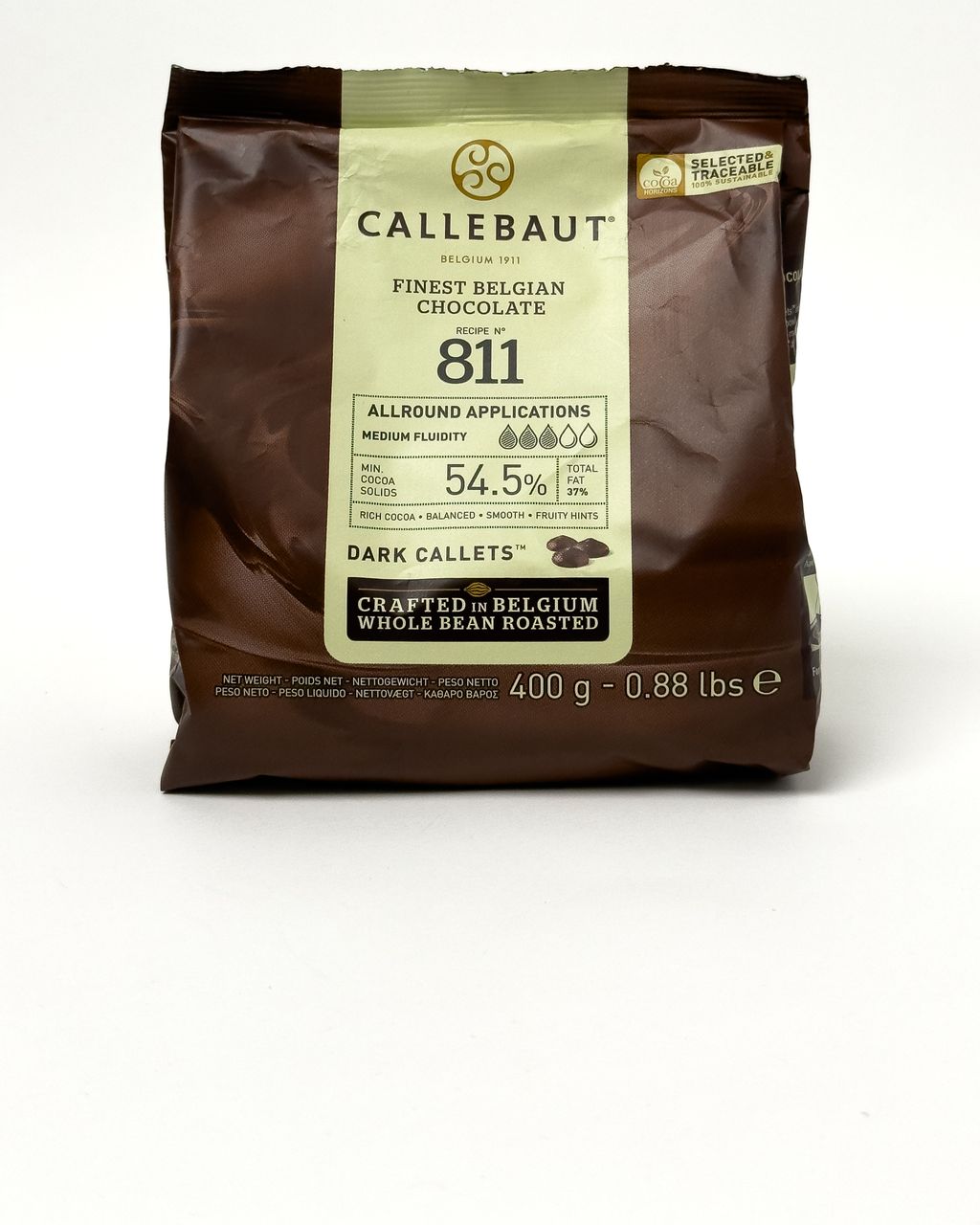
Callebaut Milk Chocolate Callets (823) 400g
Dubai-Style Pistachio Chocolate Bar: How to Make It at Home with Kataifi
Updated Oct 17, 2026
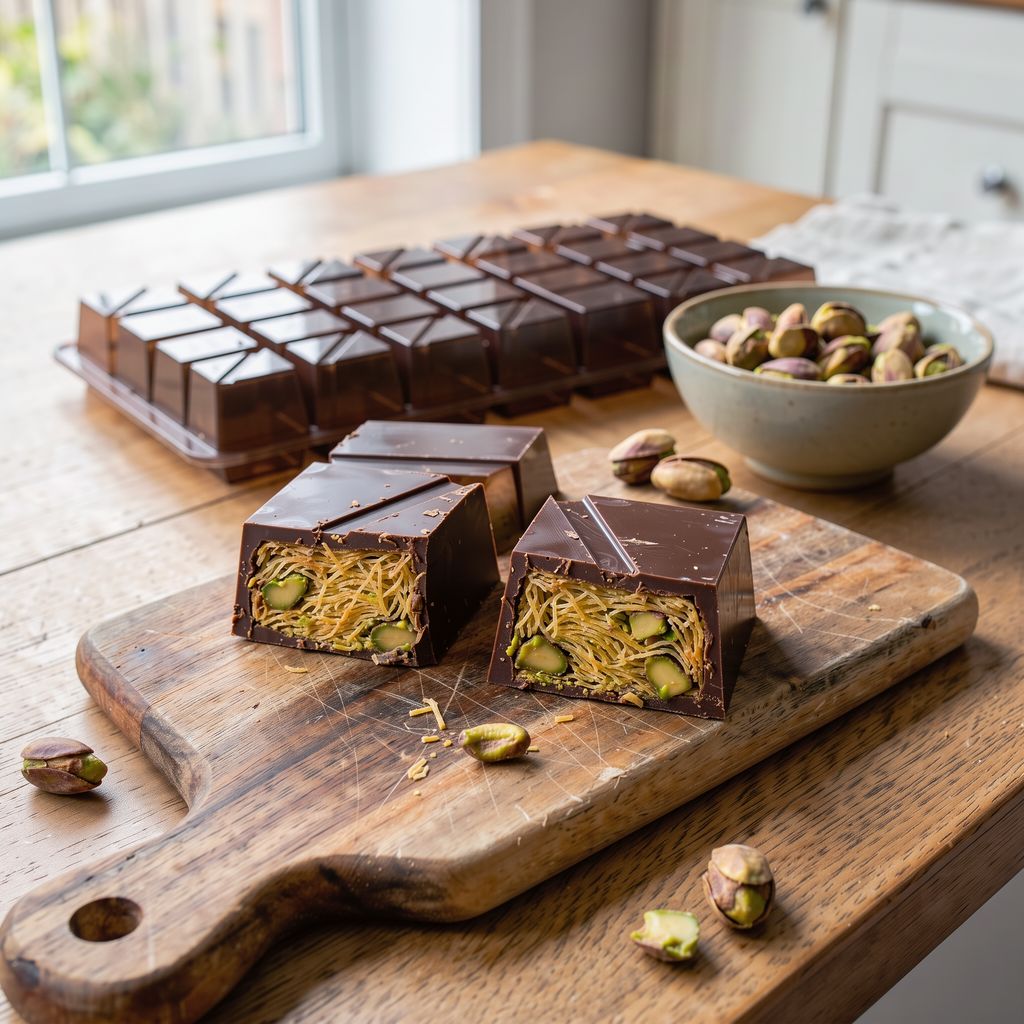
A Dubai-style pistachio chocolate bar is a tempered chocolate shell filled with pistachio cream and toasted strands of kataifi pastry. It snaps on the outside, turns creamy inside and crunches loudly. At home you make it in four steps: toast the kataifi in butter until golden brown, mix it with pistachio cream and a spoonful of tahini, line a mold with a thin chocolate shell, and seal the filling in. We'll show you where it most often goes wrong, how to make the signature green splatter, and how to turn the same filling into filled chocolates.
Dubai chocolate is a filled milk chocolate bar with a center of pistachio cream, tahini and toasted kataifi. According to available sources, it was created by Sarah Hamouda, founder of the Dubai dessert shop Fix Dessert Chocolatier, together with chef Nouel Catis Omamalin. The idea came about in 2021, and Fix Dessert Chocolatier started selling it in 2022. The shop sells it under the name "Can't Get Knafeh of It" – a nod to knafeh, a Middle Eastern dessert made from the same noodle-like pastry.
It became a worldwide sensation at the turn of 2023 and 2024, when a video of someone breaking one open racked up over 100 million views on TikTok. That crunch is the whole trick: the contrast of a thin, glossy shell, creamy pistachio and crispy strands. If one of those three things fails at home, you end up with just another pistachio chocolate.
The bar has four components: the chocolate shell, kataifi, pistachio cream and tahini.
Shell – tempered chocolate, most often milk chocolate, in a layer 2–3 mm thick. It has to snap, not bend.
Kataifi (also kadayif) – hair-thin strands of pastry made from flour and water. It's usually sold frozen in Turkish and Middle Eastern shops, in packs of around 400–500 g.
Pistachio cream – a sweetened pistachio spread, or unsweetened 100% pistachio paste that you sweeten yourself.
Tahini – sesame paste. Just 1–2 tablespoons per bar stops the cream from tasting flatly sweet and gives it a nutty, slightly bitter depth.
The shell calls for couverture – on a Czech label you'll find it as chocolate coating, and for milk chocolate as milk chocolate coating. It has more fat than regular chocolate (dark at least 31% cocoa butter, milk at least 31% total fat). It can be tempered to a shine and a snap. Cocoa coatings made with vegetable fat (on the label they appear as "cocoa coating" or "fat coating" – the word "chocolate" is missing from the name) don't need tempering, but they are soft, sticky and taste waxy, so they aren't suitable for a bar that's meant to snap.
What works:
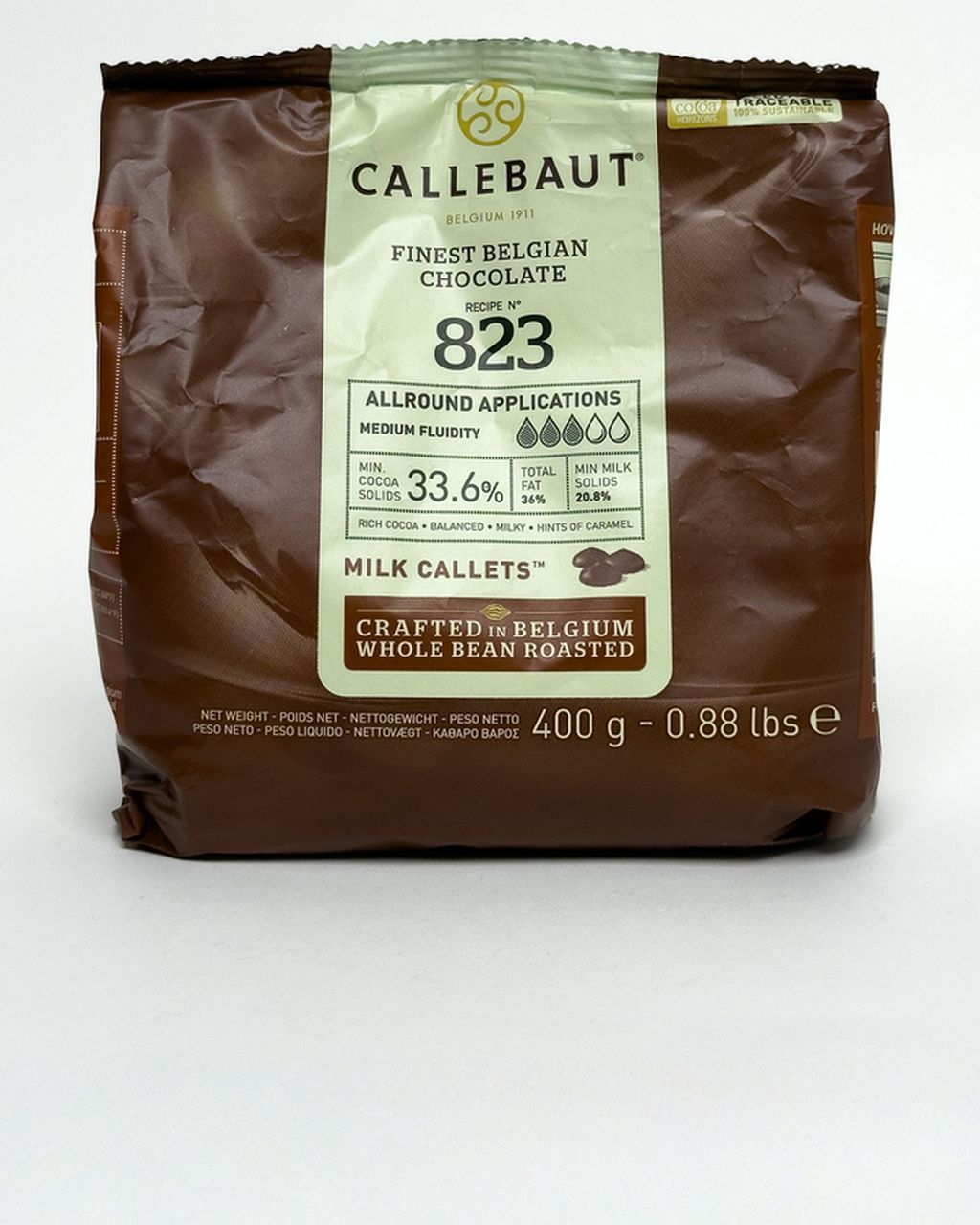
Milk – the classic from the original, sweet and creamy. Callebaut 823 milk chocolate callets have around 34% cocoa, flow well and don't overpower the pistachio.
Dark – if the original is too sweet for you. Callebaut 811 dark chocolate callets have around 54% cocoa: enough bitterness to balance the sweet cream, but not so much that the pistachio disappears. A popular combination is a dark shell with a milk chocolate top layer.
Supermarket chocolate bars – these work, but they tend to be thicker, so a thin shell is harder to make, and the shine after tempering is less reliable.
Other couverture (Valrhona, Cacao Barry and others) – works just as well; taste matters more than brand.
Callets (small chocolate discs) have the advantage that you can weigh them out without chopping, and they melt evenly. You'll find more types in the category chocolate for cooking and tempering.
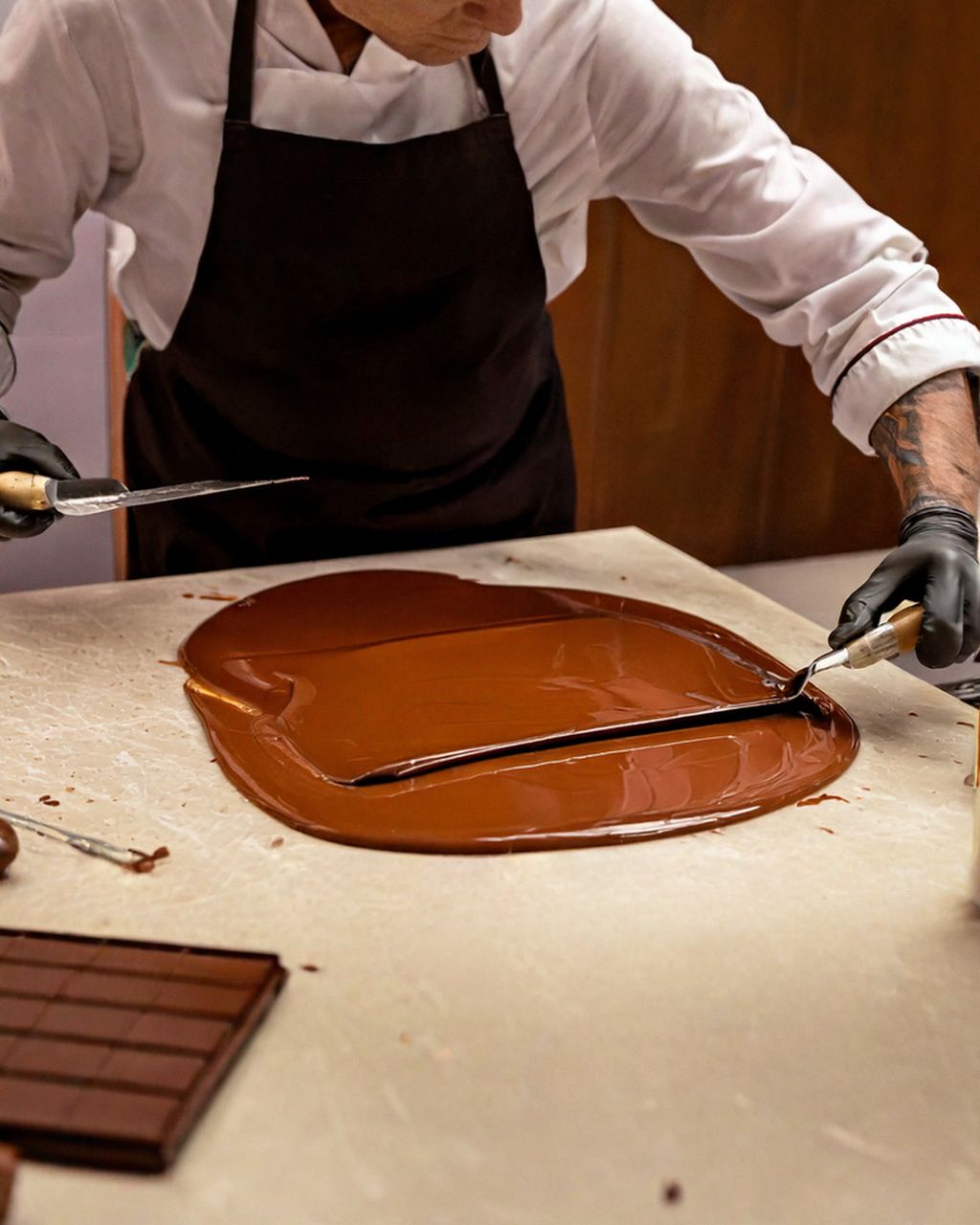
Whichever you choose, temper the chocolate – otherwise the shell stays dull, streaky and gray, and won't release from the mold. The step-by-step method is in the article how to temper chocolate. The working temperature is around 31–32 °C (88–90 °F) for dark and around 29–30 °C (84–86 °F) for milk.
Toast kataifi in butter over medium heat for 8–10 minutes, stirring constantly, until it's caramel-golden brown, then let it cool completely. Pale, underdone kataifi goes soft in the cream within a few hours, and the crunch turns into rubbery fluff.
Thaw the kataifi in its package (about 1–2 hours at room temperature); otherwise it crumbles to dust.
Use scissors or a knife to cut it into pieces roughly 1–2 cm long. Long strands tangle in the filling and the bar is hard to break.
Melt the butter in a pan – count on about 30 g per 100 g of kataifi. Add the strands and stir constantly, because the edges burn quickly.
It's done when it smells like toasted nuts, has an even golden-brown color and rustles when you rub it between your fingers.
Tip it onto a plate and let it cool to room temperature. Warm kataifi would melt the chocolate shell.
Alternative for a bigger batch: spread it on a baking sheet and bake at 180 °C (356 °F) for about 10–15 minutes, stirring every 5 minutes.
The easiest option is a ready-made sweetened pistachio cream. Unsweetened 100% pistachio paste gives you more flavor, but you'll need to sweeten it yourself. Both work – the difference is in intensity and sweetness.
Sweetened pistachio cream – sticky, sweet and ready to use. Check the pistachio content on the label: cheap creams often contain only 10–20% and taste mostly of sugar and oil.
100% pistachio paste – rich, true pistachio flavor. For every 100 g of paste, stir in about 30–50 g of melted white chocolate, which sweetens it and firms it up when chilled.
Homemade from nuts – roasted, shelled pistachios ground to a paste in a powerful blender. For how to roast and grind nuts so they don't release their oil or turn bitter, see our article on nuts for baking.
Filling ratio: roughly 2 parts cream to 1 part toasted kataifi by weight, plus 1–2 tablespoons of tahini. The filling should be thick and only just hold together – when you press it with a spoon, it should keep its shape, not run. Too much cream makes the kataifi soggy; too much kataifi leaves the filling dry and crumbly.
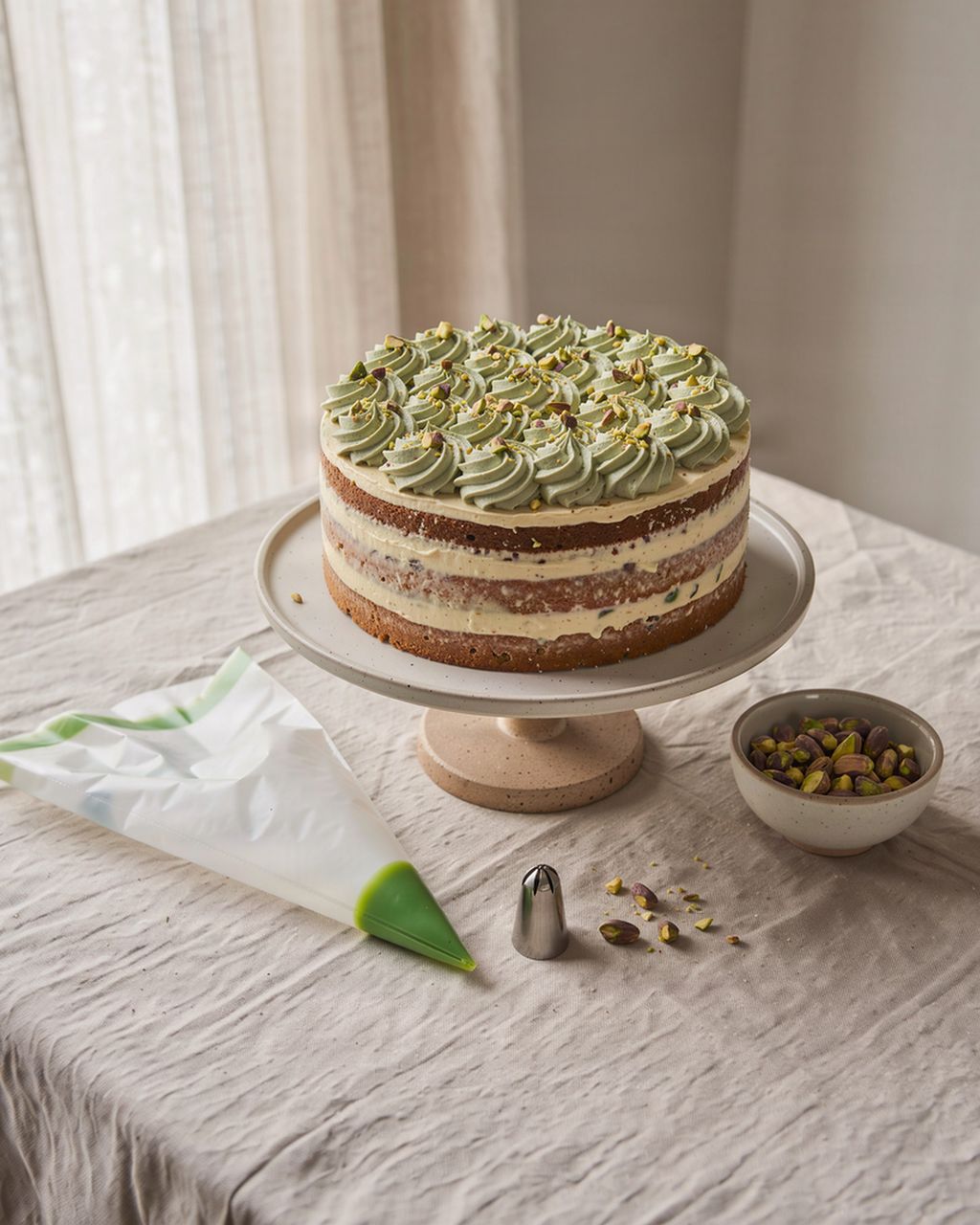
Pistachio cream made from paste, and how to give it a green color without a chemical aftertaste, is useful beyond chocolate too – see pistachio cream for cakes.
The shell of Dubai pistachio chocolate should be 2–3 mm thick. Thinner, and it cracks as you press the filling into the mold, and the base breaks when you unmold it; thicker, and it overpowers the cream and the bar is hard to bite through.
Pour tempered chocolate into a clean, dry bar mold, tilt it to coat the walls, and pour the excess back into the bowl.
Let it set in a cool place for about 5–10 minutes. For extra security, add a second thin layer – it mainly reinforces the corners, where the bar tends to break.
Press the filling into the mold and level it about 2 mm below the rim. You need to leave room for the lid.
Seal with a layer of chocolate, then scrape off the excess with a spatula so it's flush with the rim.
Let it set in the fridge for 20–30 minutes, then unmold. Properly tempered chocolate contracts as it sets and releases from the mold by itself.
Rigid polycarbonate molds work best – they give the highest shine. A silicone mold works too, but the shine is usually duller and the bar twists more easily when you unmold it.
The signature green splatters on a Dubai bar are made with colored cocoa butter or white chocolate, applied to the mold first – before the shell. The color must be oil-based (fat-soluble). Gel and water-based liquid colors don't belong in chocolate: water instantly makes it seize into a lumpy paste.
Melt a small amount of cocoa butter or white chocolate (20–30 g is enough) and stir in a few drops of oil-based color.
Dip a stiff brush or toothbrush into it and flick the bristles with your thumb over the mold. Splatter onto a dry mold, not onto wet chocolate.
Let it set completely (a few minutes) before pouring in the shell. On a warm shell, the splatters would smear.
Shade: the original is a light, pistachio green. We don't currently carry a light green in our range of Sugarflair oil-based colors – mix your own from yellow with a drop of light blue. Start at roughly 4 parts yellow to 1 part blue and adjust; adding white gives you a more pastel, opaque shade that shows up even on dark chocolate.
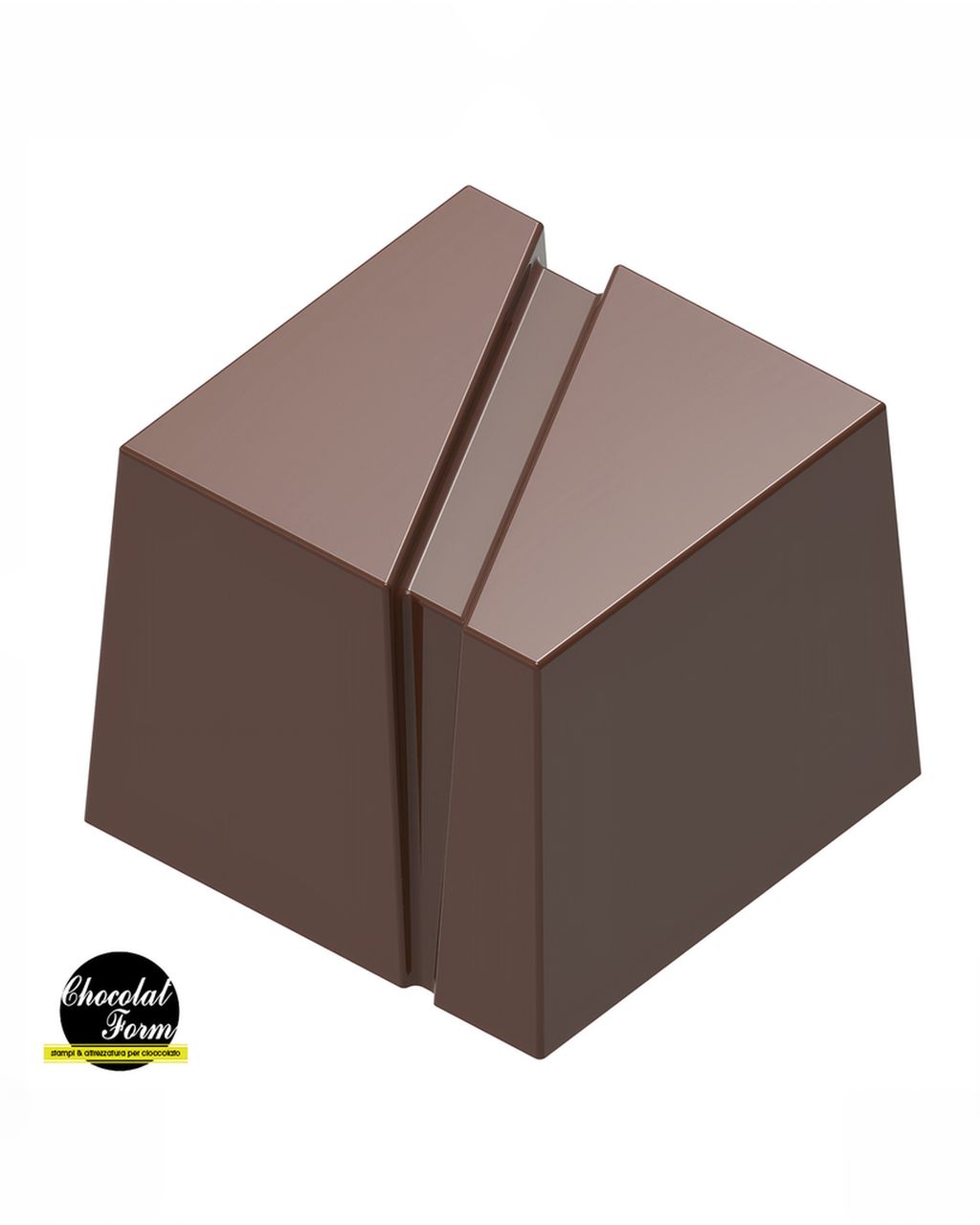
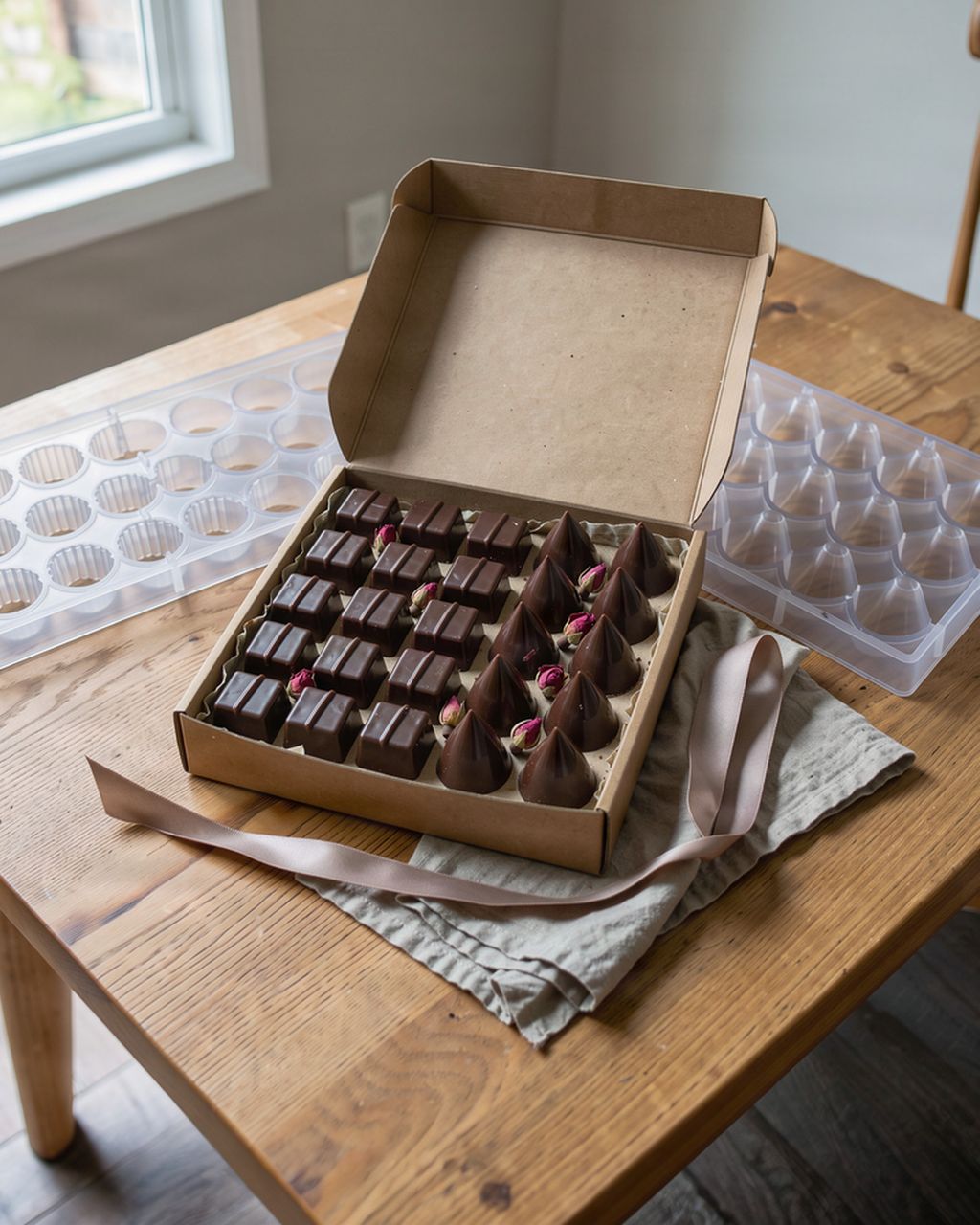
You can use the Dubai pistachio and kataifi filling in pralines too – in a 25 mm cube it's a single bite with a proper crunch, and one mold makes 24 pieces. The method is the same as for the bar, just on a smaller scale:
Splatter green color into the striped cube praline mold first and let it set.
Fill the mold with tempered chocolate, flip it over the bowl, tap it, and let the excess run out. The shell can be thinner here, around 1.5–2 mm.
Cut the kataifi shorter, under 1 cm, otherwise it won't fit into a 25 mm cube and the lid won't stick.
Spoon the filling in, or pipe it with a piping bag without a nozzle, to 2 mm below the rim.
Seal, scrape level, and let it set in a cool place; then tap out the pralines.
Count on roughly 300–400 g of chocolate per mold – most of it returns to the bowl after pouring, and you'll use it for the lids. The stripe on the cube also shows off the green splatters beautifully. For how to arrange and wrap pralines as a gift, see our article on the homemade box of chocolates.
When homemade pistachio chocolate is soft, dull, or won't come out of the mold, the cause is almost always temperature or moisture. The most common mistakes:
The kataifi isn't crunchy – it was underbaked, or you added too much cream. Toast it until golden brown and keep to a ratio of roughly 2:1.
The shell is dull and streaked with gray – the chocolate wasn't tempered, or it set in a warm place. Temper it and let it set at 15–18 °C (59–64 °F) or briefly in the fridge.
The bar won't release from the mold – again, untempered chocolate (it doesn't contract), or a greasy or scratched mold. Wash molds only in warm water, without an abrasive sponge.
The shell melted and the filling seeped through – the filling was warm. Both the kataifi and the cream must be at room temperature.
The lid peels off – the filling went right up to the rim, so the lid had nothing to grip. Leave 2 mm of space.
The chocolate thickened into a paste – water got into it (steam, a wet spoon, gel color).
Kataifi is most often sold frozen in Turkish, Middle Eastern and Asian grocery stores, or from online shops that stock Middle Eastern foods. Look for it under the names kadayif or kadaif too. A pack is usually around 400–500 g, which is enough for several bars, and you can refreeze the rest.
The closest substitute for kataifi in Dubai chocolate is feuilletine: crushed thin, buttery wafer flakes that pastry chefs use in crunchy fillings. At home, a thin wafer broken into small pieces or unsweetened cornflakes also work. Always mix them with the cream once it has cooled, and expect a texture that is less stringy than kataifi.
Homemade Dubai chocolate is at its crunchiest 2–3 days after making it, then the kataifi gradually softens from the moisture in the cream. Store it in a closed box somewhere cool (15–18 °C / 59–64 °F), or in the fridge for about a week. Take it out of the fridge a few minutes before eating, and keep it in its box so condensation doesn't form on it.
You can make a Dubai-style pistachio chocolate bar without tempering, but the shell will be dull and soft, and it will be hard to release from the mold. An easier route that skips tempering is a cocoa coating made with vegetable fat. It keeps its shine on its own, but it falls short of couverture in both flavor and snap.
Yes, classic Dubai chocolate contains gluten, because kataifi is a pastry made from wheat flour. It also contains pistachios, sesame from the tahini and, in the milk chocolate version, milk, so it isn't suitable for people with those allergies. You can make a gluten-free version with crispy rice or gluten-free flakes instead of kataifi. But the chocolate, pistachio cream and tahini must also be gluten-free, so check the labels.
One recipe worth heating the oven for, one tip, and one deal from the shop. Nothing else.