Pumpkin soup – the tastiest soup in autumn colours
What to Do with Pumpkin Flesh: What to Cook, What to Eat, What to Toss
Updated Oct 6, 2026
What should you do with the flesh you scoop out when carving a Halloween pumpkin? Cook it the same day — into a soup, a purée, or a roasted side — and toast the seeds for a crunchy snack. The big orange carving pumpkins are edible, but their flesh is wetter and less sweet than hokkaido or butternut squash, so you need to treat it a bit differently. One rule, though, has no exceptions: only eat what you scoop out fresh. Never bring a pumpkin that's already been carved and sitting out with a candle on the windowsill back into the kitchen.
Yes, Halloween pumpkins are edible — but they're among the blandest-tasting pumpkins around. Carving varieties (the big orange pumpkins, often 5–10 kg/11–22 lb, with thin walls) are bred for size, shape, and ease of carving, not flavour. Their flesh is:
watery — it contains more water and less dry matter than cooking varieties,
fibrous — it tends to turn a bit stringy once cooked,
bland — it has noticeably less sugar, so on its own it tastes more like cucumber than chestnuts.
So it's not something you'd buy pumpkin for in the first place. But once you've carved it, it's a shame to throw the flesh away — just treat it as a "diluter," not the star of the dish. If you want pumpkin specifically for cooking, go for hokkaido, butternut, or muscat squash instead.
Watch out for ornamental gourds. Don't eat the small, colourful, warty, or oddly shaped decorative gourds. They can contain cucurbitacins — bitter compounds that, according to poison control centres, cause vomiting and diarrhoea and aren't broken down by cooking. So with any pumpkin or gourd, first taste a raw, nail-sized piece: if it's bitter, spit it out and throw the whole thing away.
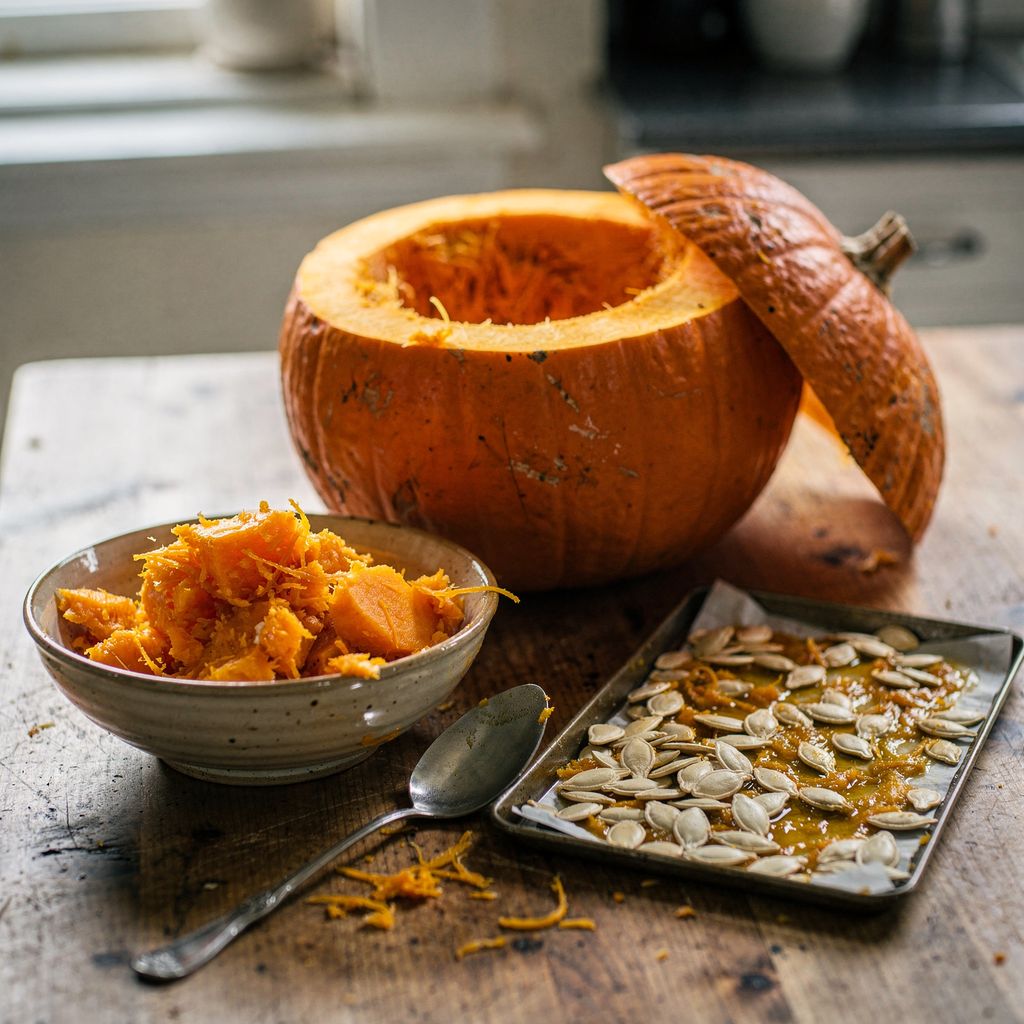
As you carve, sort straight away into three separate bowls: seeds, strings, and firm flesh. Each has a different use, and mixing them together just means picking through the mess later.
Cut the lid at an angle, pointing inward rather than straight down — it won't fall in, and the opening is big enough for your hand.
Pull out the seeds and strings by hand into the first bowl. Separate the seeds right away while the strings are still wet — once dry, they stick.
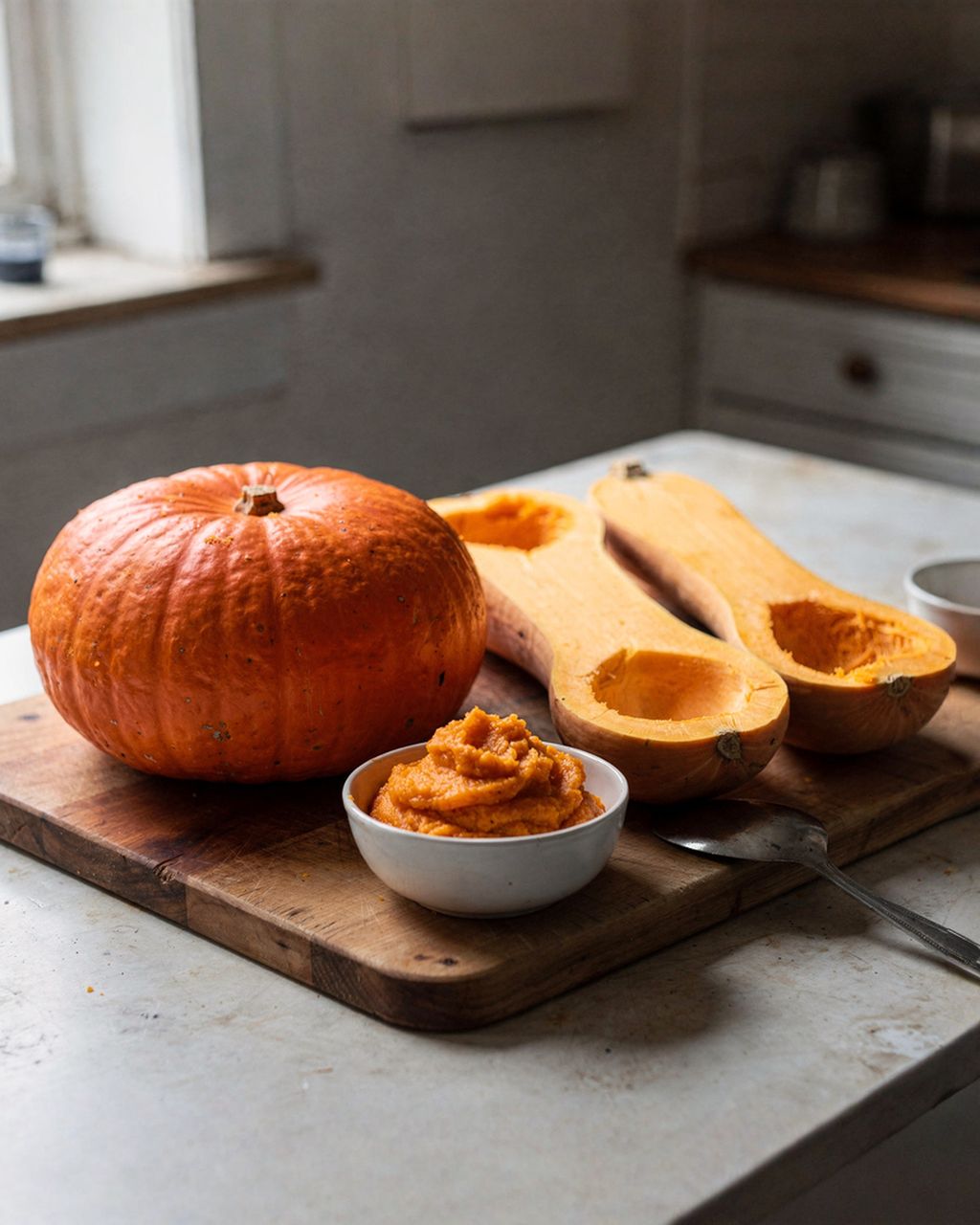
Scrape the firm flesh out with a large metal spoon or an ice-cream scoop. Thin the wall down to about 2–3 cm (¾–1¼ in) from the inside: the jack-o'-lantern glows better, and a medium pumpkin can easily yield 1–1.5 kg (2–3 lb) of flesh.
Refrigerate the flesh within 2 hours. Ideally cook it that same day, and no later than 3–4 days after.
If you're carving in the evening and won't have time to cook, freeze the flesh right away — but first read what freezing does to watery flesh (below).
Carved pumpkin flesh works best in soup, in purée for baking, roasted as a side dish, in pasta, and the strings make a good stock. Anywhere its blandness gets lifted by stronger flavours or concentrated through roasting.
Soup is the safest bet, because wateriness isn't a problem here and the blandness is easy to fix. Just don't cook carving-pumpkin flesh on its own — pair it with something sweeter and drier. A reliable ratio is 1:1 with hokkaido, sweet potato, or carrot, and add a bit more salt, ginger, or roasted onion than you normally would. Use less water than usual: the flesh releases so much liquid that you only need to cover the vegetables halfway.
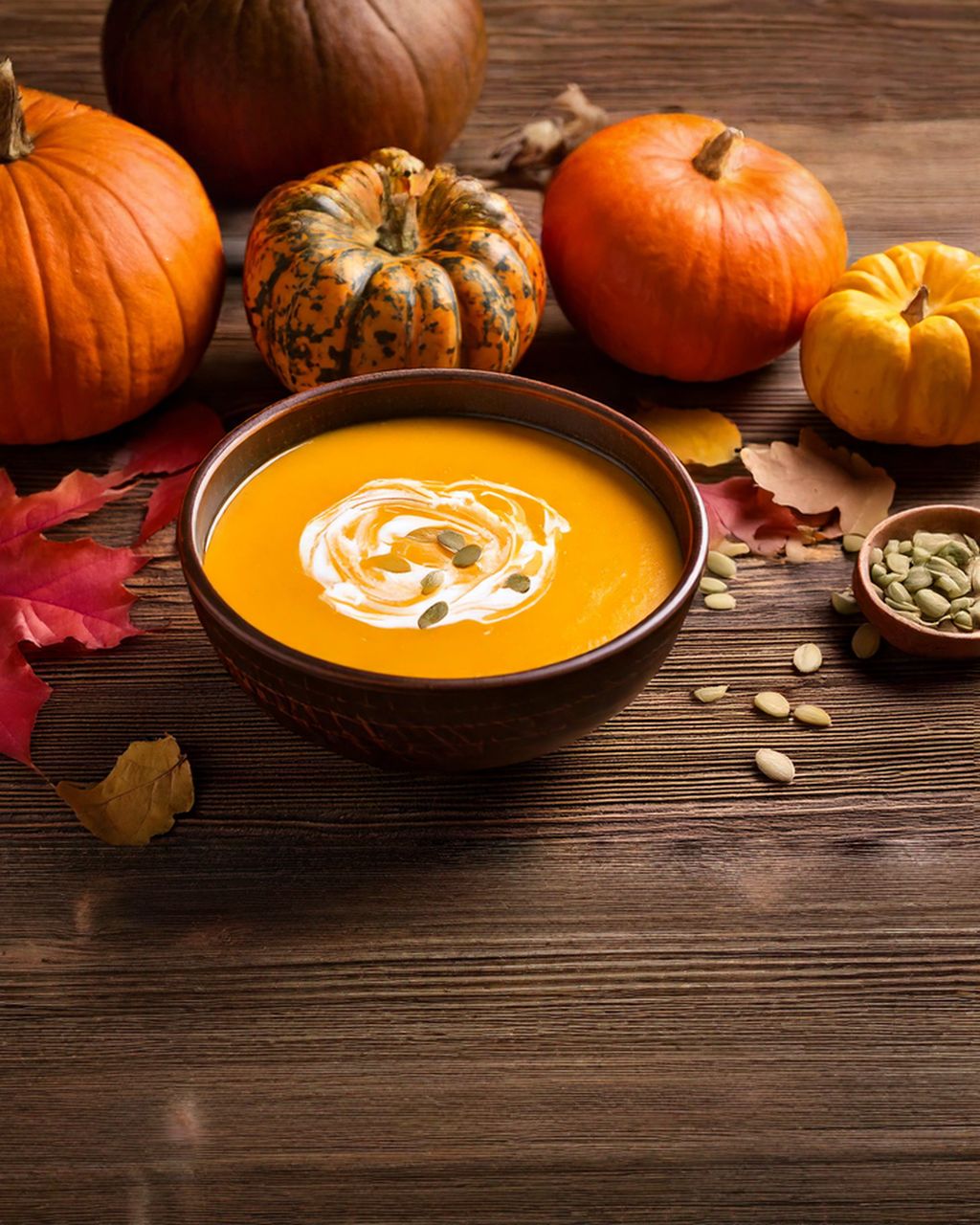
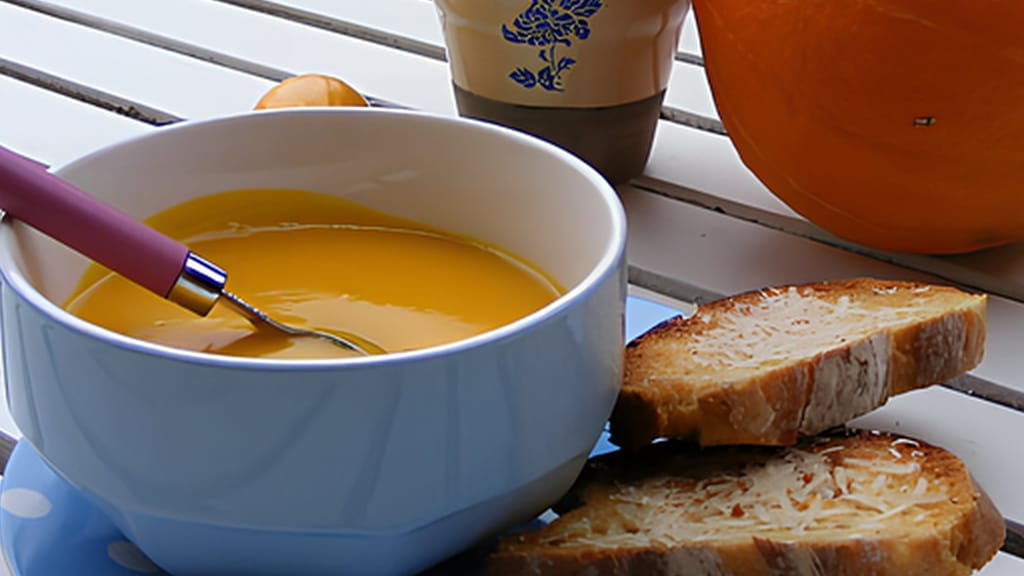
Use our pumpkin cream soup — the most delicious soup in autumn colours as a base, or the saltier pumpkin soup with crispy bacon, and swap half the pumpkin in the recipe for scooped-out flesh.
Pumpkin soup – the tastiest soup in autumn colours
Pumpkin cream soup — the soup where scooped-out pumpkin flesh disappears without a trace
Halloween pumpkin flesh works for baking too, but you must drain it thoroughly first — otherwise your batter will turn soggy. We cover the full purée method, the right moisture level, and how to work it into batter in our article on pumpkin in baking: choosing a variety, making purée, and balancing batter moisture. Then use the purée in, say, pumpkin cake or pumpkin pancakes with salted caramel.
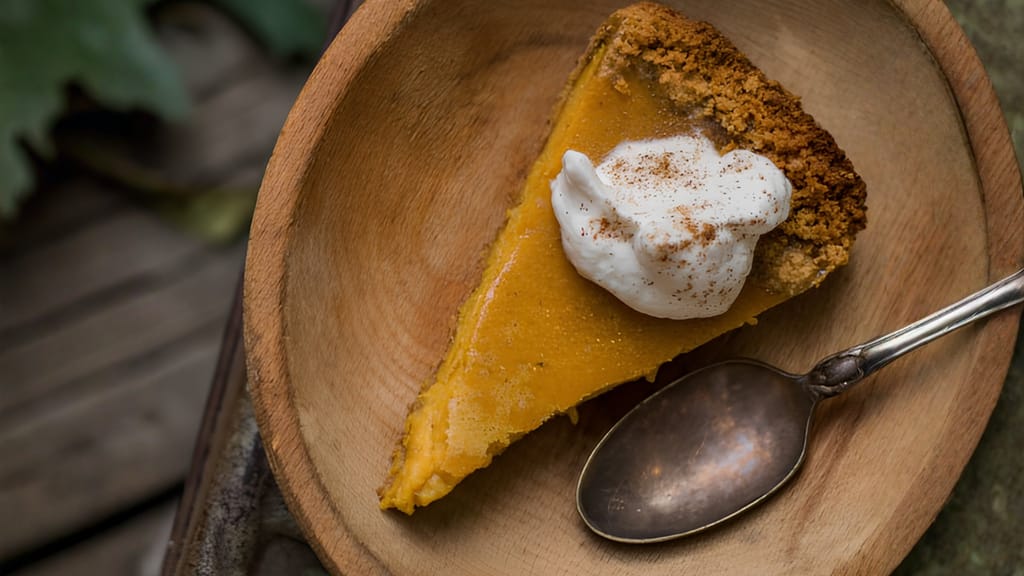
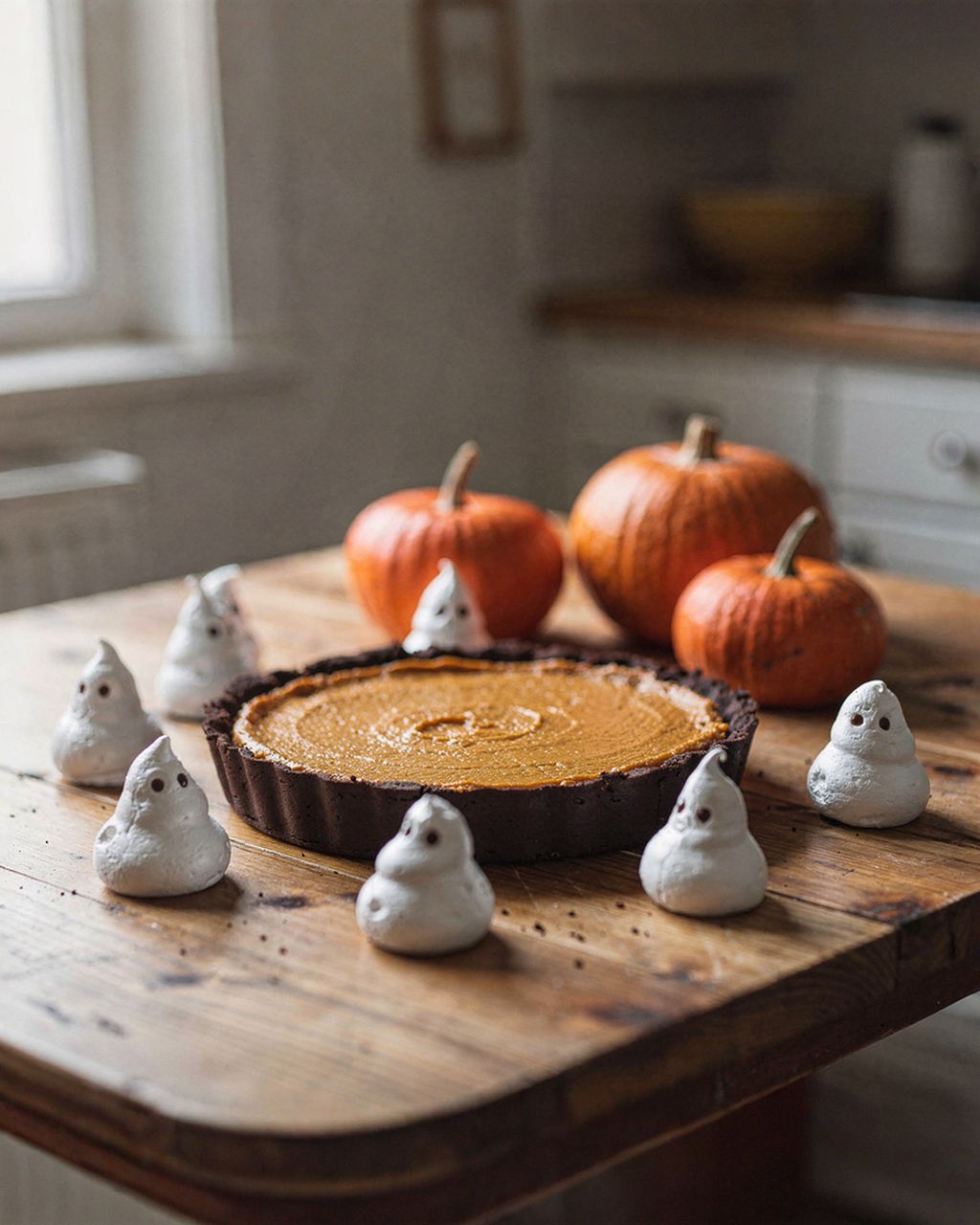
Pumpkin pie
Pumpkin cake — where to use drained purée from scooped-out pumpkin
Roasting is the best way to coax flavour out of watery flesh: the water evaporates, the sugars caramelise, and the pumpkin firms up. Cut the flesh into 2–3 cm (¾–1¼ in) cubes, toss with oil and salt, spread in a single layer, and roast at 200–220°C/400–425°F for about 25–35 minutes, until the edges brown. Thin pieces from carving cook faster — start checking from the 20-minute mark. For seasoning ideas, see our devilishly spicy roasted pumpkin.
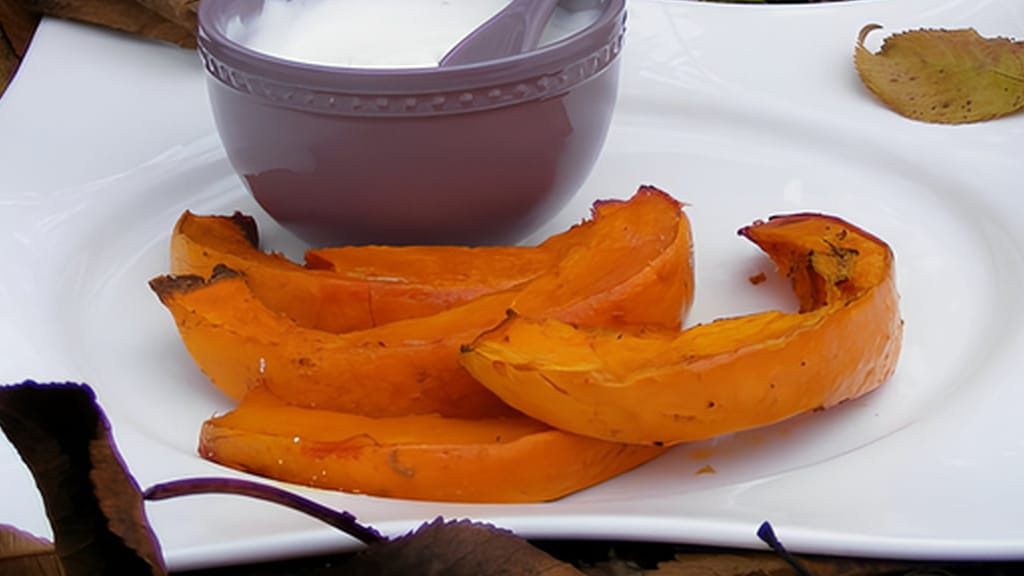
Hellishly spicy roasted pumpkin
Devilishly spicy roasted pumpkin — seasoning that wakes up even bland flesh
Blend roasted or stewed flesh into a pasta sauce, or stir it into a bake where cheese, meat, and spices carry it. Try our autumn pasta with pumpkin and spinach or pumpkin bake with ground meat — in both, scooped-out flesh can replace part of the pumpkin called for in the recipe.
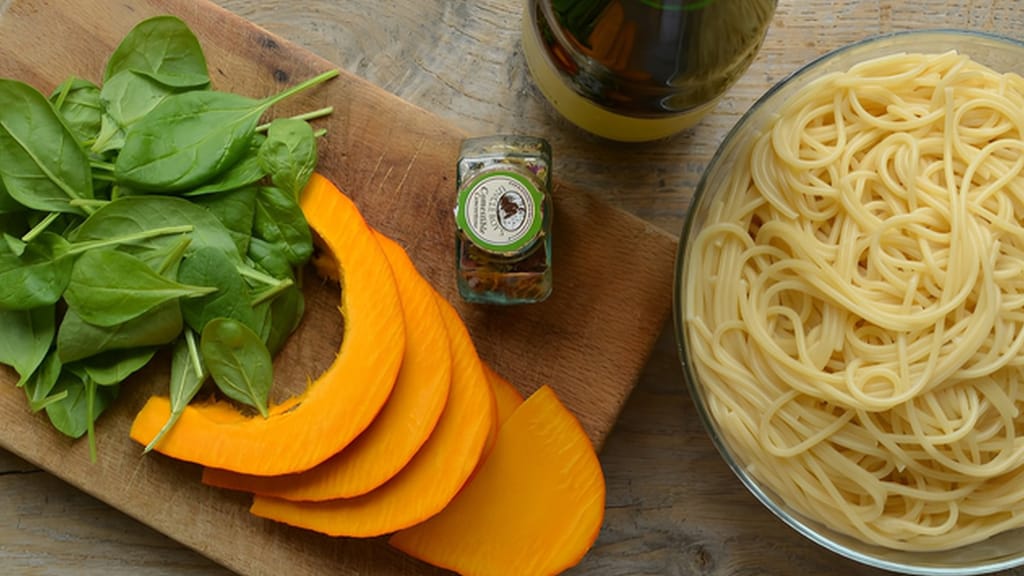
Autumn pumpkin & spinach spaghetti
Autumn pasta with pumpkin and spinach — a sauce made from roasted pumpkin flesh
Simmer the strings left over after picking out the seeds into a vegetable stock. Put them in a pot with onion, carrot, a piece of celery, and a bay leaf, cover with water, simmer for 30–40 minutes, then strain. The stock has a gentle sweetness and works perfectly as a base for pumpkin soup or risotto. Whatever you don't use goes in the compost, not the bin.
Roast the watery flesh before blending it, and bring out its flavour with fat, salt, and acid. Specifically:
Roast instead of boiling. Boiling adds water to the flesh; roasting at 200°C/400°F drives it out.
Drain the purée. Put the blended flesh into a sieve lined with a tea towel and let it drip in the fridge for 1–2 hours. It can lose a quarter of its volume — and that's a good thing.
Mix with a sweeter squash. Hokkaido or butternut in a 1:1 ratio adds back both sugar and colour.
Season boldly. An extra pinch of salt, a spoon of butter, a splash of lemon juice or cider vinegar, and toasted spices (cumin, smoked paprika, or cinnamon for something sweet) turn bland flesh into something worth using.
But don't waste your effort on flesh that's bitter, slimy, or smells sour — that belongs in the compost.
Rinse the seeds, dry them thoroughly, toss with oil and salt, and roast at 160–170°C/320–340°F for about 20–25 minutes, until golden. Seeds are often the best part of a Halloween pumpkin — one large pumpkin can easily give you a full cup.
Rinse: Put the seeds in a bowl of water — the strings sink, the seeds float. Scoop them out and rinse in a sieve.
Dry: Spread them on a tea towel and let them dry for 30–60 minutes. Dry seeds roast up crisp; damp ones steam in the oven instead.
Season: One cup of seeds needs just 1 tablespoon of oil and ½ teaspoon of salt. You can add smoked paprika, curry powder, or, for something sweet, cinnamon with a bit of sugar.
Roast: Spread in a single layer on a baking sheet, 160–170°C/320–340°F for 20–25 minutes, stirring halfway through. They're done when golden and lightly crackling. Remember they'll crisp up further as they cool.
Seeds from carving pumpkins have a tough white shell and are eaten whole, shell and all. The green, "shelled" seeds you find in shops come from special oil-seed pumpkins (such as Styrian pumpkins), which have no shell at all.
Raw or roasted pumpkin flesh and purée keep for 3–4 days in a sealed container in the fridge; freeze for longer storage.
Purée freezes well flattened in bags, in 250–500 g (roughly ½–1 lb) portions — it thaws quickly and is easy to measure out.
Raw cubes should be frozen loose on a tray first, then transferred to a bag. Once thawed they'll be soft and release water, so use them only for soup or purée, not for roasting as cubes.
Roasted seeds keep well cooled in a sealed jar at room temperature, ideally for up to 2–3 weeks.
If you end up not carving a whole pumpkin, you can store it uncut for several weeks: leave the stem on, don't wash it, and keep it somewhere dry and cool (ideally 10–15°C/50–59°F), such as a pantry or cellar. For more on working with purée in baking, see our article on pumpkin in baking.
Yes, non-bitter pumpkin flesh can be eaten raw, but from a carving pumpkin it isn't very good — it's watery and bland. Try grating it raw into a salad with apple and a lemon dressing. And always taste a small piece first: bitter pumpkin shouldn't be eaten raw or cooked.
Yes, raw pumpkin seeds are edible, but roasted ones taste better and are crunchier. Seeds from a carving pumpkin have a tough shell, so raw they're best peeled one at a time — roasting softens the shell so you can eat them whole.
No, Halloween pumpkins and hokkaido squash are different varieties with completely different flesh. Hokkaido is smaller, sweeter, drier, and eaten with its skin on; a carving pumpkin is large, watery, and not very sweet. You can only partially swap one for the other in a recipe, and you'll need to adjust the moisture.
The skin of a large Halloween pumpkin is edible, but it's tough and fibrous, so cut it off before cooking. Unlike hokkaido's thin skin, which softens when roasted or boiled, a Halloween pumpkin's skin won't soften in soup or purée.
If vomiting, diarrhoea, or stomach pain follow eating bitter pumpkin, drink plenty of fluids and contact a doctor or a poison control centre. The usual cause is bitter cucurbitacins, which cooking doesn't break down — that's why it's important to taste a raw piece beforehand.
One recipe worth heating the oven for, one tip, and one deal from the shop. Nothing else.