Pumpkin pie
Updated Aug 23, 2026
For sweet baking, hokkaido squash is your best bet — it has dense flesh, a nutty flavour, and less water than any other widely available variety, so the purée you make from it won't turn your batter into soup. Butternut squash is sweeter and silkier, but wetter, and you need to plan for that in your recipe. Here's which variety to buy, how to bake a thick purée from scratch (no tin required), and above all, how much water pumpkin actually adds to batter and how to counter it.
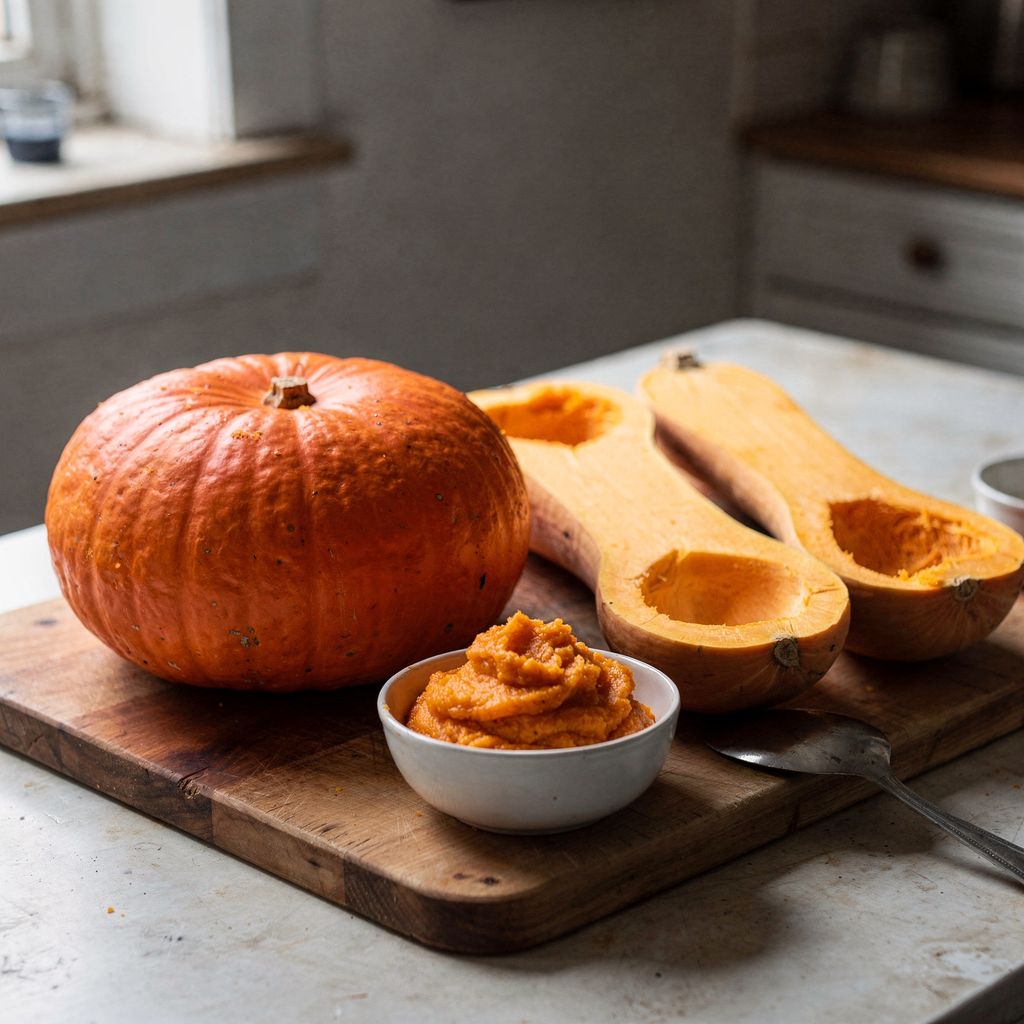
Three varieties work well for sweet baking: hokkaido, butternut squash, and musquée de provence (or other muscat-type pumpkin). All three have dense, sweet flesh and enough dry matter to make a purée that actually holds up in baking.
Hokkaido – the least watery, with a nutty flavour reminiscent of roasted chestnuts, and edible skin. The safest choice for batter.
Butternut squash – the sweetest and silkiest, but watery. Fantastic in creamy fillings; for batter, you'll need to reduce it first.
Musquée de provence / muscat pumpkin – deep orange, aromatic, with a subtle nutmeg-like note. Tends to be huge, so plan to freeze the leftovers.
Dry matter is what matters here, not colour. The less water a pumpkin holds, the less fuss your recipe will need.
Hokkaido squash is the most reliable choice for baking because it's noticeably drier than butternut, and its flesh holds its shape on a spoon once roasted. Flavour-wise it's closer to roasted chestnut — nuttier and less overtly sweet than butternut, so it won't disappear under the sugar in your batter.
You don't need to peel a ripe hokkaido. Roast it skin and all, blend it up, and you'll get a darker, more full-flavoured purée. You'll notice the difference from butternut squash right in the oven: hokkaido genuinely roasts, with caramelised edges, while butternut often just steams in its own juices.
Butternut squash is sweeter and silkier than hokkaido, but it holds more water, so it always yields a thinner purée that needs reducing. The flesh is smooth and fibre-free, and peels easily with a vegetable peeler — unlike hokkaido, you should always peel it, since the skin would otherwise turn up as tough bits in your purée.
It shines wherever you want a smooth, creamy texture: cheesecake, custard-style pie, cupcake frosting. For a moist bundt cake or loaf, reach for hokkaido instead.
Steer clear of the big orange carving and field pumpkins: their flesh is watery, stringy, and barely sweet, giving you a pale, flavourless purée. They're bred for size and for carving, not for taste.
Spaghetti squash doesn't belong in sweet baking at all — once cooked, it falls apart into long strands rather than turning into purée. Save it for savoury cooking instead, like spaghetti squash gnocchi with sage.
You can tell a pumpkin is ripe by three things: the skin is so hard you can't dent it with a fingernail, the stem has dried out, and the fruit sounds hollow when you tap it. An unripe pumpkin is watery and bland — no amount of baking will save it.
Harvest: from mid-September through the end of October, always before the first frost. A frozen pumpkin can't be stored.
Stem: leave at least 5cm attached. It protects the fruit from mould and significantly extends how long it keeps.
Curing after harvest: a few days in a dry, airy spot. The skin hardens further and the flavour settles.
Storage: a dry, ventilated place at 10–15°C, with the fruits not touching each other and left unwashed until you're ready to use them. Stored this way, they'll keep for 2 to 4 months.
Don't put a whole pumpkin in the fridge — below 10°C the flesh softens faster and the fruit starts to develop mould. A cut pumpkin, on the other hand, belongs in the fridge, wrapped, and should be used within three days.
To make pumpkin purée, halve the pumpkin, scoop out the seeds, roast it cut-side down at 180–200°C for about 40–50 minutes, and blend the softened flesh until smooth. From 1kg of raw pumpkin you'll get roughly 500–700g of finished purée depending on the variety: aim for the higher end with hokkaido, since it's roasted skin and all, and the lower end with peeled butternut.
Wash the pumpkin and cut it in half. With hokkaido, it helps to work the tip of a knife in next to the stem and lever it open rather than forcing a cut straight through the tough skin and stem.
Scoop out the seeds and the fibrous core with a spoon. Don't toss the seeds — rinse them, dry them, and roast them at 160°C until dry and crisp.
Place the halves cut-side down on a baking-paper-lined tray. Cut-side down lets the flesh steam in its own moisture while excess water escapes from underneath.
Roast for 40–50 minutes at 180–200°C, until a knife slides into the flesh with no resistance and the skin starts to collapse.
Let it cool, scoop out the flesh with a spoon (skin and all is fine for hokkaido), and blend until smooth. A stick blender works, but a food processor gives a smoother result.
Taste it, and depending on thickness, drain it if needed — see below.
Bigger pieces need longer in the oven, but don't cut the pumpkin into small chunks: the more cut surfaces you expose, the more juice pools on the tray instead of evaporating from the surface.
Roasted pumpkin always makes better purée than boiled, because the oven drives off some of the water and caramelises the surface — with hokkaido halves at 190°C, expect to lose roughly a quarter of the weight. Boiling or steaming in water does the opposite — it adds water, leaving you with a pale, thin mush you then have to laboriously thicken back up.
The second reason is flavour. Roasting triggers the Maillard reaction and caramelises the sugars, creating aromatic compounds you simply won't get from boiling. You can tell the difference between roasted and boiled purée in the finished cake blindfolded.
Avoid steaming in the microwave or pressure cooker for baking purposes for the same reason. If you're genuinely pressed for time, steam the pumpkin and then reduce the purée in a pan afterwards — but you won't fully make up the flavour gap.
You can remove excess water from purée two ways: draining it in a sieve, or evaporating it in a pan. Draining is slower and gentler on flavour, while evaporating is quicker and further concentrates the taste.
Sieve method: line a fine sieve with muslin, spread the purée into it, and let it drain for 30–60 minutes. Don't throw away the drained liquid — it's great in soup or for seasoning.
Pan method: stir the purée over medium heat for 5–10 minutes, until it thickens. Keep in mind it will thicken further as it cools.
There's one simple test for thickness: run a wooden spoon across the bottom of the pot. If the track holds for a moment and the purée doesn't flow back over it, it's ready. Properly thick purée will sit on an upturned spoon without sliding off.
You can swap tinned pumpkin purée for homemade 1:1, but only if it's the same thickness — otherwise your batter will turn soupy. That's the most common reason American recipes don't translate well into a Czech kitchen.
American tins are actually filled with concentrated flesh from the Dickinson variety, which is botanically closer to butternut squash than to our orange pumpkins (Libby's labels it simply as "pumpkin"). The result tends to be thicker and more concentrated than the purée you'd make at home from whatever pumpkin you grabbed. Before using homemade purée in a recipe like that, reduce it by about a fifth in volume.
If you don't have any pumpkin at all, here's your closest substitute:
Sweet potato – roasted and blended, 1:1. It's sweeter and starchier, so cut the sugar in the recipe by about 10%.
Butternut or musquée de provence squash – 1:1, just always reduce it first.
Carrot – roast it until dry and blend with a spoonful of cream. It'll match the colour and moistness, but not hokkaido's nutty note.
Apple purée / applesauce – an emergency option. It's thinner and more tart, so cut back on liquid and add a pinch of salt.
What doesn't work: pumpkin juice, frozen pumpkin used straight without draining, and unreduced purée from a Halloween pumpkin.
Pumpkin purée is 80–90% water, so 200g of purée brings roughly 160–180g of liquid into your batter. Butternut squash has around 86–87g of water per 100g, hokkaido even less; watery carving pumpkins run closer to 92g. Roasting and reducing gets you down toward the lower end of that range. If you add extra purée beyond what a recipe calls for, you need to cut liquid elsewhere.
Four levers you can pull to balance it out:
Cut back on other liquid. For every 100g of extra purée added, cut roughly 70–80ml of milk, cream, or water.
Add more flour. If there's nothing left to cut, add 1–2 tablespoons of flour for every extra 100g of purée.
Bake longer, at a lower temperature. Wet batters need time, not heat: 165–175°C with 10–15 extra minutes, rather than a short blast at 180°C.
Don't overfill the tin. Pumpkin batter rises more slowly, and the centre takes longest to bake through. Fill the tin no more than two-thirds full.
But pumpkin isn't just extra water. It binds some of that moisture into a soft gel — which is exactly why pumpkin bundt cake stays moist even on day three, while a plain sponge dries out. That's an advantage you don't want to bake away; the goal isn't to strip all the moisture out of the batter, but to get it under control.
How much pumpkin purée a batter can handle depends on what you're baking: for bundt cake and loaf cake, use no more than 250g of purée per 250g of flour; in muffins, purée can replace part of the fat; bake custard-style pumpkin pie at 160°C; and in pancake batter, add the milk in last. In detail:
Bundt cake and loaf cake: for 250g of flour, use a maximum of 250g of thick purée. Any more, and the centre won't bake through even if the surface looks done.
Cupcakes and muffins: purée can stand in for some of the fat. For every 100g of oil, you can cut 30g and replace it with purée — the batter will be moister and less greasy.
Custard-style pumpkin pie: the filling is set by eggs, not flour. Bake it at 160°C and pull it out while the centre still wobbles slightly when shaken — it'll finish setting from residual heat.
Pancakes: purée thickens the batter. Add the milk in gradually, by the spoonful, rather than all at once.
A skewer test isn't reliable with pumpkin batter — moist crumb clings to it even when the bake is done. A thermometer is your safest bet: aim for 96–98°C in the centre.
Hokkaido has roughly 60–80 kcal per 100g depending on variety and source, while butternut squash sits around 45 kcal — more than watery carving pumpkins, since it has less water and more dry matter. Beta-carotene content runs roughly 1,500–4,500 µg per 100g depending on variety, which is also why the flesh is such a deep orange.
In practice, this means two things. Pumpkin purée lets you cut back on some fat and sugar without drying out the batter, since pectin and the pumpkin's own water keep it moist. Pumpkin purée also pairs well with fat — in butter or oil, it dissolves both colour and the aroma of spices, giving you a batter that's more vibrant in colour and fuller in flavour.
That doesn't make pumpkin cake health food — it's still full of sugar and flour. But of all the ways to bring moisture and colour into autumn baking, pumpkin is one of the most rewarding.
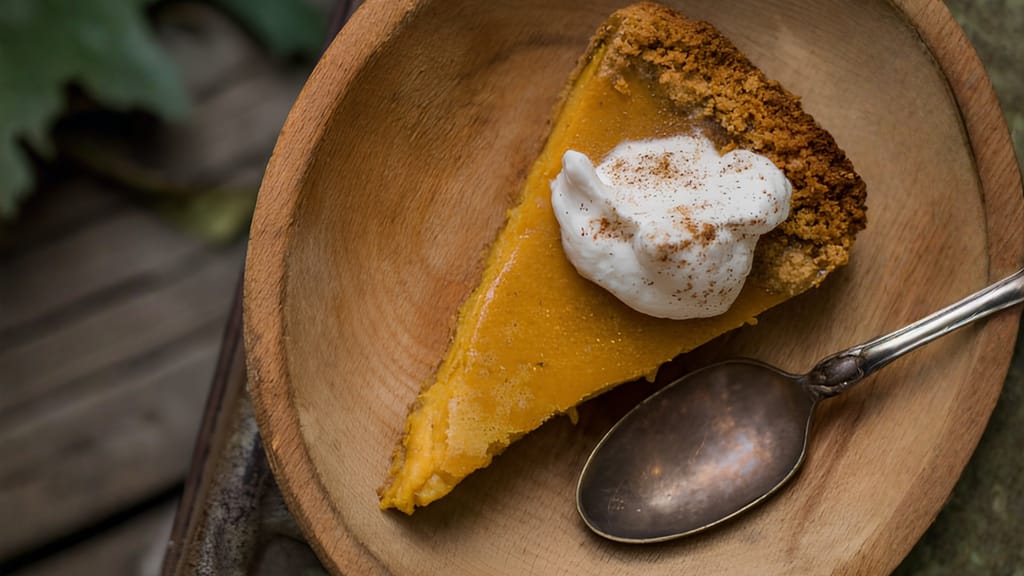
The classic pumpkin pie is the best test of whether your purée is thick enough — if it's too thin, the filling won't set and the base turns soggy. A moist batter is best suited to bundt cake and cupcakes, where the pectin really shows its worth.
Thick purée also works beautifully in a pumpkin and chocolate tart or autumn pumpkin cupcakes with mascarpone frosting.
Pumpkin pie
Classic pumpkin pie from homemade purée – the best way to tell if you've reduced your purée enough
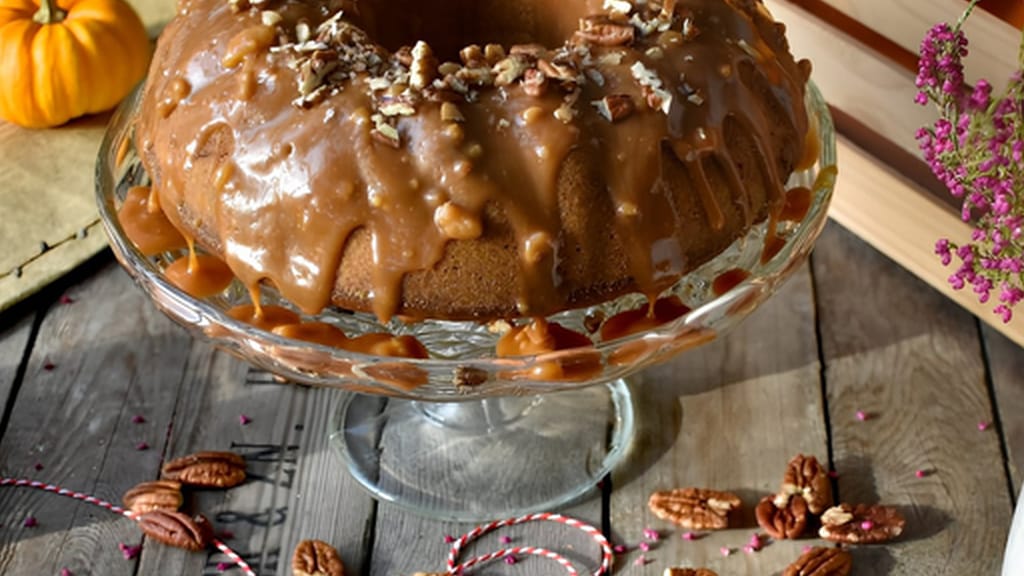
Autumn pumpkin bundt cake with creamy caramel glaze
Autumn pumpkin bundt cake with cream caramel – stays moist even on day three thanks to the pumpkin's pectin
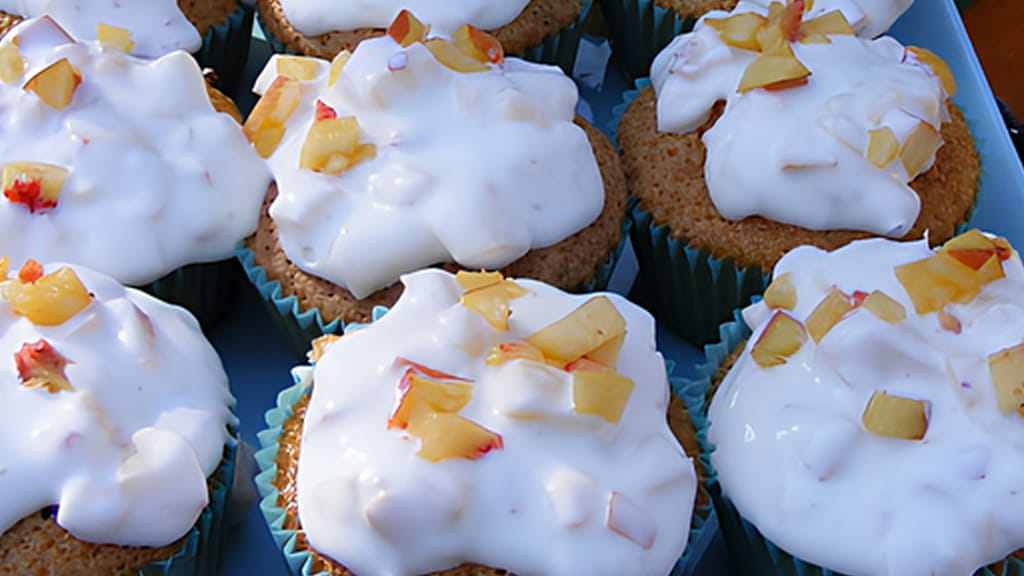
Hokkaido pumpkin cupcakes with nectarine frosting
Hokkaido pumpkin cupcakes with nectarine icing – a great example of purée standing in for some of the fat
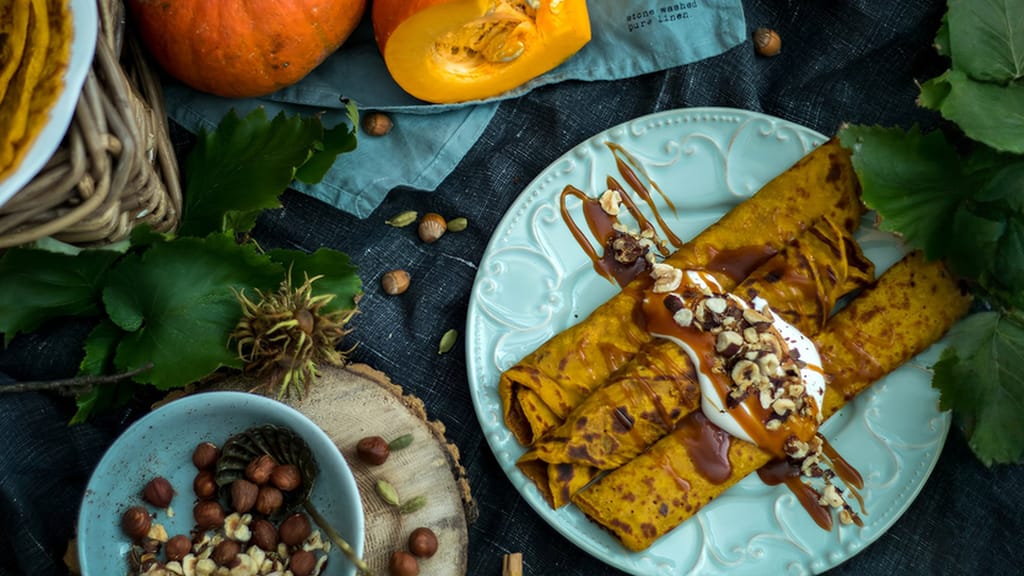
Pumpkin pancakes with salted caramel
Pumpkin pancakes with salted caramel – the fastest way to use up leftover pumpkin purée
Five spices belong with pumpkin in baking: cinnamon, ground ginger, nutmeg, cloves, and allspice. The classic ratio is 4:2:1:1:1, weighted toward cinnamon, and you'll want about 2 teaspoons of the mix per 250g of flour.
Two things that often get overlooked:
Salt. Pumpkin is flavour-flat on its own, and without a pinch of salt it stays sweet and one-note. Add at least 3g to bundt cake batter.
Acidity. Lemon zest, a spoonful of soured cream, or buttermilk lift pumpkin's flavour and also help activate the baking soda.
Don't just tip spices straight from the jar into raw batter. Toast them briefly in a dry pan, or stir them into melted butter — the fat dissolves the aroma and it comes through more strongly in the finished bake. If you want autumn flavour on hand all season, make a batch of spiced pumpkin syrup and use it to flavour coffee and icing alike.
Homemade pumpkin purée keeps in the fridge for 3–5 days in an airtight container, and up to 3 months in the freezer. Don't home-can it — pumpkin purée is a low-acid food and can't be safely processed in a standard home water-bath canner.
Freeze it in portions you'll actually use for baking: 100g or 200g flattened into a pouch defrosts in just a few minutes.
For smaller portions, freeze in a silicone ice-cube tray and transfer the cubes to a bag. Great for porridge, smoothies, or even coffee.
Purée releases water after thawing. Drain it off, or let it drain again briefly, otherwise it'll bring extra moisture into your batter.
Leftover purée doesn't have to go into something sweet — it makes the base for a silky-smooth pumpkin soup, thickens pasta with pumpkin purée, or works into a pumpkin soup with crispy bacon.
For 400g of finished purée, count on 600–700g of raw hokkaido (skin, seeds and all), or closer to 800g for peeled butternut squash. Yield generally runs 50–70% of the whole fruit's weight — go with the higher end for hokkaido, and the lower end for peeled, wetter varieties, since you'll need to reduce them down more. If you're shopping for a specific recipe, buy about 20% extra just in case.
Yes, but expect a wetter, flatter-tasting purée than you'd get from the oven. In the microwave, halve the pumpkin, place it cut-side down in a dish with a splash of water, and microwave on full power for 12–15 minutes; always finish by reducing it in a pan afterwards. In an air fryer, 180°C for roughly 25–30 minutes gets you close to oven results, since the circulating air also helps draw out moisture.
Don't use a carved Halloween pumpkin for baking. For one thing, carving pumpkins are watery, bland varieties that give you a pale, flavourless purée. For another, once a pumpkin's been carved and sitting out for a few days, it loses structure and picks up bacteria and mould. If you've scooped out flesh while carving, use it straight away or freeze it immediately.
A sunken centre in a pumpkin bundt cake almost always comes down to batter that's too wet and baking that's too short. The purée brought more water into the batter than the flour could handle, so the centre never firmed up properly and collapsed once out of the oven. Next time, reduce your purée to a thicker consistency, drop the oven to 165–175°C, and bake 10–15 minutes longer; it's done at 96–98°C in the centre, not just when a skewer comes out dry.
Stringy purée usually happens because some of the fibrous core around the seeds ended up in the blender, or because you used a field pumpkin or Halloween variety with coarse flesh. You can rescue it by pushing it through a fine sieve or a potato ricer, which catches the fibres and smooths everything out. Next time, scoop the core out more thoroughly with a spoon, and reach for hokkaido or butternut instead.
One recipe worth heating the oven for, one tip, and one deal from the shop. Nothing else.