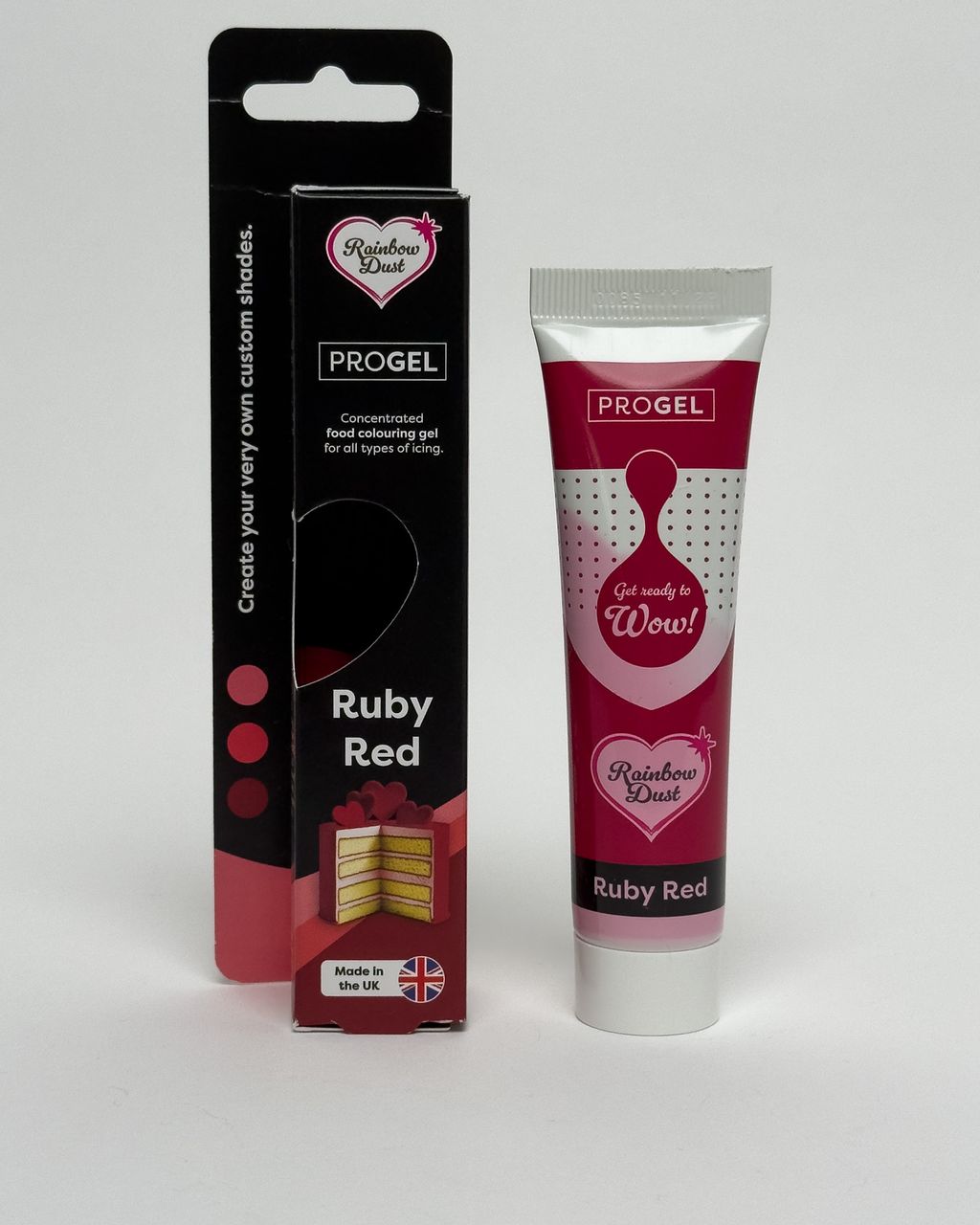
ProGel Gel Food Colouring – Ruby (25 g)
Marzipan: How It Differs from Raw Marzipan Paste, and How to Color and Use It in Christmas Cookies
Updated Oct 17, 2026
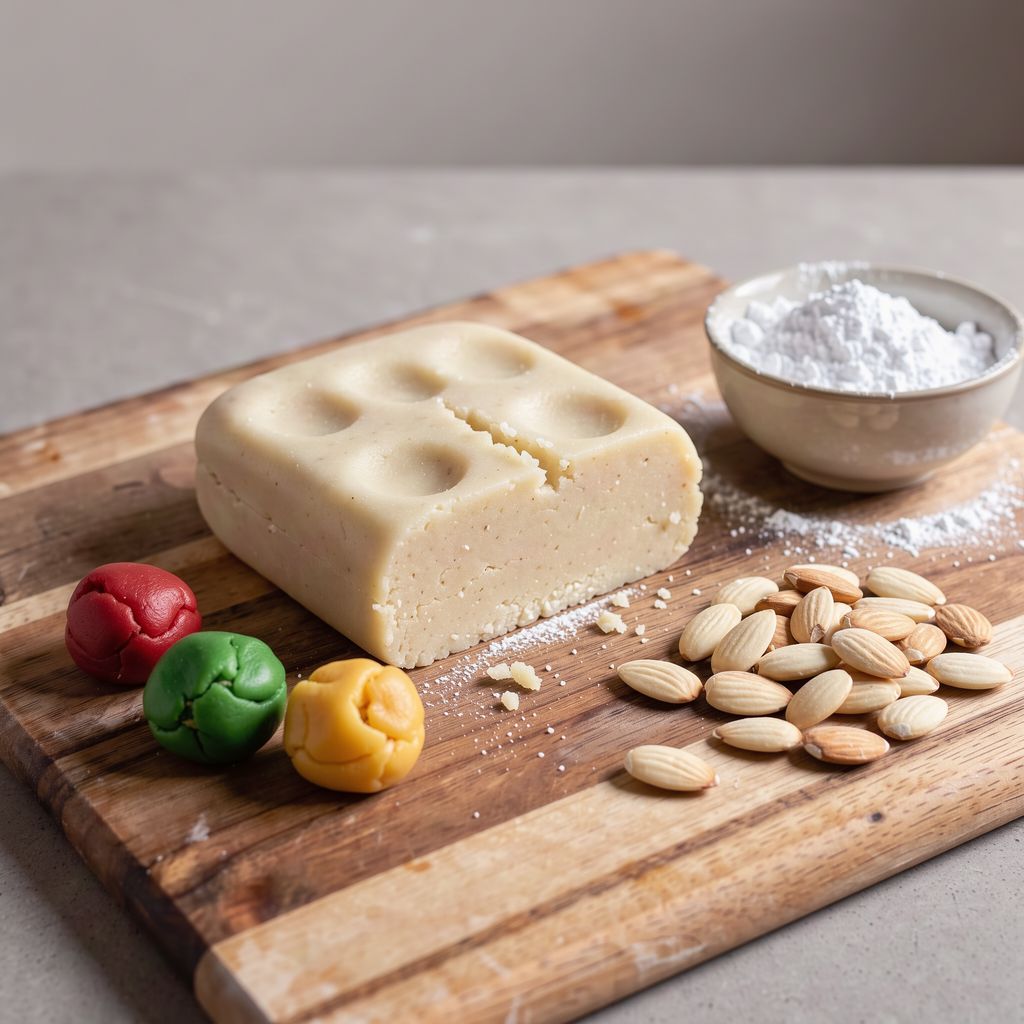
Marzipan is an almond confection made from blanched almonds and sugar. It contains roughly a quarter almonds or more, while the raw marzipan paste it's made from contains at least 50%. We'll show you how to read the label, when homemade "fake" marzipan is good enough, how to color marzipan with gel food coloring so it doesn't turn sticky, and where to use it in cookies and on cakes.
Raw marzipan paste is at least 50% blanched almonds and at most 50% sugar. By regulation, marzipan is made from at least 1 part raw marzipan paste and at most 1 part powdered sugar, so it contains roughly a quarter almonds or more. That's what the Czech confectionery regulation sets out. From June 14, 2026, it is Regulation No. 490/2025 Coll., which took over the almond and sugar proportions from the original Regulation No. 76/2003 Coll.
In practice, you'll come across three categories on packaging:
Raw marzipan paste (50% almonds or more): a semi-finished product for pastry makers. It's the softest and most almond-forward, but for modeling it tends to be soft and greasy.
Marzipan (roughly a quarter almonds or more): a ready-made confection for covering, modeling and filling. The more almonds it has, the better it tastes and the more pliable it is.
Anything else, such as "marzipan-flavored paste" or "modeling paste": by law, this isn't marzipan. It's often mostly sugar, fat and bitter almond flavoring, with few almonds or none at all.
You'll find the almond content on the label as a percentage. If it's missing and the name doesn't include the word marzipan, you're buying a scented sugar paste rather than marzipan. Sugar listed first in the ingredients doesn't mean anything by itself; that's normal for marzipan. The closer the almond content is to 50%, the better the marzipan tastes. Cheaper marzipan isn't a flaw in cookies, though: for figures and cake coverings, a firmer paste with a lower almond content is easier to model.
Choose marzipan for flavor and fondant for a smooth, colorful covering. Persipan is a cheaper substitute made from apricot or peach kernels.
Marzipan tastes of almonds, is pliable and can be eaten in pieces. On a cake, though, it's creamy white, not bright white.
Persipan is made from debittered apricot or peach kernels instead of almonds. It has a stronger, slightly bitter flavor and works well in baking, for example in stollen. It's less fine for figures.
Fondant (sugar paste) is almost pure sugar. It's snow white, so colors stay clean on it, but it tastes only sweet. You'll find the differences and the covering method in the article Fondant for cakes: how to roll it out and cover a cake without cracks.
"Fake" marzipan is a paste made without almonds (or with only a few) and rounded out in flavor with bitter almond flavoring. It works where shape and color matter most and flavor comes second: for marzipan potatoes for kids, cookie fillings, or figures that nobody ends up eating anyway.
Traditionally, it's made from milk powder, coconut, cooked semolina or even potatoes. You add powdered sugar, flavoring and a drop of rum or milk. Whichever base you choose, the same rule applies to the paste: it should be as firm as modeling clay, not stick to your fingers and not crack when you squeeze it. Sticky? Add powdered sugar. Cracking? Add liquid drop by drop.
Want real homemade marzipan? The base is simple: finely ground blanched almonds and powdered sugar in roughly a 1:1 ratio, bound with a little syrup or egg white. It all comes down to the grinding. The almonds must be ground fine, but not into a paste, or they'll release oil and the mixture will turn greasy. How to blanch, peel and grind almonds so they stay dry is covered in our article on baking nuts. Why almond flour is a better choice than coarsely ground almonds for a smooth paste is explained in Almond flour: how it differs from ground almonds.
Color marzipan with concentrated gel food coloring, adding it in tiny drops on a skewer and balancing it right away with powdered sugar. Liquid supermarket colorings add a lot of water to marzipan, so it turns damp, sticky and starts to sweat. You need much less gel, which is why it keeps the texture.
Method:
Take only as much marzipan as you need to color (for example 50–100 g). Keep the rest wrapped in plastic wrap, because it dries out quickly in the air.
Pick up just a tiny drop of gel on a skewer and dab it onto the marzipan. Always add less than you think you need.
Knead with gloves on until the color is no longer streaky. This takes 1–2 minutes.
If the marzipan starts to get sticky, work in a teaspoon of powdered sugar. Add powdered sugar for deep shades too, because they need more coloring.
Wrap the marzipan in plastic wrap and let it rest for 20–30 minutes. During that time the shade darkens a little and the marzipan firms up.
With marzipan, you have to keep two things in mind:
Marzipan is cream-colored, not white. Its yellowish base shifts colors: blue turns toward green, pink toward salmon. If you need a pure white base, reach for fondant.
Christmas red needs the most coloring. Choose a gel that's already a red shade, such as ProGel Ruby (25 g). Don't try to mix it from pink. Add the red gradually and let it develop overnight; the next day it's usually a shade darker. If you pour gel onto deep red all at once, the marzipan turns into a sticky mush.
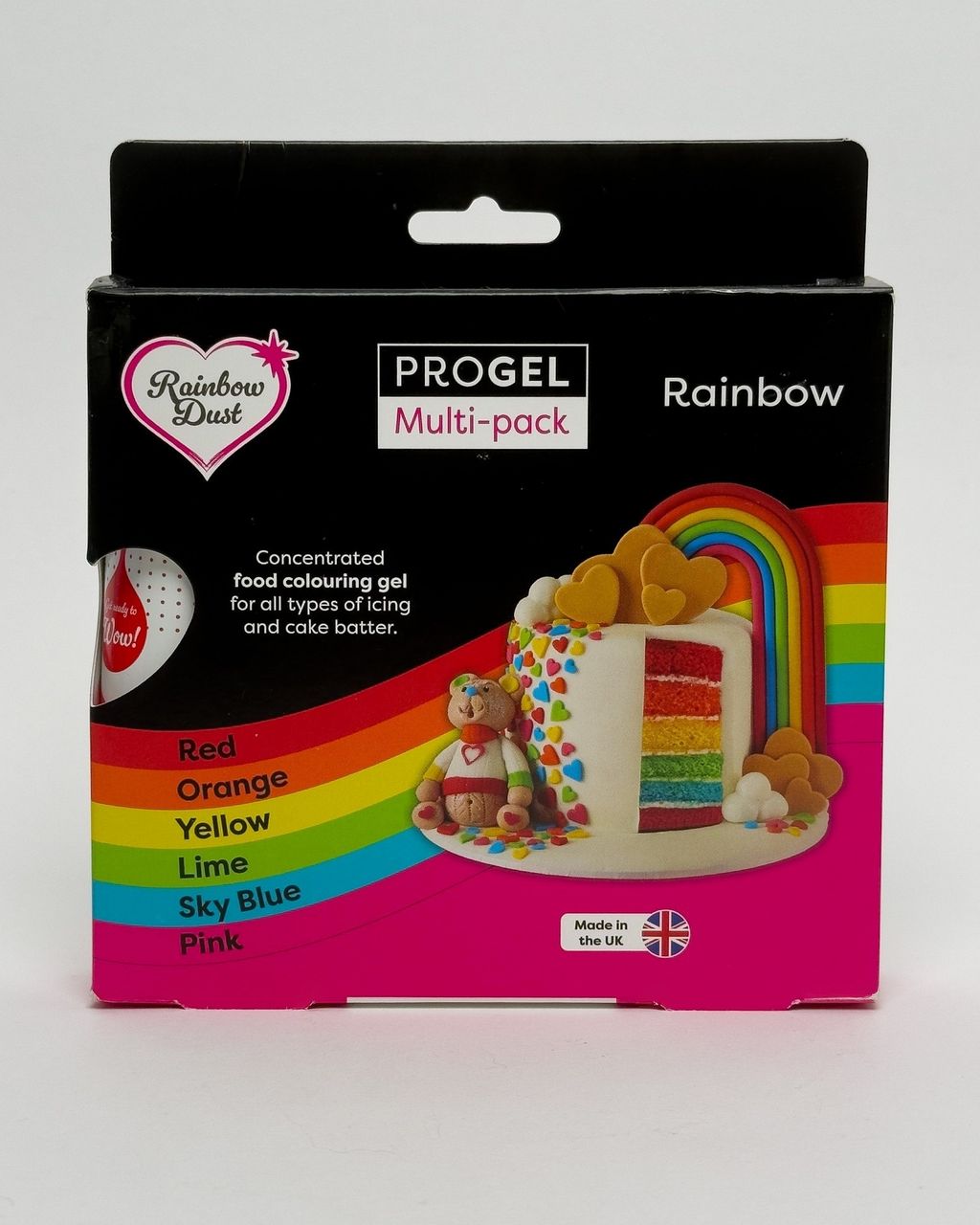
If you want colorful cookies (green leaves, yellow stars and blue decorations), it's worth having the ProGel Rainbow Set of 6. From the six basic shades you can mix most of the others. You'll find more gels, as well as powdered and natural colorings, among the colors and food colorings for cookies and cakes.
What works and what doesn't, compared:
Powdered colorings add no water and suit deep shades well. They're harder to mix in, though, and specks can remain on the marzipan.
Natural colorings (beetroot, spirulina, turmeric) give only soft pastel shades. Some also add a flavor of their own.
Liquid colorings only suit light tones and small amounts.
The shade chart for buttercream shows how many drops you need for a pastel or dark shade. With marzipan, expect to need about the same amount of coloring for the same shade, or rather a little more.
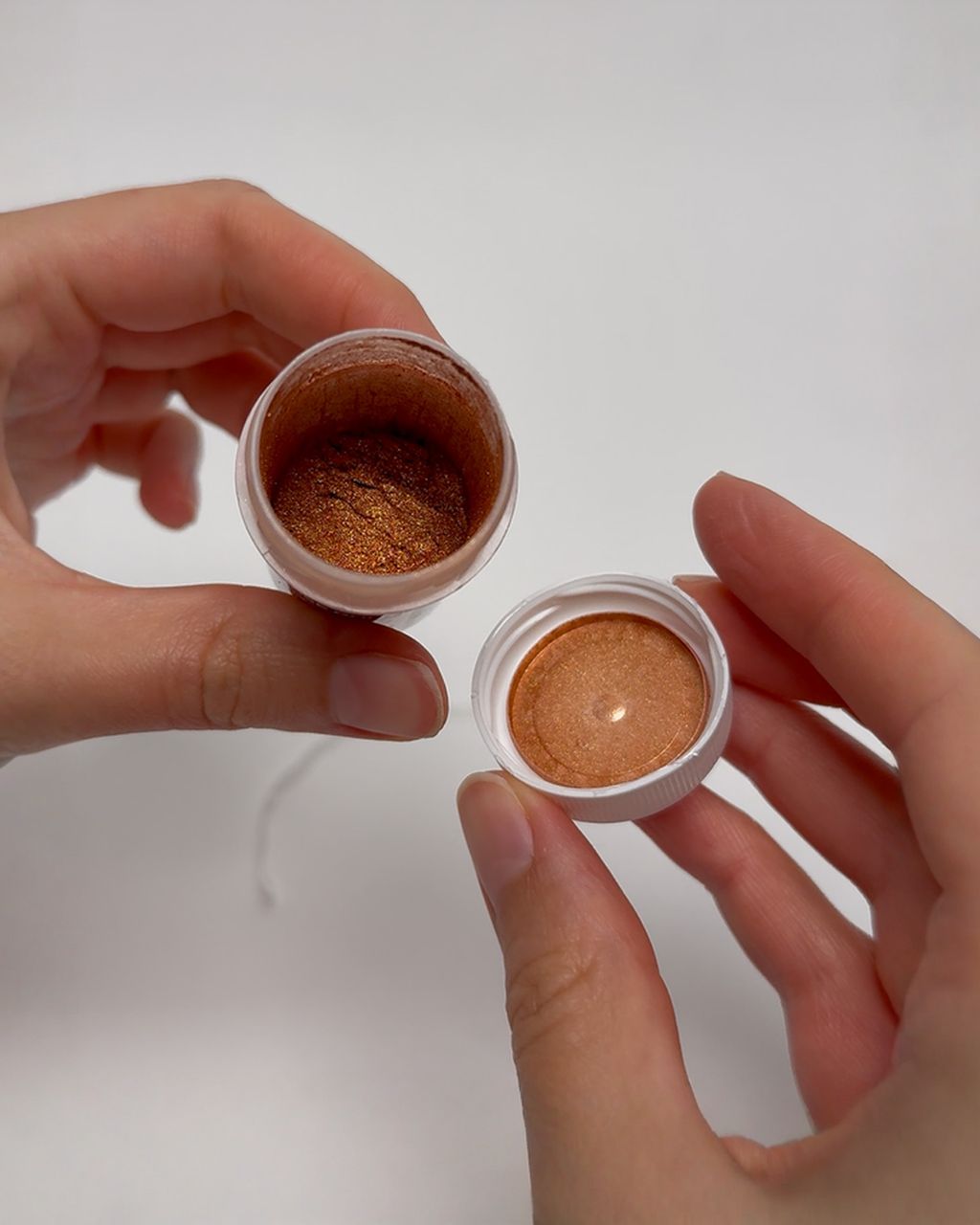
Apply shimmer powder only to finished, dry marzipan: with a dry brush for a soft sheen, or mixed with a few drops of alcohol if you want a rich gold color. Vodka or lemon extract evaporates within a few minutes, but water would leave a sticky surface.
For gold stars, the edges of figures and the edges of marzipan candies, Shimmer Edible Powder – Rose Gold works well. It's a warmer, slightly pink version of gold that goes nicely with marzipan's creamy color. If you want a mirror-like metallic shine, reach for edible gold leaf. It's more expensive, but powder can't give you that shine.
Always look for the word edible on the package. Glitter labeled "non-toxic" is only decoration and isn't meant to be eaten. The difference is explained in detail in the article Edible gold and shimmer powder for cakes: what is safe to eat.
In cookies, marzipan works well for marzipan potatoes, stuffed dates and prunes, praline fillings, Christmas stollen and figures. It loses its shape and color when baked, so you mostly use it raw or bake it inside dough.
Marzipan potatoes: balls of about 10 g, rolled in cocoa. Roll them in cocoa right after shaping, while the surface is still slightly sticky.
Stuffed dates and prunes: put a 5–8 g roll of marzipan in each one, add half an almond if you like, and dip the end in chocolate. Nothing is baked.
Pralines and candies: cut colored marzipan into cubes and dip them in tempered chocolate. You'll find ideas for fillings and packaging in the article Homemade chocolates as a gift.
Christmas stollen: wrap a roll of marzipan in the dough. Inside, it stays soft and doesn't burn.
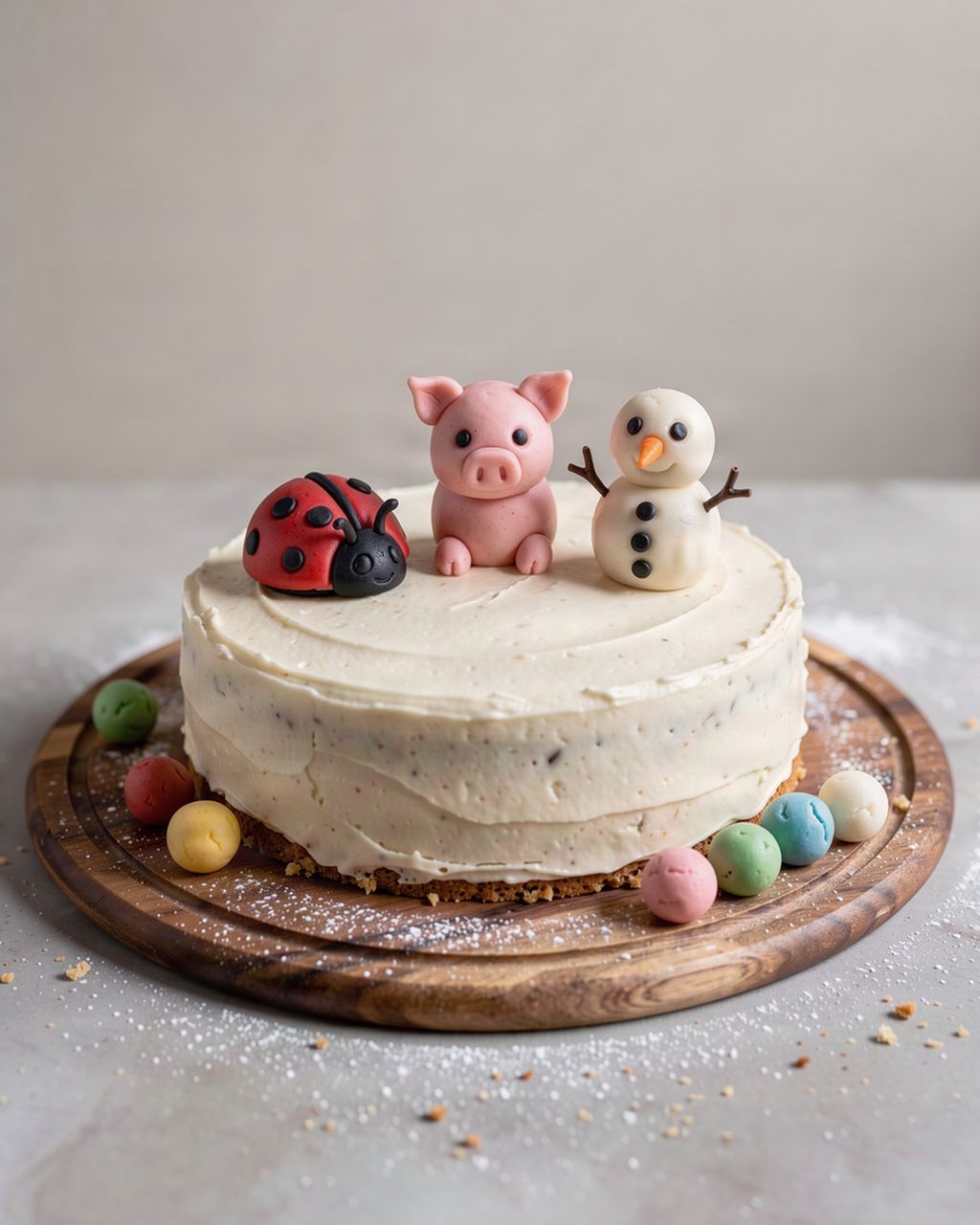
Figures and decorations for cookies: little stars, leaves and berries made from colored marzipan. How to model figures and how long they keep is covered in a separate guide to marzipan figures.
Store finished decorations and cookies in a tin in a cool place (15–18 °C / 59–64 °F), but not in the fridge. When you take them out, condensation forms on them, the color runs and the gold dissolves. For how to store an opened block, see the questions at the end of the article.
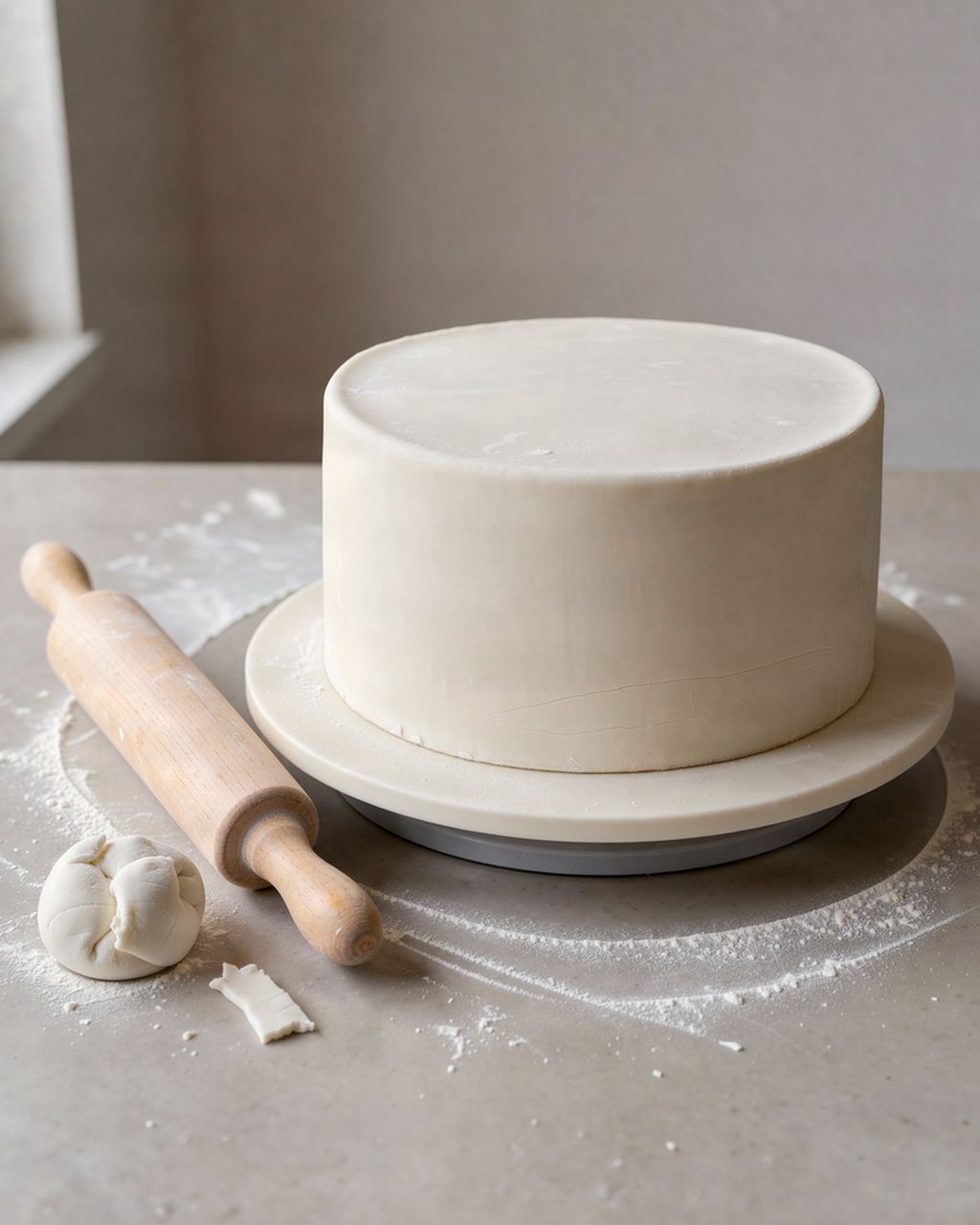
For a cake, roll marzipan into a sheet 3–4 mm thick on a surface dusted with powdered sugar, and lay it over a cake layer brushed with a thin coat of warmed (boiled) apricot jam or ganache. The jam sticks the sheet on and also stops it from drawing moisture out of the cake.
What it suits: cakes with a firm filling (buttercream, ganache) and sponge or nut cake layers.
What it doesn't: whipped cream, mascarpone and quark. They make the marzipan damp, and the sheet starts to sweat, slide and turn sticky.
How much marzipan you need: for a cake 20 cm (8 in) in diameter and roughly 8 cm (3 in) tall, plan on 500–750 g of marzipan.
No cracks: knead the marzipan before rolling so it warms up and becomes pliable. Move the sheet on a rolling pin and smooth the top first, and only then the sides.
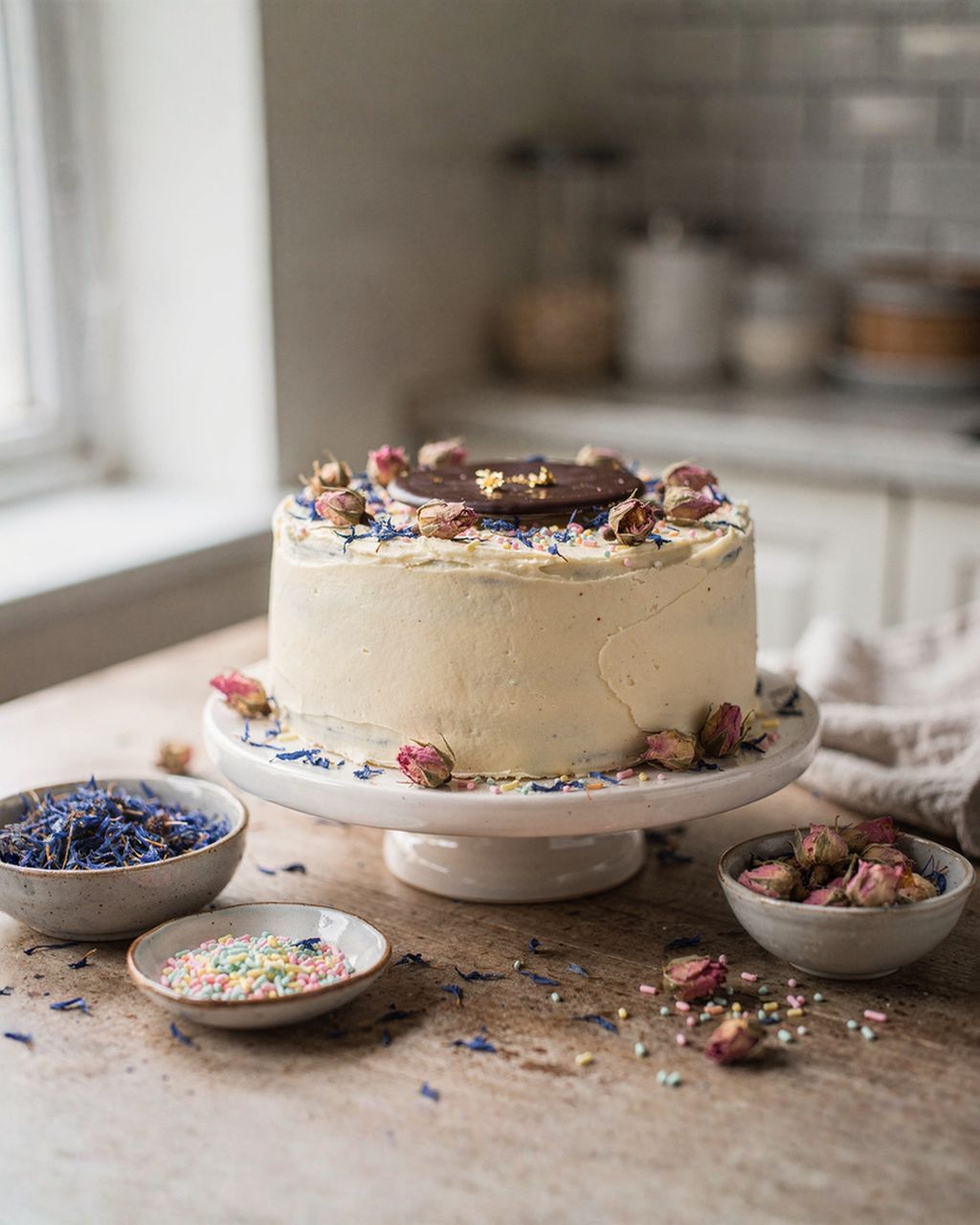
The colorful decorations and gold from the earlier sections also work on a marzipan cake. More options, from sprinkles to dried flowers, are gathered in the overview Edible cake decorations.
An opened block of marzipan keeps for several weeks if you wrap it tightly in plastic wrap and store it in the fridge. Still, go by the date on the package. Let it come to room temperature before you work with it, or it will be hard and start to crack.
If marzipan cracks, it's cold or dry. If it's greasy, it has overheated and the almonds are releasing their oil. Knead cold marzipan in warm hands and add a drop of syrup. Let greasy marzipan cool for a while and work in a little powdered sugar.
Yes, marzipan keeps well in the freezer for several months if you wrap it in plastic wrap and then put it in a bag. Thaw it slowly in the fridge. Finished colored decorations pick up condensation after thawing, though, so it's better to freeze them before they're finished.
Store-bought marzipan is only baked inside dough, for example in stollen or as a filling. The exception is baked goods made from raw marzipan paste, such as almond cookies, which can be baked on their own. Ordinary marzipan on the surface softens in the oven, melts and browns.
In fillings and baking, the best substitutes for marzipan are persipan or a homemade mixture of almond flour, powdered sugar and egg white. For covering a cake or making figures, use fondant or modeling chocolate instead. A drop of bitter almond flavoring will give them an almond taste.
One recipe worth heating the oven for, one tip, and one deal from the shop. Nothing else.