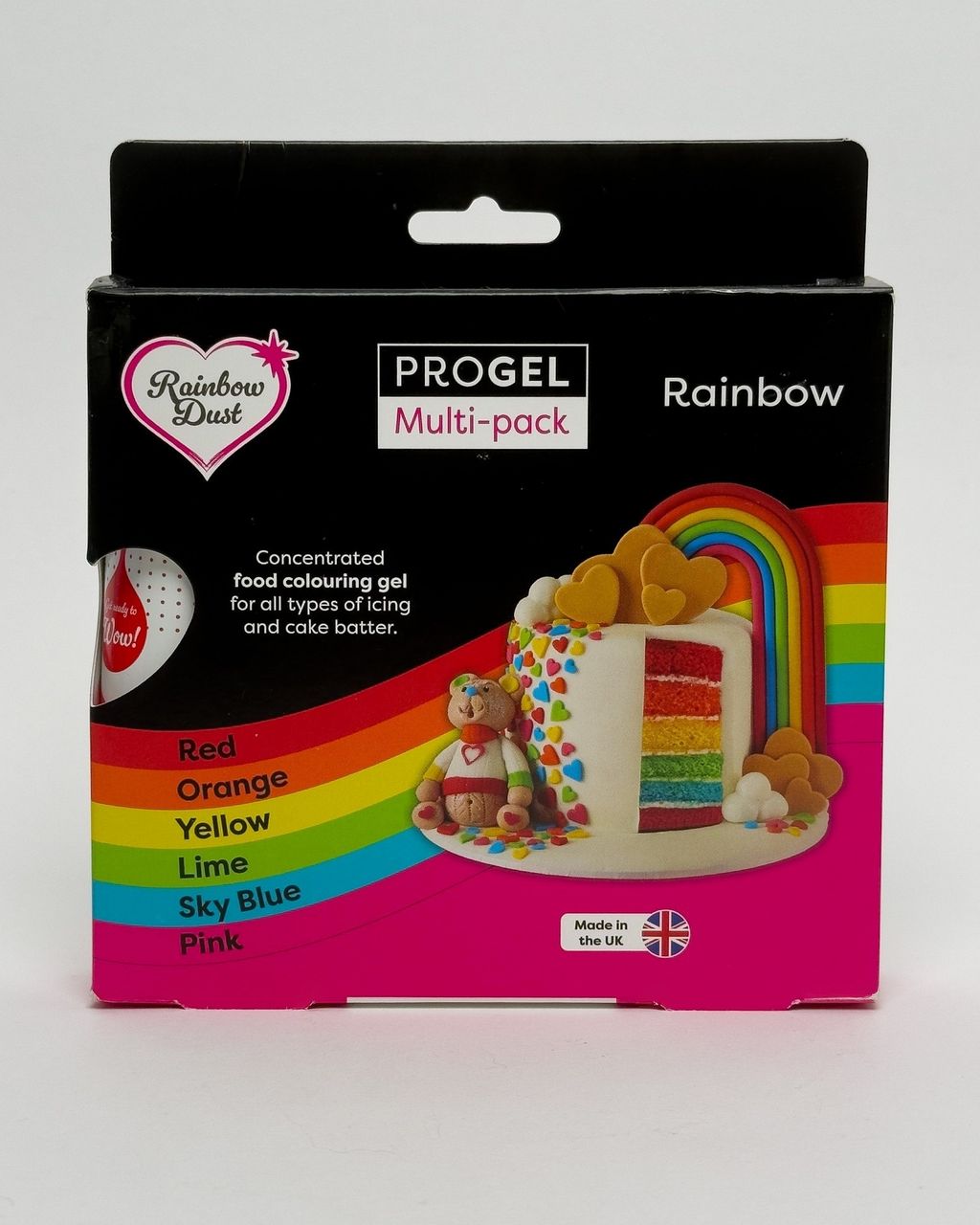
ProGel Gel Food Colouring Rainbow Set of 6
Marzipan Cake Toppers: How to Shape, Color and Store Them
Updated Oct 17, 2026
You can make marzipan cake toppers even with no experience. They're all built from four basic shapes (ball, teardrop, roll, cone). Color the marzipan with gel food coloring, let the figures dry overnight on baking paper, and set them on the cake just before serving. Moisture is what ruins them most often: in the fridge and on cream, figures sweat and their colors bleed. Here's the whole process, from choosing marzipan to storing it.
For modeling, firm marzipan with a higher sugar content works best (also sold as modeling marzipan). It holds its shape and doesn't get as greasy. Raw marzipan paste with a high almond content tastes great, but it's softer and oilier, so figures sag and stick to your fingers.
The difference is also set out in Czech decree no. 490/2025 Coll.: raw marzipan paste contains at least 50% blanched almonds and at most 50% sugar, while marzipan is made from it by adding at most 1 part powdered sugar to 1 part paste, which makes it sweeter and firmer.
Firm / modeling marzipan – the best choice for figures, especially for kids and for fine details.
Raw marzipan paste (min. 50% almonds) – better for fillings and baking; for modeling, firm it up with powdered sugar.
White vs. yellowish – marzipan is naturally yellowish. For clean colors (blue, pink), reach for the lightest one you can find.
If the marzipan is soft and sticky, work in powdered sugar a teaspoon at a time. If it's hard and cracking, knead it in warm hands. The warmth releases oil from the almonds and makes it pliable.
To color marzipan evenly, use concentrated gel color applied with a toothpick, knead it in thoroughly, and let it rest for 15–30 minutes wrapped in cling film. Don't add liquid supermarket food coloring to marzipan: it adds water, so the marzipan gets thin and sticky.
Weigh out a piece of marzipan (20–50 g is enough for one figure) and wrap the rest in cling film right away so it doesn't dry out.
Pick up a pinch of gel on a toothpick and rub it into the center of the ball. Start with a really small amount: you can always add more, but you can't take it out.
Knead, fold and roll it out again until the marbling disappears. Streaks mean you're not done yet.
Wrap it in cling film and let it rest for 15–30 minutes. The color settles in the meantime and darkens slightly, so judge the final shade only after that.
If the marzipan has become damp from the color, work in a little powdered sugar.
Wear disposable gloves while you work, because gel stains skin. You'll find the full range of colors in the cake decorating colors and food colorings category.
Gel, powder, or natural coloring? A gel color such as ProGel is the most practical for marzipan: it's thick, highly concentrated and barely moistens the marzipan. Powder colors are even drier and suit very intense shades, but they're harder to dose. Natural colorings (beetroot, spinach, turmeric) work, but they give muted tones, can affect the flavor, and fade over time.
The hardest are deep red, black and pure blue, because marzipan is yellowish and needs a lot of color.
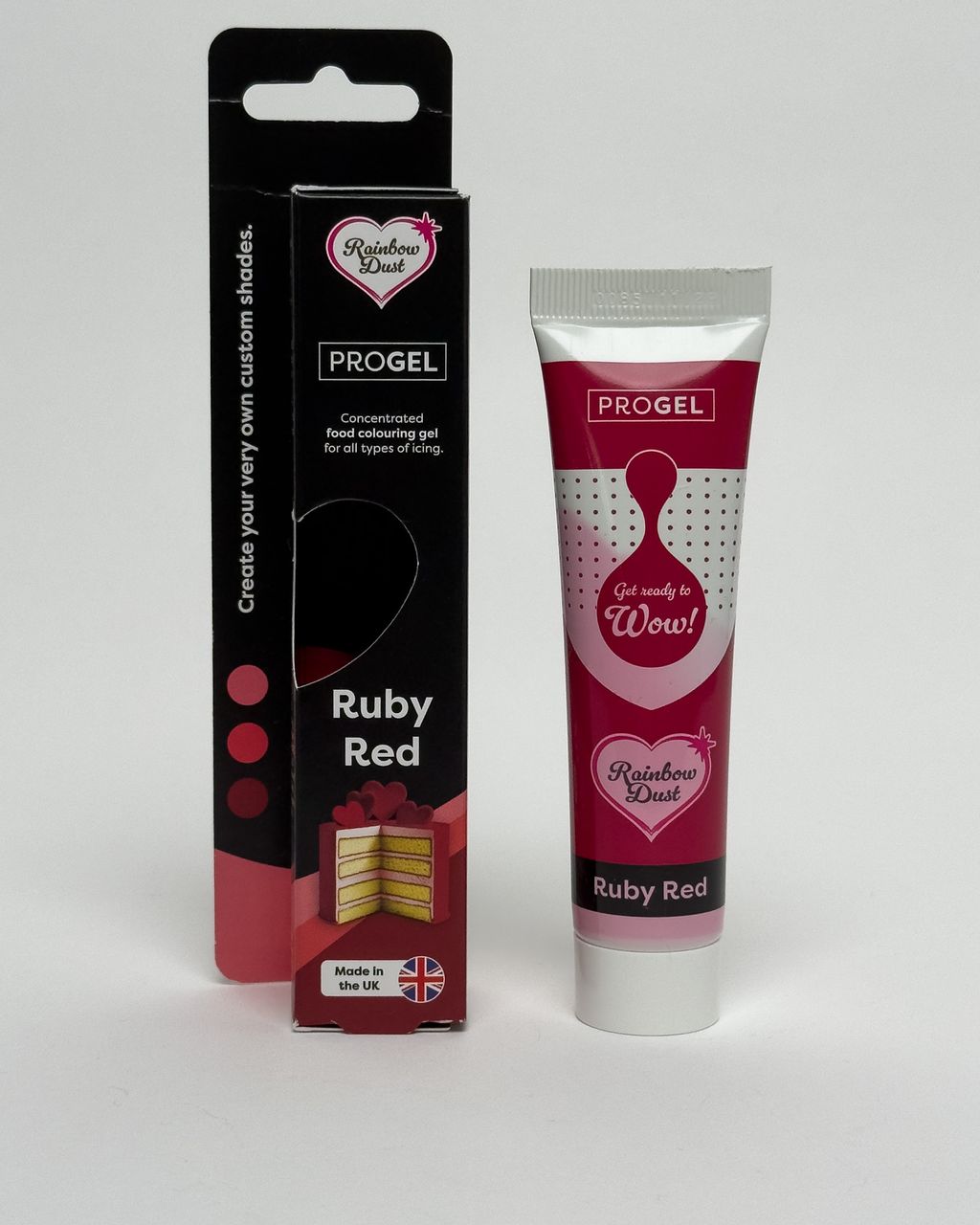
Red and pink: for a ladybug, piglet or strawberry, a ruby tone works well, such as ProGel Ruby. For pink, the tip of a toothpick is enough. For deep red, add color gradually and expect to firm up the marzipan with sugar.
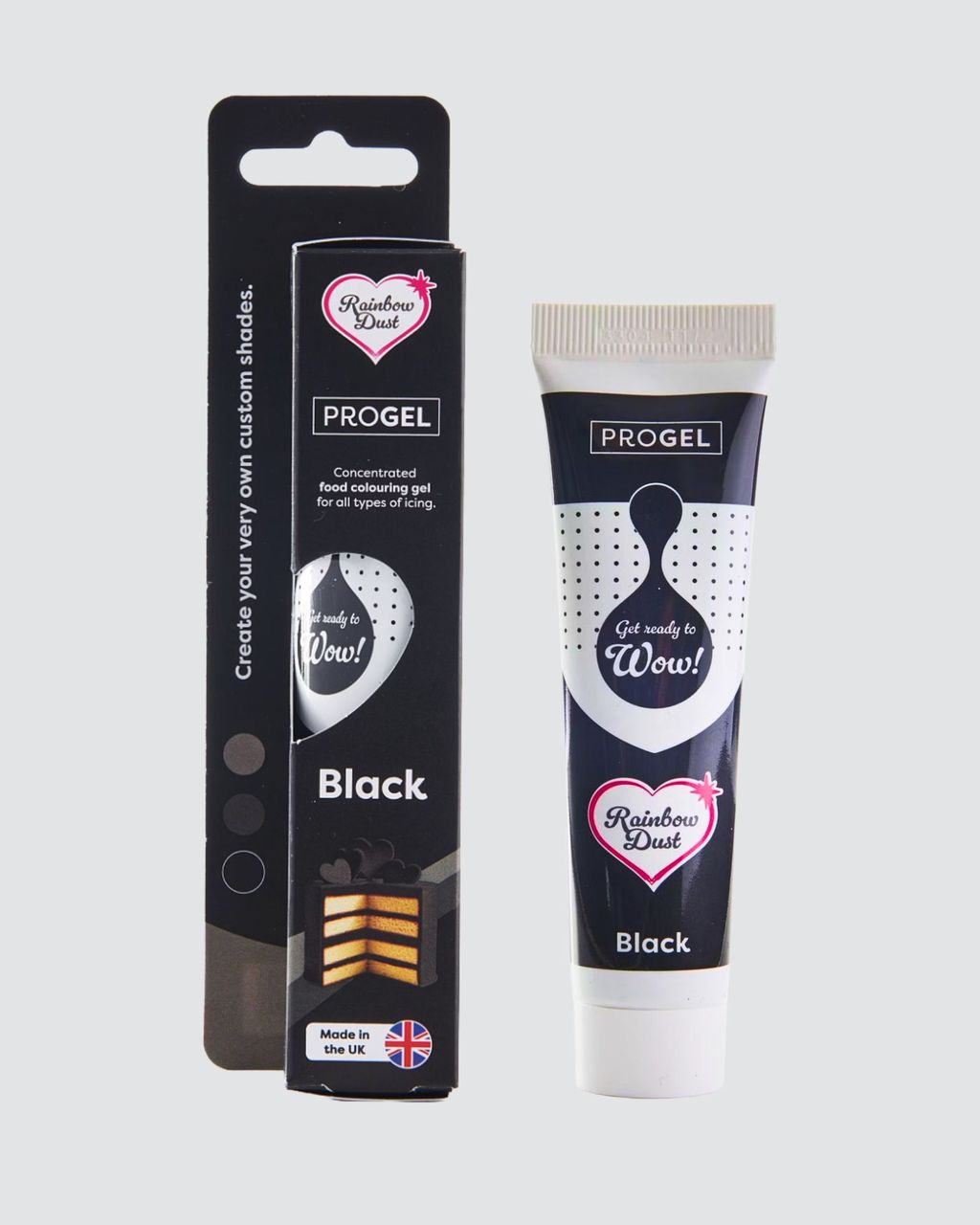
Black: coloring a whole figure black isn't worth it, since you'll use a lot of gel and the marzipan gets damp. Use black for eyes, dots and little mouths (see the section on painting details below). For larger dark areas, take a piece of marzipan you've already colored brown or dark gray and darken only that.
Blue: on yellowish marzipan it easily turns green. Use the whitest marzipan you can get.
Mix all your colors at once and keep them wrapped in cling film. Matching the same shade a second time is almost impossible.
Every simple marzipan figure is built from four basic shapes: a ball, a teardrop, a roll and a cone. First roll a smooth ball with no cracks in your palms, then shape everything else from it.
Ball – head, body, dots, eyes.
Teardrop – roll one side of a ball out between your palms: ears, wings, leaves.
Roll – roll a ball out on the work surface: arms, legs, tail, scarf.
Cone – press one end of a roll to a point: carrot, hat, beak.
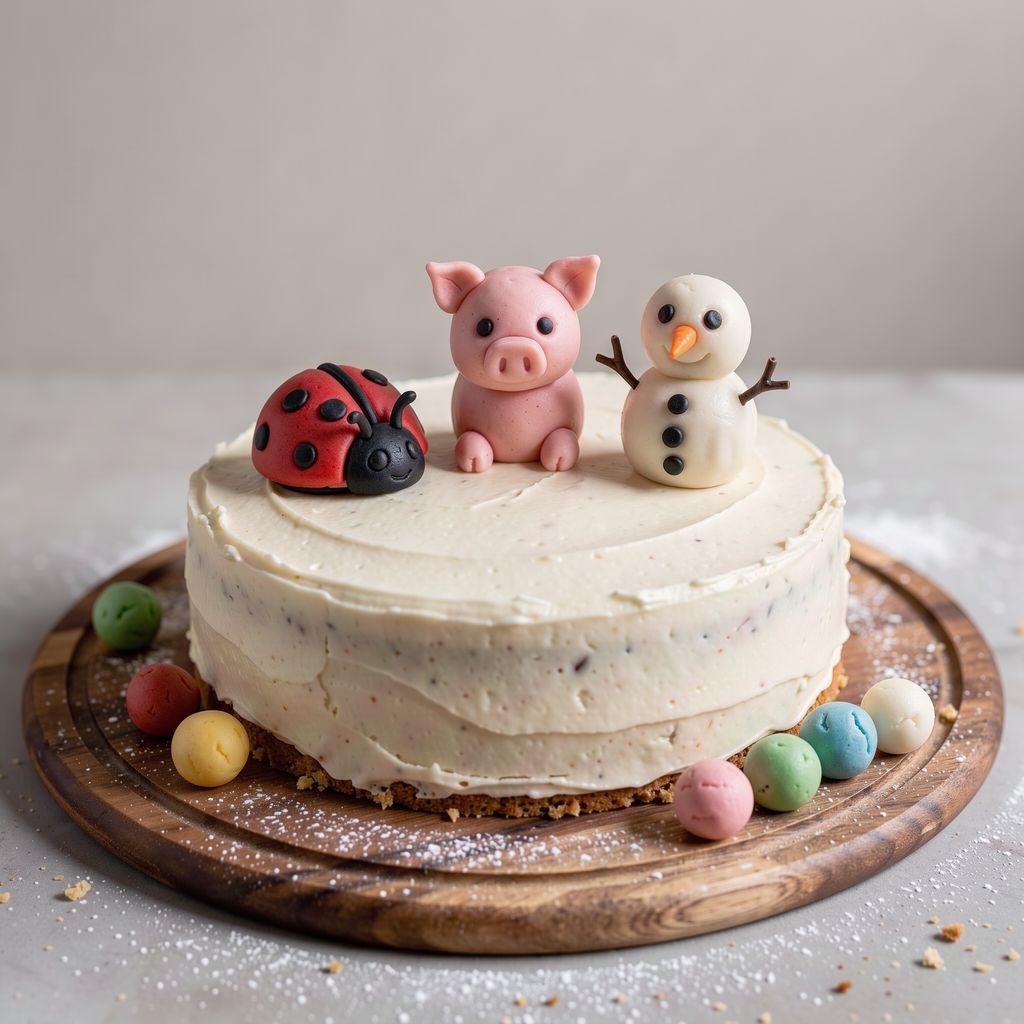
To start, try three figures: a ladybug, a piglet and a snowman:
Ladybug: flatten a red ball (about 15 g) slightly into a half-ball, press a line down the middle of the back with a knife, add a black ball for the head, and paint the dots on with black gel.
Piglet: a pink ball for the body, a smaller ball for the head, a small flattened roll for the snout (two nostrils made with a toothpick), two teardrops for ears, and a thin roll curled into a tail.
Snowman: three white balls from largest to smallest (for example 25, 15 and 8 g), an orange cone for the nose, and a thin roll for the scarf.
Attaching the pieces: glue the parts together with a drop of water applied with a brush. The surface only needs to be damp, otherwise the pieces slide. A head stays on the body better if you first press both surfaces together lightly so they touch all over. For taller figures, a support inside helps (see the safety note below).
If marzipan sticks to your hands or tools, dust them lightly with powdered sugar. Cornstarch works too, but it leaves white patches on colored marzipan.
Paint details on marzipan figures with a thin brush, and only once the surface has dried, because on fresh marzipan the color bleeds.
Black eyes and dots: thin a drop of gel, such as ProGel Black, on a palette with a few drops of water or clear alcohol so it flows from the brush without running. Alcohol evaporates faster and moistens the marzipan less. Make the tiny dot in the eye with the tip of a toothpick.
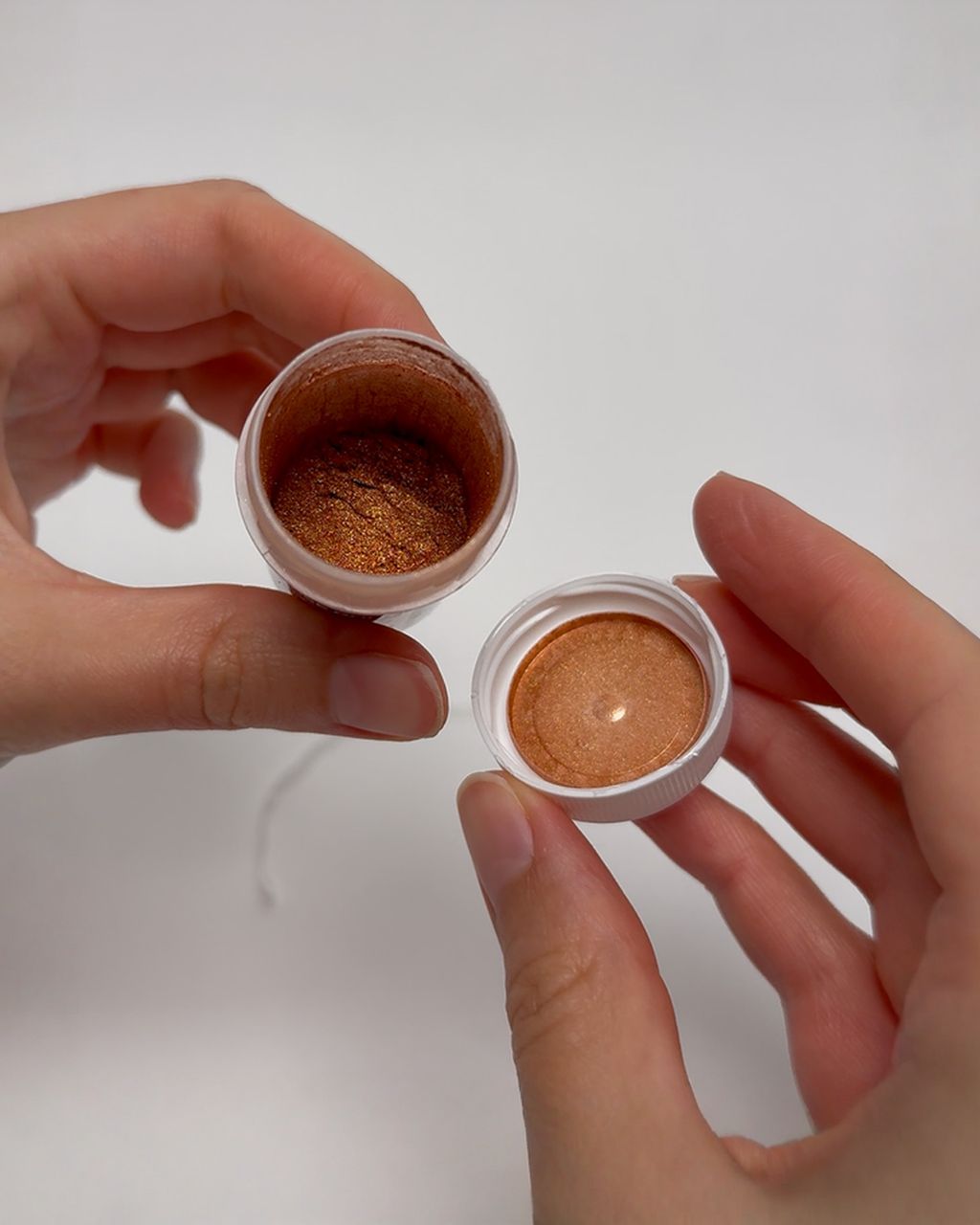
Gold accents: apply shimmering edible powder either with a dry soft brush (a gentle sheen over the whole surface), or mix it with a few drops of clear alcohol and paint lines, crowns and buttons. For figures, a shimmering powder in a pinkish gold shade works nicely. For a truly metallic effect there are also sheets of real edible gold. They cost more, but you only need a small piece for a crown or a star.
Be careful with the difference between "edible" and "non-toxic" powder. Non-toxic powders are meant for decorations that get removed, and they don't belong on a figure someone will eat. Always check that the packaging explicitly says it's edible.
Let marzipan figures dry overnight, ideally 12–24 hours at room temperature, uncovered, on baking paper. In that time a dry skin forms on the surface. The figure then holds its shape, can be painted, and won't turn soggy as quickly on the cake.
Dry them in a dry place out of the sun and away from the stove or dishwasher (steam).
Don't dry them in the fridge. When you take them out, water condenses on them, the surface turns sticky and the colors bleed.
Large figures, or heads on thin necks, take longer to dry. Feel free to make those a day earlier.
A dried figure feels dry and isn't sticky, but stays soft and edible inside. Don't let it harden completely if you want people to actually eat it.
Put marzipan figures on the cake as late as possible, ideally just before serving, and stick them on with a drop of melted chocolate or thick cream. Moist cream and the fridge both draw moisture into the figures. The longer they sit on the cake, the more they sweat and lose their sharp outlines.
On ganache, buttercream or fondant figures hold best, because the surface is firm and relatively dry. A cake with a firm surface suits them well, for example a simple chocolate cake covered in ganache.
On whipped cream and light creams, add the figures at the table and put a thin disc of marzipan or a slice of chocolate underneath. It separates the figure from the moist cream.
Larger figures should sit on a flat base (a flattened ball of marzipan) so they don't tip over or press into the cream.
Don't leave a cake with whipped cream, mascarpone or other dairy-based filling out of the fridge for long just because of the figures. According to the US food safety agency USDA FSIS, perishable foods shouldn't be left at room temperature for more than 2 hours (just 1 hour above 32 °C).
Finished marzipan figures last until the best-before date of the marzipan you used, as long as you store them in a dry place at 16–18 °C, not in the fridge. Niederegger recommends this temperature in a dry place for its marzipan products. Put the figures in a paper or cardboard box lined with baking paper, not in an airtight plastic container, where moisture condenses under the lid.
Shelf life of a finished figure depends on the marzipan it's made from: go by the best-before date on its packaging and eat the figures by that date at the latest.
Opened marzipan (leftovers you didn't use): according to the manufacturer Odense, wrap it tightly in cling film, then put it in a resealable bag and store it in the fridge for up to 2 weeks, or in the freezer for up to 3 months. Before modeling, let it come up to room temperature while still wrapped, so water doesn't condense on it.
A figure that has already sat on a cake shares the cake's fate: it gets eaten with the cream or thrown out with it. It doesn't go back in the box for the next cake.
Signs your marzipan should be thrown out: a rancid, bitter or "oily" smell, mold, a sticky surface. Marzipan that has hardened but still smells good has simply dried out.
You can freeze marzipan figures, but it's not worth it: as they thaw, water condenses on them and the colors run. If you do freeze them, put the dried figures in a sealed container and let them thaw closed until they reach room temperature. It's much better to freeze leftover plain marzipan instead. According to the manufacturer Odense, it keeps in the freezer for up to 3 months.
A marzipan figure cracks when the marzipan is too dry or too cold. Knead it in warm hands until it's smooth and pliable, and roll the balls without pressing. You can smooth cracks on a finished figure with a finger lightly dampened with water.
For simple marzipan figures, what you already have at home is enough: toothpicks, a small sharp knife, a thin brush, baking paper, cling film and disposable gloves for coloring. A set of modeling tools (ball tools and shaping spatulas) is handy for finer details like eyes, folds or feathers, but you don't need one for a ladybug, a piglet or a snowman.
You can replace marzipan with fondant (sugar paste) or modeling chocolate. Fondant is nut-free and can be colored just like marzipan, but it tastes only sweet. Modeling chocolate is made from melted chocolate and glucose syrup. It tastes best, but it softens faster in warm hands.
Make marzipan figures 1–3 days before the celebration so they have time to dry overnight. Until then, store them in a box lined with baking paper in a cool, dry place (16–18 °C according to the manufacturer Niederegger), not in the fridge. For shelf life, go by the date on the packaging of the marzipan you used.
One recipe worth heating the oven for, one tip, and one deal from the shop. Nothing else.