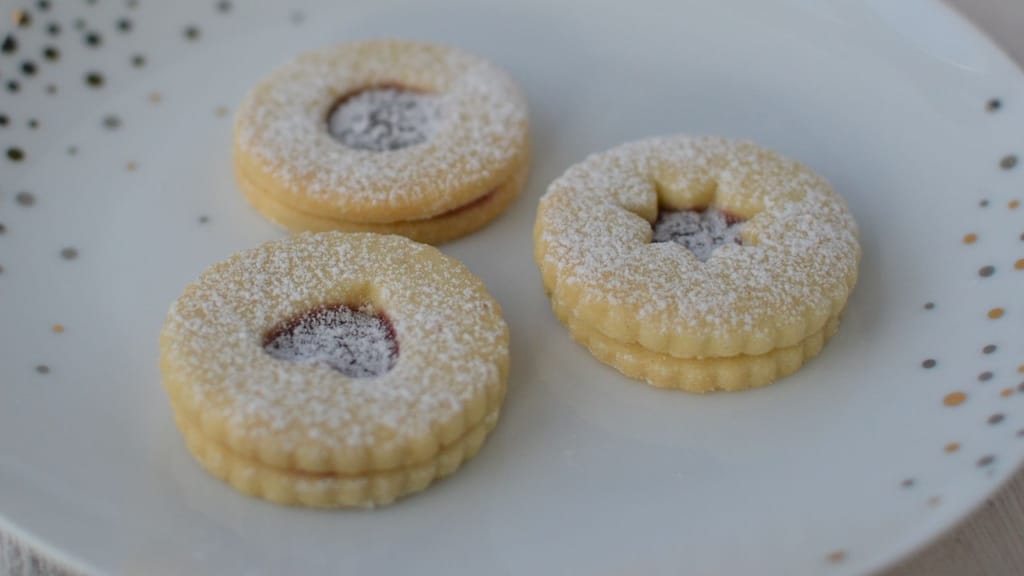
Classic christmas cookies: delicate linzer cookies
Linecké Cookies (Czech Linzer Cookies): 3:2:1 Dough, Baking, Filling and Decorating
Updated Nov 19, 2026
You make linecké (Czech Linzer-style jam cookies) from just three ingredients in a 3:2:1 ratio: 300 g all-purpose (plain) flour, 200 g cold butter and 100 g powdered sugar, brought together with one or two egg yolks. Work the dough briefly, chill it in the fridge for at least an hour, roll it out to 2–3 mm and bake at 170°C (340°F) for about 7–10 minutes, until the edges just start to turn straw-yellow. Then sandwich the cookies with jam and let them rest for a few days to soften. Here you'll find the full method, a cup-measure version, everything you can bake from Linzer dough, how to fill and decorate it, and what to do when it crumbles, spreads or turns hard.
One batch of linecké needs 300 g all-purpose (plain) flour, 200 g butter, 100 g powdered sugar and 1–2 egg yolks. Depending on the size of your cutter, a batch makes roughly 40–60 sandwiched cookies.
For the dough and the filling you'll need:
300 g all-purpose flour
200 g cold unsalted butter (at least 82% fat)
100 g powdered sugar
1–2 egg yolks (one is enough; add the second if the dough won't come together)
a pinch of salt
seeds from half a vanilla bean or a packet of vanilla sugar, zest of half a lemon
about 150 g thick red currant or apricot jam for sandwiching
powdered sugar for dusting
Here's how it goes:
Cube the butter. Cut the cold butter into roughly 1 cm cubes and put it back in the fridge for a while. Cold fat is the whole secret of tenderness.
Sift the dry ingredients. Sift the flour with the salt into a bowl. Rub the vanilla seeds and lemon zest into the powdered sugar with your fingers so the flavor spreads evenly.
Make crumbs. Rub the butter into the flour with your fingertips, or use short pulses in a food processor, until the mixture looks like coarse damp sand. Don't use your whole palms, as the heat melts the butter.
Bring the dough together. Add the sugar and the yolk and work just until the dough holds together. Don't knead it like bread: the more you squeeze it, the harder the cookies will be.
Chill. Press the dough into a disk about 2 cm thick, wrap it in plastic wrap and refrigerate for at least an hour, ideally overnight. A disk chills evenly and rolls out more easily than a ball.
Roll and cut. Let the dough soften for 5–10 minutes, roll it out between two sheets of parchment paper to 2–3 mm and cut pairs: a solid base and a top with a window.
Chill the shapes. Put the tray of cut cookies in the freezer for 10 minutes. The shapes then keep sharp edges and won't spread.
Bake. In a preheated oven, bake at 170°C (340°F) for about 7–10 minutes (6–8 minutes if rolled to 2 mm), until the edges just start to turn straw-yellow.
Cool and sandwich. Leave the cookies on the tray for 3–5 minutes, then move them to a rack. Spread jam on the completely cooled bases, dust the tops with sugar and press them on.
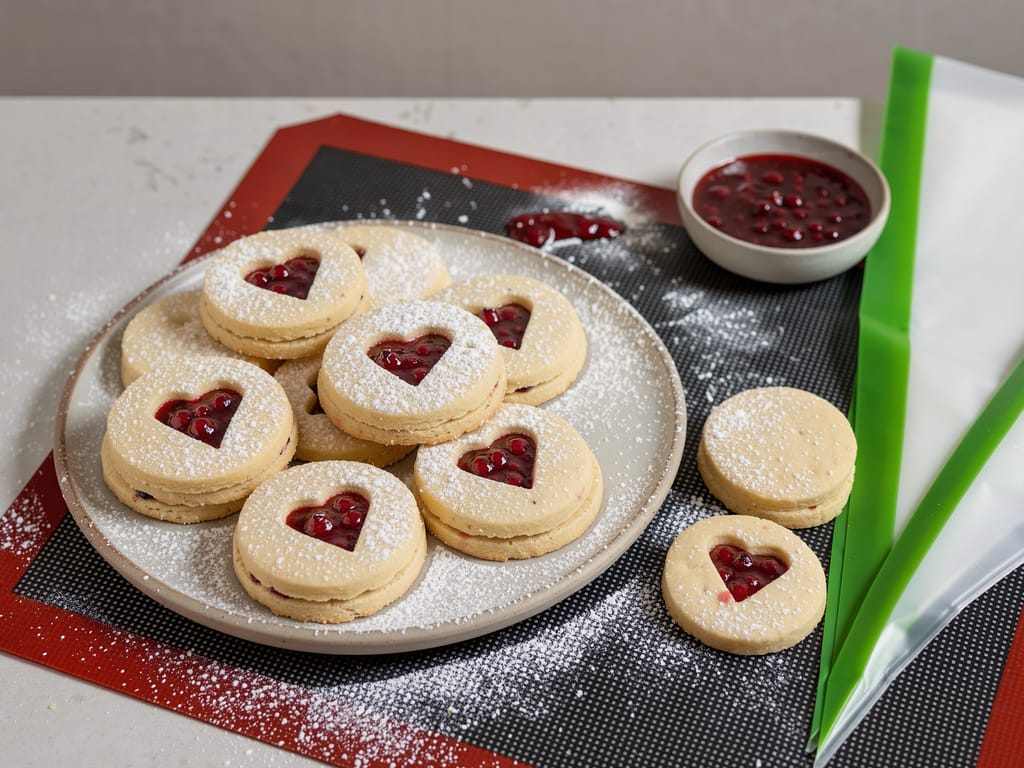
If you'd like a tried-and-tested step-by-step recipe, we have classic Christmas linecké sandwiched with red currant jam. Note that this grandmother-style version uses butter-flavored vegetable fat, a whole egg and dried lemon zest, is rolled to 5 mm and baked at 170°C for 10–13 minutes. For a bigger batch, see the conversion for how many linecké you get from 500 g flour.
Classic christmas cookies: delicate linzer cookies
Classic Christmas linecké sandwiched with red currant jam
Properly made linecké dough is smooth, cool to the touch, slightly greasy and doesn't stick to your fingers. When you break off a piece, it snaps cleanly rather than crumbling into sand. After an hour in the fridge it's as firm as cold butter, which is why you let it soften for a while before rolling. Otherwise it cracks at the edges.
Shiny and sticky: the butter has melted in your hands. Wrap the dough and chill it right away rather than adding flour.
Loose and not holding together: it lacks moisture. Add the second yolk.
Elastic and shrinking back after rolling: the dough is overworked and the gluten has developed. Let it rest in the fridge overnight and the gluten will relax.
Bake linecké at 170°C (340°F) with top and bottom heat (or 150–160°C / 300–320°F with a fan oven) and set the time by the thickness of the dough:
2–3 mm: 6–8 minutes
4–5 mm: 10–13 minutes
tartlet shells and the tart: see below, they bake longer
They're done when the cookies are pale and only the edges turn straw-colored. Tops with a window are often done a minute sooner than the solid bases, so bake them on a separate tray. Linecké is baked pale: a higher temperature or a few extra minutes scorches the milk solids in the butter, and the cookies turn bitter and hard. Every oven bakes differently, so treat the first tray as a test and start checking from the sixth minute. You'll find a detailed chart in baking temperature and time for linecké by thickness.
How to soften gingerbread that’s gone hard, when to fill Linzer cookies and how to tell the carp is done. One recipe and one tip a week. Unsubscribe in one click.
The 3:2:1 ratio means three parts all-purpose flour, two parts butter and one part powdered sugar, always by weight. It's a rule of thumb, not a recipe in grams: 300-200-100, 450-300-150 or 600-400-200 all give equally tender dough.
Why these proportions:
Lots of fat. Butter coats the flour particles and stops gluten from developing as you work the dough. That's why linecké is a "short" dough that melts in your mouth instead of being elastic.
Powdered sugar, not granulated. Fine sugar dissolves in the dough without leaving grains, and the cookies hold their shape. Granulated sugar only dissolves in the oven and pulls the dough outward.
Yolk instead of a whole egg. The yolk binds and softens the dough. The white would bring in water, which develops more gluten in the flour, and the proteins in the white would firm up the baked cookies, making them hard. We cover this in more detail in why linecké uses only the yolk.
No baking powder. Linecké isn't meant to rise. It should stay flat, with sharp edges and a delicate, crumbly texture.
The ratio can take some adjustments. You can replace part of the flour (roughly a tenth) with potato or corn starch, and the cookies will be even more tender. You can swap a third of the flour for finely ground nuts or almonds. That's how nut linecké comes about, softer and more fragrant. Almond linecké results when you replace part of the flour with almond flour and corn starch. We go through all these variations, plus an egg-free version, in how to adapt the 3:2:1 ratio for a nut dough or without eggs.
The butter matters most. Use good unsalted butter with at least 82% fat. Reduced-fat spreads (three-quarter-fat or half-fat margarine) contain more water, make the dough sticky and take the buttery flavor out of the cookies. A block of baking fat works (plenty of grandmothers swear by it), just expect a different flavor.
You can flavor the dough with spices, zest or cocoa without changing the 3:2:1 ratio. Always rub the flavoring into the powdered sugar first, because it spreads through the dough more evenly from the sugar than from the flour.
Vanilla and lemon: the classic. Seeds from half a bean and the zest of half a lemon are enough for a batch with 300 g flour.
Orange zest and cinnamon: more Christmassy, and a good match for apricot jam.
Cocoa: replace 30 g of the flour with the same amount of cocoa and sift them together, or you'll get lumps. Bake cocoa dough 10°C (about 20°F) lower and go by the timer, because you can't see the color of the edges.
Tonka or cardamom: a pinch each. They're strong and easily overpower the butter.
Without a scale, you can bake linecké with a 250 ml cup: 2¼ cups all-purpose flour, 200 g butter (a block minus a fifth) and ¾ cup powdered sugar, plus 1 egg yolk. Even in the cup version the butter is measured by its wrapper, not by the cup, so the ratio stays close to 3:2:1.
Why this works:
1 cup (250 ml) of all-purpose flour, spooned in and leveled, weighs roughly 130 g, so 2¼ cups give about 290 g.
1 cup of powdered sugar weighs about 120 g, so ¾ cup is roughly 90 g.
A block of butter is 250 g; cut off a fifth (50 g) and you're left with 200 g.
Spoon the flour into the cup and level it with a knife; don't scoop straight from the bag. Packed flour can easily weigh 30 g more, and the dough then turns dry and crumbly. If the dough is instead soft and sticky, add a spoonful of flour. The method is exactly the same as in the recipe above.
You can bake a bigger batch with cups too: 3½ cups of flour, 300 g butter and 1¼ cups powdered sugar plus 2 egg yolks. That's roughly a batch from 450 g flour. If you bake linecké every year, get a scale. Cups are fine for a quick batch, but a scale gives you the same result every time.
From one Linzer dough you can bake four classics: cut-out sandwich cookies, tartlet shells, crescents and a tart. They differ in thickness, shaping and oven time. The dough stays the same.
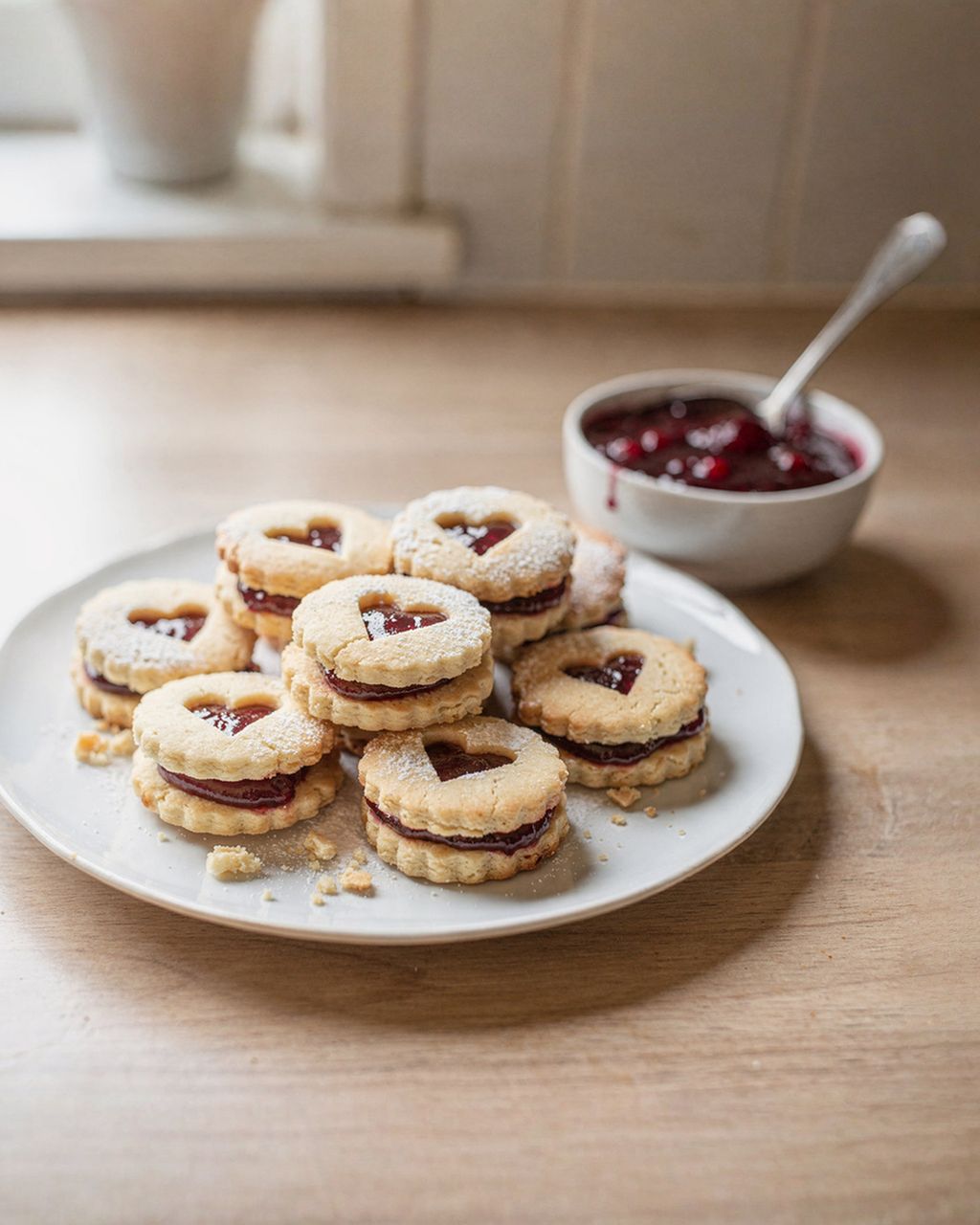
Cut-out linecké are two thin rounds sandwiched with jam, the top one with a window in the middle. Roll the dough between sheets of parchment paper to 2–3 mm and cut pairs so you have exactly as many bases as tops. Bake for 7–10 minutes at 170°C (340°F) and sandwich once cooled. Put the dough back in the fridge between batches of cutting, and gather and re-roll the scraps no more than twice, because each further rolling picks up flour and the dough turns hard.
Among our recipes, cocoa linecké with apricot jam and chocolate are worth trying. The dough with cocoa, cinnamon and orange zest bakes at 165°C (330°F) for 8–10 minutes, and the sandwiched cookies are dipped halfway into tempered milk chocolate. For a festive platter there's browned butter linecké with tonka and black currant jam: the butter is first browned to a nutty aroma, left to set overnight and grated into the flour with starch, then baked at 175°C (350°F) for 8–10 minutes.

Chocolate linzer cookies with apricot jam and chocolate dip
Cocoa linecké with apricot jam and milk chocolate
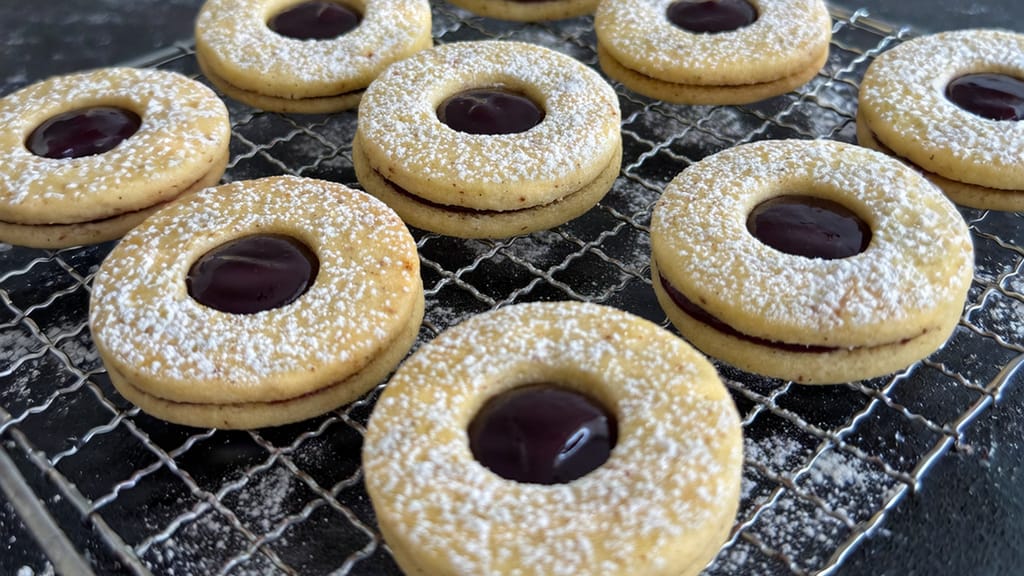
Brown butter linzer cookies with tonka bean and blackcurrant
Browned butter linecké with tonka and black currant jam
Linecké tartlet shells are little cups of Linzer dough that you fill after baking. Grease metal tartlet molds with butter, press a piece of dough into each and spread it up the sides with your thumb to a thickness of about 2–3 mm. Prick the bottom with a fork so it doesn't puff up, and bake at 170–180°C (340–355°F) for about 10–12 minutes until pale golden. Tap them out while still lukewarm, since once cooled they cling to the mold more firmly. Fill them with cream, a nut filling or thick jam just before serving, otherwise the base turns soggy.
Shape linecké crescents from ropes of dough about as thick as a finger. Take pieces of 8–10 g from the chilled dough, roll them into ropes about 6 cm long with tapered ends and bend them into half-moons. Bake at 170°C (340°F) for about 10–12 minutes so they stay pale, and roll them in a mix of powdered sugar and vanilla sugar while still warm. Without nuts they're more tender and break more easily, so handle them carefully until they cool.
If you want the traditional version with nuts, we have vanilla crescents with hazelnuts and walnuts rolled in vanilla sugar. They bake for 10–12 minutes at 180–200°C (355–390°F).
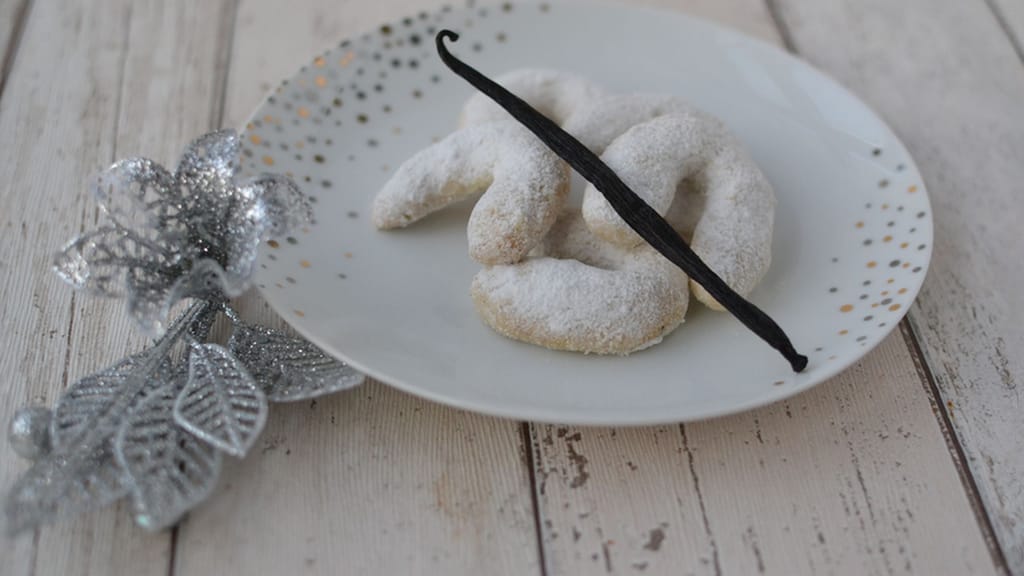
The best christmas cookies? vanilla crescents, of course!
Vanilla crescents with hazelnuts and walnuts
Use Linzer dough for a tart as a tender base for a fruit filling or a jam tart with a lattice. Roll two thirds of the dough to 4–5 mm and line a tart pan 24–26 cm across, sides included. Prick the bottom, chill for 15 minutes and blind bake at 180°C (355°F) for about 12–15 minutes until pale golden. Then spread it with thick jam or arrange fruit on it, make a lattice from the rest of the dough and bake for another 20–25 minutes, until the lattice turns golden. Cut it only when completely cooled, because a warm base breaks.
From the same dough you can also bake linecké bananas: roll pieces of 8–10 g into ropes, bend them into an arc, bake at 170°C (340°F) for 8–10 minutes, sandwich them in pairs with jam once cooled and dip the ends in chocolate. Full details are in chocolate-dipped linecké bananas. And to see how linecké fits among the other classics, take a look at our overview of 20 kinds of Christmas cookies.
The classic filling for linecké is a thick, distinctly tart jam, most often red currant. Its tartness balances the sweet buttery dough. A thin jam with pieces of fruit isn't suitable: it seeps into the dough and the cookies slide apart.
Which jams suit linecké:
Red currant: the tartest and most classic, with a beautiful ruby window.
Black currant: darker, with a pronounced fruity bitterness. Good with browned butter or spiced dough.
Apricot: milder and sweeter, a match for cocoa dough and chocolate.
Raspberry: fragrant, but the seeds need to be strained out.
Plum butter (povidla): tastes good, but is dark and stiff. Stir it with a little rum or red currant jam.
You thicken a thin jam in four steps:
Cook it down. Simmer the jam in a wide pot for 5–10 minutes, stirring constantly, to evaporate the water.
Do the saucer test. Put a drop on a cold saucer. If it doesn't run after a minute and wrinkles when you drag a finger through it, it's ready.
Strain it. Smooth jam spreads better and looks cleaner in the window.
Let it cool to lukewarm. Warm jam spreads easily, but hot jam would soak the bases.
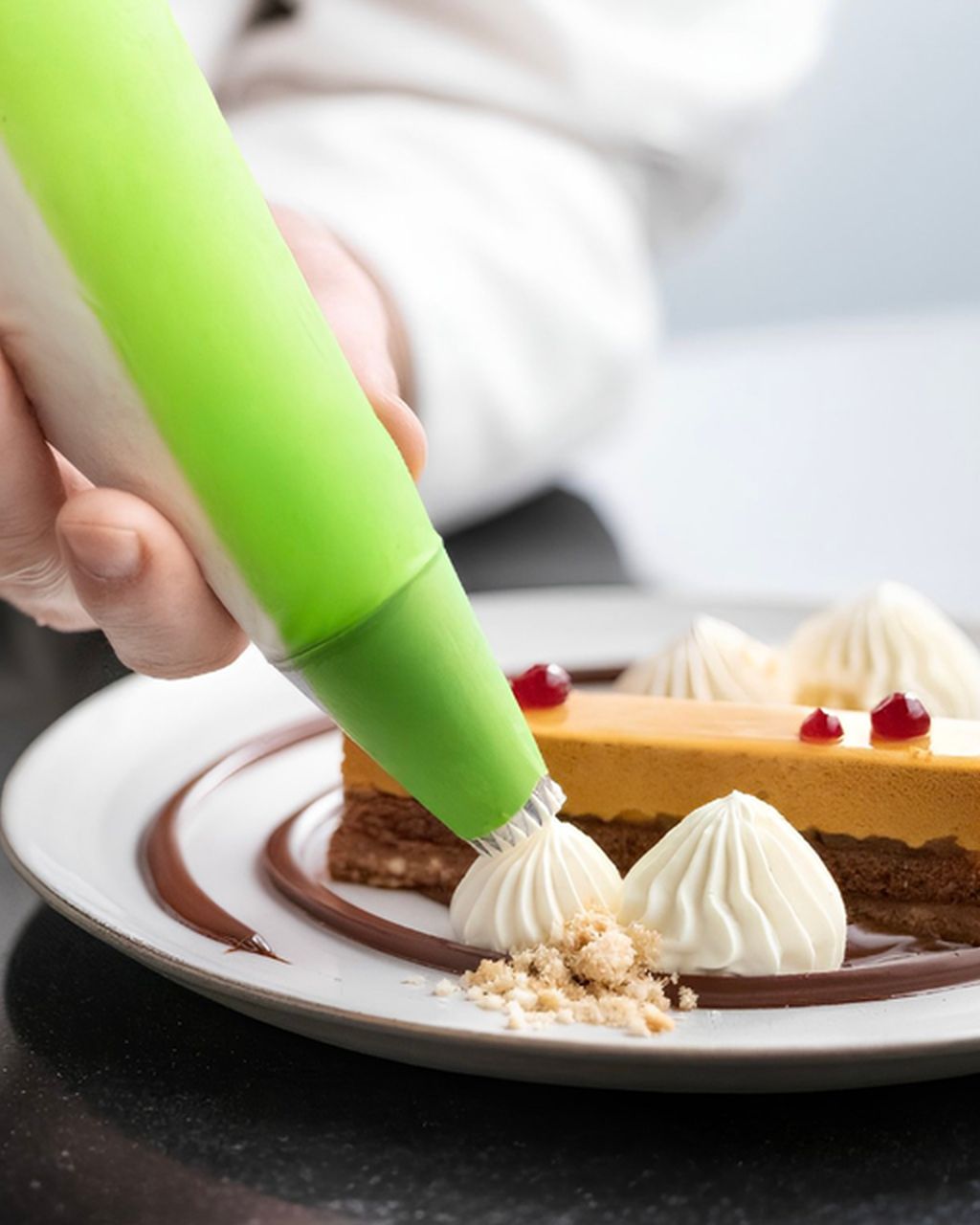
Sandwich only completely cooled cookies. Put half a teaspoon of jam in the middle of the base; it spreads by itself when you press the top on. If you want precision, pipe it from a piping bag. Don't spread the jam all the way to the edge, or it will squeeze out the sides.
Jam isn't the only option. We have linecké with salted caramel and flaky salt, where the caramel is cooked to the color of dark honey (175°C / 347°F), softened with butter and cream, and flakes of salt go into the window. Simpler is linecké filled with salted caramel, with maple syrup in the dough, baked at 180°C (355°F) for 8–12 minutes. And unconventional linecké with pistachios are sandwiched with buttercream and a hazelnut spread, with the tops dipped in dark chocolate. More fillings, and when to sandwich, are covered in what to fill linecké with and how to thicken jam.
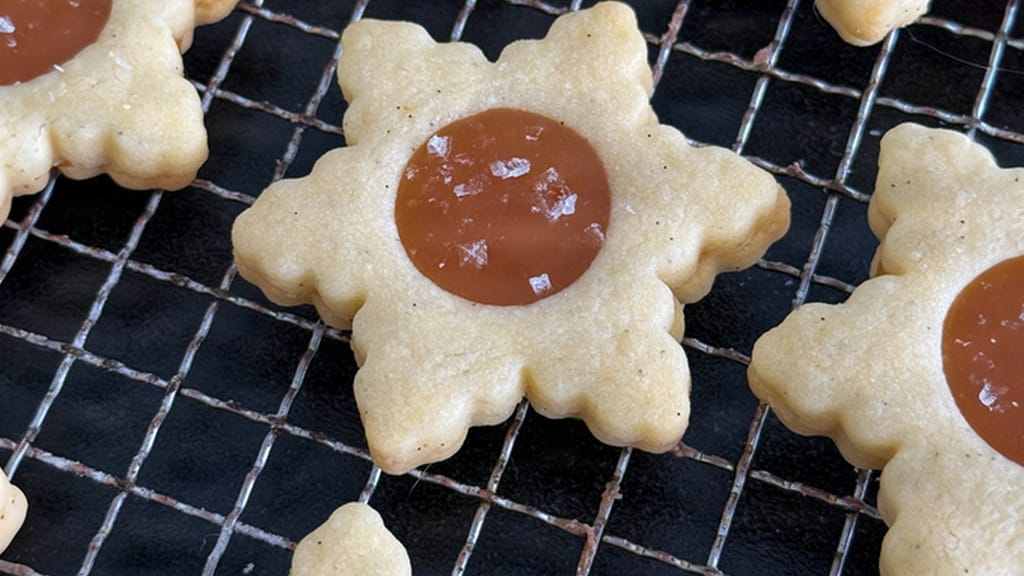
Linzer cookies with salted caramel and flaky sea salt
Linecké with salted caramel and flaky salt

Linzer cookies filled with salted caramel
Linecké filled with salted caramel and maple syrup

Unconventional linzer cookies with pistachios
Unconventional linecké cookies with pistachios and buttercream
Most often you decorate linecké with powdered sugar on the tops, chocolate or lemon glaze. For each decoration it matters whether you add it before or after sandwiching.
Powdered sugar: dust only the tops with the window, before sandwiching. If you dust sandwiched cookies, the sugar sinks into the jam and the window turns dull. The sugar gradually soaks in, so you can dust again for a festive platter. Mixed with a little potato starch, it stays dry longer.
Chocolate: dip sandwiched cookies halfway into melted chocolate and let them set on parchment paper. For shine and snap, temper the chocolate (for milk chocolate to a working temperature of 29–30°C / 84–86°F).
Lemon glaze: stir powdered sugar with a few drops of lemon juice into a thick paste and spread it thinly or drizzle it over the tops. Make it before sandwiching and let it dry.
Sprinkles and gold: stick chopped pistachios or edible gold onto chocolate or glaze while it's still wet.
Which decoration to use when, and how to match colors, you'll find in how to decorate linecké: lemon glaze, chocolate, sugar and gold.
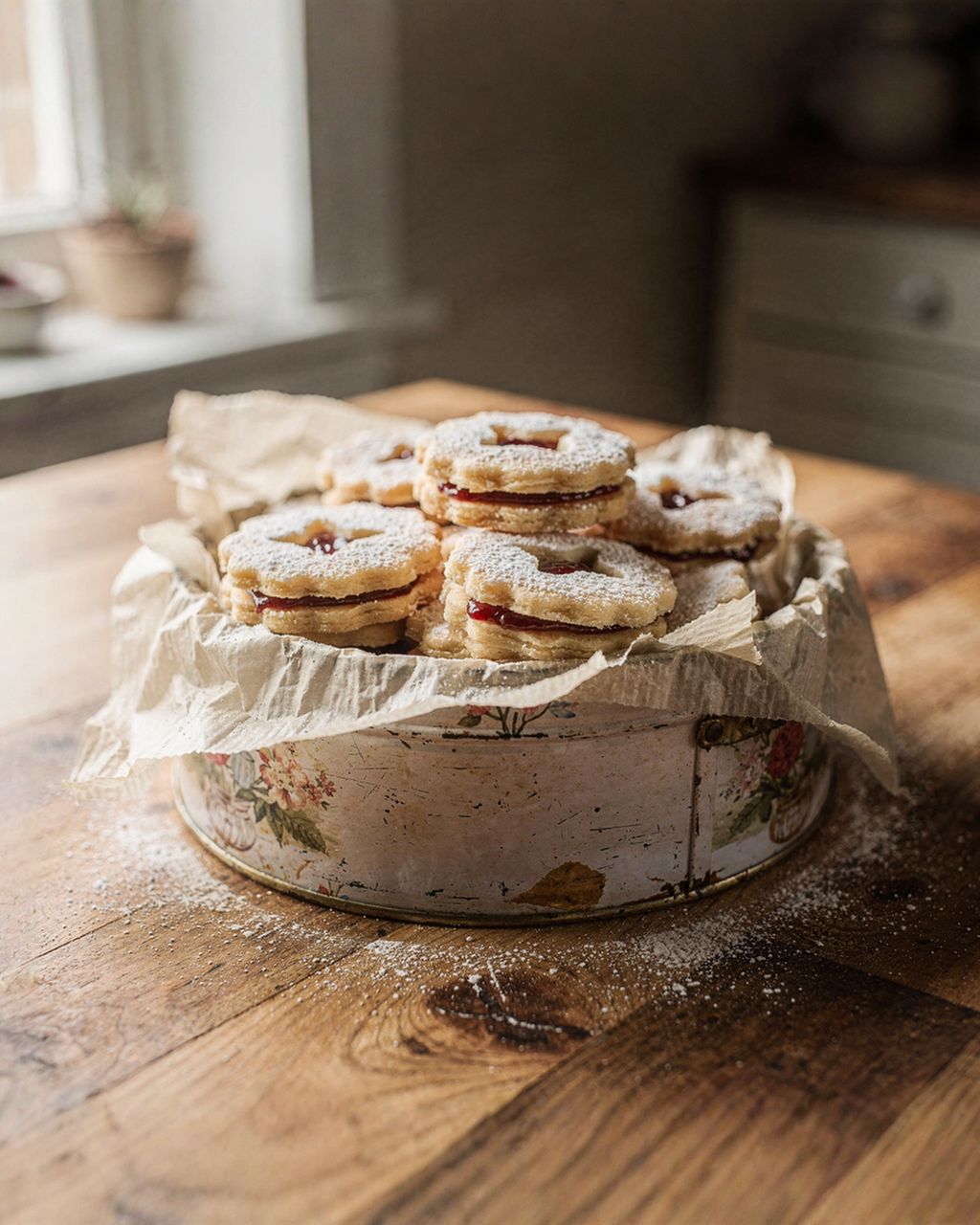
Store linecké in a tin in a cool room, not in the fridge. Separate the layers with parchment paper. Sandwiched cookies need 3–7 days to soften. During that time the jam releases moisture into the dough and the cookies change from crisp to tender and melt-in-your-mouth. That's why, ideally, you bake them 2–3 weeks before Christmas, so at the beginning of December.
Practical timings:
Raw dough: keeps 3–4 days in the fridge, and up to 3 months in the freezer wrapped in plastic wrap. Thaw it slowly in the fridge.
Baked, not yet sandwiched cookies: you can freeze them and sandwich them just before the holidays.
Sandwiched cookies: keep in a tin in a cool place for roughly 2–3 weeks. With a cream filling, only a few days, and they belong in the fridge.
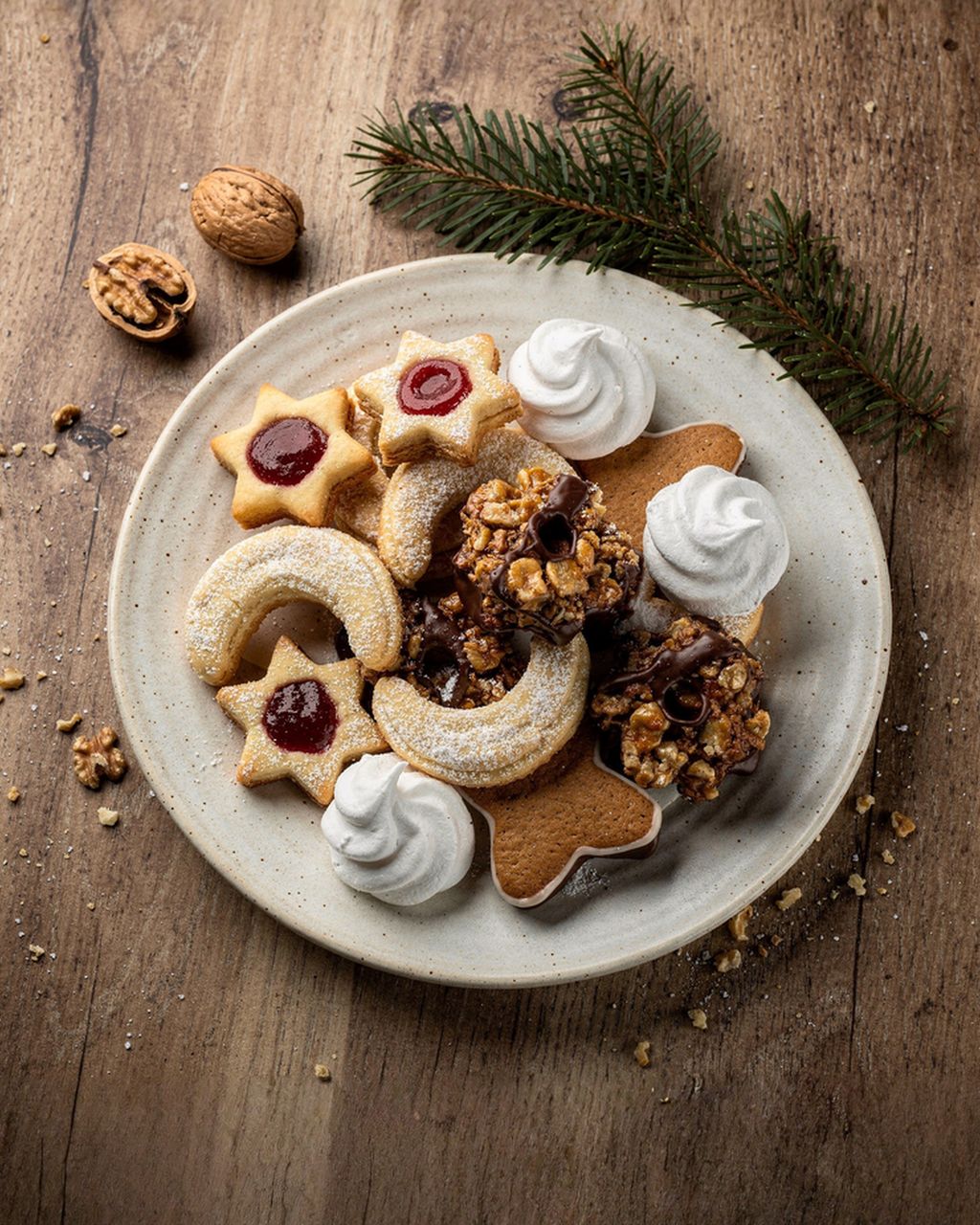
It's calmer to bake in stages. Make the dough on the weekend and leave it in the fridge. Bake it over the next two days and sandwich once the cookies have cooled. If you bake ten kinds of cookies, start with linecké, because it benefits from resting. Add the nut varieties around mid-December and the cream-filled ones only in the last week before Christmas.
Don't store it with gingerbread or other cookies that have a scent or moisture, because linecké quickly absorbs both. It's covered in detail in how long linecké keeps and when it tastes best.
Most problems with linecké come down to butter temperature, the amount of flour and working the dough too long. A quick overview:
The dough crumbles. It's too dry or too cold. Add a yolk or a teaspoon of cold water, let the dough soften for 5–10 minutes and press it together with your hands. A common cause is also extra flour from measuring. More in what to do when linecké dough crumbles.
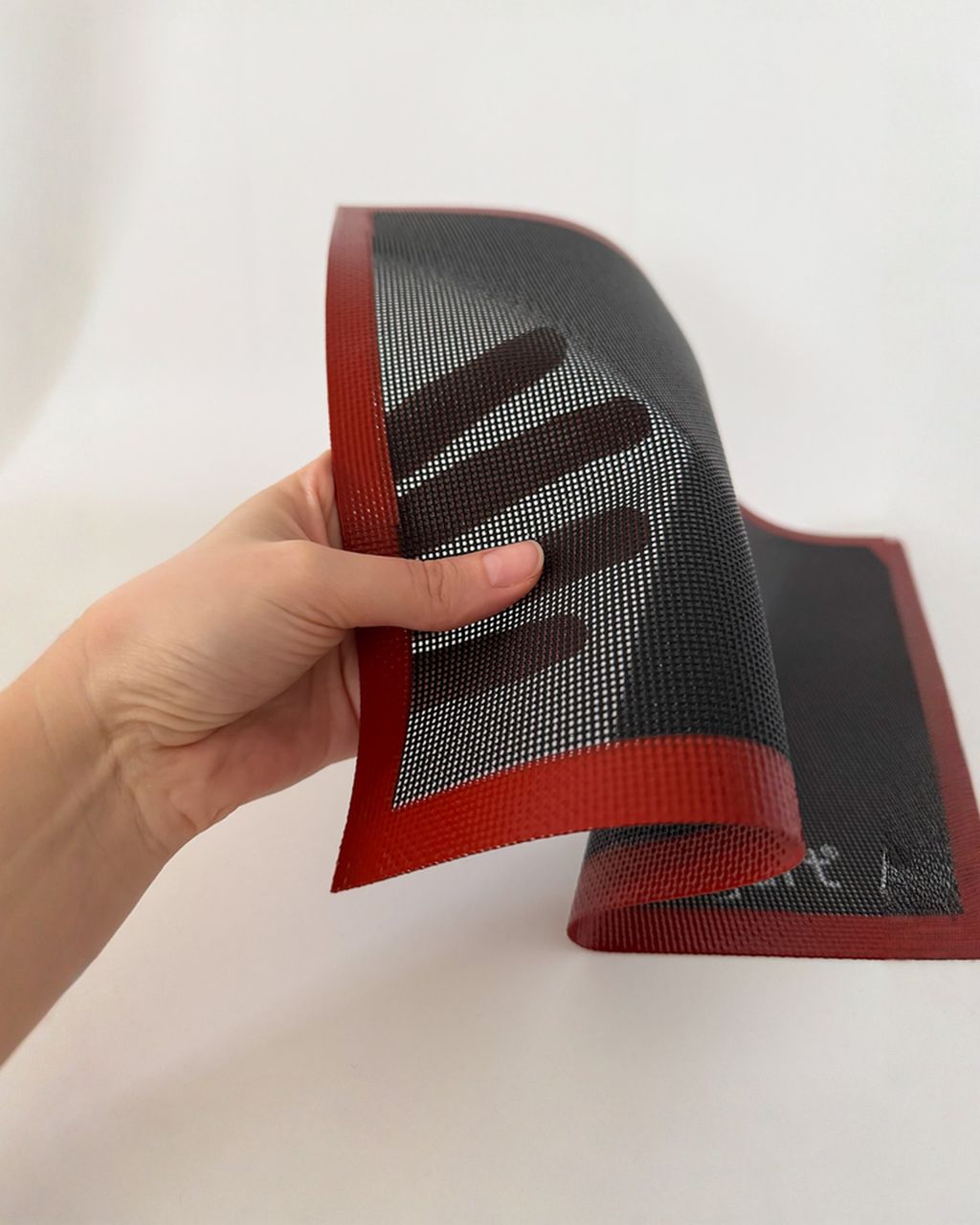
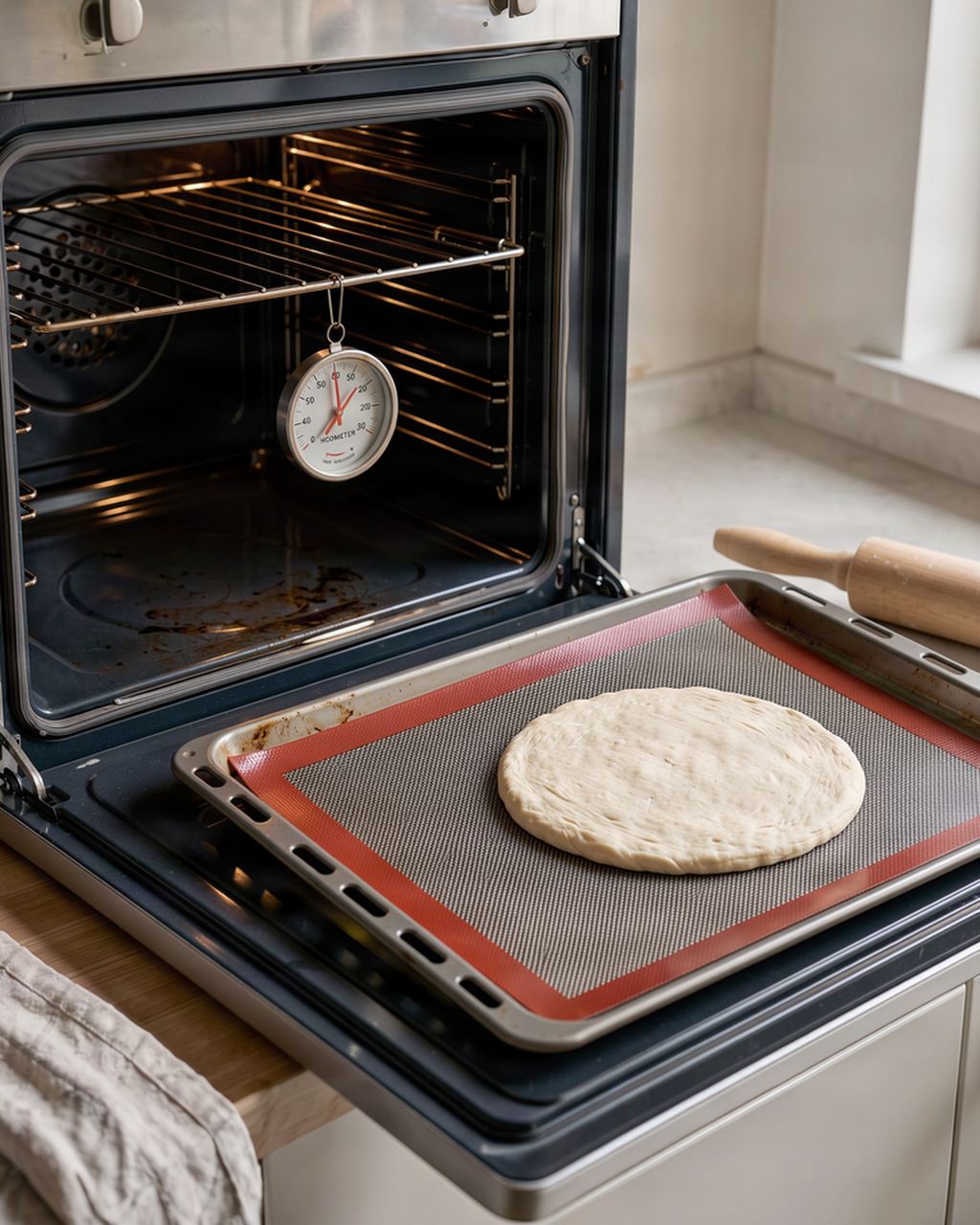
The cookies spread while baking. The butter was too warm, the sugar coarse or there was too little flour in the dough. Put the cut shapes in the freezer for 10 minutes before baking and bake on parchment paper or a silicone mat, not on a greased tray. The causes are covered in why linecké spreads while baking.
The cookies are hard. The dough was overworked, picked up too much flour while rolling or was overbaked. Work it briefly, flour the surface only lightly (or roll between sheets of paper) and take the cookies out while pale. Hard cookies are often rescued by resting with the jam. The full guide is in how to make hard linecké tender.
The dough sticks to the work surface. It's warm. Don't work in more flour; put it in the fridge for 15 minutes and roll between two sheets of parchment paper.
Tops with windows break. The window weakens the structure, and warm cookies are soft. Let the cookies firm up on the tray for 3–5 minutes before moving them to a rack.
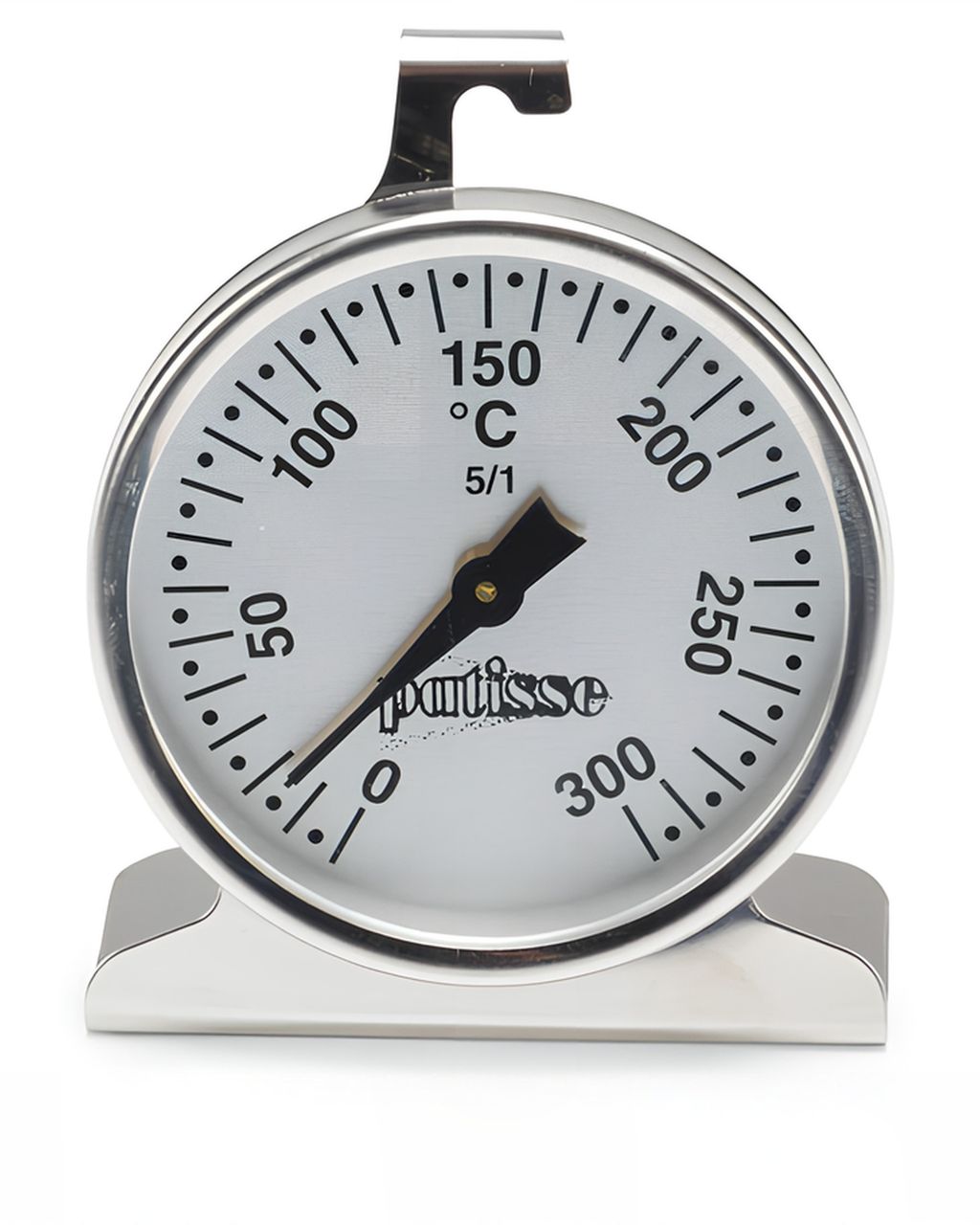
Edges are browned, the center is pale. The oven bakes unevenly. Turn the tray halfway through and check the real temperature with an oven thermometer. Many ovens differ from the setting by 10–20°C (20–35°F).
Linecké takes its name from the Austrian city of Linz, where similar sandwiched rounds with a window are baked, called Linzer Augen, "Linz eyes". According to the Austrian tourist board, they're among the most traditional Austrian Christmas cookies. Austrian rounds are often larger than the Czech ones. Here, small rounds, stars and hearts have become the norm.
Yes, linecké made with vegetable baking fat bake up fine and hold their shape, they just lack the buttery flavor. Use a block of baking fat, not a reduced-fat spread (three-quarter-fat or half-fat margarine), which contains more water and makes the dough sticky. Keep the amount the same as for butter: 200 g for 300 g of flour.
For Czech linecké, a cutter 3–4.5 cm across with a window of about 1–1.5 cm works best. Smaller cookies bake more evenly and combine nicely with other cookies on a platter. Bake larger rounds, such as Austrian Linzer Augen, 1–2 minutes longer.
It doesn't have to. An hour is enough, but overnight is better. In that time the butter firms up, the flour hydrates evenly and the gluten relaxes, so the dough rolls more easily and the cookies are more tender. Before rolling, let it soften on the counter for 5–10 minutes.
Yes. Use a gluten-free baking flour blend instead of all-purpose flour and add about 10% starch to it. The dough is more crumbly, so roll it between two sheets of parchment paper and cut smaller shapes. Baking time and temperature stay the same. For people with celiac disease, use a certified gluten-free blend (look for the crossed-out grain symbol) and make sure the other ingredients and the equipment haven't been contaminated with ordinary flour.
Linecké won't soften after sandwiching if the jam is too thick, or if the cookies sit somewhere warm in an open container. Close them in a tin and keep them in a cool room for 3–7 days. If they still don't soften, they were probably overbaked or overworked, so take them out of the oven earlier next time.
One recipe worth heating the oven for, one tip, and one deal from the shop. Nothing else.