Classic christmas cookies: delicate linzer cookies
Linzer Cookies from 500 g Flour: How Many You'll Get and How to Scale the Batch
Updated Nov 3, 2026
Following the 3 : 2 : 1 ratio, Linzer cookies from 500 g of flour need 330 g butter, 170 g powdered sugar and 2 egg yolks, and make about 1 kg of dough. Rolled 3 mm thick and cut with a 5 cm cutter, that gives you roughly 130–160 pieces, or about 65–80 sandwiched cookies, baked across 4–6 baking sheets. Below you'll find yields for smaller and larger cutters, how to scale the recipe to other amounts of flour, and how to work out the exact yield for your own cutters.
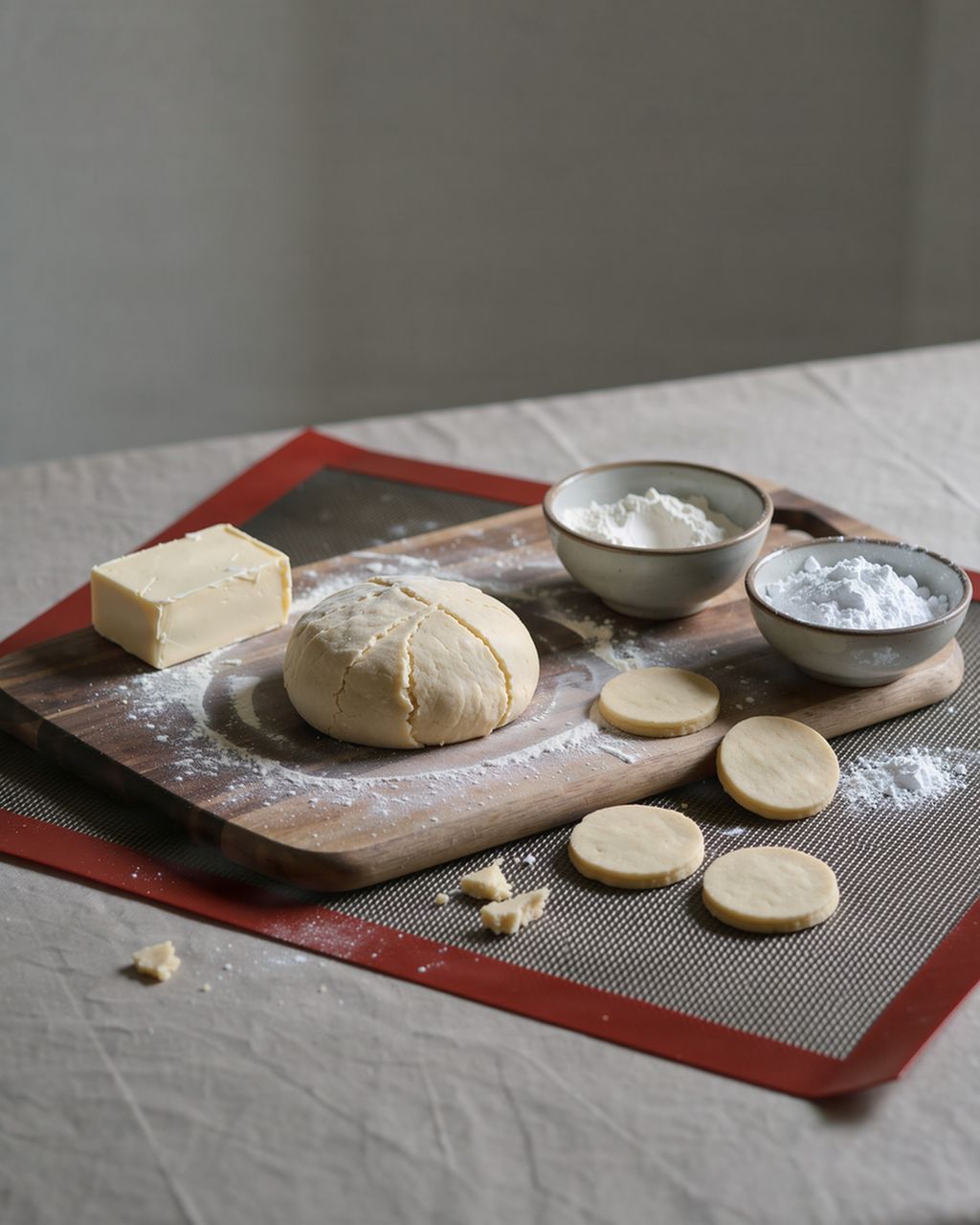
For Linzer cookies from 500 g all-purpose flour (plain, fine-ground), use 330 g butter, 170 g powdered sugar and 2 egg yolks. That's the 3 : 2 : 1 ratio rounded to the nearest 10 g (exactly 333 g and 167 g); the dough won't notice a difference of a few grams.
500 g all-purpose flour
330 g cold butter (butter with 80–90% fat, not a spreadable fat)
170 g powdered sugar
2 egg yolks (roughly one for every 300 g of flour, rounded up)
a pinch of salt, plus vanilla or lemon zest to taste
This batch makes about 1 kg of dough. Why the 3 : 2 : 1 ratio works, and how to adapt it for nut or egg-free versions, is covered in the article Linzer dough 3:2:1.
Seasonal baking plans, tested recipes and kitchen tricks that save you time. Unsubscribe in one click.
Linzer dough made from 500 g flour, rolled 3 mm thick, gives you roughly 90 to 240 cut pieces, depending on the size of the cutter. About half that number is the count of sandwiched cookies (one base plus one top):
4 cm cutter (small stars, rounds): a raw piece weighs about 4–5 g, so you get around 190–240 pieces, or 95–120 sandwiched cookies.
5 cm cutter (the most common round): a piece weighs about 6–7 g, giving around 130–160 pieces, or 65–80 sandwiched cookies.
6 cm cutter (large hearts, stars): a piece weighs about 9–10 g, giving around 90–110 pieces, or 45–55 sandwiched cookies.
These figures assume you gather the dough scraps after cutting and re-roll them, and that a small amount gets lost along the way. Tops with a cut-out window weigh slightly less than solid bases, so you'll end up with a few more sandwiched cookies than exactly half. Treat the numbers as a guide: the shape of the cutter (star vs. round) and above all the thickness of the dough change the result more than anything else. Dough one millimetre thicker (4 mm instead of 3 mm) means roughly a quarter fewer pieces.
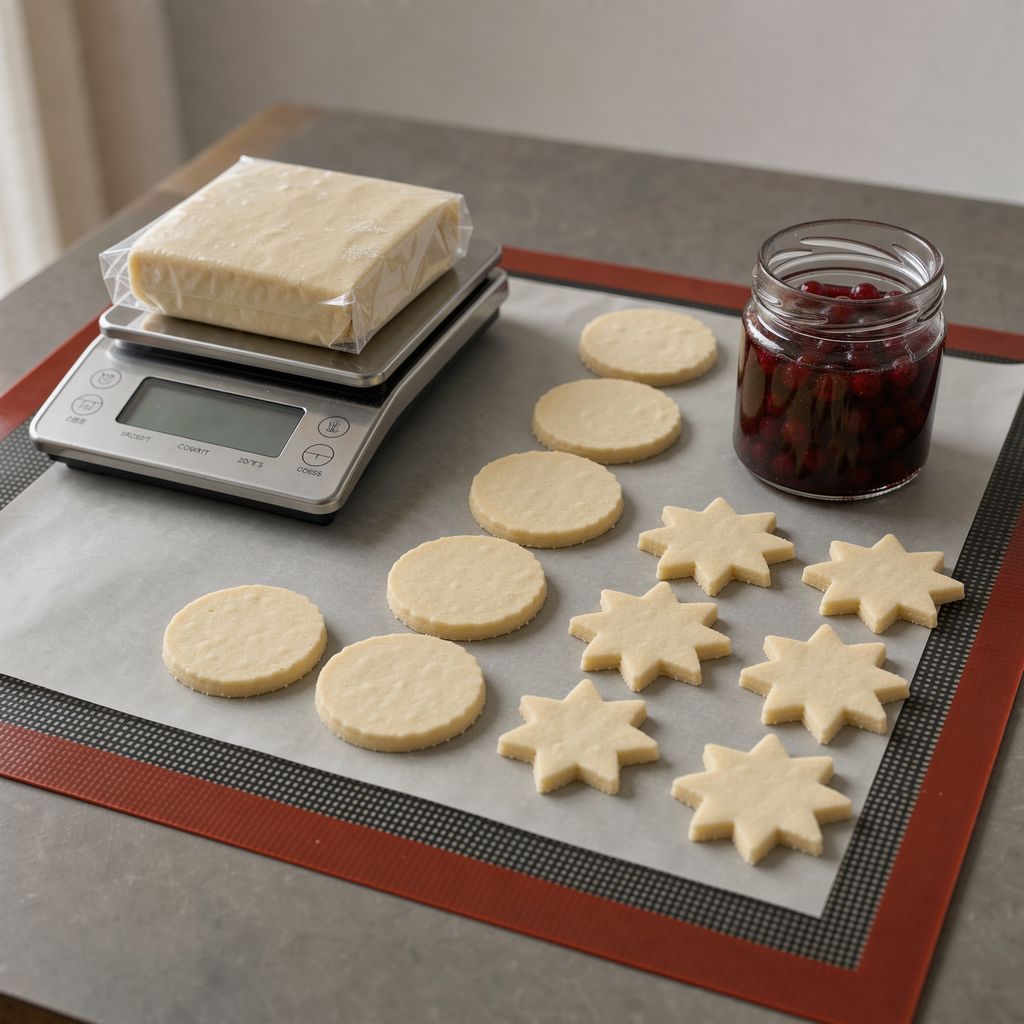
You can find the exact number of pieces in two minutes: weigh all the dough, cut ten pieces, weigh them, and divide the total weight of the dough by the weight of one piece.
Weigh all the dough (from 500 g flour, roughly 1,000–1,040 g).
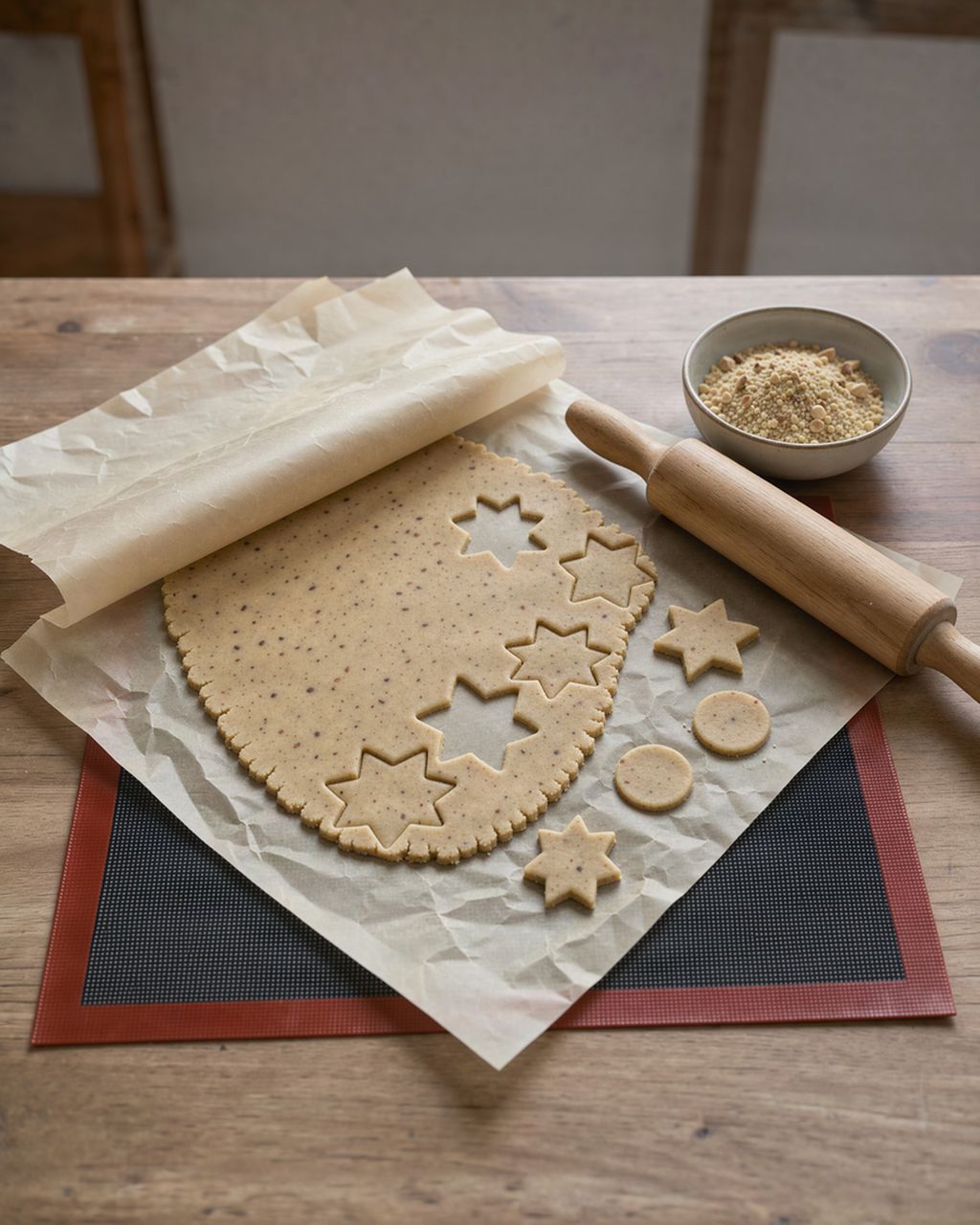
Roll out the first portion to 3 mm and cut 10 pieces with your cutter.
Weigh them and divide by ten. That gives you the weight of one piece.
Divide the weight of the dough by the weight of one piece, then subtract about 5% for losses.
Example: 1,020 g of dough, and 10 rounds weigh 65 g, so one weighs 6.5 g. 1,020 ÷ 6.5 = 157; after subtracting losses, about 150 pieces, or 75 sandwiched cookies.
The same calculation tells you whether the batch will be enough before you start cutting, and you can decide right away how much dough to use for stars and how much for hearts.
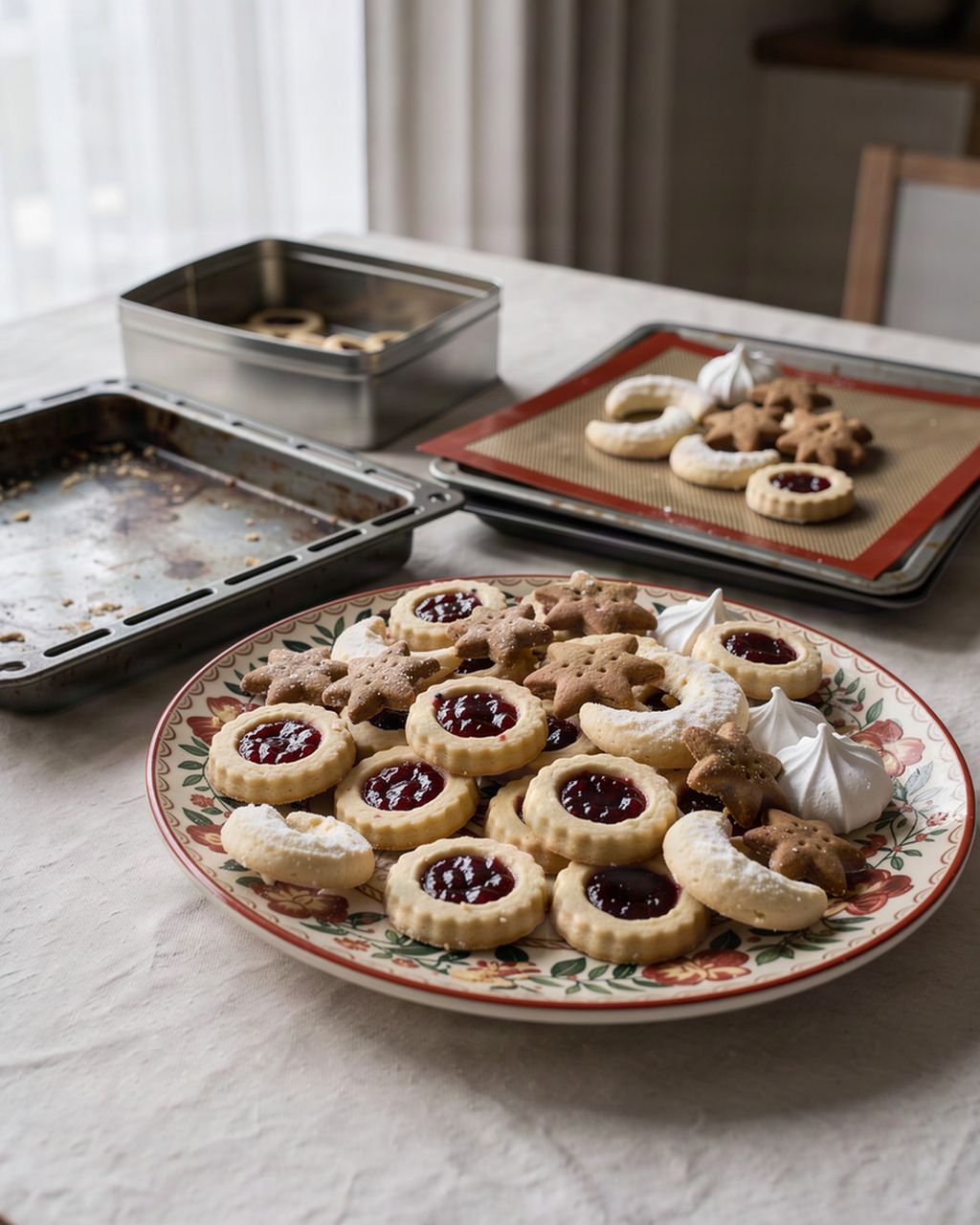
From 500 g of flour you'll bake roughly 4–6 baking sheets of Linzer cookies. A standard sheet holds 25–35 pieces 4–5 cm across, spaced about 2 cm apart; larger shapes take up more room.
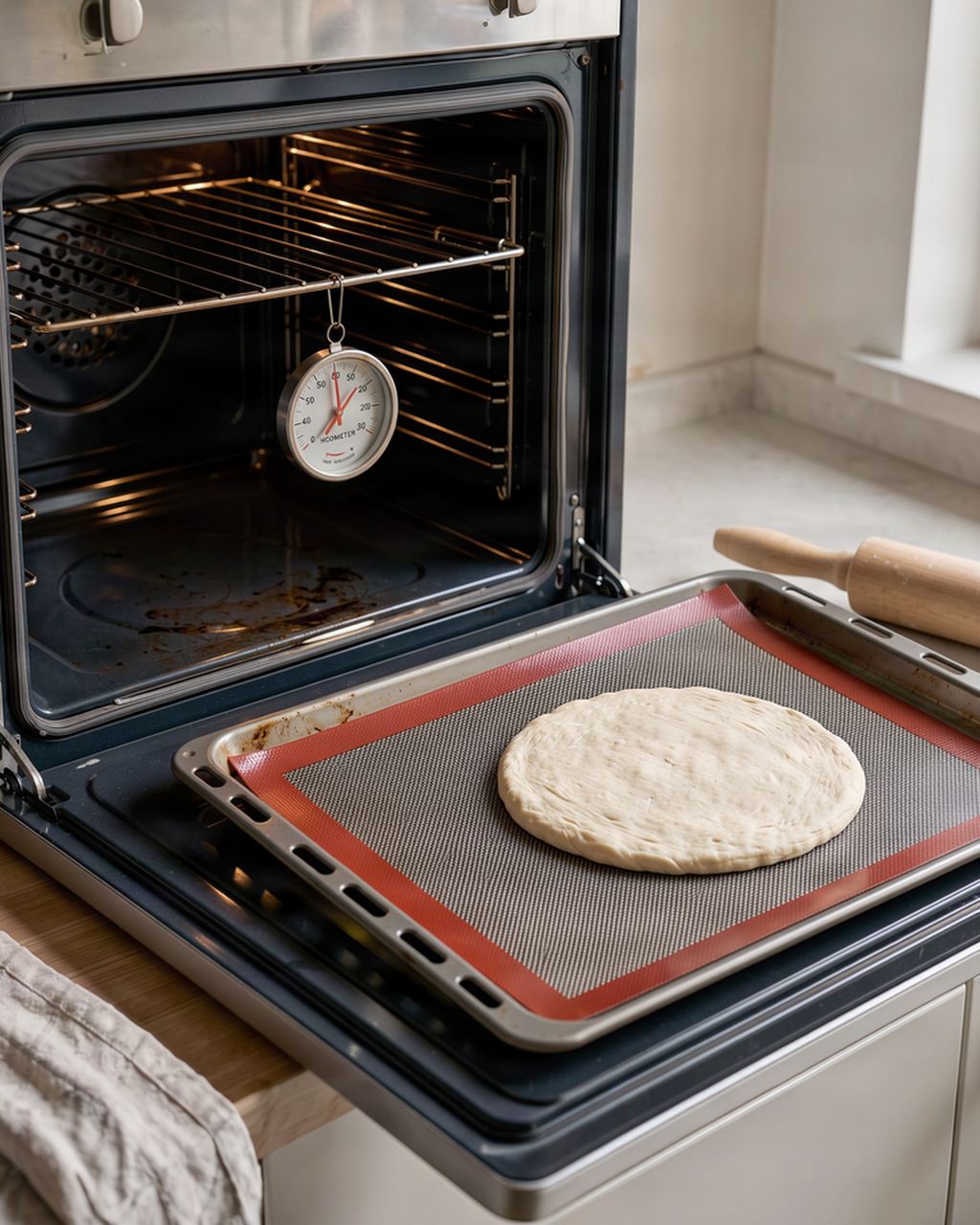
With top and bottom heat, bake one sheet at a time, 7–10 minutes at 170–175 °C (about 340–350 °F) for dough 3 mm thick.
Divide the dough into 3–4 portions and keep the ones you're not working with in the fridge. Warm Linzer dough tears and spreads on the sheet.
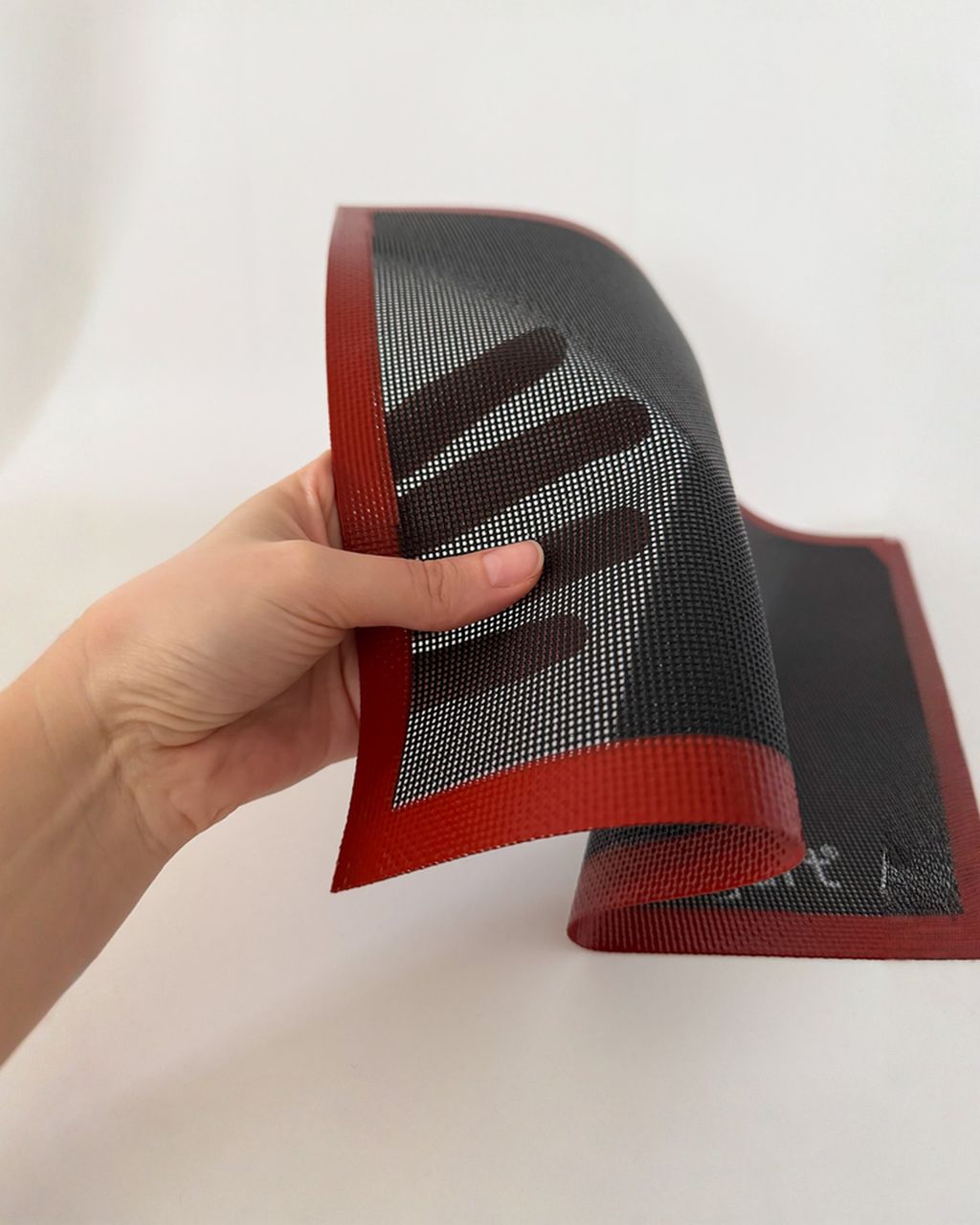
Cut out the cookies onto parchment paper or a perforated silicone baking mat, and prepare several so you don't have to wait for a sheet to cool.
How to bake several sheets at once and swap them halfway through is covered in the article how many trays of cookies to bake at once. Baking times by thickness are in the article how long to bake Linzer cookies.
To scale Linzer dough, multiply the amount of flour by two thirds for the butter and by one third for the sugar. Count about one egg yolk for every 300 g of flour. Ready-made conversions:
250 g flour: 165 g butter, 85 g sugar, 1 egg yolk. Makes about 500 g of dough, and with a 5 cm round cutter around 35–40 sandwiched cookies.
300 g flour: 200 g butter, 100 g sugar, 1 egg yolk. A classic batch for 2–3 baking sheets.
500 g flour: 330 g butter, 170 g sugar, 2 egg yolks. About 1 kg of dough, 4–6 baking sheets.
750 g flour: 500 g butter, 250 g sugar, 2–3 egg yolks. About 1.5 kg of dough.
1 kg flour: 670 g butter, 330 g sugar, 3 egg yolks. About 2 kg of dough, 8–12 baking sheets.
Don't knead a large batch all at once. Make two smaller ones, or divide it into balls as soon as it comes together, so the butter doesn't warm up in your hands. Dough that turns crumbly after scaling most often has too much dusting flour or butter that's too cold; how to rescue it is in the article crumbly Linzer dough.
For nut Linzer cookies from the 500 g batch, replace at most a third of the flour with ground nuts: 335 g flour and 165 g ground almonds, keeping the butter and sugar the same. With oilier hazelnuts or walnuts, stick to about a quarter (375 g flour and 125 g nuts), or cut 15–30 g from the butter.
Nut dough is softer and more crumbly, so chill it for longer and roll it out between two sheets of parchment paper. You'll find a step-by-step method in the article nut cut-out cookies.
To sandwich a batch of Linzer cookies from 500 g flour, count on roughly 250–400 g of jam and 2–3 hours of work, including rolling and baking. Warm the jam and press it through a sieve before spreading so it's smooth, and spread a thin layer: about half a teaspoon per cookie rather than a full teaspoon.
Make the dough a day ahead. Dough chilled overnight rolls out best.
Feel free to bake one day and assemble the next. Baked rounds keep in a tin for several days.
Sandwiched Linzer cookies need a few days to rest so they soften.
When to bake Linzer cookies so they're just right for Christmas is in the article when to bake Christmas cookies, and how long they keep in how long Linzer cookies keep. What to fill them with is covered in what to fill Linzer cookies with.
Both recipes are built on classic Linzer dough, so you can scale them to 500 g flour using the table above.
Classic christmas cookies: delicate linzer cookies
Classic Christmas cookies: tender Linzer cookies

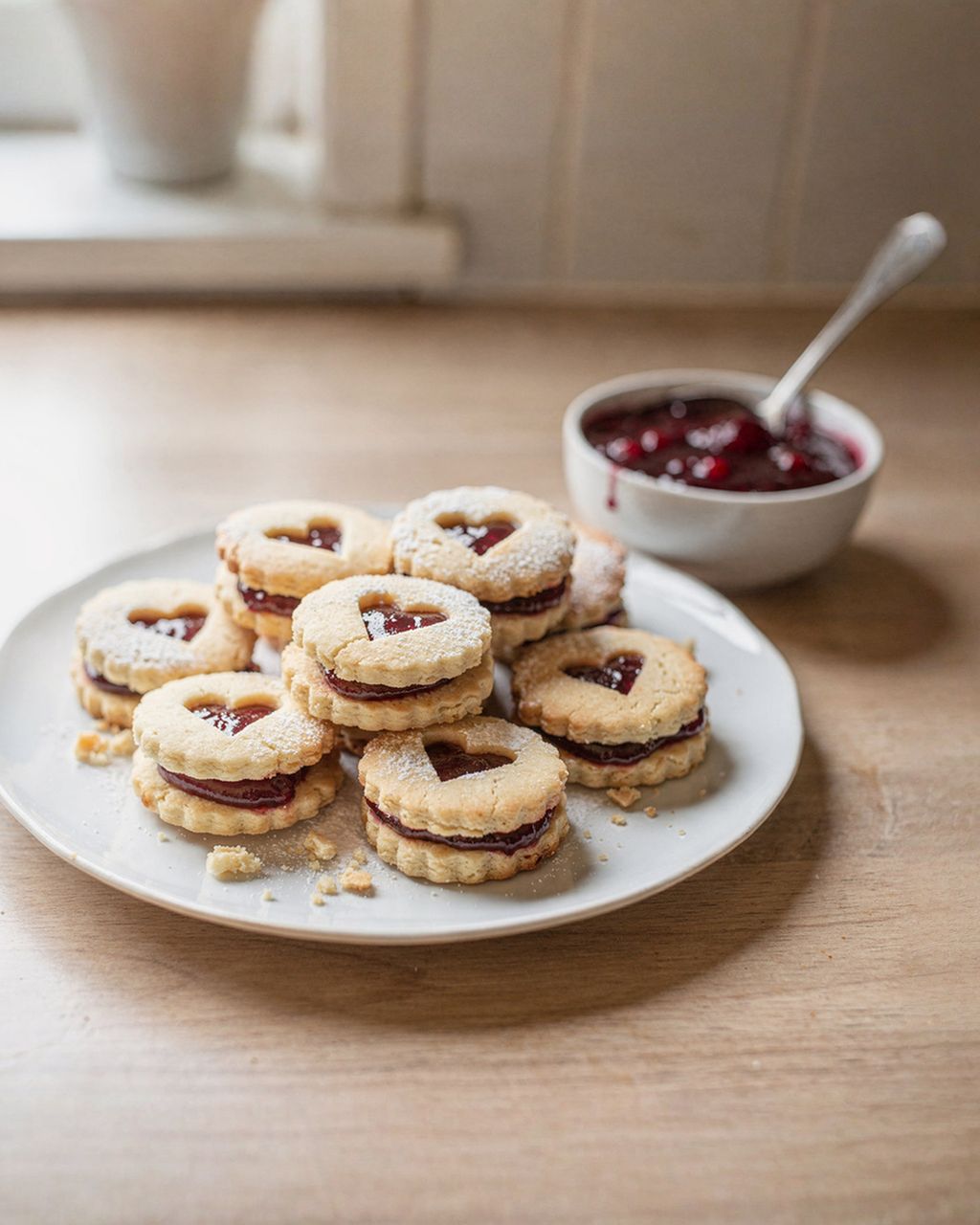
Classic linzer cookies with redcurrant jam
Classic Linzer cookies with redcurrant jam
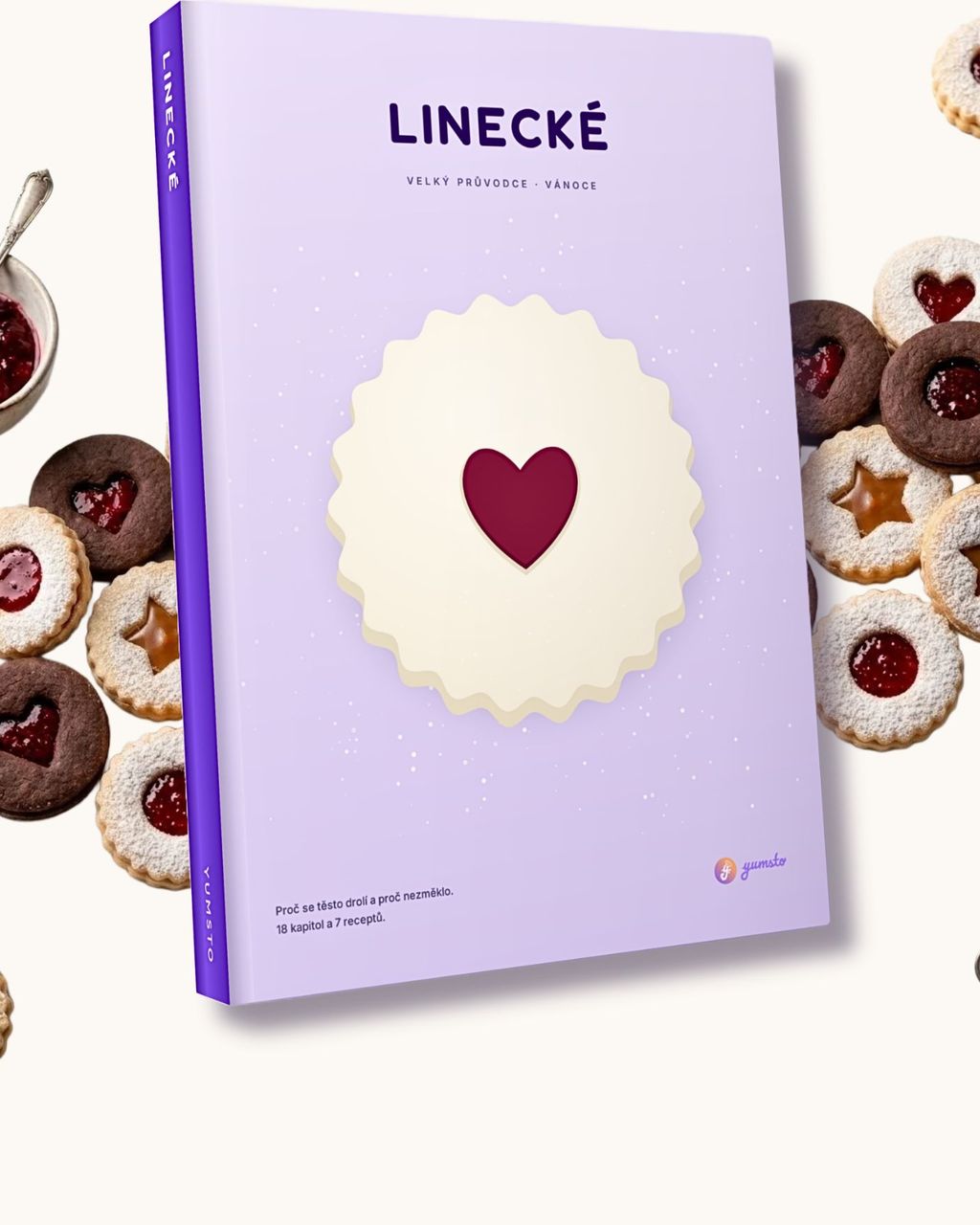
How many cookies you get is a question of maths. Why the dough crumbles, why the cookies haven't softened after a week, or why they spread on the sheet is a question of what happens inside the dough. That's what the e-book Linzer Cookies – The Complete Guide to the Dough explains in eighteen chapters, from flour and butter to storage. You'll find more kinds among the Christmas cookies.
From 1 kg of flour you get about 2 kg of Linzer dough: 1 kg flour, 670 g butter, 330 g powdered sugar and 3 egg yolks. With a 5 cm round cutter and 3 mm thickness, that's about 260–320 pieces, or 130–160 sandwiched cookies, baked on 8–12 baking sheets.
It's not recommended. The egg white adds water and protein to the dough, which makes the cookies tougher and less tender. If you only have whole eggs, use one in the 500 g batch and chill the dough for longer. The article Linzer dough and the egg yolk explains why only the yolk goes into Linzer cookies.
The smaller the cutter, the more pieces you get: with a 4 cm round cutter, 500 g of flour makes about half as many again sandwiched cookies as with a 5 cm one. But tiny shapes bake faster and take more time to assemble, so 4–5 cm is a sensible compromise.
It's best to make the dough the day before and leave it in the fridge overnight; it needs at least an hour for the butter to firm up. Wrapped, it keeps in the fridge for a few days and can also be frozen. Let it sit at room temperature for 15–20 minutes before rolling.
One recipe worth heating the oven for, one tip, and one deal from the shop. Nothing else.