How to Store Fruit: What Goes in the Fridge and What to Ripen on the Counter
How to Store Tomatoes, Cucumbers and Peppers: Fridge or Countertop?
Updated Nov 17, 2026
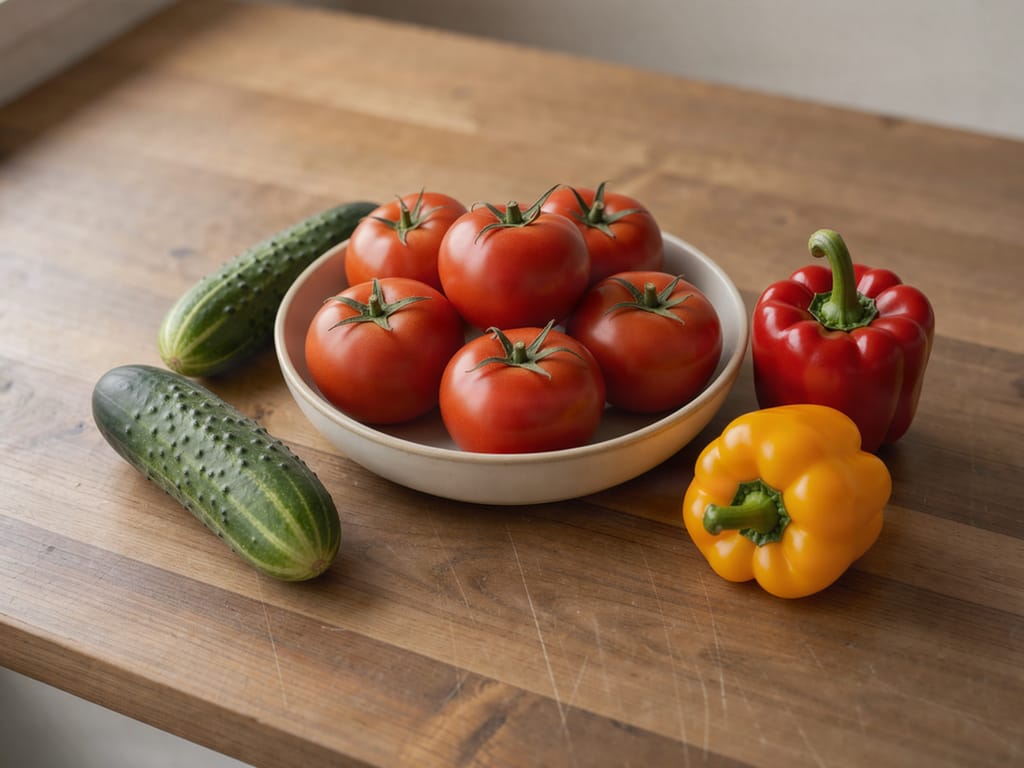
How do you store tomatoes, cucumbers and peppers? Leave ripe tomatoes on the counter, put peppers in the fridge's crisper drawer and eat cucumbers within a few days, because they can't stand the cold, and they don't like heat either. All three come from warm climates, so temperatures below roughly 10°C (50°F) harm them, and an ordinary fridge is colder than that. Here you'll find where each one keeps and for how long, how to ripen green tomatoes and what you can freeze.
In short: tomatoes on the counter, peppers in the fridge, cucumbers in the coolest spot outside the fridge, or in the fridge for a few days.
Ripe tomatoes: room temperature, out of direct sun. Refrigerate only those you won't get to in time, and only for 2–3 days (USDA FoodKeeper, refrigerator).
Green and unripe tomatoes: room temperature, ideally around 20°C (68°F) (UC Davis Postharvest Technology Center).
Cucumbers: best at around 10–12.5°C (50–55°F) (UC Davis). In the fridge they keep 4–6 days (USDA FoodKeeper), after which the chill starts to show.
Peppers: in the fridge whole and unwashed for 4–14 days (USDA FoodKeeper). Of the three, they handle the cold best.
Freezer: tomatoes and peppers yes, but then only for cooking. Cucumbers no, with one exception, which we'll get to.
That's because all three are chill-sensitive crops. According to USDA, a standard fridge should be at 4°C (40°F) or below, and that's under the limit they can tolerate for long.
Recipe of the week, one tip that saves you time and one deal from the shop. Unsubscribe in one click.
The next issue goes out on Thursday, November 26.
Cold below roughly 10°C (50°F) damages the cell membranes of tomatoes, cucumbers and peppers. This is called chilling injury. It doesn't show right away but after several days, and often only once you take the produce out of the fridge into the warmth.
According to the UC Davis Postharvest Technology Center, it looks like this:
tomatoes: mealy, mushy flesh, uneven color, faster mold. They lose flavor and aroma.
cucumbers: sunken pits on the skin, watery spots, quick softening and rot.
peppers: small pits on the surface, watery patches and browning around the seeds.
It's always a combination of temperature and time. A day in the fridge won't ruin anything, but a week will. That's why charts list fridge figures even though the ideal spot is elsewhere. USDA FoodKeeper tells you how long produce stays safe in the fridge, not when it tastes best.
Leave ripe tomatoes on the counter at room temperature, out of the sun and away from the stove. Eat them within a few days. How quickly they soften depends on the variety and on how ripe they were when you bought them.
Stem side down, or with the green stem left on. The stem scar is the softest spot and water escapes through it fastest.
Side by side, not piled up. Tomatoes at the bottom get bruised under the weight of the others and start to rot.
Don't wash them ahead of time. Wash them right before eating.
Away from cucumbers. Ripe tomatoes give off ethylene, a gas that speeds up ripening and aging, and cucumbers are sensitive to it.
If you have more tomatoes than you can eat, put the ripest ones in the fridge. According to USDA FoodKeeper, ripe tomatoes keep there for 2–3 days. Take them out an hour before eating so they warm to room temperature and regain at least some of their aroma.
Tomatoes lose their flavor only partly after a few days in the fridge, but after a week of cold the loss is largely permanent. A University of Florida study published in PNAS (Zhang et al., 2016) found that after eight days at 5°C (41°F), the aroma compounds in ripe tomatoes dropped by roughly 65%. They didn't fully come back even after three days at 20°C (68°F).
In practice, that means tomatoes for salads and for putting on bread belong on the counter. Those destined for sauce, soup or roasting can handle the fridge without trouble, because cooking masks the loss of aroma anyway.
Ripen green tomatoes at room temperature and never put them in the fridge. The UC Davis Postharvest Technology Center gives 20°C (68°F) as the optimum for color, flavor and vitamin C. At lower temperatures they ripen more slowly, and at 12.5°C (55°F) green tomatoes keep for up to two weeks before they start to ripen. That's handy if you want to spread them out over several weeks.
Sort them. Those that are starting to blush (unripe) will ripen reliably. Fully developed green tomatoes that are glossy and normal-sized will ripen too. Completely immature tomatoes, meaning small, hard and dull, mostly won't ripen and will stay flavorless.
Spread them in a single layer on a tray or in a box lined with newspaper, so they don't touch.
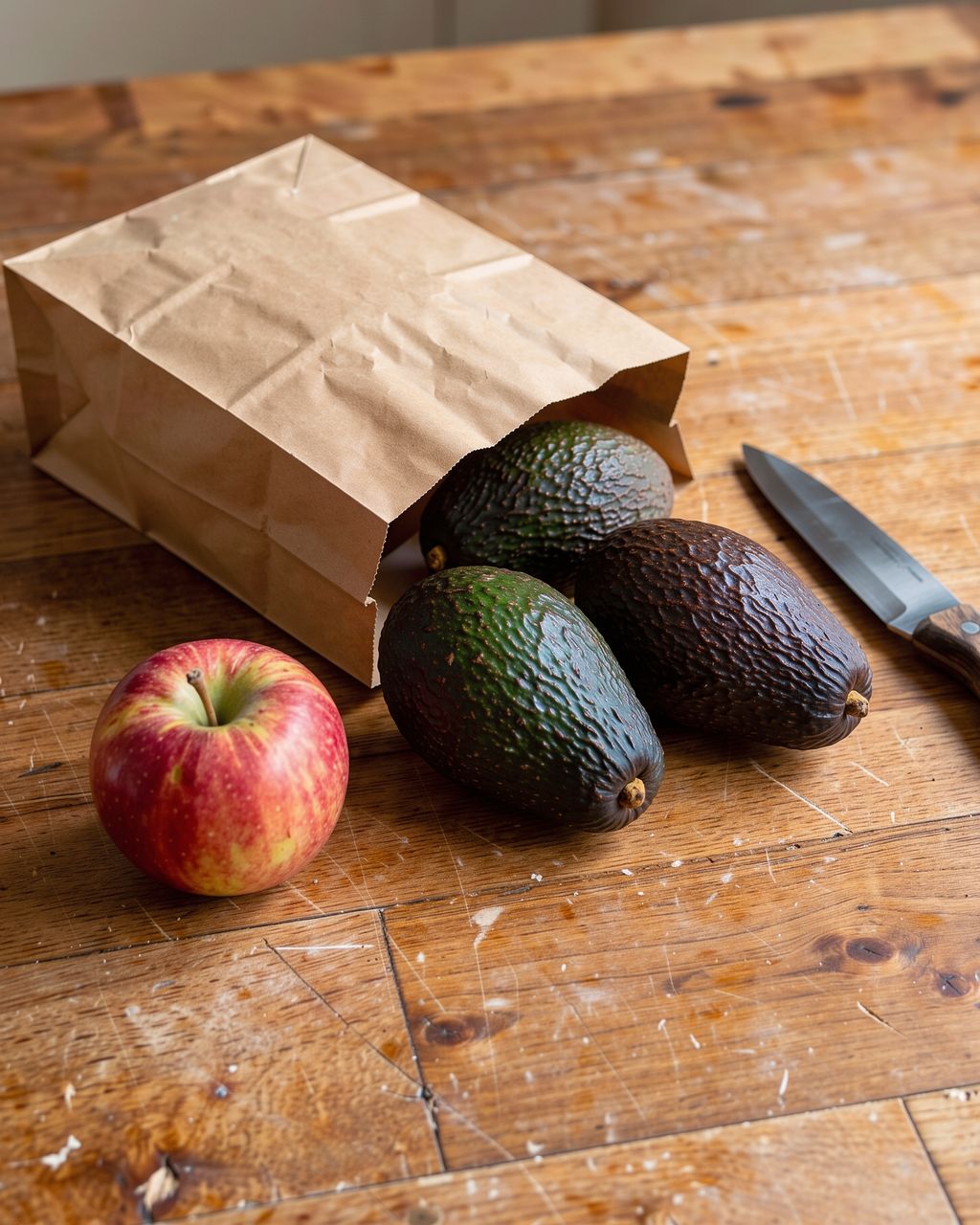
To speed things up, add a ripe apple or banana and cover them with a paper bag. The fruit gives off ethylene, which according to UC Davis triggers ripening in fully developed green tomatoes. Paper keeps the ethylene around the tomatoes while letting moisture through, so they won't start to mold under it. Don't use a plastic bag.
Check them every 2–3 days. Pick out the ripe ones and toss any that have gone bad, so they don't infect the rest.
Don't put them on a sunny windowsill. Tomatoes ripen with warmth, not light, and in direct sun they're more likely to scald than turn red.
Green tomatoes that won't ripen don't have to go in the trash. You can pickle them, make chutney or fry them in breadcrumb coating.
Store cucumbers in the coolest spot outside the fridge and eat them within a few days. If you don't have such a spot, put them in the fridge wrapped and use them within 4–6 days (USDA FoodKeeper, refrigerator). According to the UC Davis Postharvest Technology Center, the ideal for cucumbers is 10–12.5°C (50–55°F). Below 10°C (50°F), chilling injury shows up in them after just two to three days.
You'll rarely find that temperature at home, at most in a pantry or cellar in autumn. So:
In a cool kitchen, leave cucumbers on the counter and eat them within a few days.
In summer heat, put them in the fridge, but in the warmest spot, usually the door or the top shelf. The crisper drawer tends to be the coldest. For how the different areas of the fridge compare, see our article on how to arrange food in the fridge.
Don't remove the wrap the cucumber came in. It holds in moisture, so the cucumber wilts more slowly.
Keep them away from tomatoes, bananas and apples. Cucumbers are sensitive to ethylene and next to ripening fruit they yellow and soften faster.
Here's how to tell: a firm cucumber with glossy dark green skin is fine. Soft ends, sunken watery spots and a slimy surface mean it's past its prime. Don't use that one for salad.
Cucumbers taste best fresh and crisp, for example in a fresh cucumber and dill salad or grated into Greek yogurt tzatziki.
Put peppers in the fridge whole, unwashed and dry, ideally in the crisper drawer. According to USDA FoodKeeper, they keep there for 4–14 days. Of the three vegetables, they tolerate cold best.
The ideal for them is 7.5°C (45°F), at which they keep 3–5 weeks. At 5°C (41°F) they keep about 2 weeks and then chilling injury begins to show (UC Davis Postharvest Technology Center). So an ordinary fridge is enough for a pepper for a week or two. If you leave it on the counter, it loses water faster and starts to shrivel.
Colored (ripe) peppers tolerate cold better than green ones, says UC Davis. So eat the green ones first.
Whole ones keep longer than cut ones. Put a cut pepper in a container in the fridge and use it as soon as possible.
Moisture harms them. A wet pepper in a sealed bag will start to mold around the stem. Wash it only right before using.
A soft pepper with no mold is still good for cooking: try baked peppers with fresh cheese and thyme or a spicy pepper and chili dip.
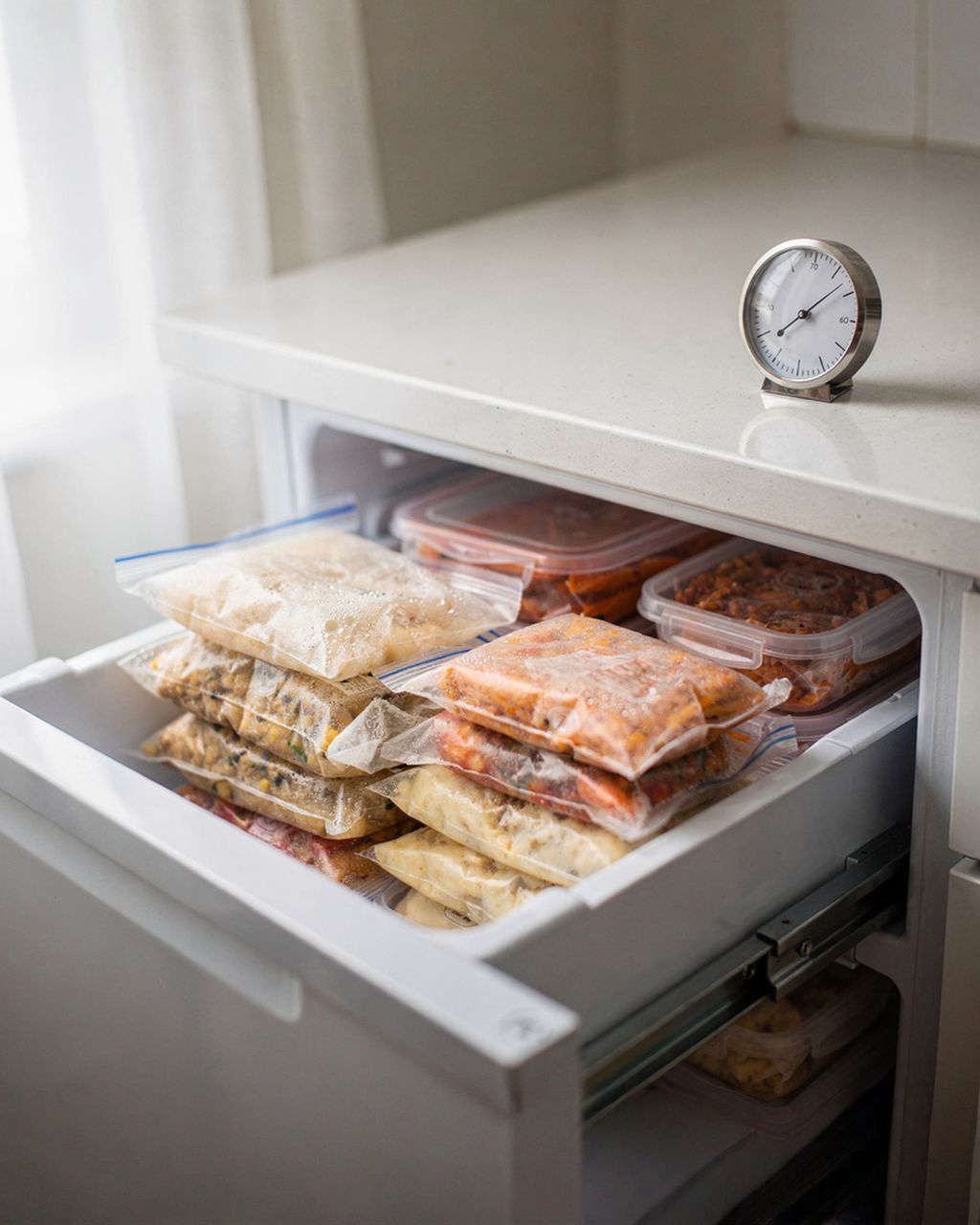
You can freeze tomatoes and peppers, but not cucumbers. After thawing, none of them will be crisp like fresh, because ice crystals tear the water-filled cells. Frozen vegetables are therefore best for cooking. For how to pack food for the freezer, see our article on storing food in the freezer.
You can freeze tomatoes whole, in pieces or cooked. They keep 2 months in the freezer (USDA FoodKeeper, freezer). According to the National Center for Home Food Preservation (USDA), they won't be firm after thawing, so use them only for cooking.
Raw: wash them, cut out the stem and freeze them whole or chopped. You can peel them beforehand. Dip them in boiling water for 30 seconds (NCHFP) and the skin then slips right off.
Cooked: cook them down into a sauce or purée, let it cool and freeze in portions. They take up less space and you have them ready to go.
Frozen tomatoes work well in an Italian tomato soup with legumes or in beans with bacon in tomato sauce. They're not suitable for salads.
Peppers are the easiest of the three to freeze, and you don't need to blanch them. They keep 6–8 months in the freezer (USDA FoodKeeper, freezer).
Wash the pepper, remove the stem and seeds and cut it into strips or cubes.
Spread it on a baking sheet in a single layer and freeze. The pieces then won't stick together in one lump.
Pour the frozen pieces into a bag, press out the air and put it back in the freezer.
According to NCHFP, raw frozen pepper keeps a slightly firmer texture. It suits sauces, a classic beef goulash, lečo (a Czech pepper and tomato stew), skillet mixes or homemade pizza. You can freeze roasted, peeled pepper too. For example, make a roasted pepper mix and freeze it in small portions.
Don't freeze raw cucumbers. USDA FoodKeeper doesn't recommend freezing them, and according to the National Center for Home Food Preservation they're limp and watery after thawing. The only exception is cucumbers pickled in a sweet-and-sour brine and then frozen. Even those won't have the same texture as ordinary pickles.
If you have too many cucumbers, don't freeze them. Pickle them, or make a salad and eat it by the next day. For how long other vegetables and foods keep, see the food shelf life chart by type.
Store cherry tomatoes and vine tomatoes like any other ripe tomatoes: whole and unwashed on the counter at room temperature, out of direct sun. Pull vine tomatoes off the vine only right before eating, so the stem scar stays sealed. With cherry tomatoes in a punnet, keep picking out split or soft ones, because they rot first and spread it to the rest.
Put frozen tomatoes straight into the pot with your sauce or soup; there's no need to thaw them. If you want the skin off, hold a frozen tomato under warm water for a moment and the skin slips off easily. Then let it cook down right in the dish.
We don't recommend freezing raw cucumbers for tzatziki, because after thawing they turn limp and release water (National Center for Home Food Preservation), so the tzatziki would be runny. You can add them to a blended smoothie, but they lose their crunch and fresh flavor. Always use a fresh cucumber for tzatziki.
Cover the cut end of the cucumber with plastic wrap or put it in a container, refrigerate it and eat it as soon as possible. The edge at the cut dries out quickly and then turns slimy. If it has already dried out, slice it off and use the rest.
Yes, you can use a pepper with a small soft spot and no mold: cut out the soft spot along with the area around it and use the rest right away, ideally for cooking. If there's a little mold on it, USDA advises cutting firm vegetables such as peppers at least 2.5 cm (1 inch) around and below the mold. Throw out a pepper that is slimy, smells sour or is mostly moldy.
One recipe worth heating the oven for, one tip, and one deal from the shop. Nothing else.