How to Store Tomatoes, Cucumbers and Peppers: Fridge or Countertop?
How to Store Fruit: What Goes in the Fridge and What to Ripen on the Counter
Updated Nov 17, 2026
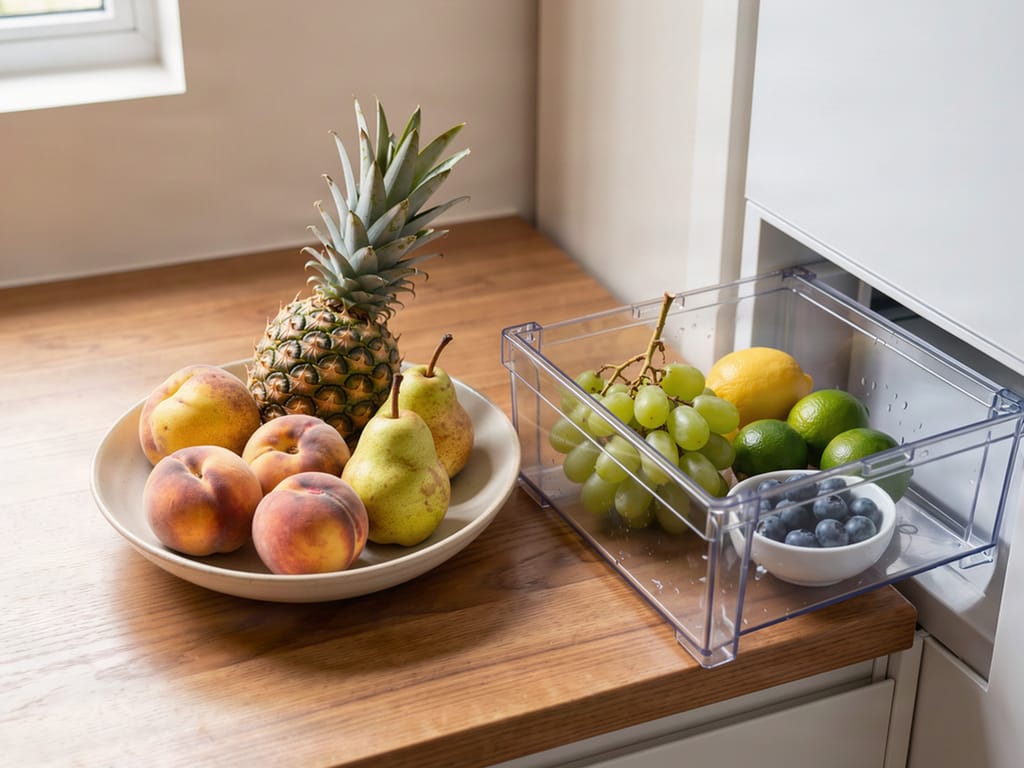
What decides how to store fruit is mostly one thing: does it keep ripening after harvest? Let peaches, nectarines and pears soften on the counter, and move them to the fridge only once they're ripe. Grapes, blueberries and figs go straight into the cold. Pineapple, pomegranate and citrus can handle either. Below, you'll find where to store each fruit, how many days it keeps and what to avoid.
Fruit that no longer ripens after harvest (grapes, blueberries, figs) belongs in the fridge. Let peaches, nectarines and pears ripen on the counter, and chill them only once ripe. Citrus, pineapple and pomegranate can handle either: if you'll eat them within a few days, they can stay on the counter. Fruit by fruit:
Pineapple: it doesn't get sweeter after harvest. Whole, it can sit on the counter for a few days, and it keeps 5–7 days in the fridge (Virginia Cooperative Extension).
Peaches and nectarines: let them ripen on the counter, then they keep 3–5 days in the fridge (Virginia Cooperative Extension).
Pears: same as peaches. Ripen at room temperature, then refrigerate ripe pears for 3–5 days (Virginia Cooperative Extension).
Fresh figs: straight into the fridge. At 0–2°C (32–36°F) they keep 5–7 days (California Fig Advisory Board).
Pomegranate: whole, it keeps up to 2 months in the fridge; the removed seeds keep up to 5 days in the fridge (University of Florida IFAS).
Grapes: into the fridge, where they keep about a week. At room temperature, only a day (Virginia Cooperative Extension).
Lemons and limes: about 10 days at room temperature, 10–21 days in the fridge (Virginia Cooperative Extension). Wrap cut ones and refrigerate them for 3–4 days (University of Maine Extension).
Blueberries: unwashed in the fridge, where they keep 7–10 days (University of Wisconsin Extension).
In the fridge, fruit belongs in the fruit and vegetable drawer. For where the fridge is coldest and where it's most humid, see our article on where to put food in the fridge by temperature zone.
Seasonal baking plans, tested recipes and kitchen tricks that save you time. Unsubscribe in one click.
Ethylene is a gas that some fruits use to control their own ripening. It also speeds up the ripening of fruit lying next to them. According to the Postharvest Technology Center at the University of California, Davis (UC Davis), avocados, kiwis, peaches, nectarines, plums and pears, among others, keep ripening on the counter after harvest. Citrus, grapes, cherries, pineapple and most berries don't ripen after harvest. They stay as you bought them, only growing softer and wilting with time.
What that means in practice:
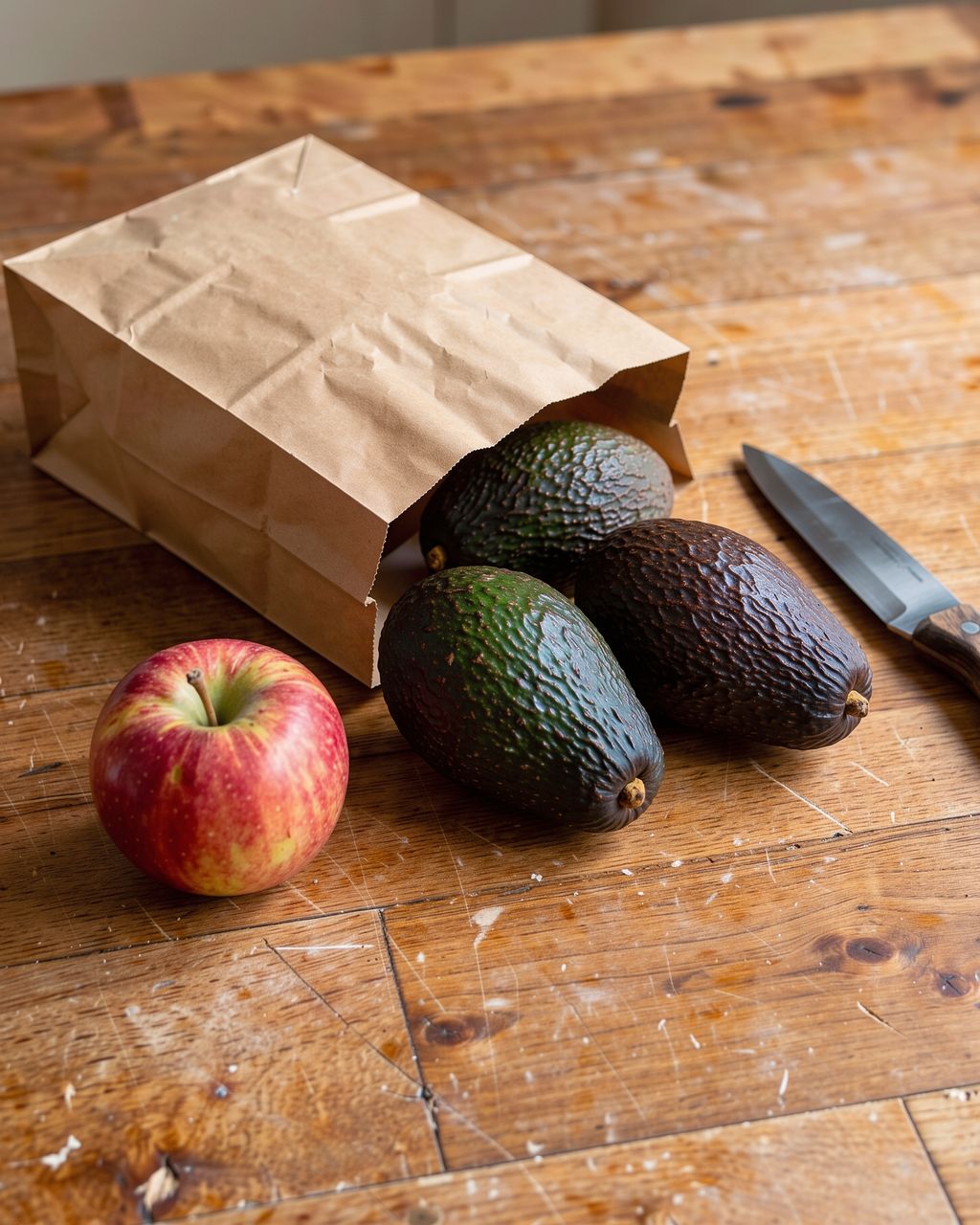
Hard peaches, nectarines and pears should sit on the counter out of direct sunlight. Want to speed up ripening? Put them in a paper bag with a ripe apple. The UC Davis overview counts on one apple for 5–7 pieces of fruit.
Move ripe fruit to the fridge. The cold slows ripening, so a peach stays in perfect condition a few days longer.
Keep fruit and vegetables in separate drawers. According to UC Davis, this limits the effect of ethylene from ripening fruit on vegetables.
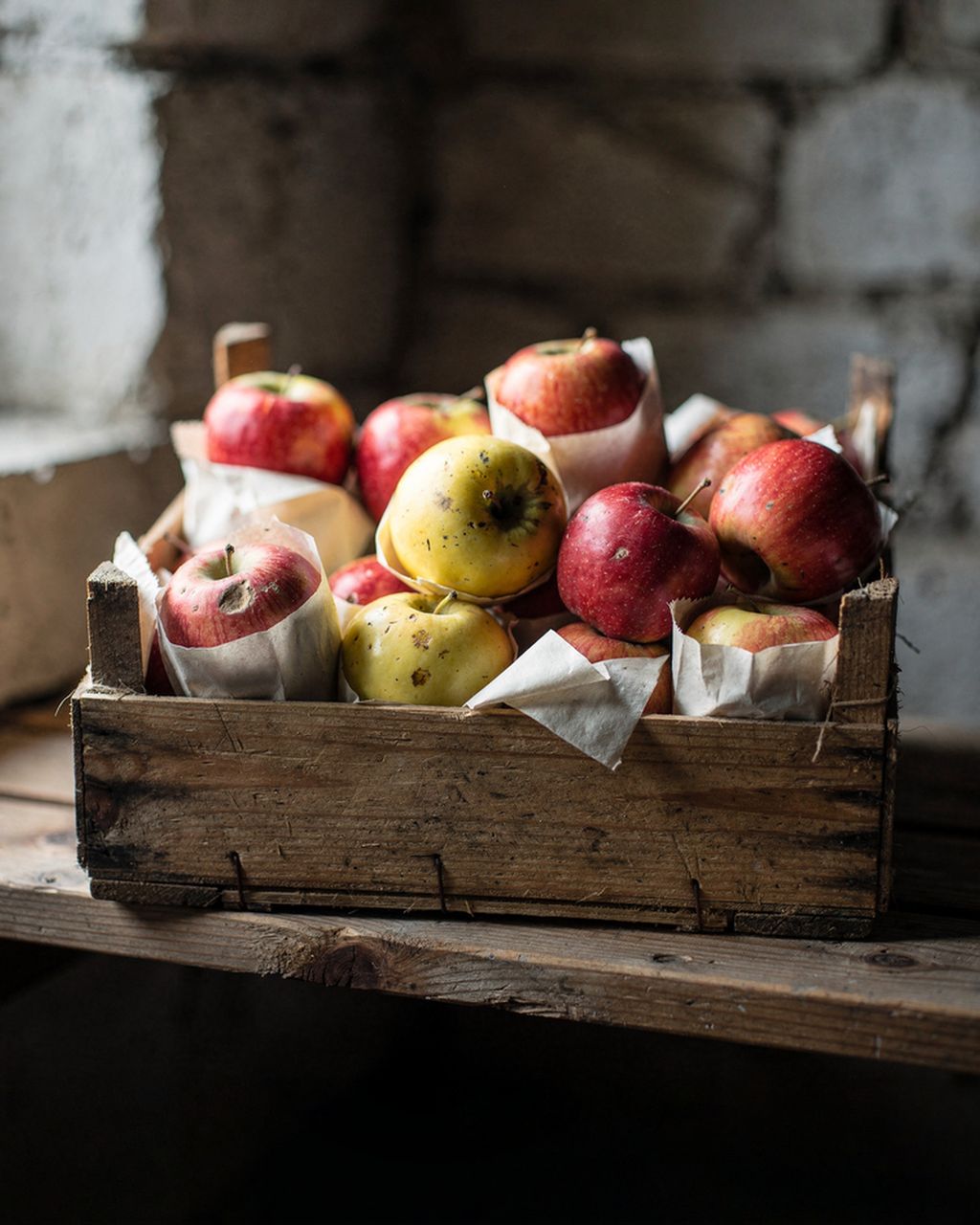
Most apples give off a lot of ethylene (exceptions, per UC Davis, include Fuji and Granny Smith), so they're worth keeping in a spot of their own. For the rules on apples, including winter storage, see how long apples keep and how to store them over winter.
A whole pineapple can sit on the counter for a few days, or you can put it in the fridge, where according to Virginia Cooperative Extension it keeps 5–7 days. Sources differ here: UC Davis recommends storing pineapple at room temperature. It won't ripen at home, though. According to UC Davis, pineapple doesn't ripen after harvest, so the skin may turn yellow but the flesh won't get any sweeter. Choose one that's already ripe: it should smell sweet at the base and feel heavy in your hand.
Watch out for long chilling. Below 7°C (45°F), UC Davis says pineapple develops chilling injury: a darkening core and watery flesh. A ripe fruit is less sensitive to cold than an unripe one, so a few days in the fridge won't hurt it. Just don't leave it there longer than necessary.
Cut pineapple goes into an airtight container in the fridge within two hours of cutting, and should be eaten within 3–4 days. That's the general rule for cut fruit, according to University of Maine Extension.
Let hard peaches and nectarines ripen on the counter at room temperature. Move ripe ones to the fridge, where according to Virginia Cooperative Extension they keep 3–5 days.
You can tell they're ripe by the smell and by the flesh near the stem giving slightly under your thumb.
On the counter, spread them in a single layer so they don't bruise each other.
Refrigerate only once ripe. According to the UC Davis overview, cold can stop the fruit from ripening to good flavor and texture.
Take them out a little while before eating. A cold peach smells less than one warmed to room temperature.
Ripe peaches you won't get around to eating raw are good in a warm dish. Try buckwheat dumplings with peaches and quark.
Let pears ripen on the counter and put ripe ones in the fridge, where according to Virginia Cooperative Extension they keep 3–5 days. UC Davis is more cautious about ripe pears, at 1–3 days. Pears are among the fruit that ripens after harvest (UC Davis), so hard pears from the store are normal, not defective.
Check ripeness at the stem. When the neck under the stem gives slightly under your thumb, the pear is ripe. The sides may still be firm.
You can speed it up with a paper bag and a ripe apple, just as with peaches.
Don't leave ripe pears on the counter long. They soften quickly and bruised spots turn brown.
Pears that have softened more than you'd like are ideal for baking. For example, baked pears with maple syrup and skyr.
Fresh figs go straight into the fridge. According to the California Fig Advisory Board, at 0–2°C (32–36°F) they usually keep 5–7 days, occasionally up to two weeks. A home fridge tends to be warmer, so expect a shorter time and check the figs regularly.
Spread them in a single layer on a plate or in a shallow dish. They're very delicate and get crushed when stacked.
Don't wash them ahead of time. Rinse them just before eating.
Buy them ripe. The California Fig Advisory Board advises choosing plump, fragrant figs that give slightly to the touch.
Figs that are starting to get too soft are good for baking: baked figs with goat cheese, walnuts and honey.
A whole pomegranate keeps up to 2 months in the fridge, according to University of Florida IFAS. The thick skin protects the seeds, so it's one of the longest-keeping fruits in the kitchen. If you want to eat it soon, you can happily leave it on the counter. The UC Davis overview lists it among fruit that tolerates room temperature.
Put the removed seeds in an airtight container in the fridge and use them within 5 days (University of Florida IFAS).
Don't break the skin until you know when you'll eat it. Whole fruit keeps many times longer than the removed seeds.
Seeds you won't get to can be frozen. More on that below.
The seeds make a great garnish, for example on the most chocolatey cake with pomegranate.
Put grapes in the fridge. According to Virginia Cooperative Extension, they keep about a week there, and only a day at room temperature. They don't ripen after harvest (UC Davis), so they gain nothing on the counter.
Don't wash them before storing. Rinse only the portion you're about to eat. Moisture between the berries encourages mold.
Leave them on the stems in the packaging you bought them in, or in a bag with holes. The UC Davis overview also recommends perforated fruit bags.
Before storing, remove any split or soft berries so they don't spoil the good ones.
Lemons and limes keep about 10 days at room temperature and 10–21 days in the fridge, according to Virginia Cooperative Extension. UC Davis, on the other hand, recommends storing them at room temperature. If you'll use them within a week, leave them in a bowl on the counter. If you're stocking up, they belong in the fruit drawer in the fridge.
They don't ripen after harvest, so on the counter they gain no juice or flavor, they just slowly dry out. A long stay on the counter doesn't pay off.
Wrap a cut lemon in plastic wrap, or put it cut side down in an airtight container, and refrigerate it within two hours of cutting. Use it within 3–4 days. That's the general rule for cut fruit, according to University of Maine Extension.
The cut surface dries out first. Slice off a thin layer before using it again.
Grate the zest before you halve the lemon. It's much easier to grate from a whole fruit than from a dried-out half.
It's best to use half a lemon right away, for example in quick pasta with zucchini and lemon.
Put blueberries in the fridge unwashed, in a shallow container. They keep 7–10 days in the fridge, according to University of Wisconsin Extension. The more cautious University of Maine Extension counts on 2–3 days. The riper the blueberries you buy, the closer you'll be to the shorter end.
Don't wash them ahead of time. Water on the surface speeds up molding. Rinse only what you're about to eat.
Sort them before storing. Throw out crushed and moldy berries, since mold spreads to the neighboring ones.
A shallow container beats a deep bowl. The bottom layer doesn't get crushed, and a paper towel at the bottom soaks up excess moisture.
Freeze what you can't get to unwashed. The U.S. Highbush Blueberry Council recommends this too.
If you have more blueberries than you can eat raw, bake yeasted blueberry koláče with quark and streusel.
If you know you won't eat the fruit within a few days, freeze it while it's in its best condition. The fridge only slows ripening and spoilage, while the freezer stops them. Blueberries, pomegranate seeds, cut pineapple and peaches all freeze well. To keep fruit loose rather than frozen in one block, see how to freeze fruit so it stays loose.
The white coating on blueberries isn't mold. It's a natural waxy layer (called bloom) that, according to the U.S. Highbush Blueberry Council, protects the skin and keeps moisture in the berry. It's edible and harmless. It rubs off when berries are sorted and washed, so a heavy bloom usually means the berries haven't been handled much. Mold looks different: it's fuzzy, and the berry underneath turns soft.
Don't wash blueberries before freezing. Freeze them dry and unwashed, as the U.S. Highbush Blueberry Council recommends. Water on the surface would freeze and the berries would stick together. Rinse them just before using. For how to freeze fruit so it stays loose, see our article on freezing fruit.
Peaches and nectarines don't ripen well in the fridge, because the cold slows ripening and, according to UC Davis, can worsen their flavor and texture. Let hard peaches and nectarines soften on the counter, and put them in the fridge only once ripe. There they keep 3–5 days (Virginia Cooperative Extension).
Don't wash grapes before refrigerating them. Rinse them just before eating, as the UC Davis overview also recommends. Moisture left between the berries encourages mold. Unwashed grapes on the stems keep about a week in the fridge (Virginia Cooperative Extension).
One recipe worth heating the oven for, one tip, and one deal from the shop. Nothing else.